18-wheeler, bobtail, cabover and other US truck terms
An 18-wheeler is FHWA's five-axle tractor semitrailer; a bobtailed tractor runs without a trailer. American truck terms in the words of federal texts.
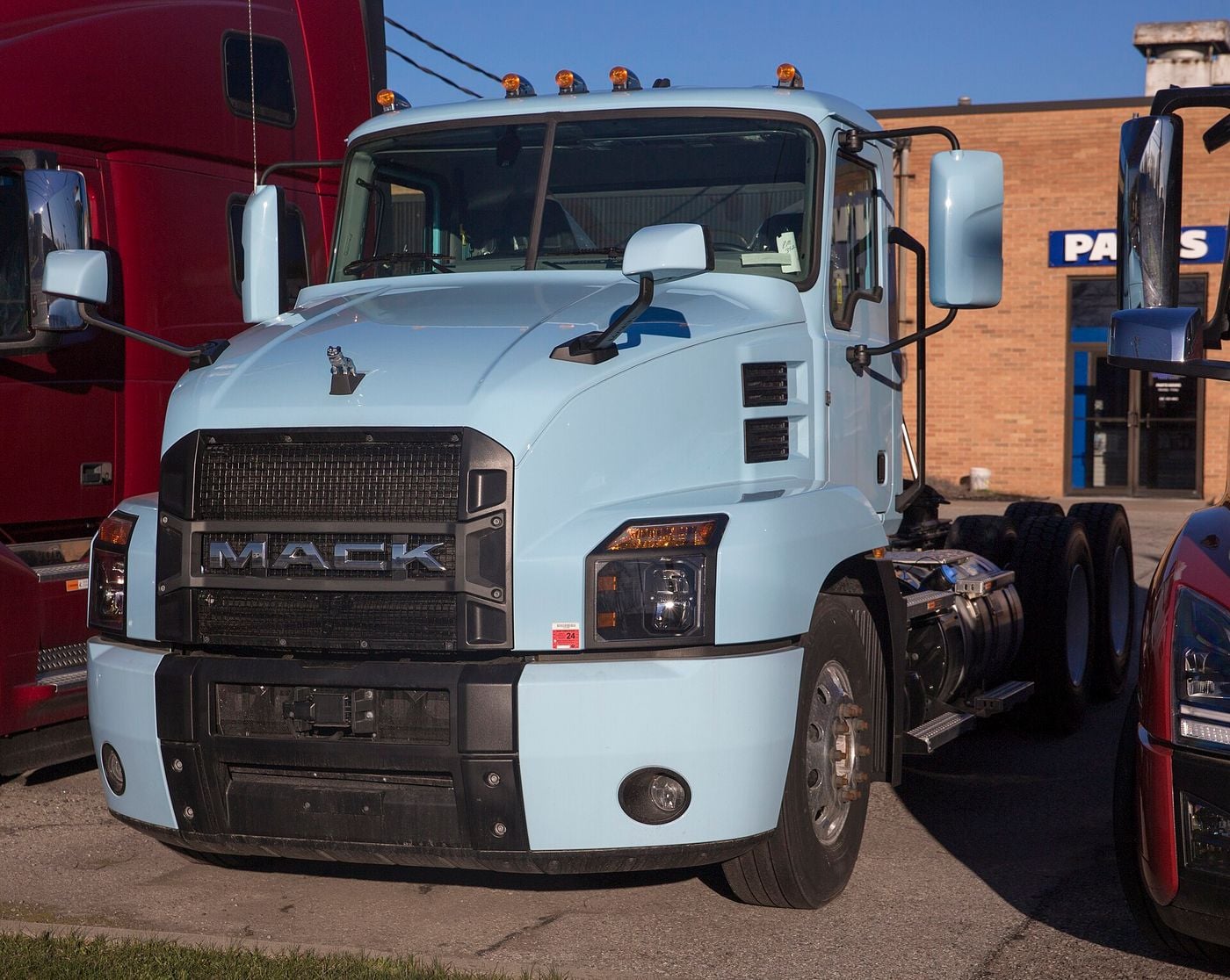
“18-wheeler” is another name for the five-axle tractor semitrailer: the Federal Highway Administration (FHWA) writes of “the five-axle tractor semitrailer vehicle, also known as the ‘18-wheeler’”. A bobtail is a truck tractor running without a trailer, which federal guidance of 1997 describes as a tractor “being bobtailed (operating without a trailer)”. A cabover is what 49 CFR 399.205 calls a cab-over-engine (COE) truck, with “all, or the front portion, of the engine under the cab”.
Status: 8 November 2026. The Code of Federal Regulations is quoted from the annual editions on govinfo: Title 49 revised as of October 1, 2025, Title 40 as of July 1, 2025 and Title 23 as of April 1, 2025. The Code marks section 390.5 of Title 49 as suspended indefinitely; the definitions quoted are those of the parallel section 390.5T. The 1997 and 2018 texts are regulatory guidance published in the Federal Register; the FHWA reports, the Traffic Monitoring Guide and the Census Bureau’s survey form are quoted in the editions named under Sources.
| Term | Wording | Whose text |
|---|---|---|
| 18-wheeler | “the five-axle tractor semitrailer vehicle, also known as the ‘18-wheeler’” | FHWA, report to Congress, May 2015 |
| Semi-truck | “semi-truck (tractor/trailer truck)” | Census Bureau, 2021 Vehicle Inventory and Use Survey form |
| Semitrailer | “some part of its weight rests upon the self-propelled towing motor vehicle” | 49 CFR 390.5T |
| Truck tractor | “designed and/or used primarily for drawing other vehicles” | 49 CFR 390.5T |
| Bobtail | “bobtailed (operating without a trailer)” | FHWA guidance, 62 FR 16402, 1997 |
| Deadhead | “deadheaded (returning empty)” | FHWA guidance, 62 FR 16402, 1997 |
| Straight truck | “SU vehicles where the power unit and vehicle chassis are permanently attached” | FHWA, report to Congress, May 2015 |
| Cabover (COE) | “all, or the front portion, of the engine under the cab” | 49 CFR 399.205 |
| Day cab | “a type of tractor cab that is not a sleeper cab or a heavy-haul tractor cab” | 40 CFR 1037.801 |
| Sleeper cab | “a compartment behind the driver’s seat intended to be used by the driver for sleeping” | 40 CFR 1037.801 |
| Sleeper berth | “a berth conforming to the requirements of § 393.76” | 49 CFR 395.2 |
| Class 8 | “Greater than 14968 kg. (33,001 lbs. and over)” | 49 CFR 565.15, Table II |
| Longer combination vehicle | “a truck tractor and two or more trailers or semitrailers” over 80,000 pounds on the Interstate System | 23 CFR 658.5 |
What is an 18-wheeler?
FHWA’s report to Congress Compilation of Existing State Truck Size and Weight Limit Laws (May 2015) introduces the vehicle this way: “Probably the most widely recognized commercial truck in the U.S. vehicle fleet is the five-axle tractor semitrailer vehicle, also known as the ‘18-wheeler.’” Its glossary defines the tractor semitrailer (TST) as “The most common commercial motor vehicle combination, consisting of a single tractor unit pulling a single semitrailer. The typical TST has five axles (an ‘18 wheeler’) but, depending on configuration and use, can vary from four axles to six or more.”
In FHWA’s vehicle classification, used for traffic counts and set out in Appendix A of the 2022 Traffic Monitoring Guide, the same vehicle is Class 9, “5-Axle tractor semi-trailer”, within the group “Five-Axle Single-Trailer Trucks – All five-axle vehicles consisting of two units, one of which is a tractor or straight truck power unit.” Neither text counts the wheels of the five-axle vehicle; how they add up is shown in what is a semi truck, wheel formulas such as 6x4 on makers’ tractor sheets in a truck in numbers, and axle layouts in axle configurations explained.
Semi, semi-truck and semitrailer
The regulations use the word semitrailer. In the Federal Motor Carrier Safety Regulations, “Semitrailer means any motor vehicle, other than a pole trailer, which is designed to be drawn by another motor vehicle and is constructed so that some part of its weight rests upon the self-propelled towing motor vehicle” (49 CFR 390.5T). The Federal Motor Vehicle Safety Standards put it as “a trailer, except a pole trailer, so constructed that a substantial part of its weight rests upon or is carried by another motor vehicle” (49 CFR 571.3).
The Census Bureau’s 2021 Vehicle Inventory and Use Survey uses the word semi-truck, glossed in brackets: its questionnaire, form TC-9502, asks “Was this vehicle a semi-truck (tractor/trailer truck)?” None of these texts explains the name. How US, EU, UN and other national texts define the tractor, the semi-trailer and the combination is compared in what is a semi truck.
A semitrailer can be turned into a full trailer: “A semitrailer equipped with an auxiliary front axle (converter dolly) shall be considered a full trailer” (49 CFR 390.5T). Section 393.5 defines the converter dolly as “A motor vehicle consisting of a chassis equipped with one or more axles, a fifth wheel and/or equivalent mechanism, and drawbar, the attachment of which converts a semitrailer to a full trailer.”
Tractor and truck tractor
49 CFR 390.5T separates the two powered vehicles: “Truck means any self-propelled commercial motor vehicle except a truck tractor, designed and/or used for the transportation of property”, and “Truck tractor means a self-propelled commercial motor vehicle designed and/or used primarily for drawing other vehicles.” The safety standards define the truck tractor as “a truck designed primarily for drawing other motor vehicles and not so constructed as to carry a load other than a part of the weight of the vehicle and the load so drawn” (49 CFR 571.3).
EPA’s greenhouse gas rules for heavy-duty vehicles take the 571.3 meaning and add that “Examples of vehicles that are similar to tractors but that are not tractors under this part include dromedary tractors, automobile haulers, straight trucks with trailers hitches, and tow trucks” (40 CFR 1037.801). The same section defines two kinds of tractor by use and weight:
- Drayage tractor: “a tractor that is intended for service in a port or intermodal railyard, with multiple design features consistent with that intent, such as a cab with only a single seat, rear cab entry, a raiseable fifth wheel, a solid-mounted rear suspension, and a maximum speed at or below 54 mi/hr.”
- Heavy-haul tractor: “a tractor with GCWR greater than or equal to 120,000 pounds.”
What is a bobtail truck?
A bobtail is a truck tractor running without a trailer. FHWA’s regulatory guidance of April 4, 1997, under Part 387, Minimum Levels of Financial Responsibility for Motor Carriers, asks: “Is a motor vehicle owned by an owner-operator, and being deadheaded (returning empty), or a tractor that is being bobtailed (operating without a trailer), subject to the financial responsibility regulations?” and answers “A motor vehicle deadheading or bobtailing while in the service of a motor carrier would be subject to the financial responsibility regulations” (62 FR 16370, at 16402).
The word appears in the vehicle safety standards as well. Table II of Federal Motor Vehicle Safety Standard No. 121, on air brake systems, gives stopping distances in columns, and its note describes columns (6) and (8) as “Unloaded Tractors (Bobtail)” (49 CFR 571.121). For traffic counts, FHWA’s Traffic Monitoring Guide sets the rule that “Truck tractor units traveling without a trailer will be considered single-unit trucks.”
FMCSA’s guidance of June 7, 2018 on personal conveyance lists among its examples of uses of a commercial motor vehicle that would not qualify as personal conveyance “Continuation of a CMV trip in interstate commerce in order to fulfill a business purpose, including bobtailing or operating with an empty trailer in order to retrieve another load or repositioning a CMV (tractor or trailer) at the direction of the motor carrier” (83 FR 26377). The notice states that the guidance expires June 7, 2023. FMCSA’s notice of June 20, 2023 says that FMCSA effectively reissued the guidance it published to its guidance portal, including guidance with an expiration date, and that March 3, 2020, the date the Department of Transportation announced the portals, is the reissuance date for all guidance published there as of that date; it lists the 2018 notice among the guidance documents with previously identified expiration dates (88 FR 39904).
Deadheading
The 1997 guidance quoted above glosses the word in brackets: a motor vehicle “being deadheaded (returning empty)”. It answers that a motor vehicle deadheading while in the service of a motor carrier would be subject to the financial responsibility regulations.
What is a straight truck?
A straight truck carries its cargo on the same chassis as the power unit. FHWA’s 2015 report to Congress: “Straight trucks refer to SU vehicles where the power unit and vehicle chassis are permanently attached.” Its Exhibit 4, on common vehicle configurations, describes the same group: “Single-Unit (SU) Trucks – Also referred to as straight trucks, this class of vehicles includes all trucks on a single frame with two or more axles and dual rear wheels.” FHWA’s publication Federal Size Regulations for Commercial Motor Vehicles (2004) speaks of “A truck that carries cargo on the same chassis as the power unit and cab, commonly known as a straight truck”; what that means for federal length rules is set out in semi-truck dimensions.
Single-unit truck is the term in FHWA’s vehicle classification, Classes 5 to 7 in the table further down. Class 5, for example, is “Two-Axle, Six-Tire, Single-Unit Trucks – All vehicles on a single frame including trucks, camping and recreational vehicles, motor homes, etc., with two axles and dual rear wheels.” The license classes that separate a straight truck from a combination vehicle are explained in CDL classes and endorsements.
What is a cabover truck?
The federal term is cab-over-engine (COE). Part 399 of the Federal Motor Carrier Safety Regulations defines it in section 399.205:
Cab-over-engine (COE) A truck or truck-tractor having all, or the front portion, of the engine under the cab.
COE—High profile A COE having the door sill step above the height of the front tires.
The definitions serve Subpart L, on step, handhold and deck requirements, which “applies to all trucks and truck-tractors, having a high profile cab-over-engine (COE) configuration, for entrance, egress and back of cab access, manufactured on and after September 1, 1982” (section 399.203). The 1997 guidance lists the abbreviation as “COE—Cab-over-engine truck tractor”.
The vehicle safety standards have a separate definition based on the position of the engine and the steering wheel: “Forward control means a configuration in which more than half of the engine length is rearward of the foremost point of the windshield base and the steering wheel hub is in the forward quarter of the vehicle length” (49 CFR 571.3). The cabs of European trucks are described in truck cabs explained.
Day cab, sleeper cab and sleeper berth
EPA’s heavy-duty vehicle rules define both tractor cabs in 40 CFR 1037.801:
Day cab means a type of tractor cab that is not a sleeper cab or a heavy-haul tractor cab.
Sleeper cab means a type of tractor cab that has a compartment behind the driver’s seat intended to be used by the driver for sleeping, and is not a heavy-haul tractor cab. This includes cabs accessible from the driver’s compartment and those accessible from outside the vehicle.
The same section sorts vehicles by roof height, which excludes narrow accessories such as exhaust pipes and antennas but includes wide accessories such as roof fairings: “Low-roof means relating to a vehicle with a roof height of 120 inches or less”, mid-roof covers 121 to 147 inches and high-roof 148 inches or more. FHWA’s 2015 report to Congress says day cab tractors “are for pickup and delivery or other short haul operations” and that “Sleeper cabs integrate a living area or a sleeping berth into the tractor.” The Census Bureau’s 2021 survey offers “Day cab” and “Sleeper cab” as the answers for a semi-truck.
The berth itself is defined by the hours-of-service rules: “Sleeper berth means a berth conforming to the requirements of § 393.76 of this chapter” (49 CFR 395.2). Section 393.76 sets its minimum size by date of installation; it also provides that “A sleeper berth must not be installed in or on a semitrailer or a full trailer other than a house trailer” and that a berth installed on or after January 1, 1953 “must be located in the cab or immediately adjacent to the cab and must be securely fixed with relation to the cab”.
| Date of installation on motor vehicle | Length | Width | Height |
|---|---|---|---|
| Before January 1, 1953 | 72 | 18 | 18 |
| After December 31, 1952, and before October 1, 1975 | 75 | 21 | 21 |
| After September 30, 1975 | 75 | 24 | 24 |
How time in the berth counts toward the off-duty periods is set out in hours of service rules; day cabs and sleeper cabs on European trucks in truck cabs explained.
Class 8 and the other classes
Class 8 is a weight class. Table II of 49 CFR 565.15, whose designations are used when gross vehicle weight rating (GVWR) information is submitted to NHTSA, reads “Class 8—Greater than 14968 kg. (33,001 lbs. and over)”; Class 7 covers 26,001 to 33,000 lbs. The regulation adds that “The use of these designations within the VIN itself is not required.” Below Class 3 the table uses letters, Class A to Class H. EPA’s rules draw the same line: “Class 8 means relating to heavy-duty motor vehicles above 33,000 pounds GVWR” (40 CFR 1037.801). The whole table, with GVWR, GCWR and GAWR explained, is in GVWR, GCWR and GAWR.
FHWA numbers its vehicle classes in a separate scheme, by axles and units, for traffic counts. In that list Class 8 is “Four or less axle, single trailer” and Class 9 the five-axle tractor semitrailer.
| Class | Figure A-1 | Appendix A |
|---|---|---|
| 1 | Motorcycles | Motorcycles |
| 2 | Passenger Cars | Passenger Cars |
| 3 | Four tire, single unit | Other Two-Axle, Four-Tire Single Unit Vehicles |
| 4 | Busses | Buses |
| 5 | Two axle, six tire, single unit | Two-Axle, Six-Tire, Single-Unit Trucks |
| 6 | Three axle, single unit | Three-Axle Single-Unit Trucks |
| 7 | Four or more axle, single unit | Four or More Axle Single-Unit Trucks |
| 8 | Four or less axle, single trailer | Four or Fewer Axle Single-Trailer Trucks |
| 9 | 5-Axle tractor semi-trailer | Five-Axle Single-Trailer Trucks |
| 10 | Six or more axle, single trailer | Six or More Axle Single-Trailer Trucks |
| 11 | Five or less axle, multi-trailer | Five or Fewer Axle Multi-Trailer Trucks |
| 12 | Six axle, multi-trailer | Six-Axle Multi-Trailer Trucks |
| 13 | Seven or more axle, multi-trailer | Seven or More Axle Multi-Trailer Trucks |
Appendix A sets four criteria for reporting information on trucks: truck tractor units traveling without a trailer are single-unit trucks; a truck tractor pulling other such units in a saddle mount configuration is one single-unit truck defined only by the axles on the pulling unit; floating axles are counted only when in the down position; and “The term ‘trailer’ includes both semi- and full trailers.”
Doubles, triples and longer combination vehicles
Federal size and weight rules define the longer combination vehicle (LCV) as “any combination of a truck tractor and two or more trailers or semitrailers which operates on the Interstate System at a gross vehicle weight greater than 80,000 pounds” (23 CFR 658.5). The glossary of FHWA’s 2015 report to Congress names the common types:
- Twin trailer combination: “A commercial motor vehicle combination consisting of a single tractor pulling two semitrailers. The Surface Transportation Assistance Act (STAA) Double is a twin trailer vehicle configuration consisting of a tractor, a 28 ft. semitrailer, and a 28 ft. trailer. The STAA Double is allowed nationwide on the Interstate and the NN [National Network].”
- Rocky Mountain Double: “A twin trailer combination classified as an LCV consisting of a tractor, a long semitrailer (45-48 ft.), and a short trailer (25-28 ft.).”
- Turnpike Double: “A twin trailer combination classified as an LCV consisting of a tractor, a long semitrailer (45-48 ft.), and a long trailer (45-48 ft.).”
- Triple: “A triple trailer combination classified as an LCV consisting of a tractor, a short semitrailer (25-28 ft.), and two short trailers (25-28 ft.). These short trailers are referred to in the industry as ‘pup trailers.’”
Where LCVs may run and the federal freeze on them are covered in long truck combinations; the endorsement for double and triple trailers in CDL classes and endorsements; trailer bodies such as dry vans, reefers and lowboys in US semi-trailer types.
What this page does not cover
- State definitions and State size and weight rules.
- Insurance terms and the financial responsibility amounts themselves.
- Engine brakes, covered in what is a Jake brake.
Quick answers
- What is an 18-wheeler?
- A five-axle tractor semitrailer. The Federal Highway Administration's 2015 report to Congress on State truck size and weight laws calls the five-axle tractor semitrailer vehicle, “also known as the ‘18-wheeler’”, probably the most widely recognized commercial truck in the US fleet, and its glossary says the typical tractor semitrailer has five axles but “can vary from four axles to six or more”. In FHWA's vehicle classification the five-axle tractor semitrailer is Class 9.
- What is a bobtail truck?
- A truck tractor running without a trailer. Federal guidance of April 4, 1997 speaks of a tractor “being bobtailed (operating without a trailer)”; Federal Motor Vehicle Safety Standard No. 121 describes two columns of its Table II as “Unloaded Tractors (Bobtail)”; and FHWA's 2022 Traffic Monitoring Guide counts truck tractor units traveling without a trailer as single-unit trucks.
- What is a straight truck?
- A truck that carries cargo on the same chassis as the power unit and cab, in the words of FHWA's 2004 publication on federal size regulations. FHWA's 2015 report to Congress says “Straight trucks refer to SU vehicles where the power unit and vehicle chassis are permanently attached” and that the single-unit truck class, also referred to as straight trucks, “includes all trucks on a single frame with two or more axles and dual rear wheels”. In FHWA's vehicle classification the single-unit truck classes are 5 to 7.
- What is a cabover truck?
- A cab-over-engine (COE) truck. 49 CFR 399.205 defines it as “A truck or truck-tractor having all, or the front portion, of the engine under the cab”, and a high-profile COE as one with the door sill step above the height of the front tires. The federal step, handhold and deck requirements of Part 399, Subpart L apply to high-profile COE trucks and truck-tractors manufactured on and after September 1, 1982.
- Why is it called a semi?
- None of the federal texts quoted on this page explains the name. 49 CFR 390.5T defines a semitrailer as a motor vehicle designed to be drawn by another motor vehicle and “constructed so that some part of its weight rests upon the self-propelled towing motor vehicle”, and the Census Bureau's 2021 truck survey asks whether a vehicle was “a semi-truck (tractor/trailer truck)”.
- What are a day cab and a sleeper cab?
- Two types of tractor cab in EPA's heavy-duty vehicle rules (40 CFR 1037.801). A sleeper cab has “a compartment behind the driver’s seat intended to be used by the driver for sleeping”; a day cab is “a type of tractor cab that is not a sleeper cab or a heavy-haul tractor cab”, a heavy-haul tractor being one with a GCWR of 120,000 pounds or more. A sleeper berth installed after September 30, 1975 must be at least 75 inches long and 24 inches wide, with 24 inches of height above the mattress (49 CFR 393.76).
Sources
- 49 CFR 390.5T Definitions, with the Effective Date Note to section 390.5 (Code of Federal Regulations, annual edition, Title 49, revised as of October 1, 2025) — Federal Motor Carrier Safety Administration (Code of Federal Regulations, govinfo)
- 49 CFR 393.5 Definitions (annual edition, Title 49, revised as of October 1, 2025) — Federal Motor Carrier Safety Administration (Code of Federal Regulations, govinfo)
- 49 CFR 393.76 Sleeper berths (annual edition, Title 49, revised as of October 1, 2025) — Federal Motor Carrier Safety Administration (Code of Federal Regulations, govinfo)
- 49 CFR 395.2 Definitions (annual edition, Title 49, revised as of October 1, 2025) — Federal Motor Carrier Safety Administration (Code of Federal Regulations, govinfo)
- 49 CFR 399.203 Applicability and 399.205 Definitions, Part 399 Subpart L, Step, Handhold, and Deck Requirements for Commercial Motor Vehicles (annual edition, Title 49, revised as of October 1, 2025) — Federal Motor Carrier Safety Administration (Code of Federal Regulations, govinfo)
- 49 CFR 571.3 Definitions, Federal Motor Vehicle Safety Standards (annual edition, Title 49, revised as of October 1, 2025) — National Highway Traffic Safety Administration (Code of Federal Regulations, govinfo)
- 49 CFR 571.121 Standard No. 121, Air brake systems, Table II and its note (annual edition, Title 49, revised as of October 1, 2025) — National Highway Traffic Safety Administration (Code of Federal Regulations, govinfo)
- 49 CFR 565.15 Content requirements, Table II, Gross Vehicle Weight Rating Classes (annual edition, Title 49, revised as of October 1, 2025) — National Highway Traffic Safety Administration (Code of Federal Regulations, govinfo)
- 40 CFR 1037.801 Definitions, greenhouse gas emission standards for heavy-duty vehicles (annual edition, Title 40, revised as of July 1, 2025) — Environmental Protection Agency (Code of Federal Regulations, govinfo)
- 23 CFR 658.5 Definitions (annual edition, Title 23, revised as of April 1, 2025) — Federal Highway Administration (Code of Federal Regulations, govinfo)
- Regulatory Guidance for the Federal Motor Carrier Safety Regulations, 62 FR 16370, April 4, 1997 (Part 387, Question 5, page 16402) — Federal Highway Administration (Federal Register, govinfo), 4 Apr 1997
- Regulatory Guidance Concerning the Use of a Commercial Motor Vehicle for Personal Conveyance, 83 FR 26377, June 7, 2018 — Federal Motor Carrier Safety Administration (Federal Register, govinfo), 7 Jun 2018
- Regulatory Guidance: Clarification of Reissuance Dates, 88 FR 39904, June 20, 2023 — Federal Motor Carrier Safety Administration (Federal Register, govinfo), 20 Jun 2023
- Traffic Monitoring Guide (2022), Appendix A: Vehicle Types and Figure A-1, FHWA 13 Vehicle Category Classification — Federal Highway Administration, Office of Highway Policy Information
- Federal Size Regulations for Commercial Motor Vehicles (FHWA-HOP-04-022, October 2004) — Federal Highway Administration, Office of Freight Management and Operations, 1 Oct 2004
- Compilation of Existing State Truck Size and Weight Limit Laws, Report to Congress (May 2015): Glossary of Terms and Typical Truck Configurations — Federal Highway Administration, Office of Freight Management and Operations, 1 May 2015
- 2021 Vehicle Inventory and Use Survey, questionnaire TC-9502 (04-14-2022) — U.S. Census Bureau