CDL disqualifications in 49 CFR 383.51: offenses and periods
49 CFR 383.51: most major offenses mean 1 year (3 with hazmat), a second one life; repeat serious violations 60 or 120 days; out-of-service up to 5 years.
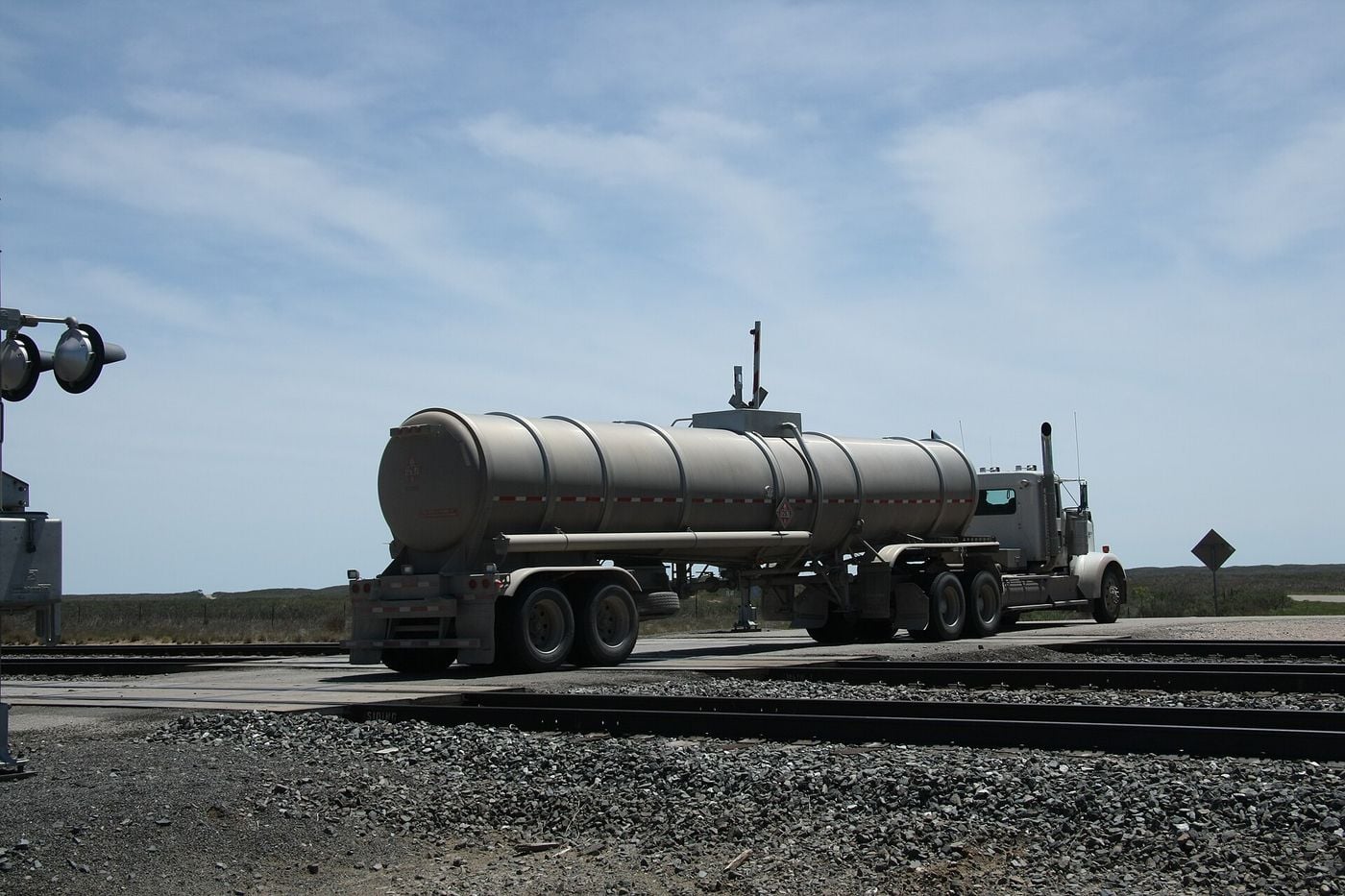
Section 383.51 of Title 49 of the Code of Federal Regulations lists, in four tables, the offenses for which a person required to have a commercial learner’s permit (CLP) or commercial driver’s license (CDL), and a CLP or CDL holder, is disqualified from operating a commercial motor vehicle (CMV), and the period of each disqualification. A person who is disqualified “must not drive a CMV”. A first conviction for a major offense such as driving a CMV with an alcohol concentration of 0.04 or greater or leaving the scene of an accident disqualifies the driver from operating a CMV for 1 year, or 3 years in a CMV transporting hazardous materials, and a second conviction for life; for the felonies of rows (9) and (10), involving manufacturing, distributing or dispensing a controlled substance or severe forms of trafficking in persons, a first conviction already means life. Serious traffic violations disqualify from the second conviction within 3 years (60 days, then 120 days), grade crossing offenses for no less than 60 days, and violating an out-of-service order for no less than 180 days on a first conviction.
Status: 22 November 2026. This page follows, as read on that day, sections 383.51 and 383.52 of Title 49 of the Code of Federal Regulations in the annual edition revised as of October 1, 2025. In that edition the source note of section 383.51 lists its last amendment as 86 FR 35640 of July 7, 2021. The Federal Register’s list of documents affecting Part 383 published from September 1, 2025 to November 22, 2026, read on the same day, shows five rules: the interim final rule of September 29, 2025 (90 FR 46509) and the final rule of February 13, 2026 (91 FR 7044) on non-domiciled CDLs, described in the non-domiciled CDL rule, and the rules of January 9, 2026 (91 FR 918), February 19, 2026 (91 FR 7860) and June 22, 2026 (91 FR 37047). Their amendments change sections 383.3, 383.5, 383.31, 383.71 and 383.73 and sections of Part 384, not sections 383.51 or 383.52. This page gives the federal rule only; State laws and State point systems are not described.
| Item | Rule | Source |
|---|---|---|
| Who must not drive | A person required to have a CLP or CDL who is disqualified must not drive a CMV; an employer must not knowingly allow, require, permit or authorize it | 383.51(a)(1), (a)(2) |
| Major offenses, rows (1) to (8), first conviction | 1 year; 3 years if the CMV was transporting hazardous materials | Table 1 |
| Major offenses, second conviction | Life; for rows (1) to (8) a State may reinstate after 10 years if the driver has voluntarily entered and successfully completed a rehabilitation program approved by the State | Table 1, (a)(6) |
| Felony involving manufacturing, distributing or dispensing a controlled substance, or severe forms of trafficking in persons | Life, not eligible for 10-year reinstatement | Table 1, rows (9), (10) |
| Serious traffic violations | No period for a first conviction; 60 days for a second and 120 days for a third or subsequent conviction within a 3-year period | Table 2 |
| Railroad-highway grade crossing offenses | No less than 60 days for a first, no less than 120 days for a second and no less than 1 year for a third or subsequent conviction within a 3-year period | Table 3 |
| Out-of-service order violations | First conviction 180 days to 1 year (180 days to 2 years with hazardous materials or in a vehicle designed to transport 16 or more passengers, including the driver); second within 10 years 2 to 5 years (3 to 5 years); third or subsequent 3 to 5 years | Table 4 |
| Imminent hazard | Not more than 30 days; more than 30 days only after notice and an opportunity for a hearing, and not more than one year | 383.52(b), (c) |
| Several disqualifications | A section 383.51 period is in addition to any previous periods; an imminent hazard period is served concurrently with simultaneous ones | 383.51(a)(5), 383.52(e) |
General rules: section 383.51(a)
Paragraph (a) of section 383.51, headed “General”, sets these rules:
- The driver. “A person required to have a CLP or CDL who is disqualified must not drive a CMV.” (paragraph (a)(1))
- The employer. “An employer must not knowingly allow, require, permit, or authorize a driver who is disqualified to drive a CMV.” (paragraph (a)(2))
- CMV and non-CMV. A holder of a CLP or CDL is subject to the sanctions of paragraphs (b) and (c), Tables 1 and 2, “if the holder drives a CMV or non-CMV and is convicted of the violations listed in those paragraphs.” (paragraph (a)(3))
- Counting first and later violations. “each conviction for any offense listed in Tables 1 through 4 to this section resulting from a separate incident, whether committed in a CMV or non-CMV, must be counted.” (paragraph (a)(4))
- Periods add up. “The disqualification period must be in addition to any other previous periods of disqualification.” (paragraph (a)(5))
- Foreign drivers. “A foreign commercial driver is subject to disqualification under this subpart.” (paragraph (a)(7))
Paragraph (a)(6), on reinstatement after a lifetime disqualification, is described below. CLP and CDL classes and endorsements are described in CDL classes and endorsements.
The column headings and the “Not applicable” cells of the four tables show in which vehicle a conviction leads to a disqualification. Summarized from those headings and cells:
| Table | Conviction while operating a CMV | Conviction while operating a non-CMV |
|---|---|---|
| Table 1, major offenses | All ten rows | Rows (1), (2), (4), (5), (6) and (9); “Not applicable” for rows (3), (7), (8) and (10) |
| Table 2, serious traffic violations | All ten rows | Rows (1) to (5), if the conviction results in the revocation, cancellation or suspension of the license or non-CMV driving privileges; “Not applicable” for rows (6) to (10) |
| Table 3, railroad-highway grade crossings | All six rows | No column |
| Table 4, out-of-service orders | Both rows | No column |
Which major offenses disqualify a CDL driver? Table 1
Table 1 to section 383.51 lists the major offenses of paragraph (b). Its first, third and fourth columns apply to “a person required to have a CLP or CDL and a CLP or CDL holder” convicted, or refusing to be tested, while operating a CMV; its second and fifth columns to “a CLP or CDL holder” convicted, or refusing to be tested, while operating a non-CMV. In every column the driver is disqualified “from operating a CMV”. The two right-hand columns cover a second conviction or refusal to be tested “in a separate incident of any combination of offenses in this Table”. The column headings of Table 1 name no period of years within which the second conviction must fall; those of Tables 2 and 3 say “within a 3-year period” and those of Table 4 “within a 10-year period”.
| Offense: if a driver operates a motor vehicle and is convicted of | First conviction or refusal, in a CMV | First, in a non-CMV | First, in a CMV transporting hazardous materials | Second, in a CMV | Second, in a non-CMV |
|---|---|---|---|---|---|
| (1) Being under the influence of alcohol as prescribed by State law | 1 year | 1 year | 3 years | Life | Life |
| (2) Being under the influence of a controlled substance | 1 year | 1 year | 3 years | Life | Life |
| (3) Having an alcohol concentration of 0.04 or greater while operating a CMV | 1 year | Not applicable | 3 years | Life | Not applicable |
| (4) Refusing to take an alcohol test as required by a State or jurisdiction under its implied consent laws or regulations as defined in section 383.72 | 1 year | 1 year | 3 years | Life | Life |
| (5) Leaving the scene of an accident | 1 year | 1 year | 3 years | Life | Life |
| (6) Using the vehicle to commit a felony, other than a felony described in paragraph (b)(9) or (10) | 1 year | 1 year | 3 years | Life | Life |
| (7) Driving a CMV when, as a result of prior violations committed operating a CMV, the driver’s CLP or CDL is revoked, suspended, or canceled, or the driver is disqualified from operating a CMV | 1 year | Not applicable | 3 years | Life | Not applicable |
| (8) Causing a fatality through the negligent operation of a CMV, including but not limited to the crimes of motor vehicle manslaughter, homicide by motor vehicle and negligent homicide | 1 year | Not applicable | 3 years | Life | Not applicable |
| (9) Using the vehicle in the commission of a felony involving manufacturing, distributing, or dispensing a controlled substance | Life, not eligible for 10-year reinstatement | Life, not eligible for 10-year reinstatement | Life, not eligible for 10-year reinstatement | Life, not eligible for 10-year reinstatement | Life, not eligible for 10-year reinstatement |
| (10) Using a CMV in the commission of a felony involving an act or practice of severe forms of trafficking in persons, as defined and described in 22 U.S.C. 7102(11) | Life, not eligible for 10-year reinstatement | Not applicable | Life, not eligible for 10-year reinstatement | Life, not eligible for 10-year reinstatement | Not applicable |
The hazardous materials column refers to a CMV “transporting hazardous materials as defined in § 383.5”. The 0.04 figure of row (3) applies only “while operating a CMV”; rows (1) and (4) refer to State law and to the State’s implied consent laws. Alcohol and drug testing by employers and the reporting of test results are separate rules of Part 382, described in the FMCSA Drug and Alcohol Clearinghouse.
Reinstatement after a lifetime disqualification
Paragraph (a)(6) lets a State reinstate a driver disqualified for life for rows (1) to (8) of Table 1: “A State may reinstate any driver disqualified for life for offenses described in paragraphs (b)(1) through (8) of this section (Table 1 to § 383.51) after 10 years, if that person has voluntarily entered and successfully completed an appropriate rehabilitation program approved by the State.” A person reinstated in this way “who is subsequently convicted of a disqualifying offense described in paragraphs (b)(1) through (8)” of Table 1 “must not be reinstated.” Rows (9) and (10) read “not eligible for 10-year reinstatement” in every column that applies.
What are serious traffic violations for a CDL? Table 2
Table 2 to section 383.51 lists the serious traffic violations of paragraph (c). It has no column for a first conviction. A second conviction of any combination of its offenses “in a separate incident within a 3-year period” disqualifies for 60 days, and a third or subsequent one for 120 days. For a conviction while operating a non-CMV the period applies to a CLP or CDL holder only “if the conviction results in the revocation, cancellation, or suspension of the CLP or CDL holder’s license or non-CMV driving privileges.”
| Offense: if the driver operates a motor vehicle and is convicted of | Second conviction within 3 years, in a CMV | Second, in a non-CMV | Third or subsequent within 3 years, in a CMV | Third or subsequent, in a non-CMV |
|---|---|---|---|---|
| (1) Speeding excessively, involving any speed of 24.1 kmph (15 mph) or more above the regulated or posted speed limit | 60 days | 60 days | 120 days | 120 days |
| (2) Driving recklessly, as defined by State or local law or regulation, including but not limited to offenses of driving a motor vehicle in willful or wanton disregard for the safety of persons or property | 60 days | 60 days | 120 days | 120 days |
| (3) Making improper or erratic traffic lane changes | 60 days | 60 days | 120 days | 120 days |
| (4) Following the vehicle ahead too closely | 60 days | 60 days | 120 days | 120 days |
| (5) Violating State or local law relating to motor vehicle traffic control (other than a parking violation) arising in connection with a fatal accident | 60 days | 60 days | 120 days | 120 days |
| (6) Driving a CMV without obtaining a CLP or CDL | 60 days | Not applicable | 120 days | Not applicable |
| (7) Driving a CMV without a CLP or CDL in the driver’s possession (note 1) | 60 days | Not applicable | 120 days | Not applicable |
| (8) Driving a CMV without the proper class of CLP or CDL and/or endorsements for the specific vehicle group being operated or for the passengers or type of cargo being transported | 60 days | Not applicable | 120 days | Not applicable |
| (9) Violating a State or local law or ordinance on motor vehicle traffic control prohibiting texting while driving a CMV (note 2) | 60 days | Not applicable | 120 days | Not applicable |
| (10) Violating a State or local law or ordinance on motor vehicle traffic control restricting or prohibiting the use of a hand-held mobile telephone while driving a CMV (note 2) | 60 days | Not applicable | 120 days | Not applicable |
The table has two footnotes:
- Note 1, row (7). “Any individual who provides proof to the enforcement authority that issued the citation, by the date the individual must appear in court or pay any fine for such a violation, that the individual held a valid CLP or CDL on the date the citation was issued, shall not be guilty of this offense.”
- Note 2, rows (9) and (10). Driving, for this disqualification, “means operating a commercial motor vehicle on a highway, including while temporarily stationary because of traffic, a traffic control device, or other momentary delays.” It “does not include operating a commercial motor vehicle when the driver has moved the vehicle to the side of, or off, a highway and has halted in a location where the vehicle can safely remain stationary.”
The federal texting and hand-held phone bans for drivers themselves, sections 392.80 and 392.82, are described in the Part 392 driving rules.
Railroad-highway grade crossing offenses: Table 3
Table 3 to section 383.51, under paragraph (d), lists six offenses at railroad-highway grade crossings, for convictions of operating a CMV in violation of a Federal, State or local law. Its periods are minimums: “No less than 60 days” for a first conviction, “No less than 120 days” for a second and “No less than 1 year” for a third or subsequent conviction of any combination of these offenses in a separate incident within a 3-year period. The six offenses are that the driver, not being required to always stop, fails to slow down and check that tracks are clear of an approaching train, or fails to stop before reaching the crossing if the tracks are not clear; that the driver, being always required to stop, fails to stop before driving onto the crossing; and that the driver fails to have sufficient space to drive completely through the crossing without stopping, fails to obey a traffic control device or the directions of an enforcement official at the crossing, or fails to negotiate a crossing because of insufficient undercarriage clearance. The crossing rules of section 392.10 are described in the Part 392 driving rules.
Out-of-service order violations: Table 4
Table 4 to section 383.51, under paragraph (e), applies when the driver “operates a CMV and is convicted” of violating a driver or vehicle out-of-service order. Unlike Tables 1 to 3, each cell gives both a minimum and a maximum, and the second and later convictions count within a 10-year period.
| Offense: if the driver operates a CMV and is convicted of | First conviction | Second conviction in a separate incident within 10 years | Third or subsequent conviction within 10 years |
|---|---|---|---|
| (1) Violating a driver or vehicle out-of-service order while transporting nonhazardous materials | No less than 180 days or more than 1 year | No less than 2 years or more than 5 years | No less than 3 years or more than 5 years |
| (2) Violating a driver or vehicle out-of-service order while transporting hazardous materials as defined in section 383.5, or while operating a vehicle designed to transport 16 or more passengers, including the driver | No less than 180 days or more than 2 years | No less than 3 years or more than 5 years | No less than 3 years or more than 5 years |
How a vehicle is placed out of service at the roadside is described in CVSA inspection levels, decal and out-of-service criteria, and the civil penalties for violating an out-of-service order, which are separate from the disqualification, in FMCSA civil penalties.
Imminent hazard: section 383.52
Section 383.52 sets a separate disqualification that FMCSA issues for a driver whose driving is determined to constitute an imminent hazard:
- Who. “The Assistant Administrator or his/her designee must disqualify from operating a CMV any driver whose driving is determined to constitute an imminent hazard, as defined in § 383.5.” (paragraph (a))
- Up to 30 days. The period “may not exceed 30 days” unless FMCSA complies with paragraph (c). The driver may be given an opportunity for a hearing after a disqualification of 30 days or less is issued. (paragraphs (b), (c))
- More than 30 days. FMCSA “must provide the driver notice of a proposed disqualification period of more than 30 days and an opportunity for a hearing to present a defense to the proposed disqualification.” Such a disqualification “may not exceed one year in duration.” The driver, or a representative, may file an appeal of a disqualification issued by the Assistant Administrator’s delegate with the Assistant Administrator, Adjudications Counsel. (paragraph (c))
- Driver record. The disqualification is transmitted by FMCSA to the jurisdiction where the driver is licensed and “must become a part of the driver’s record maintained by that jurisdiction.” (paragraph (d))
- Several at once. A driver disqualified at the same time under this section and under other provisions of the subpart, or under State law or regulation, “shall serve those disqualification periods concurrently.” (paragraph (e))
What this page does not cover
- State traffic laws, State point systems and State penalties, and how a State applies these tables to a particular conviction.
- The definitions of hazardous materials and imminent hazard in section 383.5, to which sections 383.51 and 383.52 refer, and the implied consent rules of section 383.72.
- The railroad crossing rules of section 392.10, described, with a summary of Table 3, in the Part 392 driving rules.
- Civil penalties, described in FMCSA civil penalties.
- The other sections of Part 383 and Part 384, among them the rules on non-domiciled CLPs and CDLs, described in the non-domiciled CDL rule.
Quick answers
- What are the major offenses that disqualify a CDL driver?
- Table 1 of 49 CFR 383.51 lists ten major offenses, among them being under the influence of alcohol as prescribed by State law or of a controlled substance, having an alcohol concentration of 0.04 or greater while operating a commercial motor vehicle (CMV), refusing an alcohol test under a State's implied consent laws, leaving the scene of an accident, using the vehicle to commit a felony and causing a fatality through the negligent operation of a CMV. A first conviction in a CMV disqualifies the driver from operating a CMV for 1 year, or 3 years if the CMV was transporting hazardous materials; a second conviction or refusal in a separate incident, for any combination of offenses in the table, for life. Using the vehicle in a felony involving manufacturing, distributing or dispensing a controlled substance, or a CMV in a felony involving severe forms of trafficking in persons, means life with no 10-year reinstatement.
- What alcohol concentration disqualifies a CDL driver?
- Row (3) of Table 1 to 49 CFR 383.51 is having an alcohol concentration of 0.04 or greater while operating a CMV: 1 year for a first conviction, 3 years if the CMV was transporting hazardous materials, and life for a second conviction. Its non-CMV columns read “Not applicable”. Row (1), being under the influence of alcohol as prescribed by State law, and row (4), refusing an alcohol test under a State's implied consent laws, also apply in a non-CMV: 1 year for a first conviction or refusal and life for a second.
- What are serious traffic violations for a CDL?
- Table 2 of 49 CFR 383.51 lists ten serious traffic violations: speeding by 15 mph or more above the limit, reckless driving, improper or erratic lane changes, following too closely, a traffic control violation arising in connection with a fatal accident, driving a CMV without obtaining a CLP or CDL, without one in the driver's possession or without the proper class or endorsements, and State or local texting and hand-held phone offenses while driving a CMV. The table sets no period for a first conviction. A second conviction of any combination of these offenses in a separate incident within a 3-year period disqualifies for 60 days, a third or subsequent one for 120 days. In a non-CMV, a second or later conviction disqualifies only for rows (1) to (5) and only if it results in the revocation, cancellation or suspension of the holder's license or non-CMV driving privileges.
- Can a lifetime CDL disqualification be reinstated?
- Under 49 CFR 383.51(a)(6), a State may reinstate a driver disqualified for life for the offenses in rows (1) to (8) of Table 1 after 10 years, if that person has voluntarily entered and successfully completed an appropriate rehabilitation program approved by the State. A person reinstated this way who is later convicted of one of those offenses must not be reinstated. Rows (9) and (10), felonies involving manufacturing, distributing or dispensing a controlled substance or severe forms of trafficking in persons, read “not eligible for 10-year reinstatement”.
- What is the CDL disqualification for violating an out-of-service order?
- Table 4 of 49 CFR 383.51 sets no less than 180 days and no more than 1 year for a first conviction of violating a driver or vehicle out-of-service order, 2 to 5 years for a second conviction in a separate incident within a 10-year period, and 3 to 5 years for a third or subsequent one. While transporting hazardous materials, or in a vehicle designed to transport 16 or more passengers including the driver, the periods are 180 days to 2 years, 3 to 5 years and 3 to 5 years.
- Do violations in a personal vehicle count against a CDL?
- For Tables 1 and 2 of 49 CFR 383.51, yes. Section 383.51(a)(4) counts each conviction resulting from a separate incident “whether committed in a CMV or non-CMV”. In Table 1, six of the ten major offenses also apply in a non-CMV: a first conviction disqualifies a CLP or CDL holder from operating a CMV for 1 year, a second for life, and a felony involving manufacturing, distributing or dispensing a controlled substance for life with no 10-year reinstatement. In Table 2, a second or later conviction in a non-CMV disqualifies only for rows (1) to (5) and only if it results in the revocation, cancellation or suspension of the holder's license or non-CMV driving privileges. Tables 3 and 4 apply to convictions while operating a CMV.
Sources
- 49 CFR 383.51 — Disqualification of drivers, Tables 1 to 4 (Code of Federal Regulations, annual edition revised as of October 1, 2025) — U.S. Government Publishing Office (govinfo)
- 49 CFR 383.52 — Disqualification of drivers determined to constitute an imminent hazard (Code of Federal Regulations, annual edition revised as of October 1, 2025) — U.S. Government Publishing Office (govinfo)
- Federal Register documents affecting 49 CFR Part 383, published from September 1, 2025 (API listing, read November 22, 2026) — Office of the Federal Register (federalregister.gov)
- Restoring Integrity to the Issuance of Non-Domiciled Commercial Drivers Licenses (CDL) — interim final rule, FR Doc. 2025-18869, 90 FR 46509 (September 29, 2025), effective September 29, 2025 — Federal Motor Carrier Safety Administration (Federal Register), 29 Sept 2025
- Transportation of Fuel for Agricultural Aircraft Operations — final rule, FR Doc. 2026-00269, 91 FR 918 (January 9, 2026), effective March 10, 2026 — Federal Motor Carrier Safety Administration (Federal Register), 9 Jan 2026
- Restoring Integrity to the Issuance of Non-Domiciled Commercial Drivers Licenses (CDL) — final rule, FR Doc. 2026-02965, 91 FR 7044 (February 13, 2026), effective March 16, 2026 — Federal Motor Carrier Safety Administration (Federal Register), 13 Feb 2026
- Commercial Driver's License Standards; Requirements and Penalties: Applicability to the Exception for Certain Military Personnel — final rule, FR Doc. 2026-03263, 91 FR 7860 (February 19, 2026), effective March 23, 2026 — Federal Motor Carrier Safety Administration (Federal Register), 19 Feb 2026
- Removal of Self-Reporting Requirement — final rule, FR Doc. 2026-12449, 91 FR 37047 (June 22, 2026), effective July 22, 2026 — Federal Motor Carrier Safety Administration (Federal Register), 22 Jun 2026