Clean Air Zones and lorries in Great Britain
Which English Clean Air Zones charge HGVs, buses and coaches, what London's LEZ costs a lorry below Euro VI, and how Scotland's four LEZs fine instead of charging.
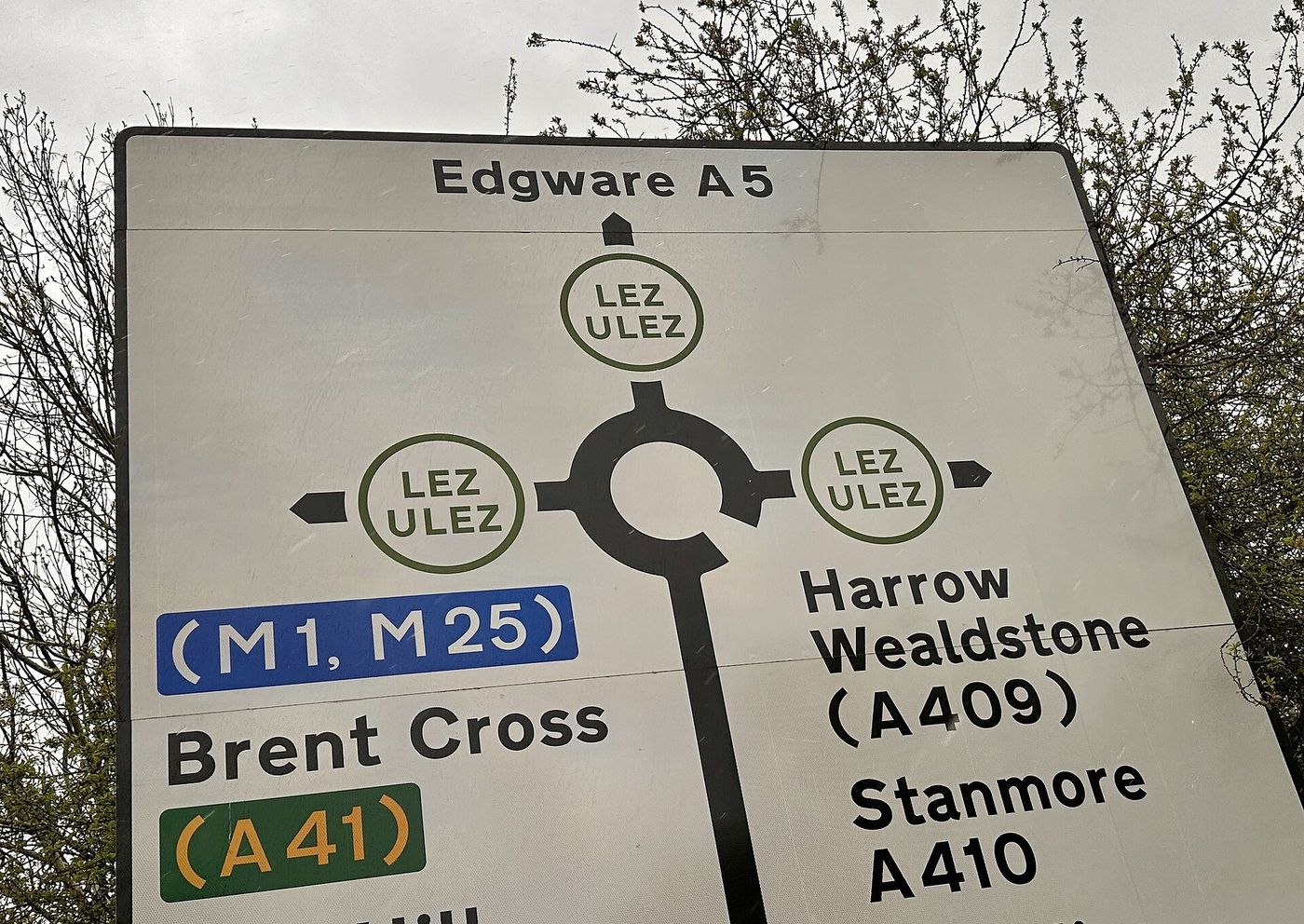
Lorries, buses and coaches meet three different low-emission schemes in Great Britain, and each works in its own way. In England, GOV.UK lists seven Clean Air Zones run by local authorities, in which a vehicle below the minimum standard pays a daily charge; all seven cover heavy goods vehicles, buses and coaches. London has its own Low Emission Zone (LEZ) across most of Greater London, where a heavy vehicle that does not meet Euro VI pays £100 or £300 a day. Scotland’s four Low Emission Zones cannot be paid to enter at all: a non-compliant vehicle receives a penalty charge. For heavy diesel vehicles the minimum standard in all three is Euro VI.
Status: 30 September 2026. This page follows the official texts as read on that date: GOV.UK’s guidance on driving in a Clean Air Zone (last updated 12 February 2026) and the start page of its checking service, the government’s Clean Air Zone framework (a policy paper, updated 6 October 2022), Transport for London’s LEZ pages, and the mygov.scot pages on Scotland’s Low Emission Zones (the vehicle-check and fines pages last updated 26 June 2026). Each scheme is described only as its own authority describes it. The daily charges in the English zones are set by each council and are not listed on the GOV.UK page, so they are not given here.
Three schemes side by side
| England: Clean Air Zones | London: Low Emission Zone | Scotland: Low Emission Zones | |
|---|---|---|---|
| Where | Bath, Birmingham, Bradford, Bristol, Portsmouth, Sheffield, Tyneside (Newcastle and Gateshead) | Most of Greater London; the M25 is not included | The city centres of Aberdeen, Dundee, Edinburgh and Glasgow |
| Heavy vehicles covered | HGVs, buses and coaches in all seven zones (Class B to D) | Lorries, vans and specialist vehicles over 3.5 tonnes GVW; buses, minibuses and coaches over 5 tonnes GVW | All vehicles, buses, coaches and HGVs included; motorbikes, mopeds and fully electric vehicles are outside the restrictions |
| Minimum standard, heavy vehicles | Euro VI | Euro VI (NOx and PM) | Euro VI for diesel, Euro IV for petrol |
| Hours | 24 hours a day, 7 days a week, every day of the year | 24 hours a day, every day of the year | 24 hours a day, 7 days a week, including public holidays such as Christmas Day |
| A non-compliant vehicle | Pays a daily charge set by the council | Pays a daily charge of £100 or £300 | Receives a penalty charge notice; there is no charge to pay instead |
| Penalty | Penalty charge notice if the charge is not paid in time; amount set locally | £1,000 or £2,000, halved if paid within 14 days | £60 for the first, doubling up to £960 |
| Vehicles registered outside the UK | The online checking service cannot check them | Must be registered with TfL, even if they meet the standards | The online checker cannot be used; check with the manufacturer or the national vehicle authority |
What the Euro stages mean for heavy engines, and how Euro VI differs from the Euro 6 used for cars and vans, is explained in Euro 6 and Euro 7 explained.
England: the seven Clean Air Zones
GOV.UK’s guidance, which applies to England, lists these zones with their class and area:
| Zone | Class | Area (square miles) |
|---|---|---|
| Bath | C | 1.2 |
| Birmingham | D | 2.96 |
| Bradford | C | 9.35 |
| Bristol | D | 1.18 |
| Portsmouth | B | 1.16 |
| Sheffield | C | 0.9 |
| Tyneside (Newcastle and Gateshead) | C | 0.94 |
There are four classes of zone, A to D, and the vehicle types covered widen from class to class:
| Class | Vehicle types covered |
|---|---|
| A | Buses, coaches, taxis, private hire vehicles |
| B | As Class A, plus heavy goods vehicles |
| C | As Class B, plus vans and minibuses |
| D | As Class C, plus cars; the local authority has the option to include motorcycles |
Every zone on the list is Class B, C or D, so all seven charge heavy goods vehicles, buses and coaches that do not meet the standard (our reading of the two GOV.UK tables). The framework adds that, for a given class, all the vehicle types in it should be subject to the restrictions, allowing for any agreed local exemptions; a council should not select individual vehicle types within a class or mix and match vehicles across classes.
The standard. To avoid being charged, buses, coaches and heavy goods vehicles must meet Euro VI. For vans, minibuses, taxis, private hire vehicles and cars the standard is Euro 6 for diesel and Euro 4 for petrol, and for motorcycles Euro 3. GOV.UK says a vehicle’s emission standard can be found in its log book or from its manufacturer. The framework states that its minimum vehicle standards may be periodically updated.
Paying the charge. The zones operate 24 hours a day, 7 days a week, every day of the year, and the charge period runs from midnight to midnight. The charge must be paid by 11:59pm on the sixth day after driving into the zone and can be paid up to 6 days before travelling; if it is not paid in that time, a penalty charge notice (PCN) may follow. A single payment is capped at £5,000, and larger amounts have to be split into separate transactions. Businesses that own or manage 2 or more UK-registered vehicles can open an account to upload number plates from a CSV spreadsheet, see what each vehicle will be charged in each zone, add up to 10 team members and set up payment by bank account.
What the charge costs. The framework leaves the level of the charge to each council, to be set “appropriate to their local circumstances”, and says it should not be set as a revenue raising measure. Councils can impose penalty charges for non-payment and give discounts on them for prompt payment, the framework says there will be a fair procedure for making an appeal, and councils should publicise both the entry charge and the penalty. The GOV.UK guidance itself gives no amounts; its online service tells a driver whether a vehicle has to pay.
Cameras. Under the framework, automatic number plate recognition (ANPR) cameras capture all vehicles on the monitored roads, whether the zone is their destination or they are moving within or passing through it.
Vehicles registered outside the UK. The start page of the GOV.UK service states: “This service cannot check vehicles that are registered outside the UK.” The GOV.UK texts read for this page do not say how the zones assess such vehicles. GOV.UK offers Clean Air Zone support, by online contact form and by telephone, for drivers who cannot use the online service or need help.
Exemptions. A national exemption applies automatically to an ultra low emission vehicle, a vehicle in the disabled passenger or disabled tax class, a military vehicle, a historic vehicle, a vehicle retrofitted with technology accredited under the Clean Vehicle Retrofit Accreditation Scheme (CVRAS), and certain types of agricultural vehicles. The framework adds that fully electric or hydrogen fuel cell vehicles will not be charged, and it names certain non-road going vehicles allowed to drive on the highway, such as agricultural machines, digging machines and mobile cranes, among the vehicles exempt because of their age or their unsuitability for retrofitting or replacement. Each council also publishes local exemptions, linked from the GOV.UK page.
Legal basis. The framework names Part III of the Transport Act 2000 as the power that lets local authorities, as “charging authorities”, make a local charging scheme for the use or keeping of motor vehicles on roads.
Places not on the list. The GOV.UK update notes record that information about Leeds was removed because Leeds City Council decided not to introduce a Clean Air Zone, and that references to Greater Manchester were removed following the completion of review and agreement to a non-charging plan. The same notes describe London’s ULEZ as not a Clean Air Zone: London’s schemes are run by Transport for London.
London: the Low Emission Zone
TfL says the LEZ was set up to encourage the most polluting heavy diesel vehicles driving in the capital to become cleaner. It covers most of Greater London and operates 24 hours a day, every day of the year. All roads within Greater London, those at Heathrow and parts of the M1 and M4 are included; the M25 is not, even where it passes within the GLA boundary. Signs at the boundary and at the side of the road show where the LEZ applies. The LEZ charge does not apply to a vehicle that is parked in the zone and not being driven.
Which vehicles, which standard. HGVs, lorries, vans or other specialist vehicles over 3.5 tonnes gross vehicle weight (GVW), and buses, minibuses and coaches over 5 tonnes GVW, must meet Euro VI for oxides of nitrogen (NOx) and particulate matter (PM). TfL’s list of heavy vehicles covered names lorries, vans, motor caravans, motorised horseboxes, breakdown and recovery vehicles, snow ploughs, gritters, refuse collection vehicles, road sweepers, concrete mixers, fire engines, tippers, removal lorries and other specialist heavy vehicles. For goods vehicles above 1.205 tonnes unladen weight and not exceeding 3.5 tonnes GVW, and for buses and coaches not exceeding 5 tonnes GVW, the standard is unchanged at Euro 3 for PM only. Gross vehicle weight is explained in truck weights: GVW and GCW.
TfL states: “The LEZ is enforced based on manufacturer declared emissions of the vehicle rather than age”. As a guide it adds that Euro VI (NOx and PM) engines are generally those first registered with the DVLA after 1 January 2014, and Euro IV (PM) engines generally those first registered with the DVLA as new after 1 October 2006. Every vehicle that meets the ULEZ standards also meets the LEZ standards.
| Heavy vehicle | Daily charge | Penalty charge | If paid within 14 days |
|---|---|---|---|
| Meets Euro VI (NOx and PM) | No charge | – | – |
| Meets Euro IV (PM), not Euro VI (NOx and PM) | £100 | £1,000 | £500 |
| Does not meet Euro IV (PM) | £300 | £2,000 | £1,000 |
For the lighter vans, specialist diesel vehicles and minibuses that do not meet Euro 3, TfL’s daily charge is £100 and the penalty £500, or £250 if paid within 14 days.
Paying. Charging days run from midnight to midnight, every day of the year. The charge can be paid for up to three previous days, the same day, or any day up to 90 days in the future, and must be paid before midnight of the third charging day following the journey. A registered vehicle can be charged automatically through Auto Pay, and payment for several vehicles is possible when it is known in advance which vehicles will be driven in the zone on which days. TfL warns against paying through unofficial websites.
When a penalty charge notice is issued. TfL lists these cases:
- the vehicle does not meet the LEZ standards and is not exempt or registered for a 100% discount;
- the charge is not paid by midnight on the third day after travel;
- the vehicle has not been registered with TfL;
- an incorrect number plate or date of travel was given when paying;
- payment was made by post without allowing at least 10 days before the date of travel.
A separate PCN may be issued for each charging day on which the vehicle is driven in the LEZ, and TfL states: “PCNs can be issued to both UK and non-UK registered vehicles.”
Vehicles registered outside the UK. TfL says a vehicle registered outside the UK has to be registered with it, to show that the vehicle meets the LEZ standards so that it can be added to TfL’s database. Driving in the LEZ without registering means paying the daily charge, or risking a PCN, even if the vehicle meets the standards. Registration needs a London Road User Charging account and uploaded documents. For all vehicles TfL asks for a copy of the V5C or its non-UK equivalent. Depending on the reason for registering, it then lists a letter from the vehicle manufacturer’s homologation department showing the vehicle’s Euro standard, or a Certificate of Conformity (CoC) from the manufacturer, as proof of meeting the ULEZ standards, and proof of abatement equipment fitted to the vehicle as proof of meeting the LEZ standards. Which document fits a particular vehicle is for TfL to decide; this page does not interpret the list.
The other London charges. Meeting the LEZ standard does not settle the other schemes. The ULEZ and the Congestion Charge are separate; heavy vehicles that meet Euro VI (NOx and PM) do not have to pay an additional ULEZ charge, but within the central London charging zone, during its hours, the Congestion Charge may still have to be paid even by a vehicle that meets the LEZ standards. The Blackwall and Silvertown tunnels charge is paid on every crossing during charging times unless the vehicle is exempt. An HGV over 12 tonnes GVW also needs an HGV Safety Permit at all times in Greater London, free to apply for, under the Direct Vision Standard: see London’s Direct Vision Standard and HGV Safety Permit. How the LEZ standard bears on the choice of an older coach is covered in buying a used coach.
Scotland: four Low Emission Zones enforced by penalties
Scotland has four Low Emission Zones, in the city centres of Aberdeen, Dundee, Edinburgh and Glasgow. Each covers specific roads, shown on the council’s website, and they operate 24 hours a day, 7 days a week, including public holidays such as Christmas Day. Automatic number plate recognition cameras check all vehicles driving in a zone.
The standards. Unless it is exempt, a vehicle must meet Euro VI if it is a diesel bus, coach or HGV, and Euro IV if it is a petrol bus, coach or HGV; for cars and vans the standards are Euro 6 for diesel and Euro 4 for petrol. Motorbikes, mopeds and fully electric vehicles are outside the restrictions, while hybrid vehicles are treated like fully petrol or diesel vehicles.
No charge, only penalties. There is no daily charge to pay: “You cannot prepay to avoid a fine.” A penalty charge notice is issued when a vehicle is driven in a zone, does not meet the standards and is not exempt, and a vehicle can receive only one PCN per zone per day. The first penalty is £60, reduced to £30 if paid within 14 days. The penalty doubles each time the same vehicle is driven in the same zone within 90 days, up to a maximum of £960 for minibuses, buses, coaches and HGVs (£480 for cars and light goods vehicles). When 90 days pass after the last penalty charge, the amount returns to £60.
| Penalty in the series | Amount |
|---|---|
| First | £60 |
| Second | £120 |
| Third | £240 |
| Fourth | £480 |
| Fifth and any further | £960, the maximum |
The council sends the PCN to the vehicle’s registered owner, and it is paid or challenged on the council’s website. If the challenge fails and the council has issued a “Notice of Rejection” letter, an appeal can go to the First-tier Tribunal for Scotland (General Regulatory Chamber).
Vehicles registered outside the UK. The mygov.scot vehicle checker cannot be used for a vehicle registered outside the UK. Its owner is told to check the vehicle’s emission standard in the vehicle manual or with the manufacturer, or to contact the national vehicle authority.
Exemptions. Exempt vehicles are those for disabled people, emergency service vehicles such as a police car or ambulance, military vehicles, and vehicles of historic interest and showman’s vehicles that meet specific criteria. A historic vehicle must, among other conditions, have been manufactured or first registered at least 30 years ago and no longer be in production. Councils can also allow local, time-limited exemptions of up to one year, for example so that highly specialised construction or recovery vehicles can be driven in a zone.
What this page does not cover
- The ULEZ and the Congestion Charge as they apply to cars and light vans, and the details of the Blackwall and Silvertown tunnels charge.
- The Direct Vision Standard and the HGV Safety Permit, covered in London’s Direct Vision Standard and HGV Safety Permit.
- Wales and Northern Ireland: the GOV.UK guidance on Clean Air Zones applies to England.
- The daily charges, discounts and local exemptions of the individual English zones, which each council publishes.
- Zones that have been proposed or planned but are not listed by GOV.UK as operating.
- The HGV road user levy, a separate matter covered in the HGV road user levy.
Quick answers
- Which Clean Air Zones in England charge lorries?
- GOV.UK lists seven zones: Bath, Birmingham, Bradford, Bristol, Portsmouth, Sheffield and Tyneside (Newcastle and Gateshead). Portsmouth is Class B, Birmingham and Bristol are Class D and the other four are Class C. Buses and coaches are covered from Class A and heavy goods vehicles from Class B, so all seven zones charge HGVs, buses and coaches that do not meet Euro VI (our reading of the GOV.UK tables). Each council sets its own daily charge.
- How much does London's LEZ cost a lorry that is not Euro VI?
- For goods vehicles over 3.5 tonnes gross vehicle weight and for buses, minibuses and coaches over 5 tonnes, TfL's daily charge is £100 if the vehicle meets Euro IV for particulate matter but not Euro VI for NOx and PM, and £300 if it does not meet Euro IV for PM. If the charge is not paid in time, the penalty charge is £1,000 or £2,000 respectively, halved if paid within 14 days.
- Does a lorry registered outside the UK need to do anything for London's LEZ?
- Yes. TfL says a vehicle registered outside the UK has to be registered with it so that it is recorded as meeting the LEZ standards. Driven in the zone without that registration, it has to pay the daily charge or may receive a penalty charge notice, even if it meets the standards. TfL states that penalty charge notices can be issued to both UK and non-UK registered vehicles.
- Can you pay to drive a non-compliant lorry in a Scottish Low Emission Zone?
- No. Scotland's four zones, in Aberdeen, Dundee, Edinburgh and Glasgow, have no entry charge and cannot be prepaid. A non-compliant vehicle that is not exempt receives a penalty charge notice: £60 for the first, reduced to £30 if paid within 14 days, doubling each time the same vehicle is driven in the same zone within 90 days, up to £960 for HGVs, buses, coaches and minibuses.
- When must a Clean Air Zone charge in England be paid?
- By 11:59pm on the sixth day after driving into the zone; it can also be paid up to 6 days before travelling. The charge period runs from midnight to midnight and the zones operate every day of the year. A charge not paid in time may lead to a penalty charge notice.
- Is a Euro VI lorry free to enter all of these zones?
- Euro VI is the minimum standard for heavy diesel vehicles in all three schemes: the English Clean Air Zones, London's LEZ (Euro VI for NOx and PM) and Scotland's zones, where petrol buses, coaches and HGVs need Euro IV. In London other rules still apply: a vehicle registered outside the UK must be registered with TfL, HGVs over 12 tonnes need an HGV Safety Permit, and the Congestion Charge is a separate scheme.
Sources
- Driving in a Clean Air Zone (guidance, last updated 12 February 2026) — Department for Environment, Food & Rural Affairs (GOV.UK)
- Drive in a clean air zone (start page of the online service) — GOV.UK
- Clean air zone framework (policy paper, updated 6 October 2022) — Department for Environment, Food & Rural Affairs and Department for Transport (GOV.UK)
- LEZ: where and when — Transport for London
- HGVs, lorries, vans, buses/minibuses, coaches and specialist heavy vehicles — Transport for London
- Your vehicle and LEZ — Transport for London
- How to pay a LEZ charge — Transport for London
- Penalty charges for the LEZ — Transport for London
- Register a vehicle to drive in London — Transport for London
- About Low Emission Zones in Scotland — mygov.scot
- Check if you can drive a vehicle in a Low Emission Zone (last updated 26 June 2026) — mygov.scot
- Vehicle exemptions for Low Emission Zones — mygov.scot
- Fines for Low Emission Zones (last updated 26 June 2026) — mygov.scot