Chain rules for trucks and buses in Colorado and Washington
Chains on board on certain roads. Colorado: Sept. 1–May 31, over 16,000 lb in commerce or 16+ passengers; Washington: Nov. 1–April 1, over 10,000 lb GVWR.
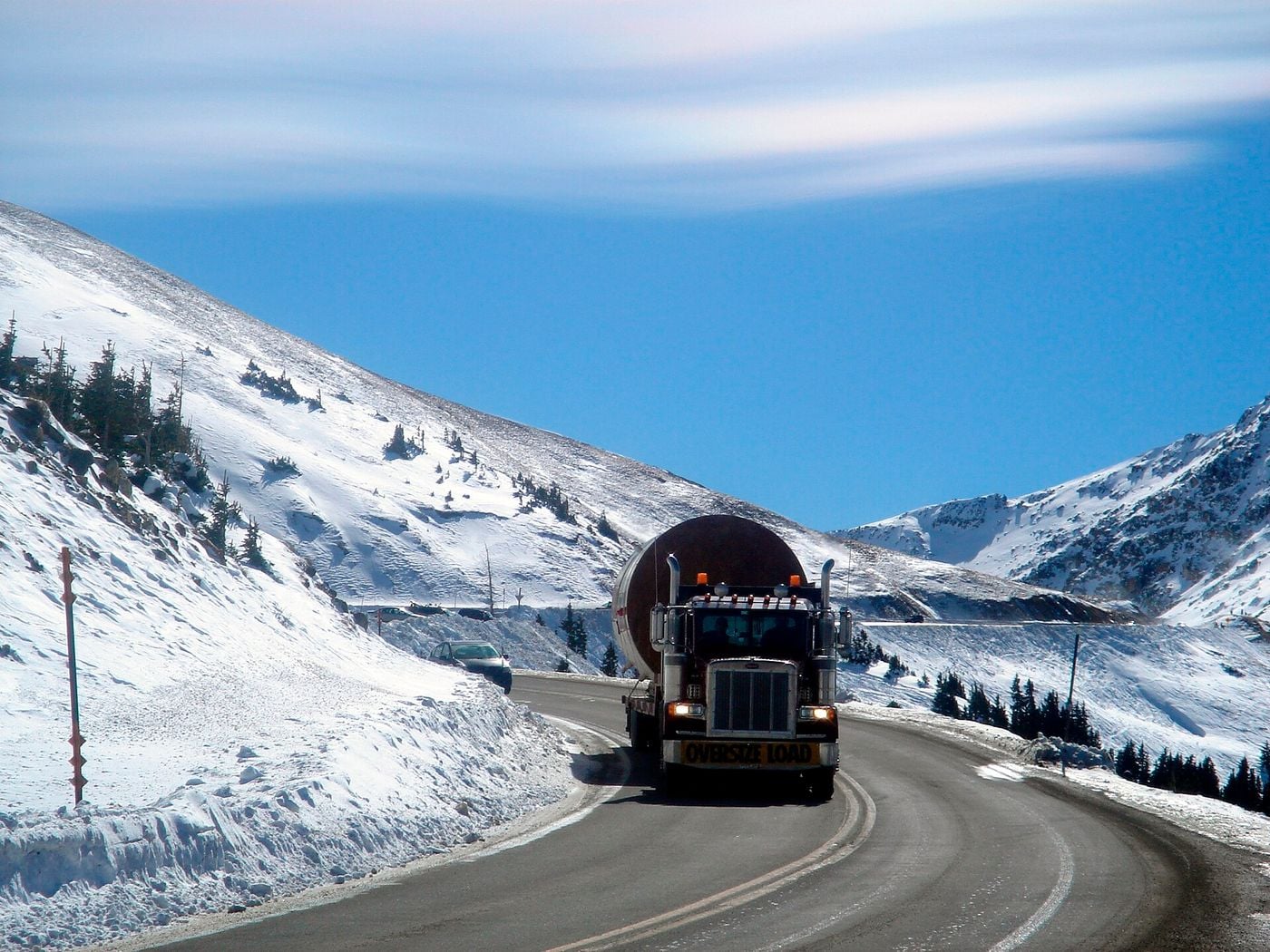
Colorado and Washington require heavy vehicles to carry tire chains for part of the year on certain roads, not only when chains have to be put on. In Colorado, the state’s Department of Transportation (CDOT) says the Must Carry Law covers vehicles with a combined weight of more than 16,000 pounds used in commerce or as transport for at least 16 passengers including the driver, from September 1 to May 31. In Washington, WAC 204-24-050 requires vehicles and combinations over 10,000 pounds gross vehicle weight rating (GVWR) to carry sufficient tire chains on 12 listed route entries from November 1 to April 1 of each year, and sets out which tires must be chained when “chains required” signs are posted.
Status: 14 November 2026. Read on that day: WAC 204-24-050 in the current Washington Administrative Code as published by the Washington State Code Reviser’s Office, last amended by WSR 20-22-105 (filed November 4, 2020, effective December 5, 2020); the Code Reviser’s WAC-to-Register tables for Title 204 for 2025 and 2026, the 2026 table as posted on November 13, 2026; and CDOT’s news release of October 21, 2025 on the Must Carry Law. The Colorado statute itself was not read. Chain rules of other States are not covered.
| Item | Colorado (CDOT release, October 21, 2025) | Washington (WAC 204-24-050) |
|---|---|---|
| Rule | Must Carry Law, signed in 2024 | WAC 204-24-050(2)(i); section last amended by WSR 20-22-105, effective December 5, 2020 |
| Vehicles | Combined weight of more than 16,000 pounds used in commerce or as transport for at least 16 passengers including the driver | Vehicles and combinations over 10,000 pounds GVWR |
| Period | September 1 to May 31 | November 1 to April 1 of each year, or at other times when chains are required for such vehicles |
| 2026-27 season (dates applied by this page) | September 1, 2026 to May 31, 2027 | November 1, 2026 to April 1, 2027 |
| Roads | Including sections of I-70, Highway 9 and US 40, 50, 160, 285 and 550; over 1,400 centerline miles | 12 listed entries on I-90, I-82, SR-2, SR-12, SR-14, SR-20, SR-97, SR-155, SR-410, SR-542 and SR-970 |
| What is carried | Chains or alternative traction devices (ATDs) | Sufficient tire chains to meet the requirements of the chapter, and at least two extra chains |
Colorado’s Must Carry Law
CDOT’s release of October 21, 2025 says the Must Carry Law, signed by the Governor in 2024, “requires all CMV drivers to carry chains from Sept. 1 to May 31.” It applies, the release says, to vehicles with a combined weight of more than 16,000 pounds used in commerce or as transport for at least 16 passengers, the driver included, on public highways. The release was CDOT’s notice for the 2025-26 season, which it called “the second year that Colorado’s updated chain law is in effect.” Applied to the 2026-27 season, the dates it gives run from September 1, 2026 to May 31, 2027.
A 16-passenger threshold, driver included, is also part of the federal Class C definition described in CDL classes and endorsements.
Which Colorado roads the law covers
The release carries a map of the roads where commercial motor vehicles “must carry chains or alternative traction devices (ATDs) regardless of current weather.” Its caption names sections of I-70, Highway 9 and US 40, 50, 160, 285 and 550 among them. The release gives no milepost list.
CDOT’s figures
The release of October 21, 2025 gives these figures:
- over 1,400 centerline miles of highway are subject to the law;
- there are 130 designated chain stations along Colorado’s roadway network, 22 of them on I-70’s mountain corridor;
- law enforcement issued more than 1,300 citations under the law during the 2024-2025 chain season;
- commercial motor vehicle traffic accounts for roughly 10% of vehicles on I-70.
The Colorado statute text was not read for this page, and no fine is given here.
Washington: WAC 204-24-050
In section 204-24-050 of the Washington Administrative Code, “Use of tire chains or other traction devices”, subsection (1) deals with vehicles under 10,000 pounds gross vehicle weight and subsection (2) with “Vehicles or combinations of vehicles over 10,000 pounds gross vehicle weight rating (GVWR).” Subsection (2) contains both the rule on carrying chains on listed routes from November 1 to April 1, in paragraph (i), and the rule on which tires must be chained where “chains required” signs are posted, in paragraphs (a) to (e). Its opening sentence adds that “highway maintenance vehicles operated by the department of transportation for the purpose of snow removal and its ancillary functions are exempt from the following requirements”. Snow-removal vehicles as a type are described in snow ploughs and gritter trucks, and what GVWR means in GVWR, GCWR and GAWR explained.
Carrying chains: the routes and the dates
Under WAC 204-24-050(2)(i), on the listed routes all vehicles and combinations over 10,000 pounds GVWR “must carry sufficient tire chains to meet the requirements of this chapter from November 1 to April 1 of each year or at other times when chains are required for such vehicles.” For 2026-27 that is November 1, 2026 to April 1, 2027.
| Entry | Route | Section |
|---|---|---|
| (i) | I-90 | Between North Bend (MP 32) and Ellensburg (MP 101) |
| (ii) | SR-97 | Between (MP 145) and Junction SR-2 |
| (iii) | SR-2 | Between Dryden (MP 108) and Index (MP 36) |
| (iv) | SR-12 | Between Packwood (MP 135) and Naches (MP 187) |
| (v) | SR-97 | Between the Columbia River (MP 0.00) and Toppenish (MP 59.00) |
| (vi) | SR-410 | From Enumclaw to Naches |
| (vii) | SR-20 | Between Tonasket (MP 262) and Kettle Falls (MP 342); and between Newhalem (MP 120) and Winthrop (MP 192) |
| (viii) | SR-155 | Between Omak (MP 79) and Nespelem (MP 45) |
| (ix) | SR-970 | Between (MP 0) and (MP 10) |
| (x) | SR-14 | Between Gibbons Creek (MP 18.00) and (MP 108.40) intersection of Cliffs Road |
| (xi) | SR-542 | Mt. Baker highway between (MP 22.91) and (MP 57.26) |
| (xii) | I-82 | Between Ellensburg Exit 3 (MP 3.00) and Selah Exit 26 (MP 26.00) |
The paragraph after the list sets the local-delivery exemption: “Vehicles making local deliveries as indicated on bills of lading and not crossing the mountain pass are exempt from this requirement if operating outside of a chain required area.”
Which tires must be chained when “chains required” signs are posted
When the Department of Transportation posts traffic control signs marked “chains required”, subsection (2) makes it unlawful for a vehicle or combination over 10,000 pounds GVWR to enter the controlled area “without having mounted on its tires, tire chains as follows”.
| Paragraph | Vehicle or combination | Drive axle or axles | Trailer or semi-trailer |
|---|---|---|---|
| (a) | Two to four axles, including but not limited to trucks, truck-tractors, buses and school buses | Single drive axle: one tire on each side of the drive axle. Dual drive axles: one tire on each side of one of the drive axles | One tire on the last axle of the last trailer or semi-trailer; with tandem rear axles, the chained tire may be on either of the last two axles |
| (b) | Automobile transporters: any vehicle combination designed and used specifically for the transport of assembled (capable of being driven) highway vehicles | Single drive axles: one tire on each side of the drive axle. Dual drive axles: one tire on each side of each of the drive axles | One tire on the last axle of the last trailer or semi-trailer; with tandem rear axles, the chained tire may be on either of the last two axles |
| (c) | Five axles: a truck tractor with dual drive axles and a tandem axled semi-trailer | All tires on one drive axle, or one tire on each side of each of the drive axles; a minimum of four tires on the drive axles | On the tandem axle semi-trailer, the chained tire may be on either of the last two axles |
| (d) | Five axles: a truck and trailer, or a truck tractor and semi-trailer with a single drive axle, or a truck tractor, semi-trailer and full trailer | Single drive axle: all tires on the drive axle. Dual drive axles: all tires on one of the drive axles | One tire on the last axle of the last trailer or semi-trailer; with tandem rear axles, the chained tire may be on either of the last two axles |
| (e) | Six or more axles, including but not limited to truck and trailer, truck tractor and semi-trailer, or truck tractor, semi-trailer and full trailer | Single drive axle: all tires on the drive axle. Dual drive axles: all tires on one of the drive axles, and in addition one tire on each side of the additional drive axle | One tire on the last axle; with tandem axle trailers or semi-trailers, the chained tire may be on either of the last two axles |
Paragraph (e) also covers signs marked “approved traction tires required”: there, a six-or-more-axle combination with dual drive axles must have all tires on one of the drive axles chained.
Extra chains, approved chains and traction devices
- Two extra chains. All vehicles over 10,000 pounds GVWR must carry a minimum of two extra chains “for use in the event that road conditions require the use of more chains or in the event that chains in use are broken or otherwise made useless” (paragraph (2)(f)).
- What counts as an approved chain. Chains for these vehicles must have at least two side chains with sufficient cross chains of hardened metal attached “so that at least one cross chain is in contact with the road surface at all times.” “Plastic chains will not be allowed” (paragraph (2)(g)).
- Automatic tire chains. A vehicle that uses them must also carry regular tire chains “for use on the outside tires of the drive axle of all axles equipped with the automatic tire chain” (paragraph (2)(h)).
- Alternative traction devices. For the section, a chained tire is one with a tire chain approved under chapter 204-24 WAC “or an alternative traction tire device listed on the patrol’s website as approved for the type of vehicle combination listed in this section” (subsection (3)). The Washington State Patrol’s list is not reproduced here.
- Entry prohibition. The Washington State Department of Transportation or the Washington State Patrol “may prohibit any vehicle from entering a chain/approved traction device control area when it is determined that the vehicle will experience difficulty in safely traveling the area” (subsection (4)).
Has the Washington rule changed?
The history note of the section gives WSR 20-22-105, filed November 4, 2020 and effective December 5, 2020, as its last amendment; the one before was WSR 14-21-076, effective November 13, 2014. The Code Reviser’s WAC-to-Register tables for Title 204 list 2025 entries for chapters 204-21 and 204-91A only, and 2026 entries, in the table as posted on November 13, 2026, for chapters 204-21 and 204-50 only. Neither table has an entry for chapter 204-24.
Another State rule that starts at the same 10,000-pound GVWR line, California’s limit on truck and bus idling, is set out in US truck idling rules. National rules on winter tires and snow chains for heavy vehicles in Europe are on winter tyres and snow chains for trucks and buses in Europe.
What this page does not cover
- Fines and penalties in either State: the Colorado statute text was not read, and WAC 204-24-050 itself names no fine.
- Washington’s rules for vehicles under 10,000 pounds gross vehicle weight, in subsection (1) of the same section.
- The exact limits of the Colorado road sections and the places of the chain stations.
- The Washington State Patrol’s list of approved alternative traction devices.
- How chains are fitted, chain-up procedures and driving in snow.
- Road conditions, closures and the chain rules of other States.
Quick answers
- What is the Colorado chain law for trucks?
- Colorado's Must Carry Law requires commercial motor vehicle drivers to carry chains from September 1 to May 31, according to the Colorado Department of Transportation (CDOT). It applies to vehicles with a combined weight of more than 16,000 pounds used in commerce or as transport for at least 16 passengers including the driver, on the roads CDOT maps, which include sections of I-70, Highway 9 and US 40, 50, 160, 285 and 550. CDOT says the law was signed in 2024. Applied to the 2026-27 season, the dates run from September 1, 2026 to May 31, 2027.
- Do semi trucks have to carry chains?
- In Colorado and Washington, on certain roads and for part of the year, yes. Colorado's Must Carry Law, as CDOT describes it, covers vehicles with a combined weight of more than 16,000 pounds used in commerce or as transport for at least 16 passengers including the driver, from September 1 to May 31. Washington's WAC 204-24-050(2)(i) requires vehicles and combinations over 10,000 pounds GVWR to carry sufficient tire chains on the listed routes from November 1 to April 1 of each year, or at other times when chains are required. The rules of other States are not covered on this page.
- What are Washington's chain requirements for trucks?
- Vehicles and combinations over 10,000 pounds GVWR must carry sufficient tire chains on 12 listed route entries from November 1 to April 1 of each year (WAC 204-24-050(2)(i)). Under paragraph (2)(f), all vehicles over 10,000 pounds GVWR must carry a minimum of two extra chains. Where the Department of Transportation posts “chains required” signs, entering the controlled area without chains mounted as the rule sets out is unlawful. The tires to be chained depend on the axles: on a two- to four-axle vehicle with a single drive axle, one tire on each side of the drive axle; on a combination of six or more axles with dual drive axles, all tires on one of the drive axles and one tire on each side of the additional drive axle. Plastic chains are not allowed.
- Which roads in Washington require trucks to carry chains?
- WAC 204-24-050(2)(i) lists 12 entries: I-90 between North Bend and Ellensburg; SR-97 between MP 145 and Junction SR-2; SR-2 between Dryden and Index; SR-12 between Packwood and Naches; SR-97 between the Columbia River and Toppenish; SR-410 from Enumclaw to Naches; two sections of SR-20 (Tonasket to Kettle Falls, Newhalem to Winthrop); SR-155 between Omak and Nespelem; SR-970 between MP 0 and MP 10; SR-14 between Gibbons Creek and the Cliffs Road intersection; SR-542, the Mt. Baker highway, between MP 22.91 and MP 57.26; and I-82 between Ellensburg Exit 3 and Selah Exit 26.
- Are any trucks exempt from Washington's chain rule?
- Two exemptions are written into WAC 204-24-050(2). In the paragraph after the route list of (2)(i), vehicles making local deliveries as indicated on bills of lading and not crossing the mountain pass are exempt from this requirement if operating outside of a chain required area. Highway maintenance vehicles operated by the Department of Transportation for the purpose of snow removal and its ancillary functions are exempt from the requirements that follow in subsection (2).
- Has Washington's chain rule changed for 2026-27?
- WAC 204-24-050 was last amended by WSR 20-22-105, filed November 4, 2020 and effective December 5, 2020. The Code Reviser's WAC-to-Register tables for Title 204 for 2025 and 2026, the 2026 table as posted on November 13, 2026, have no entry for chapter 204-24.
Sources
- WAC 204-24-050 — Use of tire chains or other traction devices (Washington Administrative Code, current text read November 14, 2026; last amended by WSR 20-22-105, effective December 5, 2020) — Washington State Code Reviser's Office (Washington State Legislature)
- Washington State Register — 2026 WAC-to-Register Table, Title 204 WAC (as posted November 13, 2026) — Washington State Code Reviser's Office
- Washington State Register — 2025 WAC-to-Register Table, Title 204 WAC (as posted January 15, 2026) — Washington State Code Reviser's Office
- 1,400 miles, 130 chain stations: Colorado’s “Must Carry Law” (news release, October 21, 2025) — Colorado Department of Transportation, 21 Oct 2025