Commercial gas oil in the EU: Article 7 of Directive 2003/96/EC and the French, Italian and Spanish refunds
EU states may tax gas oil for trucks of 7.5 t or more and M2/M3 buses apart from non-commercial use. France, Italy and Spain provide refunds; Spain's rate is zero from 22 March to 31 December 2026.
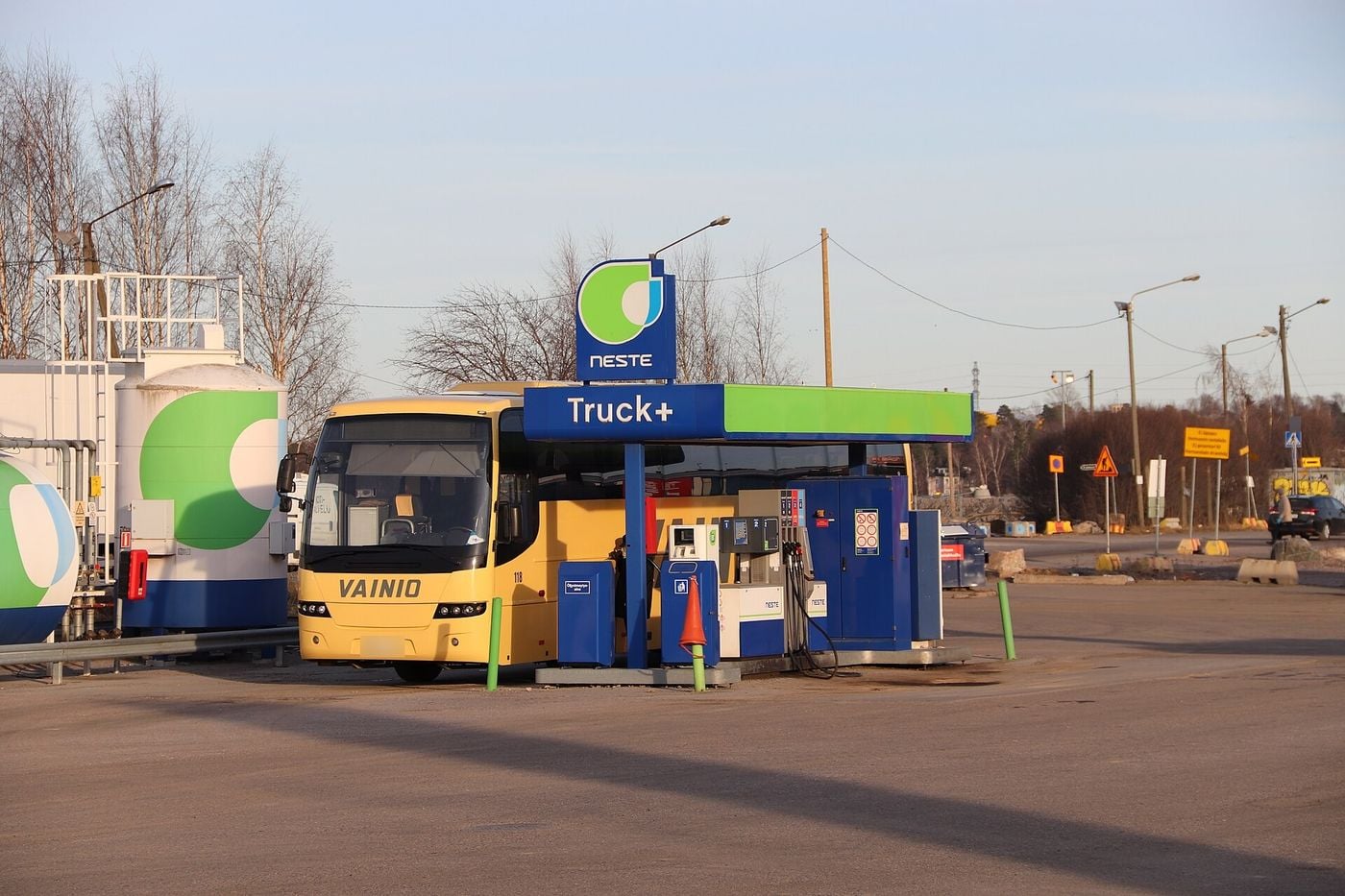
Article 7 of Council Directive 2003/96/EC, the EU’s Energy Taxation Directive, allows each member state to tax “commercial gas oil used as propellant” differently from gas oil used as propellant for non-commercial purposes. Commercial gas oil is diesel used to carry goods by road in vehicles intended exclusively for goods with a maximum permissible gross laden weight of not less than 7.5 tonnes, and diesel used to carry passengers in M2 or M3 vehicles on regular or occasional services. Under Article 7(2), the rate for commercial gas oil may not fall below the EU minimum for gas oil, EUR 330 per 1,000 litres since 1 January 2010, or below the state’s national level of taxation in force on 1 January 2003. France, Italy and Spain each provide for a refund of part of the excise duty on diesel used by road hauliers and passenger transport operators. From 1 January 2026 France refunds EUR 15.56 per hectolitre for road goods transport and EUR 21.56 per hectolitre for collective road passenger transport (EUR 14.21 and EUR 20.21 in Corsica). Italy refunds, each quarter, the difference between its normal rate and its commercial gas oil rate. Spain’s refund rate is zero euros from 22 March to 31 December 2026, and an extraordinary per-litre aid is paid through the same procedure.
Status as at 18 November 2026. Read on that day: the consolidated text of Directive 2003/96/EC of 10 January 2023 in English and Spanish from the Publications Office of the European Union (the German, French, Italian and Polish versions of the same text were read on 14 November 2026); the two pages of France’s Directorate General of Public Finances (DGFiP) on refunds of the excise on petroleum products (ex-TICPE); Article 24-ter of Italy’s Consolidated Excise Act on Normattiva, updated to 9 November 2026; Article 52 bis of Spain’s Excise Duties Act, Ley 38/1992, in the consolidated text of the Boletín Oficial del Estado (BOE) last updated on 30 September 2026, and Royal Decree-laws 7/2026, 18/2026 and 25/2026; the Spanish Tax Agency’s procedure pages DL03 and DJ34; and the European Parliament’s Legislative Observatory file on the recast of the directive. The European Commission’s page on excise duties on energy was read on 17 November 2026. The rules of other member states are not covered here.
What Article 7 calls commercial gas oil
Article 7(3) defines “commercial gas oil used as propellant” as gas oil used as propellant for two purposes:
- (a) “the carriage of goods for hire or reward, or on own account, by motor vehicles or articulated vehicle combinations intended exclusively for the carriage of goods by road and with a maximum permissible gross laden weight of not less than 7,5 tonnes”;
- (b) “the carriage of passengers, whether by regular or occasional service, by a motor vehicle of category M2 or category M3”, as defined in Council Directive 70/156/EEC on the type-approval of motor vehicles and their trailers.
The goods limb sets a weight threshold, the maximum permissible gross laden weight explained in GVW, gross combination weight and axle loads, and requires vehicles intended exclusively for the carriage of goods. The passenger limb names categories M2 and M3, described in vehicle categories M, N and O, and sets no weight threshold. Taxis are not among the purposes in Article 7(3). Article 5 separately allows member states to apply differentiated rates, under fiscal control, for uses that include “local public passenger transport (including taxis)”.
| Language | Term |
|---|---|
| English | commercial gas oil used as propellant |
| German | gewerblich genutztes Gasöl, das als Kraftstoff verwendet wird |
| Spanish | gasóleo profesional utilizado como carburante de automoción |
| French | gazole à usage commercial utilisé comme carburant |
| Italian | gasolio commerciale utilizzato come propellente |
| Polish | handlowy olej gazowy wykorzystywany jako materiał napędowy |
The option and its limits
Article 7(2) provides that member states “may differentiate between commercial and non-commercial use of gas oil used as propellant”, on two conditions: “the Community minimum levels are observed” and “the rate for commercial gas oil used as propellant does not fall below the national level of taxation in force on 1 January 2003”. The minimum for gas oil used as motor fuel is in Annex I, Table A: EUR 302 per 1,000 litres from 1 January 2004 and EUR 330 per 1,000 litres from 1 January 2010. The Commission’s page on excise duties on energy gives the same EUR 330 per 1,000 litres for gas oil among its “Minimum rates for motor fuels”, and notes that member states “are free to apply excise duty rates above these minima”.
Under Article 6, member states are free to give effect to the exemptions or reductions in the level of taxation that the directive provides for “directly”, “by means of a differentiated rate” or “by refunding all or part of the amount of taxation”. Each of the three national schemes described below takes the form of a refund of part of the excise duty already paid on the diesel.
Article 7(4) adds a second route for goods vehicles only. Member states “which introduce a system of road user charges” for motor vehicles or articulated vehicle combinations intended exclusively for the carriage of goods by road may apply to the gas oil used by those vehicles a reduced rate that goes below the national level in force on 1 January 2003, “as long as the overall tax burden remains broadly equivalent”. Two conditions apply: the EU minimum levels are observed, and the national level for gas oil used as propellant on 1 January 2003 “is at least twice as high as the minimum level of taxation applicable on 1 January 2004”. Road user charges for trucks are covered in truck tolls in Europe and the Eurovignette.
The consolidated text of 10 January 2023 lists four amending acts: Council Directives 2004/74/EC and 2004/75/EC of 29 April 2004 and Commission Implementing Decisions (EU) 2018/552 and (EU) 2022/2521. Article 7 carries no amendment mark in that text: it reads as adopted on 27 October 2003.
Not the same as Article 8 or Article 24
Article 8 sets separate minimum levels, in Annex I Table B, for motor fuels used for other “industrial and commercial purposes”: agricultural, horticultural or piscicultural works and forestry; stationary motors; plant and machinery used in construction, civil engineering and public works; and vehicles intended for use off the public roadway or not authorised for use mainly on the public roadway. For gas oil, Table B gives EUR 21 per 1,000 litres. The Commission’s page shows the same EUR 21 under “Minimum rates for motor fuels used for commercial and industrial use”; Table B applies to the purposes of Article 8(2), not to the trucks and buses of Article 7.
Article 24, on fuel carried in the standard tanks of commercial motor vehicles from one member state into another, is explained in fuel in standard tanks at the EU border. Emissions trading for road fuels, a separate EU instrument, is explained in ETS2 and road transport.
France, Italy and Spain in one table
| Country and legal basis | Vehicles and users | Refund for 2026 | How it is claimed | Firms established in another EU state |
|---|---|---|---|---|
| France: excise on petroleum products (ex-TICPE), Articles L. 312-51, L. 312-52 and L. 312-53 of the Code des impositions sur les biens et services (CIBS) | Road goods transport (L. 312-53), collective road passenger transport (L. 312-51), taxis (L. 312-52) | From 1 January 2026: EUR 15.56 per hectolitre for goods transport, EUR 21.56 per hectolitre for collective passenger transport; in Corsica EUR 14.21 and EUR 20.21 | To the DGFiP for diesel consumed from 2025, with the VAT return (annex 3310-TIC); monthly, quarterly or annual | Road hauliers established in another EU country may claim; without a French VAT obligation, quarterly or annual requests to the DGFiP’s non-resident tax directorate (DINR) |
| Italy: gasolio commerciale, Article 24-ter of Legislative Decree No 504 of 26 October 1995 (Consolidated Excise Act) | Goods vehicles of 7.5 tonnes or more; passenger transport by the operators the article lists; public cable transport. Vehicles of Euro 4 or lower excluded from 1 January 2021 | The difference between the normal rate on diesel (Annex I) and the commercial gas oil rate (Table A, number 4-bis), within one litre per kilometre per vehicle and quarter | Declaration to the Customs and Monopolies Agency (ADM) within the month after each calendar quarter; credit by offsetting or in cash | Included for goods transport: firms meeting the EU requirements for the occupation of road haulage operator |
| Spain: devolución parcial por el gasóleo de uso profesional, Article 52 bis of Ley 38/1992 | Goods vehicles of 7.5 tonnes or more intended exclusively for goods; M2 and M3 passenger vehicles; taxis. Cap: 50,000 litres per vehicle and year, 5,000 litres per taxi | Zero euros from 22 March to 31 December 2026; an extraordinary per-litre aid is paid through the same procedure | Gasóleo profesional card at retail sites, or supply lists from own-consumption installations; Tax Agency (AEAT) resolution period six months | Holders with residence or a permanent establishment elsewhere in the EU, with the authorisations their own state requires |
France: refunds of the excise on petroleum products
The DGFiP handles refund requests for diesel consumed from 2025 by road goods hauliers, collective road passenger carriers and taxi operators; the customs administration (DGDDI) remains competent for consumption up to 31 December 2024. A firm that files VAT in France enters the amount in the VAT return, with the detail on annex 3310-TIC; the amount is set against the VAT due, and any remainder is refunded by the tax office in charge of the firm. Supporting documents are not attached but kept available to the administration. Only fuel bought in metropolitan France counts, not fuel bought in the overseas territories.
The refund rate is the difference between the regional excise rate and the reduced rate. From 1 January 2026 the DGFiP gives one rate for all regions except Corsica, and the weighted flat rate that some firms could choose in 2025 is abolished. Among its references, the DGFiP page lists the circular of 1 September 2023 on the refund for road vehicles of 7.5 tonnes and over that carry goods.
According to the DGFiP’s page for firms with no VAT obligation in France, taxi operators from Monaco and road hauliers established in another EU country may claim the refund of part of the excise they bore at the full rate (“peuvent demander le remboursement d’une partie de l’accise”). Road hauliers file online, quarterly or annually, attaching among other documents the vehicle registration certificates and the fuel invoices, and the VAT refund service (SR-TVA) of the non-resident tax directorate handles the request. The same page gives the same rates as the page for French firms.
Italy: the refund on gasolio commerciale
Article 24-ter of the Consolidated Excise Act taxes commercial gas oil at the rate of number 4-bis of Table A and refunds the difference between that rate and the normal rate on diesel used as motor fuel in Annex I. It applies to diesel used by vehicles other than those of category Euro 4 or lower (Euro 3 or lower before 1 January 2021), used by their owner or under another title that guarantees exclusive use, for:
- goods transport with vehicles of a maximum total mass of 7.5 tonnes or more, by firms on the national register of road hauliers for hire or reward, by holders of an own-account licence on the dedicated list, and by firms established in other EU member states (“imprese stabilite in altri Stati membri dell’Unione europea”) that meet the EU requirements for the occupation of road haulage operator (paragraph 2(a));
- passenger transport by public bodies or local public undertakings running transport under Legislative Decree No 422 of 19 November 1997, by firms running interregional services of state competence under Legislative Decree No 285 of 21 November 2005, by firms running regional and local services under Legislative Decree No 422 of 1997, and by firms running regular services within the Community under Regulation (EC) No 1073/2009 (paragraph 2(b));
- passenger transport by public bodies or firms running cable transport as a public service (paragraph 3).
On the passenger side the article lists types of operator; it names no vehicle category.
The declaration goes to the competent office of the Customs and Monopolies Agency within the month after the end of each calendar quarter in which the diesel was consumed. For each quarter the refund is capped at one litre of diesel per kilometre travelled by each vehicle (paragraph 4). The credit is used by offsetting under Article 17 of Legislative Decree No 241 of 9 July 1997, by 31 December of the year after the one in which it arose, through the acceptance of the declaration or the lapse of 30 days from its receipt (paragraph 5); it may instead be paid in cash (paragraph 6). A declaration for offsetting is filed “esclusivamente in forma telematica”; under Article 1-ter(7) of Decree-Law No 63 of 30 April 2026, converted with amendments by Law No 113 of 25 June 2026, this change has effect from 1 October 2026.
Spain: a refund rate of zero euros from 22 March to 31 December 2026
Article 52 bis of Ley 38/1992 gives the holders of three kinds of vehicle a partial refund of the hydrocarbons tax paid on general-use gas oil used as fuel in their engines: motor vehicles or vehicle combinations intended exclusively for the carriage of goods by road, for hire or on own account, with a maximum authorised weight of 7.5 tonnes or more; M2 and M3 passenger vehicles on regular or occasional services, defined by reference to Directive 70/156/EEC; and taxis. Holders not resident in Spain, with residence or a permanent establishment elsewhere in the EU, must hold the authorisations that their own member state requires for the activity (paragraph 3). The refund may not exceed what 50,000 litres per vehicle and year would give, or 5,000 litres per taxi and year (paragraph 6(c)).
Three royal decree-laws provide that, from 22 March to 31 December 2026, the refund rate of Article 52 bis(6) “será de cero euros” (shall be zero euros):
| Period | Provision | Published in the BOE |
|---|---|---|
| 22 March to 30 June 2026 | Article 39 of Royal Decree-law 7/2026 of 20 March | 21 March 2026; in force the next day |
| 1 July to 30 September 2026 | Article 8 of Royal Decree-law 18/2026 of 29 June | 30 June 2026; in force the next day |
| 1 October to 31 December 2026 | Article 16 of Royal Decree-law 25/2026 of 29 September | 30 September 2026; in force the next day |
Over the same months the holders of the vehicles entitled to the refund are beneficiaries of an extraordinary and temporary aid per litre of gas oil: Article 55 of Royal Decree-law 7/2026 for supplies up to 30 June 2026, Article 22 of Royal Decree-law 18/2026 for July to September, and Article 28 of Royal Decree-law 25/2026, which extends the Article 22 aid to October, November and December 2026. The aid is managed “de forma simultánea y conjunta” (simultaneously and jointly) with the refund procedure: at retail sites, paying with the gasóleo profesional card counts as the application, and the amount is calculated at the end of each calendar month and paid by bank transfer. For supplies in October, November and December 2026, Article 28(2) of Royal Decree-law 25/2026 sets EUR 0.05, EUR 0.12 and EUR 0.19 per litre, with lower amounts for November and December if the gas oil tax rate of that month is one of the rates the paragraph names.
The Tax Agency’s page for procedure DL03 names Orden HFP/941/2022 of 3 October as the procedural rule and gives a resolution period of six months.
The proposed recast of the directive
In July 2021 the Commission proposed a recast of the Energy Taxation Directive: COM(2021) 563 of 14 July 2021, procedure 2021/0213(CNS), a consultation procedure. On 18 November 2026 the European Parliament’s Legislative Observatory gave the stage reached as “Awaiting committee decision”. Its last key event was the “Resumption of business from the previous parliamentary term” on 13 November 2024, and its documentation gateway lists a committee draft report of 5 May 2025 (PE770.060) and an opinion of the Committee on Transport and Tourism of 24 June 2025 (PE774.480). The proposal has not been adopted, and Article 7 as quoted above is the text in force. What the proposal puts in place of Article 7 was not read for this page.
Not yet known
- Spain from 1 January 2027. The zero rate of Article 16 of Royal Decree-law 25/2026 applies “hasta el 31 de diciembre de 2026” (until 31 December 2026), and the extended aid covers supplies up to December 2026. In the BOE consolidated text read on 18 November 2026, no note sets the refund rate for after 31 December 2026.
- France in 2027. The DGFiP pages give refund rates for 2025 and from 1 January 2026 only.
- The recast. No date for a decision appears in the Legislative Observatory file.
Quick answers
- What is commercial gas oil in EU law?
- Under Article 7(3) of Directive 2003/96/EC, it is gas oil used as propellant for two purposes: the carriage of goods, for hire or reward or on own account, by motor vehicles or articulated vehicle combinations intended exclusively for the carriage of goods by road with a maximum permissible gross laden weight of not less than 7.5 tonnes; and the carriage of passengers, on regular or occasional services, by M2 or M3 vehicles. Taxis are not among the purposes in Article 7(3).
- Can EU countries tax diesel for trucks and buses at a lower rate than private diesel?
- Article 7(2) of Directive 2003/96/EC allows member states to differentiate between commercial and non-commercial use of gas oil used as propellant, provided that the EU minimum, EUR 330 per 1,000 litres since 1 January 2010, is observed and that the commercial rate does not fall below the national level of taxation in force on 1 January 2003. Under Article 7(4), a state with road user charges for goods vehicles may go below that 2003 level for those vehicles if the overall tax burden remains broadly equivalent, the EU minimum is observed and the state's 2003 level for gas oil used as propellant is at least twice the minimum applicable on 1 January 2004. Under Article 6, member states are free to give effect to the exemptions or reductions the directive provides for directly, by a differentiated rate or by refunding all or part of the tax.
- How much is the TICPE diesel refund for hauliers in France in 2026?
- From 1 January 2026 the DGFiP gives EUR 15.56 per hectolitre for road goods transport and EUR 21.56 per hectolitre for collective road passenger transport, and EUR 14.21 and EUR 20.21 for diesel bought in Corsica. Requests for diesel consumed from 2025 go to the DGFiP; the customs administration remains competent for consumption up to 31 December 2024.
- Is there a gasóleo profesional refund in Spain in 2026?
- The refund of Article 52 bis of Ley 38/1992 still exists, but its rate is zero euros from 22 March to 31 December 2026, under Article 39 of Royal Decree-law 7/2026, Article 8 of Royal Decree-law 18/2026 and Article 16 of Royal Decree-law 25/2026. Over the same months the holders entitled to the refund are beneficiaries of an extraordinary per-litre aid, managed together with the refund procedure.
- Can a haulier from another EU country claim the diesel refund in France, Italy or Spain?
- France: road hauliers established in another EU country may claim part of the excise borne at the full rate; without a French VAT obligation they file quarterly or annually with the DGFiP's non-resident tax directorate. Italy: Article 24-ter covers goods transport with vehicles of 7.5 tonnes or more by firms established in other EU member states that meet the EU requirements for the road haulage occupation. Spain: holders with residence or a permanent establishment elsewhere in the EU must hold the authorisations their own state requires.
Sources
- Council Directive 2003/96/EC of 27 October 2003 restructuring the Community framework for the taxation of energy products and electricity — consolidated text of 10 January 2023 (02003L0096-20230110): list of amending acts, Articles 5, 6, 7 and 8, Annex I Tables A and B; English, German, Spanish, French, Italian and Polish versions — Publications Office of the European Union
- Excise duties on energy: rates and structure, minimum rates for motor fuels, review of the Energy Taxation Directive (read on 17 November 2026) — European Commission, Directorate-General for Taxation and Customs Union
- Energy Taxation Directive, procedure file 2021/0213(CNS): basic information, key events, technical information and documentation gateway (read on 18 November 2026) — European Parliament, Legislative Observatory
- Accise sur les produits pétroliers (ex-TICPE) : remboursements des taxis et transporteurs (published 6 January 2025, modified 11 February 2026) — Direction générale des finances publiques (impots.gouv.fr)
- Accise sur les produits pétroliers (ex-TICPE) : remboursements des exploitants de taxis et transporteurs routiers n'ayant pas d'obligation de déclaration de la TVA en France (published 21 January 2025, modified 23 December 2025) — Direction générale des finances publiques (impots.gouv.fr)
- Decreto legislativo 26 ottobre 1995, n. 504 (Testo unico delle accise), art. 24-ter Gasolio commerciale — text in force on Normattiva, updated to 9 November 2026 — Normattiva, Istituto Poligrafico e Zecca dello Stato
- Ley 38/1992, de 28 de diciembre, de Impuestos Especiales — consolidated text, article 52 bis (last update published 30 September 2026, in force from 1 October 2026) — Boletín Oficial del Estado
- Real Decreto-ley 7/2026, de 20 de marzo — articles 39 and 55 (BOE no. 71, 21 March 2026) — Boletín Oficial del Estado, 21 Mar 2026
- Real Decreto-ley 18/2026, de 29 de junio — articles 8 and 22 (BOE no. 158, 30 June 2026) — Boletín Oficial del Estado, 30 Jun 2026
- Real Decreto-ley 25/2026, de 29 de septiembre — articles 16 and 28 (BOE no. 241, 30 September 2026) — Boletín Oficial del Estado, 30 Sept 2026
- II. EE. Devolución de gasóleo profesional, procedure DL03 (page updated 3 August 2026) — Agencia Estatal de Administración Tributaria, sede electrónica
- Ayuda para sufragar el precio del gasóleo consumido por beneficiarios de la devolución por Gasóleo Profesional (Real Decreto-ley 18/2026), procedure DJ34 (page updated 21 September 2026) — Agencia Estatal de Administración Tributaria, sede electrónica