Truck tolls in Europe and the Eurovignette: who pays where
Where heavy trucks still buy a Eurovignette and where they pay by the kilometre: who pays, on which roads and how, in twelve countries, and the EU dates ahead.
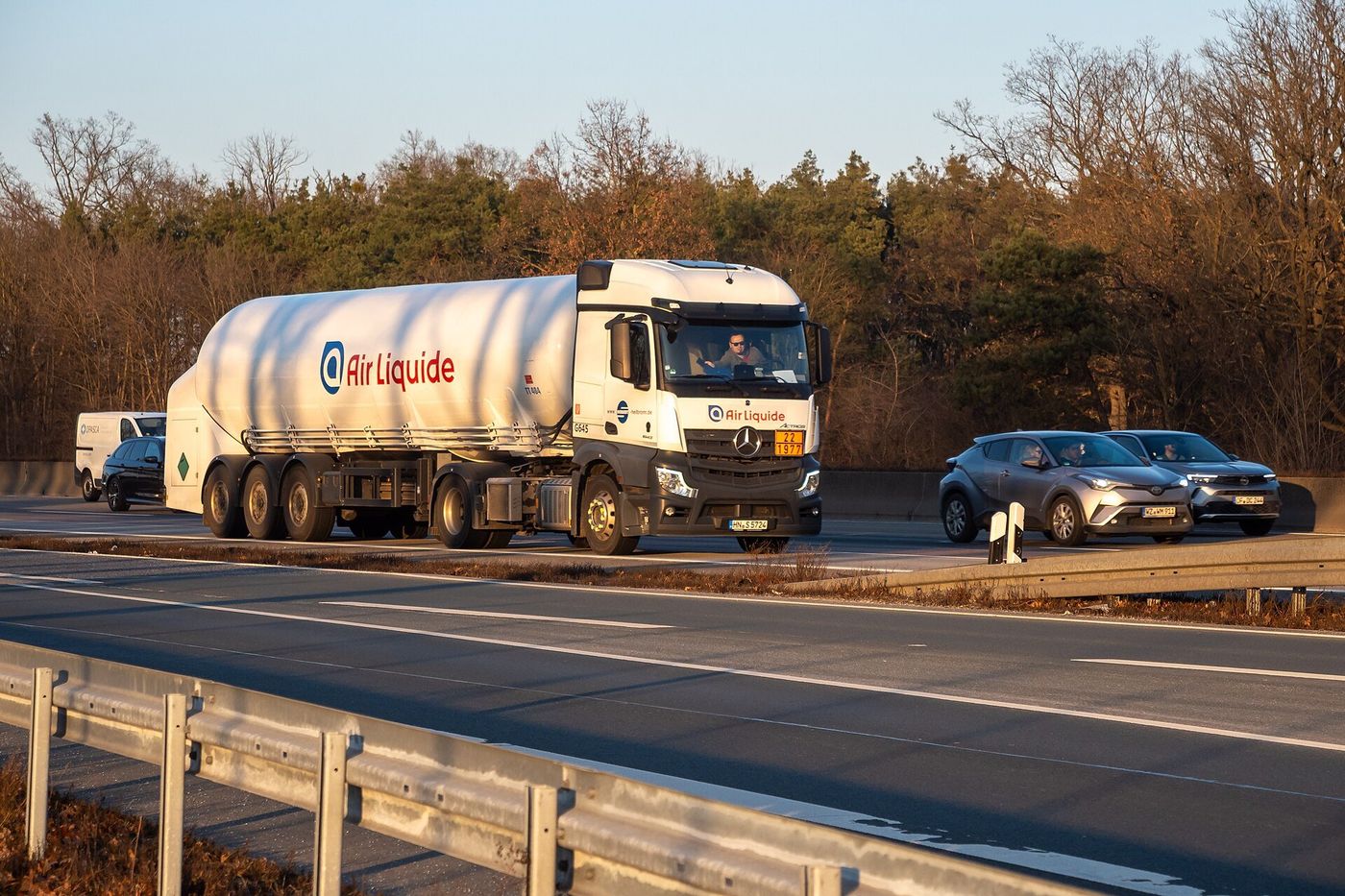
Heavy trucks pay for European roads in two ways. Luxembourg and Sweden still sell the Eurovignette, a time-based charge for heavy goods vehicles of at least 12 tonnes gross vehicle weight: one booking, valid for a day up to a year, covers the motorways and toll highways of both countries. The other ten countries in this overview charge by the kilometre, nine of them from above 3.5 tonnes and Denmark for now from 12 tonnes, and depending on the country they need an on-board unit, an app or a ticket bought before the journey. Denmark left the Eurovignette on 1 January 2025 and the Netherlands on 1 July 2026, both for kilometre-based tolls. Romania moved goods vehicles over 3.5 tonnes from its vignette to a kilometre-based toll, TollRo, on 1 October 2026.
Status: 1 October 2026. This overview follows the operators’ own pages and the consolidated text of Directive 1999/62/EC of 24 December 2025, read on 30 September and 1 October 2026. It gives no rates: they depend on weight, axles and emission class, change at least once a year, and each operator publishes its own tables and calculator.
Toll or vignette: two kinds of charge
Directive 1999/62/EC, the Eurovignette Directive, names both. A toll is an amount based on the distance travelled on a given infrastructure and on the type of vehicle. A user charge is an amount that gives a vehicle the right to use the infrastructure for a given period, which is what a vignette is. A vehicle with a technically permissible maximum laden mass exceeding 3.5 tonnes is a heavy-duty vehicle, and a heavy-duty vehicle intended for the carriage of goods is a heavy goods vehicle. How a toll is made up, and how the CO2 emission class changes it, is explained in EU road tolls and CO2 emission classes; tolls as a line in a truck’s costs are covered in tractor unit running costs.
The Eurovignette in 2026
According to the Eurovignette portal, heavy goods vehicles with a gross vehicle weight of at least 12 tons must buy the Eurovignette to use motorways and toll highways in Luxembourg and Sweden. One valid Eurovignette is accepted in all Eurovignette countries, so a truck crossing both needs only one.
- Period: at least one calendar day and at most one year. Validity starts at the time of booking, or at 0.00 hours on the first day for a future period, and ends at 24:00 on the last day.
- Booking: no account is needed. The Eurovignette is stored electronically, so there is no paper to carry. AGES sells it; the portal accepts credit cards and a list of fuel and fleet cards.
- Who left: Denmark on 1 January 2025, the day its kilometre-based toll started, and the Netherlands on 1 July 2026. The portal offers a refund form to holders who use motorways only in the Netherlands.
The directive provides for this kind of scheme in Article 8: two or more Member States may cooperate in a common system of user charges for their territories as a whole, and other Member States may join. Article 7a(2) sets the periods any user charge for heavy-duty vehicles must offer, at least a day, a week, a month and a year, and caps the monthly rate at 10 %, the weekly rate at 5 % and the daily rate at 2 % of the annual rate.
Country by country
| Country | Charge | Who pays | Roads | How to pay |
|---|---|---|---|---|
| Luxembourg, Sweden | Eurovignette, time-based | Heavy goods vehicles with a gross vehicle weight of at least 12 t | Motorways and toll highways | Electronic vignette for one day up to one year |
| Netherlands | Truck toll per kilometre, since 1 July 2026 | Owners of N2 and N3 trucks, technical maximum mass over 3 500 kg, Dutch and foreign, empty or loaded | Almost all motorways and some provincial and municipal roads | Contract with a service provider and an on-board unit; driving without one can be fined even on roads without the toll |
| Denmark | Kilometre-based, CO2-differentiated toll, since 1 January 2025 | Trucks of 12 t or more used for freight transport | Main part of the state road network and parts of the municipal network, about 10 900 km | On-board unit through a provider, or a digital KmToll ticket valid for 24 hours from its start time |
| Germany | Truck toll per kilometre | Motor vehicles and combinations for road haulage over 3.5 t technically permissible maximum laden mass; buses exempt | Federal motorways and federal roads | Toll Collect on-board unit, the TollNow app or online log-on |
| Austria | GO toll per kilometre | Vehicles over 3.5 t technically permissible maximum laden mass, including buses and heavy motorhomes | Motorways and expressways | GO-Box on-board unit, which communicates with the toll gantries |
| Switzerland | LSVA, performance-related heavy vehicle fee | Motor vehicles and trailers over 3.5 t permissible total weight used for goods transport | Charged on the kilometres driven in the Swiss customs territory | NETS or EETS recording systems; the manual NMTS service for foreign vehicles without them |
| Belgium | Kilometre charge | Vehicles over 3.5 t for the road transport of goods | Roads of the Flemish and Brussels-Capital Regions, and roads managed by SOFICO in Wallonia | On-board unit accredited in Belgium; the Dutch NEDLINQ unit is not |
| Poland | e-TOLL electronic toll | Motor vehicles over 3.5 t maximum permissible weight, and buses of any weight | Toll road sections managed by GDDKiA | Geolocation data from an OBU, an External Location System (ELS) or the free e-TOLL PL app |
| Hungary | HU-GO electronic toll | Vehicles over 3.5 t | Toll road sections | Registration with an on-board unit, or an occasional route ticket paid before the journey, valid once, in one direction, for the planned route |
| Romania | TollRo, per kilometre, since 1 October 2026 | Registered goods vehicles over 3.5 t maximum authorised mass; vehicles for mixed transport count as goods vehicles | National roads, expressways and motorways managed by CNAIR, except national road sections inside municipalities | Route ticket for one trip on a declared route, valid 72 hours from the declared start, or the free CNAIR mobile app; on-board units through SETRo service providers from 15 January 2027 |
| Bulgaria | Distance-based toll, in euro per kilometre, with a CO2 component since 1 June 2026 | Trucks and buses over 3.5 t technically permissible maximum laden mass | Toll sections of the national road network: motorways, first-class and second-class roads | On-board unit or approved GPS tracker through a service provider, or a prepaid route pass valid 24 hours from activation |
What the operators add:
- Netherlands: the rates per kilometre follow Dutch inflation and are adjusted every 1 January. From 1 September until 31 December 2026 a temporary discount of 22.3 percent applies to the rates for all trucks; the Dutch cabinet granted it because fuel costs had risen sharply. The operator has announced a rise of 2.6 percent for 1 January 2027 and says the 2027 rates will be slightly higher than those in force until 1 September 2026.
- Denmark: the government intends to extend the toll to trucks above 3.5 tonnes from 1 January 2027 and to the entire public road network, about 75 000 km, from 1 January 2028. The KmToll ticket is sold only digitally; a round trip can be booked on one ticket.
- Germany: the rate per kilometre has four components, for infrastructure, air pollution, noise and traffic-related CO2 emissions, and depends on weight class, number of axles, Euro emission class and CO2 emission class. Toll Collect says its on-board unit can also pay the Austrian truck toll.
- Austria: the Euro emission class changes the rate, and on the A 12 Lower Inn Valley route, between the border at Kufstein and the Innsbruck/Amras intersection, 25 % is added to the basic kilometre rate.
- Belgium: from 1 July 2026 Flanders applies a surcharge for CO2 emissions to its kilometre charge rates.
- Poland: on 1 February 2026 about 645 km of new sections joined e-TOLL, most of them extensions of roads that were already tolled, bringing the network to about 5 869 km, and the rates changed.
- Hungary: changes that took effect in May 2026 include a new validity period for the route ticket and the option of paying a toll difference afterwards, to avoid a fine, where the fee or environmental category was given wrongly. A 2.5 km stretch of the M6 between Ivándárda and the border has been tolled since 1 July 2026; for now no toll declaration is needed for it. The rates rose in two steps in 2026: by 4.3 percent, in line with inflation, on 1 January, and from 1 March to a total of 35 percent above the 2025 level.
- Romania: TollRo replaced the rovinieta for goods vehicles over 3.5 t. Buses, coaches and vehicles up to 3.5 t keep the rovinieta, a time-based charge whose level now also depends on the Euro emission class. Rovinietas issued under the old rules lost their validity on 1 October 2026, except those for vehicles that keep the rovinieta, and CNAIR refunds the unused period on written request. A route ticket is paid at most 72 hours before the declared start, covers one trip from the origin through intermediate points to the destination, and lapses 72 hours after the declared start whether or not the route was completed.
- Bulgaria: the rate depends on the technically permissible maximum laden mass, the emission category, the number of axles and the type of road. Owners declare a vehicle’s CO2 emission class through an online calculator; until they do, the vehicle is placed in the lowest CO2 class, which carries the highest CO2 rate. Vehicles first registered before 1 July 2019 fall into CO2 class 1 automatically. Registered users can buy a route pass up to 7 days ahead, others up to 2 days ahead.
- Slovakia: not in the table, because its electronic toll system changes on 1 January 2027. The current portal serves the system running until 31 December 2026, and vehicles registered in it can be pre-registered for the new system from 1 December 2026.
The dates ahead
| Date | Where | What |
|---|---|---|
| 1 December 2026 | Slovakia | Pre-registration for the new electronic toll system opens |
| 31 December 2026 | Netherlands | Temporary 22.3 percent discount on the rates ends |
| 1 January 2027 | Slovakia | New electronic toll system |
| 1 January 2027 | Denmark | Intended extension of the toll to trucks above 3.5 t |
| 1 January 2027 | Netherlands | Rates rise by 2.6 percent |
| 15 January 2027 | Romania | TollRo can also be paid with on-board units from SETRo service providers |
| 25 March 2027 | EU | End of the option to charge only heavy goods vehicles of at least 12 t, Article 7(13) |
| 1 January 2028 | Denmark | Intended extension of the toll to the entire public road network |
| 25 March 2030 | EU | No user charges for heavy-duty vehicles on the core trans-European transport network, save notified exceptions, Article 7(10) and (11) |
| 25 March 2032 | EU | Common systems of user charges to be adapted or discontinued, Article 7(12) |
Article 7(13) lets a Member State, until 25 March 2027, charge only heavy goods vehicles of at least 12 tonnes where it considers that charging lighter ones would cause significant adverse effects through traffic diversion, involve administrative costs of more than 15 % of the extra revenue, or concern a category of vehicles causing no more than 10 % of the chargeable infrastructure costs; it must inform the Commission. The exception in Article 7(11) allows user charges on sections of the core network only in duly justified cases, where a toll would involve disproportionate costs compared with its revenue or benefits, or would divert traffic with negative effects on road safety or public health, and the Member State must notify the Commission first.
The trip cost calculator adds up fuel, AdBlue, tolls and driver time for one trip from the prices entered.
What this page does not cover
- Rates, discounts and the operators’ calculators.
- Countries not in the table.
- How Luxembourg and Sweden intend to meet the directive’s dates of 2027, 2030 and 2032.
- Vignettes for vehicles up to 3.5 tonnes, and separate tolls for bridges, tunnels and mountain passes.
- Buses, except where the table names them.
- The European Electronic Toll Service (EETS) and the choice of a service provider.
- Driving bans for heavy trucks, covered in truck driving bans in Europe.
Quick answers
- What is the Eurovignette?
- A time-based road user charge that heavy goods vehicles with a gross vehicle weight of at least 12 tons must buy to use motorways and toll highways in the Eurovignette countries. It is booked for a period of one day up to one year, is stored electronically so there is no paper to carry, and one valid Eurovignette is accepted in all Eurovignette countries.
- Which countries still use the Eurovignette?
- As of 1 October 2026, Luxembourg and Sweden. Denmark left on 1 January 2025, when its kilometre-based and CO2-differentiated toll started, and the Netherlands left on 1 July 2026, when it introduced a kilometre-based truck toll.
- Do I need a Eurovignette for the Netherlands?
- No. Since 1 July 2026 owners of trucks in categories N2 and N3 pay a toll per kilometre on almost all Dutch motorways and on some provincial and municipal roads, and need a contract with a service provider and an on-board unit. The Eurovignette portal offers a refund form to holders who use motorways only in the Netherlands.
- Which trucks pay the toll in Germany?
- Motor vehicles and vehicle combinations intended or used for road haulage whose technically permissible maximum laden mass is more than 3.5 tonnes, on federal motorways and federal roads. For a combination, the toll is due only if the motor vehicle itself is above 3.5 tonnes. Buses are exempt under section 1(2) of the Federal Trunk Road Toll Act.
- Will vignettes for trucks disappear?
- The Eurovignette Directive says that from 25 March 2030 Member States shall not apply user charges for heavy-duty vehicles on the core trans-European transport network, except in duly justified cases notified to the Commission, and that Member States running a common system of user charges shall adapt or discontinue it by 25 March 2032.
- How does a foreign truck pay the Swiss LSVA?
- The LSVA is charged by the kilometres driven in the Swiss customs territory, the total weight and the emission level. Vehicles record it with the automated NETS or EETS systems; foreign vehicles without them can use the manual service NMTS, meant for vehicles that are only occasionally in the customs territory.
Sources
- Eurovignette: information on the Eurovignette and on the exit of the Netherlands on 1 July 2026 — AGES, Eurovignette portal
- Directive 1999/62/EC on the charging of vehicles for the use of road infrastructures, consolidated text of 24 December 2025 — EUR-Lex, Publications Office of the European Union
- Truck toll in the Netherlands — Trucktoll (vrachtwagenheffing.nl)
- Truck toll rates 2027 — Trucktoll (vrachtwagenheffing.nl)
- You will pay this amount — Trucktoll (vrachtwagenheffing.nl)
- Kilometre-based and CO2-differentiated toll for trucks — Vejafgifter, Sund & Bælt
- Who has to pay — Vejafgifter, Sund & Bælt
- Digital KmToll ticket — Vejafgifter, Sund & Bælt
- Bundesfernstraßenmautgesetz (BFStrMG), § 1 Autobahn- und Bundesstraßenmaut — Bundesministerium der Justiz, gesetze-im-internet.de
- HGV toll: How much is the toll? — Federal Office for Logistics and Mobility (BALM)
- Toll Collect: home page — Toll Collect GmbH
- Toll — ASFINAG
- GO toll — ASFINAG
- Schwerverkehrsabgaben LSVA und PSVA — Bundesamt für Zoll und Grenzsicherheit (BAZG)
- Viapass: the kilometer charge in Belgium — Viapass
- About the e-TOLL system — e-TOLL (Poland)
- OBU and ELS on-board devices — e-TOLL (Poland)
- HU-GO elektronikus útdíjszedési rendszer — Magyar Közút Nonprofit Zrt., Útdíj Üzletág
- Electronic toll system of the Slovak Republic — Toll SK (emyto.sk)
- Zmiany w systemie e-TOLL od 1 lutego 2026 r. — e-TOLL, Krajowa Administracja Skarbowa
- Két lépcsőben emelkedik az útdíj mértéke 2026-tól — Magyar Közút Nonprofit Zrt., Útdíj Üzletág
- Informații generale TollRo — CNAIR, portal.etoll.ro
- Rețeaua de drumuri (TollRo, rovinieta) — CNAIR, portal.etoll.ro
- Informații generale rovinieta — CNAIR, portal.etoll.ro
- Legea nr. 226/2023 privind aplicarea unor tarife rutiere pe rețeaua de drumuri naționale din România — CNAIR, portal.etoll.ro
- Тол такса — Национално тол управление (bgtoll.bg)
- Тол такса в евро/км, в сила от 01.06.2026 — Национално тол управление (bgtoll.bg)
- Продължава регистрацията в онлайн CO2 калкулатора за определяне на класа на емисиите на въглероден диоксид на ППС над 3,5 т — Национално тол управление (bgtoll.bg)