ETS2 and road transport: the 2028 start
What the EU's separate emissions trading system, ETS2, covers on the road, who must surrender allowances, and what the texts say about the start moving to 2028.
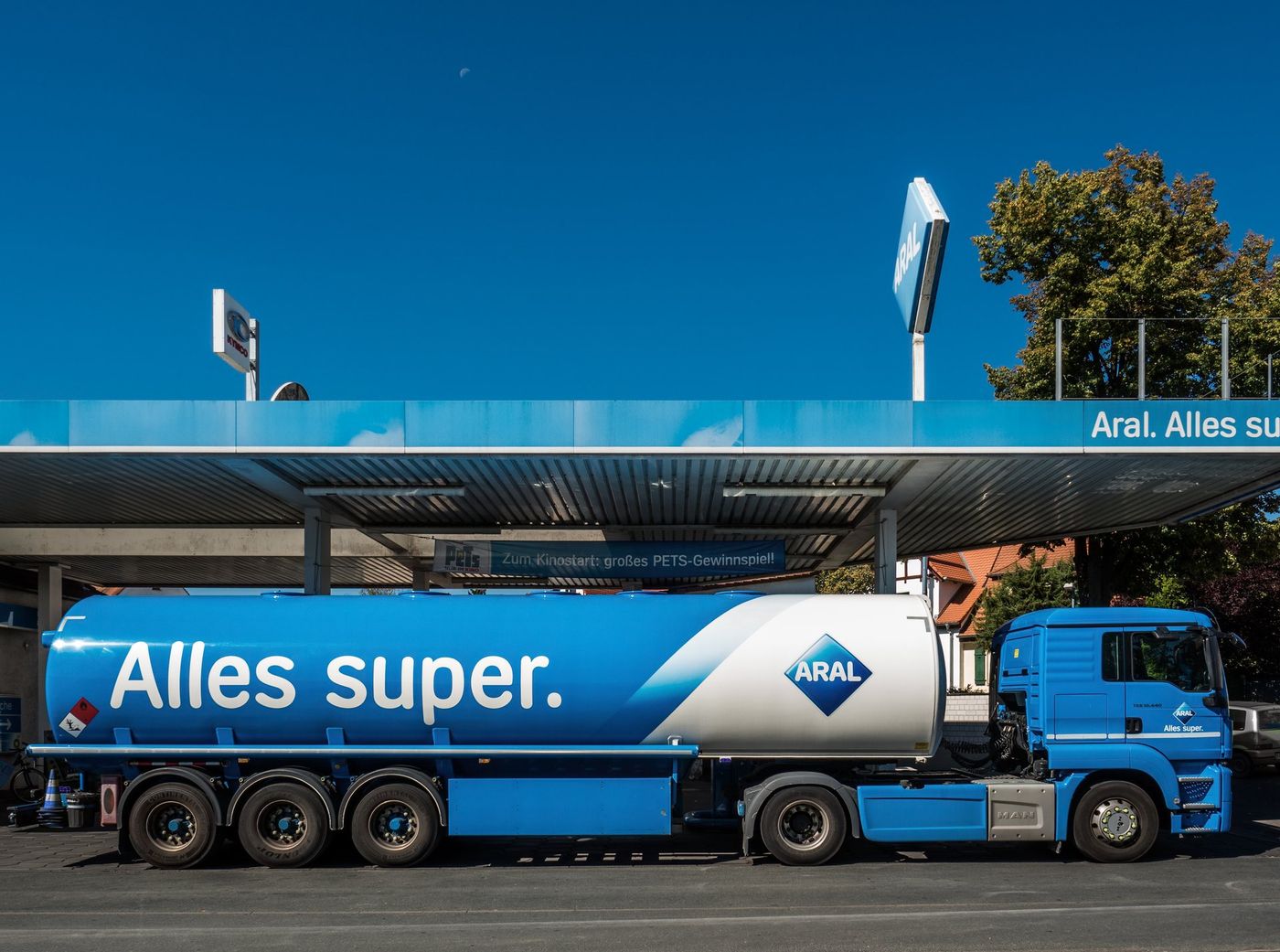
ETS2 is a separate EU emissions trading system, created in the 2023 revision of the ETS Directive, for the CO2 from fuel combustion in buildings, road transport and additional sectors; the European Commission says it is “fuel suppliers, rather than end consumers such as households or car users” who must monitor and report emissions and surrender allowances. Article 2 of Regulation (EU) 2026/667 postponed the operation of ETS2 “until 2028”: DEHSt, the German emissions trading authority, gives 01/01/2028 as the start of the regulatory phase, and the first deadline to surrender allowances is 31 May 2029, for 2028 emissions (Directive 2003/87/EC, Article 30k(2)(d)).
Every date and figure below is read from the text or page named beside it, and each status statement carries the date of its source. Where two sources differ, both are quoted and the difference is left standing. This page does not estimate what the carbon price does to the price of diesel and gives no price forecast.
What ETS2 is, and who it regulates
The Commission’s DG Climate Action writes: “As part of the 2023 revisions of the ETS Directive, a new emissions trading system named ETS2 was created.” The system covers “the CO2 emissions from fuel combustion in buildings, road transport and additional sectors (mainly small industry not covered by the existing EU ETS)”. Directive (EU) 2023/959 of 10 May 2023 inserted it into Directive 2003/87/EC as Chapter IVa; recital 75 of that Directive says “a separate but parallel emissions trading system should be established to avoid any disturbance of the well-functioning emissions trading system for stationary installations and aviation”. DG Climate Action adds that, although it is a “cap and trade” system like the existing EU ETS, ETS2 “will cover emissions upstream”.
The party with the obligation is defined in Article 3(ae) of Directive 2003/87/EC, as inserted by Directive 2023/959. A “regulated entity” for Chapter IVa “means any natural or legal person, except for any final consumer of the fuels, that engages in the activity referred to in Annex III and that falls within one of the following categories”. The first category is, where the fuel passes through a tax warehouse, “the authorised warehousekeeper … liable to pay the excise duty which has become chargeable”; the last is, “if points (i), (ii) and (iii) are not applicable, or if several persons are jointly and severally liable for payment of the same excise duty, any other person designated by a Member State”. Recital 78 adds: “Final consumers of fuels in those sectors should not be subject to obligations under Directive 2003/87/EC.”
Other texts describe the same point of regulation in plain terms. DG Climate Action, on its ETS2 page (last updated 2 September 2026): “It will be fuel suppliers, rather than end consumers such as households or car users, that will be required to monitor and report their emissions. These entities will be regulated under the ETS2, which means they will be required to surrender sufficient allowances to cover their emissions. Regulated entities will purchase these allowances at auctions.” DEHSt, on its reporting-phase page (last update 14/04/2026): “it is not the users of fossil fuels (for example for cars or heating systems) who are obliged to participate, but those companies that place fuels on the market within the scope of EU ETS 2 (for example gas traders).” Recital 77 says the act that triggers the compliance obligation “should be the release for consumption of fuels which are used for combustion in the buildings and road transport sectors”, and Article 3(ag) defines “release for consumption” by reference to Article 6(3) of Directive (EU) 2020/262.
The Commission’s guidance for regulated entities (8 October 2025; guidance, not legally binding) says the ETS2 “puts the point of regulation ‘upstream’ on the entities releasing the fuel for consumption (i.e. putting the fuels onto the market)”. Its footnote 53 states: “Self-consumption of fuels does not exclude the entity from being a regulated entity as defined in the Directive.” For fuel that is used partly outside the Annex III sectors, the guidance says that “for each fuel stream the regulated entity has to determine the share of the released fuel amounts being combusted in sectors listed in Annex III”, with a scope factor of “0 (not covered by Annex III), 1 (fully covered by Annex III) or any value in between (partly covered by Annex III)”.
What the texts do not say: none of the passages above names a haulage or bus operator as regulated or as excluded. “Final consumer” has no definition of its own in the texts we read, and the categories in Article 3(ae) follow liability for excise duty and end with a person a Member State designates. On our reading, which entity is the regulated entity for a given fuel therefore turns on how the excise-duty system and the designation of persons work in the Member State concerned; the sources we read do not answer it for any individual operator.
How the postponement was made
The postponement is Article 2 of Regulation (EU) 2026/667 of the European Parliament and of the Council of 11 March 2026 “amending Regulation (EU) 2021/1119 as regards the setting of a Union intermediate climate target for 2040”, published in the Official Journal on 18.3.2026. The Regulation’s title names Regulation (EU) 2021/1119, not the ETS Directive. DEHSt, on its reporting-phase page (last update 14/04/2026), describes it as “an EU regulation, which primarily sets out amendments to the European Climate Law”; its main content is the binding Union 2040 target: “a reduction of net greenhouse gas emissions (emissions after deduction of removals) by 90 % compared to 1990 levels by 2040”. Article 2, headed “Postponement of the operation of emissions trading for buildings, road transport and additional sectors”, reads in full:
The operation of emissions trading for buildings, road transport and additional sectors set out in Chapter IVa of Directive 2003/87/EC shall be postponed until 2028. The rules set out in Article 30k(2), points (a) to (e), of Directive 2003/87/EC shall apply. The provisions of Article 10a(8b) of Directive 2003/87/EC shall apply also in 2026.
Recital 12 gives the purpose: “In order to ensure a smooth transition to the emissions trading system for buildings, road transport and additional sectors set out in Chapter IVa of Directive 2003/87/EC (the ‘ETS2’), the operation of emissions trading for those sectors should be postponed by one year and the rules set out in Article 30k(2), points (a) to (e), of Directive 2003/87/EC should apply.” The same DEHSt page says: “The postponement applies immediately in Germany.”
Article 30k of Directive 2003/87/EC, as inserted in 2023, is titled “Postponement of emissions trading for buildings, road transport and additional sectors until 2028 in the event of exceptionally high energy prices”. Article 2 of the Regulation does not use that wording: it postpones “until 2028” and makes points (a) to (e) of Article 30k(2) apply.
The European Parliament’s procedure file is 2025/0524(COD), “Framework for achieving climate neutrality”; neither that title nor the Regulation’s title mentions ETS2. The Legislative Observatory records the file as “Procedure completed”.
| Date | Step | Source |
|---|---|---|
| 2 July 2025 | Legislative proposal published, COM(2025)0524 | Legislative Observatory, 2025/0524(COD) |
| 5 November 2025 | “EU environment ministers agreed to postpone the start of the regulatory phase (it means the start of the obligation to pay emissions allowances) of EU ETS 2” | DEHSt, outlook page (last update 17/07/2026) |
| 13 November 2025 | Decision by Parliament, 1st reading, T10-0262/2025; matter referred back to the committee responsible for interinstitutional negotiations | Legislative Observatory |
| 10 February 2026 | Decision by Parliament, 1st reading, T10-0031/2026 | Legislative Observatory |
| 5 March 2026 | Act adopted by Council after Parliament’s 1st reading | Legislative Observatory |
| 11 March 2026 | Final act signed | Legislative Observatory |
| 18 March 2026 | Final act published in the Official Journal | Legislative Observatory |
The dates, from 2025 to 2031
“2028” is not a single date in the texts. The table gives each date beside the text that states it; the paragraphs after it say where the texts differ.
| Date | What the text says | Source |
|---|---|---|
| 1 January 2025 | Permit required: “from 1 January 2025, no regulated entity carries out the activity referred to in Annex III unless that regulated entity holds a permit”. Monitoring: each regulated entity “monitors for each calendar year from 2025 the emissions corresponding to the quantities of fuels released for consumption pursuant to Annex III” | Directive 2003/87/EC, Articles 30b(1) and 30f(2) |
| 30 April 2025 | Each regulated entity holding a permit on 1 January 2025 “reports its historical emissions for the year 2024 by 30 April 2025” | Directive 2003/87/EC, Article 30f(4) |
| From 2026 | Each regulated entity “reports those emissions to the competent authority in the following year, starting in 2026”. DG Climate Action: “Every year, regulated entities must submit an emissions report by 30 April for the emissions of the previous year. From 2026, the data for a given year will have to be verified by an accredited verifier.” | Directive 2003/87/EC, Article 30f(2); DG Climate Action (page updated 2 September 2026) |
| 2026 and 2027 | DEHSt: “the current reporting phase in EU ETS 2 will be extended until the end of 2027”, and “no emission certificates need to be surrendered within the EU ETS 2 for 2026 and 2027 emissions” | DEHSt, reporting-phase page (14/04/2026) and outlook page (17/07/2026) |
| January 2027 | Auctioning of ETS2 allowances “will start in January 2027, in accordance with Article 8(5) of the Auctioning Regulation”. Delegated Regulation (EU) 2026/787, recital 3: “auctioning for allowances covered by Chapter IVa of Directive 2003/87/EC should start as from 2027”. DEHSt: certificates “are expected to be auctioned in the EU ETS 2 as early as January 2027 through ‘early auctions’” | DG Climate Action news article (2 July 2026); Delegated Regulation (EU) 2026/787; DEHSt outlook page (17/07/2026) |
| 1 January 2028 | DEHSt: “The regulatory phase of the EU ETS 2 will therefore start one year later than originally planned, i.e. on 01/01/2028”, where the regulatory phase is “the start of the surrender obligation for emission allowances” | DEHSt, reporting-phase page (14/04/2026) |
| 2028 | Article 30k(2)(a): “the first year for which the Union-wide quantity of allowances is established shall be 2028 and, by way of derogation from Article 30c(3), the first year for which the Union-wide quantity of allowances is adjusted shall be 2029”. Article 30k(2)(b): “the start of auctioning of allowances under this Chapter shall be postponed to 2028” | Directive 2003/87/EC, Article 30k(2), applied by Article 2 of Regulation (EU) 2026/667 |
| 1 January 2029 | “the deadline for the Commission to report to the European Parliament and to the Council shall be put back to 1 January 2029” | Directive 2003/87/EC, Article 30k(2)(e), derogating from Article 30i |
| 2029 | Report on the average share of carbon costs passed on to consumers: “first time in 2029 for 2028” (Commission quick guide); “for the first time in 2029 for the 2028 reporting year” (DEHSt) | Commission quick guide (version of 15 June 2026); DEHSt outlook page (17/07/2026) |
| 31 May 2029 | “the deadline for initial surrendering of allowances shall be put back to 31 May 2029 for total emissions in the year 2028”. DEHSt: regulated entities “must submit emission certificates for the first time by 31/05/2029 for emissions in the 2028 reporting year” | Directive 2003/87/EC, Article 30k(2)(d); DEHSt outlook page (17/07/2026) |
| 31 December 2029 | The EUR 45 release mechanism runs “up to 31 December 2029” (see the price section below) | Directive 2003/87/EC, Article 30h(2) |
| 31 October 2031 | “By 31 October 2031, the Commission shall assess the feasibility of integrating the sectors covered by Annex III to this Directive into the EU ETS covering the sectors listed in Annex I to this Directive.” | Directive 2003/87/EC, Article 30i |
Three different things carry “2028”. DEHSt puts the start of the regulatory phase, which it glosses as the start of the surrender obligation, at 01/01/2028. The first surrender deadline falls later: 31 May 2029, for 2028 emissions. And auctioning is described in two ways. Article 30k(2)(b) says the start of auctioning “shall be postponed to 2028”; recital 3 of Delegated Regulation (EU) 2026/787 of 8 April 2026 says auctioning “should start as from 2027”, and DG Climate Action says it “will start in January 2027”. Article 8(5) of Delegated Regulation (EU) 2023/2830, as replaced by Delegated Regulation (EU) 2026/787, adds by way of derogation that “the volume of allowances referred to in Article 13 to be auctioned for the first year of auctioning in accordance with Article 30d(2) of Directive 2003/87/EC, shall be distributed in the period from 1 January 2027 up to 31 December 2028”, and DG Climate Action writes: “Regarding 2028 allowances, a 30% higher volume will be auctioned to provide market liquidity.” We quote these texts and do not reconcile them or compute any volume.
The schedule as adopted in 2023 was different. Recital 76 of Directive (EU) 2023/959 expected regulated entities “to report their emissions for the years 2024 to 2026” and said “The issuance of allowances and compliance obligations for those entities should be applicable as from 2027.” The DEHSt page on the reporting phase, titled “EU ETS 2 reporting phase (2024-2027)” (last update 14/04/2026), says: “In practical terms, this postponement means that the current reporting phase in EU ETS 2 will be extended until the end of 2027.” In Germany, DEHSt adds, “in the period from 2024 to 2027, reporting and surrender obligations within the nEHS will continue to apply under the Fuel Emissions Trading Act (BEHG) in parallel with the reporting obligations in EU ETS 2”.
A later proposal leaves ETS2 out. COM(2026) 616 final of 17.7.2026, a proposal for a Directive amending Directive 2003/87/EC and Decision (EU) 2015/1814 “as regards driving competitiveness and cost-effective decarbonisation”, says: “ETS2 is excluded from the scope of this proposal as it will become fully operational in 2028, its application is due for review by 2029, and any assessment of the feasibility of integrating the sectors under ETS2 into the EU ETS is due by 2031.” It is a proposal, not adopted law.
What “road transport” means in the text
Annex III to Directive 2003/87/EC defines the activity as “Release for consumption of fuels which are used for combustion in the buildings, road transport and additional sectors.” Its road transport entry reads “Road Transportation (source category code 1A3b), excluding the use of agricultural vehicles on paved roads”. The Commission’s guidance lists “CRF 1A3b: Road Transportation” and says it includes “all combustion emissions arising from fuel use in road vehicles such as from cars, motorcycles, light- and heavy-duty vehicles such as trucks, busses, etc.” (the guidance’s spelling).
The European Environment Agency (EEA) adds two statements. On what is counted: “Under 1A3b, only direct CO2 emissions from fuel combustion (i.e. exhaust emissions) are included in the ETS2; indirect emissions from production of electricity subsequently used in transport are covered by the ETS1.” On which transport: “Within the transport sector, only road transport emissions are covered under the ETS2; most aviation and maritime shipping along with emissions from electricity production for rail and electric road transport are covered under the ETS1.”
The EEA also gives shares. It says that “road transport accounted for 61% of emissions from all sectors covered by the ETS2 in 2023”. In a separate sentence, without a year: “Passenger cars account for about 60% of road transport emissions in the EU and heavy-duty vehicles for roughly 27%.” The two figures have different denominators and the second carries no year, so we do not combine them.
Which fuels are in, zero-rated or left out
Article 3(af) defines “fuel” for Chapter IVa as “any energy product referred to in Article 2(1) of Directive 2003/96/EC, including the fuels listed in Table A and Table C of Annex I to that Directive”, as well as “any other product intended for use, offered for sale or used as motor fuel or heating fuel as specified in Article 2(3) of that Directive”. The Commission’s guidance lists “fuels listed in Tables A and C of the ETD: (un)leaded petrol, gas oil, kerosene, LPG, natural gas, heavy fuel oil, coal and coke”. ICAP, a secondary source, glosses “gasoil (diesel)” in its own list of the fuels concerned.
| Category | What the text says | Source |
|---|---|---|
| Zero-rated if criteria are met | The guidance: the EU ETS Directive “allows that the emissions of biomass and certain other fuels may be ‘zero-rated’, i.e. their emission factor may be set to zero”. For zero-rating of emissions from “biomass/RFNBO/RCF/SLCF used for combustion”: “the fuel must satisfy the sustainability and GHG savings criteria as defined by the RED II … demonstrated via so-called Proof of Sustainability (PoS)” | Commission guidance (8 October 2025) |
| Left out | Annex III does not include “the release for consumption of fuels for which the emission factor is zero”. The guidance: “Annex III of the EU ETS Directive also excludes the following fuels:” and among them “Hydrogen and ammonia (as its combustion does not create CO2 emissions)” | Directive 2003/87/EC, Annex III; Commission guidance (8 October 2025) |
| Electricity used in transport | “indirect emissions from production of electricity subsequently used in transport are covered by the ETS1” | European Environment Agency briefing (published 5 March 2026) |
In the guidance, zero-rating depends on the criteria of the RED II, Directive (EU) 2018/2001. The guidance names bio-LNG in an example under its “Mass balance of fossil and biomass carbon” method: “RED II compliant biofuel blended into transport fuels, for example bioethanol blended in petrol, or gaseous biomass fuels like bio-LNG blended and co-distributed with LNG”. The trucks that run on such gas are described in LNG and bio-LNG trucks: where they make sense. For the other vehicles, see Electric trucks and tractor units explained and Hydrogen trucks: fuel cell (FCEV) vs hydrogen combustion (H2-ICE).
The carbon price: what is fixed and what is not
DEHSt, on its outlook page (last update 17/07/2026): “Unlike Germany’s National Emissions Trading System (nEHS), the EU ETS 2 does not include fixed prices or a price corridor in the auctioning process. This means that, from the outset, prices under the EU ETS 2 will be determined entirely by the market, based on supply and demand. Despite the implementation of price-stabilising mechanisms such as frontloading and the Market Stability Reserve (MSR), there will be no explicitly predefined price cap.”
Article 30h of Directive 2003/87/EC ties releases of allowances from the market stability reserve to three price conditions. In each case the allowances “shall be released from the market stability reserve in accordance with Article 1a(7) of Decision (EU) 2015/1814”.
| Provision | Condition | Release |
|---|---|---|
| Article 30h(1) | “for more than three consecutive months, the average price of allowances in the auctions carried out in accordance with the delegated acts adopted pursuant to Article 10(4) of this Directive is more than twice the average price of allowances during the six preceding consecutive months in the auctions for the allowances covered by this Chapter”. For the years 2027 and 2028 the same paragraph reads “more than 1,5 times the average price of allowances during the reference period of the six preceding consecutive months” | 50 million allowances |
| Article 30h(2) | “the average price of allowances referred to in paragraph 1 of this Article exceeds a price of EUR 45 for a period of two consecutive months”. “Indexation based on the European index of consumer prices for 2020 shall apply.” Releases run “up to 31 December 2029” | 20 million allowances |
| Article 30h(3) | “the average price of allowances referred to in paragraph 1 of this Article is more than three times the average price of allowances during the six preceding consecutive months” | 150 million allowances |
The EUR 45 mechanism is a release of allowances, not a price cap. Recital 91 states the aim: “to increase certainty for citizens that the carbon price in the initial years of the new emissions trading system does not go above EUR 45, it is appropriate to include an additional price stability mechanism to release allowances from the market stability reserve in the event the carbon price exceeds that level.”
A separate amendment of the reserve had not been adopted at the dates of the sources below. DG Climate Action reported on 11 June 2026: “The European Parliament and Council have reached a provisional agreement on a key legislative proposal supporting the implementation of the EU’s 2040 climate objectives while enhancing resilience to volatility in fossil fuel imports.” It says the agreement “enables stronger intervention for price stability by doubling the number of allowances to be injected if the ETS2 price rises above a certain level”, and that “the European Parliament and the Council of the EU will have to formally adopt the text. Thereafter, the amendment of the Market Stability Reserve will be published in the Official Journal of the EU and enter into force.” The Legislative Observatory file 2025/0380(COD), “Market stability reserve for the buildings, road transport and additional sectors”, read on 29 September 2026, records a Parliament first-reading decision on 15/09/2026 (T10-0279/2026) and the stage “Awaiting Council’s 1st reading position”.
On passing the cost on, the European Parliamentary Research Service (EPRS), in a briefing of January 2026, writes: “Having to pay for the carbon content of fuels, fuel suppliers are expected to pass the cost of carbon to final consumers.” The EEA: “The ETS2 will affect fuel prices and mobility costs across the economy, with differentiated impacts on certain social groups and regions.” Neither gives a figure. Article 30f(3) of the Directive says: “From 1 January 2028, Member States shall ensure that, by 30 April each year until 2030, each regulated entity reports the average share of costs related to the surrender of allowances under this Chapter which it passed on to consumers for the preceding year.” Recital 89 adds: “the Commission should monitor the extent to which regulated entities pass on carbon costs, so that windfall profits are avoided.” The Commission’s quick guide puts the first report at “first time in 2029 for 2028” and says: “More guidance will follow once the Commission has adopted an implementing act (pursuant to Article 30f(3) EU ETS Directive) concerning requirements of this report.” DEHSt says the obligation “will take effect for the first time in 2029 for the 2028 reporting year and will end with the submission of the 2030 report on 30/04/2031”. Article 30f(3) is worded from 1 January 2028 and until 2030; the quick guide and DEHSt place the first report in 2029, and DEHSt puts the last on 30/04/2031. We do not reconcile them.
No text we read puts a figure on what this means for the price of diesel, and this page calculates none. The running-cost lines of a tractor unit, diesel among them, are set out in What it costs to run a tractor unit.
Two more statements from DG Climate Action. On the cap: “The ETS2 cap will be set to bring emissions down by 42% by 2030 compared to 2005 levels.” That is a figure for the system as a whole (buildings, road transport and additional sectors), not for road transport alone: recital 80 of Directive (EU) 2023/959 speaks of “the cost-efficient contribution of the buildings and road transport sectors of 43 % emission reductions by 2030 compared to 2005 and of the additional sectors, a combined cost-efficient contribution of 42 % emission reductions by 2030 compared to 2005”. On the purpose of the price: “The carbon price set by the ETS2 will provide a market incentive for investments in building renovations and low-emissions mobility.”
Where the revenue goes
DG Climate Action: “All emission allowances in the ETS2 will be auctioned. Member States will be required to use ETS2 revenues for climate action and social measures, and they will report on how this money is spent. A share of the revenues will be used to support vulnerable households and micro-enterprises through a dedicated Social Climate Fund.”
Article 30d(6) of the Directive says: “Member States shall use their revenues or the equivalent in financial value of those revenues for one or more of the purposes referred to in Article 10(3) of this Directive, giving priority to activities that can contribute to addressing social aspects of the emissions trading under this Chapter, or for one or more of the following:”. Its point (b) lists “measures intended to accelerate the uptake of zero-emission vehicles or to provide financial support for the deployment of fully interoperable refuelling and recharging infrastructure for zero-emission vehicles, or measures to encourage a shift to public transport and improve multimodality, or to provide financial support in order to address social aspects concerning low- and middle-income transport users”.
How it sits beside road tolls
The consolidated Eurovignette Directive (Directive 1999/62/EC, text of 24 December 2025) carries three provisions that refer to Directive 2003/87/EC or to “another Union road transport fuel carbon-pricing measure”.
- Article 7cb(4): “By 25 March 2027, the Commission shall assess the implementation and effectiveness of external-cost charging for CO2 emissions, as well as its coherence with Directive 2003/87/EC … and Council Directive 2003/96/EC.” The same paragraph also provides: “In the event that this Article has not been amended accordingly by 1 January 2027 but Directive 2003/87/EC or Directive 2003/96/EC has been amended in a manner resulting in an effective internalisation of at least part of the external costs of CO2 emissions from road transport, the Commission shall adopt delegated acts in accordance with Article 9d of this Directive, amending Annex IIIc to this Directive to adjust the reference values of the external-cost charge for CO2 emissions, taking into account the effective carbon price applied to road transport fuels in the Union.”
- Article 7ga(8), on the variation of charges by CO2 emissions: “By 25 March 2027, the Commission shall assess the implementation and effectiveness of the variation of charges based on CO2 emissions referred to in this Article, as well as whether it is still necessary and its coherence with Directives 2003/87/EC and 2003/96/EC.”
- Article 7ga(11): “The application of the variation of charges based on CO2 emissions referred to in this Article shall not be mandatory where another Union road transport fuel carbon-pricing measure applies.”
None of the three names ETS2, and the texts we read do not say whether ETS2 is the “another Union road transport fuel carbon-pricing measure” of Article 7ga(11) or meets the condition in the second sentence of Article 7cb(4). The CO2 emission classes, their toll discounts and Article 7ga(11) are described in EU road tolls and CO2 emission classes: what the class changes.
The EU’s carbon border adjustment mechanism, which prices the emissions embedded in certain imported goods, and whether it reaches trucks, buses, trailers and parts are described in CBAM and vehicles.
What the sources leave open
- Diesel prices. No text we read gives a figure for the effect of the ETS2 carbon price on the price of diesel, and this page calculates none. It gives no forecast of allowance prices either.
- “Final consumer”. The term has no definition of its own in the texts we read, so they do not settle whether a given operator is one.
- The 2027 auction calendar. DG Climate Action’s article of 2 July 2026 says: “The 2027 auction calendar for ETS2 allowances will be published at the latest in September 2026.” We did not find the calendar, so this page states no auction dates and no volumes beyond those quoted above.
- The market stability reserve. The texts we read do not make clear from which date the ETS2 reserve operates, so this page gives no date for it.
- The Social Climate Fund. The texts we read give different totals, and which applies after the postponement is not settled by them, so this page gives none.
- Consolidated text. The newest consolidated text of Directive 2003/87/EC we read is dated 1 March 2024. The Chapter IVa provisions quoted here are read from it and from the Official Journal text of Directive (EU) 2023/959.
Quick answers
- What is ETS2 and does it cover trucks and buses?
- ETS2 is the separate EU emissions trading system, created in 2023, for the CO2 from fuel combustion in buildings, road transport and additional sectors. Annex III to Directive 2003/87/EC lists road transport as “source category code 1A3b”, excluding “the use of agricultural vehicles on paved roads”, and the Commission’s guidance says the category “includes” combustion emissions from road vehicles “such as trucks, busses, etc.”; the European Environment Agency adds that only direct exhaust CO2 is included, with electricity used in transport covered by the ETS1.
- When does ETS2 start, 2027 or 2028?
- Article 2 of Regulation (EU) 2026/667 postponed the operation of ETS2 “until 2028”, and DEHSt gives 01/01/2028 as the start of the regulatory phase, which it glosses as the start of the surrender obligation for emission allowances. The first surrender deadline is 31 May 2029, for 2028 emissions; the start of auctioning is put at January 2027 by DG Climate Action and at 2028 by Article 30k(2)(b) of the Directive, and we quote both without reconciling them.
- Do hauliers and bus operators have to buy ETS2 allowances?
- None of the texts we read names haulage or bus operators as regulated or as excluded. The Directive defines a regulated entity as “any natural or legal person, except for any final consumer of the fuels”, that engages in the Annex III activity within categories that follow excise-duty liability, the last being “any other person designated by a Member State”; DG Climate Action says it is “fuel suppliers, rather than end consumers such as households or car users” who must monitor, report and surrender allowances, and the Commission’s guidance says “Self-consumption of fuels does not exclude the entity from being a regulated entity as defined in the Directive”. “Final consumer” has no definition of its own in the texts we read.
- Which fuels does ETS2 cover: diesel, natural gas, biofuels, hydrogen?
- The Commission’s guidance lists “(un)leaded petrol, gas oil, kerosene, LPG, natural gas, heavy fuel oil, coal and coke”, and ICAP, a secondary source, glosses gas oil as “gasoil (diesel)”. The same guidance says that, for emissions from biomass and certain other fuels to be zero-rated, “the fuel must satisfy the sustainability and GHG savings criteria as defined by the RED II” (Directive (EU) 2018/2001), and that Annex III also excludes “Hydrogen and ammonia (as its combustion does not create CO2 emissions)”, and the EEA says that indirect emissions from the production of electricity subsequently used in transport are covered by the ETS1.
- Will ETS2 make diesel more expensive, and is the price capped?
- No text we read gives a figure for the effect on diesel prices. The European Parliamentary Research Service says fuel suppliers “are expected to pass the cost of carbon to final consumers” and the EEA says the ETS2 “will affect fuel prices”; DEHSt states that “there will be no explicitly predefined price cap”. Article 30h(2) of the Directive instead releases 20 million allowances from the market stability reserve when the average price exceeds EUR 45 for two consecutive months, with indexation based on consumer prices for 2020, up to 31 December 2029.
- Which act postponed ETS2, and why?
- Article 2 of Regulation (EU) 2026/667 of 11 March 2026, a regulation amending Regulation (EU) 2021/1119 as regards the setting of a Union intermediate climate target for 2040, published in the Official Journal on 18.3.2026. Recital 12 gives the purpose: “to ensure a smooth transition” to the ETS2; the European Parliament’s procedure file is 2025/0524(COD), “Framework for achieving climate neutrality”.
Sources
- Regulation (EU) 2026/667 amending Regulation (EU) 2021/1119 as regards the setting of a Union intermediate climate target for 2040 (OJ L, 18.3.2026) — EUR-Lex, Official Journal of the European Union
- Procedure file 2025/0524(COD): Framework for achieving climate neutrality — Legislative Observatory, European Parliament
- Directive (EU) 2023/959 amending Directive 2003/87/EC establishing a system for greenhouse gas emission allowance trading within the Union and Decision (EU) 2015/1814 — EUR-Lex, Official Journal of the European Union
- Directive 2003/87/EC establishing a system for greenhouse gas emission allowance trading within the Union, consolidated text of 1 March 2024 — EUR-Lex, Publications Office of the European Union
- Commission Delegated Regulation (EU) 2026/787 amending Delegated Regulation (EU) 2023/2830 as regards rules on the timing, administration and other aspects of auctioning of greenhouse gas emission allowances (OJ L, 15.6.2026) — EUR-Lex, Official Journal of the European Union
- Directive 1999/62/EC on the charging of vehicles for the use of road infrastructures, consolidated text of 24 December 2025 — EUR-Lex, Publications Office of the European Union
- COM(2026) 616 final, 17.7.2026: proposal for a Directive amending Directive 2003/87/EC and Decision (EU) 2015/1814 as regards driving competitiveness and cost-effective decarbonisation — European Commission
- ETS2: buildings, road transport and additional sectors (page last updated 2 September 2026) — European Commission, DG Climate Action
- Commission welcomes agreement on key safeguards for the new emissions trading system for buildings and road transport (11 June 2026) — European Commission, DG Climate Action
- Timing of the publication of the EU ETS auction calendar (2 July 2026) — European Commission, DG Climate Action
- The Monitoring and Reporting Regulation: general guidance for ETS2 regulated entities (8 October 2025; guidance, not legally binding) — European Commission, DG Climate Action
- EU ETS monitoring and reporting: quick guide for ETS2 regulated entities (version of 15 June 2026; guidance, not legally binding) — European Commission, DG Climate Action
- EU ETS 2 reporting phase (2024-2027) (page last updated 14 April 2026) — German Emissions Trading Authority (DEHSt), German Environment Agency
- EU ETS 2 outlook for 2028 (page last updated 17 July 2026) — German Emissions Trading Authority (DEHSt), German Environment Agency
- EU new Emissions Trading System (ETS2) and Social Climate Fund: mechanisms, challenges and conditions for a fair decarbonisation in road transport (EEA Briefing 20/2025, published 5 March 2026) — European Environment Agency
- Market stability reserve for the buildings, road transport and additional sectors (EU Legislation in Progress, PE 782.604, January 2026) — European Parliamentary Research Service
- Procedure file 2025/0380(COD): Market stability reserve for the buildings, road transport and additional sectors — Legislative Observatory, European Parliament
- EU Emissions Trading System for buildings and road transport (EU ETS 2), secondary source, used only to gloss the term gas oil — ICAP (International Carbon Action Partnership)