CBAM and trucks, buses, trailers and parts: what is covered and what is proposed
Whether the EU carbon border adjustment mechanism (CBAM) applies to trucks, buses, trailers and their parts today, and which CN codes the 2025 proposal would add from 2028.
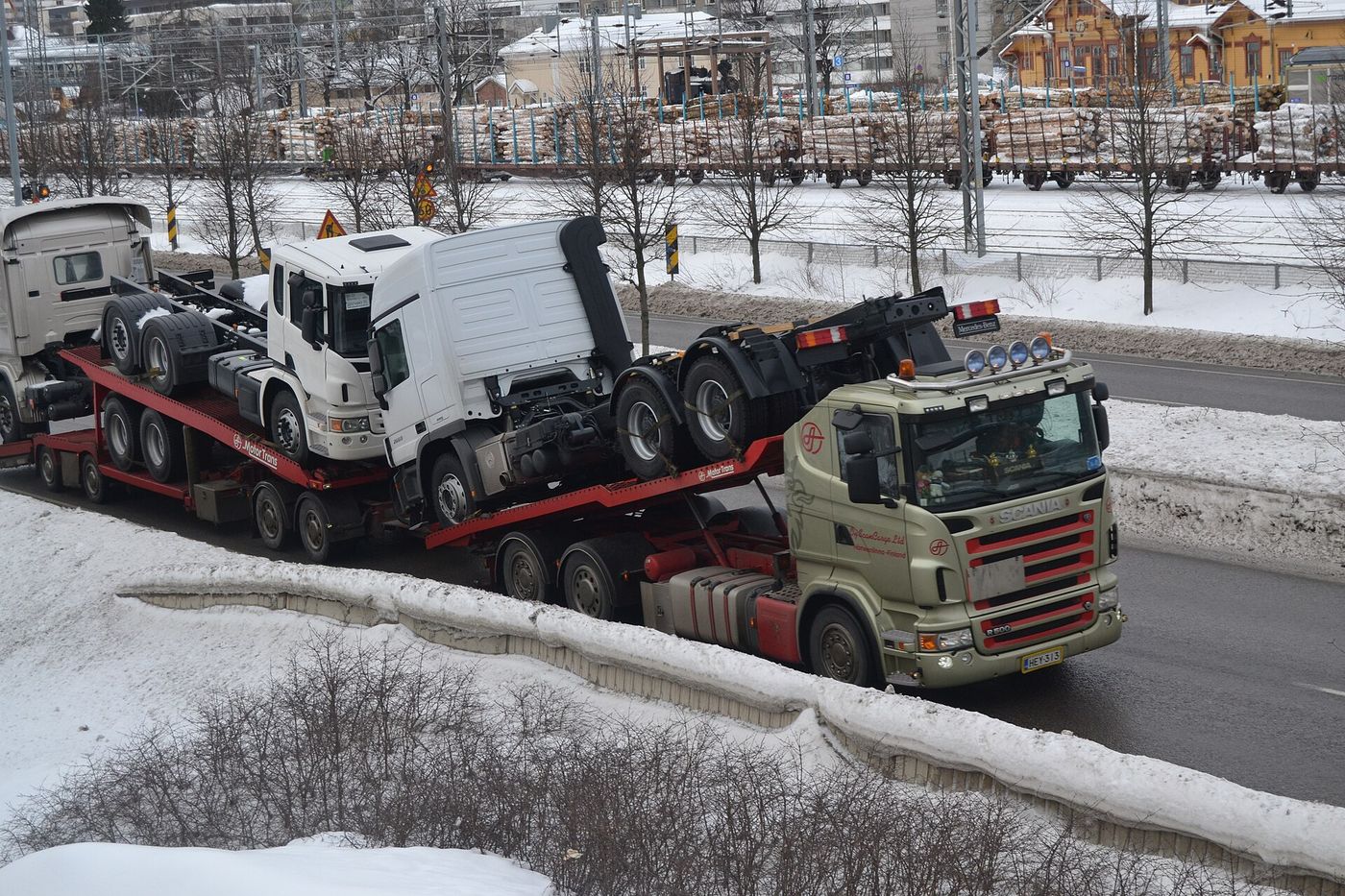
The EU carbon border adjustment mechanism (CBAM) does not apply today to trucks, road tractors, buses, coaches, trailers or the vehicle parts classified in Chapter 87 of the Combined Nomenclature (CN). Regulation (EU) 2023/956 applies to goods listed in its Annex I that originate outside the EU and are imported into the customs territory of the Union, and that list, applied under the definitive regime since 1 January 2026, names cement, electricity, fertilisers, iron and steel, aluminium and hydrogen by CN code; no code of headings 8701 to 8716 is on it. Steel and aluminium articles that a vehicle importer may also bring in, such as bolts and nuts of heading 7318, are on the list whatever they are used for. A Commission proposal of 17 December 2025, COM(2025) 989, would add new goods vehicles of heading 8704, motor chassis, diesel engines and some truck and trailer parts from 1 January 2028. On 6 October 2026 it had not been adopted, and the European Parliament had referred it back to its committee for interinstitutional negotiations.
Status as of 6 October 2026. Read that day: the consolidated text of Regulation (EU) 2023/956 dated 20 October 2025, which incorporates Regulation (EU) 2025/2083; Implementing Regulation (EU) 2025/2548; the CBAM pages of the Commission’s Directorate-General for Taxation and Customs Union (DG TAXUD) and its questions and answers of 27 May 2026; the proposal COM(2025) 989 with its annexes; the Legislative Observatory file 2025/0419(COD) and its summary of Parliament’s vote; the amendments adopted by Parliament on 15 September 2026; the draft minutes of the Council meeting of 12 June 2026; and the 2026 Combined Nomenclature.
What CBAM covers today
Regulation (EU) 2023/956 of 10 May 2023 has applied since 1 October 2023 (Article 36(2)). Until 31 December 2025 the importer’s obligations were limited to reporting (Article 32). DG TAXUD states: “The CBAM definitive regime applies from 1 January 2026.” Before that start, Regulation (EU) 2025/2083 of 8 October 2025, published on 17 October 2025, amended the text; among other changes it introduced the 50-tonne threshold and set the 30 September deadlines and the February 2027 start of certificate sales described below.
The scope is set by Article 2(1): the Regulation “applies to goods listed in Annex I originating in a third country”, where those goods, or processed products made from them under inward processing, are imported into the customs territory of the Union. Article 3(1) defines “goods” as “goods listed in Annex I”, and Article 3(4) defines importation as release for free circulation under Article 201 of the Union Customs Code. Origin follows the non-preferential rules (Article 2(5)). Goods originating in Iceland, Liechtenstein, Norway and Switzerland, and in Büsingen, Heligoland, Livigno, Ceuta and Melilla, are outside the scope (Article 2(4) and Annex III).
Annex I identifies goods by the CN codes of Regulation (EEC) No 2658/87. In the consolidated text:
- Iron and steel: all of Chapter 72 except listed ferro-alloys and ferrous waste and scrap (7204); agglomerated iron ores (2601 12 00); and, from Chapter 73, headings 7301 to 7311 (sheet piling, railway material, tubes, pipes and fittings, structures, tanks and containers including 7311 00 containers for compressed or liquefied gas), 7318 (screws, bolts, nuts, rivets, washers and similar articles) and 7326 (other articles of iron or steel).
- Aluminium: headings 7601 and 7603 to 7614, and 7616 (other articles of aluminium).
- Cement, electricity, fertilisers and hydrogen: codes of headings 2507, 2523, 2716, 2808, 2814, 2834, 3102, 3105 and 2804 10 00.
CBAM is separate from the EU’s second emissions trading system for road fuels, described in ETS2 and road transport, and it sets no limit on the CO2 emissions of a vehicle in use; those are set for makers in the EU CO2 standards for trucks and buses.
Trucks, buses, trailers and parts are not on the list today
None of the vehicle headings appears in Annex I: not 8701 (tractors, including road tractors for semi-trailers), 8702 (vehicles for ten or more persons, which includes buses and coaches), 8704 (goods vehicles), 8705 (special purpose vehicles such as crane lorries and fire fighting vehicles), 8706 (chassis fitted with engines), 8707 (bodies, including cabs), 8708 (parts and accessories) or 8716 (trailers, semi-trailers and their parts). Diesel engines of heading 8408 are not on it either. Because the obligations of the Regulation attach to “goods” in the sense of Article 3(1), a truck, bus or trailer imported from outside the EU in 2026 is not a CBAM good, the steel and aluminium built into it is not declared under CBAM, and its mass is not part of the net mass that Article 2a adds up for the threshold.
The line is drawn by CN code, not by end use. Note 2(b) to Section XVII of the Combined Nomenclature excludes “parts of general use” of base metal from the vehicle parts headings, and Note 2 to Section XV defines these as articles of headings 7307, 7312, 7315, 7317 or 7318 and springs and leaves for springs, among others. Screws, bolts, nuts and washers of iron or steel are therefore classified in heading 7318 even when they are made for a truck, and 7318 is in Annex I. The same holds for anything classified in 7326 (other articles of iron or steel), 7616 (other articles of aluminium) or 7311 00. Asked whether CBAM applies to second-hand goods, the Commission’s questions and answers reply that the Regulation applies to all goods included in Annex I and released for free circulation. Springs of heading 7320, which include leaf springs, are not in Annex I today.
Who pays, and when: the rules in force
Who. Article 4 states that “Goods shall be imported into the customs territory of the Union only by an authorised CBAM declarant”, and Article 25(1) has customs refuse importation by anyone else, without prejudice to the threshold exemption. An importer established in a Member State applies for that status before importing (Article 5(1)); an importer covered by the threshold exemption described below applies where it expects to exceed the threshold (Article 5(1b)). Where the importer is not established in a Member State, its indirect customs representative must obtain the status, whether or not the importer is exempt under the threshold (Article 5(2)). The Commission’s questions and answers describe the CBAM declarant as either the importer or the indirect customs representative, depending on who includes the CBAM account number in the customs declaration. Applications submitted by 31 March 2026 allowed imports to continue provisionally until the competent authority decided (Article 17(7a)).
The threshold. Under Article 2a and point 1 of Annex VII, an importer is exempt for a calendar year if the net mass of the goods it imports, aggregated across all CN codes, does not exceed 50 tonnes. If it exceeds 50 tonnes within the year, it “shall be subject to all obligations” for all emissions embedded in all goods imported that year (Article 2a(2)). The exemption does not apply to electricity or hydrogen (Article 2a(4)). By 30 April each year the Commission checks that the threshold exempts no more than 1 % of embedded emissions (Article 2a(3)). Its assessment for 1 April 2025 to 31 March 2026, published on 30 September 2026, found that 50 tonnes “would exempt 0.87% of embedded emissions”.
Declaration and surrender. By 30 September of each year, for the first time in 2027 for the year 2026, the authorised CBAM declarant submits a CBAM declaration for the preceding calendar year (Article 6(1)) and surrenders the corresponding number of CBAM certificates (Article 22(1)). From 2027 the declarant must hold, at the end of each quarter, certificates for at least 50 % of the embedded emissions in goods imported since the beginning of the year (Article 22(2)), from the end of the quarter following the one in which it passes the threshold (Article 22(2a)). The number to surrender is adjusted to reflect the free allocation of EU ETS allowances to EU producers of the same goods (Article 31), and DG TAXUD states that where importers can prove that a carbon price has already been paid during the production of the goods, the corresponding amount can be deducted.
Certificates and price. From 1 February 2027 each Member State sells CBAM certificates on a common central platform to authorised declarants established in it (Article 20(1)). The certificates cannot be transferred or sold to another person, according to the Commission’s questions and answers. The price is the weekly average of the closing prices of EU ETS allowances on the auction platform (Article 21(1)); for emissions declared for 2026 it is the quarterly average of the quarter of importation (Article 21(1a)), calculated under Implementing Regulation (EU) 2025/2548.
| Quarter of importation | Published | Price per certificate |
|---|---|---|
| Q1 2026 | 7 April 2026 | €75.36 |
| Q2 2026 | 6 July 2026 | €75.28 |
| Q3 2026 | 5 October 2026 | €82.32 |
| Q4 2026 | scheduled for 4 January 2027 | not yet published |
Penalties. A declarant that does not surrender the certificates by 30 September pays, for each missing certificate, a penalty identical to the excess emissions penalty of the EU ETS Directive (Article 26(1)). A person other than an authorised declarant who brings goods into the customs territory without complying pays three to five times that amount per certificate not surrendered (Article 26(2)).
What the 2025 proposal would add
The Commission’s proposal COM(2025) 989 of 17 December 2025 would “extend the scope of CBAM to selected steel and aluminium-intensive downstream products”. Its legislative financial statement counts “180 additional CN” codes. The annex replaces the iron and steel table of Annex I and adds a new table, “Combined metal products”. The entries that concern road vehicles are:
- Goods vehicles. ex 8704 21, ex 8704 22, ex 8704 23 10, ex 8704 31, ex 8704 32 10, ex 8704 41, ex 8704 42 and ex 8704 43, each excluding eight-digit codes that the 2026 CN labels as used (for example 8704 22 99 and 8704 43 99); and 8704 60 00 (only electric motor for propulsion) and 8704 90 00 (other), which have no new or used split.
- Chassis and bodies. 8706 00, chassis fitted with engines for the motor vehicles of headings 8701 to 8705; 8707 10, bodies for the vehicles of heading 8703 (motor cars) only.
- Vehicle parts. 8708 40 (gear boxes and parts), 8708 70 (road wheels and parts and accessories) and 8708 80 (suspension systems and parts, including shock-absorbers), each for the motor vehicles of headings 8701 to 8705; and ex 8708 91, radiators and parts containing steel or aluminium, described as for the industrial assembly of certain vehicles.
- Trailer parts. 8716 90 90, other parts of trailers, semi-trailers and other vehicles; and ex 8716 80 00, other vehicles pushed or drawn by hand.
- Engines and engine parts. Five codes of 8408 20, diesel engines of a kind used for the propulsion of vehicles of Chapter 87: 8408 20 10, for the industrial assembly of certain vehicles, and 8408 20 51, 8408 20 55, 8408 20 57 and 8408 20 99, in power bands from not exceeding 50 kW to exceeding 200 kW; 8408 90 65 and 8408 90 67, other new diesel engines of more than 200 kW up to 500 kW; 8413 30, fuel, lubricating or cooling medium pumps for internal combustion piston engines; and ex 8421 23 00, oil or petrol filters for internal combustion engines containing steel or aluminium.
- Springs. 7320 20 89 (other helical springs) and 7320 90 90 (other springs and leaves for springs), added to the iron and steel table.
Not on the Commission’s list are road tractors (8701), buses and coaches (8702), special purpose vehicles (8705), bodies and cabs for trucks and buses (8707 90), the trailers and semi-trailers themselves (8716 10 to 8716 40), the other parts of heading 8708 such as brakes (8708 30), drive axles (8708 50) and steering (8708 94), and leaf springs (7320 10).
Three entries of the printed annex do not read cleanly. The rows ex 8704 23 10 and ex 8704 32 10 describe all such vehicles above 20 tonnes and above 5 tonnes, but in the 2026 CN the eight-digit codes 8704 23 10 and 8704 32 10 are the subheadings for vehicles specially designed for the transport of highly radioactive materials. In the English version of the annex, the description of ex 8708 91 breaks off in mid-sentence. This page gives the codes as printed and does not resolve these points.
Article 2 of the proposal makes the amendment of Annex I apply “from 1 January 2028”; the regulation itself would enter into force on the third day after publication. Recital 10 provides that the 2027 assessment of the 50-tonne threshold should use import data covering the new downstream goods.
Where the proposal stands
Parliament. The Committee on the Environment, Climate and Food Safety (ENVI) voted on 6 July 2026 and its report, A10-0201/2026, was tabled on 9 July. On 15 September 2026 Parliament adopted amendments by 464 votes to 50, with 159 abstentions, and referred the matter back to the committee for interinstitutional negotiations. The Legislative Observatory therefore shows the file as “Awaiting Parliament’s position in 1st reading”. Parliament’s amendments go further than the Commission on vehicles:
- Amendments 110 and 135 add to the iron and steel table Chapter 73 as a whole and, each as a whole heading, 8704 (motor vehicles for the transport of goods), 8716 (trailers and semi-trailers, other vehicles not mechanically propelled, parts thereof), 8409 (parts for engines of 8407 or 8408), 8482 (ball or roller bearings) and 8483 (transmission shafts, gears and gear boxes), among others.
- Amendment 83 adds eight-digit codes, among them goods vehicles with a spark-ignition engine and electric motor, new or for highly radioactive materials (8704 51, 8704 52), bodies for tractors, buses, goods vehicles and special purpose vehicles (8707 90 10 and 8707 90 90), 27 codes in heading 8708 (bumpers, windows, other body parts, brakes, drive and non-driving axles, silencers and exhaust pipes, clutches, steering and other parts), ten codes in heading 8716 (caravans, tanker trailers, trailers for highly radioactive materials, new trailers and semi-trailers for goods, other trailers, and trailer chassis, bodies and axles), seats for motor vehicles (9401 20 00), leaf springs (7320 10 11, 7320 10 19, 7320 10 90) and diesel engines for wheeled agricultural or forestry tractors (8408 20 31, 8408 20 35, 8408 20 37).
- A new Annex IIa would set the threshold at “5 tonnes of net mass for aluminium products”.
Parliament’s amendments do not change the application date. They do not list road tractors (8701), buses and coaches (8702) or special purpose vehicles (8705). Used trailers and semi-trailers (8716 39 80) are not among Parliament’s eight-digit codes, but its listing of heading 8716 as a whole would include them.
Council. The draft minutes of the Economic and Financial Affairs Council of 12 June 2026, document ST 10684/26, record that “The Council reached a general approach” on the regulation. The Council’s public record of 12 June 2026 does not list the codes, and it does not give the application date, so this page does not show a Council position on any code.
As of 6 October 2026 the procedure file showed no provisional agreement and no adopted act, so the codes that will apply, and from when, depend on the text the co-legislators finally adopt.
| CN code | What it covers | In force today | Commission proposal | Parliament amendments |
|---|---|---|---|---|
| 8701 21 to 8701 29 | Road tractors for semi-trailers | Not covered | Not listed | Not listed |
| 8702 | Vehicles for ten or more persons (buses, coaches) | Not covered | Not listed | Not listed |
| 8704 21 to 8704 43 | Goods vehicles with diesel or petrol engines or diesel hybrids | Not covered | New vehicles listed; used subheadings excluded | Whole heading 8704 listed, used vehicles included |
| 8704 51, 8704 52 | Goods vehicles, petrol engine and electric motor | Not covered | Not listed | Added; also within heading 8704 as a whole |
| 8704 60 00 | Goods vehicles with only an electric motor | Not covered | Listed | Kept; also within heading 8704 as a whole |
| 8705 | Special purpose vehicles | Not covered | Not listed | Not listed |
| 8706 00 | Chassis fitted with engines | Not covered | Listed | Kept |
| 8707 90 | Bodies, including cabs, for vehicles other than cars | Not covered | Not listed (only 8707 10, car bodies) | Added (8707 90 10, 8707 90 90) |
| 8708 40, 8708 70, 8708 80, ex 8708 91 | Gear boxes, road wheels, suspension, radiators | Not covered | Listed | Kept |
| 8708 10, 22, 29, 30, 50, 92, 93, 94, 99 | Bumpers, windows, body parts, brakes, axles, exhausts, clutches, steering, other parts | Not covered | Not listed | Added (27 eight-digit codes) |
| 8716 31 00, 8716 39 (new), 8716 40 00 | Trailers and semi-trailers | Not covered | Not listed | Added; heading 8716 also listed as a whole |
| 8716 90 10, 30, 50 | Trailer chassis, bodies, axles | Not covered | Not listed | Added |
| 8716 90 90 | Other parts of trailers and semi-trailers | Not covered | Listed | Kept; also within heading 8716 as a whole |
| 8408 20 | Diesel engines for vehicles of Chapter 87 | Not covered | 8408 20 10, 51, 55, 57, 99 listed | Adds 8408 20 31, 35, 37 (engines for agricultural or forestry tractors) |
| 7318 | Screws, bolts, nuts, washers of iron or steel | Covered | Stays | Stays |
| 7320 | Springs, including leaf springs | Not covered | 7320 20 89 and 7320 90 90 listed | Adds leaf springs (7320 10) and further spring codes; Chapter 73 also listed as a whole |
| 7326, 7616 | Other articles of iron or steel; of aluminium | Covered | Stays | Stays |
| 9401 20 00 | Seats for motor vehicles | Not covered | Not listed | Added |
What this means for an importer of a vehicle or parts
These are the duties and limits as the texts stood on 6 October 2026:
- A complete vehicle. A truck, road tractor, bus, coach, special purpose vehicle or trailer imported into the EU from a third country in 2026 is not a CBAM good. No CBAM authorisation, declaration or certificate attaches to it, and its mass does not count towards the 50 tonnes. Type approval and customs duty are separate matters, covered in new truck brands entering Europe.
- Vehicle parts in Chapter 87 and engines in 8408. Not CBAM goods in 2026.
- Steel and aluminium articles in Annex I codes. Bolts, nuts and other articles classified in 7318, 7326, 7616 or another Annex I code count towards the importer’s 50 tonnes for the calendar year. Above that mass, the importer needs the status of authorised CBAM declarant, declares by 30 September of the following year and surrenders certificates for the emissions embedded in all such goods of that year. Where the importer is not established in the EU, its indirect customs representative must hold that status whatever the mass (Article 5(2)).
- The trigger is release for free circulation. CBAM importation is release for free circulation (Article 3(4)); moving goods under a transit procedure such as T1 and NCTS is a different customs procedure.
- From 1 January 2028, if adopted as proposed. New goods vehicles of 8704, chassis of 8706 00, gear boxes, road wheels, suspension and certain radiators of 8708, other trailer parts of 8716 90 90 and the five listed diesel engine codes of 8408 20 would become CBAM goods under the same authorisation, declaration and certificate rules. Parliament’s amendments would add further truck, bus and trailer parts and complete trailers; road tractors and buses are on neither the Commission’s list nor Parliament’s. The Council’s public record of 12 June 2026 does not list the codes.
Quick answers
- Does CBAM apply to trucks and buses?
- Not today. Regulation (EU) 2023/956 applies to goods listed in its Annex I, and that list covers cement, electricity, fertilisers, iron and steel, aluminium and hydrogen by CN code; no code of headings 8701 to 8716 is on it, so a truck, road tractor, bus, coach or trailer imported from outside the EU is not a CBAM good. The Commission's proposal COM(2025) 989 would add new goods vehicles of heading 8704 and chassis fitted with engines (8706 00) from 1 January 2028, but not road tractors (8701), buses and coaches (8702) or complete trailers (8716). On 6 October 2026 the proposal had not been adopted.
- Are truck and trailer parts covered by CBAM?
- Parts classified in Chapter 87, such as heading 8708 or 8716 90, are not in Annex I today. Steel and aluminium articles classified in Annex I codes are covered whatever their use: screws, bolts, nuts and washers of iron or steel fall under heading 7318 even when made for a truck, because the CN treats them as parts of general use. The 2025 proposal would add gear boxes (8708 40), road wheels (8708 70), suspension (8708 80), certain radiators (ex 8708 91), other trailer parts (8716 90 90) and diesel engines for vehicles of Chapter 87 (five codes of 8408 20) from 1 January 2028. Parliament's amendments of 15 September 2026 would also add brakes, axles, steering, trailer chassis, bodies and axles and more. The Council's public record of 12 June 2026 does not list the codes of its general approach.
- What is the 50-tonne CBAM threshold?
- Under Article 2a and Annex VII of Regulation (EU) 2023/956, an importer is exempt from CBAM obligations in a calendar year if the net mass of the CBAM goods it imports, added up across all CN codes, does not exceed 50 tonnes. Once it exceeds 50 tonnes, all obligations apply to all goods imported that year. The threshold does not apply to electricity or hydrogen. The Commission's assessment published on 30 September 2026 found that the 50-tonne threshold would exempt 0.87 % of embedded emissions, below the 1 % limit.
- When do CBAM certificates go on sale and who pays for them?
- Member States sell CBAM certificates on a common central platform from 1 February 2027 (Article 20(1)). The buyer is the authorised CBAM declarant, which is the importer or its indirect customs representative. By 30 September each year, for the first time on 30 September 2027 for 2026 imports, the declarant submits a CBAM declaration and surrenders certificates for the emissions embedded in the goods. For 2026 imports the price is the average for the quarter of importation: €75.36 for the first quarter, €75.28 for the second and €82.32 for the third; from 2027 it is calculated weekly.
- Would CBAM apply to used trucks?
- No CBAM obligation applies to any truck today. In the 2025 proposal, the entries for goods vehicles of subheadings 8704 21 to 8704 43 exclude the eight-digit codes that the 2026 Combined Nomenclature labels as used, such as 8704 22 99 and 8704 43 99, so those entries cover new vehicles. The entries 8704 60 00 (vehicles with only an electric motor) and 8704 90 00 have no new or used split in the CN. Parliament's amendments of 15 September 2026 would list heading 8704 as a whole.
- When would CBAM apply to trucks and trailer parts?
- The proposal COM(2025) 989 of 17 December 2025 provides that its extension of Annex I applies from 1 January 2028. Parliament adopted amendments on 15 September 2026 that do not change that date, and referred the file back to its committee for interinstitutional negotiations. The Council reached a general approach on 12 June 2026; the Council's public record of that meeting does not set out the content of the general approach. As of 6 October 2026 no provisional agreement or adopted act was listed in the procedure file 2025/0419(COD).
Sources
- Regulation (EU) 2023/956 of 10 May 2023 establishing a carbon border adjustment mechanism — consolidated text of 20 October 2025 (after Regulation (EU) 2025/2083) — EUR-Lex, European Union
- Regulation (EU) 2025/2083 of 8 October 2025 amending Regulation (EU) 2023/956 as regards simplifying and strengthening the carbon border adjustment mechanism — OJ L, 2025/2083, 17 October 2025 — EUR-Lex, European Union
- Commission Implementing Regulation (EU) 2025/2548 of 10 December 2025 on the calculation and publication of the price of CBAM certificates — OJ L, 2025/2548, 22 December 2025 — EUR-Lex, European Union
- Proposal COM(2025) 989 final of 17 December 2025 amending Regulation (EU) 2023/956 as regards the extension of its scope to downstream goods and anti-circumvention measures, with Annexes 1 to 3 — European Commission (EUR-Lex)
- Procedure file 2025/0419(COD): Carbon Border Adjustment Mechanism, extension of its scope to downstream goods and anti-circumvention measures (status read on 6 October 2026) — European Parliament, Legislative Observatory
- Summary of the amendments adopted by Parliament on 15 September 2026, T10-0276/2026 (procedure 2025/0419(COD)) — European Parliament, Legislative Observatory
- P10_TA(2026)0276 — Amendments adopted by the European Parliament on 15 September 2026 on proposal COM(2025)0989 — European Parliament
- Draft minutes of the Council (Economic and Financial Affairs) of 12 June 2026 — document ST 10684/26 of 25 June 2026 — Council of the European Union
- Commission Implementing Regulation (EU) 2025/1926 of 22 September 2025 amending Annex I to Council Regulation (EEC) No 2658/87 — the Combined Nomenclature applying from 1 January 2026 — EUR-Lex, European Union
- CBAM definitive regime (page read on 6 October 2026) — European Commission, Directorate-General for Taxation and Customs Union
- Price of CBAM certificates — quarterly prices for 2026 (page read on 6 October 2026) — European Commission, Directorate-General for Taxation and Customs Union
- CBAM communication and news — including the de minimis threshold assessment of 30 September 2026 — European Commission, Directorate-General for Taxation and Customs Union
- Carbon Border Adjustment Mechanism (CBAM): Questions and Answers, last updated 27 May 2026 — European Commission, Directorate-General for Taxation and Customs Union