The T1 transit document and NCTS explained
How T1 transit moves goods under customs control with duties suspended: T1 and T2, the 1987 Convention and its parties, the guarantee, NCTS phase 5 and the MRN.
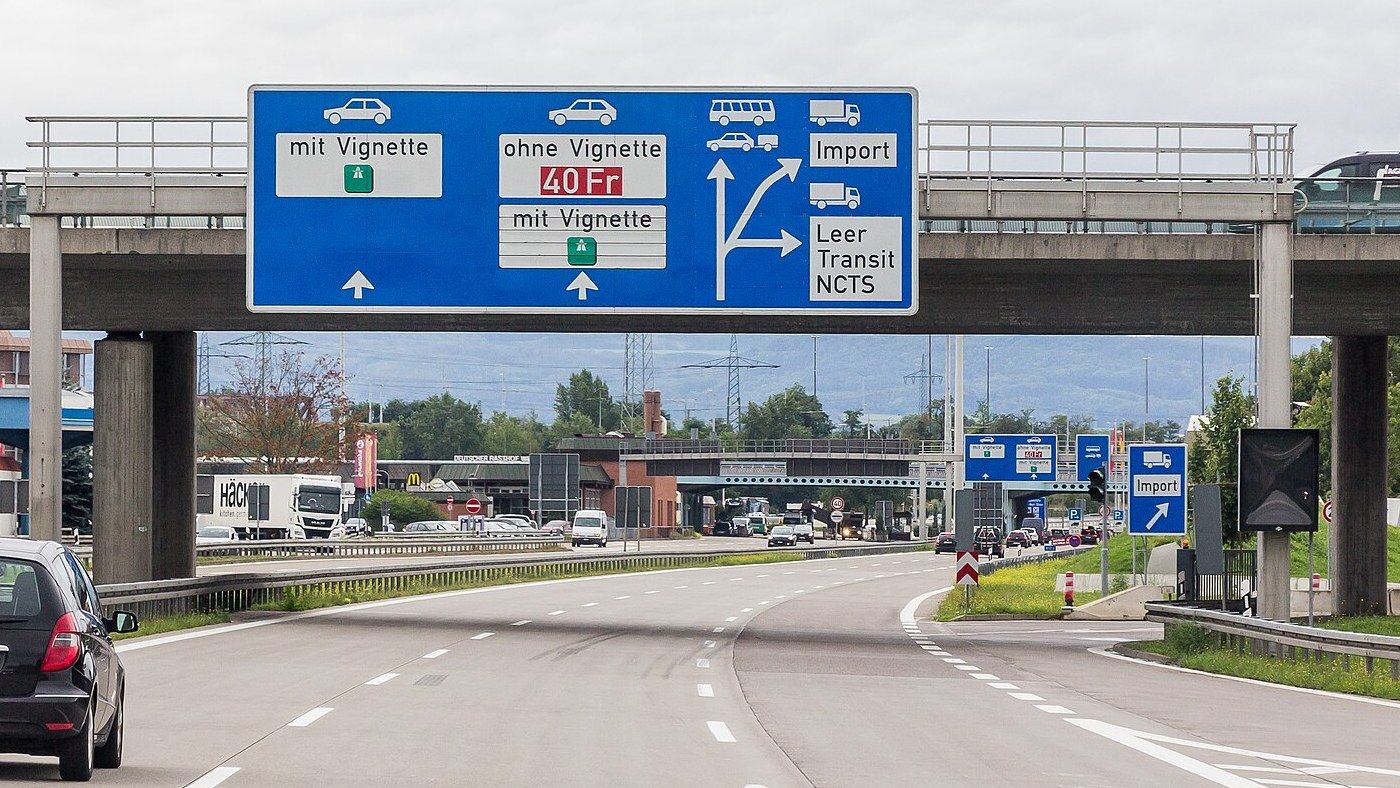
A T1 is the external transit procedure, and the transit declaration that places goods under it: non-Union goods move under customs control from a customs office of departure to a customs office of destination without import duty, other charges or commercial policy measures being applied on the way, except measures that prohibit the entry or exit of goods (Union Customs Code, Article 226(1)). Inside the European Union it runs as Union transit; between the EU and Iceland, Norway, Switzerland, Türkiye, North Macedonia, Serbia, the United Kingdom, Ukraine, Georgia, Moldova and Montenegro it runs as common transit under the Convention of 20 May 1987, whose rules the European Commission describes as “identical to those of the Union transit”. The declaration is lodged electronically in the New Computerised Transit System (NCTS); once it is accepted the system allocates a Master Reference Number (MRN), and the goods travel with that number to the office of destination.
Status as of 6 October 2026. Read on that day: the European Commission’s pages on customs transit and on NCTS, the consolidated text of the Convention of 1 November 2025, the Union Customs Code (consolidated text of 12 December 2022), its implementing and delegated regulations (both consolidated on 1 July 2026), the Work Programme for the customs IT systems (Implementing Decision (EU) 2023/2879) and the Commission’s Transit Manual of 31 July 2026. The Manual explains the rules but states that it “does not constitute a legally binding act”; where it and the legal texts differ, this page follows the legal texts.
What transit does
The Transit Manual starts from the problem transit solves: when goods enter a country or territory, customs demand import duties and other charges even where the goods only pass through, and the formalities may be repeated at each border before the goods reach their destination. The Commission describes transit as a procedure that “allows for the temporary suspension of duties, taxes and commercial policy measures that apply at import” and that lets customs clearance take place at the destination rather than at the point of entry.
The suspended duties are secured, not waived. The holder of the procedure provides a guarantee “to ensure payment of the debt which may be incurred in respect of the goods” (Appendix I to the Convention, Article 10(1)); the Manual explains that it secures payment where a debt arises in the course of a transit operation. When the goods and the MRN reach the customs office of destination, transit ends there; the Manual describes the goods then being released for free circulation or placed under another suspensive customs procedure. For common transit the Manual adds that operators may use the procedure “to move goods more easily from one Contracting Party to another. However, there is no obligation to use it.”
Whether the EU’s carbon border adjustment mechanism applies to an imported truck, bus, trailer or part is set out in CBAM and vehicles.
T1 and T2: the customs status of the goods
Article 2 of the Convention names two forms of the common transit procedure. “The T1 procedure may be applied to any goods” carried under the Convention, while the T2 procedure applies in the EU only to Union goods, and in a common transit country only to goods that arrived there under T2 and are reconsigned under the conditions of Article 9. Union goods are goods wholly obtained in the EU customs territory, goods brought in from outside and released for free circulation, and goods produced in the EU from either kind (Article 2(3)(a)).
The Union Customs Code uses the same split. External transit moves non-Union goods within the customs territory of the Union with duties and measures suspended (Article 226); internal transit lets Union goods move from one point in that territory to another and pass through a country or territory outside it “without any change in their customs status” (Article 227).
| Code | Goods it covers | Where it is set out |
|---|---|---|
| T1 | Non-Union goods; under the Convention, any goods. In a few export cases also Union goods, for example goods exported with refunds under the common agricultural policy. | UCC Article 226; Convention Article 2(2); Transit Manual I.4.1.2.1 |
| T2 | Union goods that pass through a country outside the EU customs territory without any change in their customs status, and Union goods moved to a common transit country after export. | UCC Article 227; Convention Article 2(3); Transit Manual I.4.1.2.2 |
| T2F | Union goods moved from a special fiscal territory to a part of the EU customs territory that is not one, where the movement ends outside the Member State where they entered the Union. | Transit Manual I.4.1.2.2 |
| T | A mixed consignment: one declaration for goods of different status, with T1, T2 or T2F entered for each goods item. | Transit Manual IV.1.4.2.2 |
The choice has a consequence. The Manual states that Union goods placed under T1 instead of T2 lose their Union status and are treated as non-Union goods. It also notes that T2 can only take place when a third country is involved, and that in some cases Union goods may move without any customs procedure if their Union status is proven, for example when they cross a territory outside the EU without being transhipped, under a single transport document issued in a Member State.
Where common transit applies, and since when
The Convention was done at Interlaken on 20 May 1987 between the European Economic Community and Austria, Finland, Iceland, Norway, Sweden and Switzerland; Article 22(1) provided for its entry into force on 1 January 1988 if all instruments of acceptance were deposited before 1 November 1987. Other countries join by invitation. Under Article 15a a third country may become a Contracting Party if the depositary invites it following a decision of the Joint Committee, and it lodges an instrument of accession with the General Secretariat of the Council; “The accession shall become effective on the first day of the second month following the lodging of the instrument of accession.” Any party may withdraw on 12 months’ written notice (Article 21).
| Country | Invitation | Common transit since |
|---|---|---|
| Iceland, Norway, Switzerland | Original parties of 1987 | From the Convention’s entry into force (Article 22) |
| Türkiye | Decision No 2/2012 of 19 January 2012 | 1 December 2012 |
| North Macedonia | Decision No 1/2015 of 11 May 2015 | 1 July 2015 |
| Serbia | Decision No 3/2015 of 13 October 2015 | 1 February 2016 |
| United Kingdom | Decision No 1/2018 of 4 December 2018 | 1 January 2021 |
| Ukraine | Decision No 2/2022 of 25 August 2022 | 1 October 2022 |
| Georgia | Decision No 2/2024 of 21 October 2024 | 1 February 2025 |
| Moldova | Decision No 3/2025 of 19 September 2025 | 1 November 2025 |
| Montenegro | Decision No 1/2025 of 19 September 2025 | 1 November 2025 |
For North Macedonia the Joint Committee’s amending Decision No 2/2015, which adapted the Convention’s appendices to the accession, names the date itself: it “shall apply as of 1 July 2015”. Liechtenstein is covered through Article 20(2), under which the Convention applies to it “for as long as that Principality remains bound to the Swiss Confederation by a customs union treaty”; the Commission lists it among the four EFTA countries, while the Transit Manual leaves it out of its list of common transit countries for that reason. The Manual also notes that Albania, Armenia, Azerbaijan and Bosnia and Herzegovina are among the countries that have expressed a desire to join; none of them is on the Commission’s list.
Two limits of the network matter on the road. Union transit also extends to Andorra and San Marino, but the Manual notes that a guarantee does not cover common transit operations to and from those two states, because the Convention does not apply there. And where a route crosses a country that is not a party, Article 5 of the Convention allows the T1 or T2 procedure across that country only if, in the absence of an agreement with it, the carriage is made under a single transport document drawn up in a Contracting Party and the procedure is suspended while the goods are in that country.
The customs offices on the route
| Office | Where it is | What happens there |
|---|---|---|
| Departure | The office where the transit declaration is accepted (Article 3(g)). | Checks the declaration and the guarantee, may examine the goods, sets the time limit and, where needed, the itinerary, affixes seals and releases the goods; it then sends the movement data to the declared offices of transit and destination. |
| Transit | The office at the point of entry into a Contracting Party, or at the point of exit when the goods leave it across a frontier with a third country (Article 3(h)). | The goods and the MRN are presented at each office of transit, which records the border passage and notifies the office of departure; it may inspect the goods (Article 43). |
| Exit for safety and security | The point where a movement leaves the safety and security area of the EU Member States, Norway and Switzerland. | Assesses the safety and security data where the declaration contains them (Transit Manual I.4.1.3.5). |
| Incident registration | The nearest customs office in the country where the goods are when an incident occurs. | Records the incident and decides whether the movement may continue (Transit Manual I.4.1.3.6). |
| Destination | The office where the goods are presented to end the procedure (Article 3(i)). | The goods, the MRN and any information it requires are presented during official opening hours; another office than the declared one may become the office of destination (Article 45). |
Within Union transit, the Manual places offices of transit where goods re-enter the EU after crossing a third country and where they leave the EU across a frontier with a third country other than a common transit country. Its first example is a movement from Germany to Great Britain by ferry from Belgium: the office of transit is in the British port of arrival.
Ending the procedure is not the same as discharging it. The procedure ends, and the holder’s obligations are met, when the goods and the required information are available at the office of destination; the customs authorities discharge it once a comparison of the data held at departure and at destination shows that it ended correctly (Appendix I, Article 48).
What travels with the truck: the MRN and the transit accompanying document
The transit declaration is sent to NCTS as an electronic message, and on acceptance the system allocates the MRN, “the registration number allocated to a transit declaration” (Appendix I, Article 3(j)). The transit accompanying document is a document produced by electronic data-processing “to accompany the goods and based on the particulars of the transit declaration” (Article 3(d)). The customs office of departure provides it at the request of the declarant or of the person who presented the goods, with a List of items that forms an integral part of it (Article 41; for Union transit, Article 303(4) of Regulation (EU) 2015/2447).
The MRN itself is the key. Article 42a of Appendix I has it submitted to customs by electronic data-processing techniques only; where that is not possible, the receiving customs authority accepts it on a transit accompanying document or as a bar code and may allow other means. The documents accompanying the goods are presented “when prescribed or whenever the customs authorities so require” (Article 42). Among the information an office of destination may ask for, the Manual names a police receipt after an accident, a breakdown-service receipt and the CMR note.
One means of transport per declaration. Each declaration covers goods moved from one office of departure to one office of destination on a single means of transport, and a road vehicle with its trailers or semi-trailers counts as one where the goods are dispatched together (Appendix I, Article 24). If one vehicle loads at several offices of departure, each consignment needs its own declaration; the Manual adds that a consignment split between two vehicles needs a declaration for each.
The carrier’s own duty. The holder of the procedure must present the goods intact, with the required information, at the office of destination within the time limit and in compliance with the identification measures. A carrier “who accepts goods knowing that they are moving under the common transit procedure” carries the same responsibility for presenting them intact (Appendix I, Article 8(1) and (2); for Union transit, Union Customs Code, Article 233(1) and (3)).
Seals. “As a general rule, identification of the goods shall be ensured by sealing” (Convention, Article 11(1)): the load space where the vehicle or container is suitable for sealing, otherwise each package, unless the office of departure finds the goods readily identifiable from their description (Article 11(4)). The Manual treats vehicles approved for carriage under customs seal under an international agreement, such as the TIR Convention, as suitable, and states that seals must not be removed without customs approval.
Incidents on the way. Article 44 of Appendix I lists the cases in which the carrier presents the goods and the MRN without undue delay to the nearest customs authority of the country where the vehicle is: a forced change of a prescribed itinerary, seals broken for reasons beyond the carrier’s control, a transfer of goods to another means of transport under customs supervision, unloading because of imminent danger, any incident that may affect the ability to meet the obligations, and a change of any element of the single means of transport. That authority decides whether the operation may continue and records the incident in the transit system. No presentation is needed, provided the holder or the carrier gives the authority the relevant information, when only the tractor unit is changed and the trailers or semi-trailers stay the same, or when goods are transferred from a vehicle that is not sealed. A change of transport mode for an intermodal unit with a unique ID number, such as a container, a swap body or a semi-trailer, without the goods being handled, is not an incident at all.
Time limits
The office of departure sets the time limit within which the goods must reach the office of destination, taking into account the itinerary, the means of transport, transport or other legislation that may affect it and any relevant information from the holder (Appendix I, Article 34; Regulation (EU) 2015/2447, Article 297). The limit binds the customs authorities of every country the goods enter, which may not alter it. Among the legislation to be considered, the Manual names transport regulations on working hours and mandatory rest periods for drivers; the EU rules are set out in driving time and rest rules. The goods move along an economically justified itinerary; the office of departure prescribes one where it or the declarant considers it necessary (Article 33).
| Step | Rule | Article |
|---|---|---|
| Arrival at destination | Within the time limit set by the office of departure. A late presentation counts as on time where the holder or the carrier proves to the office of destination that the delay is not attributable to them. | 34; 45(2) |
| Missing control results | The office of departure asks for them if it has not received them within six days after the arrival notification. | 49(1) |
| Enquiry when no arrival is recorded | The authority of the country of departure requests information within seven days after the time limit for presentation has expired. | 49(2)(a), 49(3) |
| Replies to the enquiry | Within 28 days of the request. Where the office of destination has not provided enough information, the holder of the procedure is asked at the latest 35 days after the enquiry began and replies within 28 days. | 49(4), 49(5) |
| First notice to the guarantor | Within nine months from the prescribed time limit for presentation, where the procedure has not been discharged. | 117(2); DA Article 85(1) |
| Second notice to the guarantor | Within three years from the acceptance of the transit declaration, that the guarantor is or may be required to pay. If either notice is late, the guarantor is released. | 117(3), 117(4); DA Article 85(2), 85(3) |
As examples of proof that a delay was not the carrier’s fault, the Manual lists a police receipt after an accident or theft, a health-service receipt, a breakdown-service receipt and proof of a strike or adverse weather; the office of destination decides whether the proof is valid.
The guarantee
Article 10(1) of the Convention requires any T1 or T2 operation to be covered by a guarantee valid for all the Contracting Parties involved, except where its paragraph 2 or the appendices provide otherwise: parties may agree among themselves to waive the guarantee for operations involving only their territories, and a party may decide not to require one for the stretch between the office of departure and the first office of transit (Article 10(2)). The guarantee is either individual, for a single operation, or comprehensive, for several operations under an authorisation (Appendix I, Article 10(2)); the Manual adds that the guarantor and the holder of the procedure must not be the same person.
| Form | Covers | Amount | Validity |
|---|---|---|---|
| Cash deposit | One operation | The debt that may be incurred, in full; repaid on discharge, without interest according to the Manual | All Contracting Parties |
| Guarantor’s undertaking | One operation | The debt that may be incurred, in full | The parties involved; the guarantor may delete parties |
| Vouchers (TC32) | One operation | EUR 10,000 per voucher, in the number needed to cover the debt | All Contracting Parties; one year from issue |
| Comprehensive guarantee | Several operations, by authorisation | A reference amount, which may be reduced to 50 %, 30 % or 0 % | The parties involved |
The individual amount. An individual guarantee covers the debt which may be incurred, “calculated on the basis of the highest rates of duty applicable to goods of the same type”, and Union goods carried under the Convention are treated as non-Union goods for that calculation (Appendix I, Article 18; for Union transit, Article 148 of Regulation (EU) 2015/2447). The Manual counts customs duties and other charges, such as excise duty and VAT. Vouchers cover EUR 10,000 each (Appendix I, Article 21(2); Regulation (EU) 2015/2447, Article 160), so the Manual’s example needs one voucher for a possible debt of EUR 8,000 and four for EUR 33,000. Undertakings and vouchers come with a guarantee reference number and an access code, which the declaration must contain, and before release NCTS checks in the guarantee management system that the amount is sufficient, that the guarantee is valid for all the Contracting Parties involved and that it is in the name of the holder.
The comprehensive guarantee. Its amount equals a reference amount that the customs office of guarantee sets in cooperation with the holder, from the goods placed under transit in the preceding 12 months and the expected volume of operations; where that information is not available, “that amount shall be fixed at EUR 10 000 for each transit operation” (Appendix I, Article 74). The amount is reduced to 50 % or 30 % of the reference amount, or waived entirely, for holders who meet listed conditions, among them an accounting system that allows audit-based customs control, no bankruptcy proceedings, payment of duties over the three preceding years and sufficient financial standing (Appendix I, Article 75; Regulation (EU) 2015/2446, Article 84). Its use may be temporarily prohibited in special circumstances or for goods where large-scale fraud involving the guarantee has been proven; the Manual assigns that decision to the European Commission for Union transit and to the EU-CTC Joint Committee for common transit.
NCTS: phase 5 and phase 6
The Commission’s NCTS page dates the system to 2004 and its mandatory use for Union and common transit to 2005, and says it covers all EU countries and the parties to the Convention. The UCC Work Programme describes Phase 5 as aligning NCTS with the Union Customs Code, including the registration of events en route, and sets its deployment window from 1 March 2021, with steps on 1 December 2023 and 2 December 2024 and the end of the transitional period on 21 January 2025 (Implementing Decision (EU) 2023/2879, Annex, point 9). Its recital 8 states that from 2 December 2024 Member States and traders should be using the new systems. Until that upgrade was deployed, Appendix I to the Convention had the MRN submitted on a printed transit accompanying document (Articles 42 and 42a). In Phase 5 a declaration has four levels, the declaration, the master consignment, the house consignment and the goods item, and the Manual gives a maximum of 1,999 consignment items per declaration, set by the NCTS validation rules.
Phase 6 adds the safety and security data of goods brought into the EU. The Work Programme describes an interface with the Import Control System 2 so that a transit declaration can carry the particulars of the entry summary declaration, with a deployment window from 3 March 2025 to 1 September 2025. The Commission’s NCTS page leaves each customs administration a choice: under opt-out the entry summary declaration is lodged separately in ICS2, under opt-in its particulars go into the transit declaration. It publishes the choices in a state-of-play table, dated 5 August 2026 when read, and notes that a country may move from opt-out to opt-in later; the Transit Manual calls the arrangement a temporary approach during the implementation of Phase 6.
T1, TIR carnet and CMR note compared
The three documents answer different questions. A T1 declaration places goods under customs control with duties suspended; a TIR carnet does so under a separate procedure and also serves as proof of the guarantee; a CMR consignment note confirms the contract of carriage.
| Document | What it is | Who issues it | What it proves or does |
|---|---|---|---|
| T1 transit declaration (MRN, transit accompanying document on request) | A customs declaration placing goods under the external transit procedure, Union or common. | Lodged by the holder of the procedure or on that person’s behalf; accepted by the customs office of departure, which allocates the MRN and provides the accompanying document on request. | That the goods have been released for transit under customs control, with duties suspended and a guarantee registered, until they are presented at the office of destination. |
| TIR carnet | The document of the TIR procedure, valid for one journey only (TIR Convention, Article 17(2)). | Guaranteeing associations authorised under Article 6, which issue carnets only to persons whose access to the TIR procedure has not been refused. | Serves both as customs declaration and proof of guarantee (Transit Manual); in the EU it can be used only where a movement starts or ends outside the EU or crosses a non-EU country (UCC, Article 226(3)(b)). |
| CMR consignment note | The note by which the contract for the international carriage of goods by road is confirmed (CMR, Article 4). | Made out in three original copies signed by the sender and the carrier (Article 5(1)). | Prima facie evidence of the contract, its conditions and the carrier’s receipt of the goods (Article 9(1)); it carries the instructions for customs formalities (Article 6(1)(j)), and the sender attaches the documents needed for them or places them at the carrier’s disposal (Article 11(1)). |
The procedures also meet. The Commission states that the guarantee amount per TIR carnet in the EU is EUR 100,000 and that NCTS is used for the electronic exchange of TIR data between EU customs administrations; the Manual counts TIR as a separate transit procedure available in the Union, alongside common and Union transit, and describes its guarantee chain as managed by the International Road Transport Union. The full procedure is in the TIR carnet explained, and the contract document in the CMR consignment note and e-CMR explained.
Quick answers
- What is a T1 transit document?
- T1 is the external transit procedure: non-Union goods move under customs control from a customs office of departure to a customs office of destination without import duty, other charges or commercial policy measures being applied on the way, except measures that prohibit the entry or exit of goods (Union Customs Code, Article 226(1)). The transit declaration is lodged electronically in NCTS, which allocates a Master Reference Number (MRN) once it is accepted; the customs office of departure provides a Transit Accompanying Document at the request of the declarant or of the person who presented the goods.
- What is the difference between T1 and T2?
- The customs status of the goods. Under Article 2 of the Convention of 20 May 1987 the T1 procedure may be applied to any goods carried under it, while the T2 procedure applies in the EU only to Union goods. Article 227 of the Union Customs Code uses internal transit for Union goods that pass through a country outside the EU customs territory without any change in their customs status. The Commission's Transit Manual adds that Union goods placed under T1 instead of T2 lose their Union status.
- Which countries use the T1 common transit procedure?
- As listed by the European Commission on 6 October 2026: the EU Member States, the EFTA countries Iceland, Norway, Liechtenstein and Switzerland, Türkiye since 1 December 2012, North Macedonia since 1 July 2015, Serbia since 1 February 2016, the United Kingdom since 1 January 2021, Ukraine since 1 October 2022, Georgia since 1 February 2025, and Moldova and Montenegro since 1 November 2025. The Convention applies to Liechtenstein for as long as it is bound to Switzerland by a customs union treaty (Article 20(2)). Union transit also covers Andorra and San Marino.
- What does the driver carry for a T1 under NCTS phase 5?
- The MRN of the transit declaration. Under Article 42a of Appendix I to the Convention the MRN is submitted to customs electronically; where that is not possible, customs accept it on a Transit Accompanying Document or as a bar code and may allow other means. The goods and the MRN are presented at each customs office of transit and, within the time limit set by the customs office of departure, at the customs office of destination.
- How much does a TC32 transit guarantee voucher cover?
- EUR 10,000 per voucher, valid for one year from the date of issue and in all Contracting Parties (Appendix I, Article 21). Enough vouchers are submitted to cover the debt that may be incurred; the Transit Manual's example is four vouchers for a possible debt of EUR 33,000. That amount is calculated on the highest rates of duty applicable to goods of the same type, with Union goods treated as non-Union goods (Article 18).
- How is a T1 different from a TIR carnet and a CMR note?
- The T1 is a customs transit declaration accepted by a customs office of departure, which allocates the MRN. A TIR carnet is issued by a guaranteeing association under Article 6 of the TIR Convention; the Transit Manual describes it as both a customs declaration and proof of guarantee, and it is valid for one journey only. A CMR consignment note, made out in three original copies signed by the sender and the carrier, is prima facie evidence of the contract of carriage and of the carrier's receipt of the goods, and it carries the instructions for customs formalities.
Sources
- Convention of 20 May 1987 on a common transit procedure — consolidated text of 1 November 2025, with Appendix I — EUR-Lex, European Union
- Regulation (EU) No 952/2013 laying down the Union Customs Code — consolidated text of 12 December 2022, Articles 95, 226, 227 and 233 — EUR-Lex, European Union
- Commission Implementing Regulation (EU) 2015/2447 — consolidated text of 1 July 2026, Articles 148, 155, 160, 297, 303 and 304 — EUR-Lex, European Union
- Commission Delegated Regulation (EU) 2015/2446 — consolidated text of 1 July 2026, Articles 84, 85 and 184 — EUR-Lex, European Union
- Commission Implementing Decision (EU) 2023/2879 of 15 December 2023 establishing the Work Programme for the electronic systems of the Union Customs Code — recital 8 and Annex, point 9 (NCTS) — EUR-Lex, European Union
- Transit Manual, version of 31 July 2026 (TAXUD/A1/TRA/001/2025-1-EN) — European Commission, Directorate-General for Taxation and Customs Union, 31 Jul 2026
- Customs transit — Union and common transit, TIR (page read on 6 October 2026) — European Commission, Directorate-General for Taxation and Customs Union
- New Computerised Transit System (NCTS) (page read on 6 October 2026) — European Commission, Directorate-General for Taxation and Customs Union
- Decision No 2/2012 of the EU-EFTA Joint Committee on a common transit procedure of 19 January 2012 concerning an invitation to Turkey to accede to the Convention — EUR-Lex, European Union
- Decision No 1/2015 of the EU-EFTA Joint Committee on common transit of 11 May 2015 concerning an invitation to the former Yugoslav Republic of Macedonia to accede to the Convention — EUR-Lex, European Union
- Decision No 2/2015 of the EU-EFTA Joint Committee on common transit of 17 June 2015 amending the Convention (applies as of 1 July 2015) — EUR-Lex, European Union
- Decision No 3/2015 of the EU-EFTA Joint Committee on common transit of 13 October 2015 as regards invitation to the Republic of Serbia to accede to the Convention — EUR-Lex, European Union
- Decision No 1/2018 of the EU-CTC Joint Committee of 4 December 2018 as regards an invitation to the United Kingdom to accede to the Convention — EUR-Lex, European Union
- Decision No 2/2022 of the EU-CTC Joint Committee of 25 August 2022 as regards an invitation to Ukraine to accede to the Convention — EUR-Lex, European Union
- Decision No 2/2024 of the EU-CTC Joint Committee of 21 October 2024 as regards an invitation to Georgia to accede to the Convention — EUR-Lex, European Union
- Decision No 3/2025 of the EU-CTC Joint Committee of 19 September 2025 as regards an invitation to the Republic of Moldova to accede to the Convention — EUR-Lex, European Union
- Decision No 1/2025 of the EU-CTC Joint Committee of 19 September 2025 as regards an invitation to Montenegro to accede to the Convention — EUR-Lex, European Union
- TIR Convention 1975 — consolidated text of 1 June 2025 annexed to Council Decision 2009/477/EC, Articles 3, 6 and 17 — EUR-Lex, European Union
- Convention on the Contract for the International Carriage of Goods by Road (CMR), Geneva, 19 May 1956 — certified true copy, Articles 4, 5, 6, 9 and 11 — United Nations Treaty Collection