Fuel in the standard tanks of trucks and buses at the EU border: customs, VAT and excise relief
EU law on fuel in the standard tanks of trucks and buses: customs duty, import VAT and traveller VAT and excise relief, the optional 200-litre limits, and tanks moving between EU states.
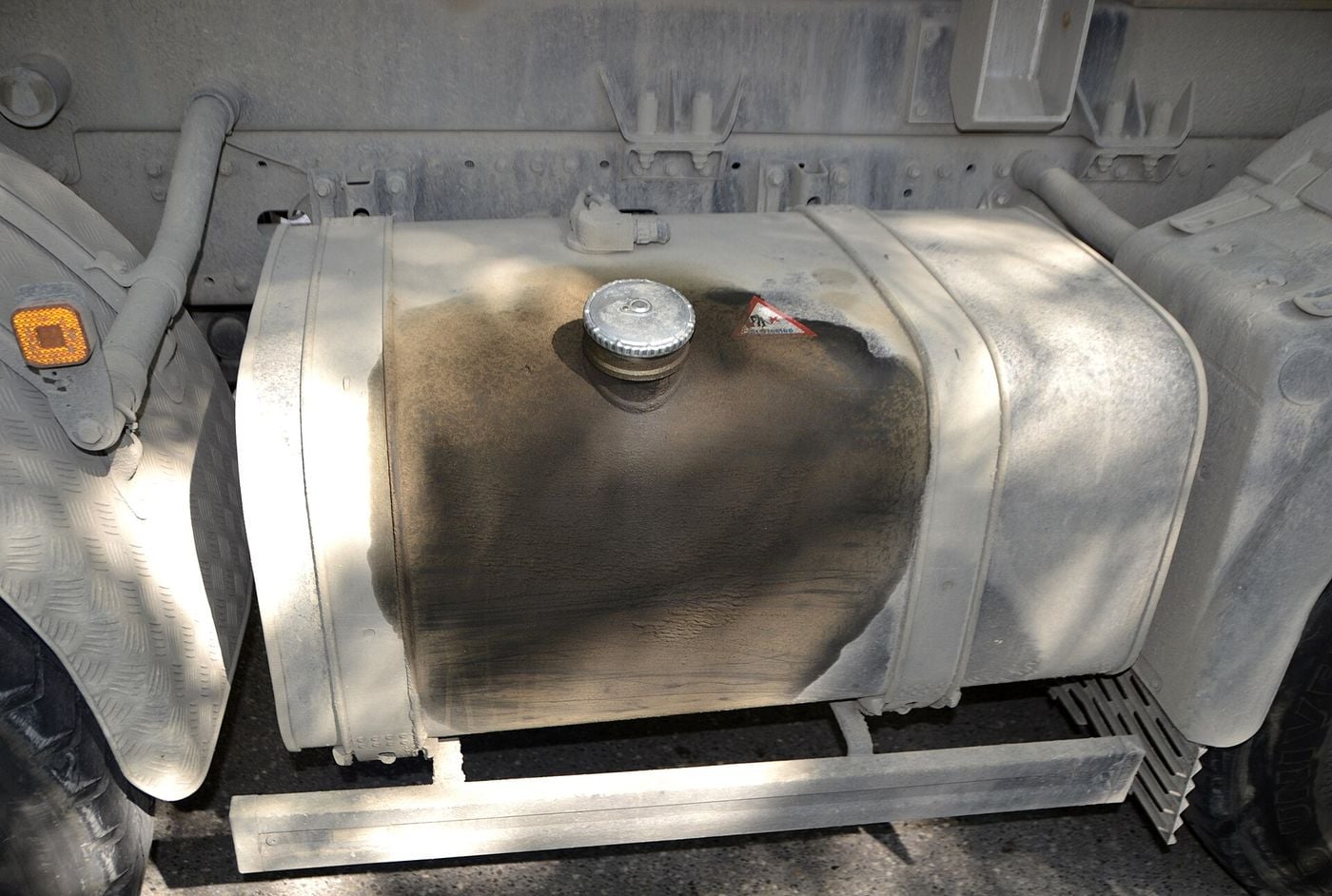
Fuel in the standard tanks of a truck or bus entering the EU’s customs territory is admitted free of import duties under Article 107 of Council Regulation (EC) No 1186/2009, and exempt from import VAT under Article 84 of Council Directive 2009/132/EC. Both acts let member states limit the relief for commercial motor vehicles to 200 litres per vehicle and per journey, and both forbid using the fuel in another vehicle, removing it from the vehicle and storing it except during necessary repairs, or passing it on. A third act, Council Directive 2007/74/EC on goods imported by travellers from third countries, requires member states to exempt from VAT and excise duty the fuel in the standard tank of any one means of motor transport and up to 10 litres in a portable container, and allows lower limits for the crew of a means of transport travelling from a third country. Inside the EU, fuel released for consumption in one member state and carried in the standard tanks of a commercial motor vehicle for use as fuel by that vehicle shall not be subject to taxation in any other member state (Article 24 of Council Directive 2003/96/EC). This page covers EU law only.
Status as at 14 November 2026. Read on that day from the Publications Office of the European Union: the consolidated text of Regulation (EC) No 1186/2009 of 1 July 2026, the consolidated text of Directive 2009/132/EC of 1 July 2021, Directive 2007/74/EC as published in the Official Journal and the consolidated text of Directive 2003/96/EC of 10 January 2023, each in English, German, Spanish, French, Italian and Polish; and, in English only, Council Regulation (EU) 2026/382, Directive (EU) 2020/262 and, from the European Parliament, its Legislative Observatory file on the recast of the Energy Taxation Directive, 2021/0213(CNS). Not read: the national laws through which member states apply these acts, including whether a member state uses the 200-litre options, and the rules of countries outside the EU.
Three reliefs at the external border and one rule inside the EU
The four acts deal with different charges and are separate from each other: the regulation covers import duties, Directive 2009/132/EC covers VAT on importation, Directive 2007/74/EC covers VAT and excise duty on goods that travellers bring from a third country, and Article 24 of Directive 2003/96/EC covers the taxation of fuel that moves in a vehicle’s tanks from one member state to another. Each has its own articles and its own options for member states.
| Act and articles | Charge | Fuel covered | Limits member states may set | If the fuel is used otherwise |
|---|---|---|---|---|
| Regulation (EC) No 1186/2009, Articles 107 to 111 | Import duties | Standard tanks of private and commercial motor vehicles, motor cycles and special containers entering the customs territory; portable tanks of private motor vehicles and motor cycles, up to 10 litres per vehicle; lubricants required for the journey | 200 litres per vehicle, per special container and per journey for commercial motor vehicles and special containers (Art. 108); a frontier zone of up to 25 km for commercial vehicles on journeys made by frontier-zone residents (Art. 109) | Import duties at the rate in force on the date of non-compliance (Art. 110(2)) |
| Directive 2009/132/EC, Articles 84 to 88 | Import VAT | Standard tanks of private and commercial motor vehicles, motorcycles and special containers; portable tanks of private motor vehicles and motorcycles, up to 10 litres per vehicle; lubricants required for the journey | 200 litres per vehicle and per journey when the vehicle comes from a third country or third territory, and 200 litres per special container and per journey (Art. 85); a frontier zone of up to 25 kilometres for commercial vehicles coming from third countries or third territories, on journeys made by residents of that zone (Art. 86) | Import VAT at the rate in force on the date of non-compliance (Art. 87(2)) |
| Directive 2007/74/EC, Articles 11 and 13 | VAT and excise duty on goods imported by travellers from a third country | The standard tank of any one means of motor transport, and up to 10 litres in a portable container | Lower quantitative limits for frontier-zone residents, frontier-zone workers and the crew of a means of transport used to travel from a third country (Art. 13(1)) | Not stated in Articles 11 and 13 |
| Directive 2003/96/EC, Article 24 | Taxation of energy products in another member state | Fuel released for consumption in a member state, in the standard tanks of commercial motor vehicles and used by those same vehicles, and in special containers for their systems | No quantity in Article 24 | Not stated in Article 24 |
Customs duty: Regulation (EC) No 1186/2009, Articles 107 to 111
The fuel articles form Chapter XXVIII of Title II (“Relief from import duty”), headed “Fuel and lubricants present in land motor vehicles and special containers”. Article 107(1)(a) admits free of import duties “fuel contained in the standard tanks” of private and commercial motor vehicles and motor cycles, and of special containers, “entering the customs territory of the Community”. Point (b) adds fuel in portable tanks carried by private motor vehicles and motor cycles, with a maximum of 10 litres per vehicle and without prejudice to national provisions on the holding and transport of fuel. The relief is “Subject to Articles 108, 109 and 110”.
Article 107(2)(a) defines a commercial motor vehicle as any motorised road vehicle “(including tractors with or without trailers)” which by its type of construction and its equipment is designed for and capable of transporting, whether for payment or not, “more than nine persons including the driver” or goods, and any road vehicle for a special purpose other than transport as such. Any other motor vehicle is a private motor vehicle (point (b)).
- The 200-litre option (Article 108). “As regards the fuel contained in the standard tanks of commercial motor vehicles and special containers, Member States may limit application of the relief to 200 litres per vehicle, per special container and per journey.” The regulation does not list the member states that use this option.
- The frontier zone (Article 109). Member states may limit the amount of duty-free fuel for commercial motor vehicles engaged in international transport into their frontier zone “to a maximum depth of 25 km as the crow flies, provided such journeys are made by persons residing in the frontier zone” (paragraph 1(a)), and for private motor vehicles belonging to persons residing in the frontier zone (paragraph 1(b)). For the private-vehicle case, paragraph 2 defines the frontier zone as a zone that, as the crow flies, does not extend more than 15 kilometres from the frontier, together with the local administrative districts part of whose territory lies within it. Like Article 108, Article 109 is worded as something member states “may” do.
- Use, storage and transfer (Article 110). Fuel admitted duty-free “may not be used in a vehicle other than that in which it was imported nor be removed from that vehicle and stored, except during necessary repairs to that vehicle, nor be transferred, whether for a consideration or free of charge, by the person benefiting from the relief” (paragraph 1). Non-compliance gives rise to the import duties at the rate in force on the date of non-compliance, on the basis of the type of goods and the customs value ascertained or accepted on that date by the competent authorities (paragraph 2).
- Lubricants (Article 111). The relief also applies to the lubricants present in the motor vehicles “and required for their normal operation during the journey in question”.
The consolidated text of 1 July 2026 lists one amending act, Council Regulation (EU) 2026/382 of 11 February 2026, which applies from 1 July 2026 (Article 4). Its Article 1 reads: “Chapter V of Title II of Regulation (EC) No 1186/2009 is deleted.” That chapter was the relief for goods sent from a third country in consignments with a total intrinsic value not exceeding EUR 150 (recital 1).
What counts as a standard tank
Regulation (EC) No 1186/2009 (Article 107(2)(c)), Directive 2009/132/EC (Article 84(2)) and Directive 2003/96/EC (Article 24(2)) define standard tanks in matching terms, in three parts:
- the tanks “permanently fixed by the manufacturer to all motor vehicles of the same type as the vehicle in question” whose permanent fitting enables fuel to be used directly, both for propulsion and, where appropriate, “for the operation, during transport, of refrigeration systems and other systems”;
- gas tanks fitted to motor vehicles designed for the direct use of gas as a fuel, and tanks fitted to the other systems with which the vehicle may be equipped (Directive 2009/132/EC speaks of “ancillary systems”);
- the tanks permanently fixed by the manufacturer to all containers of the same type as the container in question, whose permanent fitting enables fuel to be used directly for the operation, during transport, of the refrigeration and other systems with which special containers are equipped.
A special container is “any container fitted with specially designed apparatus for refrigeration systems, oxygenation systems, thermal insulation systems, or other systems” (Article 107(2)(d) of the regulation; the same definition in Article 84(2)(d) of Directive 2009/132/EC and Article 24(2) of Directive 2003/96/EC). The definitions thus name refrigeration systems and gas tanks expressly. Temperature-controlled transport is described in refrigerated transport and the ATP test, and trucks that run on gas in LNG and bio-LNG trucks.
Import VAT: Directive 2009/132/EC, Articles 84 to 88
Directive 2009/132/EC defines the scope of the VAT exemptions on importation referred to in Article 143(b) and (c) of the VAT Directive, Directive 2006/112/EC (Article 1). Its Chapter 6, “Fuels and lubricants present in land motor vehicles and special containers”, has its own articles and its own options:
- Exemption (Article 84). Exempt on admission are fuel in the standard tanks of private and commercial motor vehicles and motorcycles and of special containers, and fuel in portable tanks carried by private motor vehicles and motorcycles, up to a maximum of 10 litres per vehicle and without prejudice to national provisions on the holding and transport of fuel. Paragraph 2 defines commercial motor vehicle, private motor vehicle, standard tanks and special container.
- The 200-litre option (Article 85). Member states may limit the exemption for fuel in the standard fuel tanks of commercial motor vehicles and special containers “(a) when the vehicle comes from a third country or third territory, to 200 litres per vehicle and per journey; (b) to 200 litres per special container and per journey.”
- The frontier zone (Article 86). Member states may limit the exempt amount for commercial motor vehicles engaged in international transport coming from third countries or third territories to their frontier zone, “to a maximum depth of 25 kilometres as the crow flies, where such transport consists of journeys made by persons residing in that zone”, and for private motor vehicles of frontier-zone residents, to a maximum depth of 15 km as the crow flies, contiguous with a third country or third territory.
- Use, storage and transfer (Article 87). The fuel may not be used in a vehicle other than that in which it was imported, nor be removed from that vehicle and stored, except during necessary repairs to that vehicle, or transferred for a consideration or free of charge by the person granted the exemption. Non-compliance gives rise to “the import VAT relating to the products in question at the rate in force on the date of such non-compliance” (paragraph 2).
- Lubricants (Article 88). The exemption also applies to lubricants carried in motor vehicles and required for their normal operation during the journey in question.
Article 85 is an option of its own, separate from Article 108 of the customs regulation. The consolidated text of 1 July 2021 lists one amending act, Council Directive (EU) 2017/2455, itself amended by Council Decision (EU) 2020/1109, and shows Chapter 6 in its 2009 wording.
VAT and excise duty for travellers and crews: Directive 2007/74/EC
Directive 2007/74/EC lays down rules on the exemption from VAT and excise duty of goods imported “in the personal luggage of persons travelling from a third country” or from a territory where the EU’s VAT or excise provisions, or both, do not apply (Article 1). Fuel comes into it in two places:
- Article 11: “Member States shall exempt from VAT and excise duty, in the case of any one means of motor transport, the fuel contained in the standard tank and a quantity of fuel not exceeding 10 litres contained in a portable container.”
- Article 5, on personal luggage: “Fuel other than that referred to in Article 11 shall not be regarded as personal luggage.”
Article 11 stands in Section 3 of Chapter II, “Quantitative limits”. Under the common provisions of that chapter, member states exempt goods imported in the personal luggage of travellers “provided that the imports are of a non-commercial character” (Article 4). Article 11 is worded as an obligation (“shall exempt”) and gives no litre figure for the standard tank. Under Article 13(1), member states may lower the monetary thresholds or the quantitative limits, or both, for persons resident in a frontier zone, frontier-zone workers and “the crew of a means of transport used to travel from a third country” or from a territory where the EU’s VAT or excise provisions do not apply. Article 13(2) sets paragraph 1 aside where such a traveller produces evidence that he is going beyond the frontier zone of the member state or is not returning from the frontier zone of the neighbouring third country, but adds that it “shall apply where frontier-zone workers or the crew of the means of transport used in international travel import goods when travelling in the course of their work”. In this directive the frontier zone is a zone that, as the crow flies, does not extend more than 15 kilometres from the frontier of a member state (Article 3(5)).
Fuel in the tank between member states: Directive 2003/96/EC, Article 24
Article 24(1) of the Energy Taxation Directive covers energy products released for consumption in a member state and “contained in the standard tanks of commercial motor vehicles and intended to be used as fuel by those same vehicles”, as well as fuel in special containers intended for the operation, during transport, of the systems equipping those containers. Such products “shall not be subject to taxation in any other Member State”. Paragraph 2 defines standard tanks and special containers as set out above. Article 24 names no quantity, and it is in its 2003 wording in the consolidated text of 10 January 2023.
The general excise directive, Council Directive (EU) 2020/262, whose Article 32 applies from 13 February 2023 (Article 57), mentions vehicle tanks in Article 32(4) only. That paragraph concerns private individuals: member states may provide that excise duty becomes due in the member state of consumption on mineral oils already released for consumption in another member state if they are transported by or on behalf of a private individual using “atypical modes of transport”, which means the transport of fuels “other than in the tanks of vehicles or in appropriate reserve fuel canisters”.
The EU’s separate emissions trading system for road transport fuel is covered in ETS2 and road transport.
Changes in force and proposals
- In force: Council Regulation (EU) 2026/382, applying from 1 July 2026, deleted Chapter V of Title II of Regulation (EC) No 1186/2009, the EUR 150 relief for low-value consignments. Articles 107 to 111 on fuel are unchanged.
- Proposed, not adopted: the Commission’s proposal to recast the Energy Taxation Directive, COM(2021) 563, was published on 14 July 2021 (procedure 2021/0213(CNS), a consultation procedure). On 14 November 2026 the Legislative Observatory gave the stage reached as “Awaiting committee decision”; its last key event was the “Resumption of business from the previous parliamentary term” on 13 November 2024, and its documentation gateway lists a committee draft report of 5 May 2025 (PE770.060). Article 24 of Directive 2003/96/EC, as quoted above, is the text in force. What the proposal puts in place of Article 24 was not read for this page.
What this page does not cover
- National rules. How each member state applies these acts, including whether it uses the 200-litre options of Article 108 of the regulation and Article 85 of Directive 2009/132/EC, the frontier-zone limits or the lower limits for crews. No national text was read, so no member state is named.
- Countries outside the EU. The rules of Türkiye, Russia, the Eurasian Economic Union or any other country for fuel in the tanks of vehicles entering their territory.
- Refunds of national fuel excise to hauliers or bus operators.
- The goods a vehicle carries. Customs formalities for the load are described in the T1 transit document and NCTS and the TIR carnet.
- Commercial gas oil. The refunds of excise duty on gas oil used by trucks and buses that the Energy Taxation Directive allows are described in commercial gas oil in the EU.
Quick answers
- How much fuel can a truck bring into the EU in its tank without paying duty?
- Under EU law the fuel in the standard tanks of a commercial motor vehicle entering the EU's customs territory is admitted free of import duties (Article 107 of Regulation (EC) No 1186/2009) and exempt from import VAT (Article 84 of Directive 2009/132/EC). Neither article sets a litre figure for standard tanks, but each act lets member states limit the relief: Article 108 of the regulation to 200 litres per vehicle, per special container and per journey, and Article 85 of the directive to 200 litres per vehicle and per journey when the vehicle comes from a third country or third territory, and 200 litres per special container and per journey. Directive 2007/74/EC, on goods in the personal luggage of travellers from a third country where the imports are of a non-commercial character (Article 4), requires member states to exempt from VAT and excise duty the fuel in the standard tank of any one means of motor transport plus up to 10 litres in a portable container, and lets member states lower limits for crews. The acts do not say which member states use these options.
- What counts as a standard tank of a truck or bus?
- Regulation (EC) No 1186/2009 (Article 107(2)(c)), Directive 2009/132/EC (Article 84(2)) and Directive 2003/96/EC (Article 24(2)) define standard tanks as the tanks permanently fixed by the manufacturer to all motor vehicles of the same type, whose permanent fitting lets the fuel be used directly for propulsion and, where appropriate, for refrigeration and other systems during transport; gas tanks of vehicles designed to run directly on gas and tanks fitted to the vehicle's other systems; and tanks fixed by the manufacturer to all containers of the same type for the refrigeration and other systems of special containers.
- Can fuel that entered duty-free in a truck's tank be pumped into another vehicle or stored?
- No. Article 110(1) of Regulation (EC) No 1186/2009 says such fuel may not be used in a vehicle other than that in which it was imported, nor be removed from that vehicle and stored, except during necessary repairs to that vehicle, nor be transferred, for a consideration or free of charge, by the person benefiting from the relief. If this is not complied with, the import duties apply at the rate in force on the date of non-compliance (Article 110(2)). Article 87 of Directive 2009/132/EC sets the same ban for the import VAT exemption, with import VAT applying on non-compliance.
- Is the fuel in a truck's tank taxed again when it crosses from one EU country into another?
- No, under Article 24 of Directive 2003/96/EC: energy products released for consumption in a member state, contained in the standard tanks of commercial motor vehicles and intended to be used as fuel by those same vehicles, and fuel in special containers for their systems, shall not be subject to taxation in any other member state. Article 24 names no quantity. The Commission's 2021 proposal to recast the directive (procedure 2021/0213(CNS)) has not been adopted: on 14 November 2026 the European Parliament's Legislative Observatory gave its stage as Awaiting committee decision.
- What is the 25 km frontier-zone rule for trucks?
- It is an option for member states, not a limit that applies by itself. Article 109(1)(a) of Regulation (EC) No 1186/2009 lets a member state limit the amount of duty-free fuel for commercial motor vehicles engaged in international transport into its frontier zone to a maximum depth of 25 km as the crow flies, provided such journeys are made by persons residing in the frontier zone. Article 86(a) of Directive 2009/132/EC gives the same option for import VAT, to a maximum depth of 25 kilometres. For private motor vehicles of frontier-zone residents the figure is a maximum of 15 km.
Sources
- Council Regulation (EC) No 1186/2009 of 16 November 2009 setting up a Community system of reliefs from customs duty (codified version) — consolidated text of 1 July 2026 (02009R1186-20260701): Article 1, Title II Chapter XXVIII, Articles 107 to 111; English, German, Spanish, French, Italian and Polish versions — Publications Office of the European Union
- Council Regulation (EU) 2026/382 of 11 February 2026 amending Regulation (EC) No 1186/2009 as regards the elimination of the threshold-based customs duty relief (OJ L, 2026/382, 18.2.2026): recital 1, Articles 1 and 4 — Publications Office of the European Union, 11 Feb 2026
- Council Directive 2009/132/EC of 19 October 2009 determining the scope of Article 143(b) and (c) of Directive 2006/112/EC as regards exemption from value added tax on the final importation of certain goods (codified version) — consolidated text of 1 July 2021 (02009L0132-20210701): Article 1, Chapter 6, Articles 84 to 88; English, German, Spanish, French, Italian and Polish versions — Publications Office of the European Union
- Council Directive 2007/74/EC of 20 December 2007 on the exemption from value added tax and excise duty of goods imported by persons travelling from third countries (OJ L 346, 29.12.2007): Articles 1, 3, 4, 5, 11 and 13; English, German, Spanish, French, Italian and Polish versions — Publications Office of the European Union, 20 Dec 2007
- Council Directive 2003/96/EC of 27 October 2003 restructuring the Community framework for the taxation of energy products and electricity — consolidated text of 10 January 2023 (02003L0096-20230110): Article 24; English, German, Spanish, French, Italian and Polish versions — Publications Office of the European Union
- Council Directive (EU) 2020/262 of 19 December 2019 laying down the general arrangements for excise duty (recast) (OJ L 58, 27.2.2020): Articles 32 and 57 — Publications Office of the European Union, 19 Dec 2019
- Energy Taxation Directive, procedure file 2021/0213(CNS): basic information, key events, technical information and documentation gateway (read on 14 November 2026) — European Parliament, Legislative Observatory