Can I drive a minibus or 7.5-tonne lorry on a car licence?
A minibus of up to 16 passenger seats under conditions such as 21+, unpaid and for a non-commercial body; a 7.5 t lorry, exempted vehicles aside, only if your car test was before 1997.
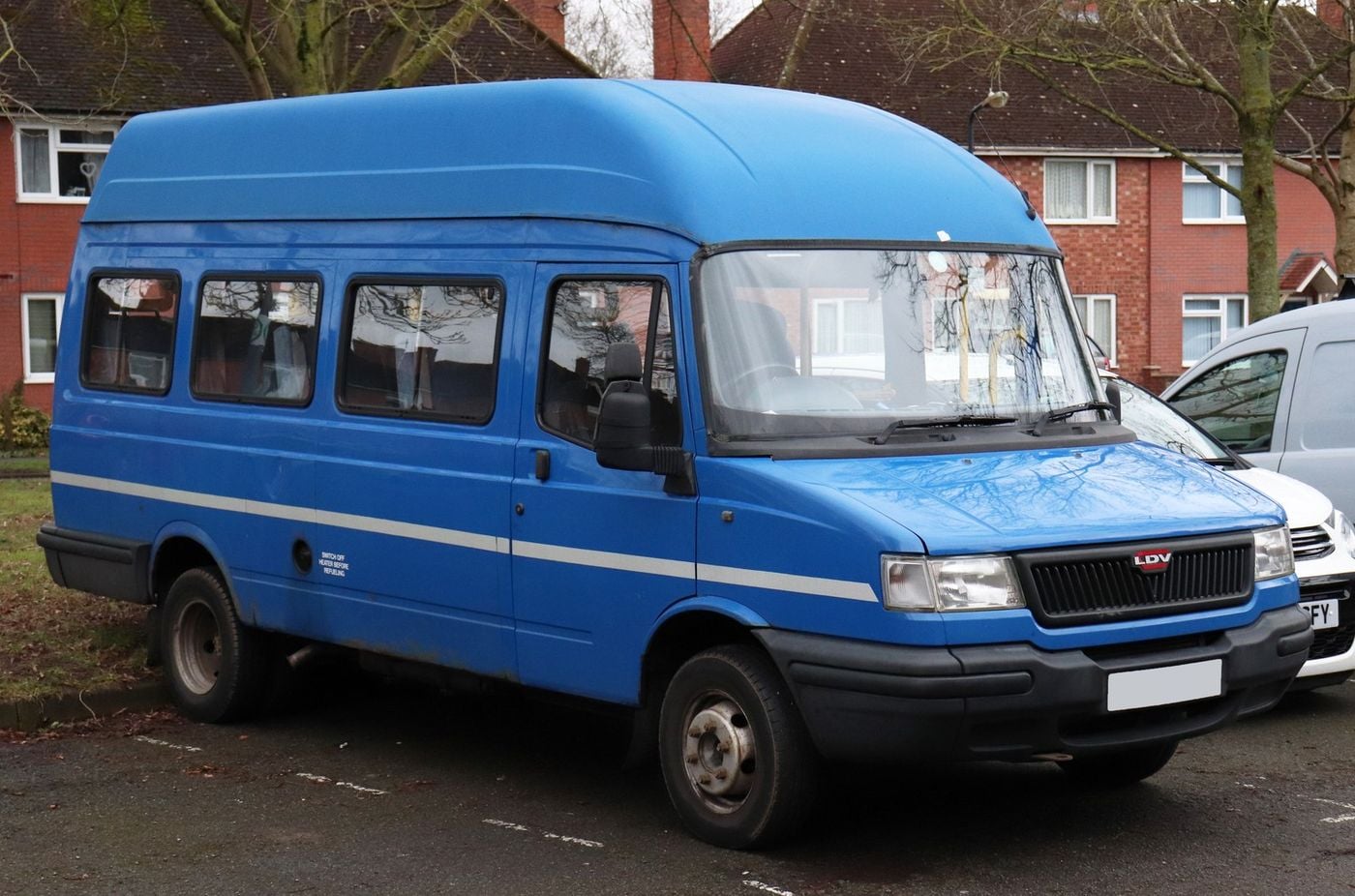
A full car (category B) licence in Great Britain covers a minibus with up to 16 passenger seats through an exemption in regulation 7(6) of the Motor Vehicles (Driving Licences) Regulations 1999: the driver must be 21 or over, have held the car licence for at least 2 years and receive nothing beyond out-of-pocket expenses, and the minibus must be driven for a non-commercial body, for social purposes and not for hire or reward, with no trailer and a maximum authorised mass (MAM) of 3.5 tonnes, or 4.25 tonnes counting specialised equipment for disabled passengers. A lorry of 3,500 to 7,500 kg MAM is a category C1 vehicle; DVLA’s leaflet INF52 says C1 is already on the licence of a driver who passed the car test before 1 January 1997, and where the car test was passed on or after that date category B stops at 3,500 kg, or 4,250 kg for an electric or hydrogen vehicle.
Status: 25 October 2026. This page follows, as read on that day, GOV.UK’s pages Driving a minibus, Driving licence categories, Driving licence codes, Renew your driving licence if you’re 70 or over and Driver CPC training for qualified drivers; the Department for Transport’s guidance on section 19 and 22 permits, last updated on 30 December 2020; DVLA’s leaflets INF52 (5/25) and INF4D (4/26); and regulations 7 and 76 of the Motor Vehicles (Driving Licences) Regulations 1999 (SI 1999/2864) in the revised text on legislation.gov.uk, which showed no known outstanding effects for either regulation. It covers England, Scotland and Wales; Northern Ireland is not covered. GOV.UK points drivers to its View your driving licence information service to see what vehicles their own licence covers.
| Vehicle | Car test passed before 1 January 1997 | Car test passed on or after 1 January 1997 |
|---|---|---|
| Minibus, up to 16 passenger seats, not for hire or reward | D1 (not for hire or reward) is shown on the licence | Only under the regulation 7(6) conditions: 21 or over, licence held 2 years, unpaid, non-commercial body, social purposes, no trailer, 3.5 t MAM (4.25 t with equipment for disabled passengers); zero-emission minibus under regulation 7(11)(c): 4.25 t (5 t) |
| Minibus with a trailer | D1E (not for hire or reward); GOV.UK: a minibus with a trailer over 750 kg MAM | Not covered: the exemption requires no trailer |
| Goods vehicle of 3,500 to 7,500 kg MAM | C1 is shown on the licence | Not covered, apart from exempted goods vehicles: category B ends at 3,500 kg, or 4,250 kg zero-emission; C1 is needed |
| Vehicle and trailer combination | C1E (8.25 tonnes); GOV.UK: usually up to 8,250 kg MAM | Trailer up to 3,500 kg MAM, combined MAM not over 7,000 kg |
The lorry categories, the D4 medical and the tests for adding C1 are set out in HGV licences in Great Britain, and the 3.5 and 7.5 tonne lines in British law in What is an HGV?. This page answers the two car-licence questions only.
Can I drive a minibus on a car licence?
The exemption is regulation 7(6) of SI 1999/2864. It applies to a person who holds a full licence for category B, has held it for an aggregate period of not less than 2 years, is aged 21 or over, if aged 70 or over is not suffering from a relevant disability for which the Secretary of State would be bound to refuse a Group 2 licence, and “receives no consideration for so doing, other than out-of pocket expenses”. Such a person “may drive, on behalf of a non-commercial body for social purposes but not for hire or reward, a vehicle of a class included in sub-category D1 which has no trailer attached” and whose maximum authorised mass is not over 3.5 tonnes, excluding any part of that weight attributable to specialised equipment intended for the carriage of disabled passengers, and not over 4.25 tonnes otherwise. A holder whose licence covers only vehicles with automatic transmission is deemed competent to drive only such minibuses that have automatic transmission.
GOV.UK’s page Driving a minibus gives the conditions in plain words for driving a minibus within the UK, and adds that the MAM of the minibus “including passengers” is not more than 3,500 kg, or 4,250 kg for electric or hydrogen vehicles, with an additional MAM of 750 kg for extra equipment for disabled passengers, for example a wheelchair ramp. It describes the driving as done “on a voluntary basis” and words the medical condition as meeting the “Group 2” medical standards if over 70; the regulation says aged 70 or over. For driving abroad, GOV.UK refers drivers to the licensing authority of the country they are visiting.
Electric and hydrogen minibuses. Regulation 7(11)(c) sets the same conditions for a zero-emission vehicle in sub-category D1, with a MAM limit of 4.25 tonnes excluding specialised equipment for disabled passengers and 5 tonnes otherwise. Regulation 7(12)(b) defines a zero-emission vehicle as “a vehicle without an internal combustion engine, or with an internal combustion engine that has emissions of CO2 of zero grams per kilometre”. legislation.gov.uk records paragraphs (11) and (12) as substituted on 10 June 2025 by SI 2025/608.
How many seats. Sub-category D1 is the limit of the exemption. GOV.UK defines a D1 vehicle as one with no more than 16 passenger seats, a maximum length of 8 metres and a trailer up to 750 kg; INF52 counts the 16 seats “in addition to the driver”. A minibus with 16 passenger seats and the driver’s seat has 17 seats in all and stays within that count (our arithmetic). Category B itself covers vehicles with up to 8 passenger seats. The general D1 and D categories are set out in bus driving licences.
Charging passengers: the minibus permit
GOV.UK’s Driving a minibus page describes a minibus permit, applied for from DVSA, for charging passengers when the vehicle can carry between 9 and 16 passengers, it is driven for a voluntary organisation that benefits the community, the service is only available for members of that organisation and not to the general public, and any charges are to cover running costs and are not for profit. The driver must be 21 or older.
The Department for Transport’s guidance on section 19 and 22 permits under the Transport Act 1985 says all drivers of a vehicle operated under a permit must be 21 or over, and that drivers who hold a passenger carrying vehicle (PCV) licence can drive, and be paid for driving, a permit vehicle of any size. For drivers without one, it sets the rules for small buses, adapted to carry 9 to 16 passengers, by the date of the car licence:
- Full licence for category B (car, not automatic) granted before 1 January 1997. These drivers “were automatically granted additional entitlement D1, to drive a small bus not used for hire or reward”. For as long as they hold D1, they “may drive a small bus of any weight used under the permit. There is no restriction on them receiving payment.”
- Car test passed on or after 1 January 1997. Category B entitles them to drive a small bus only if they have held a full car licence for at least 2 years, receive no payment or other consideration beyond out-of-pocket expenses, the vehicle’s maximum gross weight is not over 3.5 tonnes (4.25 tonnes including specialised equipment for the carriage of disabled passengers), drivers aged 70 or over have no medical condition that would disqualify them from a D1 licence, no trailer is towed, and an automatic-only licence is used only in an automatic vehicle.
The guidance adds that drivers aged 70 or over who do not meet the higher medical standards are not authorised to drive small buses, and that large buses, adapted to carry 17 or more passengers, need a PCV licence. It was last updated on 30 December 2020, before regulation 7(11) took its current wording, and its weight condition does not mention zero-emission vehicles.
Driving a minibus commercially, or where the above conditions do not apply, needs both minibus provisional entitlement, “also known as a passenger carrying vehicle (PCV) licence”, and a public service vehicle (PSV) operator licence, according to GOV.UK.
Can I drive a 7.5-tonne lorry on a car licence?
For a driver who passed the car test on or after 1 January 1997, GOV.UK’s category B covers vehicles with up to 8 passenger seats and a MAM of 3,500 kg for petrol and diesel vehicles, hybrids included, and 4,250 kg for electric or hydrogen vehicles, zero emission vehicles only; an electric or hydrogen vehicle with extra equipment for disabled passengers can have an additional MAM of 750 kg. Category C1 covers “vehicles between 3,500 and 7,500kg maximum authorised mass (MAM) (with a trailer up to 750kg)”. A 7.5-tonne lorry is therefore a C1 vehicle, outside a car licence of that date. INF52 also lists “exempted” goods vehicles that a full car licence covers, among them goods vehicles built before 1 January 1960 as long as they are not loaded and are not towing a loaded trailer; HGV licences in Great Britain gives two of them.
For a driver who passed earlier, INF52 Note 5 says: “If you passed your test for category B or B automatic before 1 January 1997, your licence will already show entitlements C1, C1E (8.25 tonnes), D1 and D1E (not for hire or reward).” GOV.UK’s categories page says such a driver is “usually allowed to drive a vehicle and trailer combination up to 8,250kg maximum authorised mass (MAM)” and is “also allowed to drive a minibus with a trailer over 750kg MAM”, and points to the licence information service to check.
Regulation 76 of SI 1999/2864 sets how such licences are read: in a licence granted before 1 January 1997, a category in the older classification is read as the corresponding new one. Its table turns an older “C1 plus E” into “C1 + E (8.25 tonnes)”, an older “D1” into “D1 (not for hire or reward)” and an older “D1 plus E” into “D1 + E (not for hire or reward)”. Paragraph (3E) excludes D1 in those licences from paragraph (2A), the conversion rule for licences granted before 19 January 2013: “Paragraph (2A) shall not apply to a reference to vehicles in sub-category D1 in a licence granted before 1st January 1997.”
GOV.UK’s list of driving licence codes includes these three, whose wording refers to C1, to hire or reward and to 8,250 kilograms:
| Code | Meaning |
|---|---|
| 97 | Not allowed to drive category C1 vehicles which are required to have a tachograph fitted |
| 101 | Not for hire or reward (that is, not to make a profit) |
| 107 | Not more than 8,250 kilograms |
The sources word the 1997 cut-off differently. INF52 and GOV.UK’s categories page speak of passing the test before 1 January 1997, INF52 for “category B or B automatic”. The Department for Transport’s permit guidance speaks of drivers granted a full licence “in category B (car, not automatic)” before that date, and a note on GOV.UK’s minibus page begins “If you got your driving licence after 1 January 1997”. The sources were not reconciled here; GOV.UK’s pages point to the licence information service for what a given licence covers. INF4D adds that a driver under 70 who holds a medically restricted car or motorcycle licence, held before 1 January 1997, needs a D4 medical examination report to apply for C1 or C1/D1 entitlement.
At 70: renewing C1 and D1
GOV.UK says that once a driver reaches 70 the licence must be renewed every 3 years, and that its online renewal service cannot be used for C1 or D1: “You must renew your C1 (medium-sized vehicles) or D1 (minibus) entitlements by post.” INF4D lists, among the cases needing a D4 medical examination report, a driver who is 70 and still needs C1 and D1 entitlement, with a D4 every 3 years. The permit guidance says a driver with pre-1997 D1 who renews it at 70 “will need to take a compulsory medical examination”, and that “The renewed car licence and D1 entitlement are normally valid for 3 years.”
GOV.UK’s minibus page, under the heading “Renew your driving licence if you’re 70 or over”, names two forms: a D2 application form and a D4 medical examination report, which must be filled in by a doctor; both go to the address in section F of the D2. In the same section it notes: “If you got your driving licence after 1 January 1997, you’ll need to apply for a minibus licence.”
Driver CPC is a separate requirement
The permit guidance states: “You must have Driver CPC to drive a category D1, D1+E, D or D+E vehicle or vehicle combination, unless one of the exemptions applies.” GOV.UK’s Driver CPC page lists the vocational licences that carry “acquired rights”, meaning the driver did not have to take the initial qualification because of existing driving experience: lorry categories including C1 obtained before 10 September 2009, and “Minibus (not for hire or reward)”, D1(101), before 1997. It says the training deadlines for drivers with acquired rights have passed, and tells drivers who held only a D(101) or D1(101) licence before 10 September 2008 that driving a large vehicle for profit needs a provisional HGV or bus licence. The 35 hours of periodic training and the exemptions are covered in Driver CPC in Great Britain. Operator licensing for goods vehicles is set out in Goods vehicle operator licences in Great Britain.
Quick answers
- Can I drive a minibus on a car licence?
- Yes, a minibus with up to 16 passenger seats, if every condition of regulation 7(6) of SI 1999/2864 is met: the driver is 21 or over, has held the car licence for at least 2 years and is paid nothing beyond out-of-pocket expenses; the minibus is driven on behalf of a non-commercial body for social purposes, not for hire or reward, with no trailer; and its maximum authorised mass is no more than 3.5 tonnes, or 4.25 tonnes counting specialised equipment for disabled passengers. A driver aged 70 or over must also be free of any condition that would bar a Group 2 licence.
- Can I drive a 17-seater minibus on a car licence?
- Only if the 17 seats include the driver's. The car-licence exemption covers sub-category D1, which GOV.UK limits to no more than 16 passenger seats and a maximum length of 8 metres; DVLA's INF52 counts the 16 seats in addition to the driver. A vehicle with 16 passenger seats and a driver's seat has 17 seats in all, and the same conditions as for any minibus driven on a car licence apply.
- Can I drive a minibus without a D1 on my licence?
- Yes, within the regulation 7(6) conditions: unpaid, for a non-commercial body, for social purposes and not for hire or reward, aged 21 or over with the car licence held for 2 years, no trailer and a maximum authorised mass of 3.5 tonnes (4.25 tonnes with equipment for disabled passengers). Under a section 19 or 22 permit, the Department for Transport's guidance lets a driver who passed the car test on or after 1 January 1997 drive a small bus for 9 to 16 passengers if aged 21 or over, with the car licence held for 2 years, nothing received beyond out-of-pocket expenses, no trailer, a maximum gross weight of 3.5 tonnes (4.25 tonnes with equipment for disabled passengers) and, from 70, no medical condition that would disqualify them from a D1 licence. Driving a minibus commercially needs both minibus provisional entitlement, also known as a passenger carrying vehicle (PCV) licence, and a public service vehicle (PSV) operator licence, according to GOV.UK.
- Can I drive a 7.5 tonne lorry on a car licence?
- Apart from the exempted goods vehicles listed by DVLA, only if you passed your car test before 1 January 1997. DVLA's INF52 says those licences already show C1, which covers vehicles between 3,500 and 7,500 kg maximum authorised mass, and C1E (8.25 tonnes). A car licence from a test passed on or after that date covers vehicles up to 3,500 kg, or 4,250 kg for an electric or hydrogen vehicle, so a 7.5-tonne lorry needs category C1 to be added.
- What happens to C1 and D1 on a pre-1997 licence at 70?
- From 70 a licence is renewed every 3 years, and GOV.UK says C1 and D1 entitlements cannot be renewed with its online service, only by post. DVLA's INF4D says a driver who is 70 and still needs C1 and D1 entitlement needs a D4 medical examination report every 3 years, and the Department for Transport's permit guidance says the renewed car licence and D1 entitlement are normally valid for 3 years.
Sources
- Driving a minibus — GOV.UK (DVLA and DVSA)
- Driving licence categories — GOV.UK (DVLA)
- Driving licence codes — GOV.UK (DVLA)
- Renew your driving licence if you're 70 or over — GOV.UK (DVLA)
- Driver CPC training for qualified drivers — When to take training (drivers with acquired rights) — GOV.UK (DVSA)
- Section 19 and 22 permits and obligations: not for profit passenger transport — Drivers of permit vehicles; Driver's CPC and driver training — Department for Transport, GOV.UK, 30 Dec 2020
- INF52: Large vehicles you can drive using your car, bus or lorry licence (5/25) — Driver and Vehicle Licensing Agency (DVLA), 10 Jun 2025
- INF4D: D4 medical examination report for a Group 2, lorry or bus licence — information and useful notes (4/26) — Driver and Vehicle Licensing Agency (DVLA)
- The Motor Vehicles (Driving Licences) Regulations 1999 (SI 1999/2864) — regulation 7, competence to drive classes of vehicle: special cases (revised text, paragraphs (11) and (12) as substituted on 10 June 2025) — legislation.gov.uk (The National Archives)
- The Motor Vehicles (Driving Licences) Regulations 1999 (SI 1999/2864) — regulation 76, effect of change in classification of vehicles for licensing purposes (revised text) — legislation.gov.uk (The National Archives)