PCV licence in Great Britain: D1, D, ages and the tests
A PCV licence is bus entitlement D1 or D: D1 means up to 16 passenger seats and 8 metres. DVLA's table sets 21 for D1 and 24 for D, with lower ages.
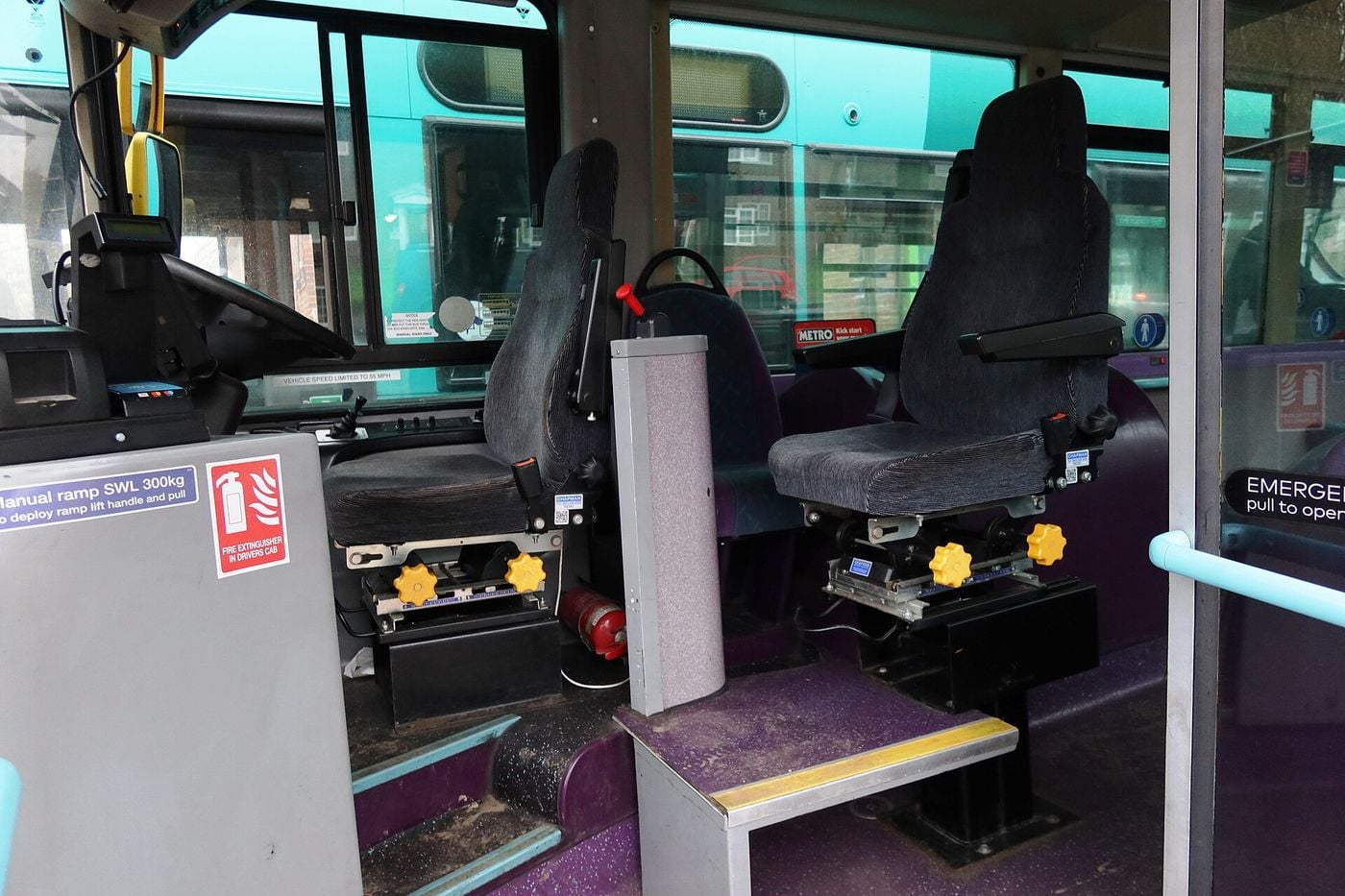
A PCV licence is the passenger carrying vehicle entitlement on a Great Britain driving licence: category D1, D1E, D or DE, added to a full car licence. GOV.UK limits D1 to no more than 16 passenger seats and a maximum length of 8 metres, while D covers any bus with more than 8 passenger seats. DVLA’s INF52 table gives 21 as the minimum age for D1 and 24 for D, with ages from 18 for a driver who holds the Driver CPC initial qualification, under stated conditions.
Status: 4 November 2026. This page follows, as read on that day, GOV.UK’s pages Driving licence categories, Compare old and new driving licence categories, Driving licence codes, Adding categories to your driving licence, Become a qualified HGV or bus driver, Driver CPC training, Driving a minibus, PSV operator licences, and Renew or change a lorry or bus licence; DVSA’s Rules for buses and coaches used for driving tests, last updated on 2 September 2026; DVLA’s leaflets INF52 (5/25) and INF4D (4/26); and, on legislation.gov.uk, the revised text of SI 1999/2864 and the Road Traffic Act 1988 and the Explanatory Note to SI 2021/1251. It covers England, Scotland and Wales; GOV.UK says driving licence categories are different in Northern Ireland, which is not covered.
| Item | As GOV.UK and DVLA state it |
|---|---|
| Categories | D1 and D1E (minibuses); D and DE (buses) |
| Licence needed first | A full car licence |
| Applying for provisional entitlement | Forms D2 and D4 to DVLA; no application fee |
| Minimum age in INF52’s table | D1: 21. D: 24. Lower ages under conditions |
| Tests for the full Driver CPC | Part 1 theory, part 2 case studies, part 3a off-road exercises, part 3b on-road driving, part 4 practical demonstration |
| Staying qualified | 35 hours of Driver CPC training every 5 years |
| Renewal | Every 5 years; every year from 65; a D4 medical from 45 |
The qualification itself, including the training hours, the card and the exemptions, is set out in Driver CPC in Great Britain, and the lorry categories in HGV licences in Great Britain. Driving a minibus on a car licence has its own page, Can I drive a minibus or 7.5-tonne lorry on a car licence?, and the European directive framework for the same category names is in bus driving licences and is not the Great Britain rule.
What does PCV mean?
PCV stands for passenger carrying vehicle. Section 121(1) of the Road Traffic Act 1988 defines two kinds: “a large passenger-carrying vehicle, that is to say, a vehicle used for carrying passengers which is constructed or adapted to carry more than 16 passengers”, and “a small passenger-carrying vehicle, that is to say, a vehicle used for carrying passengers for hire or reward which is constructed or adapted to carry more than 8 but not more than 16 passengers”. The Act speaks of a “passenger-carrying vehicle driver’s licence”.
GOV.UK’s categories page and its guide for new drivers do not use the term; the guide says “bus licence”. The term appears elsewhere: GOV.UK’s minibus page has “minibus provisional entitlement, also known as a passenger carrying vehicle (PCV) licence”, INF52 has “PCV driving test”, and DVSA’s test rules say category D1 vehicles “are minibuses, which are passenger carrying vehicles (PCVs)” and category D vehicles “are buses and coaches, which are PCVs”.
A driver licensed before June 1990 may have had a separate licence showing the older PSV groups. GOV.UK’s comparison table turns PSV 1 or 2 into DE, PSV 3 into D, PSV 4 into D with restriction code 105, and PSV 1-4A into D or DE with restriction code 78. It describes the vehicles in the PSV 1 to PSV 4 rows as “Passenger carrying vehicle (PCV)” or “PCV”.
PCV and PSV. A PCV licence belongs to the driver. A public service vehicle (PSV) operator’s licence is what GOV.UK says is needed to “operate a vehicle for hire or reward (payment or payment in kind) that can carry 9 or more passengers” and to “operate a smaller vehicle carrying passengers and charging separate fares for the journey”. To drive a minibus commercially, GOV.UK’s minibus page says both are needed.
What is a D1 licence? The four PCV categories
GOV.UK files D1 and D1E under “Minibuses” and D and DE under “Buses”.
| Category | Passengers and length | Trailer |
|---|---|---|
| D1 | No more than 16 passenger seats; a maximum length of 8 metres | Up to 750 kg |
| D1E | D1 category vehicles | Over 750 kg MAM; the combined MAM of both cannot exceed 12,000 kg |
| D | Any bus with more than 8 passenger seats | Up to 750 kg MAM |
| DE | D category vehicles | Over 750 kg |
The other texts add these details:
- Counting seats. INF52 counts D1’s 16 seats “in addition to the driver”, and Schedule 2 to SI 1999/2864 says “not more than sixteen passengers not including the driver”. DVSA’s test rules give D1 “between 9 and 16 passenger seats”. GOV.UK’s D1 entry names seats, length and trailer, and no maximum mass; the 3,500 kg on its minibus page is one of the conditions for driving a minibus on a car licence.
- D1 before 2013. INF52’s table for categories before 19 January 2013 describes D1 as “Vehicles with 9 to 16 passenger seats, with or without a trailer weighing up to 750kg”, with no length. Schedule 2, Part 4, keeps a “Former sub-category D1” for such vehicles with a maximum length exceeding 8 metres.
- The D1E limit. Schedule 2, in the revised text read, defines D1+E by the trailer: “the maximum authorised mass of the trailer exceeds 750 kilograms but not the unladen weight of the tractor vehicle”. It shows its former points (c) and (d) as omitted from 19 January 2013, and 12 tonnes appears in the Part 4 entry for “Former sub-category D1+E”. GOV.UK’s 12,000 kg and the revised Schedule differ on this point.
- Articulated buses. INF52 Note 4 says category D entitlement is needed for an articulated bus, for example a “bendy bus”.
- Other vehicles. GOV.UK lists trolley vehicles as category M. INF52 says a full car licence covers a bus “made more than 30 years before the date it is being driven, and not used for business purposes or for carrying more than 8 passengers”, and that a bus recovery vehicle, one with an unloaded weight of no more than 10.2 tonnes, can be driven with a full category D entitlement on the conditions it lists.
Speed limits for buses and coaches by length are in HGV, lorry and bus speed limits in Great Britain.
Code 101: not for hire or reward
GOV.UK’s list of driving licence codes reads: “101 - not for hire or reward (that is, not to make a profit)”. Schedule 2 has a matching sub-category, D1 (not for hire or reward), “comprising motor vehicles in sub-category D1 driven otherwise than for hire or reward”. GOV.UK glosses the phrase on other pages too: its minibus page says “there’s no payment from or on behalf of the passengers”, and its PSV page says “payment or payment in kind”.
INF52 Note 5 says a driver who passed the test for category B or B automatic before 1 January 1997 already has “C1, C1E (8.25 tonnes), D1 and D1E (not for hire or reward)”. GOV.UK’s comparison table shows D1 with restriction code 101, and D1E with codes 101, 111 and 119, for licences issued from 1976 to June 1990, and has rows both with codes (101 and 111 for D1; 101, 111 and 119 for D1E) and without them for licences issued from June 1990 to December 1996. Its Driver CPC page lists two entitlements with the code:
| Entry | GOV.UK’s wording |
|---|---|
| D(101) | Bus or coach (not for hire or reward); vocational licence got after 1991 |
| D1(101) | Minibus (not for hire or reward); vocational licence got before 1997 |
| Code 78 | Restricted to vehicles with automatic transmission |
| Code 105 | Vehicle not more than 5.5 metres long |
| Code 110 | Limited to transporting persons with restricted mobility |
| Code 111 | Limited to 16 passenger seats |
| Code 113 | Limited to 16 passenger seats except for automatics |
| Code 119 | Weight limit for vehicle does not apply |
GOV.UK says of a driver who held only a D(101) or D1(101) licence before 10 September 2008: “You’ll need to contact DVSA if you want to add your acquired rights for buses to your Driver CPC records”, and “If you want to drive a large vehicle for profit you’ll need to apply for a provisional HGV or bus licence.”
Minimum ages for D1 and D
GOV.UK’s guide lists being “over 18 - but there are some exceptions” among the conditions for becoming an HGV, bus or coach driver. Section 101(1) of the Road Traffic Act 1988 sets 21 for “Other motor vehicle”, and regulation 9 of SI 1999/2864 changes that figure for bus categories. legislation.gov.uk records no known outstanding effects on regulation 9.
| Age | D1 and D1+E | D and D+E |
|---|---|---|
| 24 | — | INF52 table minimum for D; regulation 9(8B), subject to paragraphs (9) and (9B) |
| 21 | INF52 table minimum for D1; section 101(1) | Vehicle used by the fire service or for maintaining public order, or undergoing road tests for repair or maintenance; a person under 24 entitled to a licence for that class before 19 January 2013 (regulation 9(8B)) |
| 20 | — | Initial qualification, carrying passengers other than on the regular service in the next row (regulation 9(9B)) |
| 18 | Initial qualification (regulation 9(9A)(a)) | Initial qualification, and either on “a regular service over a route which does not exceed 50 kilometres” or “not engaged in the carriage of passengers” (regulation 9(9)(a)) |
| 17 | Armed forces (regulation 9(10)) | Armed forces (regulation 9(10)) |
Paragraphs (9) and (9A) have further limbs that refer to regulations 3(2)(e), 4(5)(d) and 4(7) of the Vehicle Drivers (Certificates of Professional Competence) Regulations 2007. The armed forces rule covers vehicles owned or operated by the Secretary of State for Defence, or driven by persons subject to the orders of a member of the armed forces of the Crown, when used for naval, military or air force purposes.
INF52 Note 3 gives age 18 for a driver who:
- is learning to drive or taking a PCV test or Driver CPC initial qualification;
- has passed a PCV driving test and Driver CPC initial qualification, and is driving on a regular service where the route does not exceed 50 km, not engaged in the carriage of passengers, or driving a vehicle in sub-category D1;
- passed a PCV test before 10 September 2008 and drives under a bus operator’s licence, minibus permit or community bus permit, on the same three conditions.
The same note gives age 20 “after passing a PCV driving test and Driver CPC initial qualification”. INF52’s older table, for categories before 19 January 2013, gives 21 for both D1 and D.
How to become a qualified bus driver
GOV.UK’s three conditions are a full car licence, being over 18, with exceptions, and the Driver CPC. Its steps for a first-time driver are:
- Apply for a provisional HGV or bus licence.
- Pass the 5 tests that make up the Driver CPC.
- Take 35 hours of Driver CPC training every 5 years to stay qualified.
GOV.UK says the full Driver CPC is required of a driver who drives an HGV, bus or coach as the main part of the job. In the situations it lists, such as non-commercial carriage of passengers or a vehicle limited to a top speed of 28mph, the route is the provisional licence and the part 1, part 3a and part 3b tests. Those situations are set out in Driver CPC in Great Britain, with the National Vocational Training concession that lets a driver on an approved course drive professionally for up to 12 months without taking parts 2 and 4.
Provisional entitlement
Applying takes a D2 application form and a D4 medical examination report, which “must be filled in by a doctor”: a GP, though an optician might need to fill in the eyesight section, or a private firm specialising in drivers’ medical exams, any of whom can charge. Both forms and the photocard driving licence go to DVLA, with no application fee. GOV.UK says the licence should arrive within 3 weeks of DVLA getting the application, and that it can take longer if health or personal details need to be checked. It also says an HGV or bus licence is lost automatically if the car licence is lost.
Regulation 11 of SI 1999/2864 requires a full category B licence for provisional D1, D, D1+E or D+E, full-time members of the armed forces aside. SI 2021/1251, in force since 15 November 2021, removed some of what its Explanatory Note calls “staging”: previously a person had to pass a category D test before taking the test for a “heavy trailer drawing passenger carrying vehicle licence (category D + E)”. GOV.UK’s Adding categories page says a test for a lower category is not needed first.
GOV.UK’s two pages differ on what a bus application brings:
| Source | Entitlements listed |
|---|---|
| GOV.UK, Applying for a provisional HGV or bus licence (form D2) | D1, D1+E, D and D+E |
| GOV.UK, Adding categories to your driving licence | C1, C1+E, C, C+E, D1, D1+E, D, D+E |
| SI 1999/2864, regulation 19 table, full D1 held | C1, C1+E, C, C+E, D1+E, D and D+E |
| SI 1999/2864, regulation 19 table, full D held | C1, C1+E, C, C+E, D1+E and D+E |
The Adding categories page also says a driver who got full bus or lorry entitlement after 15 November has the extra provisional entitlements added automatically, and that one who got it before 15 November 2021 may be able to add them on form D2. It points to GOV.UK’s online service for what a given licence covers.
The D4 medical
INF4D says the medical standards for Group 2 vehicles, “lorries, buses and minibuses”, are higher than those for car and motorcycle drivers. A D4 is needed for a first application for a Group 2 lorry or bus licence, and for a new Group 2 provisional entitlement where one has not been submitted in the last 12 months. It is valid for 4 months from the date the doctor and optician or optometrist signs and dates it. The standards, the same for lorries and buses in INF4D, are summarised in HGV licences in Great Britain.
The Driver CPC tests and fees
GOV.UK’s guide has a page for each of part 1, part 2, part 3a, part 3b and part 4, and says 5 tests make up the full Driver CPC; its part 2 and part 4 pages speak of “all 4 parts of the test”.
| Test | Format | Pass mark | Weekday | Evening, weekend, bank holiday |
|---|---|---|---|---|
| Part 1, multiple choice | 100 questions in 1 hour and 55 minutes | 85 out of 100 | £26 | £26 |
| Part 1, hazard perception | 19 video clips | 67 out of 100 | £11 | £11 |
| Part 2, case studies | 7 case studies in 1 hour and 15 minutes | 40 out of 50 | £23 | £23 |
| Part 3a, off-road exercises | Up to 30 minutes, with an “S” shaped reverse into a bay and, with a trailer, the uncoupling and recoupling procedure | — | £40 | £40 |
| Part 3b, on-road driving | Vehicle safety questions and 1 hour of practical road driving | 12 or fewer driving faults and no serious or dangerous faults | £115 | £141 |
| Part 4, practical demonstration | 5 topics, up to 20 points each | At least 15 out of 20 in each topic and 80 out of 100 overall | £55 | £63 |
GOV.UK says a part 3a test may cost up to £40 with an approved test provider instead of DVSA. Part 1 must be passed before part 3a or part 3b can be booked, part 3a before part 3b is taken, and part 2 before part 4 can be booked. The multiple-choice questions in part 1 and the questions in part 2 are based on The Highway Code, Know your traffic signs, and The Official DVSA Guide to Driving Goods Vehicles or The Official DVSA Guide to Driving Buses and Coaches. The time limits between tests are listed in Driver CPC in Great Britain.
The test vehicle
DVSA says the vehicle must be in the same category for parts 3a and 3b. An update on 2 September 2026 clarified that the vehicle must require the category being tested: “you cannot use a vehicle that can be driven using a lower driving licence category, even if it meets all the other rules”.
| Category | Minimum test vehicle |
|---|---|
| D1 | Between 9 and 16 passenger seats; MAM of at least 4 tonnes; at least 5 metres in length |
| D1E | A D1 vehicle towing a closed box trailer with a MAM of at least 1.25 tonnes, at least 2 metres high and at least 2 metres wide |
| D | More than 8 passenger seats; at least 10 metres long; at least 2.4 metres wide |
| DE | A category D vehicle towing a closed box trailer with a MAM of at least 1.25 tonnes, at least 2 metres high and at least 2 metres wide |
All four must be capable of 50mph and be fitted with L-plates (“L” or “D” plates in Wales) on the front and rear, 2 sets of externally mounted nearside and offside mirrors, a seat belt for the examiner or any person supervising the test, a tachograph and anti-lock braking. Trailers for D1E and DE tests must have a minimum real weight of 800 kg and carry a minimum load, which DVSA gives as 600 kg of aggregates or one IBC of 1,000 kg or 600 kg capacity when filled with water. Stretch limousines and prison vans based on a lorry chassis cannot be used for the category D test.
After qualifying
GOV.UK says a qualified driver is sent a Driver CPC card, must carry it while driving a bus or coach professionally, and applies for a digital tachograph card. A driver who drives both lorries and buses professionally completes only one set of the 35 hours of training every 5 years.
Trailers, and moving from lorries to buses
GOV.UK’s route to tow a heavier trailer within the same category is to find and complete training and to book and pass parts 3a and 3b, for a bus or coach driver in a vehicle that meets the D+E rules, with no new provisional licence and no second part 1. It says adding a different category means going through the usual qualification process for that category. Passing some trailer tests also upgrades other entitlements; as a guideline, in GOV.UK’s words, “lorry entitlements can upgrade bus entitlements” and “bus entitlements cannot upgrade lorry entitlements”.
| Full entitlement held | New test passed | Automatic upgrade |
|---|---|---|
| B, D1 | D1+E | No upgrade |
| B, C1, D1 | C1+E or D1+E | No upgrade |
| B, C, C1, D1 | C+E | C1+E |
| B, C1, C, D1, D | D+E | D1+E |
| B, C1, C, D1, D | C+E | C1+E, D1+E, D+E |
Renewal: every 5 years, then every year from 65
GOV.UK’s guide says a bus or HGV licence must be renewed “every 5 years, and every year when you reach 65”; another of its pages words it as “every 5 years when you reach 45 and every year when you reach 65”. It says it is free to renew or change a lorry or bus licence.
| Driver | Forms DVLA sends 56 days before the licence runs out | D4 medical |
|---|---|---|
| Under 45 | D47PU; a D2 pack from a Post Office if it has not arrived | When also applying for a provisional lorry licence, if no D4 was completed in the last year |
| 45 or over, or a licence running out within 56 days of the 45th birthday | D47P and D4; a D2/D4 pack from a Post Office if they have not arrived | Every 5 years until 65 |
| 65 or over | D47P and D4 | Annually |
| 70, still needing C1 and D1 entitlement | Set out on the minibus page | Every 3 years |
GOV.UK says a doctor, optician or optometrist will normally charge for the D4. Each renewal page lists seven conditions under which a driver can keep driving while the licence is being renewed. INF4D adds that car licence holders who are renewing category D1 (minibuses not for hire or reward) must meet the eyesight standard for Group 2 drivers.
Quick answers
- What is a PCV licence?
- A passenger carrying vehicle licence: in Great Britain, the entitlement to drive a minibus or bus, shown on the driving licence as category D1, D1E, D or DE. GOV.UK describes minibus provisional entitlement as also known as a passenger carrying vehicle (PCV) licence, and DVSA's test rules call category D1 minibuses and category D buses and coaches PCVs. It is the driver's licence; a public service vehicle (PSV) operator's licence is a separate licence to operate such a vehicle for hire or reward.
- What is a D1 licence?
- Category D1 covers vehicles with no more than 16 passenger seats and a maximum length of 8 metres, with a trailer up to 750 kg, according to GOV.UK. D1E adds a trailer over 750 kg, and GOV.UK limits the combined maximum authorised mass to 12,000 kg. Shown with code 101, D1 is not for hire or reward, which GOV.UK's list of codes explains as not to make a profit.
- How do you get a PCV licence?
- GOV.UK's route starts from a full car licence. A driver applies to DVLA for provisional entitlement with a D2 application form and a D4 medical examination report filled in by a doctor, with no application fee, and then passes the Driver CPC tests: part 1 theory, part 2 case studies, part 3a off-road exercises, part 3b on-road driving and part 4 practical demonstration. In the situations GOV.UK lists, such as driving that is not the main part of the job, parts 1, 3a and 3b are the route. A qualified driver takes 35 hours of Driver CPC training every 5 years.
- How old do you have to be to drive a bus in the UK?
- In Great Britain, DVLA's INF52 table gives 21 for D1 and 24 for D. With the Driver CPC initial qualification, regulation 9 of SI 1999/2864 allows D1 and D1+E from 18, D and D+E from 18 on a regular service over a route not exceeding 50 kilometres or when not carrying passengers, and D and D+E from 20 for other passenger work. It also allows 21 for D and D+E in fire service use, public order use and road tests for repair or maintenance, and 17 in the armed forces.
- What does code 101 mean on a driving licence?
- GOV.UK's list of driving licence codes reads: not for hire or reward (that is, not to make a profit). It appears with D1 and D1E on some licences from before 1997 and on D(101) bus entitlements. GOV.UK tells a driver who held only a D(101) or D1(101) licence before 10 September 2008 that driving a large vehicle for profit needs a provisional HGV or bus licence.
- How often do you renew a PCV licence?
- Every 5 years, and every year when the driver reaches 65, according to GOV.UK. Under 45 DVLA sends form D47PU 56 days before the licence runs out; from 45 it sends form D47P and a D4 medical examination report. GOV.UK says it is free to renew or change a lorry or bus licence, though a doctor, optician or optometrist will normally charge for the D4.
Sources
- Driving licence categories — GOV.UK (DVLA)
- Compare old and new driving licence categories — GOV.UK (DVLA)
- Driving licence codes — GOV.UK (DVLA)
- Adding categories to your driving licence — GOV.UK (DVLA)
- Become a qualified heavy goods vehicle (HGV) or bus driver — Getting qualified; If driving is not the main part of your job or the vehicle is exempt; Applying for a provisional HGV or bus licence; Driver CPC part 1, 2, 3a, 3b and 4 tests; After you've qualified; Upgrade your licence to tow heavier trailers; Fees — GOV.UK (DVLA and DVSA)
- Rules for buses and coaches used for driving tests — GOV.UK (Driver and Vehicle Standards Agency), 2 Sept 2026
- Driver CPC training for qualified drivers — How much training you need to do; When to take training (drivers with acquired rights) — GOV.UK (Driver and Vehicle Standards Agency)
- Driving a minibus — GOV.UK (DVLA and DVSA)
- PSV (Public Service Vehicle) operator licences — Overview — GOV.UK
- Renew or change a lorry or bus licence — GOV.UK (DVLA)
- INF52: Large vehicles you can drive using your car, bus or lorry licence (5/25) — Driver and Vehicle Licensing Agency (DVLA), 10 Jun 2025
- INF4D: D4 medical examination report for a Group 2, lorry or bus licence — information and useful notes (4/26) — Driver and Vehicle Licensing Agency (DVLA)
- The Motor Vehicles (Driving Licences) Regulations 1999 (SI 1999/2864) — regulation 9, minimum ages (revised text) — legislation.gov.uk (The National Archives)
- The Motor Vehicles (Driving Licences) Regulations 1999 (SI 1999/2864) — regulation 11, eligibility to apply for a provisional licence (revised text) — legislation.gov.uk (The National Archives)
- The Motor Vehicles (Driving Licences) Regulations 1999 (SI 1999/2864) — regulation 19, full licences and provisional entitlement (revised text) — legislation.gov.uk (The National Archives)
- The Motor Vehicles (Driving Licences) Regulations 1999 (SI 1999/2864) — Schedule 2, categories and sub-categories of vehicle (revised text) — legislation.gov.uk (The National Archives)
- The Motor Vehicles (Driving Licences) (Amendment) (No. 4) Regulations 2021 (SI 2021/1251) — Explanatory Note — legislation.gov.uk (The National Archives)
- Road Traffic Act 1988 — section 101, disqualification of persons under age (revised text) — legislation.gov.uk (The National Archives)
- Road Traffic Act 1988 — section 121, interpretation (revised text) — legislation.gov.uk (The National Archives)