Pre-trip inspection and the DVIR: what US federal rules require
Before driving, a commercial motor vehicle driver must be satisfied that 11 listed parts work; a DVIR is due only when a defect is found or reported and is kept 3 months.
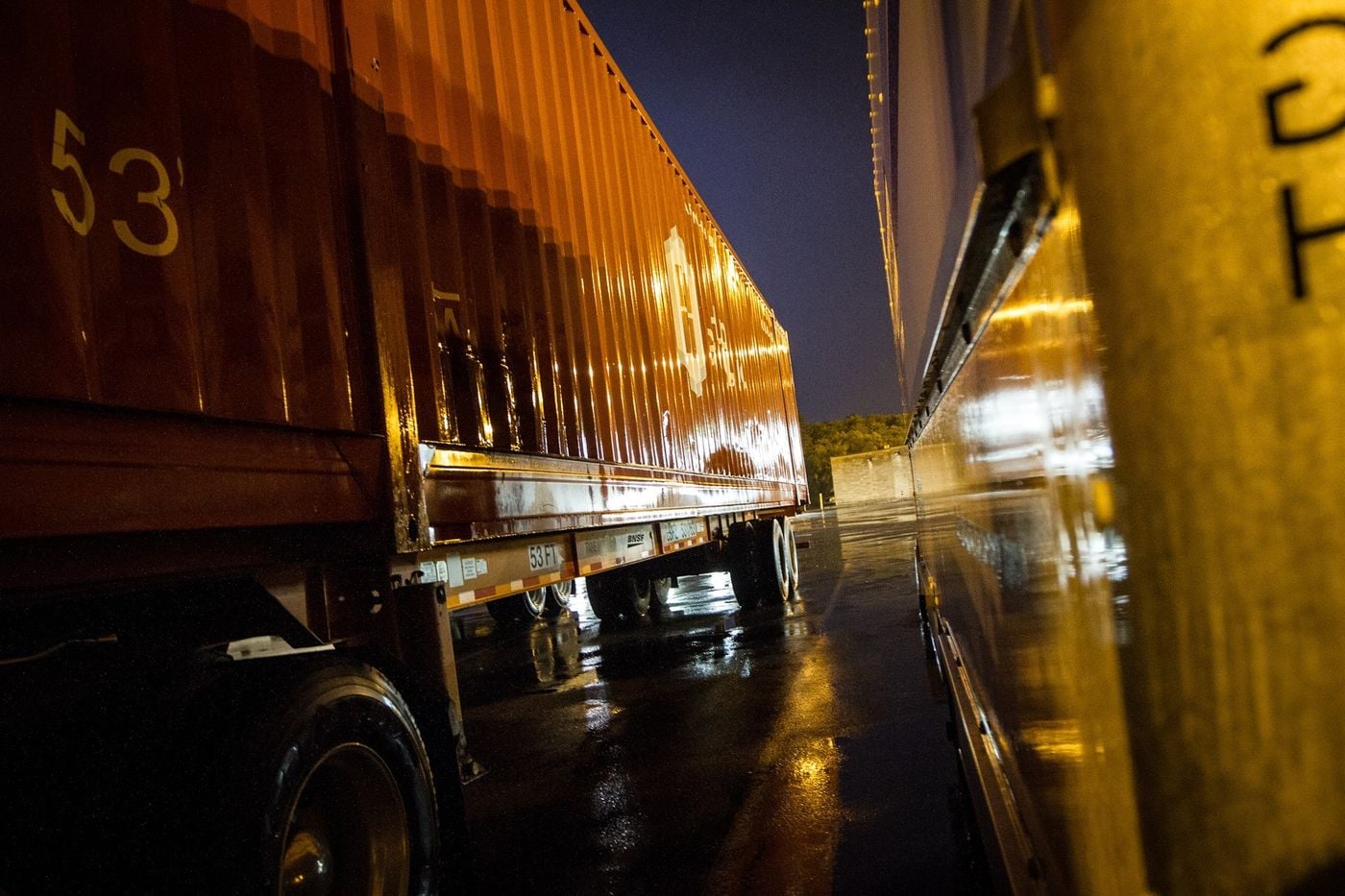
In the United States a commercial motor vehicle may not be driven unless the driver is satisfied that 11 listed parts and accessories, from the service brakes to the emergency equipment, are in good working order (49 CFR 392.7). At the end of each day’s work the driver prepares a driver vehicle inspection report (DVIR) on each vehicle covering the same 11 items, but only when a defect or deficiency was found or reported; the motor carrier then repairs any defect likely to affect safety, certifies on the report that the listed defect or deficiency has been repaired or that repair is unnecessary, and keeps the report for three months (49 CFR 396.11). Since March 23, 2026 the regulation states explicitly that the report may be created and kept electronically.
Status: 13 November 2026. This page follows sections 383.111, 383.113, 392.7, 396.11, 396.13 and 396.15 of Title 49 of the Code of Federal Regulations in the annual edition revised as of October 1, 2025, together with the final rule of February 19, 2026 (91 FR 7893), in force since March 23, 2026, which added the electronic format paragraphs that this edition does not yet print. The final rules of December 18, 2014 (79 FR 75437) and August 18, 2020 (85 FR 50787) were read for the history of the no-defect report. The Federal Register’s lists of documents affecting Parts 383, 392 and 396 published from October 1, 2025 to November 13, 2026, proposed rules included, and of all final rules of the Federal Motor Carrier Safety Administration (FMCSA) in that period show no other change to these sections. These are the federal rules; rules a State applies to driving within its borders, State CDL manuals and test procedures are not described here.
| Rule | What the text requires | Section |
|---|---|---|
| Before driving | The driver is satisfied that 11 listed parts and accessories are in good working order and that the vehicle is in safe operating condition | 392.7(a), 396.13(a) |
| Report after the day’s work | A written report at the completion of each day’s work on each vehicle operated, covering at least the same 11 items | 396.11(a)(1) |
| No defect found | No report required if no defect or deficiency is discovered by or reported to the driver; for all drivers since September 17, 2020 | 396.11(a)(2)(i) |
| Signature | The driver signs; on two-driver operations one signature, provided both drivers agree on the defects or deficiencies | 396.11(a)(2)(ii) |
| Defects listed | Before requiring or permitting a driver to operate the vehicle, the motor carrier repairs defects likely to affect safety, and certifies the repair or that repair is unnecessary | 396.11(a)(3) |
| Next driver | Reviews the last report if one was required, and signs it | 396.13(b), (c) |
| Retention | Three months from the date the written report was prepared | 396.11(a)(4) |
| Electronic format | Reports may be created and maintained in electronic format, in accordance with 49 CFR 390.32, since March 23, 2026 | 396.11(a)(6), (b)(5); 396.13(d) |
| Outside section 396.11 | Private motor carriers of passengers (nonbusiness), driveaway-towaway operations and motor carriers operating only one commercial motor vehicle | 396.11(a)(5) |
What the driver must check before driving
Section 392.7(a) states the rule in one sentence that begins: “No commercial motor vehicle shall be driven unless the driver is satisfied that the following parts and accessories are in good working order”. The same sentence forbids any driver to fail to use those parts and accessories when and as needed. Section 396.13(a) adds a general duty: before driving, the driver shall “be satisfied that the motor vehicle is in safe operating condition”.
The list in section 392.7(a) and the list a DVIR must cover under section 396.11(a)(1) are the same eleven items. FMCSA made them so in its final rule of December 18, 2014, which added “wheels and rims” and “emergency equipment” to the pre-trip list “in order to harmonize it with the post-trip list in § 396.11(a)(1)” (79 FR 75445).
| Item | Before driving, 392.7(a) | In the DVIR, 396.11(a)(1) |
|---|---|---|
| (i) | Service brakes, including trailer brake connections | Service brakes including trailer brake connections |
| (ii) | Parking (hand) brake | Parking brake |
| (iii) | Steering mechanism | Steering mechanism |
| (iv) | Lighting devices and reflectors | Lighting devices and reflectors |
| (v) | Tires | Tires |
| (vi) | Horn | Horn |
| (vii) | Windshield wiper or wipers | Windshield wipers |
| (viii) | Rear-vision mirror or mirrors | Rear vision mirrors |
| (ix) | Coupling devices | Coupling devices |
| (x) | Wheels and rims | Wheels and rims |
| (xi) | Emergency equipment | Emergency equipment |
Item numbers are those of section 396.11(a)(1); section 392.7(a) does not number its items. Neither section describes how each item is to be checked.
What is a DVIR?
The driver vehicle inspection report is set by section 396.11. Under paragraph (a)(1), every motor carrier shall require its drivers to report, and every driver shall prepare a report “in writing at the completion of each day’s work on each vehicle operated”, except for intermodal equipment tendered by an intermodal equipment provider, which has its own report (below). Paragraph (a)(2) sets what the report contains:
- It must identify the vehicle and list any defect or deficiency discovered by or reported to the driver “which would affect the safety of operation of the vehicle or result in its mechanical breakdown”.
- A driver who operates more than one vehicle during the day prepares a report for each vehicle operated.
- The driver must sign the report. On two-driver operations only one driver needs to sign, provided both drivers agree as to the defects or deficiencies identified.
In its 2020 rule FMCSA described the duty in two steps: section 396.11(a) “requires every driver to (1) perform a post-trip inspection of each vehicle operated during the day and (2) prepare a DVIR, if defects or deficiencies are discovered by or reported to the driver” (85 FR 50789). The same rule states that it does not change the requirement for commercial motor vehicle (CMV) drivers to conduct pre- and post-trip vehicle inspections.
Do you need a DVIR if there are no defects?
No. The last sentence of section 396.11(a)(2)(i) reads: “Drivers are not required to prepare a report if no defect or deficiency is discovered by or reported to the driver.” That has applied to all drivers subject to the section since September 17, 2020, and it came in two steps.
| Period | Rule | Source |
|---|---|---|
| Before December 18, 2014 | A report at the end of each day’s work on each vehicle even with nothing to report; if no defect or deficiency was found, “the report shall so indicate” | 79 FR 75438, 75445 |
| From December 18, 2014 | No report when no defect or deficiency is found or reported, for interstate CMV drivers except drivers of passenger-carrying CMVs, who still had to prepare and submit one | 79 FR 75437, 75445 |
| From September 17, 2020 | The same relief for drivers of passenger-carrying CMVs in interstate commerce; the sentence now covers all drivers | 85 FR 50787 |
The 2020 rule changed nothing else in the report. In FMCSA’s words it “retains the rule requiring reports when there are defects or deficiencies, as well as the requirement for motor carriers to take appropriate action on receipt of the report” (85 FR 50788). FMCSA also noted that a motor carrier may voluntarily require its drivers to prepare no-defect reports (85 FR 50789).
In the 2026 rule on electronic reports, a commenter suggested bringing back the no-defect report for drivers of passenger-carrying vehicles. FMCSA replied that it “does not agree with the commenter suggesting the Agency consider reinstating the requirement for the submission of no-defect DVIRs” (91 FR 7894).
What the motor carrier does with the report
Under section 396.11(a)(3), before requiring or permitting a driver to operate a vehicle, every motor carrier or its agent shall repair any defect or deficiency listed on the report “which would be likely to affect the safety of operation of the vehicle”. The carrier or its agent then certifies on the report that the defect or deficiency has been repaired or that repair is unnecessary, before the vehicle is operated again.
Paragraph (a)(4) sets the retention period: the motor carrier keeps the driver vehicle inspection report, the certification of repairs and the certification of the driver’s review for three months from the date the written report was prepared. The registrations that identify a motor carrier, such as the USDOT number, are described in USDOT number, MC number, UCR, IRP and IFTA.
Before the next trip: section 396.13
Section 396.13 sets three duties. Before driving a motor vehicle, the driver shall:
- (a) “Be satisfied that the motor vehicle is in safe operating condition”;
- (b) “Review the last driver vehicle inspection report if required by § 396.11(a)(2)(i)”; and
- (c) “Sign the report to acknowledge that the driver has reviewed it and that there is a certification that the required repairs have been performed.”
The signature requirement does not apply to listed defects on a towed unit which is no longer part of the vehicle combination.
Paragraph (b) has been conditional since the 2020 rule. FMCSA explained that the review requirement dated from a time when a DVIR was required at the completion of every day, and that a report from the previous trip would now be available for review only if defects or deficiencies had been found by or reported to the previous driver, or if the motor carrier voluntarily requires no-defect reports (85 FR 50789).
Electronic DVIRs since March 23, 2026
The final rule “Electronic Driver Vehicle Inspection Reports”, published on February 19, 2026 (91 FR 7893, docket FMCSA-2025-0115) and in force since March 23, 2026, added three paragraphs:
- 396.11(a)(6) “Electronic reporting. The report required by this paragraph (a) may be created and maintained in electronic format, in accordance with 49 CFR 390.32.”
- 396.11(b)(5) the same wording for the intermodal equipment report of paragraph (b).
- 396.13(d) “The reports required by this section may be created and maintained in electronic format, in accordance with 49 CFR 390.32.”
FMCSA presented the rule as a clarification: “The DVIR may already be completed electronically, however the explicit language in this rule will make this clear.” (91 FR 7893). Paper stays an option: the National School Transportation Association asked that paper-based DVIRs remain allowed as a compliance alternative, and FMCSA answered that it “will continue to do so” (91 FR 7894). The proposal was published on May 30, 2025 (90 FR 22957); the 60-day comment period ended on July 29, 2025 with five comments, and the final rule made no changes from the proposal.
The annual edition revised as of October 1, 2025 does not print these paragraphs; the wording above is that of the Federal Register. The conditions of section 390.32, to which they refer, are not covered here. Electronic logging devices for hours-of-service records are a separate rule in Part 395, described in hours of service.
Intermodal equipment
Intermodal equipment tendered by an intermodal equipment provider has its own pair of rules. Before over-the-road operation, section 392.7(b) says drivers preparing to transport intermodal equipment “must make an inspection of the following components, and must be satisfied they are in good working order before the equipment is operated over the road”; a driver who operates the equipment over the road is deemed to have confirmed that the components were in good working order when accepting it. On return, section 396.11(b) requires the provider to have a process to receive driver reports, and the driver or motor carrier to report to the provider or its designated agent any known damage, defects or deficiencies at the time the equipment is returned.
| Item | Inspected before over-the-road operation, 392.7(b) | Reported on return, 396.11(b)(1) |
|---|---|---|
| (i) | Service brake components that are readily visible to a driver performing as thorough a visual inspection as possible without physically going under the vehicle, and trailer brake connections | Brakes |
| (ii) | Lighting devices, lamps, markers, and conspicuity marking material | Lighting devices, lamps, markers, and conspicuity marking material |
| (iii) | Wheels, rims, lugs, tires | Wheels, rims, lugs, tires |
| (iv) | Air line connections, hoses, and couplers | Air line connections, hoses, and couplers |
| (v) | King pin upper coupling device | King pin upper coupling device |
| (vi) | Rails or support frames | Rails or support frames |
| (vii) | Tie down bolsters | Tie down bolsters |
| (viii) | Locking pins, clevises, clamps, or hooks | Locking pins, clevises, clamps, or hooks |
| (ix) | Sliders or sliding frame lock | Sliders or sliding frame lock |
The report to the provider gives the name of the motor carrier responsible for the equipment at the time, the USDOT numbers of the motor carrier and of the provider, a unique identifying number for the item of equipment, the date and time of the report, the damage, defects or deficiencies that would affect safe operation or result in a mechanical breakdown while transported on public roads, and the signature of the driver (section 396.11(b)(2)). The provider repairs reported defects likely to affect safety before letting a motor carrier transport the equipment, certifies the repair or that repair is unnecessary, and keeps the documentation for three months from the date the report is submitted (paragraphs (b)(3) and (b)(4)). The kingpin and the fifth wheel it couples to are described in kingpin and fifth wheel.
Exceptions and driveaway-towaway operations
Section 396.11(a)(5): “The rules in this section shall not apply to a private motor carrier of passengers (nonbusiness), a driveaway-towaway operation, or any motor carrier operating only one commercial motor vehicle.”
For driveaway-towaway operations, section 396.15(a) applies Part 396 with one exception: the maintenance records of section 396.3, the vehicle inspection report of section 396.11 and the periodic inspection of section 396.17 are not required “for any vehicle which is part of the shipment being delivered”. Paragraph (b), headed “Pre-trip inspection”, requires the motor carrier, before the beginning of any driveaway-towaway operation of motor vehicles in combination, to “make a careful inspection and test to ascertain that”:
- the tow-bar or saddle-mount connections are properly secured to the towed and towing vehicle;
- they function adequately without cramping or binding of any of the parts; and
- the towed motor vehicle follows substantially in the path of the towing vehicle without whipping or swerving.
Paragraph (c), headed “Post-trip inspection”, requires motor carriers to maintain practices to ensure that, after each such trip and before they are used again, the tow-bars and saddle-mounts are disassembled and inspected.
The pre-trip inspection on the CDL skills test
A licensing rule also uses the term “pre-trip vehicle inspection”. Section 383.113 sets the skills an applicant for a commercial driver’s license must have, and its paragraph (a) is headed “Pre-trip vehicle inspection skills”: “Applicants for a CDL must possess the following basic pre-trip vehicle inspection skills for the vehicle class that the driver operates or expects to operate”. For all test vehicles, applicants must be able to identify each safety-related part on the vehicle and explain what needs to be inspected to ensure a safe operating condition of each part, including:
- (i) Engine compartment;
- (ii) Cab/engine start;
- (iii) Steering;
- (iv) Suspension;
- (v) Brakes;
- (vi) Wheels;
- (vii) Side of vehicle;
- (viii) Rear of vehicle; and
- (ix) Special features of tractor trailer, school bus, or coach/transit bus, if this type of vehicle is being used for the test.
For a test vehicle equipped with air brakes, paragraph (a)(2) adds six skills on the inspection and operation of air brakes. On the knowledge side, section 383.111(b) requires all CMV drivers operating vehicles equipped with air brakes to know seven areas, among them the procedures for pre-trip inspections and for en route and post-trip inspections of air-actuated brake systems.
Section 383.113 is addressed to applicants for a CDL; sections 392.7, 396.11 and 396.13 are addressed to drivers and motor carriers. The CDL classes, the endorsements and the learner’s permit are described in what a CDL is.
What this page does not cover
- The periodic inspection of section 396.17 and Appendix A to Part 396.
- Roadside inspections, the out-of-service criteria and the handling of roadside inspection reports under section 396.9, described in CVSA inspection levels, decal and out-of-service criteria.
- The equipment standards of Part 393 for the parts and accessories listed above.
- The conditions for electronic records in section 390.32.
- State CDL manuals and test procedures, and the rules for driving within a single State.
Quick answers
- What is a DVIR?
- A driver vehicle inspection report: the written report that 49 CFR 396.11 requires a driver to prepare at the completion of each day's work on each vehicle operated, when a defect or deficiency was discovered by or reported to the driver. It covers at least 11 parts and accessories, from the service brakes to the emergency equipment, identifies the vehicle, lists any defect or deficiency found by or reported to the driver that would affect safe operation or cause a mechanical breakdown, and is signed by the driver.
- Do you have to fill out a DVIR if there are no defects?
- No. Section 396.11(a)(2)(i) says drivers are not required to prepare a report if no defect or deficiency is discovered by or reported to the driver. The exemption took effect on December 18, 2014 for all drivers except those of passenger-carrying vehicles, and on September 17, 2020 for drivers of passenger-carrying vehicles too. A report is still required whenever a defect or deficiency is found or reported.
- Can a DVIR be done electronically?
- Yes. A final rule of February 19, 2026, in force since March 23, 2026, added to sections 396.11 and 396.13 that the reports may be created and maintained in electronic format, in accordance with 49 CFR 390.32. FMCSA said the DVIR could already be completed electronically and that the new text makes this explicit; paper reports remain allowed.
- How long does a motor carrier have to keep a DVIR?
- Three months from the date the written report was prepared. Section 396.11(a)(4) applies this to the report, the certification of repairs and the certification of the driver's review. For intermodal equipment, the equipment provider keeps the driver's report and the certification of repairs for three months from the date the report is submitted.
- What must a driver check before driving a commercial motor vehicle?
- Under 49 CFR 392.7(a), no commercial motor vehicle may be driven unless the driver is satisfied that 11 parts and accessories are in good working order: service brakes including trailer brake connections, parking (hand) brake, steering mechanism, lighting devices and reflectors, tires, horn, windshield wipers, rear-vision mirrors, coupling devices, wheels and rims, and emergency equipment. Section 396.13(a) adds that the driver must be satisfied the vehicle is in safe operating condition.
- What is the pre-trip inspection on the CDL skills test?
- Under 49 CFR 383.113(a), a CDL applicant must be able to identify each safety-related part on the vehicle and explain what needs to be inspected to ensure a safe operating condition of each part, including eight areas from the engine compartment to the rear of the vehicle and, if such a vehicle is used for the test, the special features of a tractor trailer, school bus or coach/transit bus. A test vehicle with air brakes adds six air brake skills.
Sources
- 49 CFR 392.7 — Equipment, inspection and use (Code of Federal Regulations, annual edition revised as of October 1, 2025) — U.S. Government Publishing Office (govinfo)
- 49 CFR 396.11 — Driver vehicle inspection report(s) (Code of Federal Regulations, annual edition revised as of October 1, 2025) — U.S. Government Publishing Office (govinfo)
- 49 CFR 396.13 — Driver inspection (Code of Federal Regulations, annual edition revised as of October 1, 2025) — U.S. Government Publishing Office (govinfo)
- 49 CFR 396.15 — Driveaway-towaway operations and inspections (Code of Federal Regulations, annual edition revised as of October 1, 2025) — U.S. Government Publishing Office (govinfo)
- 49 CFR 383.113 — Required skills, with section 383.111(b) on the same page (Code of Federal Regulations, annual edition revised as of October 1, 2025) — U.S. Government Publishing Office (govinfo)
- Inspection, Repair, and Maintenance; Driver-Vehicle Inspection Report (DVIR) — final rule, 79 FR 75437 (December 18, 2014), effective December 18, 2014 — Federal Motor Carrier Safety Administration (Federal Register, govinfo), 18 Dec 2014
- Passenger Carrier No-Defect Driver Vehicle Inspection Reports — final rule, 85 FR 50787 (August 18, 2020), effective September 17, 2020 — Federal Motor Carrier Safety Administration (Federal Register, govinfo), 18 Aug 2020
- Electronic Driver Vehicle Inspection Reports — final rule, 91 FR 7893 (February 19, 2026), effective March 23, 2026 — Federal Motor Carrier Safety Administration (Federal Register, govinfo), 19 Feb 2026
- Federal Register documents affecting 49 CFR Part 396 published since October 1, 2025 (list read on November 13, 2026) — Office of the Federal Register (federalregister.gov)
- Federal Register documents affecting 49 CFR Part 392 published since October 1, 2025 (list read on November 13, 2026) — Office of the Federal Register (federalregister.gov)
- Federal Register documents affecting 49 CFR Part 383 published since October 1, 2025 (list read on November 13, 2026) — Office of the Federal Register (federalregister.gov)
- Final rules of the Federal Motor Carrier Safety Administration published since October 1, 2025 (list read on November 13, 2026) — Office of the Federal Register (federalregister.gov)