How many HGVs are in the UK? Lorries and buses in numbers
520,000 road-using HGVs and 143,000 buses and coaches were licensed in the UK at the end of 2025; 47,000 new HGVs, 1.4% zero emission. DfT figures.
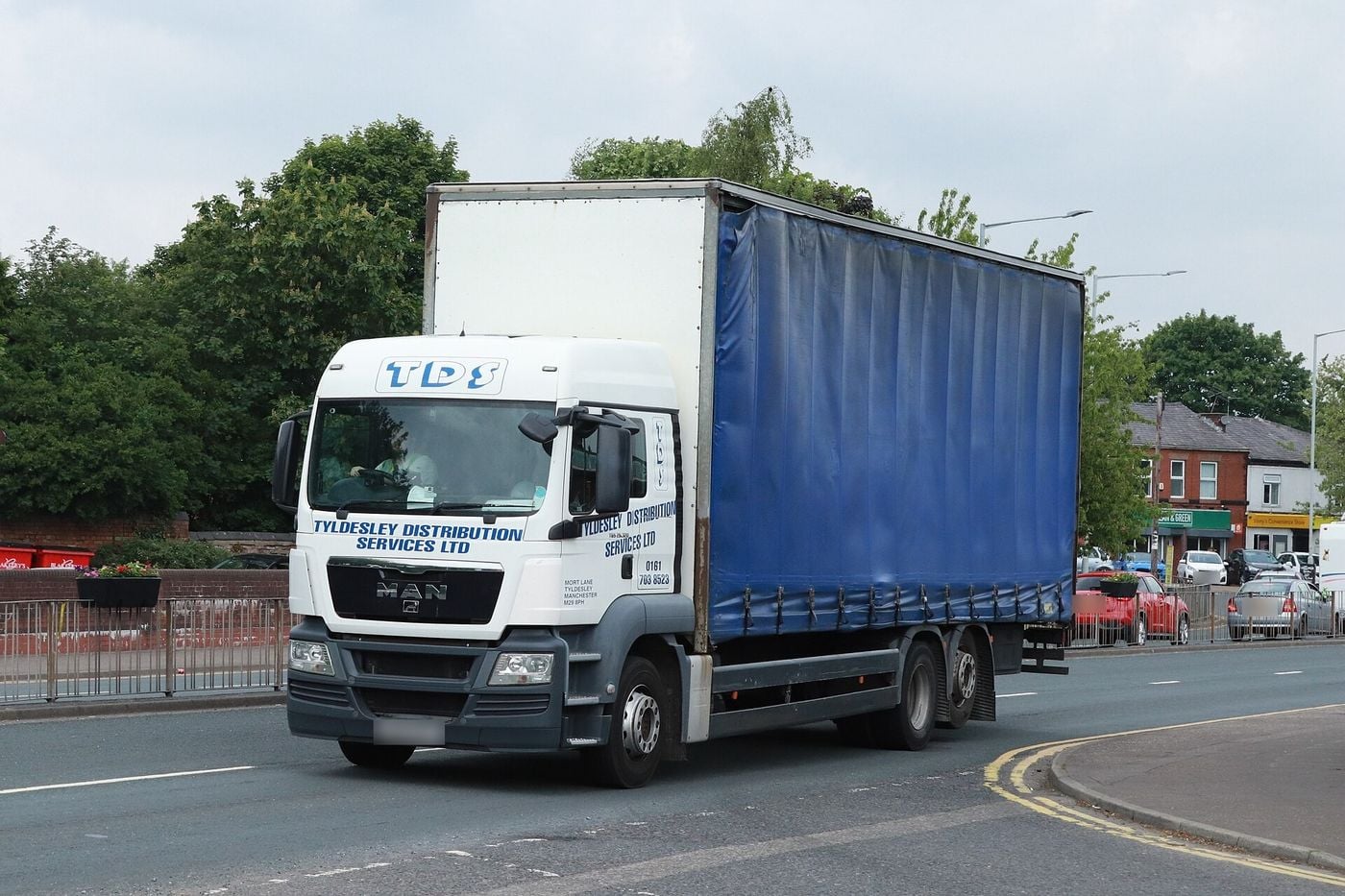
At the end of December 2025 there were 520,000 licensed road-using heavy goods vehicles (HGVs) in the United Kingdom and 143,000 buses and coaches, according to the vehicle licensing statistics of the Department for Transport (DfT). During the year 47,000 HGVs and 10,000 buses and coaches were registered for the first time; zero-emission vehicles made up 1.4% of the new road-using HGVs and 25.4% of the new road-using buses and coaches. HGVs registered in Great Britain lifted 1.53 billion tonnes of goods within the UK in 2025 and travelled 31% of their kilometres empty, according to DfT’s domestic road freight statistics.
Status: 14 November 2026. All texts were read that day on GOV.UK: the Department for Transport’s Vehicle licensing statistics, United Kingdom: 2025, published on 29 April 2026, with its notes and definitions, updated on 23 September 2026; and Domestic road freight statistics, United Kingdom: 2025, published on 27 May 2026. Both releases are accredited official statistics. Each table names its own coverage: the licensing figures are for the whole UK, the freight figures for GB-registered HGVs operating in the UK.
| Figure | 2025 | 2024 | Coverage | DfT table |
|---|---|---|---|---|
| HGVs registered for the first time | 47 thousand, down 6.9% | 51 thousand | UK | VEH0150 |
| Buses and coaches registered for the first time | 10 thousand, up 3.9% | 10 thousand | UK | VEH0150 |
| Zero-emission HGVs registered for the first time | 632, 1.4% of new road-using HGVs | 0.6% | UK | VEH1153a |
| Zero-emission buses and coaches registered for the first time | 2,614, 25.4% of new road-using buses and coaches | 17.4% | UK | VEH1153a |
| Licensed road-using HGVs, end of December | 520 thousand, 0.3% zero emission | Not in the release table | UK | VEH1103a |
| Licensed road-using buses and coaches, end of December | 143 thousand, 5.4% zero emission | Not in the release table | UK | VEH1103a |
| Goods lifted | 1.53 billion tonnes | 1.59 billion tonnes | GB-registered HGVs in the UK | RFS0101 |
| Goods moved | 162 billion tonne-kilometres | 168 billion tonne-kilometres | GB-registered HGVs in the UK | RFS0101 |
| Share of vehicle kilometres run empty | 31% | 30% | GB-registered HGVs in the UK | RFS0117 |
How many HGVs are there in the UK?
Table 3 of the licensing release (VEH1103a) counts 520 thousand licensed road-using HGVs at the end of December 2025, among 41,462 thousand licensed road-using vehicles of all kinds. About 1 thousand of the HGVs were zero emission, 0.3%. Buses and coaches numbered 143 thousand, 8 thousand of them zero emission, 5.4%. The release counts as licensed the vehicles “licensed for use on UK roads, which typically requires paying Vehicle Excise Duty (VED)”, and adds that vehicles that are not licensed “should typically be given a Statutory Off Road Notification (SORN)” and that the keeper can re-license them at any time.
| Body type | Licensed road-using vehicles (thousands) | Of which zero emission (thousands) | Zero emission share |
|---|---|---|---|
| Total | 41,462 | 1,874 | 4.5% |
| Cars | 34,485 | 1,737 | 5.0% |
| Light goods vehicles | 4,880 | 113 | 2.3% |
| Heavy goods vehicles | 520 | 1 | 0.3% |
| Motorcycles | 1,360 | 14 | 1.0% |
| Buses and coaches | 143 | 8 | 5.4% |
| Other vehicles | 73 | 1 | 0.9% |
DfT notes that the number of licensed vehicles grows more slowly than the number of new registrations, because vehicles leave the on-road stock through a variety of routes, such as “receiving a Statutory Off Road Notification (SORN)”, “being written off or scrapped” or “being exported from the UK”. Its notes add that the licensed figures “represent the number of vehicles licensed at the end of each year” and that the number licensed at the end of each quarter is seasonal.
Table 4 of the release (VEH1107) gives the average age since first use of licensed vehicles. At the end of December 2025 it was 8 years for HGVs, against 7 years at the end of December 2020, and 12 years for buses and coaches, against 11. The average for all licensed vehicles was 10 years, against 9.
What the licensing figures count
DfT groups vehicles by the body type the Driver and Vehicle Licensing Agency (DVLA) records, and its notes say these body types “relate to the physical construction of the vehicle but not the way in which it is currently being used”. Heavy goods vehicles are defined as “Vehicles constructed for transporting goods and must have a gross weight over 3.5 tonnes, or over 4.25 tonnes if zero emission. This includes vehicles that are not used for freight.” Light goods vehicles are those of 3.5 tonnes or less, or 4.25 tonnes or less if zero emission. How these lines compare with the 3.5 and 7.5 tonne and 12,000 kilogram lines in British law is set out in what is an HGV.
Buses and coaches are “Vehicles constructed for passenger carrying with nine seats or more (excluding the driver)”, and the notes add: “This includes minibuses, which are usually similar in construction to vans.” Where a minibus sits in vehicle approval and licence categories is covered in minibuses explained. The legal arrangements under which local bus services run in England are described in how local bus services are organised in England.
Road-using vehicles, a concept introduced in 2021, are those “expected to make significant use of public highways and to serve as a mode of transport”; the release says “Approximately 98% of vehicles in the DVLA database meet this definition”. Its coverage is stated as: “These statistics cover the whole of the United Kingdom, which is Great Britain (England, Scotland, and Wales) and Northern Ireland. Data prior to July 2014 covers Great Britain only.” Among the “Other factors to consider in interpreting these statistics”, DfT lists that foreign-registered vehicles may use UK roads without being registered with DVLA.
HGV registrations in the UK in 2025
New registrations, in the release’s words, “refer to vehicles that are registered with the Driver and Vehicle Licensing Agency (DVLA) for the first time. This includes both new vehicles and vehicles imported into the UK at the point of first UK registration.” In 2025, 47 thousand HGVs were registered for the first time, 6.9% fewer than the 51 thousand of 2024. Buses and coaches round to 10 thousand in both years; the release gives the change as an increase of 3.9%. All first registrations together came to 2,617 thousand, 0.5% more than in 2024.
| Body type | 2025 (thousands) | 2024 (thousands) | Year on year change |
|---|---|---|---|
| Total | 2,617 | 2,605 | 0.5% |
| Cars | 2,071 | 2,000 | 3.6% |
| Light goods vehicles | 330 | 363 | -9.2% |
| Heavy goods vehicles | 47 | 51 | -6.9% |
| Motorcycles | 100 | 123 | -18.6% |
| Buses and coaches | 10 | 10 | 3.9% |
| Other vehicles | 58 | 58 | 0.7% |
The release says there is usually a peak in new registrations when DVLA issues a new registration plate series, which since 1999 has happened twice a year, in March and September. DfT’s notes say that “When comparing new vehicle registrations over time, statistics for the same time period in different years should be used, rather than comparing consecutive months or quarters.”
Statistics from the Society of Motor Manufacturers and Traders (SMMT) are a different series. DfT’s notes say they are collated directly from the manufacturers and “only report new vehicles, rather than all new registrations”, with some minor differences in body type classifications, so that the broad trends tend to be similar but “there will be some minor differences”.
Electric and zero-emission HGVs and buses in the UK
Zero emission vehicles, in the release, are vehicles “reported to emit 0g of carbon dioxide (CO2) from the tailpipe for every kilometre travelled”, currently only battery electric vehicles (BEVs) and fuel cell electric vehicles (FCEVs, sometimes referred to as hydrogen powered). In 2025, 632 zero-emission HGVs were registered for the first time, 1.4% of all new road-using HGV registrations, against 0.6% in 2024. For buses and coaches the figure was 2,614, or 25.4%, against 17.4%.
| Body type | Zero emission first registrations, 2025 | Share of all new road-using registrations, 2025 | Share, 2024 |
|---|---|---|---|
| Total | 510,332 | 19.9% | 16.1% |
| Cars | 473,226 | 22.8% | 19.1% |
| Light goods vehicles | 30,524 | 9.3% | 6.2% |
| Heavy goods vehicles | 632 | 1.4% | 0.6% |
| Motorcycles | 3,233 | 3.2% | 3.0% |
| Buses and coaches | 2,614 | 25.4% | 17.4% |
| Other vehicles | 103 | 2.8% | 3.4% |
The table counts road-using vehicles only. Counting every vehicle, the release gives 528,000 zero-emission first registrations in 2025 (VEH1153b), of which 510,000 were road using. In the licensed road-using stock at the end of December 2025, zero-emission vehicles made up 0.3% of HGVs and 5.4% of buses and coaches (Table 3 above).
For zero-emission goods vehicles the HGV line in these statistics is 4.25 tonnes, not 3.5. Under the heading “Heavy vans”, the release refers to the change of July 2018 that let holders of a category B driving licence drive alternatively fuelled vehicles up to 4.25 tonnes with some additional training, and says that “The statistics presented here place these ‘heavy vans’ into the light goods vehicle category to align with these policy changes.” Under the definitions in DfT’s notes, a zero-emission goods vehicle of 4.25 tonnes or less is counted as a light goods vehicle, not an HGV. The lorry licence categories themselves are covered in HGV licences in Great Britain, and the levy rules for zero-emission HGVs in the HGV levy in the UK.
Domestic road freight by GB-registered HGVs in 2025
The freight release “summarises the domestic activity of GB-registered Heavy Goods Vehicles (HGVs) operating in the UK during 2025”, from surveys of businesses that operate HGVs. Here an HGV is “a vehicle with a gross vehicle weight of more than 3.5 tonnes”; the release’s definition names no separate line for zero-emission vehicles. Goods lifted are “the weight of goods carried, measured in tonnes”, and goods moved are “the weight of goods carried, multiplied by the distance hauled, measured in tonne kilometres”.
In 2025 GB-registered HGVs lifted 1.53 billion tonnes of goods within the UK, 3% less than in 2024 (1.59 billion tonnes), moved 162 billion tonne-kilometres, 4% less than in 2024 (168 billion), and travelled 19.0 billion kilometres, 2% less (19.4 billion). Between April and June 2025, 408 million tonnes were lifted, against 360 million tonnes between January and March; the release says the amount lifted varied by up to 14% per quarter in 2025 and by no more than 8% per quarter in 2024.
| Measure | 2025 | 2024 | Release section and table |
|---|---|---|---|
| Goods lifted | 1.53 billion tonnes | 1.59 billion tonnes | Infographic 1, RFS0101 |
| Goods moved | 162 billion tonne-kilometres | 168 billion tonne-kilometres | Infographic 1, RFS0101 |
| Vehicle kilometres travelled | 19.0 billion | 19.4 billion | Infographic 1, RFS0101 |
| Kilometres travelled empty | 5,897 million, 31% of 18,975 million | 30% | Infographic 5, RFS0117 |
| Average length of haul, all HGVs | 105 km | 106 km | Average length of haul |
| Average length of haul, articulated and rigid HGVs | 134 km and 58 km | 134 km and 58 km | Average length of haul, RFS0108 |
| Goods lifted by rigid vehicles | 570 million tonnes, 37% | 588 million tonnes, 37% | Infographic 6, RFS0109 |
| Goods lifted by articulated vehicles | 962 million tonnes, 63% | 998 million tonnes, 63% | Infographic 6, RFS0109 |
| Goods declared as dangerous goods | 72 million tonnes, 5% | 77 million tonnes, 5% | Dangerous goods lifted; classes in Chart 1, RFS0118 |
| HGV journeys, and those with an inter-modal element | 163 million; 7.3 million, 5% | 165 million; 6.2 million, 4% | Intermodal road freight activity; modes in Infographic 3, RFS0132 |
The average length of haul divides tonne-kilometres by tonnes lifted; the release adds: “This is not the average distance travelled by HGVs, but an internationally recognised measure of the average distance travelled by each tonne of freight.”
What the lorries carried
The five largest commodity types made up 72% of the goods lifted in 2025 (1.1 of 1.53 billion tonnes), against 73% in 2024. The most common was groupage, consignments that mix different commodities with no single main type of good: 25% by weight, 383 million tonnes (24% and 386 million tonnes in 2024). The biggest change among these five was in glass, cement and other non-metallic mineral products, 114 million tonnes, 11% more than the 103 million tonnes of 2024.
Of the 72 million tonnes declared as dangerous goods, flammable liquids such as petrol, kerosene and jet fuel accounted for 45 million tonnes, 62% (50 million tonnes and 66% in 2024). Miscellaneous substances followed with 8 million tonnes, 12%, and gases with 8 million tonnes, 11%. The release lists nine dangerous goods classes: flammable liquids, gases, corrosive substances, flammable solids, oxidisers and organic peroxides, toxic and infectious substances, radioactive materials, explosives and miscellaneous substances.
On 5% of the 163 million HGV journeys a different mode of transport was used to transfer goods to or from the HGV; by weight, 9% of the goods lifted (130 million tonnes) involved at least one other mode. Of these inter-modal journeys, 66% began or ended at a shipping dock, 24% at a rail siding or terminal and 12% at an airport, up 2 percentage points from 10% in 2024. The release notes that these shares may not add up to 100%, because a journey appears under more than one mode if both its origin and its destination are inter-modal sites. Large freight containers were the most common method of transportation on inter-modal journeys (30% of journeys), while across all road freight journeys palletised goods came first (27%), followed by solid bulk (23%).
HGVs registered in Northern Ireland are surveyed separately (RFS0130). Within the UK they lifted 67.1 million tonnes in 2025, 13% more than in 2024 (59.1 million tonnes), and moved 5.9 billion tonne-kilometres, 6% less (6.3 billion); 79% of their tonnage (52.8 million tonnes) was lifted completely within Northern Ireland.
What the freight figures leave out
The release excludes foreign-registered HGVs and vehicles with a gross vehicle weight of 3.5 tonnes or less, and adds: “The figures also exclude GB-registered HGVs when operating outside of the UK.” International trips by GB-registered HGVs are covered by DfT’s separate international road freight statistics. The figures are weighted estimates from a stratified sample, “with potential sampling errors”; in 2025, 8,346 GB-registered vehicles were in the sample.
The survey moved from paper to an online form at the start of quarter 3 2021, and DfT states: “Due to the methodology change, comparisons between paper (before quarter 3 2021) and online data should not be made. This means no long-term data trends are available for these statistics.” It points to its road traffic statistics for long-term trends in HGV traffic in Great Britain.
Eurostat’s road freight figures carry no recent data reported by the UK: as European road freight in numbers sets out, the United Kingdom left the EU in 2020 and has not reported road freight data since then. Who needs a licence to operate these vehicles is covered in goods vehicle operator licences in Great Britain.
When the figures change
The licensing release says “Vehicle licensing statistics are published quarterly” and that dates of future releases are advertised via the DfT statistical publications schedule; the release for 2025, published on 29 April 2026, covers the period up to December 2025. According to DfT’s notes, most of the tables are typically published annually in April with an accompanying statistical release, and a selection quarterly in July, September and December, “the final quarter being incorporated into the April annual release”. The notes also say several measures, among them ultra low emission vehicles, plug-in vehicles and CO2 emissions, are subject to regular minor revisions for the entire series. The domestic road freight release describes itself as an “annual statistical release”; the edition for 2025 was published on 27 May 2026.
Quick answers
- How many HGVs are there in the UK?
- 520,000 licensed road-using heavy goods vehicles at the end of December 2025, according to Table 3 (VEH1103a) of the Department for Transport's vehicle licensing statistics, which cover the whole UK including Northern Ireland. About 1,000 of them, 0.3%, were zero emission. The statistics count as HGVs vehicles constructed for transporting goods with a gross weight over 3.5 tonnes, or over 4.25 tonnes if zero emission, including vehicles not used for freight. The average age since first use of licensed HGVs was 8 years (Table 4, VEH1107).
- How many new HGVs were registered in the UK in 2025?
- 47,000 heavy goods vehicles were registered for the first time in the UK in 2025, down 6.9% from 51,000 in 2024, according to Table 1 (VEH0150) of DfT's vehicle licensing statistics. First registrations include new vehicles and vehicles imported into the UK at the point of first UK registration.
- How many electric HGVs are there in the UK?
- 632 zero-emission HGVs were registered for the first time in 2025, 1.4% of all new road-using HGV registrations, up from 0.6% in 2024 (DfT table VEH1153a). At the end of December 2025 there were about 1,000 licensed road-using zero-emission HGVs, 0.3% of the 520,000 licensed road-using HGVs (VEH1103a). In these statistics zero emission currently covers only battery electric and fuel cell electric vehicles. Zero-emission goods vehicles up to 4.25 tonnes are counted as light goods vehicles, not HGVs.
- How many buses and coaches are there in the UK?
- 143,000 licensed road-using buses and coaches at the end of December 2025, 5.4% of them zero emission, according to DfT table VEH1103a. 10,000 were registered for the first time in 2025, 3.9% more than in 2024, and 2,614 of the new road-using registrations, 25.4%, were zero emission (17.4% in 2024). The category covers vehicles with nine seats or more excluding the driver, minibuses included.
- How much freight do lorries carry in the UK?
- GB-registered HGVs lifted 1.53 billion tonnes of goods within the UK in 2025, 3% less than in 2024, and moved 162 billion tonne-kilometres, 4% less, while travelling 19.0 billion kilometres, according to DfT's domestic road freight statistics (table RFS0101). The figures exclude foreign-registered HGVs, vehicles of 3.5 tonnes or less and GB-registered HGVs operating outside the UK.
- How far do lorries run empty in the UK?
- GB-registered HGVs travelled 5,897 million kilometres empty in 2025, 31% of their 18,975 million loaded and empty kilometres in the UK, against 30% in 2024, according to DfT table RFS0117.
Sources
- Vehicle licensing statistics, United Kingdom: 2025 (accredited official statistics, published 29 April 2026): Tables 1 to 4 (VEH0150, VEH1153a, VEH1103a, VEH1107), Heavy vans, Licensed vehicles, Background notes — GOV.UK (Department for Transport)
- Vehicle licensing statistics: notes and definitions (updated 23 September 2026): Revisions to series; Body types, Table 1 Definitions of body types; Factors affecting statistics on licensed vehicles; Trade associations; Publication schedule — GOV.UK (Department for Transport)
- Domestic road freight statistics, United Kingdom: 2025 (accredited official statistics, published 27 May 2026): Infographics 1 to 7 (RFS0101, RFS0104, RFS0109, RFS0117, RFS0119, RFS0130, RFS0132, RFS0135), Chart 1 (RFS0118), average length of haul (RFS0108), About these statistics — GOV.UK (Department for Transport)