Weigh stations in the US: how they work and who must stop
Weigh stations use fixed scales, weigh-in-motion and transponder bypass; each State certifies its size and weight enforcement to FHWA before January 1.
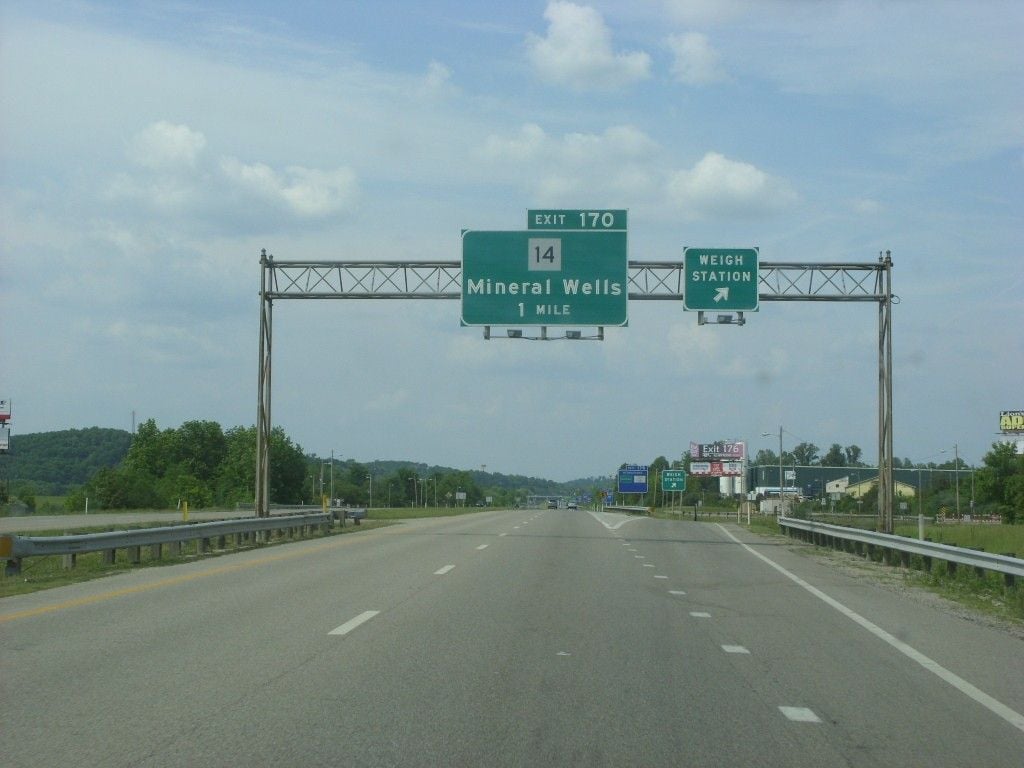
A weigh station is a roadside facility where State enforcement staff weigh trucks and buses and check them against size and weight laws. In FHWA’s description, trucks are commonly screened first by weigh-in-motion sensors that estimate their axle weights at highway speed, and those over a set threshold are weighed on a static scale, whose reading is used for a citation. Which vehicles must pull in is set by each State: in Maine, a bus or truck with a registered weight or gross vehicle weight rating over 10,000 pounds, or one subject to FMCSA regulations, when the weighing point’s signs are operating, unless a state police officer directs otherwise. The federal part is a certification: each State must certify before January 1 of each year that it enforces its size and weight laws, or have 7 percent of certain Federal-aid highway apportionments withheld.
Status: 13 November 2026. Read on that day: 23 U.S.C. 141 in the 2024 edition of the United States Code; 23 CFR Part 657 in the annual edition of the Code of Federal Regulations revised as of April 1, 2025, and the Federal Register’s index of documents affecting Part 657, whose latest entry is the final rule of February 20, 2007; Maine Revised Statutes, Title 29-A, section 2358, as published by the Maine Legislature with data extracted on October 5, 2026; section 316.545 of the 2026 Florida Statutes; the weigh station pages of the Minnesota and Florida Departments of Transportation; and two Federal Highway Administration (FHWA) reports, a state-of-the-practice report on enforcement technologies of May 2009 and a case study on virtual weigh stations of July 2017. Figures from the two reports are given as of their dates.
| Item | Rule | Source |
|---|---|---|
| Annual State certification | Before January 1 of each year, that the State is enforcing its vehicle size and weight laws | 23 U.S.C. 141(a); 23 CFR 657.13 and 657.17 |
| Enforcement plan | To the FHWA Division Office by July 1, or an alternate date FHWA and the State select jointly if the State’s legislative or budgetary cycle does not fit July 1; an approved plan in effect by October 1 of each year | 23 CFR 657.11(a) |
| Weighing devices | At least two of: fixed platform scales, portable wheel weigher scales, semiportable or ramp scales, WIM equipment | 23 CFR 657.9(b)(1)(i) |
| Penalty in the statute | 7 percent (since October 1, 2012) of the State’s apportionment under 23 U.S.C. 104(b)(1) through (6) | 23 U.S.C. 141(b)(2) |
| Penalty in the regulation text | A reduction of National Highway System funds by an amount equal to 10 percent of the State’s apportionment under 23 U.S.C. 104; wording last amended February 20, 2007 | 23 CFR 657.19 |
| Who must stop: Maine | A bus or truck with a registered weight or GVWR over 10,000 pounds (4,536 kg), or subject to FMCSA regulations, when the signs are operating, unless a state police officer directs otherwise; fine up to $500 | 29-A M.R.S. §2358(2) |
| Who must stop: Florida | A driver whom a Florida Highway Patrol officer, with reason to believe the weight is unlawful, requires to stop and be weighed | F.S. 316.545(1) |
| Electronic bypass | Transponder signal to pull in or bypass, after weight, safety and credentials screening ahead of the station | FHWA report, May 2009 |
What is a weigh station?
FHWA’s 2017 case study describes permanent, or fixed, roadside stations as the means law enforcement agencies have traditionally used to weigh and inspect trucks, and notes that they are expensive to construct. The federal regulation on enforcement states FHWA’s policy: size and weight limits are based on design specifications and safety considerations, and enforcement shall be developed and maintained “both to prevent premature deterioration of the highway pavement and structures and to provide a safe driving environment” (23 CFR 657.5).
How the stations are organized, in three State examples:
- Minnesota. “Weigh stations are a partnership between MnDOT and the Minnesota State Patrol.” The Department of Transportation owns and maintains the facilities and the State Patrol’s Commercial Vehicle Enforcement Division operates them; the department’s page lists six stations.
- Florida. The Department of Transportation may employ weight inspectors to operate its fixed-scale facilities. On duty there, they are authorized to enforce the laws on commercial motor vehicle weight, registration, size and load and to assess and collect civil penalties. They may detain a vehicle with an obvious critical safety defect or one operating in violation of an out-of-service order, but they are not classified as law enforcement officers subject to the certification requirements of chapter 943 and “are not authorized to carry weapons or make arrests” (F.S. 316.545(9)). The department’s listing, read on 13 November 2026, names 10 “Weigh-in-Motion (Bi-Directional) Interstate based Weigh Stations” and 10 “Static Station Non-Interstate based Weigh Stations”.
- Maine. The Chief of the State Police, or a person the chief designates, may designate weighing points, and the weighing is done at the direction of state police officers. A driver directed onto the scales must also permit examination of the registration certificate and the load, and when a loaded vehicle is stopped for weighing the officer checks that the load is secure under section 2396, subsection 2 (29-A M.R.S. §2358(2), (4) and (11)).
In both Florida and Maine the weighing goes together with a check of the vehicle’s registration (F.S. 316.545(2)(b); 29-A M.R.S. §2358(4)); carrier registrations and credentials are explained in USDOT number, MC number, UCR, IRP and IFTA.
Fixed scales, portable scales and weigh-in-motion
Part 657 names four kinds of weighing device. A State’s enforcement program is not approved unless it uses “a combination of at least two” of them “to deter evasion of size and weight measurement in sufficient quantity to cover the FA system” (23 CFR 657.9(b)(1)(i)). The appendix to Part 657 adds a capacity figure for each, which it says was derived from information in previous State certifications.
| Device, as 657.9 names it | Name in the appendix | Potential weighing capacity |
|---|---|---|
| Fixed platform scales | Permanent scales | 60 vehicles per hour |
| WIM equipment | Weigh-in-motion scales | 100 vehicles per hour |
| Semiportable or ramp scales | Semi-portable scales | 25 vehicles per hour |
| Portable wheel weigher scales | Portable scales | 3 vehicles per hour |
What WIM measures. FHWA’s 2009 report defines it: “WIM scales measure approximate axle weights as a vehicle moves across sensors or scales and determine the gross vehicle weight and classification based on the axle weights and spacings.” A typical system has three parts: a scale or set of sensors on the mainline or on a ramp; a roadside cabinet whose processor converts the downward force readings into estimates of gross and axle weights; and a communication link to the computers of enforcement personnel or to a WIM database. Weight data taken on a ramp, at low speed, are more accurate than readings at highway speed.
Mainline screening. In the report’s description, WIM sensors in the pavement weigh vehicles on the mainline as they approach a weigh station, and each estimate is compared with a pass/fail threshold set to a percent of the legal weight, which station personnel can adjust. “Trucks that exceed the threshold are directed into the weigh station to be weighed on more accurate static scales used to write citations” (section 3.1).
Ramp sorting. WIM scales on the approach ramp weigh, at low speed, the trucks that have left the highway. Vehicles under the threshold set by station personnel are signalled by a message sign to the bypass lane and back to the main highway; the rest go to the static scale (section 3.2).
In 2009 the report said there were approximately 550 WIM sites in operation nationwide from which FHWA received weight-based highway data, and added that not all of them were used for enforcement. The annual certification reports separate totals of vehicles weighed “on fixed scales, on semiportable scales, on portable scales, and on WIM when used for enforcement” (23 CFR 657.15(f)(3)(i)).
Mobile screening and virtual weigh stations
WIM sites away from a station can also feed enforcement. In the mobile screening the 2009 report describes, an officer at the roadside receives axle and gross weights from a mainline WIM device on a laptop, identifies the trucks that are overweight according to the data, intercepts them after they pass the site and weighs them on portable scales at the roadside “to record legally enforceable weights” (section 4.2).
FHWA’s July 2017 case study describes “virtual” weigh stations made up of WIM scales and other sensors in or along the road. As of 2017:
- Maryland. The State Highway Administration used WIM at ten virtual weigh stations, each consisting of an inductive loop, two pairs of WIM sensors, a camera, an overheight detector and the associated information technology. Sites were chosen a few miles before a fixed weigh station or along routes known to serve as bypasses to fixed stations. Within seconds of a truck passing, its size and weight data and an image reach law enforcement through a secure web-based interface, and a truck flagged for a potential violation can be targeted for an inspection at the roadside or at a weigh station further along its route. Each virtual station cost approximately $600,000 for a two-lane site and $400,000 for a one-lane site, against approximately $2–3 million for a fixed weigh station.
- New York City. The city’s Department of Transportation, with the State DOT and the Port Authority of New York and New Jersey, installed three truck WIM sites between 2013 and 2016 to collect truck weight data. “The agency is not currently authorized to use the WIM sensors for enforcement”.
- Accuracy. Maryland found it important to have smooth pavement 200 feet (61 m) before and 100 feet (30 m) beyond the sensors, and the study tells agencies considering virtual weigh stations to be prepared to “calibrate the sensors at least every six months”.
The same study notes that some States or localities are prohibited by law from using WIM sites for enforcement purposes.
How weigh station bypass works
Electronic screening can clear a truck to stay on the highway past an open station. The 2009 report describes it in section 3.1: “When used as part of an electronic screening or bypass system such as PrePass or NORPASS, WIM provides real-time weight verification concurrent with safety and credentials verification for bypass eligibility.” Dedicated short-range communications (DSRC) readers and WIM sensors are placed far enough ahead of the station ramp for the system to finish processing the vehicle. “The driver is signaled to pull in or bypass via their transponder before it reaches the ramp.” Vehicles cleared for bypass are not generally directed to pull in. The report names NORPASS and PrePass as services that use DSRC for automatic vehicle identification in their electronic screening, as of 2009.
The report’s Washington State example shows how the two kinds of truck are handled. A WIM system linked to a camera records every vehicle, with or without a transponder. A changeable message sign before the exit ramp directs transponder-equipped trucks into the station if their weights exceed the thresholds, and the State’s sorting system queries a database for up-to-date safety and credentials information; generally, a truck that meets the State’s screening criteria is signalled through its transponder to bypass the station. “All trucks without transponders must enter an open weigh station.”
Who has to stop at a weigh station?
Section 141 and Part 657 are addressed to the States: they require an annual certification and, in Part 657, an enforcement plan; neither text says which vehicles must enter a station. That is set by State law, and the two States below word it differently.
Maine: trucks and buses over 10,000 pounds
Section 2358 of Title 29-A opens: “A state police officer may require a motor vehicle or combination of vehicles described in this chapter to stop and submit to weighing.” A weighing point must have signs (subsection 2):
- not less than 500 feet (152 m) from approaching traffic;
- bearing the words “State Police Commercial Vehicle Check - All Trucks and Buses Stop”;
- displaying flashing yellow lights, which must operate when the weighing station is open; and
- directing operators of vehicles subject to the gross vehicle weight restrictions to the weighing point when it is on a road that intersects the road with the sign.
The duty to stop follows: “An operator of a bus or truck with a registered weight or gross vehicle weight rating greater than 10,000 pounds or subject to the Federal Motor Carrier Safety Administration regulations who fails to stop at the weighing point when the signs are operating, unless otherwise directed by a state police officer, commits a traffic infraction for which a fine not to exceed $500 may be adjudged.” What the rating means is explained in GVWR, GCWR and GAWR.
If scales are not available, the officer may send the vehicle to the nearest location capable of weighing it, if that adds no more than 5 miles (8 km) to the trip (subsection 1). If the weight exceeds the maximum allowable gross vehicle weight by 20% or more, the officer affixes an out-of-service sticker to the windshield and the vehicle may not be moved until it is brought into compliance; moving it with a sticker no officer has signed is a Class E crime (subsection 7).
Florida: a stop on an officer’s reason to believe
Section 316.545(1) of the Florida Statutes reads: “Any officer of the Florida Highway Patrol having reason to believe that the weight of a vehicle and load is unlawful is authorized to require the driver to stop and submit to a weighing of the same by means of either portable or fixed scales.” A driver who refuses obstructs an officer under section 843.02 and commits a misdemeanor of the first degree; knowingly and willfully resisting the officer with violence while refusing is a felony of the third degree (section 843.01).
When the axle or gross weight is found unlawful, the driver may be required to stop in a suitable place until the weight and any penalty are determined (subsection (2)(a)). A driver cited on the evidence of portable scales “may request to proceed to the nearest fixed scale at an official weigh station or at a certified public scale for verification of weight”; the officer must escort the driver and attend the reweighing, and if the vehicle is in compliance at the fixed scale, “the citation is void.”
Under subsection (3)(a), the fine for overloading is $10 if the excess over the maximum is 200 pounds or less, and 5 cents per pound for each pound of excess weight if it is greater than 200 pounds; if the gross weight of the vehicle or combination does not exceed the maximum allowable gross weight, the maximum fine for the first 600 pounds of unlawful axle weight is $10.
The federal certification: 23 U.S.C. 141 and 23 CFR Part 657
Under 23 U.S.C. 141(a), each State “shall certify to the Secretary before January 1 of each year that it is enforcing all State laws respecting maximum vehicle size and weights” on the Federal-aid primary, urban and secondary systems, including the Interstate System, and that it is enforcing and complying with section 127(d) of Title 23 and section 31112 of Title 49. Part 657 turns this into a yearly cycle:
- The plan (section 657.9) describes the procedures, resources and facilities the State intends to devote to enforcement, including the weighing devices, the staff by agency, the geographical coverage and hours of operation in general terms, and its policy on overweight violators, penalties and special permits. It goes to the FHWA Division Office by July 1 (or, if the State’s legislative or budgetary cycle does not fit that date, an alternate date FHWA and the State select jointly), an approved plan must be in effect by October 1, and FHWA reviews the State’s operation on a continuing basis and prepares an evaluation report annually (section 657.11). Among the practices the appendix lists for a plan is a “Strategy for prevention of bypassing of fixed weighing facility location”.
- The certification (sections 657.13 to 657.17) goes from the Governor, or an official the Governor designates, to the FHWA division office before January 1. It covers the roads that formed the Federal-aid primary, secondary and urban systems before October 1, 1991, including the Interstate System, and the “ISTEA freeze on the use of LCV’s and other multi-unit vehicles” (the freeze is explained in long truck combinations). It rests on the activities and results of the 12 months ending September 30.
- The report in the certification gives the vehicles weighed by type of scale, the citations or civil assessments for axle, gross and bridge formula weight limits (the limits are in how much a semi-truck weighs), the number of vehicles whose loads were shifted or offloaded, and the overweight permits issued, for divisible and nondivisible loads, on a trip or annual basis (section 657.15(f)). A copy of any State size and weight law or regulation adopted since the last certification is attached, with an analysis of the changes (section 657.15(e)).
On numbers, the appendix says: “It is not considered practicable at this time to establish objective minimums, such as the number of vehicles to be weighed by each State”.
The penalty: 7 percent in the statute, 10 percent in the regulation
The statute and the regulation give different figures for the same penalty.
| 23 U.S.C. 141(b)(2), 2024 edition | 23 CFR 657.19, edition revised as of April 1, 2025 | |
|---|---|---|
| Funds reduced | Federal-aid highway funds apportioned to the State for that fiscal year | Federal-aid funds for the National Highway System apportioned to the State for the next fiscal year |
| Amount | 7 percent of the amount apportioned under paragraphs (1) through (6) of 23 U.S.C. 104(b) | 10 percent of the amount apportioned under 23 U.S.C. 104, and/or the amount required under 23 U.S.C. 127 |
| Last changed | Pub. L. 112–141 of July 6, 2012, effective October 1, 2012, substituted “7 percent” for “10 per centum”; Pub. L. 114–94 of December 4, 2015, effective October 1, 2015, extended the range to paragraph (6) | 72 FR 7747, February 20, 2007 |
The edition revised as of April 1, 2025 still prints section 657.19 with the 10 percent wording, and the Federal Register’s index lists no document affecting Part 657 after the final rule of February 20, 2007: the text of the regulation was not updated when the statute changed in 2012.
If, within one year of a reduction, the Secretary determines that the State is enforcing its size and weight laws, the apportionment is increased by the amount of the reduction; otherwise the withheld amounts are reapportioned to all other eligible States (23 U.S.C. 141(b)(3)). Under section 657.21 the Federal Highway Administrator first notifies the Governor in writing of a proposed determination of nonconformity, and the State may request a hearing within 30 days. Pending a final determination, the Secretary may reserve 10 percent of the State’s apportionment under 23 U.S.C. 104 (section 657.21(e)).
What this page does not cover
- The federal weight limits, the bridge formula and tolerances: see how much a semi-truck weighs. Length, width and height limits: see semi-truck dimensions.
- The rules of States other than Maine and Florida, and the locations and opening hours of stations.
- Enrolment in electronic screening services and their fees.
- Roadside safety inspections and out-of-service criteria, described in CVSA inspection levels, decal and out-of-service criteria.
- Special permits for overweight and oversize loads: see oversize and overweight loads in the US.
Quick answers
- What is a weigh station?
- A roadside facility where State enforcement staff weigh trucks and buses to check them against size and weight laws. FHWA describes trucks being screened by weigh-in-motion sensors as they approach, with those over a set threshold directed onto static scales, whose readings are used to write citations. In Minnesota, for example, the Department of Transportation owns the stations and the State Patrol's Commercial Vehicle Enforcement Division operates them.
- Who has to stop at a weigh station?
- State law decides: 23 U.S.C. 141 and 23 CFR Part 657 are addressed to the States and do not say which vehicles must enter a station. In Maine, the operator of a bus or truck with a registered weight or gross vehicle weight rating greater than 10,000 pounds, or subject to FMCSA regulations, who fails to stop at a weighing point while its signs are operating, unless otherwise directed by a state police officer, commits a traffic infraction with a fine of up to $500. In Florida, a Highway Patrol officer with reason to believe a vehicle's weight is unlawful may require the driver to stop and be weighed on portable or fixed scales.
- What is weigh-in-motion (WIM)?
- Equipment that weighs vehicles while they drive over it. FHWA's 2009 report says WIM scales measure approximate axle weights as a vehicle moves across sensors or scales and work out the gross vehicle weight and classification from the axle weights and spacings. In the report's description of weigh station operations, WIM sorts the trucks and the weight used for a citation comes from a static scale.
- How does weigh station bypass work?
- In electronic screening systems such as PrePass or NORPASS, which FHWA's 2009 report names as examples, readers and WIM sensors ahead of the station check a truck's weight together with its safety and credentials information, and the truck's transponder signals the driver to pull in or bypass before the ramp. In Washington's system as described in 2009, all trucks without transponders must enter an open weigh station.
- What happens if a State does not enforce truck size and weight limits?
- Under 23 U.S.C. 141(b)(2), its Federal-aid highway funds for that fiscal year are reduced by 7 percent of its apportionment under section 104(b)(1) through (6). The reduction is restored if the Secretary finds within one year that the State is enforcing its laws; otherwise the money is reapportioned to the other eligible States. The regulation, 23 CFR 657.19, still says National Highway System funds are reduced by an amount equal to 10 percent of the State's apportionment under 23 U.S.C. 104: its wording was last amended in 2007 and was not updated when Congress changed the figure in 2012.
- When do States certify their size and weight enforcement?
- Before January 1 of each year. The certification covers the 12 months ending September 30 and reports, among other things, the number of vehicles weighed on fixed, semiportable and portable scales and on WIM used for enforcement. The State's enforcement plan or its annual update goes to the FHWA Division Office by July 1, unless, where the State's legislative or budgetary cycle does not fit that date, FHWA and the State jointly select another date, and an approved plan must be in effect by October 1.
Sources
- 23 U.S.C. 141 — Enforcement of requirements (United States Code, 2024 Edition) — U.S. Government Publishing Office (govinfo)
- 23 CFR Part 657 — Certification of Size and Weight Enforcement (Code of Federal Regulations, Title 23, revised as of April 1, 2025) — Federal Highway Administration (Code of Federal Regulations, U.S. Government Publishing Office)
- Federal Register documents affecting 23 CFR Part 657 (index as of November 13, 2026; latest entry the final rule of February 20, 2007, document E7-2823) — Office of the Federal Register (FederalRegister.gov)
- Maine Revised Statutes, Title 29-A, §2358: Weighing of vehicles (text as extracted October 5, 2026) — Maine Legislature, Office of the Revisor of Statutes
- The 2026 Florida Statutes, section 316.545 — Weight and load unlawful; special fuel and motor fuel tax enforcement; inspection; penalty; review — The Florida Legislature (Online Sunshine)
- Weigh stations in Minnesota (Commercial Vehicle Operations page, read November 13, 2026) — Minnesota Department of Transportation
- Weigh Station Location Information (read November 13, 2026) — Florida Department of Transportation
- Virtual Weigh Stations and Weigh-in-Motion (WIM) Technology in Maryland and New York (FHWA-HOP-17-059, July 2017) — Federal Highway Administration, Office of Operations
- State of the Practice: Truck Size and Weight Enforcement Technologies, final report (FHWA-HOP-09-050, May 2009) — Federal Highway Administration (prepared by Cambridge Systematics, Inc.)