DVSA OCRS and earned recognition: bands, points and KPIs
DVSA's OCRS divides an operator licence's defect and offence points by its encounters over 3 years; a combined score of 10 or less is green, over 25 red.
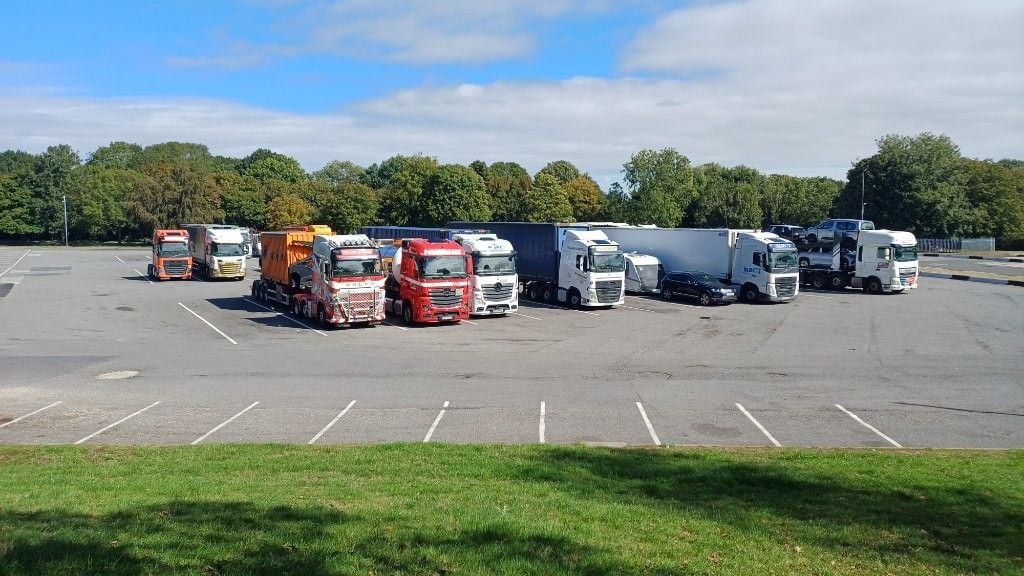
The Operator Compliance Risk Score (OCRS) is the system the Driver and Vehicle Standards Agency (DVSA) uses “to decide which vehicles should be inspected”. It is worked out for each operator licence, not for each vehicle, by dividing the defect and offence points DVSA has recorded over a 3-year rolling period by the number of encounters, and the result puts the licence in a green, amber, red or grey band. Operators in DVSA’s voluntary earned recognition scheme are shown in a fifth band, blue: they report against DVSA’s key performance indicators through a DVSA-validated IT system, which tells DVSA every 4 weeks if a KPI has been missed by a set amount.
This article follows the GOV.UK pages for England, Scotland and Wales, the area both DVSA guides say they apply to. The OCRS figures are those of DVSA’s guide Use the Operator Compliance Risk Score (OCRS) system, last updated 21 November 2024; the earned recognition figures are those of DVSA earned recognition: join the scheme, last updated 1 September 2023, with comparisons from the HGV operator audit standards updated 8 December 2025. The GOV.UK pages were read on 13 November 2026, and the figures are those pages’ figures on that date. The OCRS guide says DVSA can change the points, the weightings and the band thresholds.
| Point | What the guide says |
|---|---|
| What is scored | Each operator licence; “An individual vehicle will not have its own OCRS.” |
| Period | 3-year rolling period, with year weightings of 1, 0.75 and 0.5 |
| Scores per licence | Roadworthiness, traffic and combined |
| Bands | Blue (DVSA earned recognition operator), green (low risk), amber (medium risk), red (high risk), grey (unknown) |
| Updates | Re-scoring runs every day; the score and the report update early in the morning |
| Earned recognition | Voluntary; HGV or PSV operator licence held for at least 2 years; no application fee |
| Reporting | Maintenance and driving activity KPIs, measured over 4-week periods |
| Audit | By a DVSA-authorised audit provider after the application is reviewed and every 2 years; extra modules every year |
What OCRS is and who has one
The guide says DVSA uses OCRS “to calculate the risk of an operator not keeping their vehicles safe to drive or breaking safety rules, such as drivers’ hours”, and that “It’s more likely that your vehicles will be inspected if your OCRS is high.” GOV.UK’s overview of the score adds that drivers might be stopped at the roadside by the police or DVSA for vehicle inspections. The score attaches to the licence itself, which is described in goods vehicle operator licences in Great Britain and PSV operator licences in Great Britain.
An operator has no OCRS if it has a new licence or has not interacted with DVSA in the last 3 years, and none if it only operates vehicles exempt from operator licensing. Adding a new operating centre to an existing licence does not affect the OCRS; a new operator licence in a different traffic area has no OCRS until the first positive or negative interaction with DVSA.
Operators from Northern Ireland get a reduced report, based on data captured at the roadside by DVSA examiners and on MOT tests taken in England, Wales and Scotland. It does not include testing, prosecution events or roadside encounters carried out by the Driver and Vehicle Agency (DVA) in Northern Ireland.
Under the heading Data protection, the guide says OCRS bands are not given to a driver at the roadside unless the driver can prove that they are the sole owner of the vehicle, the operator of the vehicle or named on the vehicle operator licence.
Where the points come from
DVSA sorts events into two categories, which together make up the overall score.
| Category | Where the data comes from |
|---|---|
| Roadworthiness | Vehicle tests (first tests and subsequent MOT, the annual tests), vehicle encounters (roadside inspections), fleet assessments (visits to an operator’s premises) and remote enforcement interactions (desk-based assessments) |
| Traffic | Roadside inspections and prosecutions (for example for drivers’ hours and tachograph offences, weighing checks), fleet assessments and desk-based assessments |
Points are added when a test, inspection, fleet assessment or desk-based assessment finds a vehicle defect or an offence, and the guide says “You’ll get more points for more serious defects or offences.” An event where no points are allocated is a “clear event”, and it reduces the OCRS.
- Roadside checks. DVSA checks whether the vehicle is safe to drive and whether the driver is following drivers’ hours rules. A prohibition affects the score; a check that finds no issues is a clear event. A prohibition issued to a trailer during a roadside check is allocated to the vehicle pulling the trailer.
- Sifted encounters. A “sifted” encounter is a roadside check where a DVSA examiner does a walkaround check and decides that a full inspection is not needed. It is not classed as an event and is not scored. The guide’s examples are a brand new vehicle, a vehicle that has recently had an annual test or a roadside inspection, and a vehicle belonging to a DVSA earned recognition accredited operator.
- MOT results. A failed MOT increases the score and a pass is a clear event. Trailer MOT results are not included in the roadworthiness score, but prohibitions issued to a trailer at an MOT are; the guide’s update of 21 November 2024 added the sentence on trailer prohibitions at an MOT. If passenger vehicles are added to an operator licence, their MOT results are included in the roadworthiness score.
- Desk-based assessments. DVSA can ask for a copy of the vehicle maintenance and drivers’ hours records and check them remotely.
- Fleet assessments. DVSA can visit the site to inspect the drivers’ hours records and the maintenance records.
For both assessments the guide says the score can increase if DVSA finds the records unsatisfactory. The maintenance records themselves are the subject of keeping lorries, buses and trailers roadworthy in Great Britain.
How the base score is calculated
The “base score” decides the band. In the guide’s words it “is worked out over a 3-year rolling period by dividing your total number of offence or defect points by your total number of encounters.”
Each licence has 3 scores, roadworthiness, traffic and combined, and the guide says the band limits are different for each of them. For targeting, the guide combines them, and gives this example: “200 roadworthiness event points + 150 traffic event points = 350. These came from 4 roadworthiness events and 2 traffic events = 6 events. 350 divided by 6 = 58.33 putting this operator in the red band.”
Older events weigh less. The guide’s reason is that “Older offences or defects have less impact on road safety”, and it splits the 3 years into blocks of 1 year: year 1 has a weighting factor of 1, year 2 of 0.75 and year 3 of 0.5. The base score therefore changes as an event moves from year 1 to year 3, and events more than 3 years old are removed, so the score changes depending on whether those old events were positive or negative.
The re-scoring runs every day. It scores newly encountered operators, adds new events such as vehicle encounters and annual tests, includes vehicles newly added to an operator licence, changes older event scores to the relevant year weighting and removes expired events. The score and the report update early in the morning.
The OCRS bands
| Band | Risk type | Roadworthiness | Traffic | Combined |
|---|---|---|---|---|
| Blue | DVSA earned recognition operator | — | — | — |
| Green | Low-risk operator | 10 defect points or below | 5 offence points or below | 10 points or below |
| Amber | Medium-risk operator | 10.01 to 25 defect points | 5.01 to 30 offence points | 10.01 to 25 points |
| Red | High-risk operator | More than 25 defect points | More than 30 offence points | More than 25 points |
| Grey | Unknown operator | No score | No score | No score |
A licence can have a score in one category and none in the other, or no score in either, when there is no data in the 3-year period. An operator is classified as grey when it has not had an interaction with DVSA and has no score in any category.
Points for defects, offences and prosecutions
| Defect | Points | S marked defect |
|---|---|---|
| Cat 1: immediate prohibition for tyres, brakes and steering defects | 200 | 400 |
| Cat 2: immediate prohibition for all other defects | 100 | 200 |
| Cat 3: delayed prohibition for tyres, brakes and steering defects | 50 | 100 |
| Cat 4: delayed prohibition for all other defects | 25 | 50 |
| MOT (annual test) failure for tyres, brakes, steering defects | 50 | — |
| MOT (annual test) failure for all other defects | 25 | — |
| Event | Points |
|---|---|
| Band 0 traffic offence (least serious) | 12.5 |
| Band 1 traffic offence | 25 |
| Band 2 traffic offence | 50 |
| Band 3 traffic offence | 100 |
| Band 4 traffic offence | 200 |
| Band 5 traffic offence | 300 |
| DVSA operator prosecution case | 300 |
| DVSA operator prosecution, per offence | 100 |
| DVSA driver prosecution case | 0 |
| DVSA driver prosecution, per offence | 50 |
| ADR prohibition, risk category 1 (band 2 offence, highest risk) | 50 |
| ADR prohibition, risk category 2 (band 1 offence, medium risk) | 25 |
| ADR prohibition, risk category 3 (band 0 offence, lowest risk) | 0 |
The guide gives the points for each band without listing on that page which offences fall into which band. For ADR offences, the rules for the carriage of dangerous goods described in dangerous goods classes and orange plates, it refers to section 14 of DVSA’s enforcement sanctions policy document. Two of the figures date from later updates: 12.5 points for a band 0 traffic offence dates from the update of 2 December 2022, and the 50 points per offence in a DVSA driver prosecution from that of 1 September 2023.
| Result | Vehicle safety, desk-based | Vehicle safety, fleet | Drivers’ hours or other traffic, desk-based | Drivers’ hours or other traffic, fleet |
|---|---|---|---|---|
| Unsatisfactory, DVSA will report to traffic commissioner | 25 | 100 | 25 | 250 |
| Unsatisfactory | 25 | 50 | 25 | 100 |
| Mostly satisfactory | 9 | 0 | 9 | 0 |
| Satisfactory | 0 | 0 | 0 | 0 |
The OCRS report, and when a score looks wrong
An operator with one or more Great Britain operator licences can see its OCRS report through the Vehicle Operator Licensing account. GOV.UK’s service page says the same service shows the latest OCRS, the MOT pass rates of the operator’s vehicles, causes of vehicle test failures, and information about when its drivers or vehicles were checked by a DVSA examiner.
The first page of the report has the operator details and a summary of how the score was worked out. The report then lists the events that had a negative and a positive effect on the score, and its last table shows the events removed from the score in the past 90 days. GOV.UK publishes a sample report as a PDF of 7 pages.
For a score that looks incorrect, the guide lists checking that each vehicle registration is on the operator licence, running the service history reports, and, where DVSA may have made a mistake during an event, an appeal against an HGV or trailer MOT decision or a PSV annual test decision, and a complaint about a roadside prohibition or about a fine. Other issues go to DVSA’s operator reports address with the operator licence number, a copy of the report with the mistake and any supporting documents. DVSA can only speak to a person named on the Vehicle Operator Licensing system for the company, such as a transport manager or director.
A pending appeal does not affect the OCRS until DVSA accepts it. If the appeal succeeds, DVSA removes the event and the score is worked out again. The guide notes that reports are a snapshot, so the change shows only after the update.
What DVSA says about maintaining the score
Under the heading “Maintain and improve your OCRS”, the guide places the responsibility on the operator: making sure “the right vehicles appear on your licence and are maintained on time”, that the vehicles are “always maintained to a high standard” and that all relevant laws, regulations and rules are followed, and that failures at tests and prohibitions are investigated. Its list of what “DVSA recommends” is to check the OCRS on a regular basis, track changes to it, set targets to improve the score in the future and take action when a negative event occurs. The guide then points to DVSA’s vehicle safety and maintenance guides and to its drivers’ hours rules and guidance.
How DVSA can change OCRS
The guide says DVSA “can change how OCRS works if it needs to”: the number of points for offences and defects, the number of points for prosecutions, the weightings for older events, and the band thresholds that determine if an operator is red, amber, green or blue. The page’s update history shows how it has changed.
| Date | Change |
|---|---|
| 18 August 2014 | First published |
| 6 December 2016 | New combined score and other changes to the scoring system |
| 29 January 2021 | An operator that joins DVSA earned recognition is not part of the OCRS system |
| 16 December 2021 | Desk-based and fleet assessments count; earned recognition operators in the blue band, with no full roadside inspection by DVSA examiners; reduced report for Northern Ireland operators; daily re-scoring; the section on OCRS for operators based outside Great Britain removed, as there is no OCRS system for them |
| 2 December 2022 | 12.5 points for a band 0 traffic offence |
| 1 September 2023 | DVSA driver prosecution points per offence added |
| 21 November 2024 | Prohibitions issued to a trailer at an MOT included in the roadworthiness score |
DVSA earned recognition: what the scheme is
DVSA describes earned recognition as “a way to prove you meet driver and vehicle standards”: the operator continuously monitors its own compliance, uses monitoring systems and is compliant with vehicle and road safety standards. “It’s a voluntary scheme that’s designed to work for operators of all sizes.”
The operator needs a DVSA-validated IT system for vehicle maintenance and drivers’ hours, which monitors whether a set of key performance indicators (KPIs) is met. Every 4 weeks the system tells DVSA if a KPI has been missed by a set amount, and DVSA then works with the operator on the problem. The guide adds: “DVSA will not have direct access to any of your data or systems.” From 1 April 2022, the maintenance monitoring can be a fully digital reporting system approved by DVSA; a mixture of manual maintenance and vehicle systems or a mixture of digital maintenance systems (both internal systems and external programmes), alongside digital reporting, all validated by DVSA; or manual reporting sent to DVSA.
The guide lists what an earned recognition operator gets, in its words: to “be less likely to have your vehicles stopped at the roadside for inspections” and less likely to have DVSA enforcement staff visit the premises, use of the earned recognition logo on a website and other publicity materials “but not on your vehicles”, recognition as a DVSA-accredited operator on GOV.UK, direct access to a dedicated earned recognition team in DVSA, and to “be an exemplary operator, and be able to prove this when you bid for contracts”.
On the OCRS side, earned recognition operators are in the blue band, the vehicle of an accredited operator is one of the guide’s examples of a sifted encounter, and the update of 16 December 2021 says DVSA examiners do not carry out a full roadside inspection for these operators.
Who can join, and what it costs
The guide’s eligibility criteria are:
- an HGV or PSV operator licence held for at least 2 years;
- no regulatory action by the Traffic Commissioner, other than a formal warning, on any of the operator’s licences in the last 2 years;
- management systems for vehicle maintenance and digital management systems for drivers’ hours that can track the KPIs and report when they are missed;
- meeting the earned recognition audit standards.
The application covers the whole business, not individual licences, and the data for all the operator licences must be reported. Several legal entities in one group that use the same management systems can make a single group application, and the audit standards and KPIs are then measured over the group as a whole; an entity cannot be removed from the group accreditation unless it changes ownership or no longer exists.
Extra modules, which are optional and show that an operator meets the requirements for certain projects, are listed for HGV operators as High Speed 2 (HS2), London Power Tunnels (LPT2), TfL Contractual Requirements and Concrete operations, and for PSV operators as TfL Contractual Requirements and PSV Private Hire. An extra module may involve sharing information such as KPIs with a third party, and extra modules are audited every year.
There is no application fee. The audit may have to be paid for, depending on the provider, and “The providers set their own fees”; an IT system that cannot measure and report the KPIs may need a paid update, with the system suppliers also setting their own fees. The operator must meet and agree DVSA’s earned recognition terms and conditions, published as a separate PDF of 11 pages. The guide’s route in is a self-assessment checklist, a check that the IT system provider and the audit provider are registered with DVSA, and the application form, which DVSA then checks.
The audit
The audit can take place up to 3 months before or 3 months after DVSA receives the application, and can be held by video call instead of in person. The auditor looks at the processes in the operator’s transport management systems and how they are managed, against the DVSA standard for HGVs or for PSVs, or both when the operator has both types of licence. Each standard has 10 sections plus optional modules.
| Section | Audit area |
|---|---|
| 1 | Operator licences |
| 2 | Transport manager or responsible person |
| 3 | Vehicle standards |
| 4 | Drivers’ hours |
| 5 | Operation management |
| 6 | Security requirements |
| 7 | Driver management |
| 8 | Training |
| 9 | Additional policies |
| 10 | Dangerous goods (HGV operators) or services provided (PSV operators); not audited if the operator does not do these activities |
A sample of vehicles and systems is checked, based on vehicles, drivers and operating centres. For vehicle and trailer records and for driver records, a fleet of 1 to 5 has all records checked, 6 to 100 has 2 checks per operator licence with a minimum of 5 in total, and 101 or more has 5 checks per operator licence with a minimum of 10 in total. For operating centres the sample is the main centre for 1 to 5 centres, the main centre and 1 more for 6 to 20, and the main centre and 2 more above that. The guide says maintenance records should conform with DVSA’s guide to maintaining roadworthiness. On the period looked at, the two DVSA documents differ: the join-the-scheme guide says the auditor check “should include a minimum of 3 months’ operator analysis and subsequent actions”, while the HGV operator audit standards updated 8 December 2025 say “a minimum of one month’s operator analysis and subsequent actions”.
The auditor sends the results to the operator and to DVSA, and DVSA decides whether the standard to join has been met. Issues that can be put right within a month can be dealt with in that time; otherwise DVSA rejects the application with its reasons, and the operator may reapply in the future. An appeal against an application and audit outcome must be made within 14 days of the original decision, with detailed reasons and documentary evidence. DVSA decides within 28 days of receiving the appeal, longer if information, clarifications or required actions are delayed, and gives the outcome in writing within 7 days of its final decision. “You cannot make any further appeals.”
The KPIs, alerts and triggers
All KPIs are measured over 4-week periods that start on a Monday and end on a Sunday, the “KPI measurement period”. They are reported at the end of the period and sent to DVSA 4 weeks later, manually or automatically. The guide’s example: a period from Monday 8 October 2018 to Sunday 4 November 2018 is measured on Monday 5 November 2018 and reported to DVSA on Monday 3 December 2018. DVSA says that, to be sure the KPIs are realistic, it analysed over 1.5 million historical records on vehicle test results, drivers’ hours infringements and fleet size.
| No. | Measure | KPI |
|---|---|---|
| 1 | Complete set of safety inspection records | 100% |
| 2 | Safety inspection records are completed correctly, including all relevant sections signed off as roadworthy | 100% |
| 3 | Safety inspections are completed within the stated frequency | 100% |
| 4 | Where there has been a report of a road safety-related incident, driver defect reports are actioned | 100% |
| 5 | Vehicle and trailer MOT initial pass rates | 95%; with up to 20 vehicles in the fleet, no more than one failure in 13 rolling measurement periods |
The HGV operator audit standards updated 8 December 2025 word the small-fleet rule differently: “If the fleet has 20 or less vehicles, the 95% key performance indicator (KPI) does not apply. Instead, there must be no more than one initial fail in a rolling 12 months.”
| No. | Measure | KPI |
|---|---|---|
| 1 | Band 1: an infringement on the tachograph analysis that would attract a band 1 fixed penalty under current legislation | 1.3% |
| 2 | Band 2: the same for a band 2 fixed penalty | 1.2% |
| 3 | Band 3: the same for a band 3 fixed penalty | 0.8% |
| 4 | Band 4: the same for a band 4 fixed penalty | 0.7% |
| 5 | Overall infringements: total number of infringements found | 4% |
| 6 | Working time: any infringement identified under current legislation | 4% |
With fewer than 25 tachograph days reported in a measurement period, the KPI is no more than one offence in the period.
When a KPI is missed but not by enough to send a trigger to DVSA, the operator’s digital systems raise an alert. The colours below are those of the earned recognition alert table, not OCRS bands.
| Alert | Level | When it is triggered |
|---|---|---|
| Yellow | Minor | Missing a KPI by less than 1% point |
| Amber | Moderate | Missing a KPI by 1% point or more |
| Grey | Major | Missing a KPI by 2% points or more |
Grey alerts are reported to DVSA automatically at the end of the measurement period. DVSA is also alerted automatically on criteria that apply to both maintenance and drivers’ hours:
- over 3 rolling measurement periods, any one KPI is missed 3 times by less than one percentage point;
- over 3 rolling measurement periods, any one KPI is missed twice by one percentage point or more;
- in any measurement period, a KPI is exceeded by 2 percentage points or more;
- over 13 rolling measurement periods, a KPI is exceeded more than 4 times;
- a driver has infringed in 3 consecutive measurement periods.
The fixed-penalty bands the driving KPIs refer to belong to the drivers’ hours and tachograph enforcement described in drivers’ hours and tachograph rules in Great Britain.
Keeping, losing and leaving earned recognition
The KPIs and the trigger points are set by DVSA, and the KPIs are measured every 4 weeks. The business must be audited every 2 years by a DVSA-authorised audit provider, sooner if DVSA asks because of performance issues. The audit must be completed no more than 3 months before the 2nd anniversary of entry into the scheme and no later than 2 years after the anniversary date. In the guide’s example, an operator accredited on 15 September 2018 could have the audit at the earliest on 15 June 2020 and at the latest on 15 September 2020.
The audit outcome is one of three. With standards fully met the operator remains in the scheme. With standards part met an action plan is needed: the auditor discusses the findings and sends a proposed improvement plan and recommendations to DVSA. With standards not met, what DVSA does next “will depend on how far you’ve failed to meet the standards.”
When an operator is not meeting the standards, for example when a KPI is not met and an alert is triggered, compliance issues are identified or the standards are not met at the periodic audit, DVSA discusses the issues, can use discretion and acts according to their seriousness. The guide says that in most cases the operator gets the opportunity to resolve them, and lists the possible actions as a desk-based assessment that may include a request for information, a discussion at the operator’s request, a discussion started at DVSA’s request, an improvement action plan that may include a further audit, and removal from the scheme.
An operator can leave at any time with at least 7 days’ notice, and is then removed from the published list of accredited operators and no longer entitled to the scheme’s benefits. DVSA can refuse entry or remove membership if it thinks the scheme’s credibility could be damaged by an operator or anyone working for or on its behalf, and can remove an operator that fails to meet the standards, for example by not completing a periodic audit within the timeframe, not providing access to its maintenance systems and data, not being able to achieve the KPIs, or being continually non-compliant without improving. Removal comes with 28 days’ notice and the reasons; DVSA “will not be liable for any of your costs resulting from your removal from the scheme”, and the decision can be appealed.
OCRS and the EU risk rating
OCRS is DVSA’s scheme for Great Britain, set out in its own guide. The risk rating of undertakings under EU law is a separate system, with its own points and bands, described in HGV roadworthiness and roadside checks.
Quick answers
- What OCRS score is green, amber or red?
- On the combined score, 10 points or below is green, 10.01 to 25 points amber and more than 25 points red, according to DVSA's OCRS guide last updated 21 November 2024. The roadworthiness score uses the same limits in defect points; the traffic score is green at 5 offence points or below, amber at 5.01 to 30 and red above 30. Grey means no score, and blue is the band of a DVSA earned recognition operator.
- How is the OCRS score calculated?
- The base score is the total of offence or defect points divided by the total number of encounters over a 3-year rolling period, worked out for each operator licence. Points are weighted by age: 1 in year 1, 0.75 in year 2 and 0.5 in year 3. In the guide's example, 200 roadworthiness points and 150 traffic points from 6 events give 350 divided by 6, or 58.33, which puts the operator in the red band.
- How long do points stay on an OCRS?
- 3 years. DVSA's guide says events that happened more than 3 years ago are removed from the OCRS, and that the points count less as they age: a weighting of 1 in year 1, 0.75 in year 2 and 0.5 in year 3. The re-scoring runs every day, and the report's last table shows the events removed in the past 90 days.
- What is DVSA earned recognition?
- A voluntary DVSA scheme in which an operator uses a DVSA-validated IT system for vehicle maintenance and drivers' hours that tells DVSA every 4 weeks if a key performance indicator has been missed by a set amount. The guide, last updated 1 September 2023, says DVSA has no direct access to the operator's data or systems. Earned recognition operators are in the blue OCRS band.
- Who can join DVSA earned recognition and what does it cost?
- An operator that has held an HGV or PSV operator licence for at least 2 years, with no regulatory action by the Traffic Commissioner other than a formal warning on any of its licences in the last 2 years, that has management systems for vehicle maintenance and digital management systems for drivers' hours able to track the KPIs, and that meets the audit standards. There is no application fee. The audit by a DVSA-authorised provider, once the application has been reviewed and every 2 years, may have to be paid for: the providers set their own fees.
- What are the DVSA earned recognition KPIs?
- Five maintenance KPIs, four of them at 100% and the MOT initial pass rate at 95%, and six driving activity KPIs expressed as infringements as a percentage of tachograph days: 1.3%, 1.2%, 0.8% and 0.7% for fixed-penalty bands 1 to 4, and 4% each for overall infringements and working time. They are measured over 4-week periods, as DVSA's guide last updated 1 September 2023 sets them out.
Sources
- Use the Operator Compliance Risk Score (OCRS) system (guidance, published 18 August 2014, last updated 21 November 2024) — GOV.UK (Driver and Vehicle Standards Agency)
- Operator Compliance Risk Score (OCRS): overview (guide) — GOV.UK (Driver and Vehicle Standards Agency)
- View your vehicle operator safety and risk reports (service start page) — GOV.UK (Driver and Vehicle Standards Agency)
- DVSA earned recognition: join the scheme (guidance, published 24 April 2018, last updated 1 September 2023) — GOV.UK (Driver and Vehicle Standards Agency)
- Heavy goods vehicle (HGV) operator audit standards: DVSA earned recognition (updated 8 December 2025) — GOV.UK (Driver and Vehicle Standards Agency)