PSV operator licence and section 19 and 22 permits in GB
A PSV operator licence is needed to operate a vehicle that can carry 9 or more passengers for hire or reward. GOV.UK lists 4 types; not-for-profits can use section 19 or 22 permits.
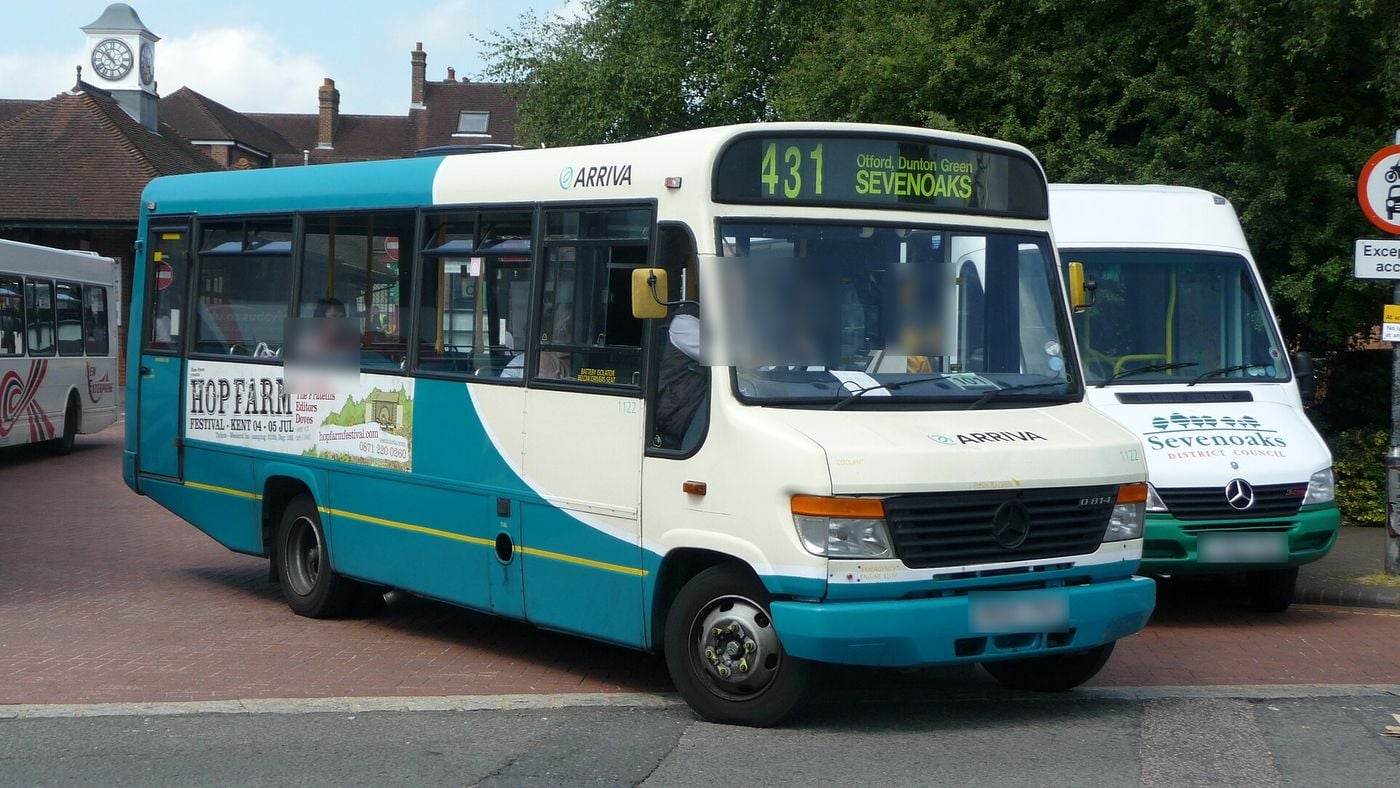
A PSV operator licence is what section 12(1) of the Public Passenger Vehicles Act 1981 requires before a public service vehicle is used on a road to carry passengers for hire or reward in Great Britain. GOV.UK sums up the trigger as a vehicle that can carry 9 or more passengers, or a smaller one charging separate fares, and lists 4 types of licence. Not-for-profit bodies can instead run under a section 19 or section 22 permit of the Transport Act 1985, which takes the vehicle out of the licence requirement.
Status: 13 November 2026. This page follows, as read on that day, GOV.UK’s pages PSV operator licences, Driving a minibus and the Schedule of fees for bus registration and permits; the operators’ guide PSV437, last updated on 2 October 2025; the Department for Transport’s guidance on section 19 and 22 permits, which shows “Updated 30 December 2020”; the Senior Traffic Commissioner’s Statutory Document No. 13, version 10.0, commencement March 2025; and, on legislation.gov.uk, sections 1, 12 and 13 of the Public Passenger Vehicles Act 1981 and sections 12, 18, 19 and 22 of the Transport Act 1985, each shown as up to date with all changes known to be in force on or before 13 November 2026. These provisions extend to England, Wales and Scotland. Northern Ireland is not covered.
| Item | As the sources state it |
|---|---|
| Who needs one | Operating a vehicle for hire or reward that can carry 9 or more passengers, or a smaller vehicle charging separate fares (GOV.UK) |
| Who grants it | A traffic commissioner (1981 Act, section 12(2)) |
| Classes in the Act | Standard or restricted (section 13(1)); the special restricted licence comes from section 12 of the Transport Act 1985 |
| Types on GOV.UK | Standard national; standard national and international; restricted; special restricted |
| Application fee | £209 standard or restricted; £61 special restricted (GOV.UK) |
| Financial standing from 1 January 2021 | Standard: £8,000 first vehicle, £4,500 each additional. Restricted: £3,100 and £1,700 (PSV437) |
| How long it lasts | No expiry date; details confirmed every 5 years (GOV.UK) |
| Not-for-profit alternative | Section 19 permit (standard or large bus) or section 22 community bus permit, for an “exempt body” since 1 October 2019 |
The driving entitlement is separate from the operator licence: the D1 and D categories are in PCV licence in Great Britain, the rules for driving a permit minibus on a car licence are in Can I drive a minibus or 7.5-tonne lorry on a car licence?, and the Driver CPC is in Driver CPC in Great Britain. Lorries have their own regime, set out in Goods vehicle operator licences in Great Britain, and the EU conditions behind both are in Road transport operator licence: the four EU conditions.
When is a PSV operator licence needed?
Section 12(1) of the 1981 Act reads: “A public service vehicle shall not be used on a road for carrying passengers for hire or reward except under a PSV operator’s licence granted in accordance with the following provisions of this Part of this Act.” Section 12(1A) makes this subject to section 46 of the Act and section 18 of the Transport Act 1985, the permit exemption described below. If a vehicle is used in contravention of section 12(1), section 12(5) makes the operator liable on summary conviction to a fine not exceeding level 4 on the standard scale.
The definition sits in section 1(1). A public service vehicle is a motor vehicle, other than a tramcar, which:
- being a vehicle adapted to carry more than eight passengers, is used for carrying passengers for hire or reward; or
- being a vehicle not so adapted, is used for carrying passengers for hire or reward at separate fares in the course of a business of carrying passengers.
Section 1(4) adds that a journey on which passengers pay separate fares is not treated as made in the course of a business of carrying passengers if the fare or aggregate of the fares does not exceed the running costs of the vehicle for the journey, and the arrangements for payment were made before the journey began; running costs include an appropriate amount for depreciation and general wear. The operators’ guide PSV437 defines hire or reward for licensing purposes as “any payment in cash or kind which gives a person the right to be carried, regardless of whether or not that right is exercised. It is also regardless of whether or not a profit is made.” Its examples of indirect payment include a membership subscription to a club, payment for a bed in a hotel, school fees or payment for concert tickets where travel is included.
Vehicles with 8 or fewer passenger seats
PSV437 says that smaller vehicles, with eight or less passenger seats, operated for hire or reward are likely to need a local authority licence under a private hire or taxi regime, and that they can be classed as a PSV only in certain circumstances. With separate fares charged, it sets two alternative conditions, each including that the journey has been advertised to the public; advertisement at a place of worship, a place of work, a club or other voluntary association, or in periodicals circulated mainly among such people, does not count as advertisement to the general public.
Without separate fares, PSV437 says a small vehicle may be used under a PSV operator’s licence in England and Wales only, and only where the use of small vehicles forms a small part of a large bus operation. The two documents word the measure differently. PSV437 says Department for Transport guidance suggests the exemption may apply “if less than 10% of the fleet of vehicles licensed under a PSV operator’s licence are small vehicles”, adding that mileage or income may be taken into account. Statutory Document No. 13 speaks of “an indicative threshold of 10% of the business (measured by mileage)”. For Scotland, PSV437 says the law is different and that a small passenger-carrying vehicle may require a local authority licence when it is used for hire by private arrangement.
Standard, restricted and special restricted: the Act and GOV.UK
Section 13(1) of the 1981 Act says: “A PSV operator’s licence may be either a standard licence or a restricted licence.” Under section 13(2) a standard licence authorises the use of any description of public service vehicle, on both national and international operations or on national operations only. The special restricted licence is not in section 13. It is the “special licence” of section 12 of the Transport Act 1985, which section 12(2) defines as “a restricted PSV operator’s licence granted by virtue of this section”. GOV.UK presents the result as 4 types, plus special licensing rules in London.
| GOV.UK type | Legal basis | What it allows, in GOV.UK’s words |
|---|---|---|
| Standard licence, national operations only | 1981 Act, section 13(2)(b) | “You can only operate in Great Britain if you apply for a standard licence. Most full-time commercial operators use standard licences.” |
| Standard licence, national and international operations | 1981 Act, section 13(2)(a) | “This kind of licence lets you take passengers abroad as well as within Great Britain.” |
| Restricted licence | 1981 Act, section 13(3) | 1 or 2 vehicles, neither carrying more than 8 passengers; up to 16 passengers in either vehicle if not used as part of a passenger transport business, or run as a sideline and not as the main job |
| Special restricted licence | Transport Act 1985, section 12 | “Special restricted licences are used to operate a licensed taxi on a local service.” |
PSV437 words the national licence as allowing operation “only within the United Kingdom”, where the GOV.UK overview says Great Britain. According to PSV437, operators with a standard international licence also receive a PSV Certified Copy for each vehicle they wish to operate internationally, required for all operations in, or through, EU countries and carried on the vehicle when abroad. A standard national licence can be upgraded to a standard international one without a fee if the change is granted, while a change from restricted to standard needs a new licence application.
The restricted licence: 8 and 16 passengers and the main occupation rule
Section 13(3) of the 1981 Act says a restricted licence authorises the use, whether on national or international operations, of:
- “public service vehicles not adapted to carry more than eight passengers”; and
- “public service vehicles not adapted to carry more than sixteen passengers” when used “otherwise than in the course of a business of carrying passengers”, or “by a person whose main occupation is not the operation of public service vehicles adapted to carry more than eight passengers”.
Section 13(4) adds that a vehicle used for carrying passengers by a local or public authority is not regarded as used in the course of a business of carrying passengers unless it is used by that authority’s public service vehicle undertaking. As an example of use not in the course of a passenger transport business, PSV437 gives vehicles “used in connection with a hotel business”. It sets the maximum number of vehicles under a restricted licence at two, a limit that does not apply to a universal service provider under Part 3 of the Postal Services Act 2011 for purposes connected with the universal postal service.
Statutory Document No. 13 says the main occupation rule “does not apply to small (8 passenger seat or less) vehicles, but it does apply to all 9 to 16 passenger seat vehicles”. It is determined for the entity that applies: for a limited company, the main occupation of the company and not the hours and income of the directors; for a partnership, the business of the partnership. Quoting the Upper Tribunal, the document says a “bare assertion will not do”, and that activities “such as the pursuit of a hobby, charitable work or other activities which do not generate an income” do not fall within the definition of occupation. The evidence it lists includes tax returns, P60 forms, payslips, bank statements, audited accounts for limited companies and a business plan. It calls the rule “a continuing requirement throughout the life of a restricted licence”: the operator reaffirms it every five years, and if its status changes it no longer has authority to operate and should inform the traffic commissioner no later than 28 days after the change.
A restricted licence needs no transport manager. PSV437 adds that “the level of compliance required is no less”, and that the person responsible for a restricted licence is required to carry out the duties expected of a transport manager. Statutory Document No. 13 states that the majority of applications involving limousines and novelty vehicles are for restricted licences.
The special restricted licence for taxis and private hire vehicles
Section 12(1) of the Transport Act 1985 applies where the holder of a taxi licence or a private hire vehicle licence applies for a restricted PSV operator’s licence and states that they propose to use one or more licensed taxis or licensed hire cars to provide a local service. In that case section 14 of the 1981 Act does not apply “and the commissioner shall grant the application”. Section 12(5) requires two conditions on every special licence: every vehicle used under it is one for which the holder has a taxi licence or a private hire vehicle licence, and no vehicle is used otherwise than to provide a local service with one or more stopping places within the area of the authority that granted the relevant licence for that vehicle. Under section 12(6) a local service here does not include an excursion or tour, and under section 12(7) the number of vehicles is capped at the number for which the holder holds relevant licences.
GOV.UK describes the local service as one where stops are no more than 24.15 kilometres (15 miles) apart and at least one stop is within the area of the district council that issued the taxi or private hire vehicle (PHV) licence, and says the service must be registered with the local Traffic Commissioner. PSV437 adds that no one can object to the application, that the vehicle used on the local service must carry a notice on the front with the word “Bus” in letters at least 60mm high, and that a fare table must be displayed. When it is not providing the local bus service, the vehicle can be used for taxi or private hire work.
What standard and restricted licence holders must show
PSV437 lists requirements for all applicants for and holders of standard and restricted licences, but not for special restricted licences: satisfactory facilities and arrangements for maintaining vehicles in a fit and serviceable condition, arrangements for compliance with drivers’ hours rules, drivers with the correct licence and training, access to a suitable operating centre, good repute, and financial standing. A standard licence adds an effective and stable establishment and professional competence, normally through a nominated transport manager. A transport manager with a certificate of professional competence for national operations only can be nominated only on a standard national licence. The drivers’ hours rules are set out in drivers’ hours and tachograph rules in Great Britain.
| Licence | First vehicle | Each additional vehicle |
|---|---|---|
| Standard | £8,000 for the first public service vehicle | £4,500 for each public service vehicle |
| Restricted | £3,100 | £1,700 |
On the operating centre, Statutory Document No. 13 says: “There is no provision to consider the environmental suitability of an operating centre on a PSV operator’s licence.” PSV437 says only the police and certain local authorities have a statutory right to object to an application, in writing and no later than 21 days after it is published in Notices and Proceedings. Great Britain is divided into eight traffic areas, and section 12(3) of the 1981 Act allows a person to hold two or more PSV operator’s licences but not more than one in relation to the same traffic area.
| Item | Fee |
|---|---|
| Application for a standard licence | £209 |
| Application for a restricted licence | £209 |
| Application for a special restricted (taxi) licence | £61 |
| Continuation fee for a special restricted (taxi) licence (payable every 5 years) | £61 |
| Make changes to a licence | £122 |
GOV.UK says a decision usually comes within 7 weeks, while PSV437 says a licence is usually issued within nine weeks in straightforward cases. Both state that it is illegal to operate a vehicle before the licence has been issued. GOV.UK adds that the licence has no expiry date but the holder is asked to confirm their details every 5 years. PSV437 lists among the powers of a traffic commissioner to refuse, attach conditions to, reduce, suspend or revoke a licence and to disqualify an individual, a company or a transport manager, and, where a local bus service has not run to its timetable without reasonable excuse, to impose a financial penalty of up to £550 for each vehicle authorised under the licence.
Section 19 and section 22 permits
Section 18(1) of the Transport Act 1985 says that section 12(1) of the 1981 Act does not apply to the use by an exempt body of a vehicle under a section 19 permit, if and so long as the requirements of section 19(2) are met, or of a vehicle under a section 22 permit. The words “by an exempt body”, and the definition of that term, were inserted on 1 October 2019 by the Transport Act 1985 (Amendment) Regulations 2019 (S.I. 2019/572). Section 18(5) defines an exempt body by reference to Regulation (EC) No 1071/2009 as a body:
- to whom the Regulation does not apply because it is not engaged, and does not intend to engage, in the occupation of road transport operator;
- to whom the Regulation does not apply by virtue of its Article 1(4)(b) (non-commercial purposes or main occupation not road passenger transport operator); or
- who satisfies Article 1(5)(b) of the Regulation (minor impact on the transport market because of the short distances involved).
The Department for Transport’s guidance, which shows “Updated 30 December 2020”, says: “To be eligible for a section 19 or section 22 permit, an applicant must first demonstrate to the permit issuer that it satisfies one of the exemptions set out in the EU Regulation. It must also satisfy all the criteria set out in the 1985 Act.” It records that the short distance exemption was given effect by the 2019 Regulations, which came into force on 1 October 2019, and that the guidance was amended in line with the High Court judgment of 6 December 2019 on the non-commercial purposes exemption, in a judicial review brought on behalf of the Bus and Coach Association. Statutory Document No. 13 quotes the principles agreed in that case, R (Bus and Coach Association Ltd) v Secretary of State for Transport [2019] EWHC 3319 (Admin), among them that registered charity status “does not of itself mean” that an organisation is engaged in road passenger transport services exclusively for non-commercial purposes.
Section 18(6) lists cases in which a body engaged exclusively in national transport operations is taken to meet the short distance condition, except on an occasional basis: each service is operated within a radius of ten miles from a place the body specifies when applying, or the distance from the first pick-up to the last set-down of any passenger is not more than ten miles, measured in a straight line. The section says the cases “include (but are not limited to)” these, and the DfT guidance says operators in less densely populated areas can make the case that a short distance is longer. For the main occupation exemption, the guidance says engagement in road passenger transport must be “ancillary or complementary to another activity that must demonstrably be its main occupation”. It points to paragraphs 27 to 29 of Statutory Document No. 13; in version 10.0 the guidance headed “Main Occupation for Restricted Licences and Section 19 & 22 Permits” is at paragraphs 47 to 50.
The guidance also states: “The same legal entity cannot hold both an ‘O’ licence and a section 19 or section 22 permit under the 1985 Act.” A permit is not specific to one vehicle and can be moved between vehicles, but it can be used on only one vehicle at a time, and a vehicle may be used under only one type of permit at a time, with the matching disc displayed.
| Item | Section 19 standard permit | Section 19 large bus permit | Section 22 community bus permit |
|---|---|---|---|
| Vehicles | Adapted to carry not more than 16 passengers, excluding the driver; separate fares if 8 or fewer passenger seats | Adapted to carry 17 or more passengers | Adapted to carry 9 or more passengers, including large buses unless a condition limits the permit to 9 to 16 |
| Who may hold it | A body concerned with education, religion, social welfare, recreation or other activities of benefit to the community | A body that assists and co-ordinates the activities of bodies concerned with education, religion, social welfare or other activities of benefit to the community | A body concerned for the social and welfare needs of one or more communities |
| Passengers | Not members of the general public | Not members of the general public | The general public, on a local service |
| Granted by | A traffic commissioner or a designated body | A traffic commissioner only | A traffic commissioner only |
| Fee on GOV.UK’s schedule | £11 | £20 | £55 |
| Validity | Maximum 5 years if granted on or after 6 April 2009 | Maximum 5 years if granted on or after 6 April 2009 | Maximum 5 years if granted on or after 6 April 2009 |
Section 19 permits
Section 19(2) requires that a vehicle used under the permit “is not being used for the carriage of members of the general public nor with a view to profit nor incidentally to an activity which is itself carried on with a view to profit”. Each section 19 permit and its disc name the classes of passenger that can be carried, from Class A, members of the body holding the permit, to Class F, any other classes of persons specified in the permit; Class E covers people living within a geographically defined local community whose public transport needs are not met other than by the permit holder’s services. The guidance says fares or contributions can recover the costs of running the vehicle, including an allowance for depreciation and drivers’ wages, but must not be set at a level that would produce a regular surplus of income over expenditure.
Designated bodies, named by the Secretary of State in an order, can grant only standard permits; large bus permits come only from a traffic commissioner, who under section 19(6) must first be satisfied that there will be adequate facilities or arrangements for maintaining the bus in a fit and serviceable condition. The guidance says designated bodies include local authorities and many national voluntary organisations such as the Scout Association. GOV.UK’s Driving a minibus page describes a “minibus permit” that can be applied for from DVSA when a vehicle that can carry between 9 and 16 passengers is driven for a voluntary organisation that benefits the community, the service is only available to its members and not to the general public, and any charges cover running costs and are not for profit.
Section 22 community bus permits
Section 22(1) defines a community bus service as a local service provided by an exempt body concerned for the social and welfare needs of one or more communities, without a view to profit either on its part or anyone else’s, by means of a vehicle adapted to carry more than eight passengers. The DfT guidance says local bus services are services at separate fares on which passengers may travel for less than 15 miles, and that the community bus service must be registered as a local bus service with the traffic commissioner. Under the definition of a community bus permit, the vehicle may also carry passengers for hire or reward outside the local service where this directly assists the community bus service by providing financial support for it; the guidance says the traffic commissioner must approve this first, and that the vehicle cannot continue to be used under the permit if the holder stops operating registered community bus services. Local service registration under section 6 of the Transport Act 1985, together with enhanced partnerships, franchising schemes and local government bus companies in England, is described in how local bus services are organised in England.
Statutory Document No. 13 lists three grounds on which a traffic commissioner may revoke a section 22 permit: the commissioner is not satisfied about the facilities or arrangements for maintaining the vehicles, a condition attached to the permit has been contravened, or a prohibition under section 9 of the 1981 Act has been imposed on a vehicle used under the permit. It says a decision to revoke a permit can only be challenged by judicial review. Permits granted before 6 April 2009 have no expiry date; the guidance says old-style section 22 permits issued before that date do not authorise the operation of a large vehicle adapted to carry 17 or more passengers.
Small vehicles, limousines and novelty vehicles
Statutory Document No. 13 is issued under section 4C of the 1981 Act and provides information as to the way in which the Senior Traffic Commissioner believes that traffic commissioners should interpret the law on the licensing of PSV operations, including limousines and novelty vehicles. It defines a small vehicle or small limousine as one adapted to carry 8 or fewer passengers, and a large one as adapted to carry 9 or more. It says a 400mm benchmark has previously been employed for the size of a seat “but each case must now be considered on its merits”, and it quotes the Upper Tribunal that whether a vehicle is adapted to carry more than eight passengers “is a question of fact and degree”. It states that stretch limousines with more than 8 passenger seats should not be licensed as PHVs.
For a small vehicle, the document says it will normally qualify as a PSV only if separate fares are paid and one of two conditions is met: the service has been advertised to the public so as to create a genuine opportunity for members of the public to be carried, or the arrangements for bringing the passengers together and for the payment of separate fares were initiated by the driver, operator or owner, or a paid intermediary, and not by the passengers. Where a small vehicle is made available for exclusive hire to an individual or group, “it falls to be licensed as a PHV”. The document lists what changes for a vehicle with 9 to 16 passenger seats compared with a small one: a vocational PCV licence for a driver carrying passengers for hire and reward, a tachograph, a different category of MOT certificate, the main occupation rule for restricted licences, and a Certificate of Initial Fitness.
The document gives an example of an undertaking that applicants often provide: “Limousines and novelty type vehicles used under the licence shall have nine passenger seats or more and a valid certificate of initial fitness or equivalent.” PSV437, in its annex on limousines and novelty vehicles, names converted vehicles like tanks or fire engines, and amphibious vehicles such as those used on duck tours, and says applicants may be asked for assurance that such vehicles will have 9 or more passenger seats and a valid Certificate of Initial Fitness or Individual Vehicle Approval. On “dry hiring”, where a vehicle is leased out without a driver, Statutory Document No. 13 says that where a connection exists between the hire company and the driver, “it does not need to be a formal written contract”, it is likely to result in a requirement for the hire company to hold a PSV operator’s licence. The vehicle types themselves are described in minibuses explained.
London
GOV.UK says a London Service Permit is needed to run a private bus or coach service in London, and that taxis and private hire services in London are licensed by Transport for London (TfL). For a section 22 community bus service with stopping places in London, the DfT guidance says there is a different system and points to TfL.
Quick answers
- Do I need a PSV operator licence?
- GOV.UK says a public service vehicle (PSV) operator's licence is needed to operate a vehicle for hire or reward (payment or payment in kind) that can carry 9 or more passengers, and to operate a smaller vehicle carrying passengers and charging separate fares for the journey. Section 12(1) of the Public Passenger Vehicles Act 1981 makes the licence the rule for using a public service vehicle on a road for carrying passengers for hire or reward. Vehicles used by an exempt body under a section 22 permit of the Transport Act 1985, or under a section 19 permit while the requirements of section 19(2) are met, are outside that rule, and the operators' guide says that smaller vehicles of eight or less passenger seats used for hire or reward are likely to need a local authority private hire or taxi licence instead.
- What is a restricted PSV operator licence?
- A licence for small-scale operations that, in GOV.UK's words, allows 1 or 2 vehicles, neither carrying more than 8 passengers, or up to 16 passengers in either vehicle if it is not used as part of a passenger transport business or the vehicles are run as a sideline and not as the holder's main job. Section 13(3) of the Public Passenger Vehicles Act 1981 sets the 8 and 16-passenger limits. No transport manager has to be nominated, and the operators' guide gives financial standing for restricted licences from 1 January 2021 of £3,100 for the first vehicle and £1,700 for each additional vehicle.
- What is a section 19 permit?
- A permit under section 19 of the Transport Act 1985 that lets a body concerned with education, religion, social welfare, recreation or other activities of benefit to the community carry passengers for hire or reward without a PSV operator licence, as long as it does so without a view to profit and does not carry members of the general public. The Department for Transport's guidance describes standard permits for vehicles adapted to carry no more than 16 passengers, excluding the driver, and large bus permits for vehicles adapted to carry 17 or more. GOV.UK's fee schedule lists £11 for a standard bus permit and £20 for a large bus permit, and permits granted on or after 6 April 2009 are valid for a maximum of 5 years.
- What is the difference between a section 19 and a section 22 permit?
- A section 19 permit vehicle cannot be used to carry members of the general public, while a section 22 community bus permit is for a community bus service, which the Department for Transport's guidance describes as a local bus service that can carry the general public. Section 22 permits are granted only by a traffic commissioner and are for vehicles adapted to carry 9 or more passengers; section 19 standard permits can also come from designated bodies. GOV.UK's fee schedule lists £55 for a community bus permit.
- How much does a PSV operator licence cost?
- GOV.UK lists £209 for an application for a standard licence or a restricted licence, £61 for a special restricted (taxi) licence and the same £61 as its continuation fee every 5 years, and £122 to make changes to a licence. Separately, the operators' guide sets financial standing from 1 January 2021: £8,000 for the first vehicle and £4,500 for each additional vehicle on a standard licence, and £3,100 and £1,700 on a restricted licence. The guide states that financial standing is not a fee but the level of resource that must be available during the life of the licence.
- Can an organisation hold both a PSV operator licence and a section 19 or 22 permit?
- No. The Department for Transport's guidance states that the same legal entity cannot hold both an 'O' licence and a section 19 or section 22 permit under the Transport Act 1985, regardless of whether an organisation is carrying out all services for exclusively non-commercial purposes. An organisation may hold both section 19 and section 22 permits, but a vehicle may only be used under one type of permit at a time.
Sources
- PSV (Public Service Vehicle) operator licences — Overview and How to apply for a PSV licence — GOV.UK — Driver and Vehicle Standards Agency and Traffic Commissioners for Great Britain
- PSV operator licensing: a guide for operators (PSV437), last updated 2 October 2025 — GOV.UK — Traffic Commissioners for Great Britain, 2 Oct 2025
- Section 19 and 22 permits and obligations: not for profit passenger transport (updated 30 December 2020) — GOV.UK — Department for Transport, 30 Dec 2020
- Schedule of fees for bus registration and permits (publication page last updated 7 November 2024) — GOV.UK — Driver and Vehicle Standards Agency, 7 Nov 2024
- Statutory Document No. 13: PSV operations including small vehicles, limousines and novelty vehicles, Version 10.0, commencement March 2025 — Senior Traffic Commissioner for Great Britain
- Driving a minibus — GOV.UK — DVLA and DVSA
- Public Passenger Vehicles Act 1981 — section 1, Definition of public service vehicle (revised text) — legislation.gov.uk (The National Archives)
- Public Passenger Vehicles Act 1981 — section 12, PSV operators' licences (revised text) — legislation.gov.uk (The National Archives)
- Public Passenger Vehicles Act 1981 — section 13, Classification of licences (revised text) — legislation.gov.uk (The National Archives)
- Transport Act 1985 — section 12, Use of taxis or hire cars in providing local services (revised text) — legislation.gov.uk (The National Archives)
- Transport Act 1985 — section 18, Exemption from PSV operator and driver licensing requirements of vehicles used under permits (revised text) — legislation.gov.uk (The National Archives)
- Transport Act 1985 — section 19, Permits in relation to use of public service vehicles by educational and other bodies (revised text) — legislation.gov.uk (The National Archives)
- Transport Act 1985 — section 22, Community bus permits (revised text) — legislation.gov.uk (The National Archives)