HGV drivers' hours and tachograph rules in Great Britain
Lorries over 3.5 t: 9 hours' driving a day and 56 a week under the assimilated rules; the GB domestic rules set 10 hours' driving and 11 hours on duty.
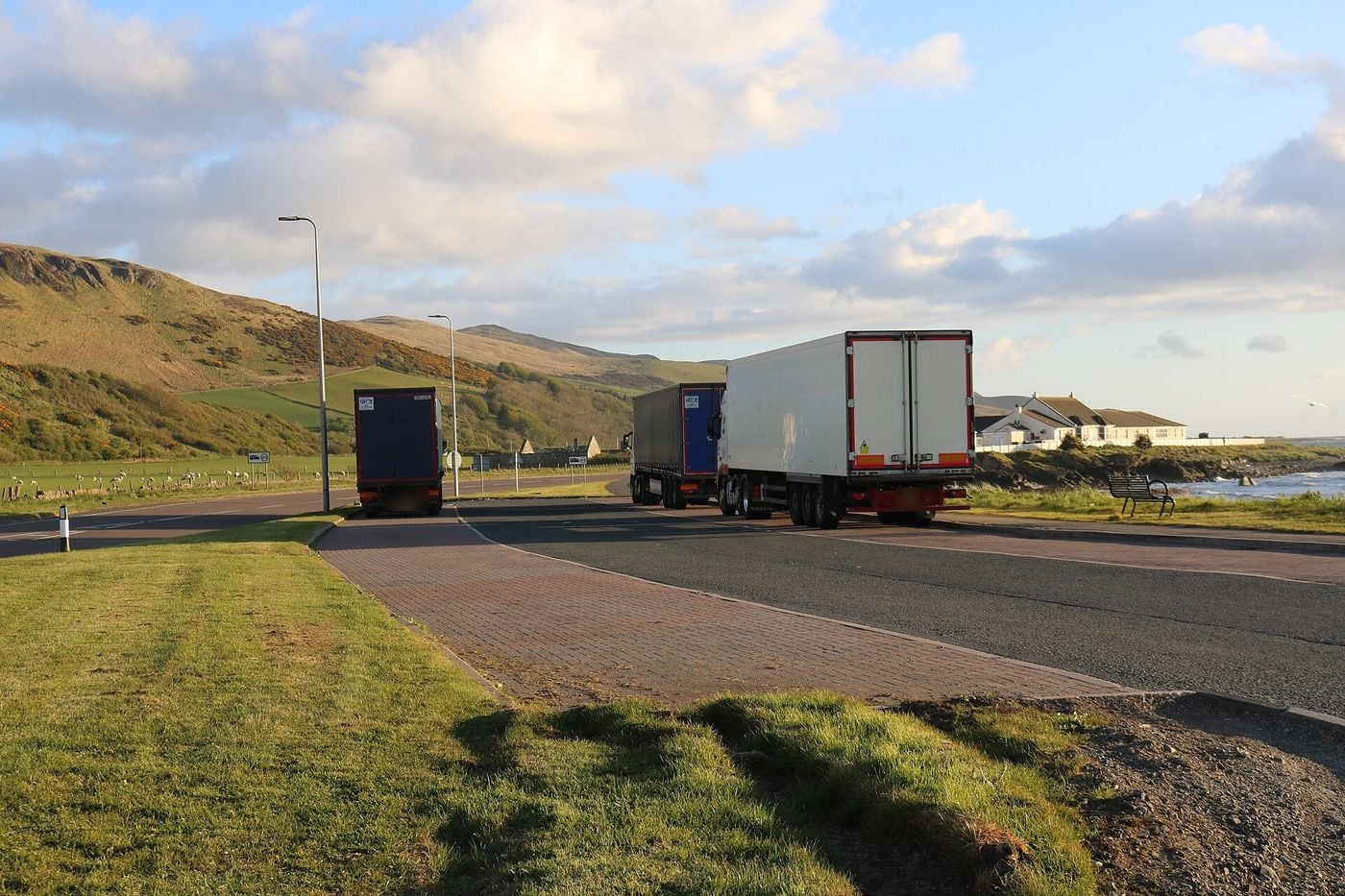
Drivers of lorries, buses and coaches in Great Britain work under one of three sets of drivers’ hours rules. Goods vehicles over 3.5 tonnes driven in the UK, or between the UK and the EU, follow the assimilated rules, which GOV.UK defines as Regulation (EC) 561/2006 as it has effect in the UK: no more than 9 hours’ driving a day, extendable to 10 hours twice a week, and 56 hours a week, all recorded on a tachograph. International journeys that are not wholly between the UK and the EU and run to, from or through an AETR country follow the AETR rules, and most vehicles exempt from the assimilated rules come under the GB domestic rules of the Transport Act 1968, which for a goods vehicle driver set 10 hours’ driving and 11 hours on duty in a working day.
Status: 13 November 2026. All texts were read that day: GOV.UK’s Drivers’ hours guide and its Tachographs guide; DVSA’s manual for goods vehicles (updated 1 July 2026) and the GB domestic rules and tachograph sections of its manual for buses and coaches; GOV.UK’s pages on roadside fines and immobilisation; DVSA’s approved tachograph centre special notice 01-25; and on legislation.gov.uk section 96 of the Transport Act 1968, Articles 2 and 6 of Regulation (EC) No 561/2006 and Article 3 of Regulation (EU) No 165/2014 as they have effect in the UK, each shown with no known outstanding effects, and the 1971 and 1986 modification orders as made. Northern Ireland has separate rules and is not covered.
| Rules | Where they apply | Driving | Duty, breaks and rest | Record |
|---|---|---|---|---|
| Assimilated rules (Regulation 561/2006 as it has effect in the UK) | Goods vehicles over 3.5 tonnes in the UK and to, from or through an EU country; buses and coaches by the table below | 9 hours a day (10 hours twice a week); 56 hours a week; 90 hours in 2 consecutive weeks | 45 minutes’ break after 4 hours 30 minutes’ driving; 11 hours’ daily rest (9 hours 3 times); 45 hours’ weekly rest (24 hours every other week) | Tachograph |
| AETR rules | Journeys to, through or from an AETR country that are not wholly between the UK and the EU | “mostly the same as the assimilated rules”, with the differences listed below | Tachograph | |
| GB domestic rules, goods vehicles | England, Wales and Scotland: most goods vehicles exempt from the assimilated rules | 10 hours in a day | 11 hours on duty in any working day | Weekly record sheet or tachograph |
| GB domestic rules, buses and coaches | England, Wales and Scotland, by the table below | 10 hours in any working day | 16 hours between starting and finishing work; 30 minutes’ break after 5 hours 30 minutes’ driving; 10 hours’ rest between working days (8.5 hours up to 3 times a week); 24 hours off duty every 2 weeks | No domestic record requirement |
Which drivers’ hours rules apply in Great Britain
GOV.UK’s guide says the rules a driver must follow depend on “the type of vehicle you’re driving” and “which country you’re driving in”, and its manual for goods vehicles adds the type of driving. Within Great Britain either the GB domestic or the assimilated rules may apply, and on international journeys either the assimilated or the AETR rules.
GOV.UK calls them the assimilated rules, “previously called EU rules”. In the manual’s words, “any reference to ‘assimilated rules’ means Regulation (EC) 561/2006 and Regulation (EU) 165/2014, as they have effect in the UK”, and “Following the UK’s departure from the EU, national journeys within the UK must follow assimilated drivers’ hours and tachograph rules. Assimilated rules also apply to international journeys between the UK and EU.” Its legislation annex says both Regulations were incorporated as retained direct EU legislation by section 3 of the European Union (Withdrawal) Act 2018 and are now known as assimilated direct legislation under section 5 of the Retained EU Law (Revocation and Reform) Act 2023. The EU text of the same rules, with its breaks, rest periods and ferry provisions, is set out in driving time and rest rules.
Article 2 of Regulation 561/2006, as it has effect in the UK since 21 April 2025, draws the line between the assimilated rules and the AETR. Paragraph 2A reads: “This Regulation shall apply to carriage by road of goods undertaken in the United Kingdom by a vehicle where the motor vehicle or tractor is registered in the United Kingdom or a member State and where that carriage is undertaken exclusively within the area consisting of the United Kingdom and the European Union.” Paragraph 3 reads: “Subject to paragraph 2A, the AETR shall apply, irrespective of the country of registration of the vehicle, to carriage by road undertaken in the United Kingdom where that carriage is part of international road transport operations undertaken in part outside the United Kingdom.” The manual puts it as “AETR rules apply to international journeys that are not wholly between the UK and the EU and are from, to or through a country that is a signatory to AETR.”
Goods vehicles
For goods vehicles the line is the maximum permissible mass. The manual says the assimilated rules “apply to drivers of most vehicles used for the carriage of goods (including dual purpose vehicles) where the maximum permissible mass of the vehicle, including any trailer or semi-trailer, exceeds 3.5 tonnes”, wholly within the UK or on journeys between the UK and the EU, and that “It is not necessary for a vehicle or its trailer to be laden for it to be in scope of assimilated or AETR rules.”
A second threshold applies to international work. Article 2(1)(aa) of Regulation 561/2006, inserted into the UK text on 24 December 2022, extends the Regulation “from 1st July 2026, of goods in international transport operations or in cabotage operations, where the maximum permissible mass of the vehicle, including any trailer or semi-trailer, exceeds 2,5 tonnes”. The manual describes the same change for light goods vehicles over 2.5 tonnes on international operations, including cabotage, within the UK and the EU, and adds: “This does not apply to AETR-regulated journeys.”
Buses, coaches and minibuses
For passenger vehicles GOV.UK sets the rules by the number of passenger seats, the length of the route and whether the service is regular, which it defines as one that “follows a route with stopping points for passengers to get on or off at specified intervals”.
| Type of operation | 8 or fewer passenger seats | 9 to 12 passenger seats | 13 to 16 passenger seats | 17 or more passenger seats |
|---|---|---|---|---|
| Regular service on route not exceeding 50km | GB domestic rules | GB domestic rules | GB domestic rules | GB domestic rules |
| National or international regular service on route exceeding 50km | The local rules of the countries you drive in (GB domestic rules in England, Wales and Scotland) | Assimilated or AETR rules | Assimilated or AETR rules | Assimilated or AETR rules |
| National or international non-regular service, for example commercial excursions, tours or private hire | The local rules of the countries you drive in (GB domestic rules in England, Wales and Scotland) | Assimilated or AETR rules | Assimilated or AETR rules | Assimilated or AETR rules |
GOV.UK adds that drivers of police, fire service or armed forces vehicles do not need to follow any drivers’ hours rules. A non-public service vehicle driven for another public authority or for a business needs no drivers’ hours rules with up to 8 passenger seats and follows the assimilated rules with 9 or more, unless exempt. A non-commercial vehicle with 9 or more passenger seats usually follows the assimilated rules, but the GB rules instead “if your vehicle has between 10 and 17 passenger seats and is only used for non-commercial journeys”. The licences for these vehicles are covered in PCV licences D1 and D in Great Britain.
The assimilated limits in the UK
GOV.UK’s guide gives the main assimilated limits on driving as no more than “9 hours in a day - this can be extended to 10 hours twice a week”, “56 hours in a week” and “90 hours in any 2 consecutive weeks”, and adds: “You must record all driving you do under assimilated rules on a tachograph.” Article 6 of Regulation 561/2006 as it has effect in the UK gives the same figures, and its paragraph 2 adds that the 56 hours shall not, in England, Wales and Scotland, “result in the maximum weekly working time laid down in the Road Transport (Working Time) Regulations 2005 being exceeded”.
On breaks and rest, the guide lists:
- “at least 11 hours rest every day - you can reduce this to 9 hours rest 3 times between any 2 weekly rest periods”
- “an unbroken rest period of 45 hours every week - you can reduce this to 24 hours every other week”
- “a break or breaks totalling at least 45 minutes after no more than 4 hours 30 minutes driving”
- “your weekly rest after 6 consecutive 24-hour periods of working, starting from the end of the last weekly rest period taken”
It adds that coach drivers on an international trip can take their weekly rest after 12 consecutive 24-hour periods, and that drivers of goods vehicles on an international trip can take 2 consecutive reduced weekly rest periods if these are taken outside the UK and outside the driver’s country of residence; over a 4-week period, 2 of the weekly rest periods must still be of at least 45 hours. The manual notes that this provision, and the operator’s duty to organise work so that a driver can return to the operating centre or home within each period of four consecutive weeks, do not apply to AETR-regulated journeys “as the AETR Agreement has not yet been aligned with Regulation (EC) 561/2006.”
Where the AETR rules differ
GOV.UK describes the AETR rules as “mostly the same” as the assimilated rules. Under the AETR a driver:
- “can work for more than 4 consecutive weeks without returning to your home or where the vehicle is usually based”
- “can only take one reduced weekly rest period (less than 45 hours) at a time - this must be followed by one full weekly rest period”
- “can only interrupt your regular daily rest period (11 hours) during ferry crossings”
The guide lists the countries the AETR rules cover, among them the United Kingdom, Norway, Switzerland and Turkey; the manual’s list of AETR countries begins with all EU countries. The manual adds that journeys between the UK and Liechtenstein or Norway, and between the UK and Iceland, must follow AETR rules, with Icelandic national rules on Icelandic territory, and that Switzerland follows Regulation 561/2006 on EU territory while “Drivers must follow AETR rules when on Swiss territory.” The treaty itself, its parties and its history are covered in the AETR Agreement explained.
Exemptions and national derogations
The manual separates two kinds of relief from the assimilated rules: “Exemptions apply to journeys wholly within the UK and on journeys between the UK and EU. National derogations only apply to journeys wholly within the UK.” It adds that the national derogations do not apply to AETR journeys, and that a vehicle exempt from the assimilated rules “will usually be in scope of the GB domestic rules when travelling in GB”. Section 1.1 of the manual has the full list; among the entries are the following.
| Exemption or derogation | Where it applies |
|---|---|
| Vehicles not capable of exceeding 40 km/h, including by a set speed limiter | Exemption: UK and UK to EU |
| Vehicles owned or hired without a driver by the armed forces, civil defence, fire services and forces responsible for maintaining public order, for their own tasks | Exemption: UK and UK to EU |
| Vehicles used in emergencies or rescue operations, including the non-commercial transport of humanitarian aid | Exemption: UK and UK to EU |
| Specialised breakdown vehicles operating within a 100 km radius of their base | Exemption: UK and UK to EU |
| Vehicles up to 7.5 tonnes used for the non-commercial carriage of goods | Exemption: UK and UK to EU |
| Vehicles up to 7.5 tonnes carrying materials, equipment or machinery for the driver’s use in the course of work, or delivering goods produced on a craft basis, within 100 km of base, not for hire or reward and where driving is not the driver’s main activity | Exemption: UK and UK to EU; the craft goods exemption does not apply to AETR journeys |
| Vehicles over 2.5 tonnes up to 3.5 tonnes carrying goods on own account where driving is not the driver’s main activity | Exemption: UK and UK to EU; not for AETR journeys |
| Vehicles used by the Royal National Lifeboat Institution, manufactured before 1 January 1947, or propelled by steam | Special exemption in Great Britain |
| Agricultural, horticultural, forestry, farming or fishery undertakings carrying goods for their own activity within 100 km of base | National derogation: journeys wholly within the UK |
| Universal service provider vehicles up to 7.5 tonnes within 100 km of base, where driving is not the driver’s main activity; the manual says the only one in the UK is the Royal Mail, and these vehicles must have a tachograph fitted | National derogation: journeys wholly within the UK |
| Zero emission goods vehicles over 3.5 tonnes up to 4.25 tonnes, including any trailer | National derogation: Great Britain only, not Northern Ireland |
| Vehicles used for driving instruction and examination for a driving licence or a certificate of professional competence, not for commercial carriage | National derogation: journeys wholly within the UK |
| Vehicles used exclusively on roads inside hub facilities such as ports, airports, interports and railway terminals | National derogation: journeys wholly within the UK |
The manual also lists derogations for vehicles used in connection with sewerage, flood protection, water, gas and electricity maintenance services, road maintenance, door-to-door household refuse collection and broadcasting, for milk collection from farms, for live animals between farm, market and slaughterhouse within 100 km, and for vehicles operated on islands not exceeding 2,300 square kilometres not linked to the rest of Great Britain by a bridge, ford or tunnel open to motor vehicles. It says that “In some cases it may be necessary to refer to case law for definitive interpretations.” A separate concession from the daily and weekly rest requirements of the assimilated rules, but not the AETR rules, covers professional drivers who are members of a volunteer reserve force or instructors in the Cadet Corps, limited to 10 weekend training sessions and fifteen days’ annual camp training in any year.
DVSA’s guidance for horsebox owners, and the manual’s use of horses as an example of the exemption for vehicles up to 7.5 tonnes used for the non-commercial carriage of goods, are set out in horsebox and horse trailer rules in Great Britain.
The GB domestic rules: 10 hours’ driving and 11 hours’ duty
The domestic rules are in Part VI of the Transport Act 1968. Section 96(1) reads: “Subject to the provisions of this section, a driver shall not on any working day drive a vehicle or vehicles to which this Part of this Act applies for periods amounting in the aggregate to more than ten hours.” Section 96(3)(a) limits the working day to eleven hours. The Act’s other limits are changed by modification orders: for a driver who spends all or the greater part of the driving time in a working day in goods vehicles, article 2 of the Drivers’ Hours (Goods Vehicles) (Modifications) Order 1986 makes Part VI apply as if subsections (2), (3)(b), (4) to (6) and (8)(b) of section 96 were omitted. Its explanatory note says such drivers “are exempt from all the provisions of section 96 except the daily driving limit in subsection (1) and the daily duty limit in subsection (3)(a)”.
Goods vehicles
GOV.UK states the two limits as “You must not drive for more than 10 hours in a day” on a public road, and off-road if not during duty time, and “You must not be on duty for more than 11 hours in any working day. This limit does not apply on any working day when you do not drive.” Off-road driving for agriculture, quarrying, forestry, building work or civil engineering counts as duty time rather than driving. The manual defines the day as “the 24-hour period beginning with the start of duty time” and adds that “A driver who does not drive for more than 4 hours on each day of the week is exempt from the daily duty limit for the whole week.”
The duty limit, but not the driving limit, does not apply to goods vehicles, including dual purpose vehicles, not exceeding 3.5 tonnes when used by doctors, dentists, nurses, midwives or vets, for any service of inspection, cleaning, maintenance, repair, installation or fitting, by commercial travellers carrying goods only for soliciting orders, by the AA, RAC or RSAC, or for cinematography or radio and television broadcasting. The domestic rules as a whole do not apply to drivers of vehicles used by the armed forces, the police and fire brigade, to drivers who always drive off the public road system, or to private driving. In an emergency, which the manual defines by the need for immediate preventative action to avoid danger to life or health, serious interruption of essential public services or serious damage to property, “the driving and duty limits are suspended for the duration of the emergency.”
The manual says the domestic rules make no specific provision for rest periods or breaks for goods vehicle drivers, and that employers are required under the Working Time Regulations 1998 to ensure that drivers have “adequate rest”.
Buses and coaches
For passenger vehicles section 96 is modified by the Drivers’ Hours (Passenger and Goods Vehicles) (Modifications) Order 1971, which in its text as made sets a working day that “shall not exceed sixteen hours” and an interval for rest between working days that “shall not be of less than ten hours except that on not more than three occasions in any working week the said interval may be of less than ten hours but not of less than eight and a half hours”. GOV.UK’s guide states the rules as follows:
- daily driving: “You must not drive for more than 10 hours in any working day.”
- length of working day: “You must not work more than 16 hours between the times of starting and finishing work - including the times when you’re not driving.”
- breaks: in a working day of less than 8 hours 30 minutes, a break of 30 minutes or more after 5 hours 30 minutes of driving; in a longer day, either that break, or at least 45 minutes not driving in the first 8 hours 30 minutes of work followed by a break of at least 30 minutes.
- rest: “You must take a rest of at least 10 hours between 2 working days (or spreadovers) - this can be reduced to 8.5 hours up to 3 times a week. Every 2 weeks you must take at least one period of 24 hours off duty.”
A bus or coach driver who drives for less than 4 hours a day in a week does not need to follow the GB domestic rules that week. A driver who drives for more than 4 hours on up to 2 days a week follows the rules on daily driving and length of working day, starts and finishes all duties within a 24-hour period, and takes a rest of 10 hours before the first duty and immediately after the last duty. When a driver divides time between goods and passenger vehicles under the GB domestic rules, the rules for passenger vehicles apply for a day or a week in which most of the time is spent driving passenger vehicles.
Mixing assimilated and domestic driving
A driver can work under both sets of rules on the same day. GOV.UK’s guide says that driving under GB domestic rules “counts as ‘other work’, not as a break or rest period”, that driving or duty under the assimilated or AETR rules “counts towards the driving and duty limits under GB domestic rules”, and that the GB domestic limits of 10 hours’ driving a day and 11 hours on duty for a goods vehicle, or 16 hours on duty for a passenger-carrying vehicle, still apply. The manual adds that “the assimilated rules take precedence over the GB domestic rules” and that, when any assimilated or AETR driving is carried out, “the limit of 13 or 15 hours maximum of duty (determined by the amount of assimilated or AETR daily rest needed) must always be obeyed.”
Tachograph rules in the UK
When a tachograph is needed
GOV.UK’s Tachographs guide says: “You must use a tachograph if the vehicle you’re driving comes under assimilated rules (previously called EU rules) or AETR rules.” It adds: “You do not have to use a tachograph if your vehicle is not covered by assimilated rules or if it’s exempt from assimilated rules on drivers’ hours.” The manual names one exception within the assimilated rules, the driving of a vehicle collecting sea coal, whose drivers follow the drivers’ hours rules without a tachograph. It also says that drivers of vehicles exempt from or out of scope of the assimilated and AETR rules are not required to use a tachograph even if one is fitted, “unless the vehicle is operated by a universal service provider (USP)”.
Under the GB domestic rules, a goods vehicle driver keeps written records on a weekly record sheet when the vehicle requires an operator licence and driving exceeds 4 hours in that day, and “Operators are expected to check and sign each weekly record sheet”; a tachograph that complies with Regulation (EU) 165/2014 as it has effect in the UK may be used instead. Vehicles over 3.5 tonnes used to carry parcels and letters on postal services must have a tachograph fitted and used even when their drivers are exempt from the assimilated rules. The bus and coach manual says “There are no record keeping requirements under GB domestic rules for passenger carrying vehicles”. Operator licences are covered in goods vehicle operator licences in Great Britain.
A smaller vehicle also needs a tachograph when it tows. The Tachographs guide lists a vehicle “such as a 4x4” used for towing where the maximum authorised mass of the vehicle and trailer is more than 3,500kg and the vehicle is used commercially.
Which tachograph a vehicle must have
GOV.UK names four types, analogue, digital, smart 1 and smart 2, and says “All vehicles can use a full smart 2 tachograph.” The type a vehicle may use depends on when it was first registered.
| Date the vehicle was registered | Type of tachograph you can use |
|---|---|
| Before 1 May 2006 | You can use any type of tachograph |
| Between 1 May 2006 and 14 June 2019 | You must use either a digital or smart tachograph |
| Between 15 June 2019 and 20 February 2024 | You must use either a smart 1 or a full or transitional smart 2 tachograph |
| Between 21 February 2024 and 23 December 2025 | You must use a full or transitional smart 2 tachograph |
| From 24 December 2025 | You must use a full smart 2 tachograph |
The manual explains that “the transitional unit does not have the location verification facility (Galileo) within its software”, and that “Transitional smart 2 tachographs do not need to be retrofitted in vehicles registered before this date”, meaning 24 December 2025. A vehicle operating only within the UK may keep the analogue, digital or smart 1 tachograph originally fitted; the manuals for goods vehicles and for buses and coaches both say that a faulty smart 1 unit must be replaced with a full or transitional smart 2 tachograph. What a smart tachograph records is set out in the smart tachograph explained, and the driver card in the digital tachograph and driver card.
Smart tachograph version 2 on international journeys
For journeys between the UK and the EU, Article 3(1b) of Regulation 165/2014, as it has effect in the UK, requires a smart tachograph 2 “only when operating on the territory of a Party to the Trade and Co-operation Agreement between the European Union and the United Kingdom entered into on 30th December 2020, other than the territory where they are registered”, on these dates:
| From | Vehicles |
|---|---|
| 21 August 2023 | Vehicles registered for the first time on or after that date |
| 31 December 2024 | Vehicles equipped with an analogue tachograph or a digital tachograph immediately before that date |
| 19 August 2025 | Vehicles equipped with a smart tachograph 1 immediately before that date |
| 1 July 2026 | All other vehicles with a maximum permissible mass, including any trailer or semi-trailer, exceeding 2.5 tonnes |
DVSA’s goods vehicle manual states the newest of these dates in its own terms: “On or after 1 July 2026, a full smart 2 tachograph must be fitted into goods vehicles over 2.5 tonnes used for international journeys for hire and reward. If the international journey is for the driver or company’s own account and driving does not constitute the main activity of the driver, there is no requirement to fit a tachograph.” It adds that “Goods vehicles weighing over 2.5 tonnes and less than 3.5 tonnes that are used only in the UK do not have to have a tachograph fitted.”
On the smart tachograph 2 retrofit requirement, DVSA’s special notice 01-25 to approved tachograph centres says the Department clarified that the retrofit requirement would not be enforced for heavy goods vehicles “by authorities in the EU and UK before 28 February 2025”, nor for public service vehicles by DVSA, “as the UK legislation will be amended to apply AETR rules to these vehicles when on international journeys between the UK and EU”. The tachograph section of the bus and coach manual gives the dates of 21 February 2024 and 24 December 2025 for newly registered buses and coaches and states no international retrofit date. The symbols that a tachograph shows and prints are listed in tachograph symbols explained.
Records a driver must be able to show
On any day of driving under the assimilated or AETR rules, the manual says, “drivers must be able to produce their assimilated AETR records, including the driver card if held, for the current day and the previous 28 calendar days, as well as any GB domestic records.” The manual’s tachograph section gives the period to be produced at the roadside as the current day and the previous 28 calendar days for AETR or domestic journeys under the assimilated rules, or 56 days for international journeys to and from an EU member country. Assimilated and AETR rules also require records of rest days and of annual or sick leave. A driver who has not been issued a driver card “is not permitted to drive a vehicle equipped with a digital or smart tachograph”, and it is not permitted to keep manual records if the driver card has been forgotten. GOV.UK’s guide tells employers to keep drivers’ hours records for at least one year and to be able to show enforcement officers records from the last 12 months.
Penalties for breaking the drivers’ hours and tachograph rules
GOV.UK’s guide lists the penalties for serious or dangerous offences as a prohibition notice, a fixed penalty whose amount “depends on how serious the offence is”, and immobilisation of a vehicle that is a danger to road safety, with a release charge; an offence rectification notice and a verbal warning are used for lesser offences. DVSA’s manual adds prosecution and referral to the Traffic Commissioner, who may take administrative action against a vocational driving licence or an operator’s licence.
At the roadside, GOV.UK says a fine from a DVSA officer or the police “could depend on the circumstances and seriousness of the offence”, that driving for too long without taking a break is one such offence, and that “You can be fined between £50 and £300.” A driver with a satisfactory UK address has 28 days to pay a fixed penalty notice. A driver without one pays a financial penalty deposit: the total of the fixed penalty notices, or £500 per offence when going to court, with a maximum deposit of £1,500. To release an immobilised vehicle the driver must prove the issues have been fixed and “pay an £80 release charge”.
In court, the manual gives the maximum fines that Part VI of the Transport Act 1968 sets on conviction.
| Offence | Penalty |
|---|---|
| Failure to observe driving times, break or rest period rules | Level 4 fine |
| Failure to make or keep records under the GB rules | Level 4 fine |
| Failure to install a tachograph | Level 5 fine |
| Failure to use a tachograph | Level 5 fine |
| Failure to hand over tachograph records as requested by an enforcement officer | Level 5 fine |
| False entry or alteration of a record with the intent to deceive | On summary conviction Level 5 fine or on indictment 2 years’ imprisonment |
| Altering or fording [sic] the seal on a tachograph with the intent to deceive | On summary conviction Level 5 or on indictment 2 years’ imprisonment |
| Failure to take all reasonable steps to ensure contractually agreed transport time schedules respect the assimilated rules | Level 4 fine |
Section 96(11) of the Act makes both the driver and an employer who “caused or permitted the contravention” liable, and gives a defence for a contravention “due to unavoidable delay in the completion of a journey arising out of circumstances which he could not reasonably have foreseen”. The manual says the assimilated and AETR rules “make operators liable for any infringements committed by their drivers” unless they can show the driver’s work was organised in full consideration of the rules, and that consignors, freight forwarders, tour operators, principal contractors, sub-contractors and driver employment agencies are responsible for ensuring that contractually agreed transport time schedules respect the rules. Under the assimilated and AETR rules, enforcement action can be taken against operators and drivers for offences detected in Great Britain but committed in another country, provided that the offender has not already been penalised.
The licence categories are covered in HGV licences in Great Britain, and the periodic training that counts as duty when an employer requests it in Driver CPC in Great Britain.
Quick answers
- What are the HGV drivers' hours rules in the UK?
- Under the assimilated rules, which cover goods vehicles over 3.5 tonnes driven in the UK or to, from or through an EU country, a driver must not drive more than 9 hours in a day, extendable to 10 hours twice a week, 56 hours in a week or 90 hours in any 2 consecutive weeks. GOV.UK lists a break or breaks totalling at least 45 minutes after no more than 4 hours 30 minutes of driving, at least 11 hours' daily rest, reducible to 9 hours 3 times between weekly rest periods, and a weekly rest of 45 hours, reducible to 24 hours every other week.
- What are the GB domestic drivers' hours rules?
- For goods vehicles, 10 hours' driving and 11 hours on duty in a working day, under Part VI of the Transport Act 1968. For buses and coaches GOV.UK gives 10 hours' driving in a working day, no more than 16 hours between starting and finishing work, a break of at least 30 minutes after 5 hours 30 minutes of driving, a rest of at least 10 hours between working days, which can be reduced to 8.5 hours up to 3 times a week, and at least one period of 24 hours off duty every 2 weeks. The domestic rules apply in England, Wales and Scotland to most vehicles that are exempt from the assimilated rules.
- Do EU drivers' hours rules still apply in the UK?
- Yes, as assimilated rules: GOV.UK means by this Regulation (EC) 561/2006 and Regulation (EU) 165/2014 as they have effect in the UK, and says national journeys within the UK and international journeys between the UK and the EU must follow them. Article 2 of Regulation 561/2006 as it has effect in the UK applies the AETR to international operations undertaken in part outside the UK, subject to paragraph 2A, which keeps under the Regulation goods carriage by a vehicle registered in the UK or an EU member State undertaken exclusively within the UK and the EU.
- When do you need a tachograph in the UK?
- When the vehicle comes under the assimilated rules or the AETR rules, according to GOV.UK; a driver does not have to use one if the vehicle is not covered by the assimilated rules or is exempt from them. Under the GB domestic rules a goods vehicle driver records the hours on a weekly record sheet or on a tachograph, and the bus and coach manual says there are no record keeping requirements under the GB domestic rules for passenger carrying vehicles.
- Do vans over 2.5 tonnes need a tachograph?
- GOV.UK says that on or after 1 July 2026 a full smart 2 tachograph must be fitted into goods vehicles over 2.5 tonnes used for international journeys for hire and reward, and that goods vehicles over 2.5 tonnes and less than 3.5 tonnes used only in the UK do not have to have one. If the international journey is for the driver's or the company's own account and driving is not the driver's main activity, there is no requirement to fit a tachograph.
- What is the fine for breaking drivers' hours rules?
- A roadside fine of between £50 and £300, according to GOV.UK, which adds that a driver can be taken to court for more serious offences. Part VI of the Transport Act 1968 sets a level 4 fine on the standard scale for failing to observe driving time, break or rest rules, a level 5 fine for failing to install or use a tachograph, and up to 2 years' imprisonment on indictment for a false entry or altering a record with intent to deceive. A driver without a satisfactory UK address pays a deposit of £500 per offence if going to court, up to £1,500.
Sources
- Drivers' hours (guide): Overview; Goods vehicles; Buses, coaches and minibuses; Exemptions from assimilated drivers' hours rules; Assimilated rules; GB domestic rules; AETR rules; Driving under both assimilated or AETR rules and GB domestic rules; Rules for employers — GOV.UK (Driver and Vehicle Standards Agency)
- Drivers' hours and tachographs: goods vehicles (manual, updated 1 July 2026): Introduction; 1. Assimilated and AETR rules; 2. Great Britain domestic rules; 3. Mixed driving; 4. Tachograph rules; 6. Enforcement and penalties; Annex 1. Legislation — GOV.UK (Driver and Vehicle Standards Agency)
- Drivers' hours and tachographs: buses and coaches (manual): 2. Great Britain domestic rules (updated 22 April 2025); 4. Tachograph rules (updated 4 December 2025) — GOV.UK (Driver and Vehicle Standards Agency)
- Tachographs: rules for drivers and operators (guide): Overview; Tachographs in light vehicles — GOV.UK (Driver and Vehicle Standards Agency)
- Roadside checks for HGV, van, bus or coach drivers: Fines, penalty points and other sanctions; What happens if your vehicle is immobilised — GOV.UK (Driver and Vehicle Standards Agency)
- Approved tachograph centre special notice 01-25, section 2: Tachograph retrofit rules (GOV.UK page last updated 16 March 2026) — Driver and Vehicle Standards Agency
- Transport Act 1968 (c. 73), section 96: permitted driving time and periods of duty (revised text, no known outstanding effects on 13 November 2026) — legislation.gov.uk (The National Archives)
- The Drivers' Hours (Goods Vehicles) (Modifications) Order 1986 (SI 1986/1459), as made — legislation.gov.uk (The National Archives)
- The Drivers' Hours (Passenger and Goods Vehicles) (Modifications) Order 1971 (SI 1971/818), as made — legislation.gov.uk (The National Archives)
- Regulation (EC) No 561/2006, Articles 2 and 6, as they have effect in the UK (revised text, no known outstanding effects on 13 November 2026) — legislation.gov.uk (The National Archives)
- Regulation (EU) No 165/2014, Article 3: scope, as it has effect in the UK (revised text, no known outstanding effects on 13 November 2026) — legislation.gov.uk (The National Archives)