Horsebox and horse trailer rules in Great Britain
A horsebox over 3,500 kg MAM needs an HGV licence, C1 up to 7,500 kg; DVSA says commercial use, prize money included, can need an operator licence.
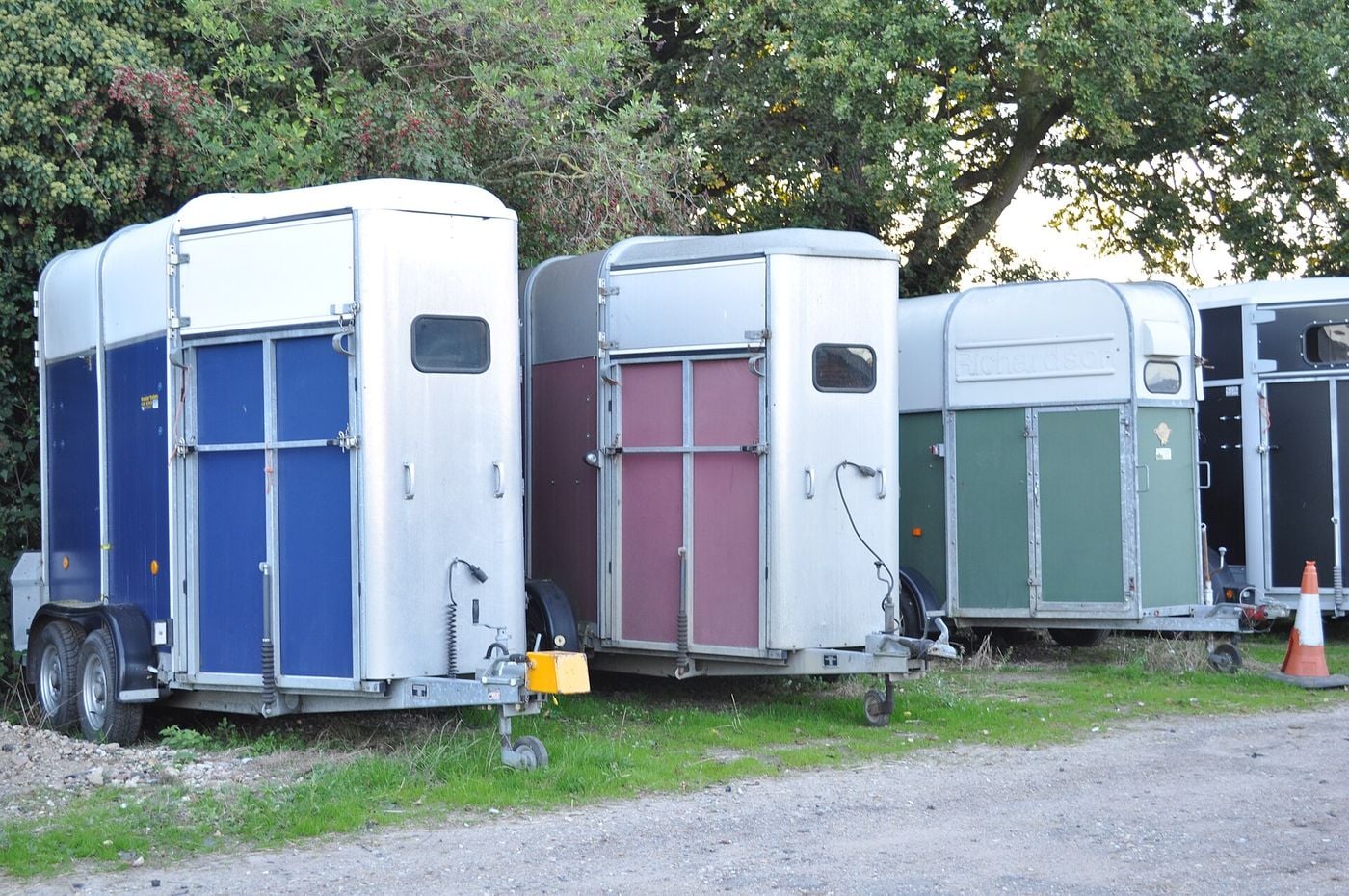
In Great Britain the driving licence category for a horsebox depends, DVSA says, on the size and type of vehicle and on when the driver passed the driving test, and a horsebox over 3,500 kg maximum authorised mass (MAM) needs an HGV licence. GOV.UK’s licence categories put vehicles between 3,500 and 7,500 kg in category C1 and vehicles over 3,500 kg in category C; a horse trailer behind a car is covered by the car licence up to weights that depend on when the licence was obtained. DVSA’s guidance adds that using a horsebox or horse trailer for commercial purposes, which its operator licence section says can include getting prize money for taking part in competitions, can bring in an operator licence and drivers’ hours rules, and that transporting horses for commercial reasons on journeys of 65 km and over needs an animal transportation certificate of competence.
Status: 22 November 2026. This page follows, as read on 21 November 2026, DVSA’s guidance Rules for transporting horses in horseboxes and trailers, updated on 23 September 2025; section 1 of DVSA’s manual Drivers’ hours and tachographs: goods vehicles, updated on 1 July 2026; GOV.UK’s guides Towing with a car, Driving licence categories and Become a qualified heavy goods vehicle (HGV) or bus driver; and DVLA’s leaflet INF52 (5/25). It covers England, Scotland and Wales; GOV.UK says driving licence categories are different in Northern Ireland, which is not covered here.
| Topic | Rule, as the source gives it | Source |
|---|---|---|
| Car licence, test on or after 1 January 1997 | Category B: vehicles up to 3,500 kg MAM for petrol and diesel vehicles, hybrids included, and 4,250 kg for electric or hydrogen vehicles | GOV.UK, Driving licence categories |
| Horsebox over 3,500 kg MAM | An HGV licence; category C1 covers 3,500 to 7,500 kg MAM, category C vehicles over 3,500 kg, each with a trailer up to 750 kg | DVSA guidance; GOV.UK, Driving licence categories |
| Car test passed before 1 January 1997 | The licence already shows C1 and C1E (8.25 tonnes) | DVLA, INF52, Note 5 |
| Horse trailer behind a car | Licence from 1 January 1997: trailer up to 3,500 kg MAM, “category BE”; licence from before 1997: usually a combined 8,250 kg MAM; category C1+E: a combined 12,000 kg MAM | GOV.UK, Towing with a car |
| Operator licence | Usually needed for commercial use above a combined gross plated weight of “2,500kg in Europe” and “3,500kg in the UK or internationally”; not for non-commercial use such as leisure activities | DVSA guidance |
| Drivers’ hours | Over 3,500 kg: usually EU or AETR rules, depending on the country; 3,500 kg or less and used commercially: usually GB domestic rules for goods vehicles | DVSA guidance |
| Tachograph | Guidance: a tachograph over 3,500 kg. Manual: exemption up to 7.5 tonnes for the non-commercial carriage of goods, with horses as an example | DVSA guidance; DVSA manual, section 1.1 |
| Annual test | An MOT every year; one type for 3,500 kg or less, another for more than 3,500 kg | DVSA guidance |
| Speed limits | “horseboxes must follow the limits for goods vehicles” | DVSA guidance |
| Certificate of competence | For horses transported for commercial reasons on journeys of 65 km and over | DVSA guidance; GOV.UK |
Which licence do I need for a horsebox?
DVSA’s guidance says the right driving licence category “will depend on the size, type of vehicle you’re using, and when you passed your driving test”, and that “A horsebox will usually count as a medium or large vehicle.” Its rule for the heavier ones reads: “You’ll need to get an HGV licence if your horsebox has a maximum authorised mass (MAM) over 3,500kg.” It says drivers can check online to see what vehicles they can drive and how much they can tow.
GOV.UK’s Driving licence categories page sets the weights. A category B licence from a test passed on or after 1 January 1997 covers vehicles with up to 8 passenger seats and a MAM of 3,500 kg for petrol and diesel vehicles, hybrids included, or 4,250 kg for electric or hydrogen vehicles, “zero emission vehicles only”. Category C1 reads: “You can drive vehicles between 3,500 and 7,500kg maximum authorised mass (MAM) (with a trailer up to 750kg).” Category C covers “vehicles over 3,500kg with a trailer up to 750kg maximum authorised mass (MAM)”. C1E adds a trailer over 750 kg to a C1 vehicle, with a combined MAM that cannot exceed 12,000 kg, and CE adds a trailer over 750 kg to a C vehicle.
For older licences, Note 5 of DVLA’s leaflet INF52 says: “If you passed your test for category B or B automatic before 1 January 1997, your licence will already show entitlements C1, C1E (8.25 tonnes), D1 and D1E (not for hire or reward).”
To get the HGV licence, DVSA’s guidance says a driver needs to pass Driver Certificate of Professional Competence (CPC) tests: part 1 (theory), part 3a (off-road exercises) and part 3b (on-road driving) “If driving is not the main part of your job, or your vehicle is exempt”, and also part 2 (case studies) and part 4 (practical demonstration) if driving is the main part of the job. The categories, the medical and the tests are set out in HGV licences in Great Britain, and the pre-1997 entitlements in Can I drive a minibus or 7.5-tonne lorry on a car licence?.
Towing a horse trailer with a car
GOV.UK’s guide Towing with a car says the weight a car licence allows you to tow depends on when you got the licence, and that you will need to know the weight of both the vehicle and the trailer, the MAM, which “is listed in the owner’s manual and is normally shown on a plate or sticker fitted to the vehicle or trailer”. DVSA’s horsebox guidance gives the same two figures as the guide’s first two rows below.
| Licence | What you can tow |
|---|---|
| Got before 1 January 1997 | “You can usually drive a vehicle and trailer with a combined weight of up to 8,250kg MAM.” |
| Got from 1 January 1997 | “You can tow a trailer that weighs up to 3,500kg MAM. This is known as a ‘category BE’ vehicle.” The categories page adds for category B: “The combined MAM of the vehicle and trailer must not exceed 7,000kg.” |
| Category BE valid from before 19 January 2013 | A vehicle with a MAM of 3,500 kg with “any size trailer within the towing limits of the vehicle” |
| Category BE valid from 19 January 2013 or later | A vehicle with a MAM of 3,500 kg with “a trailer with a MAM of up to 3,500kg within the towing limits of the vehicle” |
| Category C1+E | “vehicles and trailers with a combined weight of up to 12,000kg MAM” |
The guide says that if category BE is not on your physical driving licence, DVLA will add it the next time you renew the licence. To tow combinations heavier than the current licence allows, it lists a provisional licence for a medium-sized lorry and trailer (category C1+E), the lorry theory test and the C1+E driving test, with extra Driver CPC tests if driving the medium-sized lorry is the main part of your job.
The guide’s page Towing weight and width limits adds limits on weight, width and length. It says most cars have a maximum weight they can tow, usually listed in the handbook or specification sheet, and that the vehicle’s gross train weight may be listed on the vehicle identification number (VIN) plate. The guide says the gross train weight, “the weight of the fully-loaded car plus fully-loaded trailer”, “must not be exceeded”, and that “If your VIN plate does not list a train weight, you should not use your vehicle for towing.” The maximum trailer width for any towing vehicle is 2.55 metres. A vehicle with a MAM of 3,500 kg or less cannot tow a trailer longer than 7 metres, a length that does not include the A-frame.
When does horse transport need an operator licence?
DVSA’s guidance gives its own thresholds and its own test of commercial use for horses: “You’ll usually need a goods vehicle operator licence if you use a horsebox or horse trailer for commercial purposes with a combined gross plated weight over: 2,500kg in Europe; 3,500kg in the UK or internationally”. It adds: “You need an operator licence even if you only use your vehicle for commercial purposes for a short period, such as one day or more.”
In DVSA’s words, commercial purposes can include:
- being paid directly or indirectly to transport horses;
- getting payment as a result of transporting horses, “for example, getting prize money for taking part in competitions”;
- using horseboxes for a business.
“Being paid indirectly could include a membership subscription to a club, or paying for another service that includes transport of the horses.” On the other side of the line, the guidance says: “You do not need an operator licence if you’re only transporting horses or goods for non-commercial purposes, such as leisure activities.”
The type of licence, DVSA says, “depends on your vehicle, where you use it and who the horses belong to”. For each of the three types its vehicle condition is the same: a vehicle and horsebox trailer combination, or a horsebox, with a MAM of more than 3,500 kg.
| Licence | Who the horses belong to | Where |
|---|---|---|
| Restricted | You own the horses you’re transporting | Only within the UK and the EU |
| Standard national | You do not own the horses you’re transporting | Only within the UK |
| Standard international | You do not own the horses you’re transporting | Outside the UK |
The guidance states that DVSA “carries out regular roadside vehicle checks and can impound your vehicle if you do not have the correct operator licence.” The licence types, the weight thresholds of the Goods Vehicles (Licensing of Operators) Act 1995, the financial standing and the transport manager are set out in Goods vehicle operator licences in Great Britain.
Drivers’ hours and tachographs for horseboxes
DVSA’s horsebox guidance says drivers’ hours rules must be followed by anyone who uses “a vehicle that weighs more than 3,500kg” or uses the vehicle “for commercial purposes”, and that breaking them can lead to prosecution or a fine. Over 3,500 kg, “Depending on the country you’re driving in, you’ll usually need to follow either: EU rules; AETR rules”. For a vehicle of 3,500 kg or less used for commercial purposes, it says you will usually need to follow Great Britain domestic drivers’ hours rules for goods vehicles. On tachographs it has one sentence: “You must use a tachograph if the vehicle you’re driving weighs more than 3,500kg.”
DVSA’s manual Drivers’ hours and tachographs: goods vehicles, updated on 1 July 2026, uses “assimilated rules” for Regulation (EC) 561/2006 and Regulation (EU) 165/2014 as they have effect in the UK. It says they apply to drivers of most vehicles used for the carriage of goods whose maximum permissible mass, including any trailer or semi-trailer, exceeds 3.5 tonnes; that from 1 July 2026 they also apply to light goods vehicles (LGVs) used to carry goods on international transport operations, including cabotage, carried out within the UK and the EU where that mass exceeds 2.5 tonnes, though not on AETR-regulated journeys; that when they apply the vehicle must have a tachograph fitted and the driver must use it, and that “These requirements do not apply when a specific exemption is met.” Among the exemptions in section 1.1 is:
- “Vehicles or combinations of vehicles with a maximum permissible mass not exceeding 7.5 tonnes used for the non-commercial carriage of goods”. The manual explains: “This would include the non-commercial carriage of any goods, such as a person driving a vehicle for their own personal use, for example, to move house or to transport goods as part of a leisure pursuit (for example, horses, rally cars or bikes).”
The manual defines non-commercial carriage as “any carriage by road, other than carriage for hire or reward or on own account, for which no direct or indirect remuneration is received and which does not directly or indirectly generate any income for the driver of the vehicle or for others and which is not linked to professional or commercial activity.” It says exemptions apply to journeys wholly within the UK and on journeys between the UK and EU, and section 1.12 says the same exemptions also apply to AETR journeys.
The horsebox guidance does not mention the 7.5-tonne exemption. The driving and rest limits, the GB domestic rules and the other exemptions are set out in HGV drivers’ hours and tachograph rules in Great Britain.
The annual test
DVSA’s guidance says: “Every year, you must get an MOT for your horsebox.” It adds that “The type of MOT depends on the weight of your horsebox”, with one MOT for a horsebox that weighs 3,500 kg or less and one for a horsebox that weighs more than 3,500 kg. The heavy vehicle annual test and the ministry plate are covered in HGV, bus and trailer roadworthiness in Great Britain.
Speed limits for horseboxes
DVSA’s opening list for transporting a horse with a horsebox or trailer includes: “follow speed limits - horseboxes must follow the limits for goods vehicles”. The limits for goods vehicles in England, Wales and Scotland, by weight and type of road, are set out in HGV, lorry and bus speed limits in Great Britain.
Transporting horses commercially: the certificate of competence
DVSA’s guidance says: “You must get an animal transportation certificate of competence if you want to transport horses for commercial reasons on journeys of 65km and over.” GOV.UK’s guide Become a qualified heavy goods vehicle (HGV) or bus driver sets the same two conditions, for commercial reasons and on journeys of 65 km and over, for drivers of pigs, horses, cattle, goats, sheep or poultry. It says that a full Driver CPC is usually needed to get a certificate of competence for transporting animals in an HGV, but not if driving is not the main part of the job.
According to the same GOV.UK page, the training leads to a Level 2 Award in Animal Transport by Road for either short journeys, “over 65km and less than 8 hours”, or long journeys, “more than 8 hours”. The certificate is valid for life, “These qualifications are only valid in the UK”, and the driver must carry the certificate when driving; GOV.UK says that driving without it could lead to being taken to court. The EU’s own rules on the certificate of competence, the 65 km limit, journey times and space for horses are set out in Livestock trucks and EU animal transport rules.
Quick answers
- Can I drive a horsebox on a car licence?
- Up to 3,500 kg maximum authorised mass (MAM) with a car licence from a test passed on or after 1 January 1997: DVSA says a horsebox with a MAM over 3,500kg needs an HGV licence, and GOV.UK's category B covers vehicles of up to 3,500 kg MAM for petrol and diesel vehicles. If the car test was passed before 1 January 1997, DVLA's leaflet INF52 says the licence will already show C1 and C1E (8.25 tonnes); GOV.UK describes C1 as vehicles between 3,500 and 7,500 kg MAM with a trailer up to 750 kg.
- How heavy a horse trailer can I tow on a car licence?
- A trailer of up to 3,500 kg MAM if you got your licence from 1 January 1997, which GOV.UK's Towing with a car guide calls a "category BE" vehicle; its Driving licence categories page adds for category B that the combined MAM of the vehicle and trailer must not exceed 7,000 kg. With a licence from before 1 January 1997, GOV.UK says you can usually drive a vehicle and trailer with a combined weight of up to 8,250 kg MAM. For heavier combinations GOV.UK's towing guide lists category C1+E, which it says allows a combined weight of up to 12,000 kg MAM.
- Do I need an operator licence for a horsebox?
- Usually, if the horsebox or horse trailer is used for commercial purposes with a combined gross plated weight over 3,500 kg in the UK: DVSA's thresholds are "2,500kg in Europe" and "3,500kg in the UK or internationally", and a licence is needed even for a short period, "such as one day or more". DVSA counts as commercial being paid directly or indirectly to transport horses, for example through a membership subscription to a club, getting payment such as prize money for taking part in competitions, and using horseboxes for a business. No operator licence is needed for horses or goods transported only for non-commercial purposes, such as leisure activities.
- Does a horsebox need a tachograph?
- Over 3,500 kg, according to DVSA's horsebox guidance: "You must use a tachograph if the vehicle you're driving weighs more than 3,500kg." DVSA's manual for goods vehicles, updated 1 July 2026, lists an exemption from the assimilated drivers' hours and tachograph rules for vehicles or combinations with a maximum permissible mass not exceeding 7.5 tonnes used for the non-commercial carriage of goods, and names transporting goods as part of a leisure pursuit, "for example, horses, rally cars or bikes". The horsebox guidance does not mention that exemption.
- Does a horsebox need an MOT every year?
- Yes. DVSA's guidance says "Every year, you must get an MOT for your horsebox" and that the type of MOT depends on its weight: one for a horsebox that weighs 3,500 kg or less and one for a horsebox that weighs more than 3,500 kg.
- Do I need a certificate of competence to transport horses?
- Yes for commercial journeys of 65 km and over: DVSA says you must get an animal transportation certificate of competence to transport horses for commercial reasons on journeys of 65km and over. GOV.UK says the training leads to a Level 2 Award in Animal Transport by Road for short journeys, over 65 km and less than 8 hours, or long journeys, more than 8 hours; the certificate is valid for life, valid only in the UK and must be carried when driving.
Sources
- Rules for transporting horses in horseboxes and trailers (guidance, updated 23 September 2025) — GOV.UK — Driver and Vehicle Standards Agency
- Drivers' hours and tachographs: goods vehicles (manual, updated 1 July 2026) — 1. Assimilated and AETR rules on drivers' hours, including 1.1 Exemptions and national derogations and 1.12 AETR rules — GOV.UK — Driver and Vehicle Standards Agency
- Towing with a car — What you can tow — GOV.UK
- Towing with a car — Towing weight and width limits — GOV.UK
- Driving licence categories — GOV.UK (DVLA)
- Become a qualified heavy goods vehicle (HGV) or bus driver — If you want to transport animals — GOV.UK (DVSA)
- INF52: Large vehicles you can drive using your car, bus or lorry licence (5/25), Note 5 — Driver and Vehicle Licensing Agency (DVLA)