Livestock trucks and EU animal transport rules: journey times, space and vehicle approval
Regulation (EC) No 1/2005 sets journey times, space per animal and the equipment a livestock truck needs on journeys over 8 hours, from roof to tracking. What the 2023 proposal would change.
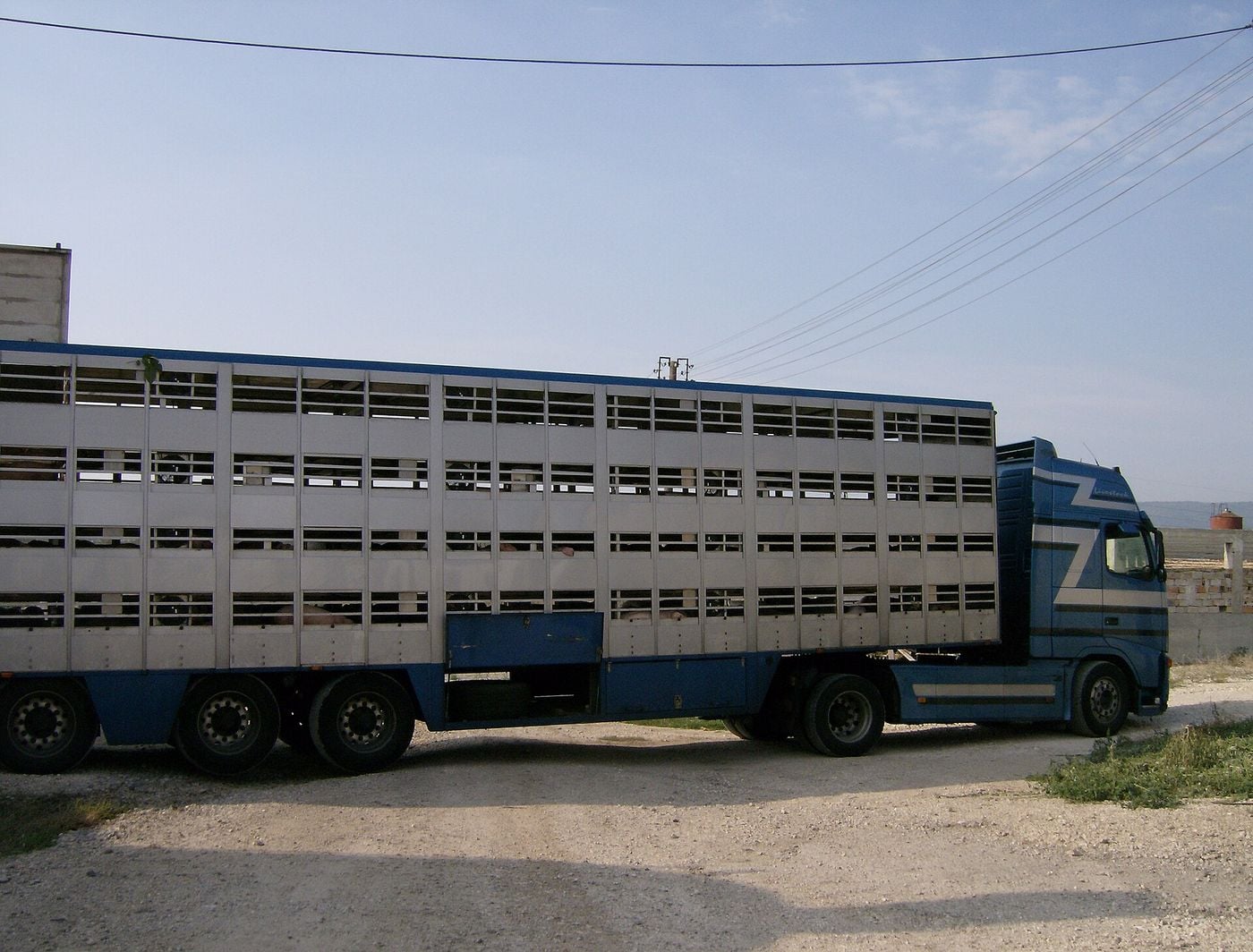
A livestock truck working in the European Union runs under Council Regulation (EC) No 1/2005 on the protection of animals during transport, which has applied since 5 January 2007 to the transport of live vertebrate animals within the EU carried out in connection with an economic activity. It sets who may carry animals, for how long, with how much space and in what kind of vehicle. A journey of more than 8 hours is a long journey: the road vehicle then needs a certificate of approval, valid for up to five years, and, for domestic Equidae and for cattle, sheep, goats and pigs, equipment the Regulation lists, from a light-coloured insulated roof and water tanks to a ventilation system that runs for at least 4 hours without the engine, temperature recording with a warning to the driver and a navigation system. A Commission proposal of 7 December 2023 would repeal and replace the Regulation; on 9 November 2026 it was still at committee stage in the European Parliament.
Status as at 9 November 2026. Read on that day: Regulation (EC) No 1/2005 in its Official Journal text and in its consolidated text of 14 December 2019, which EUR-Lex listed as the current version, with the Regulation marked as in force; the Commission’s proposal COM(2023) 770 and its annexes; the European Parliament’s procedure file 2023/0448(COD); and the product pages of two livestock body builders, Carrozzeria Pezzaioli in Italy and Menke-Janzen in Germany. National rules adopted under the options the Regulation leaves to Member States are not covered here.
What the Regulation covers
Article 1(1) states that the Regulation “shall apply to the transport of live vertebrate animals carried out within the Community, including the specific checks to be carried out by officials on consignments entering or leaving the customs territory of the Community”. It does not apply to transport “which does not take place in connection with an economic activity”, nor to the transport of animals directly to or from veterinary practices or clinics under the advice of a veterinarian (Article 1(5)). For farmers carrying their own animals in their own means of transport for a distance of less than 50 km from their holding, and for farmers using agricultural vehicles or their own means of transport for seasonal transhumance where geographical circumstances call for it, only Articles 3 and 27 apply (Article 1(2)).
Article 3 sets the general conditions for every journey. No person shall transport animals “in a way likely to cause injury or undue suffering to them”; the means of transport must be “designed, constructed, maintained and operated so as to avoid injury and suffering and ensure the safety of the animals” (point (c)), and “sufficient floor area and height” must be provided, “appropriate to their size and the intended journey” (point (g)). The technical rules are in Annex I, which transporters must follow (Article 6(3)).
The Regulation was published in the Official Journal on 5 January 2005. It applies from 5 January 2007, and its Article 6(5) on the drivers’ and attendants’ certificate of competence from 5 January 2008 (Article 37). The consolidated text lists one amending act, Regulation (EU) 2017/625 on official controls, which deleted several of the articles on checks and enforcement by the authorities; the definitions of competent authority, border inspection post, exit point and official veterinarian now refer to it.
Short and long journeys
A journey is the entire transport operation from the place of departure to the place of destination, including any unloading, accommodation and loading at intermediate points (Article 2(j)). A long journey “means a journey that exceeds 8 hours, starting from when the first animal of the consignment is moved” (Article 2(m)).
- Transporter authorisation. No person may act as a transporter without an authorisation from a competent authority (Article 6(1)). The ordinary authorisation of Article 10 is valid for not more than five years and “shall not be valid for long journeys”. For long journeys, Article 11 requires the applicant to submit valid certificates of competence for all drivers and attendants on long journeys, valid certificates of approval for all road vehicles used for them, details of the procedures that trace and record the vehicles’ movements and allow the drivers to be contacted at any time, and contingency plans for emergencies; this authorisation too is valid for up to five years. A transporter applies to no more than one competent authority, in no more than one Member State (Article 12).
- Documents on board. On every journey the vehicle carries documentation stating the animals’ origin and ownership, the place of departure, the date and time of departure, the intended place of destination and the expected duration of the journey (Article 4(1)).
- Journey log. For long journeys between Member States and with third countries of domestic Equidae other than registered Equidae, and of cattle, sheep, goats and pigs, transporters and organisers follow the journey log rules of Annex II (Article 5(4)). The log has five sections: planning, place of departure, place of destination, declaration by the transporter and an anomaly report. The organiser makes sure that a signed copy of Section 1 is received by the competent authority of the place of departure “within two working days before the time of departure”, and that the log accompanies the animals to the place of destination or, for exports, at least to the exit point (Annex II, point 3). The transporter keeps a copy of the completed log, together with “the corresponding record sheet or print out” under Annex I or IB of Regulation (EEC) No 3821/85 where the vehicle is covered by that Regulation, for at least three years (Annex II, point 8).
- Attendant. An attendant accompanies every consignment, except where the animals travel in secured, adequately ventilated containers holding, where necessary, enough food and water for twice the anticipated journey time, or where the driver performs the functions of attendant (Article 6(6)).
- The 65 km limit. The transporter authorisation, the notification of changes, the training of handling staff and the certificate of competence (Article 6(1), (2), (4) and (5)) do not apply to persons transporting animals up to a maximum distance of 65 km from the place of departure to the place of destination (Article 6(7)).
Journey times and rest periods
Chapter V of Annex I applies to domestic Equidae other than registered Equidae and to cattle, sheep, goats and pigs, except in air transport (point 1.1). The journey time for these animals “shall not exceed eight hours” (point 1.2). It may be extended “if the additional requirements of Chapter VI are met” (point 1.3), that is, with a vehicle equipped and approved for long journeys. For such a vehicle the times are:
| Animals | Rule | Point |
|---|---|---|
| Unweaned calves, lambs, kids and foals still on a milk diet, and unweaned piglets | 9 hours of travel, a rest of at least 1 hour “sufficient in particular for them to be given liquid and if necessary fed”, then a further 9 hours | 1.4(a) |
| Pigs | A maximum of 24 hours, with continuous access to water during the journey | 1.4(b) |
| Domestic Equidae | A maximum of 24 hours; liquid and, if necessary, feed every 8 hours | 1.4(c) |
| The other animals of these species: cattle, sheep and goats other than the unweaned young | 14 hours of travel, a rest of at least 1 hour, then a further 14 hours | 1.4(d) |
| All of the above, at the end of the journey time | Unloaded, fed and watered, and rested for at least 24 hours | 1.5 |
| Extension | The times of points 1.3, 1.4 and 1.7(b) may be extended by 2 hours “in the interests of the animals”, taking account in particular of proximity to the place of destination | 1.8 |
Three provisions leave room to Member States. Point 1.9 allows them to provide for “a maximum non-extendible journey time of eight hours” for animals destined for slaughter, where the transport runs exclusively between a place of departure and a place of destination both on their own territory. Article 18(4) allows them to grant derogations from Article 18, from point 1.4(b) of Chapter V and from Chapter VI for road vehicles on journeys not exceeding 12 hours to reach the final place of destination. Article 1(3) allows stricter national measures for transport taking place entirely within the territory of a Member State.
Long journeys are closed to the youngest animals unless they travel with their mother: domestic Equidae must be older than four months, except registered Equidae, calves older than fourteen days and pigs heavier than 10 kg, and “Unbroken horses shall not be transported on long journeys” (Chapter VI, point 1.9). Where nothing else is specified, mammals and birds are fed at least every 24 hours and watered at least every 12 hours (Chapter III, point 2.7). For poultry, domestic birds and domestic rabbits, suitable food and water must be available unless the journey lasts less than 12 hours, disregarding loading and unloading time, or less than 24 hours for chicks of all species when completed within 72 hours after hatching (Chapter V, point 2.1).
These are the animals’ times. The driver’s own driving and rest periods come from Regulation (EC) No 561/2006 and are set out in driving time and rest rules; the Commission’s 2023 proposal names that Regulation’s maximum driving periods and minimum rest periods as something to be taken into consideration for journeys by road or rail longer than 9 hours for purposes other than slaughter, so as to coordinate with the journey times and rest periods of the animals (recital 38).
The vehicle on every journey
Annex I, Chapter II, point 1.1 requires means of transport, containers and their fittings to be designed, constructed, maintained and operated so as to avoid injury and suffering and ensure the animals’ safety; protect them from inclement weather, extreme temperatures and adverse changes in climatic conditions; be cleaned and disinfected; prevent the animals escaping or falling out and withstand the stresses of movements; keep air quality and quantity appropriate to the species; give access to the animals for inspection and care; present a flooring surface that is anti-slip and that minimises the leakage of urine or faeces; and provide lighting sufficient for inspection and care during transport. Inside the compartment and at each of its levels there must be space for adequate ventilation above the animals “when they are in a naturally standing position” (point 1.2). Partitions must be strong enough to withstand the weight of the animals (point 1.4), and piglets of less than 10 kg, lambs of less than 20 kg, calves of less than six months and foals of less than four months are given bedding (point 1.5).
For road and rail, vehicles in which animals are transported “shall be clearly and visibly marked indicating the presence of live animals” (point 2.1), and “Road vehicles shall carry suitable equipment for loading and unloading” (point 2.2). A road vehicle loaded on a roll-on-roll-off vessel needs enough securing points to be fastened to the vessel (point 3.2).
Chapter III sets the loading geometry. Ramps may not be steeper than 20 degrees, or 36.4 % to the horizontal, for pigs, calves and horses, and 26 degrees 34 minutes, or 50 %, for sheep and cattle other than calves; where the slope is steeper than 10 degrees, or 17.6 %, they are fitted with a system, “such as provided by foot battens”, so that the animals climb or go down “without risks or difficulties” (point 1.4(a)). Lifting platforms and upper floors have safety barriers to prevent animals falling or escaping during loading and unloading (point 1.4(b)); powered loading platforms in general are covered in tail lifts explained. Equidae are not transported in multi-deck vehicles except if they are loaded on the lowest deck with no animals on a higher deck, and the minimum internal height of the compartment is at least 75 cm higher than the withers of the highest animal (point 2.3).
Long-journey vehicles: approval and equipment
No person may transport animals by road on a long journey “unless the means of transport has been inspected and approved under Article 18(1)” (Article 7(1)); the same applies to containers for Equidae, cattle, sheep, goats and pigs on long journeys (Article 7(3)). The competent authority, or a body designated by the Member State, grants the certificate of approval on application, provided the vehicle is not the subject of an application or approval elsewhere and has been inspected and found to comply with Chapters II and VI of Annex I (Article 18(1)). Each certificate carries a number unique in the Member State, follows the specimen in Chapter IV of Annex III and is drawn up in the official language or languages of the issuing Member State and in English. It is valid for not more than five years from the date of issue and “shall become invalid as soon as the means of transport are modified or refitted in a way that affects the welfare of the animals” (Article 18(2)). Approvals are recorded in an electronic database (Article 18(3)), and the transporter makes the certificate available to the competent authority of the country to which the animals are transported (Article 6(8)).
Chapter VI lists what the approved vehicle carries:
| Item | Requirement | Point |
|---|---|---|
| Roof | “a roof of light-colour”, “properly insulated” | 1.1 |
| Bedding and feed | Bedding appropriate to the species, the number of animals, the journey time and the weather; a sufficient quantity of feed, protected from the weather and from contaminants such as dust, fuel, exhaust gases, urine and dung; any feeding equipment carried on board and, if necessary, attached | 1.2 to 1.5 |
| Partitions | Separate compartments, with free access to water for all animals; partitions that can be placed in different positions to adapt the compartment to the type, size and number of animals; Equidae in individual stalls, except mares travelling with their foals | 1.6 to 1.8 |
| Water | A supply that lets the attendant provide water instantly; tanks with a total capacity of at least 1.5 % of the vehicle’s maximum payload, drainable and cleanable after each journey, with a system to check the water level, connected to drinking devices in the compartments | 2.1 to 2.3 |
| Ventilation | Able, stationary or moving, to maintain 5 °C to 30 °C inside for all animals, with a tolerance of 5 °C either way depending on the outside temperature; even distribution with a minimum airflow of nominal capacity of 60 m³/h per kN of payload; able to operate for at least 4 hours independently of the vehicle engine | 3.1, 3.2 |
| Temperature | A temperature monitoring system with a means of recording the data; sensors in the parts of the lorry most likely to experience the worst climatic conditions; dated recordings available to the competent authority on request | 3.3 |
| Warning | A system that alerts the driver when the temperature in the animal compartments reaches the maximum or the minimum limit | 3.4 |
| Navigation | From 1 January 2007 for vehicles first in service and from 1 January 2009 for all vehicles: a navigation system recording information equivalent to Section 4 of the journey log and the opening and closing of the loading flap | 4.1 |
Under Article 6(9), transporters of domestic Equidae other than registered Equidae and of cattle, sheep, goats and pigs on long road journeys use a navigation system and keep its records for at least three years, available to the competent authority on request. Temperature records for chilled and frozen food in transport come from other rules, set out in refrigerated transport and the ATP.
Space per animal
The minimum space allowances are in Chapter VII of Annex I (Chapter III, point 2.1). For transport by road:
| Animals | Category | Weight | Area per animal |
|---|---|---|---|
| Domestic Equidae | Adult horses | – | 1.75 m² (0.7 × 2.5 m) |
| Domestic Equidae | Young horses, 6 to 24 months, journeys of up to 48 hours | – | 1.2 m² (0.6 × 2 m) |
| Domestic Equidae | Young horses, 6 to 24 months, journeys over 48 hours | – | 2.4 m² (1.2 × 2 m) |
| Domestic Equidae | Ponies under 144 cm | – | 1 m² (0.6 × 1.8 m) |
| Domestic Equidae | Foals, 0 to 6 months | – | 1.4 m² (1 × 1.4 m) |
| Cattle | Small calves | about 50 kg | 0.30 to 0.40 m² |
| Cattle | Medium-sized calves | about 110 kg | 0.40 to 0.70 m² |
| Cattle | Heavy calves | about 200 kg | 0.70 to 0.95 m² |
| Cattle | Medium-sized cattle | about 325 kg | 0.95 to 1.30 m² |
| Cattle | Heavy cattle | about 550 kg | 1.30 to 1.60 m² |
| Cattle | Very heavy cattle | more than 700 kg | more than 1.60 m² |
| Sheep | Shorn sheep and lambs of 26 kg and over | under 55 kg | 0.20 to 0.30 m² |
| Sheep | Shorn sheep and lambs of 26 kg and over | over 55 kg | more than 0.30 m² |
| Sheep | Unshorn sheep | under 55 kg | 0.30 to 0.40 m² |
| Sheep | Unshorn sheep | over 55 kg | more than 0.40 m² |
| Sheep | Heavily pregnant ewes | under 55 kg | 0.40 to 0.50 m² |
| Sheep | Heavily pregnant ewes | over 55 kg | more than 0.50 m² |
| Goats | Goats | under 35 kg | 0.20 to 0.30 m² |
| Goats | Goats | 35 to 55 kg | 0.30 to 0.40 m² |
| Goats | Goats | over 55 kg | 0.40 to 0.75 m² |
| Goats | Heavily pregnant goats | under 55 kg | 0.40 to 0.50 m² |
| Goats | Heavily pregnant goats | over 55 kg | more than 0.50 m² |
| Pigs | – | around 100 kg | loading density not above 235 kg/m² |
For horses the figures may vary by a maximum of 10 % for adult horses and ponies and of 20 % for young horses and foals, and during long journeys foals and young horses must be able to lie down. The cattle figures may vary with the animals’ weight and size, their physical condition, the meteorological conditions and the likely journey time, and the section on cattle ends: “Pregnant animals must be allowed 10 % more space.” The sheep and goat figures may vary with the breed, size, physical condition and length of fleece, the meteorological conditions and the journey time. All pigs “must at least be able to lie down and stand up in their natural position”; their breed, size and physical condition may require more space, and an increase of up to 20 % may be required depending on the meteorological conditions and the journey time.
What body builders publish
Carrozzeria Pezzaioli of Montichiari, Italy, lists trailers, semi-trailers, centre-axle trailers, bodies for rigid trucks and small vans among its product ranges, and gives these figures for three of its livestock models:
| Model | Type | Gross mass | Length | Tare with 2 / 3 / 4 decks | Drinking-water tank | Ventilation |
|---|---|---|---|---|---|---|
| SBA62U | Semi-trailer | 39,000 kg | 13.60 m | 11,000 / 11,800 / 12,500 kg | 500 l | 15 side fans of 255 mm diameter, up to 19,500 m³/h |
| RBA22E | Drawbar trailer | 20,000 kg | 7.20 m | 6,500 / 7,000 / 7,500 kg | 250 l | 9 side fans of 255 mm diameter, up to 11,700 m³/h |
| BBA32E | Centre-axle trailer | 27,000 kg | 7.10 m | 7,500 / 8,000 / 8,500 kg | 250 l | 9 side fans of 255 mm diameter, up to 11,700 m³/h |
| BBA32F | Centre-axle trailer | 27,000 kg | 7.60 m | 7,650 / 8,200 / 8,750 kg | 250 l | 9 side fans of 255 mm diameter, up to 11,700 m³/h |
| BBA32G | Centre-axle trailer | 27,000 kg | 8.10 m | 7,800 / 8,400 / 9,000 kg | 250 l | 9 side fans of 255 mm diameter, up to 11,700 m³/h |
On all three models the frame is a self-supporting structure in light aluminium alloy and the body a self-supporting cage body with 2, 3 or 4 load decks raised hydraulically, a roof adjustable in height and lockers under the body for the partition gates. The loading ramp is hydraulically operated and anti-slip, with side barriers; the drinking system is automatic, for cattle, sheep and pigs; the ventilation is self-contained. The SBA62 and RBA22 roofs are sandwich panels with internal insulation, and the SBA62 is coupled to tractor units with a lowered fifth wheel. Each of the three lists as an option an integrated system that records GPS position, internal temperatures and door opening, with data recording and GPRS transmission; the SBA62 also lists heating for the drinking water.
Menke-Janzen of Werlte, Germany, builds bodies, semi-trailers and trailers for livestock to the customer’s order, using lightweight aluminium profiles. Its list of possible equipment includes movable intermediate floors, chassis galvanised against corrosion, a body of aluminium or sandwich construction, a fixed or lifting roof, active ventilation, a disinfection system, a drinking and spray system, heating systems, side and rear loading, partition gates and barrier doors, and “Typ II – Ausrüstung für Langzeittransporte gemäß geltender EU-Richtlinien” (type II, equipment for long-duration transport under the applicable EU directives). The page gives no figures.
The rigid chassis that carry such bodies are covered in box trucks and rigid distribution trucks, and the other semi-trailer bodies in trailer types explained.
Drivers and attendants: the certificate of competence
Article 6(5) reads: “No person shall drive, or act as an attendant on a road vehicle transporting domestic Equidae or domestic animals of bovine, ovine, caprine or porcine species or poultry unless he holds a certificate of competence pursuant to Article 17(2).” It has applied since 5 January 2008 (Article 37). The certificate is granted in accordance with Annex IV, drawn up in the official language or languages of the issuing Member State and in English when the driver or attendant is likely to operate in another Member State, and its scope may be limited to a specific species or group of species (Article 17(2)).
Annex IV requires the driver or attendant to complete training and pass an examination approved by the competent authority, “which shall ensure that examiners are independent”. The training covers at least Articles 3 and 4 and Annexes I and II of the Regulation; animal physiology, in particular drinking and feeding needs, animal behaviour and the concept of stress; practical aspects of handling animals; the “impact of driving behaviour on the welfare of the transported animals and on the quality of meat”; emergency care for animals; and safety for personnel handling animals. The 65 km limit of Article 6(7) applies to the certificate as well. The professional driver qualification, the Driver CPC, is covered in Driver CPC explained. For Great Britain, DVSA’s and GOV.UK’s rules for horseboxes and for the certificate of competence are in horsebox and horse trailer rules in Great Britain.
The 2023 proposal: not yet law
On 7 December 2023 the Commission proposed a Regulation “on the protection of animals during transport and related operations, amending Council Regulation (EC) No 1255/97 and repealing Council Regulation (EC) No 1/2005”, COM(2023) 770, under the ordinary legislative procedure 2023/0448(COD). On 9 November 2026 the European Parliament’s Legislative Observatory gave the stage reached as “Awaiting committee decision”. The file sits jointly with the Transport and Tourism (TRAN) and the Agriculture and Rural Development (AGRI) committees; its last key event is the “Resumption of business from the previous parliamentary term” on 13 November 2024, a committee draft report (PE770.070) is dated 3 March 2025, and amendments were tabled in committee on 15 and 16 April 2025. The file lists no Parliament position and no act of the Council. EUR-Lex lists Regulation (EC) No 1/2005 as in force.
As tabled, the proposal would change these points for road transport:
| Point | Regulation (EC) No 1/2005, in force | COM(2023) 770, proposed |
|---|---|---|
| Long journey | More than 8 hours (Article 2(m)) | More than 9 hours; a short journey does not exceed 9 hours (Article 3, points 8 and 12) |
| Animals to slaughter | The same journey times as other animals; a Member State may set 8 hours, non-extendible, on its own territory | Short journeys only; where no slaughterhouse in the EU adapted to the species can be reached within a short journey, the competent authority may authorise a long journey to the nearest one (Article 28) |
| Long journeys for other purposes | 14 + 1 + 14 hours for cattle, sheep and goats; up to 24 hours for pigs and Equidae; then at least 24 hours of rest, unloaded | At most two parts of up to 21 hours each, each with a rest of at least 1 hour after at most 10 hours, the animals staying on the stationary vehicle; between the parts, at least 24 hours of rest, unloaded at a control post (Article 27) |
| Unweaned calves, lambs, kids, piglets and foals | 9 + 1 + 9 hours | 8 hours; 9 + 1 + 9 hours only on a vehicle with a feeding system approved by the Commission (Article 29) |
| Temperature | Ventilation able to keep 5 °C to 30 °C inside, with a tolerance of 5 °C either way | Limits by forecast: below 0 °C vehicles covered and air circulation controlled; below −5 °C journeys of no more than 9 hours; between 25 °C and 30 °C no more than 9 hours between 10:00 and 21:00; above 30 °C only journeys entirely between 21:00 and 10:00, with 20 % more space if above 30 °C during those hours (Article 31) |
| Ventilation running time | At least 4 hours independently of the engine | “capable of operating for at least 6 hours” (Annex I, Chapter VI, point 6.1) |
| Height for cattle | Space for adequate ventilation above the animals standing naturally | H = W × 1.17 + 20, where W is the wither height of the tallest animal in the compartment (Annex I, Chapter III, point 6.1) |
| Tracking | Navigation system; records kept for at least three years | Positioning system recording the vehicle’s position “on short intervals” and communicating with an information system accessible to TRACES (Article 24) |
| Vehicle approval | Certificate valid for up to five years | Certificate valid for up to five years, applied for and granted in TRACES; modifications that may affect the animals’ welfare notified within 5 days (Article 12) |
| Space | Tables by category and weight | A = kW2/3, with A the area per animal, W the live weight in kg and k a value per species and category (Annex I, Chapter VII) |
The proposed Regulation would apply 2 years after its entry into force; its journey times (Articles 27 to 30), the space allowances of Chapter VII of its Annex I and the positioning system (Article 24(1) to (4)), among other provisions, would apply 5 years after it (Article 59). Until then, point 2(e) of Chapter I, Chapter V, point 3.1 of Chapter VI and Chapter VII of Annex I to Regulation (EC) No 1/2005 would continue to apply (Article 58). The explanatory memorandum puts it this way: “For the new rules on maximum journey times, including maximum journey times for unweaned calves, space allowances, exports, imports, minimum age and weight of unweaned calves, and real time tracking, the transition period is set at 5 years.” These are the Commission’s proposals as tabled, before any amendment by the Parliament or the Council.
Quick answers
- How long can cattle be transported by truck in the EU?
- Eight hours, under Annex I, Chapter V of Regulation (EC) No 1/2005. With a vehicle that meets the long-journey requirements of Chapter VI, cattle other than unweaned calves may travel 14 hours, rest for at least 1 hour and travel a further 14 hours; unweaned calves 9 hours, at least 1 hour of rest, then 9 more. At the end the animals are unloaded, fed, watered and rested for at least 24 hours. The times may be extended by 2 hours in the interests of the animals, and a Member State may set a non-extendible 8-hour limit for animals going to slaughter within its own territory.
- What counts as a long journey for livestock?
- A journey that exceeds 8 hours, starting from when the first animal of the consignment is moved (Article 2(m) of Regulation (EC) No 1/2005). On a long journey by road the vehicle needs a certificate of approval under Article 18, valid for up to five years, and the transporter an authorisation under Article 11. On long journeys between Member States or with third countries of domestic Equidae other than registered Equidae, cattle, sheep, goats and pigs, a journey log under Annex II accompanies the animals.
- What equipment must a livestock truck have for long journeys?
- Annex I, Chapter VI lists it: a light-coloured, properly insulated roof; bedding and feed; adjustable partitions; water tanks holding at least 1.5 % of the maximum payload, connected to drinking devices; a ventilation system able to keep 5 °C to 30 °C inside, with a 5 °C tolerance either way, with a minimum airflow of 60 m³/h per kN of payload and able to run for at least 4 hours independently of the engine; temperature monitoring and recording with a warning to the driver; and, since 1 January 2009 for all vehicles, a navigation system.
- Do livestock truck drivers need a special certificate?
- Yes. Since 5 January 2008, no person may drive or act as an attendant on a road vehicle carrying domestic Equidae, cattle, sheep, goats, pigs or poultry without a certificate of competence under Article 17(2) of Regulation (EC) No 1/2005. It requires training and an examination approved by the competent authority with independent examiners (Annex IV). It does not apply to transport up to 65 km from the place of departure to the place of destination.
- Is the EU changing the animal transport rules?
- The Commission proposed a new Regulation on 7 December 2023, COM(2023) 770, which would repeal Regulation (EC) No 1/2005. It would make a long journey one of more than 9 hours, limit transport to slaughter to short journeys, set two parts of up to 21 hours for other long journeys and add forecast-based temperature limits. On 9 November 2026 the European Parliament's procedure file gave its stage as 'Awaiting committee decision', and EUR-Lex listed Regulation (EC) No 1/2005 as in force.
Sources
- Council Regulation (EC) No 1/2005 of 22 December 2004 on the protection of animals during transport and related operations — consolidated text of 14 December 2019, the current version listed on EUR-Lex on 9 November 2026: Articles 1 to 18 and 37, Annexes I, II and IV — EUR-Lex, European Union
- Council Regulation (EC) No 1/2005 of 22 December 2004 on the protection of animals during transport and related operations — Official Journal text, OJ L 3 of 5 January 2005 — EUR-Lex, European Union, 22 Dec 2004
- Proposal for a Regulation on the protection of animals during transport and related operations, amending Council Regulation (EC) No 1255/97 and repealing Council Regulation (EC) No 1/2005, COM(2023) 770 final, 7 December 2023 — explanatory memorandum, recital 38, Articles 3, 12, 24, 27 to 31, 58 and 59, and Annex I — EUR-Lex, European Union, 7 Dec 2023
- Procedure file 2023/0448(COD) — Protection of animals during transport and related operations (read on 9 November 2026) — Legislative Observatory, European Parliament
- Semirimorchio dritto SBA62 — product page with technical data (read on 9 November 2026) — Carrozzeria Pezzaioli
- Rimorchio RBA22 — product page with technical data (read on 9 November 2026) — Carrozzeria Pezzaioli
- Rimorchio ad asse centrale BBA32 — product page with technical data (read on 9 November 2026) — Carrozzeria Pezzaioli
- Prodotti — product ranges (read on 9 November 2026) — Carrozzeria Pezzaioli
- Viehtransporter — livestock vehicles and list of equipment (read on 9 November 2026) — Menke-Janzen Fahrzeugbau