The AETR Agreement explained: who is party and how it fits with EU rules
The AETR is the 1970 UN agreement on driving times, rest and tachographs in international road transport: its 53 parties, when it replaces EU rules and how it is amended.
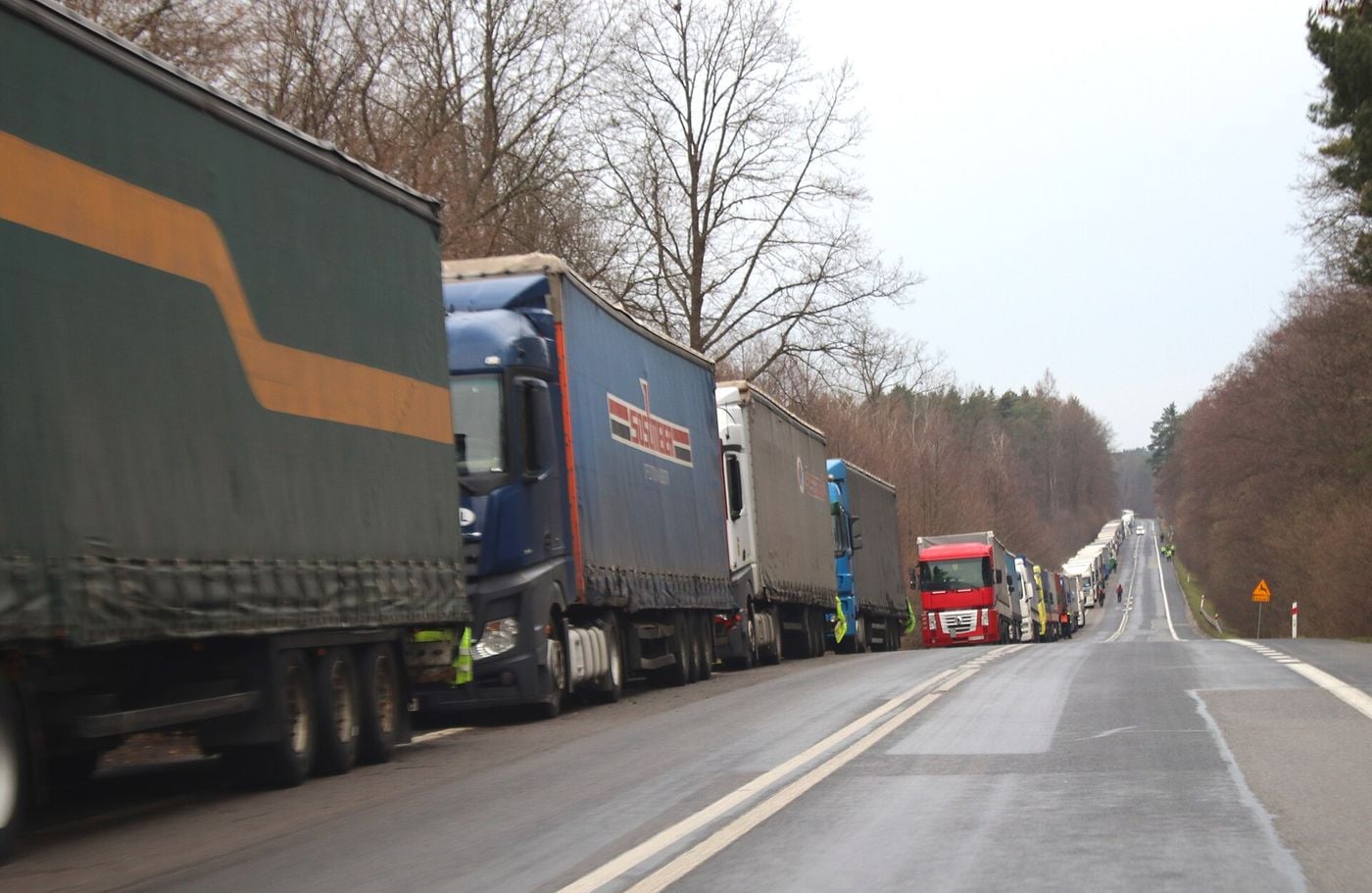
The AETR — the European Agreement concerning the Work of Crews of Vehicles engaged in International Road Transport — is a United Nations treaty, done at Geneva on 1 July 1970 and in force since 5 January 1976, on the driving times, breaks and rest periods of the crews of lorries and buses on international journeys and on the recording equipment, the tachograph, that records them. It applies in the territory of each Contracting Party to international road transport by vehicles registered in a Contracting Party. As at 25 October 2026 it has 53 parties: the 27 EU Member States and 26 other states, among them the United Kingdom, Switzerland, Norway, Türkiye, Ukraine, the Russian Federation and Kazakhstan; the most recent, Israel, acceded on 21 August 2025. For a vehicle registered in the EU it decides one kind of trip: an international operation that runs partly outside the EU, Switzerland and the European Economic Area, for which Regulation (EC) No 561/2006 hands over to the AETR.
Status as at 26 October 2026. Read for this page: the Agreement’s status page in the United Nations Treaty Collection, stamped 25 October 2026, and its PDF version with the amendment history; the certified true copy of the 1970 text; the consolidated texts of Regulation (EC) No 561/2006 and Regulation (EU) No 165/2014 of 31 December 2024; the European Commission’s proposal COM(2026) 15 of 22 January 2026; and a consolidated Russian-language text of the AETR published by FBU Rosavtotrans, which states that it does not replace the authentic text and takes in the amendments up to the one that entered into force on 20 September 2010. The consolidated English text kept by the UN Economic Commission for Europe was not read; where this page describes the Agreement as amended, it relies on that Russian compilation.
What the Agreement is
The parties to the 1970 text declared themselves convinced of “the need to increase the safety of road traffic, to make regulations governing certain conditions of employment in international road transport in accordance with the principles of the International Labour Organisation”. The Commission’s 2026 proposal sums the aim up in today’s terms: the AETR “aims to harmonise the legislative framework of its Contracting Parties as regards driving and rest times for professional drivers and the corresponding technical requirements for the construction and installation of the recording equipment used in vehicles (the tachograph)”.
Its reach is set by two provisions of the original text. Article 1(h) defines “international road transport” as “road transport which involves the crossing of at least one frontier”, and Article 2(1) provides that the Agreement “shall apply in the territory of each Contracting Party to all international road transport performed by any vehicle registered in the territory of the said Contracting Party or in the territory of any other Contracting Party.” In the consolidated Russian text, Article 2(2) then lists what is left out unless the Contracting Parties whose territory is used have agreed otherwise: goods vehicles whose maximum permissible mass, including trailers or semi-trailers, does not exceed 3.5 tonnes; passenger vehicles built and equipped to carry no more than nine persons including the driver; regular passenger services on routes of no more than 50 km; vehicles with a maximum authorised speed of no more than 40 km/h; vehicles of the armed services, civil defence, fire services and forces maintaining public order on their own tasks; vehicles in emergencies or rescue operations, including non-commercial humanitarian transport; specialised medical vehicles; specialised breakdown vehicles within 100 km of their base; vehicles on road tests and new or rebuilt vehicles not yet in service; vehicles of up to 7.5 tonnes in non-commercial goods transport; and commercial vehicles with historic status used for non-commercial carriage.
Three further articles of that text set how far the rules reach. Under Article 3, each party applies to international transport by vehicles registered in a state that is not a party provisions no less strict than Articles 5 to 10; instead of recording equipment, it may confine itself to requiring daily record sheets filled in by hand by each crew member from the moment the vehicle entered the territory of the first Contracting Party. Article 4 lets a party apply higher minimums or lower maximums than Articles 5 to 8, while the Agreement still applies to drivers on international journeys in vehicles registered in another state, party or not. Article 5 sets minimum ages: 18 for drivers of goods vehicles of up to 7.5 tonnes; 21 for heavier goods vehicles, or 18 with a certificate of professional competence recognised by a Contracting Party; and 21 for drivers carrying passengers, with an additional condition of experience or training for routes beyond a 50 km radius of the vehicle’s base.
Where the AETR takes over from EU rules
Regulation (EC) No 561/2006 applies to carriage exclusively within the EU, or between the EU, Switzerland and the EEA countries (Article 2(2)). Beyond that, Article 2(3) provides that “The AETR shall apply, instead of this Regulation, to international road transport operations undertaken in part outside the areas mentioned in paragraph 2”: for the whole journey where the vehicle is registered in the EU or in an AETR country, and only for the part on EU or AETR territory where it is registered in a third country that is not a party. How that switch works on a given journey is set out in driving time and rest rules. The same paragraph adds that “The provisions of the AETR should be aligned with those of this Regulation, so that the main provisions in this Regulation apply, through the AETR, to such vehicles for any part of the journey made within the Community.” Regulation (EU) No 165/2014 ties its tachograph rules to the same scope: Article 3(1) requires tachographs in vehicles registered in a Member State “to which Regulation (EC) No 561/2006 applies”.
The link between the two systems is older than the Regulation. On signing in 1971 the Netherlands stated that it would ratify the Agreement “only when the law of the European Economic Community conforms with the provisions of the latter”. Belgium, Denmark, Finland, France, Ireland, Luxembourg and the Netherlands declared — Germany and the United Kingdom “in essence”, and Malta in almost the same words — that “Transport operations between member States of the European Economic Community shall be regarded as national transport operations within the meaning of the AETR in so far as such operations do not pass in transit through the territory of a third State which is a contracting party to the AETR.”
The European Union itself does not appear among the parties. According to the Commission’s proposal, the Court of Justice, in its judgment of 31 March 1971 in Case 22/70 — known as the AETR case — recognised “that the area of the work of crews of vehicles engaged in road transport is an exclusive external competence of the Union”; and since the subject matter of the AETR falls within the scope of Regulations (EC) No 561/2006 and (EU) No 165/2014, “the power to negotiate and conclude the AETR and its modifications lies exclusively with the Union”. The Commission represents the Union in the UNECE Group of Experts on the AETR; in the UNECE Working Party on Road Transport, to which the Union is invited as an observer, the Commission’s 2026 proposal has the Union’s position expressed by the Member States “acting jointly in the interest of the Union”.
The rules it sets, beside Regulation (EC) No 561/2006
The core limits are the same in both texts; most of the differences come from the changes the EU made to its Regulation in 2020 and 2024, among them a lower mass threshold for goods vehicles in international transport and cabotage.
| Rule | AETR (consolidated Russian text) | Regulation (EC) No 561/2006 |
|---|---|---|
| Daily driving | 9 hours; up to 10 hours at most twice a week (Art. 6(1)) | The same (Art. 6(1)) |
| Weekly driving | 56 hours (Art. 6(2)) | 56 hours, without exceeding the maximum weekly working time of Directive 2002/15/EC (Art. 6(2)) |
| Two consecutive weeks | 90 hours (Art. 6(3)) | 90 hours (Art. 6(3)) |
| Break | 45 minutes after 4.5 hours of driving, or 15 minutes followed by 30 minutes (Art. 7) | The same; in occasional passenger services also two breaks of at least 15 minutes each (Art. 7) |
| Daily rest | Regular: at least 11 hours, or 3 hours plus 9 hours; reduced: at least 9 but less than 11 hours, at most three between two weekly rests (Art. 1(o), 8(5)) | The same (Art. 4(g), 8(4)) |
| Weekly rest | In two consecutive weeks two regular weekly rests of at least 45 hours, or one regular and one reduced of at least 24 hours, the reduction compensated by the end of the third week (Art. 8(6)(a)) | The same (Art. 8(6), 8(6b)), plus two consecutive reduced weekly rests outside the Member State of establishment for drivers in international goods transport, under conditions (Art. 8(6)) |
| Weekly rest postponed on a coach trip | Up to 12 consecutive 24-hour periods, only on a single occasional international passenger service that spends at least 24 consecutive hours in another country, among other conditions (Art. 8(6)(b)) | Up to 12 consecutive 24-hour periods on a single occasional passenger service; point (a) was deleted by Regulation (EU) 2024/1258, and the remaining conditions say nothing of time spent abroad (Art. 8(6a)) |
| Rest in the vehicle | Daily rests and reduced weekly rests away from base may be taken in a stationary vehicle with suitable sleeping facilities for each driver (Art. 8(8)); no other provision on weekly rest in the vehicle | Regular weekly rests, and weekly rests of more than 45 hours taken as compensation, not in a vehicle (Art. 8(8)) |
| Return to base or home | No corresponding provision | Work organised so that the driver can return within each period of four consecutive weeks (Art. 8(8a)) |
| Goods vehicles covered | Above 3.5 tonnes (Art. 2(2)(a) leaves out 3.5 tonnes and less) | Above 3.5 tonnes; from 1 July 2026 above 2.5 tonnes in international transport or cabotage (Art. 2(1)) |
The Russian compilation reflects the Agreement as amended up to 2010; the depositary record on the UN status page lists no later proposal of amendment except to Article 14. The driving time calculator offers the AETR as one of its rule sets for laying out an international trip.
Tachographs under the AETR
Article 10 of the consolidated text has each Contracting Party prescribe the installation and use of recording equipment in vehicles registered in its territory, and treats equipment that complies with Council Regulation (EEC) No 3821/85 of 20 December 1985, as regards construction, installation, use and testing, as complying with the Agreement. Article 13 governed the move to the digital tachograph: the new provisions on digital recording equipment became binding on the Contracting Parties no later than four years after the relevant amendments entered into force, every vehicle first put into service after that deadline had to carry such equipment, and the Contracting Parties had to take the measures needed to issue driver cards no later than three months before it. A state that joins less than two years before that deadline, or after it, may use a transition of up to two years from the Agreement’s entry into force for it; Georgia, on its accession in 2011, and Israel, in 2025, each reserved the right to use measures for “the tolerance period” of the digital tachograph during the two years after accession.
EU tachograph law also gives the AETR countries a technical forum. Article 43 of Regulation (EU) No 165/2014 sets up a Tachograph Forum that includes “experts from third countries which are using the tachograph under the AETR Agreement” and that “shall be open to participation by experts from interested third countries which are Contracting Parties to the AETR Agreement.” Who issues driver cards in AETR countries, how long they last and what a driver has to show at a roadside check under the AETR are covered in the digital tachograph and driver card; which non-EU parties use smart tachograph cards is set out there too, and the smart tachograph itself in the smart tachograph explained.
Who is party
Thirteen states signed the Agreement before signature closed on 31 March 1971 — a date postponed from 31 December 1970 by the Working Party on Road Transport, according to a note in the 1970 text: Austria, Belgium, France, Germany, Italy, Luxembourg, the Netherlands, Norway, Poland, Portugal, Sweden, Switzerland and the United Kingdom. The 1970 text brought it into force on the 180th day after the eighth instrument of ratification or accession was deposited (Article 16(4)), which the UN records as 5 January 1976, and for each later state 180 days after it deposits its own instrument (Article 16(5)). All 27 EU Member States are parties, which the Commission’s proposal confirms. The other 26:
| Party | Signature | Ratification, accession or succession |
|---|---|---|
| Albania | 20 July 2006 a | |
| Andorra | 13 February 1997 a | |
| Armenia | 9 June 2006 a | |
| Azerbaijan | 16 August 1996 a | |
| Belarus | 5 April 1993 a | |
| Bosnia and Herzegovina | 12 January 1994 d | |
| Georgia | 19 May 2011 a | |
| Israel | 21 August 2025 a | |
| Kazakhstan | 17 July 1995 a | |
| Kyrgyzstan | 24 August 2021 a | |
| Liechtenstein | 6 November 1996 a | |
| Monaco | 16 June 2008 a | |
| Montenegro | 23 October 2006 d | |
| North Macedonia | 10 November 1999 d | |
| Norway | 16 March 1971 | 28 October 1971 |
| Republic of Moldova | 26 May 1993 a | |
| Russian Federation | 31 July 1978 a | |
| San Marino | 25 April 2007 a | |
| Serbia | 12 March 2001 d | |
| Switzerland | 24 March 1971 | 7 April 2000 |
| Tajikistan | 28 December 2011 a | |
| Türkiye | 16 January 2001 a | |
| Turkmenistan | 18 September 1996 a | |
| Ukraine | 3 February 2006 a | |
| United Kingdom | 25 March 1971 | 4 January 1978 |
| Uzbekistan | 22 October 1998 a |
Iceland does not appear in the list. The United Kingdom extended the Agreement to the Isle of Man by a notification of 25 March 1971 and to Gibraltar by one received on 3 September 2019, effective from the 180th day after receipt; on 2 October 2020 the Secretary-General received a communication from Spain about the application to Gibraltar.
Several parties made reservations or declarations. Czechoslovakia (for today’s Czech Republic and Slovakia), the Soviet Union (for the Russian Federation) and Spain declared that they are not bound by the arbitration paragraphs of the disputes article — Article 20(2) and (3) in the 1970 text, Article 18(2) and (3) in the consolidated one — and Malta and Israel did the same; Poland, which had made that reservation on signature, did not maintain it on ratification. Spain also used the option of Article 5 under which persons under 21 may be prohibited from driving vehicles of a permissible maximum weight exceeding 7.5 tons on its territory, and Monaco declared that its accession does not affect its conventions with France.
How the Agreement is amended
The procedure is Article 21 of the consolidated text (Article 23 in 1970). Any Contracting Party may propose an amendment through the UN Secretary-General, who circulates it. Within six months any party may object, or say that it intends to accept but that the conditions for acceptance are not yet met in its country; a party in that second position may still object during the following nine months unless it accepts first. A single objection defeats the amendment. Without one, it is deemed accepted at the end of the six months, or, where a party has used the second option, on the earlier of the date all such parties accept and the end of the nine months. The Commission’s proposal quotes Article 21(6): “Any amendment deemed to be accepted shall enter into force three months after the date on which it was deemed to be accepted.” Before that formal step, the Commission explains, proposals are “generally first tabled, examined, and endorsed” in the UNECE Group of Experts on the AETR and then in the Working Party on Road Transport, and only then tabled with the Secretary-General by a Contracting Party.
| Proposed by | Circulated | Entry into force or acceptance |
|---|---|---|
| United Kingdom (Articles 3, 6, 10, 11, 12 and 14) | 2 February 1982 | In force 3 August 1983 |
| Norway | 24 July 1991 | In force 24 April 1992 |
| Norway | 30 August 1993 | In force 28 February 1995 |
| France (Article 12) | 27 May 2003 | In force 27 February 2004 |
| France (Agreement, annex and appendices) | 24 June 2005 | In force 16 June 2006 |
| Netherlands (body, annex and appendices) | 20 March 2009 | Acceptance notified 25 June 2010 |
| Türkiye and Ukraine (Article 14) | 18 February 2015 | Acceptance notified 14 April 2016 |
| Not named on the status page (Article 14) | 16 November 2018 | Acceptance notified 10 October 2019 |
| Greece (Article 14) | 23 October 2020 | Acceptance notified 1 February 2022 |
The first amendment took the nine-month route: after the Netherlands and Czechoslovakia had notified that the conditions for acceptance were not yet met, it was deemed accepted when that period ran out without objection, and entered into force three months later. The Russian compilation counts six amendments, the last of them entering into force on 20 September 2010; the status page gives no entry-into-force date for the three amendments to Article 14.
Who may join, and the proposal for Mongolia
The 1970 text opened the Agreement “for signature until 31 March 1971 and thereafter for accession, by States members of the Economic Commission for Europe and States admitted to the Commission in a consultative capacity under paragraph 8 of the Commission’s terms of reference” (Article 16(1)); the Russian compilation still has that wording in what is now Article 14(1). According to the Commission’s proposal, the current Article 14(1), in the version adopted by the Working Party on Road Transport in October 2019 and in force since 23 April 2022, also admits States under paragraph 11 of the ECE’s terms of reference, and limits those to Algeria, Egypt, Jordan, Lebanon, Morocco and Tunisia. The Commission adds that any other non-European state that is not an ECE member needs a Contracting Party willing to propose an amendment adding it to that list.
That is the route the Commission proposed for Mongolia in COM(2026) 15 of 22 January 2026, a proposal for a Council decision on the position the EU takes in the two UNECE bodies. Mongolia first informed the Commission in January 2024 that it was seeking accession, and Germany had submitted a similar proposal to the UNECE working groups in September 2023. The amendment would replace Article 14(1) with a text whose last sentence reads: “Accessions under paragraph 11 of the Commission’s terms of reference shall be limited to the following States: Algeria, Egypt, Jordan, Lebanon, Mongolia, Morocco and Tunisia.” The Commission planned it for the Group of Experts’ 40th session in February 2026 and the Working Party’s 121st session in October 2026, or later sessions; under the proposed decision, once the Working Party has endorsed it, the Member States would submit it to the Secretary-General. The proposal also records that Mongolia is a party to the TIR Convention and acceded to the CMR Convention on 18 September 2003. As at 25 October 2026 Mongolia is not in the UN list of parties, and the latest amendment notification listed on the status page is the acceptance of 1 February 2022; the texts read for this page do not say whether the Council has adopted the decision.
Quick answers
- What is the AETR agreement?
- The European Agreement concerning the Work of Crews of Vehicles engaged in International Road Transport: a United Nations treaty done at Geneva on 1 July 1970 and in force since 5 January 1976. It covers driving times, breaks and rest periods of professional drivers and the recording equipment used in vehicles (the tachograph), and it applies in the territory of each Contracting Party to international road transport by vehicles registered in a Contracting Party. International road transport means road transport that crosses at least one frontier.
- Which countries are in the AETR?
- 53, according to the UN Treaty Collection status page as at 25 October 2026: all 27 EU Member States and 26 other states — Albania, Andorra, Armenia, Azerbaijan, Belarus, Bosnia and Herzegovina, Georgia, Israel, Kazakhstan, Kyrgyzstan, Liechtenstein, Monaco, Montenegro, North Macedonia, Norway, the Republic of Moldova, the Russian Federation, San Marino, Serbia, Switzerland, Tajikistan, Türkiye, Turkmenistan, Ukraine, the United Kingdom and Uzbekistan. The most recent is Israel, which acceded on 21 August 2025. Iceland, Mongolia and the European Union itself are not on the list.
- When does the AETR apply instead of the EU driving time rules?
- Under Article 2(3) of Regulation (EC) No 561/2006, on international road transport operations undertaken in part outside the EU, Switzerland and the EEA countries: for vehicles registered in the EU or in an AETR country for the whole journey, and for vehicles registered in a third country that is not party to the AETR only for the part of the journey on EU or AETR territory. Carriage exclusively within the EU, or between the EU, Switzerland and the EEA countries, stays under the Regulation.
- Are the AETR driving limits the same as the EU's?
- The core limits are. The consolidated Russian-language text of the AETR read for this page sets 9 hours of driving a day, extendable to 10 at most twice a week, 56 hours a week, 90 hours in two consecutive weeks and a 45-minute break after four and a half hours, as Regulation (EC) No 561/2006 does. That text has no counterpart to the EU's ban on regular weekly rest in the vehicle, its return-home rule or its two consecutive reduced weekly rests for international goods drivers, and it leaves out goods vehicles of up to 3.5 tonnes, whereas the EU Regulation has covered international and cabotage goods transport above 2.5 tonnes since 1 July 2026.
- Can Mongolia join the AETR?
- Not under the current Article 14(1), according to the European Commission: it opens accession to ECE member States and to States admitted to the ECE in a consultative capacity, and limits those admitted under paragraph 11 to Algeria, Egypt, Jordan, Lebanon, Morocco and Tunisia. In COM(2026) 15 of 22 January 2026 the Commission proposed that the EU support an amendment adding Mongolia to that list. As at 25 October 2026 Mongolia is not a party, and the latest amendment notification listed on the UN status page dates from 1 February 2022.
Sources
- European Agreement concerning the Work of Crews of Vehicles engaged in International Road Transport (AETR) — status of treaty XI.B.21, as at 25 October 2026: participants, declarations and reservations, notes — United Nations Treaty Collection
- AETR — Chapter XI B 21, status, declarations, reservations and amendment history (PDF) — United Nations Treaty Collection
- European Agreement concerning the Work of Crews of Vehicles engaged in International Road Transport (AETR), Geneva, 1 July 1970 — certified true copy of the original text: preamble, Articles 1, 2, 16, 20, 21 and 23 — United Nations Treaty Collection, 1 Jul 1970
- European Agreement concerning the Work of Crews of Vehicles engaged in International Road Transport (AETR) — consolidated Russian text (not the authentic text), Articles 1 to 8, 10, 13, 14, 18 and 21 and the note on the amendments included — FBU Rosavtotrans (Russian Federation)
- Regulation (EC) No 561/2006 on the harmonisation of certain social legislation relating to road transport — consolidated text of 31 December 2024, Articles 2, 4, 6, 7 and 8 — EUR-Lex, European Union
- Regulation (EU) No 165/2014 on tachographs in road transport — consolidated text of 31 December 2024, Articles 3 and 43 — EUR-Lex, European Union
- Proposal for a Council Decision on the position to be taken on behalf of the European Union in the Group of Experts on the AETR and in the UNECE Working Party on Road Transport as regards a proposal to allow the accession of Mongolia to the AETR, COM(2026) 15 final, 22 January 2026 — explanatory memorandum, recitals and Annex — EUR-Lex, European Union, 22 Jan 2026