Road haulage and coach services between the EU and the UK under the Trade and Cooperation Agreement
Under the EU–UK Trade and Cooperation Agreement a UK haulier may make up to two laden journeys in the EU after a trip from the UK, an EU haulier two within the UK. Coach rules and 2025 decisions.
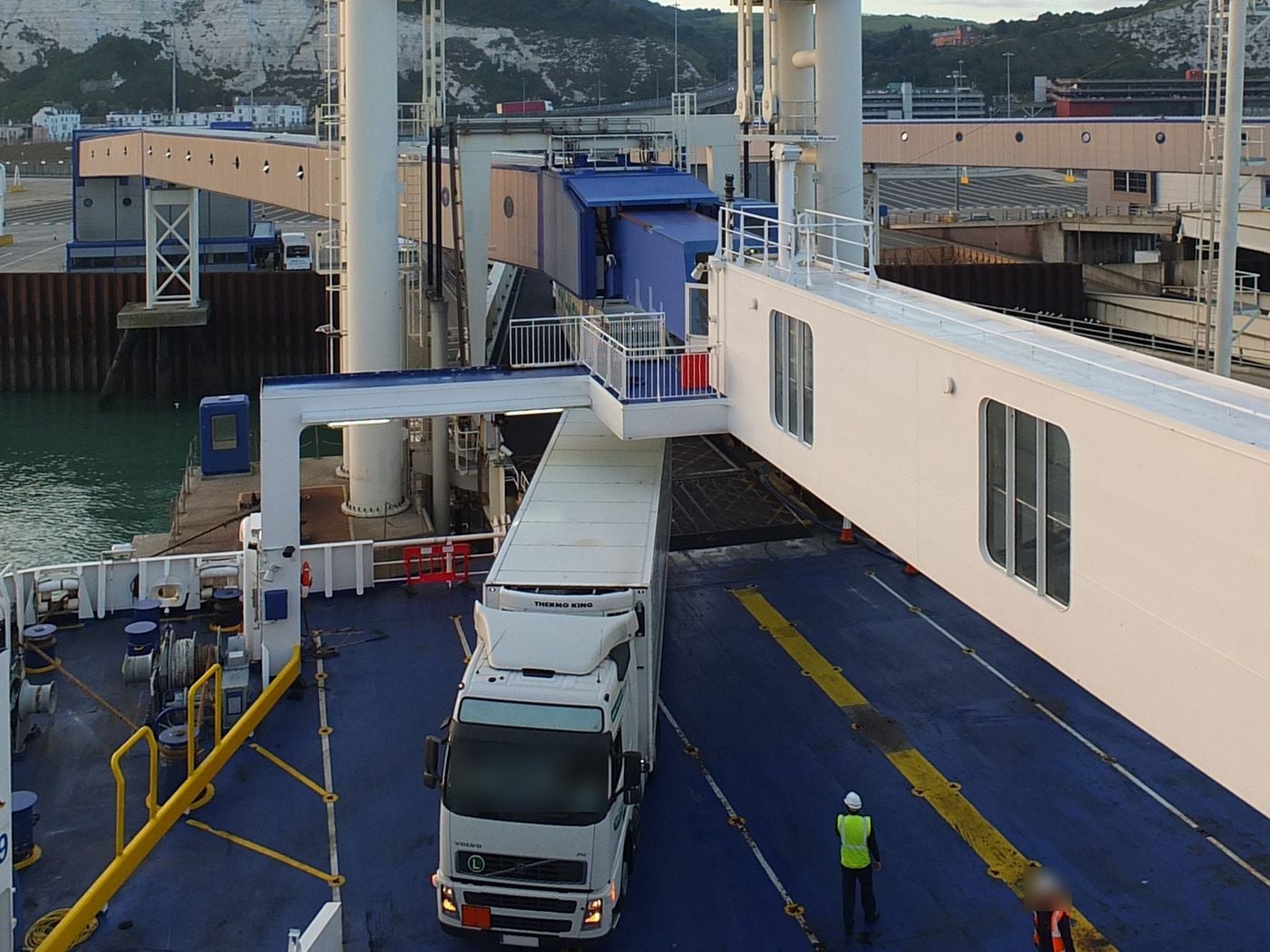
The Trade and Cooperation Agreement between the European Union and the United Kingdom, published in the Official Journal of 30 April 2021, sets the rules for road transport between, through and within the territories of the two parties in Heading Three of its Part Two: Title I, Articles 459 to 472, for goods, and Title II, Articles 473 to 487, for passengers by coach and bus. Its rights belong to operators of a party: for goods, a road haulage operator “which is a legal person established in the territory of a Party or a natural person of a Party” (Article 461(c)); for passengers, an operator established in the territory of a party (Article 474(d)). A haulage company established outside the EU and the UK is therefore not an operator of a party. After a laden journey from the UK, a UK operator may make up to two laden journeys from one Member State to another, or one laden journey within a Member State within seven days of unloading there, with a maximum of two such journeys in the Union before returning to the UK (Article 462(3), (4) and (6)). An EU operator may make up to two laden journeys within the UK within seven days of unloading there (Article 462(7)). The Specialised Committee on Road Transport adopted three decisions on 30 October 2025: those on serious infringements and on national electronic registers apply from 1 January 2026, and the UK’s annual contribution to EU information systems under the third applies as of the same date. For coaches, Article 485 ends the application of Title II, except for four paragraphs of Article 475, as of the date the Interbus Protocol on regular and special regular services enters into force for the UK, or six months after its entry into force for the Union if that is earlier; the committee’s minutes of the same day record that the TCA arrangements for those services ceased to apply after 31 March 2025 and that the Protocol entered into force for the UK with effect from 1 April 2025.
Status as of 18 November 2026. Read on that day in the Official Journal of the European Union, each in its English, French, German, Italian, Polish and Spanish versions: Articles 459 to 487 of the Agreement and Decisions No 1/2025, No 2/2025 and No 3/2025 of the Specialised Committee on Road Transport, published on 28 November 2025. Read on 17 November 2026 on GOV.UK: the guidance on cabotage and cross-trade jobs, the guidance on the UK Licence for the Community, the list of the committee’s decisions published on 15 December 2025 and the minutes of the committee’s fifth meeting of 30 October 2025. Annex 31 to the Agreement, to which Articles 463 to 466 refer for the detailed requirements, was not among the texts read.
What the road transport titles cover
The objective of Title I is “to ensure, as regards the transport of goods by road, continued connectivity between, through and within the territories of the Parties and to lay down the rules which are applicable to such transport” (Article 459(1)). It applies to the transport of goods by road “with a commercial purpose” and “is without prejudice to the application of the rules established by the European Conference of Ministers of Transport” (Article 460(1)). “Nothing in this Title shall affect the transport of goods by road within the territory of one of the Parties by a road haulage operator established in that territory” (Article 459(3)); Title II has the same provision for passengers (Article 473(3)).
A vehicle, for Title I, is a motor vehicle registered in the territory of a party, or a combination whose motor vehicle is registered there, “and which is used exclusively for the transport of goods” (Article 461(a)). Transit is “the movement of vehicles across the territory of a Party without loading or unloading of goods” (Article 461(f)). The EU’s agreements with two other neighbours, which cover bilateral and transit freight, are described in EU road freight agreements with Ukraine and Moldova.
Journeys between and through the two parties
Provided the conditions of paragraph 2 are fulfilled, road haulage operators of a party may undertake (Article 462(1)):
- laden journeys “from the territory of the Party of establishment to the territory of the other Party, and vice versa, with or without transit through the territory of a third country” (point (a));
- laden journeys from the territory of the party of establishment to the territory of the same party, with transit through the territory of the other party (point (b));
- laden journeys to or from the territory of the party of establishment with transit through the territory of the other party (point (c));
- unladen journeys in conjunction with those journeys (point (d)).
Two conditions apply to every one of them: the operator holds a valid licence issued in accordance with Article 463, except in the cases listed in Article 464, and “the journey is carried out by drivers who hold a Certificate of Professional Competence in accordance with Article 465(1)” (Article 462(2)).
Cross-trade and cabotage: Article 462(3) to (7)
Paragraphs 3 to 7 of Article 462 add a limited number of laden journeys within the territory of the other party. Each of them has to follow a laden journey from the operator’s own territory permitted under point (a) of paragraph 1, and the conditions of paragraph 2 apply to them as well.
| Operator | Journeys allowed | Follows | Time limit | Article |
|---|---|---|---|---|
| Operator of the United Kingdom | Up to two laden journeys from one Member State to another Member State, without returning to the UK | A laden journey from the UK | None in the paragraph | 462(3) |
| Operator of the United Kingdom | One laden journey within the territory of a Member State | A laden journey from the UK | Within seven days of unloading in that Member State the goods carried from the UK | 462(4) |
| Operator of the United Kingdom established in Northern Ireland | Up to two laden journeys within the territory of Ireland | A laden journey from Northern Ireland | Within seven days of unloading in Ireland the goods carried from Northern Ireland | 462(5) |
| Operator of the United Kingdom, all three cases together | A maximum of two journeys within the Union under paragraphs 3, 4 and 5 before returning to the UK | Not applicable | Not applicable | 462(6) |
| Operator of the Union | Up to two laden journeys within the territory of the United Kingdom | A laden journey from the Union | Within seven days of unloading in the UK the goods carried from the Union | 462(7) |
The seven days limit only the journeys within one territory, in paragraphs 4, 5 and 7, and they run from “the unloading” of the goods carried on the journey from the operator’s own territory. Paragraph 3, on journeys from one Member State to another, sets no time limit. Paragraph 6 counts the journeys of paragraphs 3, 4 and 5 together, “a maximum of two journeys within the territory of the Union” before the operator returns to the UK.
The UK government’s guidance on GOV.UK, published by the Department for Transport, the Driver and Vehicle Standards Agency and the Traffic Commissioners for Great Britain on 2 February 2022, describes the rules for UK hauliers in these terms: up to two haulage jobs within the EU after dropping off goods from the UK, and “Only one of the jobs can be cabotage”. The cabotage job is to be completed within 7 days of dropping off the goods brought from the UK, in the same EU country. The page defines cabotage as “loading and unloading goods within one country, with a vehicle registered in another country”, and cross-trade as loading goods in one country and unloading them in another “with a vehicle registered in a third, different country”. For Ireland, it gives up to two cabotage jobs to operators registered in Northern Ireland that have travelled from Northern Ireland, both within 7 days of dropping off the goods brought into Ireland.
The same guidance states that a UK haulier holding a permit of the European Conference of Ministers of Transport (ECMT) can carry out “one additional cross-trade job (3 haulage jobs in total) before returning to the UK”. For own-account journeys it states that the cabotage and cross-trade rules of EU countries apply, except when driving an empty trailer from one EU country to another, dropping off in the EU goods carried from the UK, picking up goods in the EU and dropping them off in the UK, or carrying goods for a non-commercial purpose. It also states that the right to carry out cabotage or cross-trade jobs may be removed temporarily or permanently for breaches of safety rules. The EU’s own cabotage rules for hauliers established in a Member State are explained in cabotage and posted drivers.
Licences, drivers and vehicles
Operators undertaking a journey under Article 462 hold a valid licence (Article 463(1)), except in the cases of Article 464 listed below. Licences are issued only to operators who comply with the requirements of Section 1 of Part A of Annex 31 “governing the admission to, and the pursuit of, the occupation of road haulage operator” (Article 463(2)). “A certified true copy of the licence shall be kept on board the vehicle and shall be presented at the request of any inspecting officers authorised by each Party”; the licence and its certified true copies correspond to one of the models in Appendix 31-A-1-3, and the licence contains at least two of the security features listed in Appendix 31-A-1-4 (Article 463(3)). For the journeys of Article 462(3) to (7), operators also comply with the requirements for the posting of drivers in Section 2 of Part A of Annex 31 (Article 463(4)).
On the UK side, GOV.UK states that a UK goods vehicle operator working in the EU needs both a standard international licence and a UK Licence for the Community, and that a certified copy of the UK Licence for the Community is carried in the vehicle “when transporting goods in or through EU countries”. How the UK issues these licences is described in goods vehicle operator licences in Great Britain.
Article 464 lists the transport that may be carried out without a licence, together with the unladen journeys made in conjunction with it:
- transport of mail as a universal service;
- transport of vehicles which have suffered damage or breakdown;
- from 21 May 2022, transport of goods in motor vehicles whose permissible laden mass, including that of trailers, does not exceed 2.5 t; until 20 May 2022 the threshold was 3.5 t (points (c) and (d));
- transport of medicinal products, appliances, equipment and other articles required for medical care in emergency relief, in particular for natural disasters and humanitarian assistance;
- own-account transport under the five conditions of point (f), among them that the vehicles are driven by the operator’s own personnel or personnel put at its disposal under a contractual obligation, and that the transport “is no more than ancillary to the overall activities of the road haulage operator”;
- transport of goods by motor vehicles with a maximum authorised speed not exceeding 40 km/h.
Drivers hold a Certificate of Professional Competence issued in accordance with Section 1 of Part B of Annex 31 and comply with the rules on driving and working time, rest periods, breaks and the use of tachographs in Sections 2 to 4 of Part B (Article 465(1)). For operations partly outside the two parties, the AETR replaces those rules: the European Agreement concerning the Work of Crews of Vehicles Engaged in International Road Transport “shall apply, instead of point (b) of paragraph 1, to international road transport operations undertaken in part outside the territory of the Parties, for the whole journey” (Article 465(2)). The AETR itself is explained in the AETR agreement.
A party “shall not reject or prohibit the use in its territory” of a vehicle that complies with Section 1 of Part C of Annex 31 (Article 466(1)), and vehicles “shall be equipped with a tachograph constructed, installed, used, tested and controlled in accordance with Section 2 of Part C of Annex 31” (Article 466(2)). In the territory of the other party, drivers comply with its national road traffic laws (Article 467).
Posting declarations and documents on board
GOV.UK states that a UK haulier declares cabotage or cross-trade jobs on an EU portal, which is “known as making a ‘posting declaration’”, and that penalties apply if no declaration is made. The exchange of information on posted drivers runs through the EU’s Internal Market Information System (IMI): Section 2 of Part A of Annex 31 provides for it, its technical modalities are laid down in Decision No 1/2022 of the Specialised Committee on Road Transport, and the UK paid its contribution to the development costs of the road transport posting declaration module in 2022 (Decision No 3/2025, recital 2).
For cabotage jobs, the same page lists the consignment details the documents on board have to show, from the sender, haulier and consignee to the goods, their gross mass or quantity and the number plates of vehicle and trailer. It adds vehicle and trailer documents, driver documents including tachograph records, digital or physical copies of the posting declarations and export documents “including an electronic consignment note (e-CMR) or a paper CMR”.
Taxes, fuel and spare parts
Vehicles used for the carriage of goods under Title I “shall be exempt from the taxes and charges levied on the possession or circulation of vehicles in the territory of the other Party” (Article 470(1)). The exemption does not cover a tax or charge on fuel consumption, a charge for using a road or network of roads, or a charge for using particular bridges, tunnels or ferries (Article 470(2)). Fuel in the standard tanks of the vehicles and of special containers, admitted temporarily and used directly for propulsion and, where appropriate, for refrigeration and other systems during transport, together with the lubricants required for normal operation during the journey, “shall be free of custom duties and any other taxes and levies, such as VAT and excise duties, and shall not be subject to any import restrictions” (Article 470(3)). Spare parts imported to repair such a vehicle are admitted duty-free on a temporary basis; the replaced parts are subject to customs duties and VAT and are re-exported or destroyed under customs control (Article 470(4)). The EU’s general rules on fuel in standard tanks at its external border are set out in fuel in standard tanks at the EU border.
The Specialised Committee on Road Transport
Each party notifies the other of new regulatory measures it proposes or adopts in the areas covered by Annex 31, and on request the Specialised Committee on Road Transport discusses them within two months (Article 468(1) to (4)). The committee may amend Annex 31 “to take account of regulatory and/or technological developments, or to ensure the satisfactory implementation of this Title”, or “decide on any other measure aimed at safeguarding the proper functioning of this Title” (Article 468(5)). A party that considers that a new regulatory measure of the other party does not comply with Annex 31, and to which the other party nevertheless applies it, may after notifying the other party adopt appropriate remedial measures; they may not exceed the level of the nullification or impairment caused, and take effect at the earliest 7 days after notice (Article 469(1)). For Title II, Article 487 empowers the same committee to amend Annexes 32, 33 and 34.
The committee held its fifth meeting in Brussels and online on 30 October 2025. The minutes record that its three decisions “were signed by the co-chairs”. They were published in the Official Journal of the European Union on 28 November 2025, and on GOV.UK on 15 December 2025.
| Decision | Subject, from its title | Official Journal | Entry into force and application |
|---|---|---|---|
| No 1/2025 | A list of categories, types and degrees of seriousness of serious infringements which may lead to the loss of good repute for a road haulage operator | OJ L 2025/2330 | In force on the day following its adoption; applies from 1 January 2026 (Article 2) |
| No 2/2025 | The national electronic registers of road transport undertakings and the modalities of the exchange of information contained in those registers | OJ L 2025/2331 | In force on the day following its adoption; applies from 1 January 2026 (Article 8) |
| No 3/2025 | The amount and modalities of the United Kingdom’s financial contribution to certain road transport information systems managed by the Union, and the amendment to Decision No 1/2022 | OJ L 2025/2329 | In force on the day following its adoption (Article 6); the annual contribution applies as of 1 January 2026 (Article 3(1)) |
Serious infringements (Decision No 1/2025). Appendix 31-A-1-1 to Annex 31 lists “the seven most serious infringements which must trigger an administrative procedure by the competent authority in the Party of establishment” (recital 2). The decision adds a list of further serious infringements of the Agreement’s goods transport rules which may lead to the loss of good repute of a road haulage operator (Article 1). Its Annex I sorts them into three degrees, “most serious infringement (MSI), very serious infringement (VSI) and serious infringement (SI)”, according to their potential to create a risk of fatalities or serious injuries or to distort competition in the road transport market. The groups cover driving times, breaks, rest periods and the organisation of drivers’ work; the tachograph; working time; weights and dimensions; roadworthiness; speed limitation devices; driver qualification and driving licences; dangerous goods; the licence and the driver attestation; animal transport; the law applicable to contractual obligations; and the posting of drivers. One entry, with Article 462(3) to (7) as its legal basis, reads: “Carrying out cabotage or other transport operations not in compliance with the laws, regulations and administrative provisions, including limitations on the number of journeys, in force in the host Party.” The posting entries include failing to submit a posting declaration by the start of the posting at the latest. Under Annex II, serious and very serious infringements committed repeatedly by the same operator are regarded as more serious: “3 SI per vehicle and per year = 1 VSI” and “3 VSI per vehicle and per year = launch of a national procedure on good repute”. Competent authorities may establish stricter thresholds where their national procedure for assessing good repute provides for them.
Registers and ERRU (Decision No 2/2025). Each national electronic register of road transport undertakings contains at least eight items, from the undertaking’s name, address, transport managers and licence to the serious infringements that have led to a conviction or penalty during the last 2 years, persons declared unfit to manage transport activities, the registration numbers of its vehicles and its risk rating band; the first four are publicly accessible, in accordance with the law on personal data protection applicable in each party (Article 2). “The United Kingdom and the Member States of the Union shall use the European Registers of Road Transport Undertakings (ERRU)” for the exchange of information referred to in Article 14(3) and (4) of Section 1 of Part A of Annex 31, the UK interconnects its national register to ERRU under Implementing Regulation (EU) 2016/480 as adapted by the decision, and the UK and each Member State designate an ERRU contact point (Article 4). The Union may suspend the UK’s access to ERRU if the UK ceases to meet the conditions of Articles 4 to 6 (Article 7). At the meeting of 30 October 2025, the UK side said it had prepared The European Registers of Road Transport Undertakings (Disclosure of Information) (Amendment) Regulations 2025, which it planned to lay in Parliament in mid-November so that the legislation could come into force on 1 January 2026, and that the final stages of testing its system might continue into January. Those minutes are the latest text read for this page on the state of the connection.
The UK’s contribution (Decision No 3/2025). The UK pays a single annual contribution for the road transport posting declaration module of IMI and for ERRU (Article 2). It consists of an operational and maintenance contribution and a participation fee for access to ERRU of 4 % of the annual operational contribution. For the first year it is fixed at EUR 114,305.10, revised every year thereafter in line with the European Consumer Price Index (HICP), and from the second year it is paid by 30 June of the contribution year (Article 3).
Under any other business at the same meeting, on the ongoing challenges of specialist hauliers supporting cultural tours, the UK recalled that it had raised at previous meetings the issues facing some specialist events hauliers “due to the challenges they face operating within existing cabotage and mobility restrictions”. The minutes record the EU’s reply that it had “come to the conclusion that there is nothing in the TCA that can solve this issue”, and that it is “not in favour of any amendment to the TCA”.
Coaches and buses: Title II and the Interbus Protocol
Title II “applies to the occasional, regular and special regular transport of passengers by coach and bus between, through and within the territories of the Parties” (Article 473(1)). Coaches and buses are vehicles which, by their construction and equipment, are suitable for carrying more than nine persons, including the driver, and are intended for that purpose (Article 474(a)).
Article 485 sets when the title stops applying: “The provisions of this Title shall cease to apply as of the date the Protocol to the Interbus Agreement regarding the international regular and special regular carriage of passengers by coach and bus enters into force for the United Kingdom, or six months following the entry into force of that Protocol for the Union, whichever is the earliest, except for the purpose of the operations under Article 475(2), (5), (6) and (7).”
The minutes of 30 October 2025 record that, in accordance with Article 485, “the temporary arrangements for regular and special regular services within the TCA ceased to apply to both parties after 31 March 2025”, with the exception of Article 475(2), (5), (6) and (7), and that “The UK confirmed that the RSR Protocol entered into force for the UK with effect from 1 April 2025.” The Interbus Agreement, its Protocol and their parties are covered in international coach services in Europe.
| Article | Services | What the paragraph allows |
|---|---|---|
| 475(2) | Regular and special regular services | Laden journeys from the territory of the party in which the operator is established to the territory of the same party, with transit through the territory of the other party, and related unladen journeys |
| 475(5) | International regular or special regular services between Ireland and the United Kingdom in respect of Northern Ireland | Passengers may be picked up and set down in one party by an operator established in the other party |
| 475(6) | Occasional services on the island of Ireland | Operators established in one party may, on a temporary basis, pick up and set down passengers on the territory of the other party |
| 475(7) | Occasional services | A laden journey from the territory of a party through the territory of the other party to the territory of a non-Contracting Party to the Interbus Agreement, including a related unladen journey |
Operators carrying out occasional services under Article 475(6) and (7) “shall carry a completed journey form, using the model set out in Annex 34”; books of journey forms are supplied by the competent authority of the territory in which the operator is registered, or by bodies it appoints (Article 483(3)).
How each title ends
Title I can be ended by either party: “each Party may at any moment terminate this Title, by written notification through diplomatic channels. In that event, this Title shall cease to be in force on the first day of the ninth month following the date of notification” (Article 472). Title II has no termination article of its own; Article 485 sets the date from which its provisions cease to apply, with the four exceptions above.
Quick answers
- How many cabotage and cross-trade jobs can a UK haulier do in the EU under the TCA?
- After a laden journey from the UK, a UK haulier may make up to two laden journeys from one Member State to another (Article 462(3) of the Trade and Cooperation Agreement), or one laden journey within a Member State, which is performed within seven days of unloading there the goods brought from the UK (Article 462(4)). Article 462(6) limits it to a maximum of two journeys within the Union before returning to the UK. GOV.UK describes this as up to two jobs within the EU, of which only one can be cabotage, and states that an ECMT permit allows one additional cross-trade job, three in total.
- Can an EU haulier do cabotage in the UK?
- Yes, within limits. Under Article 462(7) of the Trade and Cooperation Agreement, a road haulage operator of the Union may make up to two laden journeys within the UK, provided they follow a laden journey from the EU and are performed within seven days of unloading in the UK the goods carried on that journey. As for every journey under Article 462, the operator holds a valid licence under Article 463, except in the cases of Article 464, and its drivers hold a Certificate of Professional Competence.
- Do vans need a licence for haulage between the EU and the UK?
- Not up to 2.5 t. Since 21 May 2022, Article 464(d) of the Trade and Cooperation Agreement exempts from the licence the transport of goods in motor vehicles whose permissible laden mass, including that of trailers, does not exceed 2.5 tonnes; until 20 May 2022 the threshold was 3.5 tonnes. Other exemptions cover mail as a universal service, damaged or broken-down vehicles, emergency medical relief, own-account transport under the conditions of Article 464(f) and vehicles with a maximum authorised speed not exceeding 40 km/h. Other journeys under Article 462 require a valid licence.
- Does the TCA still govern coach services between the EU and the UK?
- Only in part. Under Article 485, the provisions of Title II on passenger transport cease to apply as of the date the Interbus Protocol on regular and special regular services enters into force for the UK, or six months after it enters into force for the Union, whichever is the earliest. The minutes of the Specialised Committee of 30 October 2025 record that the TCA arrangements for regular and special regular services ceased to apply to both parties after 31 March 2025 and that the Protocol entered into force for the UK with effect from 1 April 2025. Article 475(2), (5), (6) and (7) are excepted: regular services from one's own party back into it through the other party, regular services between Ireland and Northern Ireland, occasional services on the island of Ireland, and occasional services through the other party to a country that is not a contracting party to Interbus.
- What did the EU–UK Specialised Committee on Road Transport decide on 30 October 2025?
- Three decisions, published in the Official Journal on 28 November 2025. Decision No 1/2025 lists further serious infringements that may lead to the loss of good repute of a road haulage operator. Decision No 2/2025 sets the minimum data of the national electronic registers of road transport undertakings and provides for the UK's connection to the European Registers of Road Transport Undertakings (ERRU). Decision No 3/2025 sets the UK's annual contribution to IMI and ERRU, EUR 114,305.10 for the first year. Decisions No 1/2025 and No 2/2025 apply from 1 January 2026, and the annual contribution applies as of the same date.
Sources
- Trade and Cooperation Agreement between the European Union and the European Atomic Energy Community, of the one part, and the United Kingdom of Great Britain and Northern Ireland, of the other part — Official Journal L 149, 30 April 2021: Part Two, Heading Three (Road transport), Articles 459 to 487 — EUR-Lex, European Union, 30 Apr 2021
- Decision No 1/2025 of the Specialised Committee on Road Transport established by the Trade and Cooperation Agreement of 30 October 2025 on a list of categories, types and degrees of seriousness of serious infringements which may lead to the loss of good repute for a road haulage operator — Official Journal L 2025/2330, 28 November 2025: recitals, Articles 1 and 2, Annexes I and II — EUR-Lex, European Union, 30 Oct 2025
- Decision No 2/2025 of the Specialised Committee on Road Transport established by the Trade and Cooperation Agreement of 30 October 2025 on the national electronic registers of road transport undertakings and the modalities of the exchange of information contained in those registers — Official Journal L 2025/2331, 28 November 2025: recitals, Articles 1 to 8 — EUR-Lex, European Union, 30 Oct 2025
- Decision No 3/2025 of the Specialised Committee on Road Transport established by the Trade and Cooperation Agreement of 30 October 2025 on the amount and modalities of the United Kingdom's financial contribution to certain road transport information systems managed by the Union and the amendment to Decision No 1/2022 — Official Journal L 2025/2329, 28 November 2025: recitals, Articles 1 to 6 — EUR-Lex, European Union, 30 Oct 2025
- Minutes of the Fifth Meeting of the Specialised Committee on Road Transport established by the UK-EU Trade and Cooperation Agreement, Brussels and online, 30 October 2025 — items 3, 5 to 7 and 8 — GOV.UK, 30 Oct 2025
- Decisions from the Specialised Committee on Road Transport (published 15 December 2025, read on 17 November 2026) — GOV.UK — Department for Transport, 15 Dec 2025
- International road haulage: jobs inside an EU country or between EU countries (published 2 February 2022, read on 17 November 2026) — GOV.UK — Department for Transport, Driver and Vehicle Standards Agency and Traffic Commissioners for Great Britain, 2 Feb 2022
- UK Licence for the Community for international road haulage (updated 18 July 2024, read on 17 November 2026) — GOV.UK — Driver and Vehicle Standards Agency and Traffic Commissioners for Great Britain