EU road freight agreements with Ukraine and Moldova: scope, rules and end date
Since 29 June 2022 hauliers from the EU, Ukraine and Moldova may run bilateral and transit freight under two EU agreements, now continued until 31 March 2027.
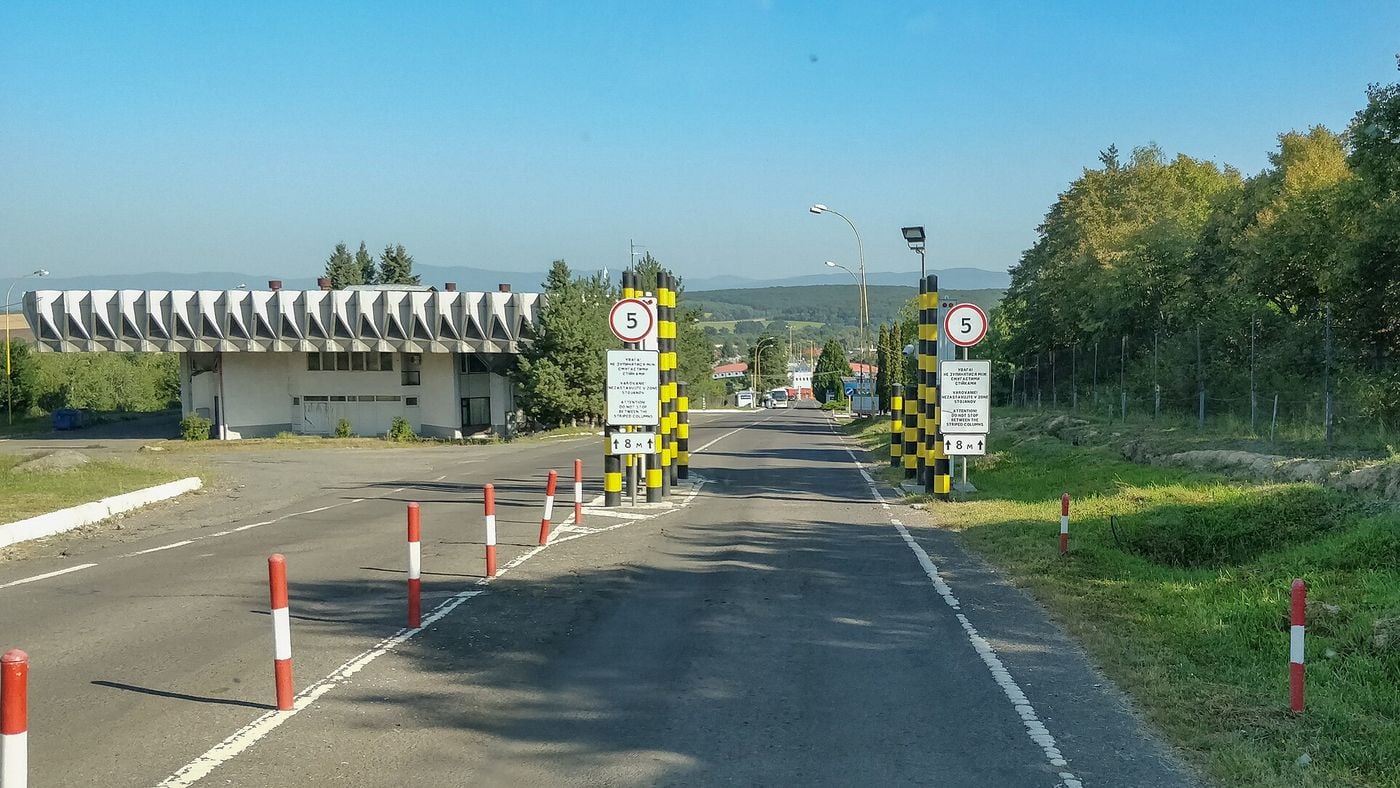
The European Union signed two agreements on the carriage of freight by road at Lyon on 29 June 2022, one with Ukraine and one with the Republic of Moldova, and the parties agreed to apply both provisionally from the day of signature. Each entitles road haulage operators established in the EU or in the partner country to carry goods for hire or reward between the two parties and in transit through the other party’s territory. The preambles note that “the current system based on a limited number of Member States’ permits does not allow the necessary flexibility” for Ukrainian and Moldovan operators. Carriage within a Member State or between Member States is outside their scope. Joint Committee decisions of September 2025 continued both agreements until 31 March 2027. For Ukraine, Article 1(2) of Decision No 3/2025 adds that “Any further prolongation should be subject to satisfactory progress made on the alignment of Ukrainian legislation with the Union acquis in the area of road freight transport”. Under an amendment of 2024, drivers working under the Ukraine agreement also carry a certified copy or extract of their operator’s authorisation, and the vehicles bear a sticker on the windshield.
Status as at 27 October 2026. Read on that day, in the Official Journal of the European Union: the two agreements of 29 June 2022; the agreement amending the Ukraine agreement, published on 2 July 2024; Decision No 3/2025 of the EU–Ukraine Joint Committee of 25 September 2025 and Decision No 1/2025 of the EU–Moldova Joint Committee of 19 September 2025; and the notice of 18 March 2026 on the entry into force of the amending agreement. Each text was read in its English, French, German, Italian, Polish and Spanish versions.
What the agreements allow
Article 4 of both agreements entitles road haulage operators to carry out four kinds of operation:
- laden journeys whose point of departure and point of arrival are in the territory of two different parties, with or without transit through the territory of a third country;
- laden journeys from the operator’s party of establishment back to the same party, with transit through the territory of the other party;
- laden journeys between the party of establishment and a third country, with transit through the territory of the other party;
- unladen journeys “in conjunction with” the journeys above (Article 4(d)).
Article 3 defines transit as “the movement of vehicles, without loading or unloading goods, in the territory of a Party by a road haulage operator established in the other Party”, and bilateral international carriage as laden journeys from the party of establishment to the other party “and vice versa, with or without transit through the territory of a third country”.
Article 2 sets the limits. The agreements apply to “the transit and international carriage of goods by road between the Parties for hire or reward”. Two sentences exclude the rest: “The carriage of goods by road within a Member State of the European Union or between Member States of the European Union is outside the scope of this Agreement.” and “Transit through the territory of the other Party for the carriage of goods between third countries is not covered by this Agreement.” Article 1 gives the aim as to “temporarily facilitate road freight transport” between and through the territories of the parties “following the repercussions of Russia’s war of aggression against Ukraine”, and adds that the agreement is not to be construed as making the conditions of market access more restrictive than before it took effect (Article 1(3) of the Ukraine agreement, Article 1(2) of the Moldova agreement). The amended Ukraine text names operations “such as cross-trade or cabotage operations” as not authorised under Article 4 (Article 5D(2)(a)). The EU’s own cabotage rules for hauliers established in a Member State are covered in cabotage and posted drivers.
Who may use them
A road haulage operator, in the agreements’ definition, is a natural or legal person established in a party in conformity with that party’s law and “authorised by the same Party to carry out the international transport of goods for hire or reward” with motor vehicles or combinations of vehicles (Article 3(2)). A vehicle, in the same article, is a motor vehicle registered in one of the parties, or a combination whose motor vehicle at least is registered in one of the parties, “used exclusively for the carriage of goods” (Article 3(3)). For operators established in the EU, the amended Ukraine agreement specifies that “the model of the authorisation shall be the one set out in Annex II to Regulation (EC) No 1072/2009” (Article 5A(2)). The EU licensing system behind that authorisation is covered in the road transport operator licence.
Driver documents: a Ukraine-only chapter
Within its scope and for its entire duration, the Ukraine agreement exempts holders of driver documents issued by the other party “from the requirement to hold an international driving permit” as defined in the road traffic conventions of Geneva (1949) and Vienna (1968) (Article 5(1)). Driver documents are a domestic driving permit, a certificate of professional competence, a driver qualification card or another official document proving the qualification and training required to drive “in similar terms to those set out in Article 1 of Directive 2003/59/EC” (Article 3(6)).
Ukraine informs the EU and its Member States of any measures taken after 23 February 2022 to extend the administrative validity of the documents it issues; since the 2024 amendment, both through diplomatic channels and by electronic means (Article 5(2)). The preamble of the amending agreement records that driving licences issued in Ukraine that have expired since the entry into force of the agreement “have been prolongated in accordance with the Decree of the Cabinet of Ministers of Ukraine No. 184 adopted on 3 March 2022”. Against fraud and forgery, Ukraine provides the relevant information through a web portal or from the electronic driving licences it issues (Article 5(3)). The Moldova agreement has no article on driver documents.
What the 2024 amendment added for Ukraine
An agreement amending the Ukraine agreement, published in the Official Journal on 2 July 2024, replaced Article 5(2) and Article 7(1), added paragraphs 3 and 4 to Article 6, and inserted Articles 5A to 5E, 7A and 9A and two annexes (Article 1). The parties agreed to apply it provisionally from the date of its signature (Article 2(2)); a notice of 18 March 2026 states that it “has entered into force on 19 February 2026”. The Moldova agreement, in the Official Journal text read for this page, contains none of these provisions.
Authorisation on board (Article 5A). Drivers carry “in paper format a certified copy or extract of the authorisation to carry out international road transport of goods”. The authorisation shows the issuing authority, the number of the certified copy or the registration number, the operator’s name and full address, the dates of issuance and of validity, and an authentication such as a seal and signature or a QR code. “An authorisation without a date of validity shall be considered as having permanent validity.” Ukraine and each Member State keep a national electronic register of road haulage operators; the authorities of the Member States have access to the Ukrainian register through a publicly available website, and the exchange may be done by connecting Ukraine to the European Register of Road Transport Undertakings (ERRU).
Unladen entry and the return journey (Article 5B). A driver entering the other party with an unladen vehicle under Article 4(d) carries “documents confirming that a contract or a request of carriage, duly signed by the carrier, already exists”, giving the sender’s name, address and contact details. Operations count as complying with Article 4 only if, on the way back to the party of establishment, the operator can produce clear evidence that they were limited to the bilateral or transit operations of that article; for a vehicle returning unladen, the operator “must be able to prove that the vehicles have exited the territory of its Party of establishment laden”. The evidence may include “bills of lading, consignment notes, cargo customs declarations, Transport International Routier (TIR) Carnets and tachograph records, any of which should be considered as sufficient evidence”. It may also be presented or transmitted electronically, for example as an electronic consignment note under the 2008 e-CMR Protocol to the CMR Convention. During a roadside check the driver may contact the operator or another person to supply the evidence before the check ends. Controls “shall not be systematic, in particular at borders” and are organised to minimise the impact on transport flows.
Sticker (Article 5C). Vehicles operating under the agreement bear “a visible and clearly identifiable sticker on the windshield” following the model in Annex I, whose published text gives a length of 5 cm. Bearing it indicates that the operator can benefit from the rights of the agreement, and “Not bearing the sticker while carrying out road haulage operations under this Agreement shall be considered as non compliant with the provisions of this Agreement.”
Compliance and exclusion (Articles 5D and 5E). The authorities of each party identify operators established in the other party that carry out operations not authorised under Article 4, that are involved in fraud or forgery of driver documents, or whose drivers have repeatedly and persistently committed serious road-safety offences: driving while impaired by alcohol or by drugs, exceeding speed limits, or an infringement of traffic rules that caused death or serious bodily injury. In duly justified cases of unauthorised operations or document fraud, each party excludes operators established in its own territory from the rights of the agreement. The authorities exchange the identity of the operators found and the follow-up measures “at least on a monthly basis” on the template in Annex II, report every six months to the Joint Committee and assist each other in enforcing sanctions.
Market disturbance and suspension (Articles 6, 7, 7A and 9A). The amendment defines a major disturbance of a road transport market as problems specific to it such that there is “a serious and potentially enduring excess of supply over demand, implying a threat to the financial stability and survival of a significant number of hauliers”. After consultation with the other party, a party may suspend the agreement entirely or partially, or take measures in a part of its territory, in case of such a disturbance resulting from the agreement in the geographical area concerned. The suspension takes effect 15 days after the notification is received, the measures remain in force for no more than three months, and where only part of a territory is concerned the right of transit is not affected (Article 9A). The Joint Committee may also recommend a temporary suspension if there is “solid and clear evidence” that the objectives of the agreement are manifestly not met anymore (Article 7(1)). An ad hoc working group of 16 members, eight for each side, supports the practical implementation; it “shall not take decisions but may make recommendations to the Joint Committee” and reports at least every six months (Article 7A).
Joint Committees and continuation
Each agreement set up a Joint Committee of representatives of the parties, chaired in turn by a representative of the EU and of the partner country; representatives of the Member States may attend as observers. It supervises the application of the agreement and is to be convened “at the latest three months before the expiry of the Agreement, in order to assess and decide the need for the continuation of this Agreement” (Article 7(2) of the Ukraine agreement, Article 6(2) of the Moldova agreement). Its decisions are taken by consensus and are binding on the parties. For the current end date of 31 March 2027, three months before expiry falls on 31 December 2026.
As signed, the Ukraine agreement applied until 30 June 2023 (Article 6(1)) and the Moldova agreement until 31 March 2023 (Article 5(1)). The 2025 decisions record how each was prolonged since.
| Step | EU–Ukraine agreement | EU–Moldova agreement |
|---|---|---|
| Signed at Lyon and applied provisionally | 29 June 2022 | 29 June 2022 |
| End date as signed | 30 June 2023 (Article 6(1)) | 31 March 2023 (Article 5(1)) |
| Prolongation | Decision 2/2023 of the Joint Committee: until 30 June 2024 | Decision No 2/2022 of the Joint Committee: until 30 June 2024 |
| Further prolongation | Amending agreement of 20 June 2024: until 30 June 2025, with one tacit renewal of six months, to 31 December 2025 | Decision No 1/2024 of the Joint Committee: until 31 December 2025 |
| Current continuation | Decision No 3/2025 of 25 September 2025, published 21 November 2025: until 31 March 2027 | Decision No 1/2025 of 19 September 2025, published 25 November 2025: until 31 March 2027 |
| Condition for a further continuation | Satisfactory progress on aligning Ukrainian legislation with the EU road freight acquis listed in the Appendix (Article 1(2)) | None stated in the decision |
Under Article 6(3) of the Ukraine agreement as amended, the prolongation to 30 June 2025 was to be tacitly renewed for one period of six months unless a party notified, at the latest three months before expiry, that it did not agree because of “solid and clear evidence” that there was a major disturbance of its road transport market as a whole as a result of the agreement, or that the objectives of the agreement were manifestly not met anymore. Decision No 3/2025 records in recital 1: “The Agreement has been tacitly renewed until 31 December 2025.”
The condition for Ukraine after March 2027
Decision No 3/2025 gives its reasons in its recitals. “The Agreement has become an essential support to the effective functioning of the Solidarity Lanes” (recital 3), and its continuation “should be understood as also contributing to the reconstruction of Ukraine” (recital 4). Recital 6 announces a European Commission study on the impact of the agreement on the road transport industry, which “will also look into road safety issues, at Union and national level, to be delivered by 30 November 2026”. Recital 7 ties any further continuation to satisfactory progress on the alignment of Ukrainian legislation by 30 November 2026, to be conducted “in the context of the current accession negotiations which started on 14 December 2023”. Article 1(2) refers to the Appendix, which lists the EU rules Ukraine is to transpose.
| Item | EU legal basis | Further entries in the Appendix |
|---|---|---|
| National electronic register of road transport undertakings complying with EU specifications | Article 16 of Regulation (EC) No 1071/2009; Commission Decision 2009/992/EU | Possible Joint Committee decision on major infringements |
| Conditions related to the requirement of establishment | Article 5 of Regulation (EC) No 1071/2009 | None |
| Conditions related to requirements of good repute | Article 6 of Regulation (EC) No 1071/2009 | None |
| Vehicles newly registered in Ukraine from 1 July 2026 and operating under the agreement to be equipped with a smart tachograph v2 | Article 8(1) of Regulation (EU) No 165/2014 | Possible Joint Committee decision; Decision No 2/2025 of the Joint Committee already transposes most of the tachograph acquis |
| Retrofit of smart tachograph v2 in the Ukrainian fleet operating under the agreement and not covered by the previous row | Article 3(4) and 3(4a) of Regulation (EU) No 165/2014 | Decision No 2/2025 already transposes most of the tachograph acquis; the availability and capacity of workshops and the training of personnel will be taken into account in the assessment |
| Alignment with EU provisions on driving times, breaks and rest periods | Articles 6 to 9 of Regulation (EC) No 561/2006 as amended by Regulation (EU) 2020/1054 | Not including the connection to the social module of IMI |
| Alignment with EU provisions on working time | Directive 2002/15/EC | Not including the connection to the social module of IMI |
To assess progress, a footnote to the Appendix requires the Commission to present to the ad hoc working group “an initial report on the status of the implementation by 30 January 2026”, “an assessment on the progress of the alignment by 31 May 2026” and “a further assessment on the progress of the alignment by 30 November 2026”. Neither these reports nor Decision No 2/2025 on tachographs were among the texts read for this page. The smart tachograph version 2 named in the Appendix is explained in the smart tachograph.
Decision No 1/2025 sets no condition for a further continuation of the Moldova agreement. Its recitals state that monitoring has shown that the agreement “has provided support to the Republic of Moldova”, with benefits in trade for both parties, and that, together with the Ukraine agreement, it “has also significantly contributed to the export of Ukrainian goods to the European Union via the Solidarity Lanes”.
When an agreement ends
Expiry or termination “shall not have the effect of restricting the conditions for market access” in road transport services between the parties, compared with the day before the agreement took effect. To that effect, “in the absence of a subsequent agreement between the Parties, the market access entitlements set under the bilateral agreements existing between Member States of the European Union and Ukraine on that day shall apply again as of the date of expiry or termination of this Agreement” (Article 12(4) of the Ukraine agreement; Article 11(4) of the Moldova agreement has the same wording for the Republic of Moldova). Operators whose vehicle is in the other party’s territory on expiry may transit through it to return to their own party (Article 12(2) and Article 11(2)). Either party may terminate an agreement by written notice through diplomatic channels; termination takes effect two weeks after the notice is delivered, or on a later date set by the notifying party, at most two months after the notification (Article 12(1) and (3) of the Ukraine agreement, Article 11(1) and (3) of the Moldova agreement).
Either party may also take proportionate safeguard measures if it considers that transport operations by the other party’s operators “pose a threat to road safety” (Article 10 of the Ukraine agreement, Article 9 of the Moldova agreement). Application is suspended in areas where the Government of Ukraine, or of the Republic of Moldova, does not exercise effective control (Article 11 of the Ukraine agreement, Article 10(2) of the Moldova agreement). Disputes follow the dispute settlement chapter of each country’s Association Agreement with the EU, and a footnote to that article in both texts states that neither the article nor the agreement “shall be construed as conferring rights or imposing obligations which can be directly invoked before the domestic courts of the Parties”.
What the agreements leave to other rules
- ECMT permits. Both agreements apply “without prejudice to the application of the rules established by the European Conference of Ministers of Transport multilateral quota system within the International Transport Forum” (Article 2). The amended Ukraine agreement adds that its control rules apply only to operations under the agreement; for operations under ECMT rules, “the driver shall be required to produce the relevant permit” (Article 5B(6)). The ECMT permit itself, the countries that take part and its journey rules are described in ECMT permits.
- Driving and rest times. The preambles state that the AETR “will ensure that the transport operations under this Agreement respect drivers’ working conditions, fair competition and not jeopardise road safety”. The AETR itself is explained in the AETR agreement.
- Customs. Apart from listing cargo customs declarations and TIR Carnets among the evidence in Article 5B(4) of the amended Ukraine text, neither agreement deals with customs procedures. Customs transit is covered in the T1 transit document and NCTS, including the dates from which Ukraine and Moldova take part in common transit.
Quick answers
- Until when do the EU–Ukraine and EU–Moldova road freight agreements apply?
- Until 31 March 2027. Joint Committee Decision No 3/2025 of 25 September 2025 continued the Ukraine agreement to that date, and Decision No 1/2025 of 19 September 2025 did the same for the Moldova agreement. Each Joint Committee is to be convened at the latest three months before expiry to decide on a continuation. For Ukraine, Decision No 3/2025 states that any further prolongation should be subject to satisfactory progress on aligning Ukrainian legislation with the EU acquis in road freight transport, as listed in its Appendix.
- Can Ukrainian or Moldovan hauliers do cabotage in the EU under these agreements?
- The agreements do not cover it. Article 2 of both states that the carriage of goods by road within a Member State or between Member States is outside their scope. Article 4 allows laden journeys between the parties, laden journeys in transit through the other party back to the operator's own party or between its own party and a third country, and unladen journeys in conjunction with those. The amended Ukraine agreement names cross-trade and cabotage as operations not authorised under Article 4 (Article 5D(2)(a)).
- What does a truck working under the EU–Ukraine agreement have to carry?
- Under the 2024 amendment, the driver carries a certified copy or extract of the operator's authorisation for international road transport of goods, in paper format (Article 5A), and the vehicle bears a sticker on the windshield following the model in Annex I (Article 5C). A vehicle entering the other party unladen carries documents confirming that a signed contract or request of carriage already exists. On the way back, the operator has to be able to produce evidence that its operations were limited to those of Article 4; bills of lading, consignment notes, cargo customs declarations, TIR Carnets and tachograph records may serve (Article 5B).
- What happens if the agreements are not continued after 31 March 2027?
- Expiry may not restrict market access compared with the day before the agreement took effect. In the absence of a subsequent agreement, the market access entitlements set under the bilateral agreements between the Member States and Ukraine, or the Republic of Moldova, existing on that day apply again from the date of expiry (Article 12(4) of the Ukraine agreement, Article 11(4) of the Moldova agreement). Operators whose vehicle is in the other party's territory on expiry may transit through it to return to their own party.
- How do the agreements relate to ECMT permits?
- Both agreements apply without prejudice to the rules of the European Conference of Ministers of Transport multilateral quota system within the International Transport Forum (Article 2). Under the amended Ukraine agreement, the control rules of Article 5B apply only to operations carried out on the basis of the agreement; for operations under ECMT rules the driver has to produce the relevant permit (Article 5B(6)).
Sources
- Agreement between the European Union and Ukraine on the carriage of freight by road, done at Lyon on 29 June 2022 — Official Journal L 179, 6 July 2022, p. 4: preamble, Articles 1 to 13 — EUR-Lex, European Union, 29 Jun 2022
- Agreement between the European Union and the Republic of Moldova on the Carriage of Freight by Road, done at Lyon on 29 June 2022 — Official Journal L 181, 7 July 2022, p. 4: preamble, Articles 1 to 12 — EUR-Lex, European Union, 29 Jun 2022
- Agreement between the European Union and Ukraine amending the Agreement between the European Union and Ukraine on the Carriage of Freight by Road of 29 June 2022 — Official Journal L 2024/1878, 2 July 2024: preamble, Articles 1 and 2, Annexes I and II — EUR-Lex, European Union
- Notice concerning the date of entry into force of the Agreement between the European Union and Ukraine amending the Agreement between the European Union and Ukraine on the carriage of freight by road of 29 June 2022 — Official Journal L 2026/688, 18 March 2026 — EUR-Lex, European Union, 18 Mar 2026
- Decision No 3/2025 of the Joint Committee established by the Agreement between the European Union and Ukraine on the carriage of freight by road of 25 September 2025 as regards the continuation of the Agreement — Official Journal L 2025/2352, 21 November 2025: recitals, Articles 1 and 2, Appendix — EUR-Lex, European Union, 25 Sept 2025
- Decision No 1/2025 of the Joint Committee established by the Agreement between the European Union and the Republic of Moldova on the carriage of freight by road of 19 September 2025 as regards the continuation of the Agreement — Official Journal L 2025/2252, 25 November 2025: recitals, Articles 1 and 2 — EUR-Lex, European Union, 19 Sept 2025