ECMT permits (CEMT, EKMT, UBAK): the multilateral quota, 43 countries and the digital permit
After the outward journey, one ECMT permit allows up to three laden journeys between other ECMT states, then the return home. The 43 countries, exclusions, Euro V and VI safe, the digital permit.
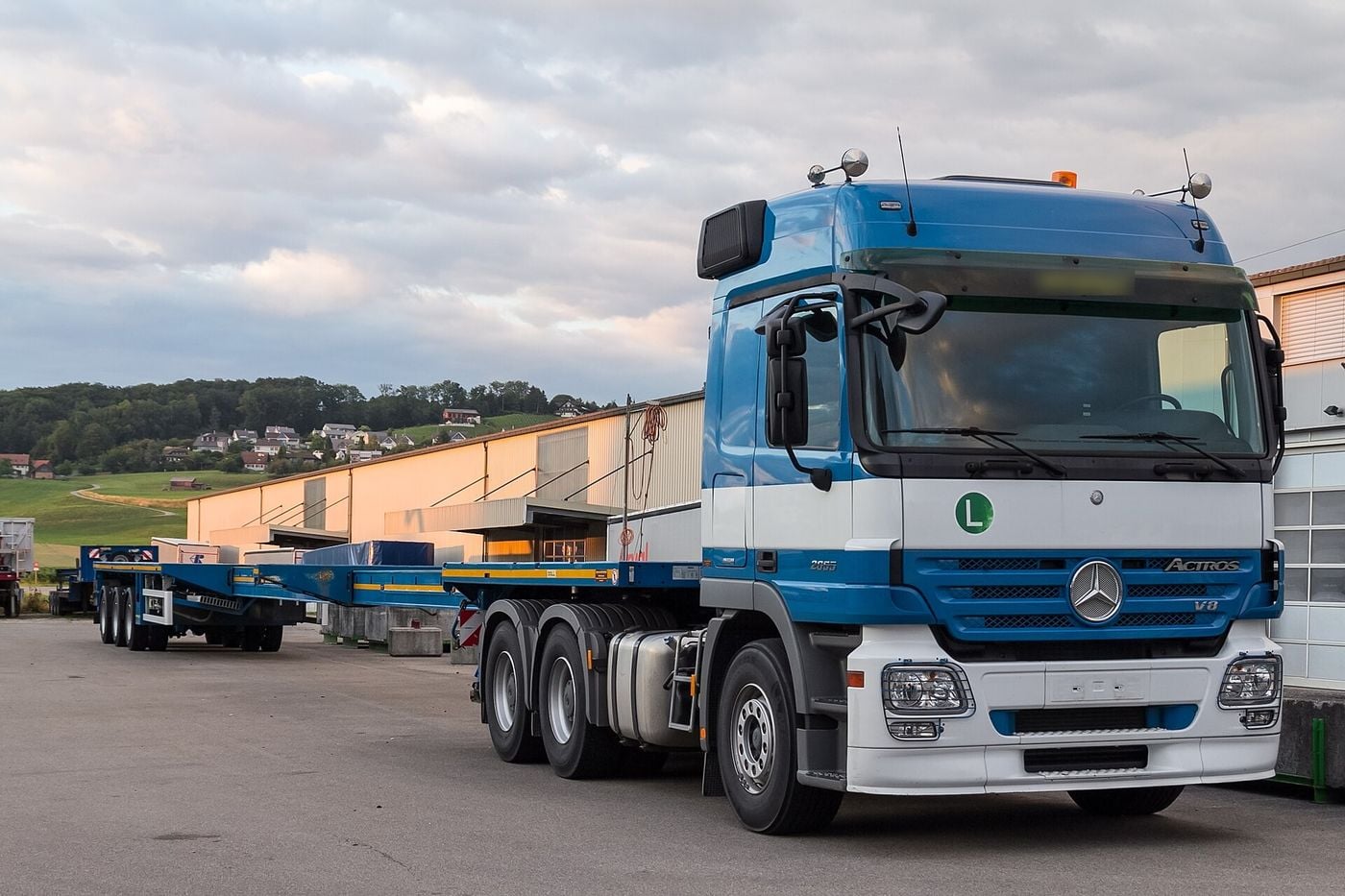
An ECMT permit is a permit from the multilateral quota of the European Conference of Ministers of Transport (ECMT), known as CEMT in French, German and Italian, EKMT in Polish, ЕКМТ in Russian and UBAK in Turkish; the GOV.UK guidance also calls it an “ECMT licence”. It lets a road haulage undertaking carry goods between the 43 participating states, provided, according to the Swiss Federal Office of Transport (BAV), that the places of loading and unloading lie in different ECMT member states. One permit allows up to three laden journeys outside the haulier’s state of establishment, after which the vehicle returns there. It does not cover domestic carriage, cabotage or carriage to or from a state outside the system. Since 1 January 2026 the permits have been digital, with an electronic logbook and a QR code for roadside checks; CEMT removal permits are still issued on paper.
Status as of 17 November 2026. Read on that day: BAV’s document “Digitale CEMT-Genehmigungen für das Jahr 2027”; the GOV.UK guidance “Get ECMT permits to transport goods internationally” of the Driver and Vehicle Standards Agency (DVSA) and the Traffic Commissioners for Great Britain, last updated on 2 January 2026; the decree of the Italian Ministry of Infrastructure and Transport of 22 September 2025 in the Gazzetta Ufficiale, Serie generale n. 225 of 27 September 2025; and the letter of the Directorate-General for Customs of the Ministry of Trade of Türkiye of 13 January 2025 on document checks during the digitalisation of UBAK permits. The “ECMT multilateral quota user guide” to which the Italian decree refers was not among them.
Who runs the quota
BAV names the body as the European Conference of Ministers of Transport, “CEMT - Conférence Européenne des Ministres des Transports”, and writes that it “hat beschlossen, ab dem 1. Januar 2026 das System auf eine digitale CEMT-Genehmigung umzustellen” (decided to switch the system to a digital CEMT permit from 1 January 2026). The Italian decree places the decision within the International Transport Forum (ITF): it cites the minutes of the meeting of the Road Transport Group held “in seno all’ITF” on 10 and 11 October 2024, at which the group gave final approval to the start of digitalisation of the multilateral CEMT licences from 1 January 2026. The GOV.UK guidance says the digital permits are accessed on the International Transport Forum website.
The number of permits is limited. The GOV.UK guidance puts it in one line: “There is a limited number of ECMT permits”.
The 43 participating states
The BAV document lists the states that take part in the permit system (“Folgende Länder nehmen am Genehmigungssystem teil”). The list has 43 names. By our count, 26 of them are EU member states, every member state except Cyprus, and 17 are not.
| Group | Number | States |
|---|---|---|
| EU member states | 26 | Austria, Belgium, Bulgaria, Croatia, Czechia, Denmark, Estonia, Finland, France, Germany, Greece, Hungary, Ireland, Italy, Latvia, Lithuania, Luxembourg, Malta, Netherlands, Poland, Portugal, Romania, Slovakia, Slovenia, Spain, Sweden |
| Other states | 17 | Albania, Armenia, Azerbaijan, Belarus, Bosnia and Herzegovina, Georgia, Liechtenstein, Moldova, Montenegro, North Macedonia, Norway, Russia, Serbia, Switzerland, Türkiye, Ukraine, United Kingdom |
The GOV.UK guidance also gives the number: “There are 43 ECMT member countries”. It describes the EU part as “all EU countries except Cyprus”. Its list of the other states names Croatia, which is an EU member state, and does not name Montenegro, which the BAV list includes.
What one permit allows
BAV states the rule in one sentence: “Mit einer CEMT-Genehmigung können ausserhalb des Niederlassungsstaates bis drei Beförderungen ausgeführt werden” (with a CEMT permit, up to three carriages can be performed outside the state of establishment). Its example is a Swiss haulier making a journey to Azerbaijan: “Danach sind drei Fahrten zwischen anderen CEMT-Mitgliedstaaten möglich; die vierte Fahrt muss wieder die Schweiz zum Ziel haben” (after that, three journeys between other CEMT member states are possible; the fourth journey must have Switzerland as its destination).
The GOV.UK guidance gives a worked example of a journey with three cross-trade jobs, cross-trade being loading goods in one country and unloading them in another with a vehicle registered in a third country:
- UK to France: the outward journey.
- France to Belgium: the first cross-trade journey.
- Belgium to the Netherlands: the second cross-trade journey.
- The Netherlands to Germany: the third cross-trade journey.
- Germany to the UK: the return journey.
It adds: “Returning to the UK does not count as one of the 3 cross-trade jobs”, and elsewhere: “You must return to the UK after every third journey.” Both examples have the same shape: the outward journey, then at most three laden journeys between other ECMT states, then the return to the state of establishment.
Several rules in the GOV.UK guidance concern how the permit is used over its validity:
- “You can make an unlimited number of journeys within the time your permit is valid for.”
- “You can only use an ECMT permit in one vehicle at a time. When a vehicle returns to the UK, you can then use the permit in another vehicle.”
- There are “short-term permits for 30 days” and “annual permits valid until 31 December 2026”.
In Switzerland the quota year begins on 1 January and ends on 31 December (BAV, section 3.4). For determining the number of authorisations to be allocated to each undertaking, the Italian decree treats twelve short-term CEMT authorisations as equal to one annual authorisation: “dodici autorizzazioni CEMT di breve durata equivalgono ad una autorizzazione CEMT annuale” (Article 1(10)).
The GOV.UK guidance and the Italian decree both refer to vehicles of 3.5 tonnes or more: the guidance requires an ECMT permit “to use a vehicle weighing 3.5 tonnes or more” on the journeys it lists, and the decree requires undertakings to have vehicles with a total mass of 3.5 tonnes or more at their disposal (Article 1(11)). On whose vehicles may be used, the texts differ in wording. BAV speaks of undertakings carrying goods “mit eigenen Fahrzeugen” (with their own vehicles) and of hauliers with their own fleet (section 3.3). The GOV.UK guidance allows hired or leased vehicles if the contract states that only the permit holder’s company can use them for its duration and only that company’s staff drive them. The Italian decree counts vehicles held in ownership, under leasing, in usufruct, under sale with retention of title or hired without a driver (Article 1(11)).
What a permit does not cover
| Excluded | Wording of the source | Source |
|---|---|---|
| Domestic carriage within an ECMT state | “Sie berechtigen nicht zu Binnenverkehr in einem CEMT-Mitgliedstaat” (they do not entitle the holder to domestic carriage in a CEMT member state) | BAV, general section |
| Cabotage | “cabotage - loading and unloading goods within one country, with a vehicle registered in another country” | GOV.UK |
| Carriage between an ECMT state and a state outside the system | “Sie berechtigen auch nicht zu Beförderungen zwischen einem CEMT-Mitgliedstaat und einem Nicht-CEMT-Mitgliedstaat” (nor to carriage between a CEMT member state and a non-CEMT state) | BAV, general section |
| Transit through a state outside the system | “You can only use ECMT permits to travel through countries that are part of the scheme.” | GOV.UK |
| Unaccompanied trailers | “unaccompanied trailers or semi-trailers” | GOV.UK |
| More than one vehicle at the same time | “You can only use an ECMT permit in one vehicle at a time.” | GOV.UK |
| A vehicle of a lower emissions class | “vehicles with a lower Euro emissions class than the permit allows” | GOV.UK |
| Transfer to another undertaking | The permit is issued digitally to the applicant undertaking “und ist nicht übertragbar” (and is not transferable); “You cannot transfer a permit to another business entity, for example, a sister company.” | BAV, general section; GOV.UK |
The EU’s own rules on cabotage, which an ECMT permit does not cover, are set out in cabotage and posted drivers, and the EU conditions for a road transport operator in road transport operator licence. Beside the multilateral permits stand bilateral permits between two states. The Italian decree names three kinds of international authorisation for goods by road, “multilaterali (CEMT), bilaterali o di transito” (Article 1(8)), and the GOV.UK guidance lists, for operators from Great Britain, journeys for which a bilateral permit or no permit at all is used instead of an ECMT permit. How the EU’s road freight agreements with Ukraine and Moldova relate to the ECMT rules is covered in EU road freight agreements with Ukraine and Moldova.
‘Euro V safe’ and ‘Euro VI safe’ vehicles
The annual permits BAV allocates are for “Euro V sicher” and “EURO VI sicher” vehicles, Euro V safe and Euro VI safe. BAV sets two conditions for a permit for either kind: the emission standards for exhaust and noise, and the requirements on technical and safety standards, must be met. If a trailer or semi-trailer is drawn, it too must meet the corresponding safety requirements (section 5.4). The GOV.UK guidance requires vehicles “that meet Euro 5 or Euro 6 emissions standards” and describes the ECMT certificates as showing “that your vehicles and trailers meet safety and emissions standards”. The national texts do not list the technical requirements themselves; the Italian decree refers to the vehicle categories in the “Technical limits” of the “ECMT multilateral quota user guide” in force (Article 2(4)). The Euro VI emission stages themselves are explained in Euro VI and Euro 7 for trucks.
Compliance is shown with record sheets in a prescribed model, which BAV lists per motor vehicle and per trailer or semi-trailer.
| Sheet | Filled in and signed by | Validity |
|---|---|---|
| Certificate of compliance of the motor vehicle with the technical and safety requirements (‘Euro V sicher’ or ‘Euro VI sicher’) | The manufacturer or its authorised representative in the state of registration | Issued once; valid until the vehicle’s data change |
| Certificate of compliance of a trailer or semi-trailer with the technical safety requirements | The manufacturer or its authorised representative in the state of registration; a bodybuilder that fitted part of the equipment adds its part and signs as well | Issued once; valid until the trailer’s data change |
| Certificate of technical inspection, for the motor vehicle and for the trailer or semi-trailer | In Switzerland, the cantonal road traffic office | One year, to the day |
The GOV.UK guidance names the documents the “ECMT certificate of compliance”, which it says confirms whether the vehicle meets the correct Euro emissions standard, and the “ECMT certificate of roadworthiness”. On the inspection certificate BAV writes that the date of the next inspection must be observed to the day, “da ansonsten die CEMT-Genehmigung von den Kontrollorganen (Zoll, Polizei) anderer Länder eingezogen wird” (as otherwise the CEMT permit is withdrawn by the control bodies, customs and police, of other countries). With the digital permit the record sheets are part of the permit, and sheets that are not completely filled in or not confirmed “können zum Nichtanerkennen der digitalen CEMT-Genehmigung führen” (can lead to the digital CEMT permit not being recognised).
The digital permit since 1 January 2026
BAV states that the change to a digital permit affects neither the number of permits available to Switzerland nor the scope of the carriage an annual permit allows, and that the conditions for its correct use stay the same. From the 2026 quota year it lists three changes:
- No more paper. “Die Genehmigungen werden nur noch digital an Unternehmen zugeteilt und können über ein webbasiertes Portal verwaltet werden” (permits are allocated to undertakings only in digital form and can be managed on a web-based portal).
- Digital trip records. The physical trip record book is replaced by an electronic system, and the required data must be entered in the system through the portal before every departure.
- Checks by QR code. To be carried in the vehicle and for checks, the permit details and the latest entries of the digital trip record can be downloaded as a document and printed if needed; “Dieses Dokument enthält einen QR-Code, der es den Kontrollbehörden ermöglicht, die Daten zu prüfen” (this document contains a QR code that lets control authorities check the data).
The permit can be shown in electronic form or printed and carried on paper. The freight documents, such as the CMR consignment note, and all record sheets must be carried in the vehicle and handed to the control bodies on request (BAV). The consignment note is explained in the CMR consignment note and e-CMR.
The GOV.UK guidance was updated on 2 January 2026 with the note “ECMT permits are now digital. The way you access and use the permits has changed.” It says the permit includes the dates it is valid for, who issued it and “QR codes that officials can scan to check your permit is valid”, and that the permit system generates an “ECMT Journey Information Document” with the last 10 journeys made with the permit. Paper copies of both must be printed on white paper.
The Italian decree ties the use of a permit to the digital logbook: use is recorded by filling in, on the dedicated CEMT platform, the “libretto digitale di viaggio”, the logbook, linked to each authorisation (Article 2(3)).
In Türkiye the change was staged over two years. The Ministry of Trade letter of 13 January 2025, citing a letter of the Ministry of Transport and Infrastructure of 7 January 2025, says that a new system, the ECMT Digital System (EDS), had been launched, that the 2025 UBAK permits were defined in it, and that the use of the electronic data sharing system (EDI), in place since 2019, ended as of 2025. It adds that in 2026 “UBAK izin belgeleri tamamen dijital olarak” (UBAK permits, entirely in digital form) would be issued and used, and that physical documents would remain in use in 2025. For those physical 2025 permits, the letter says that whether a permit was valid, and in which countries it was not, could be checked in the document “Current Status of ECMT Licences” on the ITF website.
One kind of permit stays on paper. BAV: “Die CEMT-Umzugsgenehmigungen werden weiterhin in Papierform ausgestellt” (CEMT removal permits continue to be issued on paper).
National quotas and allocation
BAV writes of the quota for the Swiss road haulage industry (“Kontingent zugunsten des schweizerischen Strassentransportgewerbes”, section 3.1), the Italian decree of the “contingente italiano” (Article 3), and DVSA assigns the permits for Great Britain.
- Switzerland. For 2027 BAV will be able to make 611 permits available to the Swiss road haulage industry, 100 for “Euro V sicher” and 511 for “Euro VI sicher” vehicles; applications are due in November and allocation is in principle made in December, before the new year.
- Great Britain. To apply to DVSA for ECMT permits, an operator must have a vehicle operator licence from Great Britain or Northern Ireland, use vehicles meeting Euro 5 or Euro 6 and “meet the ECMT quality charter”; the licence types are set out in goods vehicle operator licences in Great Britain.
- Italy. The decree of 22 September 2025 sets the criteria for renewing CEMT authorisations and for ranking the undertakings that apply for those left over, and limits the authorisations one undertaking can obtain by renewal to 30 (Article 2(5)).
Quick answers
- What is an ECMT permit?
- A permit from the multilateral quota of the European Conference of Ministers of Transport, called CEMT in French, German and Italian, EKMT in Polish and UBAK in Turkish. The Swiss Federal Office of Transport (BAV) describes it as allowing multilateral road haulage between ECMT member states where the places of loading and unloading lie in different ECMT states. 43 states take part. It does not cover domestic carriage or carriage between an ECMT state and a state outside the system.
- How many journeys can be made with one ECMT permit?
- Up to three laden journeys outside the haulier's state of establishment, after which the vehicle returns there. BAV's example is a Swiss haulier going to Azerbaijan: three journeys between other ECMT states follow, and the fourth must end in Switzerland. The GOV.UK guidance says 'You must return to the UK after every third journey' and that the return does not count as one of the three. Within its validity a permit can be used for an unlimited number of journeys (GOV.UK), but in only one vehicle at a time.
- Which countries are in the ECMT multilateral quota?
- 43 states, as listed by BAV in its document for 2027. By our count 26 of them are EU member states, every member state except Cyprus; the others are Albania, Armenia, Azerbaijan, Belarus, Bosnia and Herzegovina, Georgia, Liechtenstein, Moldova, Montenegro, North Macedonia, Norway, Russia, Serbia, Switzerland, Türkiye, Ukraine and the United Kingdom.
- What can an ECMT permit not be used for?
- BAV and the GOV.UK guidance exclude domestic carriage within an ECMT state and cabotage, carriage between an ECMT state and a non-ECMT state, unaccompanied trailers or semi-trailers, use in more than one vehicle at a time, vehicles with a lower Euro emissions class than the permit allows, and transfer of the permit to another undertaking, for example a sister company.
- Are ECMT permits still issued on paper?
- Not since 1 January 2026, apart from removal permits. Permits are allocated only in digital form and managed on a web portal, the paper trip record book has been replaced by an electronic logbook filled in before each departure, and a downloadable document with a QR code serves for roadside checks; it can be shown on a screen or printed. BAV says CEMT removal permits are still issued on paper.
Sources
- Digitale CEMT-Genehmigungen für das Jahr 2027: notice on the digital permit, general conditions, list of participating countries, record sheets for 'Euro V sicher' and 'Euro VI sicher' vehicles, quotas and allocation criteria (read on 17 November 2026) — Bundesamt für Verkehr (BAV), Swiss Federal Office of Transport
- Get ECMT permits to transport goods internationally — guidance, last updated 2 January 2026 (read on 17 November 2026) — Driver and Vehicle Standards Agency and Traffic Commissioners for Great Britain, GOV.UK, 2 Jan 2026
- Decreto 22 settembre 2025, Disposizioni di applicazione del decreto 2 agosto 2005, n. 198, in materia di autorizzazioni internazionali al trasporto di merci su strada — Gazzetta Ufficiale, Serie generale n. 225 of 27 September 2025, premises and Articles 1 to 6 — Ministero delle infrastrutture e dei trasporti, Gazzetta Ufficiale della Repubblica Italiana, 22 Sept 2025
- UBAK İzin Belgelerinin Dijitalleşmesi Sürecinde Belge Kontrolleri — letter E-96603261-120.01.04.02-00105045085 of 13 January 2025 — T.C. Ticaret Bakanlığı, Gümrükler Genel Müdürlüğü (Ministry of Trade of Türkiye, Directorate-General for Customs), 13 Jan 2025