International coach services in Europe: service types, journey form, cabotage and Interbus
Regulation (EC) No 1073/2009 sorts international coach work into regular, special regular, occasional and own-account services. Authorisation, journey form, cabotage, Interbus.
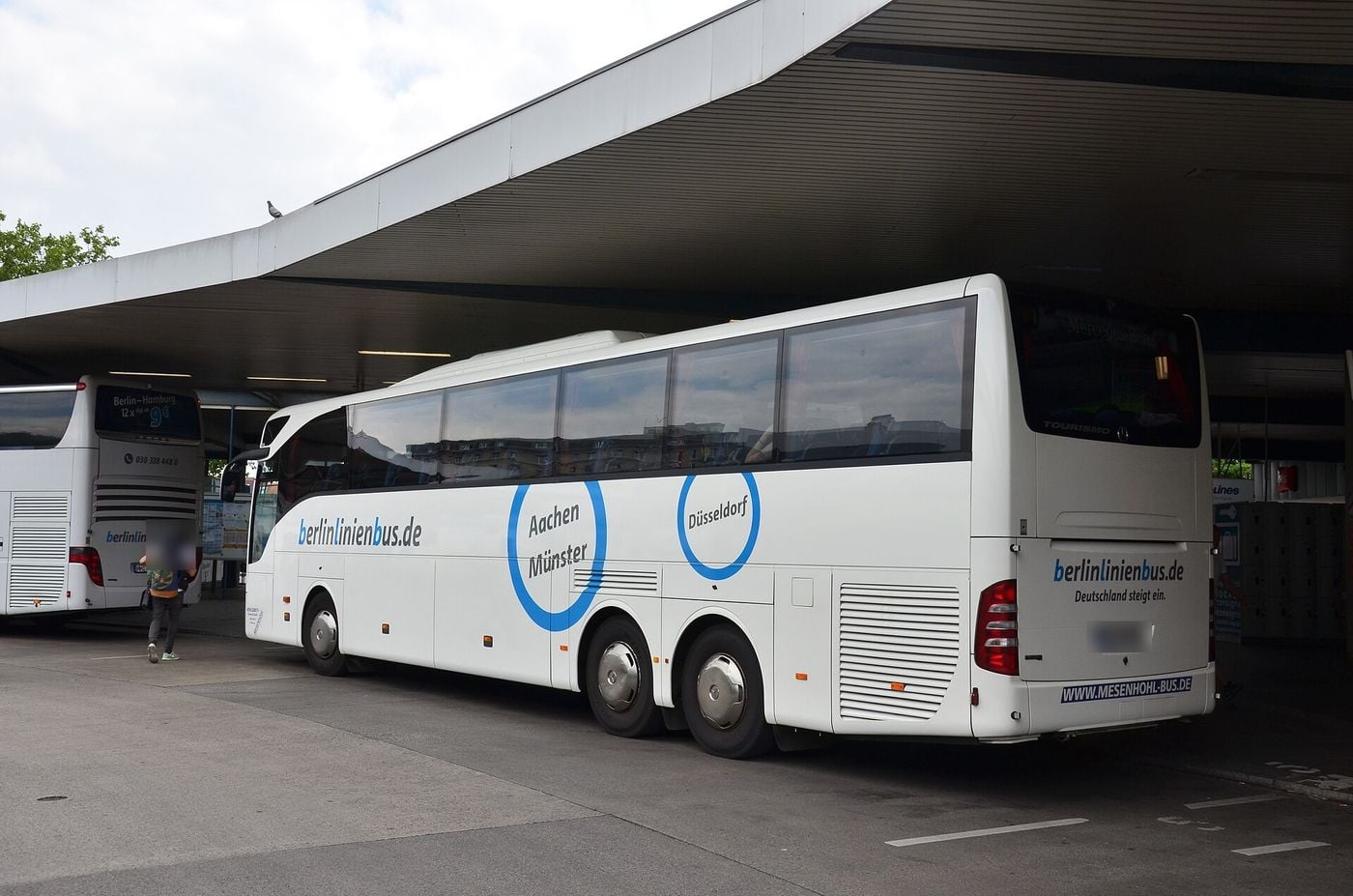
Regulation (EC) No 1073/2009 sets the common rules for international coach and bus services in the European Union. It covers journeys by vehicles built to carry more than nine persons including the driver, operated by carriers for hire or reward or on own account, and it has applied since 4 December 2011. It sorts the work into regular services, which need an authorisation; special regular services, such as carrying workers or pupils, which need none when a contract between the organiser and the carrier covers them; occasional services, carrying groups formed on the initiative of the customer or the carrier, which run under a journey form; and own-account operations, which run under a certificate. Its Chapter V opens national services in another Member State to non-resident carriers as cabotage. Beyond the EU, the Interbus Agreement between the Union and ten other parties has covered occasional services since 1 January 2003, and its Protocol on regular and special regular services has been in force since 1 October 2024.
Status as of 13 November 2026. Read on that day: Regulation (EC) No 1073/2009 and Commission Regulation (EU) No 361/2014, each in its text as published in the Official Journal; Council Decisions 2002/917/EC, (EU) 2020/1705 and (EU) 2023/911; and Council documents ST 5374/26 of 15 January 2026 and ST 6260/26 of 3 March 2026 on the Joint Committee of the Interbus Protocol.
Which journeys the Regulation covers
Article 1(1) applies the Regulation to “the international carriage of passengers by coach and bus within the territory of the Community” by carriers established in a Member State, using vehicles registered in that Member State and “suitable and intended, by virtue of their construction and equipment, to carry more than nine persons, including the driver”, and to the movement of such vehicles when empty in connection with that carriage. A change of vehicle, or an interruption so that part of the journey is made by another means of transport, does not affect its application.
Article 2(1) defines international carriage as four kinds of journey:
- departure and arrival in two different Member States, with or without transit through other Member States or third countries;
- departure and arrival in the same Member State, with passengers picked up or set down in another Member State or in a third country;
- from a Member State to a third country or the reverse;
- between third countries, in transit through one or more Member States.
The Regulation has applied from 4 December 2011 (Article 31). It replaced Council Regulations (EEC) No 684/92 and (EC) No 12/98 (Article 30).
Four kinds of service
The definitions in Article 2 and the access rules in Article 5 decide which paperwork a service needs. A regular service is open to all, “subject, where appropriate, to compulsory reservation” (Article 5(1)), and its regular nature is not affected by any adjustment to its operating conditions.
| Service | Definition | Authorisation under Chapter III | Document on board |
|---|---|---|---|
| Regular service | Carriage of passengers at specified intervals along specified routes, passengers picked up and set down at predetermined stopping points (Article 2(2)) | Required (Article 5(1)) | The authorisation or a copy certified by the issuing authority (Regulation 361/2014, Article 8(2)) |
| Special regular service | Regular services, by whomsoever organised, for specified categories of passengers to the exclusion of others (Article 2(3)), including workers between home and work and pupils and students to and from the educational institution (Article 5(2)) | Not required where a contract between the organiser and the carrier covers the service (Article 5(2)) | The contract or a certified true copy of it (Article 12(6)) |
| Occasional service | Services outside the regular and special regular definitions whose main characteristic is the carriage of groups of passengers constituted on the initiative of the customer or the carrier himself (Article 2(4)) | Not required (Article 5(3)), except for parallel or temporary services comparable to existing regular services and serving the same public | Journey form (Article 12(1)) |
| Own-account operation | Non-commercial and non-profit-making carriage that is only an ancillary activity of the natural or legal person, with vehicles it owns, has obtained on deferred terms or holds under a long-term leasing contract, driven by its own staff or by personnel put at its disposal under a contractual obligation (Article 2(5)) | Exempt from any system of authorisation; subject to certificates (Article 5(5)) | The certificate or a certified true copy of it, valid for a maximum of five years (Regulation 361/2014, Article 9) |
International carriage of passengers by coach and bus is carried out subject to possession of a Community licence issued by the Member State of establishment (Article 4(1)), and a certified true copy of it is kept in each of the carrier’s vehicles (Article 4(3)); the licence itself is covered on the page on the road transport operator licence. Article 19(1) has the authorisation or control document carried on the vehicle and presented at the request of any authorised inspecting officer. On a regular service, other than a special regular one, the carrier issues individual or collective tickets showing the points of departure and arrival, the period of validity and the fare (Article 18).
Three further rules shape the occasional category. Under Article 5(3), occasional services “shall not cease to be occasional services solely on the grounds that they are provided at certain intervals”. A group of carriers acting on behalf of the same contractor may provide them, and travellers may catch a connection en route with a different carrier of the same group, on the territory of a Member State (Article 5(3)); the original journey form then stays on the vehicle carrying out the service and a copy at the base of each carrier (Regulation 361/2014, Article 3). And within an international occasional service a carrier may run local excursions in a Member State other than its own, for non-resident passengers it previously carried on that service, with the same vehicle or another vehicle of the same carrier or group (Article 13). The passenger rights that attach to regular and to occasional services under a separate Regulation are explained in bus and coach passenger rights.
Authorisation of a regular service
A carrier applies to the authorising authority, the competent authority of the Member State in whose territory the point of departure lies, meaning “one of the termini of the service” (Articles 6(1) and 7(1)). Regulation 361/2014 prescribes the application form (Annex III) and its contents (Article 7(2)): the timetable, fare scales, a certified true copy of the Community licence, information on the type and volume of the service, a map marking the route and the stopping points, and a driving schedule to permit verification of compliance with the Union rules on driving time and rest periods, which are explained under driving time and rest rules.
The procedure in Article 8 runs on fixed periods:
- The authorisation is issued in agreement with the authorities of every Member State in whose territory passengers are picked up or set down. Member States crossed without passengers being picked up or set down receive a copy of the application and may comment.
- The Member States consulted give their decision within 2 months of receiving the request. If the authorising authority receives no reply within 2 months, they “shall be deemed to have given their agreement”.
- The authorising authority decides within 4 months of the date the carrier submitted the application.
- Authorisation “shall be granted unless” one of the grounds in Article 8(4) applies: the applicant cannot provide the service with equipment directly available to him; the applicant has not complied with road transport legislation or has committed serious infringements; on renewal, the conditions of the authorisation were not complied with; a Member State decides on the basis of a detailed analysis that the service would seriously affect the viability of a comparable service under one or more public service contracts on the direct sections concerned; or a Member State decides on the basis of a detailed analysis that the principal purpose of the service is not to carry passengers between stops located in different Member States.
- Article 8(4) also states that lower prices than those of other road carriers, or the fact that the link is already operated by other road carriers, “shall not in itself constitute justification for rejecting the application”.
- If the agreement procedure does not enable the authorising authority to decide, the matter may be referred to the Commission within 2 months of the communication of a negative decision by a Member State consulted; the Commission decides within 4 months, and its decision takes effect 30 days after notification to the Member States concerned (Article 8(7) and (8)).
An authorisation is issued in the name of the carrier, is not transferable and is valid for no more than 5 years (Article 6(1) and (2)). It states the type of service, the route with its point of departure and point of arrival, the period of validity, and the stops and timetable (Article 6(3)), and it entitles its holder to operate in the territories of all Member States over which the route passes (Article 6(5)). It lapses at the end of its validity or 3 months after the authorising authority receives the holder’s notice of withdrawing the service, 1 month where demand has ceased to exist; the holder notifies users 1 month in advance (Article 10). Where an operator adds vehicles to deal with temporary and exceptional situations, each carries a copy of the authorisation, a copy of the contract with the undertaking providing the vehicles and a certified true copy of that undertaking’s Community licence (Article 6(6)).
The journey form
Occasional services are carried out “under cover of a journey form” (Article 12(1)), which the carrier fills out before each journey (Article 12(2)). The Regulation requires at least three entries: the type of service, the main itinerary and the carrier or carriers involved (Article 12(3)). The books of journey forms are supplied by the competent authorities of the Member State where the carrier is established or by bodies they appoint (Article 12(4)).
Regulation 361/2014 sets out the rest:
- Model. The form follows Annex I: a DIN A4 sheet in Pantone 358 light green, headed for international occasional services and for cabotage operations in the form of occasional services. Its boxes cover the registration number of the coach, the carrier and any subcontractor or group of carriers, the drivers, the organisation or person responsible for the service, the type of service, the places of departure and destination, the route with daily stages, pick-up and set-down points and the number of passengers, the planned kilometres and dates, connection points with another carrier of the same group, local excursions and unforeseen changes.
- Books. Forms come in books of 25, in duplicate and detachable, with each book and each form numbered (Article 1(2)). The book is made out in the carrier’s name and is not transferable (Article 2(1)). Article 1(2) also has Member States take the measures necessary to adapt these requirements to computerised processing of journey forms.
- Use. The form is filled out legibly in indelible letters, in duplicate, by the carrier or the driver, for each journey before departure, and is valid for the entire journey. The top copy stays on the vehicle throughout the journey and a copy is kept at the company’s base (Article 2). Local excursions are entered before the vehicle leaves on the excursion (Article 5).
| Document | Prescribed colour | Format | Legal model |
|---|---|---|---|
| Community licence and its certified true copies | Pantone light blue | DIN A4 cellulose paper, 100 g/m² or more | Regulation 1073/2009, Annex II |
| Journey form | Pantone 358, light green | DIN A4 uncoated paper | Regulation 361/2014, Annex I |
| Authorisation for a regular or special regular service | Pantone 182, pink | DIN A4 uncoated paper, 100 g/m² or more | Regulation 361/2014, Annex IV |
| Certificate for own-account operations | Pantone 100, yellow | DIN A4 uncoated paper, 100 g/m² or more | Regulation 361/2014, Annex V |
For the three Regulation 361/2014 documents the Annexes add “or as close as possible to this colour”.
Coach cabotage
Chapter V lets any carrier for hire or reward that holds a Community licence carry out cabotage, “without discrimination on grounds of the carrier’s nationality or place of establishment” (Article 14). Article 2(7) defines cabotage as national road passenger services for hire or reward “carried out on a temporary basis” by a carrier in a host Member State, or the picking up and setting down of passengers within one Member State in the course of a regular international service, “provided that it is not the principal purpose of the service”.
Article 15 lists the services open to cabotage:
- special regular services covered by a contract concluded between the organiser and the carrier;
- occasional services;
- regular services performed by a non-resident carrier in the course of a regular international service, except transport services meeting the needs of an urban centre or conurbation, or between it and the surrounding areas. Such cabotage “shall not be performed independently of such international service”.
The host Member State’s laws apply, “save as otherwise provided in Community legislation”, to five areas listed in Article 16(1): the conditions governing the transport contract; the weights and dimensions of road vehicles; the carriage of certain categories of passengers, namely schoolchildren, children and persons with reduced mobility; driving time and rest periods; and VAT on transport services. Weights and dimensions may, where appropriate, exceed those of the carrier’s home state but never the host state’s limits for national traffic. For regular-service cabotage the host state’s rules also govern authorisations, tendering procedures, the routes, the regularity, continuity and frequency of services, and itineraries (Article 16(2)). Vehicles used for cabotage meet the technical standards laid down for vehicles put into circulation in international transport (Article 16(3)), and the host state applies all these rules to non-resident carriers under the same conditions as to its own (Article 16(4)).
Cabotage as an occasional service runs under the journey form, kept on board and presented on request, with the points of departure and arrival and the dates of departure and of the end of the service (Article 17(1) and (2)). For cabotage as a special regular service the contract, or a certified true copy of it, is the control document, and a journey form is filled out as a monthly statement (Article 17(4)). Used journey forms go back to the competent authority or body of the Member State of establishment under the procedures it lays down (Article 17(5); Regulation 361/2014, Article 4). Without prejudice to criminal prosecution, a host Member State may penalise infringements committed during a cabotage operation; in the event of a serious infringement the penalty may be a temporary ban on cabotage operations in its territory (Article 23(2)). Recital 11 of the Regulation states that the posting of workers Directive 96/71/EC applies to transport undertakings performing a cabotage operation.
Chapter V sets no number of operations and no period in days. Cabotage in road haulage is covered in cabotage and posted drivers.
Services to and from non-EU countries
For a journey between a Member State and a third country, Article 1(2) applies the Regulation to the part of the journey on the territory of any Member State crossed in transit, but not to the part within the Member State of picking up or setting down “as long as the necessary agreement between the Community and the third country concerned has not been concluded”. Until such agreements are concluded, the provisions of bilateral agreements between Member States and those third countries are not affected (Article 1(3)). Article 5(1) applies the same logic to authorisation: a regular service from a Member State to a third country, or the reverse, is authorised under the bilateral agreement between the Member State and the third country “and, where appropriate, the transited Member State”, as long as the necessary agreement between the Union and that country has not been concluded.
Switzerland: the Land Transport Agreement
Coach and bus services between the Union and Switzerland are governed by Part C of Title II of the Agreement between the European Community and the Swiss Confederation on the Carriage of Goods and Passengers by Rail and Road of 21 June 1999 (SR 0.740.72), in force since 1 June 2002. Annex 1 lists Regulation (EC) No 1073/2009 and Regulation (EU) No 361/2014 among the Union acts to which Switzerland applies equivalent legal provisions, and states: “For the purposes of this Agreement, the provisions of Chapter V of Regulation (EC) No 1073/2009 (on cabotage) shall not apply.”
Article 20(1) provides that transport between two points situated on the territory of the same Contracting Party by carriers established in the territory of the other Contracting Party is “not authorised under this Agreement”. Article 20(2) reads: “However, it shall continue to be permissible to exercise existing rights under the bilateral agreements concluded between the Member States of the Community and Switzerland that are in force, provided there is no discrimination between Community carriers and no distortion of competition. These rights are listed in Annex 8 to this Agreement.” Annex 8, as replaced by Joint Committee Decision No 1/2024 of 13 December 2024, is headed as a list of the provisions contained in the bilateral road transport agreements concluded by Switzerland with the Member States “relating to the granting of authorisations for the carriage of passengers in triangular traffic”.
Article 18 sets which services need an authorisation:
- occasional services do not require authorisation;
- special regular services do not require authorisation if they are covered, on Community territory, by a contract concluded between the organiser and the carrier; without such a contract they require authorisation under Annex 7, but “In Switzerland, such services shall not require authorisation”;
- regular services require authorisation in accordance with Articles 2 et seq. of Annex 7.
Annex 7, as replaced by Joint Committee Decision No 1/2015 of 16 December 2015 with effect from 1 January 2016, sets the procedure. EU carriers apply under Article 7 of Regulation (EC) No 1073/2009 and Swiss carriers under chapter 3 of the Swiss Ordinance of 4 November 2009 on the carriage of passengers (Verordnung über die Personenbeförderung, VPB), on the model in Regulation (EU) No 361/2014 (Article 3). The authorisation is issued in agreement with the competent authorities of the Contracting Parties on whose territories passengers are picked up or set down. The authorities consulted notify their decision within 2 months, failing which they are deemed to have given their agreement, and, subject to paragraphs 7 and 8 of the same Article, the issuing authority decides within 4 months of the date on which the carrier submits the application (Article 4(1) to (3)). Occasional services are carried out under cover of a journey form, which the carrier fills out before each journey; the books of journey forms are supplied by the competent authorities of Switzerland or of the Member State where the carrier is established, or by bodies they appoint, and the model and its use are those of Regulation (EU) No 361/2014. For a special regular service covered by a contract, the contract or a certified true copy of it serves as the control document (Article 8). For carriage for hire or reward, depending on the type of service, the authorisation or the journey form is carried on board with a certified true copy of the Community licence or of the similar Swiss licence (Article 11(1)).
The VPB has a cabotage ban of its own. Under Article 37(2) of the VPB (SR 745.11, status 1 January 2025), passengers may not be carried exclusively within Switzerland with an authorisation under its chapter on cross-border passenger transport; the Ordinance calls this the Kabotageverbot (cabotage ban). Under Article 41, a journey form (Fahrtenblatt) with the related collection of translations is carried on cross-border shuttle trips with accommodation and round trips by road; it is filled out before each trip and issued by the Federal Office of Transport (BAV) or a body it appoints.
The BAV, which acts as the authorising authority for international regular bus services, states on its page published on 28 May 2025 that, because of the cabotage ban, long-distance buses may not carry passengers on sections inside Switzerland, for example between Bern and Zürich, and that the cantonal police and the Federal Office for Customs and Border Security check compliance. The same page states that cross-border regular bus services between Switzerland and EU states, and between Switzerland and third states, are subject to authorisation.
Status as read on 17 November 2026: the Agreement as consolidated on Fedlex with status 9 December 2025 and the VPB with status 1 January 2025. The protocol amending the Agreement, concluded on 2 March 2026 (BBl 2026 621), does not amend Articles 18 and 20, Section 1 of Annex 1, where the cabotage exclusion stands, or Annexes 7 and 8; it gives new wording to Article 17(3) on the licences. Under its Article 2(2) it enters into force on the first day of the second month following the last notification concerning the instruments it lists.
The Interbus Agreement and its Protocol
The Interbus Agreement on the international occasional carriage of passengers by coach and bus binds the Union and, in the Commission’s list of January 2026, ten other parties. The Commission describes its aim as “harmonised liberalisation of certain international occasional services by coach and bus” (ST 5374/26, point 2.1). It was signed on behalf of the Community on 22 June 2001 and, by 30 June 2001, by the Community and 13 countries, among them Bosnia and Herzegovina, Moldova and Türkiye, named in the Decision as Moldavia and Turkey (Decision 2002/917/EC, recitals 2 and 3). The Council approved its conclusion on 3 October 2002, and it entered into force on 1 January 2003 (Decision (EU) 2020/1705, recital 1). Article 23 of the Agreement sets up a Joint Committee, in which the Commission, assisted by representatives of the members of the Council, represents the Union (Decision 2002/917/EC, Article 3).
Regular and special regular services came later, through a Protocol, and the first attempt failed. A Protocol on those services was open for signature from 16 July 2018 to 16 April 2019; the Union signed it on 11 April 2019, no other contracting party signed before the deadline, and it did not enter into force (Decision (EU) 2020/1705, recital 3). A new Protocol replacing it was open for signature from 23 October 2020 to 23 October 2022 (Decision (EU) 2023/911, recital 1). It enters into force for the parties that have signed and approved or ratified it once three contracting parties, including the Union, have done so (recital 4). The Council approved it by Decision (EU) 2023/911 of 28 September 2021, published in the Official Journal of 5 May 2023. In the Commission’s words the Protocol “enlarges the scope of the Interbus Agreement, by way of provisions establishing procedures for regular and special regular services subject to authorisation” (ST 5374/26, point 2.1), and it “largely mirrors the provisions established by the Interbus Agreement” (Decision (EU) 2023/911, recital 3).
| Party | Interbus Agreement (occasional services) | Protocol (regular and special regular services) | Source |
|---|---|---|---|
| European Union | Party; concluded on 3 October 2002, in force since 1 January 2003 | In force since 1 October 2024 | Decision 2002/917/EC; Decision (EU) 2020/1705, recital 1; ST 5374/26, point 2.1 |
| Albania | Party | With effect from 1 March 2025 | ST 5374/26, point 2.1 |
| Andorra | Party | Not listed as a party | ST 5374/26, point 2.1 |
| Bosnia and Herzegovina | Party | In force since 1 October 2024 | ST 5374/26, point 2.1 |
| Moldova | Party | In force since 1 October 2024 | ST 5374/26, point 2.1 |
| Montenegro | Party | Not listed as a party | ST 5374/26, point 2.1 |
| North Macedonia | Party | Not listed as a party | ST 5374/26, point 2.1 |
| Serbia | Party | Not listed as a party | ST 5374/26, point 2.1 |
| Türkiye | Party | Not listed as a party | ST 5374/26, point 2.1 |
| Ukraine | Party | With effect from 1 May 2025 | ST 5374/26, point 2.1 |
| United Kingdom | Party | With effect from 1 April 2025 | ST 5374/26, point 2.1 |
The Protocol has its own Joint Committee under its Article 18(1), to which Articles 23 and 24 of the Agreement apply mutatis mutandis (ST 5374/26, point 2.2). On 14 January 2026 the Commission proposed the Union’s position for that committee’s decision establishing its Rules of Procedure, which “should correspond closely, with the necessary adaptations, to those of the Joint Committee established under the Interbus Agreement” (ST 5374/26, point 3). The Council’s text for adoption, ST 6260/26 of 3 March 2026, refers to the Agreement committee’s rules as Decision No 1/2011 of 11 November 2011, which also adapted Annex 1 to the Agreement on the conditions applying to road passenger transport operators and Annex 2 on the technical standards applying to buses and coaches. In that text the number and date of the Council Decision, and the number of the committee’s decision, are left blank.
Article 3(1)(c) of Regulation 1073/2009 makes the freedom to provide services conditional on meeting legal requirements regarding the standards for drivers and vehicles, naming among them Directive 96/53/EC on maximum authorised dimensions and weights; those limits for coaches are discussed in coach specifications explained.
Quick answers
- What is the difference between a regular and an occasional coach service in the EU?
- Under Article 2 of Regulation (EC) No 1073/2009 a regular service carries passengers at specified intervals along specified routes, picking them up and setting them down at predetermined stopping points, and is open to all. An occasional service is any service that is not a regular or special regular service and whose main characteristic is the carriage of groups of passengers constituted on the initiative of the customer or the carrier. An international regular service needs an authorisation under Chapter III; an occasional service does not, but runs under a journey form.
- Does an international occasional coach service need an authorisation?
- Not under Regulation (EC) No 1073/2009: Article 5(3) states that occasional services do not require authorisation under Chapter III, and they do not cease to be occasional solely because they are provided at certain intervals. The exception is the organisation of parallel or temporary services comparable to existing regular services and serving the same public, which needs an authorisation. The carrier fills out a journey form before each journey (Article 12).
- What is a journey form for coaches?
- The control document for international occasional services and for cabotage in the form of occasional services. Article 12 of Regulation (EC) No 1073/2009 requires at least the type of service, the main itinerary and the carriers involved. Regulation (EU) No 361/2014 sets the model: light green A4 forms in books of 25, in duplicate, filled out by the carrier or the driver before departure; the original stays on the vehicle for the whole journey and a copy at the company's base.
- Can a coach operator from one EU country carry passengers within another EU country?
- Yes, as cabotage under Chapter V of Regulation (EC) No 1073/2009, for a carrier for hire or reward that holds a Community licence. Article 15 allows special regular services covered by a contract between organiser and carrier, occasional services, and regular services only in the course of a regular international service, not independently of it and not for urban or suburban transport needs. The host country's rules apply to the transport contract, weights and dimensions, carriage of children and persons with reduced mobility, driving time and rest periods, and VAT.
- Which countries are parties to the Interbus Agreement and its Protocol?
- The Commission's proposal of 14 January 2026 lists the EU, Albania, Andorra, Bosnia and Herzegovina, Moldova, Montenegro, North Macedonia, Serbia, Türkiye, Ukraine and the United Kingdom as parties to the Interbus Agreement on occasional services, in force since 1 January 2003. The Protocol on regular and special regular services entered into force on 1 October 2024 for the EU, Moldova and Bosnia and Herzegovina, with effect from 1 March 2025 for Albania, 1 April 2025 for the United Kingdom and 1 May 2025 for Ukraine. Türkiye is not among the Protocol parties listed.
Sources
- Regulation (EC) No 1073/2009 of the European Parliament and of the Council of 21 October 2009 on common rules for access to the international market for coach and bus services, and amending Regulation (EC) No 561/2006 (recast) — Official Journal text (OJ L 300, 14.11.2009): recitals 11 and 12, Articles 1 to 8, 10, 12 to 19, 23, 30 and 31, Annex II — Publications Office of the European Union, 21 Oct 2009
- Commission Regulation (EU) No 361/2014 of 9 April 2014 laying down detailed rules for the application of Regulation (EC) No 1073/2009 as regards documents for the international carriage of passengers by coach and bus and repealing Commission Regulation (EC) No 2121/98 — Official Journal text (OJ L 107, 10.4.2014): Articles 1 to 5 and 7 to 9, Annexes I, III, IV and V — Publications Office of the European Union, 9 Apr 2014
- Council Decision 2002/917/EC of 3 October 2002 on the conclusion of the Interbus Agreement on the international occasional carriage of passengers by coach and bus — recitals 1 to 4, Articles 1 and 3 — Publications Office of the European Union, 3 Oct 2002
- Council Decision (EU) 2020/1705 of 23 October 2020 on the signing of a Protocol to the Interbus Agreement regarding the international regular and special regular carriage of passengers by coach and bus — recitals 1 to 9 — Publications Office of the European Union, 23 Oct 2020
- Council Decision (EU) 2023/911 of 28 September 2021 on the conclusion of a Protocol to the Interbus Agreement regarding the international regular and special regular carriage of passengers by coach and bus (OJ L 122, 5.5.2023) — recitals 1 to 4, Articles 1 to 3 — Publications Office of the European Union, 28 Sept 2021
- Proposal for a Council Decision on the Union position in the Joint Committee established under the Protocol to the Interbus Agreement, as regards its Rules of Procedure, COM(2026) 5 final — Council document ST 5374/26 of 15 January 2026, explanatory memorandum points 2.1, 2.2 and 3 — Council of the European Union, 15 Jan 2026
- Council Decision (EU) 2026/… on the Union position in the Joint Committee established under the Protocol to the Interbus Agreement, as regards draft Decision No …/… establishing its Rules of Procedure — text for adoption, Council document ST 6260/26 of 3 March 2026, recitals 1 to 7 — Council of the European Union, 3 Mar 2026
- Agreement between the European Community and the Swiss Confederation on the Carriage of Goods and Passengers by Rail and Road of 21 June 1999 — Official Journal text (OJ L 114, 30.4.2002, p. 91): Articles 18 and 20 and information on entry into force — Publications Office of the European Union, 21 Jun 1999
- Abkommen zwischen der Schweizerischen Eidgenossenschaft und der Europäischen Gemeinschaft über den Güter- und Personenverkehr auf Schiene und Strasse (SR 0.740.72), consolidated text with status 9 December 2025: Articles 18 and 20, Annexes 1, 7 and 8 — Fedlex, Swiss Federal Chancellery, 9 Dec 2025
- Decision No 1/2015 of the Community/Switzerland Inland Transport Committee of 16 December 2015 amending Annexes 1, 3, 4 and 7 to the Agreement (OJ L 23, 29.1.2016, p. 82; number as corrected by OJ L 33, 10.2.2016, p. 38): Articles 1(4) and 4, and Annex 4, Articles 3, 4, 8 and 11 — Publications Office of the European Union, 16 Dec 2015
- Decision No 1/2021 of the Community/Switzerland Inland Transport Committee of 30 June 2021 amending Annex 1 to the Agreement (OJ L 255, 16.7.2021, p. 7): Annex 1, Section 1 — Publications Office of the European Union, 30 Jun 2021
- Decision No 1/2024 of the Community/Switzerland Inland Transport Committee of 13 December 2024 as regards the amendment of Annexes 1, 5 and 8 to the Agreement (OJ L, 2025/717, 15.4.2025): Article 3 and Annex 3 — Publications Office of the European Union, 13 Dec 2024
- Verordnung über die Personenbeförderung (VPB, SR 745.11) of 4 November 2009, status 1 January 2025: Articles 37 and 41 — Fedlex, Swiss Federal Chancellery, 1 Jan 2025
- Internationaler Linienbusverkehr (Fernbusse) — Federal Office of Transport (BAV), Switzerland, 28 May 2025
- Änderungsprotokoll zum Abkommen über den Güter- und Personenverkehr auf Schiene und Strasse, concluded on 2 March 2026 (BBl 2026 621, published by reference): Articles 1 and 2 — Fedlex, Swiss Federal Chancellery, 2 Mar 2026