Medical standards for truck and bus drivers: the EU's Group 2 rules
EU truck and bus drivers form Group 2 of Annex III: a medical before first issue, a check at each renewal and higher minimums for eyesight, the heart, diabetes and epilepsy.
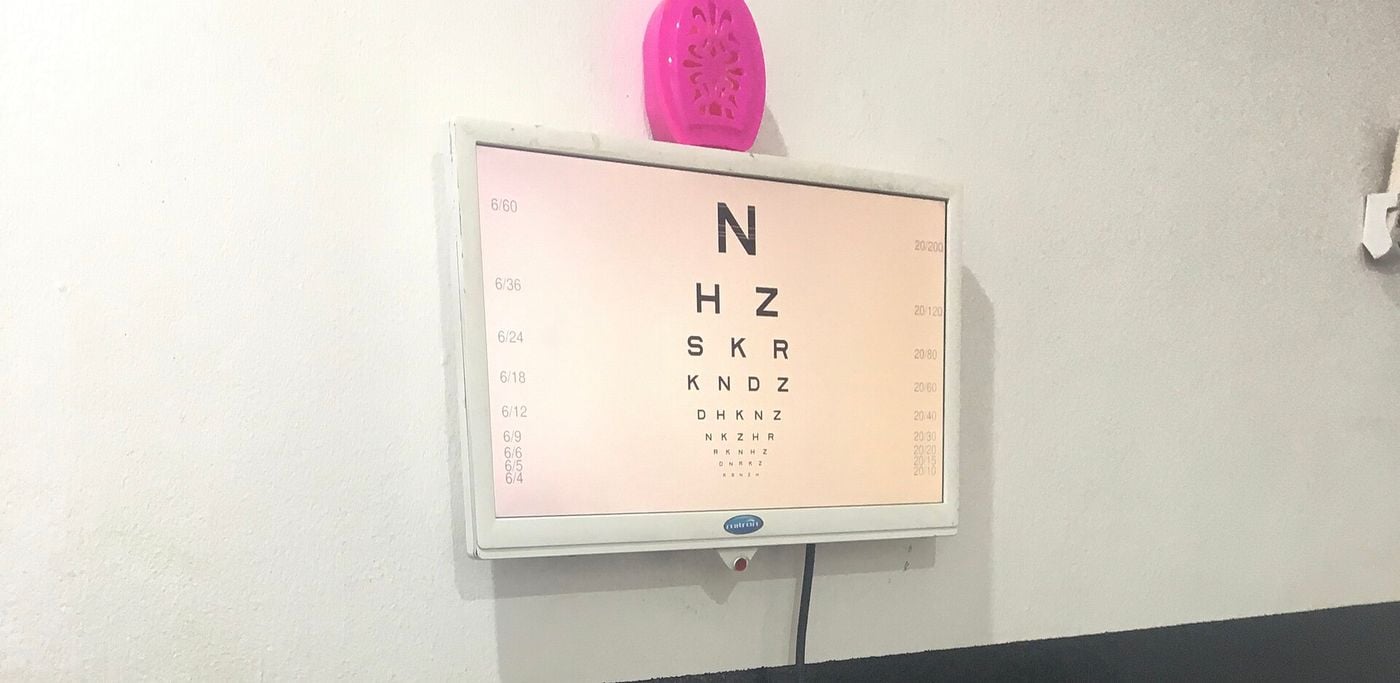
Truck and bus drivers in the European Union, in categories C1, C1E, C, CE, D1, D1E, D and DE, belong to Group 2 of Annex III to Directive 2006/126/EC, the annex that sets the minimum standards of physical and mental fitness for driving. Group 2 applicants undergo a medical examination before the licence is first issued, and drivers are checked under the national system of the Member State where they normally live each time the licence is renewed, which for these categories falls due after an administrative validity of five years, a period Member States may shorten in the cases Article 7 lists. For this group the annex sets higher values than for car and motorcycle drivers in eyesight and epilepsy, added criteria for diabetes, further heart conditions and a shorter review interval for sleep apnoea, and Member States may set stricter standards still. Three Commission directives have rewritten parts of Annex III since 2006, and Directive (EU) 2025/2205 replaces the Directive, with a new Annex III, from 26 November 2029.
Status as of 9 November 2026. Read on that day: Directive 2006/126/EC in its Official Journal text of 30 December 2006 and in its consolidated text of 1 November 2020; the three Commission directives that amended its Annex III, 2009/113/EC, 2014/85/EU and (EU) 2016/1106; and Directive (EU) 2025/2205 of 22 October 2025, published in the Official Journal on 5 November 2025.
Who is in Group 2
Point 1 of Annex III sorts drivers into two groups. Group 1 covers the drivers of categories A, A1, A2, AM, B, B1 and BE; Group 2 covers “drivers of vehicles of categories C, CE, C1, C1E, D, DE, D1 and D1E”. What each of those categories authorises, and from which age, is set out in truck driving licences and bus driving licences.
Two further rules decide who is assessed under Group 2. Applicants for a first licence or for a renewal are classified “in the group to which they will belong once the licence has been issued or renewed” (point 2), so a car driver applying for category C is assessed as a Group 2 applicant. And national legislation may apply the Group 2 provisions to drivers of category B vehicles who use their licence for professional purposes, with “taxis, ambulances, etc.” as the annex’s examples (point 1.3).
When the medical takes place
Under Article 7(1)(a) of Directive 2006/126/EC, a licence is issued only to applicants who have passed a test of skills and behaviour and a theoretical test “and who meet medical standards, in accordance with the provisions of Annexes II and III”. For Group 1, point 3 of Annex III requires a medical examination if it becomes apparent during the formalities or the tests that the applicant has one of the conditions it lists. For Group 2 the examination is part of every first issue. Point 4 reads: “Applicants shall undergo medical examinations before a driving licence is first issued to them and thereafter drivers shall be checked in accordance with the national system in place in the Member State of normal residence whenever their driving licence is renewed”.
Licences for categories C, CE, C1, C1E, D, DE, D1 and D1E issued from 19 January 2013 have an administrative validity of five years (Article 7(2)(b)), and their renewal is subject to “continuing compliance with the minimum standards of physical and mental fitness for driving set out in Annex III” (Article 7(3)(a)). The powers Member States have to shorten that period, including where an increased frequency of medical checks is needed, are set out in bus driving licences. Two conditions carry their own review interval inside the five years: not more than three years for a Group 2 driver with diabetes treated with medication that carries a risk of hypoglycaemia (point 10.3), and not more than one year for a Group 2 driver under treatment for moderate or severe obstructive sleep apnoea (point 11.5).
Many of the decisions the annex describes are left to a “competent medical authority” or rest on “authorised medical opinion”; the renewal check itself follows the national system. Point 5 lets Member States go further than the annex: “The standards set by Member States for the issue or any subsequent renewal of driving licences may be stricter than those set out in this Annex.” The qualification a professional driver needs in addition to the licence, with its own periodic training, is covered in Driver CPC explained.
The Group 2 minimum standards
Annex III applies from 19 January 2009 (Article 18). Directive 2009/113/EC replaced its points on eyesight, diabetes and epilepsy, Directive 2014/85/EU its section on neurological diseases, adding obstructive sleep apnoea, and Directive (EU) 2016/1106 its point on cardiovascular diseases and the Group 1 diabetes point. The other points are those of 2006.
| Area | Group 2 rule (point) | Wording from |
|---|---|---|
| Eyesight | Visual acuity of at least 0.8 in the better eye and 0.1 in the worse eye, with correction if necessary; glasses not exceeding plus eight dioptres, or contact lenses; horizontal field of at least 160 degrees with both eyes; no licence with impaired contrast sensitivity or diplopia (6.4) | Directive 2009/113/EC |
| Hearing | Licence subject to the opinion of the competent medical authorities, with particular account taken of the scope for compensation (7) | Directive 2006/126/EC |
| Locomotor system | No licence with complaints or abnormalities that make driving dangerous; the authority considers the additional risks of Group 2 vehicles (8, 8.3) | Directive 2006/126/EC |
| Heart and blood vessels | Listed conditions allow a licence only after effective treatment and with competent medical authorisation; others exclude it, save in exceptional cases duly justified by competent medical opinion (9.1 to 9.4) | Directive (EU) 2016/1106 |
| Diabetes | With medication carrying a risk of hypoglycaemia: no severe hypoglycaemic event in the previous 12 months, full awareness, glucose monitoring at least twice daily, medical review at intervals of not more than three years (10.3, 10.4) | Directive 2009/113/EC |
| Neurological diseases | No licence with a serious neurological disease unless supported by authorised medical opinion (11.1) | Directive 2014/85/EU |
| Obstructive sleep apnoea | Moderate or severe syndrome: licence with adequate control, compliance with treatment and improvement of sleepiness confirmed by authorised medical opinion; review at intervals of not more than one year (11.2 to 11.5) | Directive 2014/85/EU |
| Epilepsy | 10 years free of further seizures without anti-epileptic drugs; five years after a first unprovoked seizure (12.10 to 12.14) | Directive 2009/113/EC |
| Mental disorders | The authority considers the additional risks of Group 2 vehicles (13.2) | Directive 2006/126/EC |
| Alcohol | The authority considers the additional risks of Group 2 vehicles (14.2) | Directive 2006/126/EC |
| Drugs and medicinal products | No licence in any category with dependence on, or regular abuse of, psychotropic substances; for regular use, the authority considers the additional risks of Group 2 vehicles (15, 15.2) | Directive 2006/126/EC |
| Renal disorders | No licence with serious and irreversible renal deficiency, save in exceptional cases duly justified by authorised medical opinion and with regular check-ups (16.2) | Directive 2006/126/EC |
| Transplants and implants | The authority considers the additional risks of Group 2 vehicles (17.2) | Directive 2006/126/EC |
| Any other disorder | No licence for a disorder liable to result in a functional incapacity affecting safety at the wheel, unless supported by authorised medical opinion (18) | Directive 2006/126/EC |
Where the table says that the authority considers the additional risks, the annex has one sentence for Group 2, repeated under several headings: “The competent medical authority shall give due consideration to the additional risks and dangers involved in the driving of vehicles covered by the definition of this group.”
Eyesight
All applicants undergo “an appropriate investigation” of their visual acuity, and where there is reason to doubt their vision they are examined by a competent medical authority, with attention paid to “visual acuity, field of vision, twilight vision, glare and contrast sensitivity, diplopia and other visual functions that can compromise safe driving” (point 6). For Group 2, point 6.4 sets the acuity at 0.8 in the better eye and 0.1 in the worse eye, with corrective lenses if necessary; where corrective lenses are used to reach those values, they must be glasses “with a power not exceeding plus eight dioptres” or contact lenses, and the correction “must be well tolerated”. The annex asks for a horizontal visual field with both eyes of at least 160 degrees, extending at least 70 degrees left and right and 30 degrees up and down, with no defects within a radius of the central 30 degrees. After a substantial loss of vision in one eye, it provides for an adaptation period, six months being its example, during which the driver may not drive, and driving is then allowed only after a favourable opinion from vision and driving experts.
Group 1 needs a binocular acuity of 0.5 and a horizontal field of 120 degrees (point 6.1), and licensing may be considered in “exceptional cases” where those standards cannot be met. That route is written for Group 1 drivers only. The 2006 text had required at least 0.5 in the worse eye for Group 2, and allowed glasses with a power of up to plus or minus 8 dioptres; Directive 2009/113/EC replaced point 6 with the current values.
Heart and blood vessels
Point 9, rewritten by Directive (EU) 2016/1106, opens: “Cardiovascular conditions or diseases can lead to a sudden impairment of the cerebral functions that constitutes a danger to road safety.” It then sorts conditions into two lists, each entry marked as applying to group 1, to group 2, or to both.
Under point 9.1, licences may be issued or renewed “only after the condition has been effectively treated and subject to competent medical authorisation and if appropriate, regular medical assessment”. Entries marked for both groups include arrhythmias with a history of syncope, acute coronary syndrome, stable angina if symptoms do not occur with mild exercise, percutaneous coronary intervention, coronary artery bypass surgery, stroke or transient ischaemic attack, heart transplantation, valvular heart surgery, congenital heart disease and malignant hypertension, defined as systolic blood pressure of 180 mmHg or more or diastolic of 110 mmHg or more associated with impending or progressive organ damage. Entries for Group 2 only are:
- second degree atrioventricular block Mobitz II, third degree AV block or alternating bundle branch block;
- tachy-arrhythmias with polymorphic non-sustained ventricular tachycardia, sustained ventricular tachycardia or an indication for a defibrillator;
- permanent pacemaker implantation or replacement;
- significant carotid artery stenosis;
- a maximum aortic diameter exceeding 5.5 cm;
- heart failure in New York Heart Association (NYHA) classes I and II, provided that the left ventricular ejection fraction is at least 35 %;
- grade III blood pressure: diastolic of 110 mmHg or more and/or systolic of 180 mmHg or more.
Under point 9.2, licences “shall not be issued or renewed” for the conditions listed there. For Group 2 they are an implanted defibrillator; a thoracic or abdominal aortic aneurysm whose diameter predisposes to a significant risk of sudden rupture; heart failure in NYHA classes III and IV; cardiac assist devices; valvular heart disease in NYHA class III or IV, or with an ejection fraction below 35 %, mitral stenosis and severe pulmonary hypertension, severe echocardiographic aortic stenosis or aortic stenosis causing syncope, except completely asymptomatic severe aortic stenosis where the exercise tolerance test requirements are fulfilled; hypertrophic cardiomyopathy with a history of syncope, or with two or more of a left ventricle wall thickness over 3 cm, non-sustained ventricular tachycardia, a family history of sudden death in a first degree relative and no increase of blood pressure with exercise; long QT syndrome with syncope, Torsade des Pointes and QTc over 500 ms; and Brugada syndrome with syncope or aborted sudden cardiac death. The point closes: “Driving licences may be issued or renewed in exceptional cases, provided that it is duly justified by competent medical opinion and subject to regular medical assessment ensuring that the person is still capable of driving the vehicle safely taking into account the effects of the medical condition.” Recital 5 of the 2016 Directive describes this as an option for the competent national medical authorities “to allow driving in duly justified individual cases”.
Defibrillators fall on different sides for the two groups: for Group 1, implantation, replacement or a defibrillator shock is a 9.1 condition, for Group 2 the implant of a defibrillator is a 9.2 exclusion. Point 9.3 requires a careful specialist evaluation of other cardiomyopathies, and point 9.4 allows Member States to restrict licences for other cardiovascular diseases. Member States had to apply the new point 9 from 1 January 2018 (Article 2 of Directive (EU) 2016/1106).
Diabetes
Point 10 defines a severe hypoglycaemia as one where “the assistance of another person is needed”, and a recurrent hypoglycaemia as a second severe hypoglycaemia within 12 months. For Group 2, point 10.3 opens: “Consideration may be given to the issuing/renewal of group 2 licences to drivers with diabetes mellitus.” When the treatment carries a risk of inducing hypoglycaemia, “that is, with insulin, and some tablets”, the annex lists five criteria:
- no severe hypoglycaemic events have occurred in the previous 12 months;
- the driver has full hypoglycaemic awareness;
- the driver shows adequate control of the condition by regular blood glucose monitoring, at least twice daily and at times relevant to driving;
- the driver demonstrates an understanding of the risks of hypoglycaemia;
- there are no other debarring complications of diabetes.
The licence is then subject to the opinion of a competent medical authority and to regular medical review “at intervals of not more than three years”. Point 10.4 adds that a severe hypoglycaemic event during waking hours, “even unrelated to driving, should be reported and should give rise to a reassessment of the licensing status”. Before Directive 2009/113/EC, the 2006 text allowed a Group 2 licence to a driver requiring insulin treatment only “in very exceptional cases”. Directive (EU) 2016/1106 later rewrote point 10.2, which applies to Group 1, and left the Group 2 points as written in 2009.
Obstructive sleep apnoea
Directive 2014/85/EU added obstructive sleep apnoea to Annex III, stating in recital 2 that studies confirm the syndrome “is one of the highest risk factors for motor vehicle accidents”. A moderate syndrome corresponds to an Apnoea-Hypopnoea Index between 15 and 29 apnoeas and hypopnoeas per hour, a severe one to an index of 30 or more, “both associated with excessive daytime sleepiness” (point 11.2). Applicants or drivers in whom a moderate or severe syndrome is suspected are referred for further authorised medical advice before a licence is issued or renewed, and “may be advised not to drive until confirmation of the diagnosis” (point 11.3). A licence may be issued where they show adequate control of the condition and compliance with appropriate treatment, and improvement of sleepiness, if any, confirmed by authorised medical opinion (point 11.4). Under treatment, Group 2 drivers are reviewed at intervals not exceeding one year, Group 1 drivers three years, “with a view to establish the level of compliance with the treatment, the need for continuing the treatment and continued good vigilance” (point 11.5). Member States were to apply these provisions from 31 December 2015 (Article 2 of Directive 2014/85/EU).
Epilepsy
Point 12 defines epilepsy as “having had two or more epileptic seizures, less than five years apart”, and a provoked seizure as one with “a recognisable causative factor that is avoidable”. A person who has an initial or isolated seizure or loss of consciousness “should be advised not to drive”, and a specialist report states the period of driving prohibition. For Group 2:
- the applicant “should be without anti-epileptic medication for the required period of seizure freedom”, and extensive neurological investigation has found no relevant cerebral pathology and no epileptiform activity on the electroencephalogram (point 12.10);
- after a provoked seizure, the applicant can be declared able to drive on an individual basis, subject to neurological opinion; a person with a structural intra-cerebral lesion who has an increased risk of seizures “should not be able to drive vehicles of group 2 until the epilepsy risk has fallen to at least 2 % per annum” (point 12.11);
- after a first unprovoked seizure, after five years free of further seizures without anti-epileptic drugs and with an appropriate neurological assessment (point 12.12);
- after another loss of consciousness, the risk of recurrence “should be 2 % per annum or less” (point 12.13);
- with epilepsy, “10 years freedom from further seizures shall have been achieved without the aid of anti-epileptic drugs”, which also applies to juvenile epilepsy (point 12.14).
In points 12.12 and 12.14, national authorities “may allow drivers with recognised good prognostic indicators to drive sooner”. The corresponding Group 1 periods are one year free of further seizures with epilepsy and six months after a first unprovoked seizure (points 12.5 and 12.3).
Alcohol, drugs and other conditions
For alcohol, Group 2 has the general sentence on additional risks (point 14.2); what Annex III and the licence codes say on alcohol, including the interlock, is covered in alcohol limits for truck and bus drivers. On drugs, point 15 applies to every category: no licence for applicants or drivers “who are dependent on psychotropic substances or who are not dependent on such substances but regularly abuse them”. Serious and irreversible renal deficiency excludes a Group 2 licence save in exceptional cases (point 16.2), and point 18 closes the annex with a general rule for any disorder not mentioned in it that is liable to result in a functional incapacity affecting safety at the wheel.
What Directive (EU) 2025/2205 changes from 26 November 2029
Directive (EU) 2025/2205 was published in the Official Journal on 5 November 2025 and entered into force on the twentieth day following its publication (Article 31). Member States adopt the measures to comply with it by 26 November 2028 and apply them from 26 November 2029 (Article 29(1)), and Directive 2006/126/EC is repealed with effect from 26 November 2029, except for its Article 6(4)(c), repealed from 26 November 2027 (Article 30(1)). Until then, the Annex III described above is the text in force.
Much stays as it is. Group 2 covers the same eight categories (Annex III, point 1), licences in them keep an administrative validity of five years (Article 10(2)(b)), renewal stays subject to continuing compliance with Annex III (Article 10(3)(a)), and Member States may still set stricter standards (Article 11(8)). The new Annex III keeps the Group 2 eyesight values, the 12-month and three-year periods for diabetes, the one-year review for sleep apnoea, and the 10-year and five-year seizure-free periods for epilepsy. Its Title 4 keeps the two lists of cardiovascular conditions, with the same thresholds for aortic diameter, ejection fraction and blood pressure.
Among the changes for Group 2:
- The examinations are written into an article. Article 11(1) requires a medical examination before a licence is first issued, covering all the conditions in Annex III, and for categories C, CE, C1, C1E, D, D1, DE or D1E “regardless of whether a medical examination was undertaken for another category”; Article 11(2) requires one before each renewal. The self-assessment and national monitoring alternatives of Article 11(3) are open only to Group 1 categories. Recital 29 says the examination “could be performed by general practitioners or by any other competent medical authority or health sector professional, as established within the law of each Member State”.
- Provoked epileptic seizure. For Group 2, “a favourable neurological report must be provided, certifying a seizure-free period of at least one year and including an electroencephalographic assessment” (Annex III, Title 9, point (11)). The figures of 2 % per annum in the current points 12.11 and 12.13 and in the paragraph after point 12.14 do not appear in Title 9.
- Temporary requirements and restrictions. For Group 2, the competent medical authority “may establish temporary requirements or impose restrictions on driving” for mental impairments (Title 10), “may establish temporary requirements and, where appropriate, restrictions on driving” for alcohol (Title 11) and “may establish certain requirements or restrictions” for drugs and medicinal products (Title 12).
- Diabetes. The twice-daily control is described as “regular controls, using technical aids”, and the licence is subject to “the positive opinion of” a competent medical authority (Title 5, point (3)). Recital 34 names continuous glucose monitoring systems among recent advances in medical technology.
- How the annex is amended. Article 10(6) empowers the Commission to amend Annex III by delegated acts “where necessary in order to take account of technical, operational or scientific developments”; under Article 8 of Directive 2006/126/EC, amendments adapting its annexes to scientific and technical progress are adopted in accordance with the committee procedure of Article 9(2).
How the new Article 10(2) changes the powers to shorten a licence’s validity, including the age from which Member States may do so, is set out in bus driving licences.
Outside the EU text
Annex III sets minimums, and point 4 leaves the renewal check to the national system of each Member State. The Group 2 medical in Great Britain, with the Driver and Vehicle Licensing Agency’s form D4, is covered in HGV licences in Great Britain, and the medical certification of commercial drivers in the United States in DOT physical and the medical examiner’s certificate.
Quick answers
- How often do truck and bus drivers need a medical in the EU?
- Before the first licence in categories C1, C1E, C, CE, D1, D1E, D or DE, and again whenever the licence is renewed, under point 4 of Annex III to Directive 2006/126/EC; the renewal check follows the national system of the Member State of normal residence. These licences have an administrative validity of five years (Article 7(2)(b)), and Member States may shorten it in the cases Article 7(3) lists. Some conditions add their own reviews for Group 2 drivers: at most every three years with diabetes treated with medication that carries a risk of hypoglycaemia, and at most every year under treatment for moderate or severe obstructive sleep apnoea.
- What eyesight do you need for a truck or bus licence in the EU?
- Under point 6.4 of Annex III to Directive 2006/126/EC, Group 2 applicants and drivers need a visual acuity, with corrective lenses if necessary, of at least 0.8 in the better eye and at least 0.1 in the worse eye; glasses used to reach those values may not exceed plus eight dioptres, or contact lenses are used. The annex also asks for a horizontal visual field with both eyes of at least 160 degrees, extending at least 70 degrees left and right and 30 degrees up and down, with no defects within the central 30 degrees. Impaired contrast sensitivity and diplopia exclude a licence.
- Can you drive a truck or bus with insulin-treated diabetes in the EU?
- Annex III allows consideration of a Group 2 licence. With medication that carries a risk of hypoglycaemia, such as insulin and some tablets, point 10.3 sets five criteria: no severe hypoglycaemic event in the previous 12 months, full hypoglycaemic awareness, blood glucose monitoring at least twice daily and at times relevant to driving, an understanding of the risks of hypoglycaemia, and no other debarring complications. The licence is subject to the opinion of a competent medical authority and to review at intervals of not more than three years. A severe hypoglycaemic event during waking hours, even unrelated to driving, is to be reported and to give rise to a reassessment of the licensing status (point 10.4).
- Can someone with epilepsy hold a truck or bus licence in the EU?
- Under point 12.14 of Annex III, a Group 2 driver with epilepsy needs 10 years free of further seizures without the aid of anti-epileptic drugs; national authorities may allow drivers with recognised good prognostic indicators to drive sooner. After a first unprovoked seizure the period is five years without anti-epileptic drugs and with an appropriate neurological assessment (point 12.12). Point 12.10 also requires no relevant cerebral pathology and no epileptiform activity on the electroencephalogram after extensive neurological investigation.
- What changes for truck and bus drivers' medicals in 2029?
- From 26 November 2029 Directive (EU) 2025/2205 replaces Directive 2006/126/EC. Group 2 keeps the same eight categories, the five-year validity and the main thresholds for eyesight, diabetes, sleep apnoea and epilepsy. Article 11 requires a medical examination before the first C or D licence, regardless of an earlier examination for another category, and before each renewal. In the new Annex III, a Group 2 driver after a provoked epileptic seizure needs a favourable neurological report certifying at least one year without seizures, and the competent medical authority may set requirements or restrictions on driving for mental impairments, alcohol and drugs.
Sources
- Directive 2006/126/EC of the European Parliament and of the Council of 20 December 2006 on driving licences (Recast) — Official Journal text (OJ L 403, 30.12.2006): Article 7, Article 18 and Annex III — EUR-Lex, European Union, 20 Dec 2006
- Directive 2006/126/EC on driving licences (Recast) — consolidated text of 1 November 2020: Articles 7 and 8 and Annex III with the amendments of Directives 2009/113/EC, 2014/85/EU and (EU) 2016/1106 — EUR-Lex, European Union
- Commission Directive 2009/113/EC of 25 August 2009 amending Directive 2006/126/EC on driving licences — recitals 1 to 4 and the Annex (Annex III points 6, 10 and 12: eyesight, diabetes mellitus, epilepsy) — EUR-Lex, European Union, 25 Aug 2009
- Commission Directive 2014/85/EU of 1 July 2014 amending Directive 2006/126/EC on driving licences — recital 2, Article 2 and Annex point 2 (Annex III section 11: neurological diseases and obstructive sleep apnoea syndrome) — EUR-Lex, European Union, 1 Jul 2014
- Commission Directive (EU) 2016/1106 of 7 July 2016 amending Directive 2006/126/EC on driving licences — recitals 2 to 5, Article 2 and the Annex (Annex III point 9, cardiovascular diseases, and point 10.2, diabetes) — EUR-Lex, European Union, 7 Jul 2016
- Directive (EU) 2025/2205 of the European Parliament and of the Council of 22 October 2025 on driving licences (OJ L, 2025/2205, 5.11.2025) — recitals 29 and 34, Articles 10, 11, 29, 30 and 31, Annex III — EUR-Lex, European Union, 22 Oct 2025