The Clean Vehicles Directive and Public Bus Procurement
What Directive 2009/33/EC, as amended by (EU) 2019/1161, requires of public bus procurement: two reference periods, clean and zero-emission definitions, each Member State's bus share.
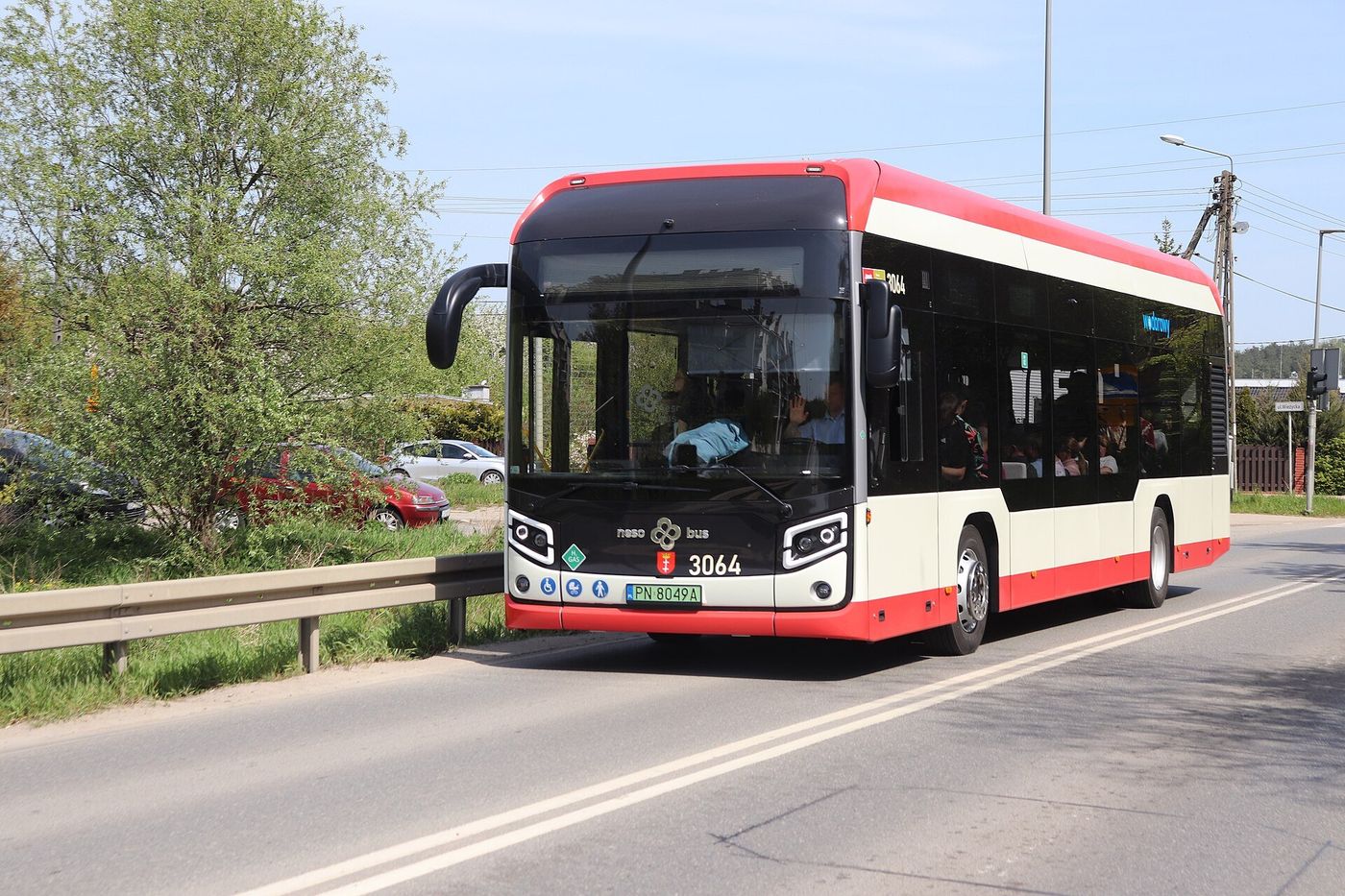
Directive 2009/33/EC, as amended by Directive (EU) 2019/1161, requires Member States to ensure that the public procurement it covers meets minimum shares of clean buses, which Table 4 of its Annex sets country by country at between 24 % and 45 % for contracts awarded from 2 August 2021 to 31 December 2025 and between 33 % and 65 % for those awarded from 1 January 2026 to 31 December 2030 (the two ranges are our reading of the table). Half of each target has to be fulfilled by zero-emission buses; the targets are addressed to Member States and counted on the vehicles in the public contracts of Article 3, not on the bus market as a whole, and Article 3(2)(b) leaves out “vehicles of category M3 other than Class I and Class A vehicles”.
Article numbers below follow the consolidated text of 20 May 2024; recitals are those of Directive (EU) 2019/1161. Where a figure or a reading is ours rather than the text’s, the sentence says so.
What the directive is, and the two acts that amended it
Directive 2009/33/EC is dated 23 April 2009. Article 1, point (1), of Directive (EU) 2019/1161 replaced its title with “on the promotion of clean road transport vehicles in support of low-emission mobility”; the amending directive itself still carries the earlier wording, “on the promotion of clean and energy-efficient road transport vehicles”. Directive (EU) 2019/1161 is dated 20 June 2019 and appeared in the Official Journal on 12 July 2019 (L 188, p. 116). It “shall enter into force on the twentieth day following that of its publication”, which by our arithmetic is 1 August 2019, and its Article 2(1) set the transposition deadline: “Member States shall bring into force the laws, regulations and administrative provisions necessary to comply with this Directive by 2 August 2021.”
Decision (EU) 2024/1254 of 24 April 2024, published on 30 April 2024, is the second amending act. For this directive it changes only Article 10, paragraphs 2 and 4, which set the reporting dates (see the reporting section below). It “shall enter into force on the twentieth day following that of its publication”, by our arithmetic 20 May 2024. According to Publications Office data queried on 29 September 2026, the directive has three consolidated versions, dated 4 June 2009, 1 August 2019 and 20 May 2024, and these two acts are the only ones that amend it. The consolidated text “is meant purely as a documentation tool and has no legal effect”, so the binding wording is that of the acts published in the Official Journal.
Article 1 gives the subject matter: the directive “requires Member States to ensure that contracting authorities and contracting entities take into account lifetime energy and environmental impacts, including energy consumption and emissions of CO2 and of certain pollutants, when procuring certain road transport vehicles”. On why it was revised, recital 10 of the 2019 directive says the Commission carried out an ex-post evaluation of Directive 2009/33/EC “in 2015 and concluded that that Directive did not trigger a market uptake of clean vehicles across the Union, in particular due to shortcomings as regards its scope and the provisions on vehicle purchase”.
The directive “is addressed to the Member States”, and Article 5(1) says they “shall ensure” that the procurement complies with its targets. The Commission’s DG MOVE page adds that “the Directive does not directly set requirements for individual tenders, nor targets for individual cities or public authorities”.
Which contracts the targets are counted on
Article 3(1) applies the directive to procurement through three kinds of contract:
- (a) “contracts for the purchase, lease, rent or hire-purchase of road transport vehicles awarded by contracting authorities or contracting entities in so far as they are under an obligation to apply the procurement procedures set out in Directives 2014/24/EU and 2014/25/EU”;
- (b) “public service contracts within the meaning of Regulation (EC) No 1370/2007 of the European Parliament and of the Council having as their subject matter the provision of passenger road transport services in excess of a threshold which shall be defined by Member States not exceeding the applicable threshold value set in Article 5(4) of that Regulation”;
- (c) “service contracts set out in Table 1 of the Annex to this Directive in so far as the contracting authorities or contracting entities are under an obligation to apply the procurement procedures set out in Directives 2014/24/EU and 2014/25/EU”.
Table 1 lists eight CPV codes (our count). Three of them, as we read the descriptions, concern passenger transport: 60112000-6 Public road transport services, 60130000-8 Special-purpose road passenger-transport services and 60140000-1 Non-scheduled passenger transport; the other five cover refuse collection, mail and parcels.
The threshold in (b) is for each Member State to define, up to the value in Article 5(4) of Regulation (EC) No 1370/2007. The directive does not say which value in that paragraph is “the applicable threshold value” for a given contract, and this page does not either; nor does it read any Member State’s own threshold.
The directive “shall only apply to such contracts for which the call for competition has been sent after 2 August 2021 or, in cases where a call for competition is not foreseen, where the contracting authority or contracting entity has commenced the procurement procedure after that date”. Recital 12 adds: “Existing contracts should not be retrospectively affected by this Directive.”
Article 5(1) then says what the targets measure. They “are expressed as minimum percentages of clean vehicles in the total number of road transport vehicles covered by the aggregate of all contracts referred to in Article 3, awarded between 2 August 2021 and 31 December 2025, for the first reference period, and between 1 January 2026 and 31 December 2030, for the second reference period”. The date that counts “is the date of completion of the public procurement procedure, by way of awarding of the contract” (Article 5(2)). For contracts under Article 3(1)(a), “the number of road transport vehicles purchased, leased, rented or hire-purchased under each contract” is taken into account (Article 5(4)); for contracts under (b) and (c), “the number of road transport vehicles to be used for the provision of the services covered by each contract” (Article 5(5)).
On our reading, then, the count is of the vehicles in the contracts awarded within a period, taken together for the whole period, and not of the buses an authority or operator already runs; the text measures one aggregate per reference period. Whether a bus operator is itself a contracting entity, and so falls under Article 3(1)(a), is a separate question, worked through in the regulatory floor under bus fleet operating costs.
Which buses count, and which do not
The bus column of Table 4 is headed “Buses (vehicle category M3)”. Under Article 4(1)(a) of Regulation (EU) 2018/858, category M3 is “motor vehicles with more than eight seating positions in addition to the driver’s seating position and having a maximum mass exceeding 5 tonnes, regardless of whether those motor vehicles have space for standing passengers”; category M2 has the same seat count with a maximum mass “not exceeding 5 tonnes”. Article 4, point (3), of the directive defines a “road transport vehicle” as “a vehicle of category M or N, as defined in points (a) and (b) of Article 4(1) of Regulation (EU) 2018/858”.
Article 3(2)(b) then provides that the directive shall not apply to “vehicles of category M3 other than Class I and Class A vehicles as defined in points (2) and (3) of Article 3 of Regulation (EC) No 661/2009 of the European Parliament and of the Council”. Recital 16 gives the reason: “Due to the limited level of market maturity of low- and zero-emission coaches, the relatively limited role of public procurement in this market segment and their specific operational requirements, coaches should not be included in the scope of this Directive.” It adds that M3 vehicles “with areas for standing passengers to allow for frequent passenger movement are considered to be buses, while vehicles of category M3 with very limited or no area for standing passengers are considered to be coaches”. Category M2 is not in the bus column: Article 4, point (4)(a), defines a clean vehicle “of category M1, M2 or N1” by tail-pipe CO2 and pollutant limits set in Table 2 of the Annex, and Article 5(1) sends “clean light-duty vehicles” to Table 3 (our reading of how the Annex tables divide the categories).
The two class names come from a regulation that is no longer in force: points 2 and 3 of Article 3 of Regulation (EC) No 661/2009 defined class I and class A vehicles. The consolidated directive still refers to that regulation. Regulation (EU) 2019/2144 repealed it “with effect from the date of application of this Regulation” (Article 18(1)); Article 19 says the new regulation “shall apply from 6 July 2022”, apart from articles it lists that apply earlier, and Article 18(2) says “References to Regulations (EC) No 78/2009, (EC) No 79/2009 and (EC) No 661/2009 shall be construed as references to this Regulation.” We found no definition of Class I or Class A in Article 3 of Regulation (EU) 2019/2144, and this page does not decide which text now defines them. The classes of UN Regulation No. 107 are set out in bus classes under UN R107.
What counts as a clean bus and as a zero-emission bus
For heavy-duty vehicles the directive gives two definitions, one inside the other. Article 4, point (4)(b), defines a clean vehicle as:
a vehicle of category M3, N2 or N3 using alternative fuels as defined in points (1) and (2) of Article 2 of Directive 2014/94/EU of the European Parliament and of the Council, excluding fuels produced from high indirect land-use change-risk feed stock for which a significant expansion of the production area into land with high-carbon stock is observed in accordance with Article 26 of Directive (EU) 2018/2001 of the European Parliament and of the Council. In the case of vehicles using liquid biofuels, synthetic and paraffinic fuels, those fuels shall not be blended with conventional fossil fuels
Article 4, point (5), defines a zero-emission heavy duty vehicle as:
a clean vehicle as defined in point 4(b) of this Article without an internal combustion engine, or with an internal combustion engine that emits less than 1 g CO2/kWh as measured in accordance with Regulation (EC) No 595/2009 of the European Parliament and of the Council and its implementing measures, or that emits less than 1 g CO2/km as measured in accordance with Regulation (EC) No 715/2007 of the European Parliament and of the Council and its implementing measures
On liquid biofuels and synthetic or paraffinic fuels, recital 14 says: “While it is possible for those fuels to contain fuel additives, as is the case for example with ethanol-based fuel for adapted diesel engines (ED95), they should not be blended with fossil fuels.” The word “HVO” does not appear in the directive (our search of the consolidated text and of Directive (EU) 2019/1161), and this page does not say whether a bus on any given fuel counts. How Germany’s Clean Vehicles Procurement Act treats paraffinic diesel fuels is set out in HVO and paraffinic diesel.
Point 4(b) refers to “points (1) and (2) of Article 2 of Directive 2014/94/EU”. In that directive, now repealed, point (1) defined “alternative fuels” as fuels or power sources which serve, at least partly, as a substitute for fossil oil sources in the energy supply to transport, and said they “include, inter alia”: electricity, hydrogen, biofuels, synthetic and paraffinic fuels, “natural gas, including biomethane, in gaseous form (compressed natural gas (CNG)) and liquefied form (liquefied natural gas (LNG))”, and liquefied petroleum gas (LPG). Point (2) defined an “electric vehicle”, a vehicle rather than a fuel, as “a motor vehicle equipped with a powertrain containing at least one non-peripheral electric machine as energy converter with an electric rechargeable energy storage system, which can be recharged externally”.
Regulation (EU) 2023/1804 repealed Directive 2014/94/EU “with effect from 13 April 2024” (Article 25(1)), and Article 25(2) says “References to Directive 2014/94/EU shall be construed as references to this Regulation and shall be read in accordance with the correlation table in Annex IV”. That table pairs Article 2 of the directive with Article 2 of the Regulation, at article level only (our reading of the table). The Regulation’s own definition of “alternative fuels”, in Article 2(4), is worded differently: it lists, under “alternative fuels for zero-emission vehicles, trains, vessels or aircraft”, “electricity”, “hydrogen” and “ammonia”. This page does not decide which list Article 4, point (4)(b), reads today. Both lists name natural gas, as CNG and LNG, and LPG; on our reading a bus running on any of them can be a clean vehicle under point 4(b), and whether it also meets point 5 is a separate test.
The DG MOVE page summarises the category as: “Clean heavy-duty vehicle: any truck or bus using one of the following alternative fuels: hydrogen, battery electric (including plug-in hybrids), natural gas (both CNG and LNG, including biomethane), liquid biofuels, synthetic and paraffinic fuels, LPG.” The words “plug-in hybrids” are DG MOVE’s; the word “hybrid” does not appear in the consolidated text (our search).
Three further points come from elsewhere in the directive. Article 5(3) says that vehicles that meet either definition “as a result of retrofitting may be counted as clean vehicles or zero-emission heavy-duty vehicles, respectively, for the purpose of compliance with the minimum procurement targets”. Recital 18, which is not an operative article, says “trolley buses are considered to be zero-emission buses, provided that they run only on electricity or that they use only a zero-emission powertrain when they are not connected to the grid, otherwise they still count as clean vehicles”. And recital 20 says “Vehicles with zero emissions at the tail-pipe also leave an environmental footprint due to the emissions deriving from the fuel supply chain, from the extraction phase to the tank, as well as due to the process of manufacture of the components and their level of recyclability”.
Table 4: the bus targets, Member State by Member State
Article 5(1) sends the heavy-duty targets to Table 4 of the Annex, titled “Minimum procurement targets for the share of clean heavy-duty vehicles in the total number of heavy-duty vehicles covered by contracts referred to in Article 3 at Member State level”. Its bus column is headed “Buses (vehicle category M3)”. The bus figures for the two reference periods follow, in the order of the Annex; we read them from the Official Journal (L 188/129 to 130) and checked them against the consolidated text.
| Member State | From 2 August 2021 to 31 December 2025 | From 1 January 2026 to 31 December 2030 |
|---|---|---|
| Luxembourg | 45 % | 65 % |
| Sweden | 45 % | 65 % |
| Denmark | 45 % | 65 % |
| Finland | 41 % | 59 % |
| Germany | 45 % | 65 % |
| France | 43 % | 61 % |
| United Kingdom | 45 % | 65 % |
| Netherlands | 45 % | 65 % |
| Austria | 45 % | 65 % |
| Belgium | 45 % | 65 % |
| Italy | 45 % | 65 % |
| Ireland | 45 % | 65 % |
| Spain | 45 % | 65 % |
| Cyprus | 45 % | 65 % |
| Malta | 45 % | 65 % |
| Portugal | 35 % | 51 % |
| Greece | 33 % | 47 % |
| Slovenia | 28 % | 40 % |
| Czechia | 41 % | 60 % |
| Estonia | 31 % | 43 % |
| Slovakia | 34 % | 48 % |
| Lithuania | 42 % | 60 % |
| Poland | 32 % | 46 % |
| Croatia | 27 % | 38 % |
| Hungary | 37 % | 53 % |
| Latvia | 35 % | 50 % |
| Romania | 24 % | 33 % |
| Bulgaria | 34 % | 48 % |
Our count of the table: 28 rows, 27 Member States and a row for the United Kingdom, which the consolidated text still carries. Thirteen rows, twelve Member States plus that United Kingdom row, sit at the top band of 45 % and 65 %: Luxembourg, Sweden, Denmark, Germany, the United Kingdom, the Netherlands, Austria, Belgium, Italy, Ireland, Spain, Cyprus and Malta. The lowest row is Romania, at 24 % and 33 %; across the table the first-period figures run from 24 % to 45 % and the second-period figures from 33 % to 65 %. The truck column of the same table, headed “Trucks (vehicle category N2 and N3)”, runs from 6 % to 10 % in the first period and from 7 % to 15 % in the second (our count).
The footnote to the bus column reads: “Half of the minimum target for the share of clean buses has to be fulfilled by procuring zero-emission buses as defined in point 5 of Article 4.” On our reading the zero-emission half sits inside the clean share and is not added to it. For Germany’s second-period 65 %, half is 32.5 % of the buses covered (our arithmetic; the figure appears neither in the directive nor in the Annex).
Recital 19 says “Member States should have the flexibility to distribute efforts to meet the minimum targets within their territory, in accordance with their constitutional framework and in line with their transport policy objectives”, and Article 5(7) says they “may apply or authorise their contracting authorities or contracting entities to apply higher national targets or more stringent requirements than those referred to in the Annex”. Recital 23 says Member States “can, in compliance with Union law, decide to impose similar requirements also on private operators and services outside the scope of this Directive, such as taxi, car rental and ride-pooling companies”. This page reads no Member State’s transposing law and no distribution rule of any Member State.
The double-decker rule
The second sentence of the footnote reads: “This requirement is lowered to one quarter of the minimum target for the first reference period if more than 80 % of the buses covered by the aggregate of all contracts referred to in Article 3, awarded during that period in a Member State, are double-decker buses.” Recital 16 gives the reason: “Given the very limited market for double-decker buses and their specific design limitations, it is appropriate to apply, during the first reference period covered by this Directive, lower minimum procurement targets for zero-emission vehicles belonging to that category of heavy-duty vehicles in Member States where double-decker buses represent a significant share of public procurement.”
Four limits follow from the wording.
- What is lowered. The requirement that is lowered is the zero-emission half, from half of the minimum target to one quarter of it. The footnote does not lower the minimum target for clean buses itself. On Germany’s first-period row, 45 %, half is 22.5 % and one quarter is 11.25 % (our arithmetic). That is arithmetic on a row, not a statement that Germany or any other Member State met the condition.
- Which period. The lowering is written “for the first reference period”, 2 August 2021 to 31 December 2025, which has ended. The footnote has no equivalent sentence for the second period, which began on 1 January 2026.
- At what level. The condition is stated on “the aggregate of all contracts referred to in Article 3, awarded during that period in a Member State”, not on any single contract.
- What is undefined. The directive does not define “double-decker” (the word appears, by our search, only in recital 16 and in the footnote). None of the sources read for this page says which Member State, if any, met the 80 % condition.
Reporting, review and the years after 2030
| Date | What | Where |
|---|---|---|
| 2 August 2021 | Transposition deadline | Directive (EU) 2019/1161, Article 2(1) |
| 2 August 2022 | Member States inform the Commission of the measures taken and their intentions | Article 10(1) |
| 31 December 2025 | End of the first reference period | Article 5(1) |
| 1 January 2026 | Start of the second reference period | Article 5(1) |
| 18 April 2026 | Member States’ first implementation report, then every five years | Article 10(2) |
| 18 April 2027 | Commission’s report to the European Parliament and the Council, then every five years | Article 10(4) |
| 31 December 2027 | Commission review and, where appropriate, a legislative proposal for the period after 2030 | Article 10(5) |
| 31 December 2030 | End of the second reference period | Article 5(1) |
Article 10(2), as replaced by Decision (EU) 2024/1254, reads: “By 18 April 2026, and every five years thereafter, Member States shall submit a report on the implementation of this Directive to the Commission.” Article 10(4), also replaced by the decision, has the Commission report to the European Parliament and to the Council “By 18 April 2027, and every five years thereafter”.
The interval is five years, not three. As adopted in 2019, Article 10(2) read “By 18 April 2026, and every three years thereafter, Member States shall submit to the Commission a report on the implementation of this Directive”, and recital 25 of that directive likewise speaks of “a first comprehensive report on the implementation of the minimum procurement targets in 2026 and every three years thereafter”. Recital 6 of Decision (EU) 2024/1254 says “it is appropriate to reduce the frequency of Member States’ reporting under Directive 2009/33/EC, and to fully align it with the five-year reference periods provided for in that Directive”. Texts written before the decision took effect, which by our arithmetic was 20 May 2024, may still say “three years”.
On 29 September 2026 the second reference period is running, the date of the Member States’ first five-yearly report, 18 April 2026, has passed, and the Commission’s report and review dates are ahead. We did not read any Member State’s report, so this page gives no figure on how far the targets of the first period were met.
For the years after 2030, Article 5(6) reads: “Where new targets for the period after 1 January 2030 are not adopted, the targets set for the second reference period shall continue to apply, and shall be calculated in accordance with paragraphs 1 to 5, over subsequent five-year periods.” The second reference period ends on 31 December 2030. Article 10(5) reads: “By 31 December 2027, the Commission shall review the implementation of this Directive and, where appropriate, submit a legislative proposal for its amendment for the period after 2030, including for the setting of new targets and for the inclusion of other categories of vehicles, such as two- and three-wheeled vehicles.” This page states no content for any new targets.
How this differs from the manufacturer-side rule
A separate instrument sets a zero-emission share for urban buses on the manufacturer side. Article 3d of Regulation (EU) 2019/1242, inserted by Regulation (EU) 2024/1610, provides that for the heavy-duty vehicles “referred to in the fourth column of the table in point 4.2 of Annex I (“urban buses”), manufacturers shall comply with the 90 % and 100 % minimum shares of zero-emission heavy-duty vehicles in their fleet of new heavy-duty vehicles in accordance with point 4.3.2 of Annex I”. Point 4.3.2 sets 90 % for 2030 to 2034 and 100 % from 2035.
The two rules differ in four ways. The addressee there is the manufacturer and the count is of its fleet of new heavy-duty vehicles; here the addressee is the Member State and the count is of vehicles in public contracts. The vehicles are picked out by different descriptions, the fourth column of a table in Annex I there and category M3 Class I and Class A here, and this page does not treat them as the same set. The shares differ. And so do the definitions of zero emission: Article 4, point (5), of the directive says “less than 1 g CO2/kWh”, while Article 3, point (11), of Regulation (EU) 2019/1242 (consolidated text of 10 September 2026) defines a zero-emission heavy-duty vehicle in terms that include, for a vehicle with an internal combustion engine, an engine emitting “not more than 3 g CO2/(tkm) or 1 g CO2/(pkm)” as determined under Regulation (EU) 2017/2400 or, where no CO2 emissions have been determined under that regulation, “not more than 1 g/kWh of CO2” as determined under Regulation (EC) No 595/2009. The two are not read into each other. The manufacturer-side rule and the award rule for public buyers that comes with it are set out in city bus propulsion.
Quick answers
- What does the Clean Vehicles Directive require for public bus procurement?
- Article 5(1) of Directive 2009/33/EC requires Member States to ensure that the procurement covered by Article 3 meets the minimum shares in Table 4 of the Annex; for buses of category M3 they run, by our reading of the table, between 24 % and 45 % for contracts awarded from 2 August 2021 to 31 December 2025 and between 33 % and 65 % for those awarded from 1 January 2026 to 31 December 2030, depending on the Member State. Half of each target has to be fulfilled by zero-emission buses. The directive “is addressed to the Member States”, and Article 3(2)(b) says it does not apply to “vehicles of category M3 other than Class I and Class A vehicles”.
- What share of buses must be clean in each EU country?
- Germany’s row in Table 4 reads 45 % for contracts awarded from 2 August 2021 to 31 December 2025 and 65 % for those from 1 January 2026 to 31 December 2030; the row for Romania reads 24 % and 33 %, the lowest, and that for France 43 % and 61 %. By our count the table has 28 rows, 27 Member States and a row for the United Kingdom, and thirteen rows, twelve Member States plus the United Kingdom row, carry 45 % and 65 %. Half of each figure has to be met with zero-emission buses. Recital 19 says Member States “should have the flexibility to distribute efforts to meet the minimum targets within their territory”, and Article 5(7) lets them apply “higher national targets or more stringent requirements”.
- What counts as a clean bus and a zero-emission bus under the directive?
- A zero-emission heavy duty vehicle under Article 4(5) is a clean vehicle “without an internal combustion engine, or with an internal combustion engine that emits less than 1 g CO2/kWh” as measured under Regulation (EC) No 595/2009, or “less than 1 g CO2/km” as measured under Regulation (EC) No 715/2007. A clean vehicle under Article 4(4)(b) is an M3, N2 or N3 vehicle “using alternative fuels as defined in points (1) and (2) of Article 2 of Directive 2014/94/EU”, and for liquid biofuels, synthetic and paraffinic fuels “those fuels shall not be blended with conventional fossil fuels”. Directive 2014/94/EU was repealed with effect from 13 April 2024, and this page does not decide which list of alternative fuels the point now reads. A retrofitted vehicle that meets either definition “may be counted” (Article 5(3)).
- Does the Clean Vehicles Directive apply to coaches or to private bus operators?
- Not to coaches: Article 3(2)(b) excludes “vehicles of category M3 other than Class I and Class A vehicles”, and recital 16 says “coaches should not be included in the scope of this Directive”. It does not address operators either: it “is addressed to the Member States”, and the targets are counted on the vehicles in the contracts of Article 3(1), which for public service contracts and the listed service contracts means “the number of road transport vehicles to be used for the provision of the services covered by each contract” (Article 5(5)). Recital 23 says Member States “can, in compliance with Union law, decide to impose similar requirements also on private operators and services outside the scope of this Directive”. Whether an operator is itself a contracting entity is set out on the bus fleet operating costs page.
- What is the double-decker exception in the Clean Vehicles Directive?
- For the first reference period only, 2 August 2021 to 31 December 2025, the footnote to Table 4 lowers the zero-emission requirement from half of a Member State’s minimum target to “one quarter of the minimum target” if “more than 80 %” of the buses covered by the contracts awarded in that period in that Member State “are double-decker buses”. On Germany’s row, 45 %, that is 22.5 % lowered to 11.25 % (our arithmetic; neither figure appears in the Annex), which says nothing about whether Germany or any Member State met the condition. The footnote has no equivalent sentence for the second period, and the directive does not define “double-decker”.
- What happens to the bus targets after 2030?
- By 31 December 2027 the Commission has to review the implementation of the directive and, “where appropriate”, submit a legislative proposal for its amendment “for the period after 2030, including for the setting of new targets” (Article 10(5)). Article 5(6) says that “where new targets for the period after 1 January 2030 are not adopted, the targets set for the second reference period shall continue to apply, and shall be calculated in accordance with paragraphs 1 to 5, over subsequent five-year periods”. The second reference period ends on 31 December 2030.
Sources
- Directive 2009/33/EC on the promotion of clean road transport vehicles in support of low-emission mobility, consolidated text of 20/05/2024 — EUR-Lex, Publications Office of the European Union
- Directive (EU) 2019/1161 amending Directive 2009/33/EC on the promotion of clean and energy-efficient road transport vehicles — recitals, Articles 1 to 3 and Annex Tables 1 to 4 — Official Journal of the European Union
- Decision (EU) 2024/1254 amending Directives 2009/12/EC, 2009/33/EC and (EU) 2022/1999 of the European Parliament and of the Council and Council Directive 96/67/EC as regards certain reporting requirements in the fields of road transport and aviation — recitals 5 and 6, Article 2 — Official Journal of the European Union
- Clean Vehicles Directive (page of the Directorate-General for Mobility and Transport) — European Commission, DG MOVE
- Regulation (EC) No 661/2009 concerning type-approval requirements for the general safety of motor vehicles — Article 3, points 2 and 3 (no longer in force) — Official Journal of the European Union
- Regulation (EU) 2019/2144 on type-approval requirements for motor vehicles — Articles 18 and 19, repeal of Regulation (EC) No 661/2009 — Official Journal of the European Union
- Regulation (EU) 2018/858 on the approval and market surveillance of motor vehicles — Article 4(1), vehicle categories M2 and M3 — Official Journal of the European Union
- Directive 2014/94/EU on the deployment of alternative fuels infrastructure (repealed) — Article 2, points 1 and 2 — Official Journal of the European Union
- Regulation (EU) 2023/1804 on the deployment of alternative fuels infrastructure — Articles 2(4), 25 and 26, Annex IV — Official Journal of the European Union
- Regulation (EU) 2019/1242 setting CO2 emission performance standards for new heavy-duty vehicles — consolidated text of 10/09/2026 (Article 3(11), Article 3d, Annex I point 4.3.2) — EUR-Lex, Publications Office of the European Union
- Regulation (EU) 2024/1610 amending Regulation (EU) 2019/1242 (Article 3d inserted; Annex I point 4.3.2) — Official Journal of the European Union