Zero-emission city buses: the EU mandate and drive options
Bus makers face a 90% zero-emission share for new EU urban buses from 2030 and 100% from 2035, coaches excluded; a hybrid counts only within the CO2 limits.
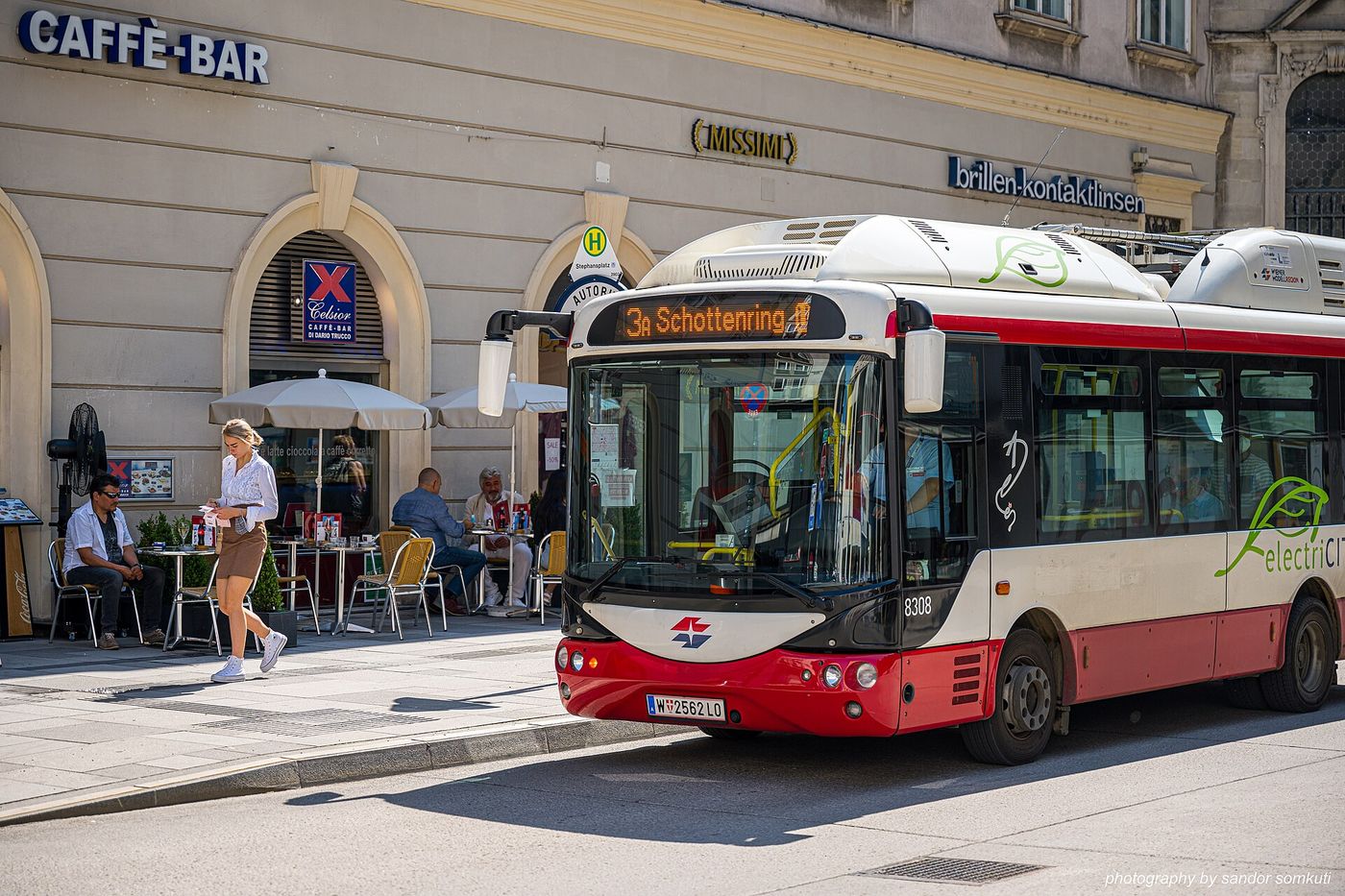
City bus propulsion in the European Union is now partly a regulated choice, but its zero-emission share binds manufacturers’ fleets, not operators’ purchases, and it stops at the boundary between a city bus and a coach.
The obligation, and who carries it
Regulation (EU) 2024/1610, published in the Official Journal on 6 June 2024 and applicable from 1 July 2024, inserted Article 3d into Regulation (EU) 2019/1242. For the vehicles in the fourth column of the table in point 4.2 of Annex I — the column headed “Urban buses” — “manufacturers shall comply with the 90 % and 100 % minimum shares of zero-emission heavy-duty vehicles in their fleet of new heavy-duty vehicles in accordance with point 4.3.2 of Annex I.”
Point 4.3.2 gives the schedule: zero for reporting periods before 2030, 90 % for 2030–2034, 100 % for 2035–2039, and 100 % as from 2040.
The Article 3d duty falls on the manufacturer, over its own registrations in a reporting period, not on a city or an operator. But it is not settled bus by bus. Point 4.1 of Annex I folds the mandate into a single specific CO2 emissions target for the whole passenger-carrying category, T(M) = T(MCO2) + T(MZE), and point 5.2 computes emission credits and debts at that same category level, so on our reading of those formulas an urban bus shortfall can in principle be carried by over-performance on coaches. Nor is it, until 2040, a hard annual cliff: for the reporting periods of 2025 to 2039 Article 7 caps total emission debt at 5 % of the specific CO2 emissions target multiplied by vehicle count, clears remaining debts in the reporting periods of 2029, 2034 and 2039, and lets credits count in the seven years after the reporting period in which they were acquired; under Article 8(2) the balance of debts over credits must not be positive in 2040, and from the 2041 reporting period a manufacturer is in excess whenever its average specific CO2 emissions exceed its target. Regulation (EU) 2026/1046 has since changed how emission credits are calculated for the reporting periods of 2025 to 2029; its recital 5 says that change “should not apply to urban buses”. Article 8 sets the excess premium at EUR 4,250 per gCO2/tkm.
Zero-emission has a numeric definition: the amended point 11 of Article 3 requires no internal combustion engine, or one emitting not more than 3 g CO2/tkm or 1 g CO2/pkm. A diesel or gas hybrid keeps its combustion engine, so it qualifies only if that engine stays within those limits. How the same definition applies to battery-electric, fuel-cell and combustion-engined vehicles is set out in heavy-vehicle powertrains: what the sources say.
Not every vehicle counts: Article 3a(5) takes out of the CO2 emissions reduction targets vehicles registered for civil protection, fire services, forces maintaining public order or urgent medical care, “provided that a Member State so indicates in the registration and reporting process”, thereby confirming that a zero-emission vehicle cannot equally serve the purpose; vehicles registered for the armed services are not subject to the Regulation’s requirements “if a Member State decides not to report them”. Nor does every manufacturer carry the targets: under Article 6b, if a manufacturer registers fewer than 100 new heavy-duty vehicles in a reporting period, its average specific CO2 emissions and its specific CO2 emissions target “shall be set at ‘0’” for that period, unless it asks otherwise, requests a transfer of vehicles, or is part of a group of connected manufacturers that “collectively registered more than 100”. Since point 4.1 carries the urban bus share inside that target, on our reading such a manufacturer carries no zero-emission share in that period.
Public buyers are reached in two ways. Article 3e, inserted into Regulation (EU) 2019/1242 by the same 2024 amendment, provides that contracting authorities and contracting entities “shall base the award” of public supply contracts for the purchase, lease, rent or hire-purchase of new zero-emission urban buses, and of public service contracts whose main subject matter is the use of such buses, “on the most economically advantageous tender”; they “shall use at least two” of its listed criteria, “at least one of which shall relate to the tender’s contribution to the security of supply”, and where that contribution is used as an award criterion it “shall be given a weighting of between 15 to 40 %”. A separate instrument also sets quantities for public buyers: Directive 2009/33/EC sets minimum procurement shares for clean buses of category M3 across public contracts, counted per Member State, half to be met by procuring zero-emission buses; it does not apply to M3 vehicles other than Class I and Class A. Germany’s share was 45 % for contracts awarded between 2 August 2021 and 31 December 2025, and is 65 % for the second reference period to 31 December 2030; in the first period only, the zero-emission half fell to a quarter where more than 80 % of the buses concerned were double-deckers.
Where the line between urban bus and coach is drawn
The urban bus sub-groups are named in Annex I: 31-LF, 31-L1, 31-DD, 33-LF, 33-L1, 33-DD, 35-FE and 39-FE. They map to the vehicle groups of Regulation (EU) 2017/2400, which classifies a complete or completed heavy bus on six criteria, among them the number of axles, the vehicle code and the class of vehicle under paragraph 2 of UN Regulation No 107.
R107 draws the distinction that matters. Class I means vehicles “constructed with areas for standing passengers, to allow frequent passenger movement”. Class II means vehicles “constructed principally for the carriage of seated passengers”, designed to allow standing passengers “in the gangway and/or in an area which does not exceed the space provided for two double seats”.
The urban bus column takes the rigid buses on low-floor and open-top vehicle codes, single and double deck, with two, three or four axles (the 33 sub-groups also take the four-axle rigid groups 37), except their low-entry Class II versions; plus every articulated bus of groups 35 and 39 — low-floor and low-entry, Class I and Class II alike, since 35-FE aggregates 35a, 35b1, 35b2 and 35c.
Everything else sits in the third column, headed “Coaches and Class II Low Entry Buses”: the high-floor groups 32-C2, 32-C3, 32-DD, 34-C2, 34-C3 and 34-DD, plus the low-entry Class II sub-groups 31-L2 and 33-L2. Those carry CO2 emissions reduction targets under Article 3a read with Annex I point 4.3.1 — 0 for 2025–2029, 43 % for 2030–2034, 64 % for 2035–2039 and 90 % as from 2040 — and no zero-emission share at all. Article 3a(1) itself states the fleet-wide 45 %, 65 % and 90 %; its paragraph 2 sends the sub-groups to point 4.3, where the coach figures sit. Recital 36 says as much: “regional and long-distance buses and coaches” remain subject to the CO2 targets for heavy-duty vehicles.
Body, not route, decides treatment, and among low-entry rigid vehicles the R107 class is the whole of the split: a two-axle low-entry Class II vehicle is 31-L2 and falls outside Article 3d, while the same two-axle low-entry vehicle in Class I is 31-L1 and falls inside. A low-entry articulated bus is inside in either class.
What the registration data shows
ACEA recorded 38,238 new EU bus registrations in 2025, up 7.5 %, with electrically chargeable vehicles at 23.8 % of the segment, hybrid-electric at 7 % and diesel at 62.1 %. In the first half of 2026, registrations reached 22,590 units, up 22.7 %; the electrically chargeable share rose to 27.7 %, diesel held 58.2 % and hybrid-electric 6.1 %.
Those are not urban bus shares. ACEA reports buses as one segment, without splitting city buses from interurban buses and coaches — a boundary set out with the rest of the counting rules in what a European truck registration figure counts. The gap showed in 2022: ACEA put electric at 12.7 % of new buses, while recital 35 records zero-emission urban buses “already represented around a quarter of all urban buses sold in the Union”.
Diesel and hybrid
Diesel is still specified new: the April 2026 data sheet for the Mercedes-Benz Citaro reads Euro VI in every column of its emissions row. Otokar sells city buses in diesel, natural-gas, hybrid, hydrogen fuel-cell and battery-electric form under the one name Otokar Kent, a name that covers several bodies and lengths rather than one vehicle.
A hybrid does not count towards Article 3d unless its combustion engine stays within the point 11 limits. Where a maker offers a diesel, a gas and a battery-electric drive on one body the comparison is unusually clean: MAN sells the Lion’s City with a diesel, a natural-gas and biogas engine and a battery-electric drive, each on its own data sheet, and offers its EfficientHybrid module on both combustion versions.
Battery-electric
Daimler Buses gives the eCitaro two ways to charge: depot charging through a vehicle socket, which it puts first, at up to 150 kW, and optional opportunity charging via pantograph or charging rails, at up to 300 kW with charging rails on the roof. Its NMC4 packs hold 111 kWh each, four to six on the solo bus and four to seven on the articulated eCitaro G, up to 777 kWh. The technical specification in Solaris’s UITP 2023 press release gave the Urbino 12 electric a ZF CeTrax 220 kW drive, Solaris High Energy batteries of 420 kWh, plug-in charging up to 260 kW and pantograph charging up to 450 kW. Solaris’s October 2025 sheet for the Urbino 12 electric with modular drive gives different figures: a central 240 kW motor and Solaris High Energy batteries of 600 kWh, with plug-in charging and a pantograph as an option, and no charging power. What BMC’s technical page gives for the electric version of its Procity urban bus is set out in BMC Procity+ Electric. How a battery-electric city bus is built and charged, and what makers declare for its range, is set out in Electric buses explained.
For both plug and automated contact charging the interface is binding law: under Article 21(1) of Regulation (EU) 2023/1804 “the technical specifications set out in Annex II shall apply”. Annex II point 1.4, as amended by Delegated Regulation (EU) 2025/656, requires DC normal-power and high-power recharging points for electric buses installed or renovated from 8 January 2026 to be equipped “at least with vehicle connectors of the combined charging system ‘Combo 2’” for Mode 4 recharging to EN IEC 62196-3:2022, and AC points “at least with connectors of Type 2” to EN IEC 62196-2:2022; points installed before that date “shall continue to comply” with the earlier editions of those standards until they are renovated. Point 1.5 provides that a contact interface automated device for electric buses on conductive recharging in mode 4 “shall be equipped at least with mechanical and electrical interfaces, as defined in the standard EN 50696:2021”, in four arrangements: an infrastructure-mounted pantograph, a roof-mounted or underbody device on the vehicle, or an infrastructure device connecting to the side or roof. Article 3d(2) of Regulation (EU) 2019/1242 directs the Commission to specify, by implementing acts, common technical specifications for “the technical and open interoperability between the recharging and refuelling infrastructure and urban buses”. Depot and opportunity charging for electric buses, alongside charging for trucks, is covered in charging electric trucks and buses.
At the depot, Daimler addresses the load from the vehicle side: two eCitaro buses can be charged “sequentially, i.e. one after the other” at a charger with two charging points, which it says “avoids charging peaks, saves infrastructure costs”. AFIR’s recharging targets are for publicly accessible points: in each urban node, recharging points dedicated to heavy-duty electric vehicles with an aggregated power output of at least 900 kW by 31 December 2025 and at least 1,800 kW by 31 December 2030. For captive fleets, Article 14(2)(d) lists among the elements each national policy framework “shall contain at least” measures, planned or adopted, to promote alternative fuels infrastructure for them, “in particular for recharging stations and hydrogen refuelling stations for public transport services”.
Trolleybus and in-motion charging
A trolleybus without an internal combustion engine meets the point 11 definition directly, and the Trollino 12 on Solaris’s 2018 InnoTrans sheet was not purely wired: the sheet gives it a 175 kW traction motor, a Solaris High Power battery of 58 kWh and an automatic pantograph. In-motion charging is documented separately by the manufacturer: the batteries charge while the vehicle is connected to the overhead wire, giving, depending on capacity, “up to several dozen kilometres” off catenary.
Solaris presents that range as a way to run zero-emission routes “in areas where catenary is not available or planned”, such as historic city centres.
Hydrogen fuel cell
CaetanoBus pitches its fuel-cell bus on the operating day: its brochure says the H2.City Gold removes “the need to stop for charging during long journeys”. Solaris’s 2021 Transexpo sheet gives the Urbino 12 hydrogen a 70 kW fuel cell, an electric axle carrying two integrated 125 kW motors, and Type 4 composite tanks of 1,560 l total (5 × 312 l), at 19,200 kg GVW. The CaetanoBus brochure, in its English edition of November 2021, gives the H2.City Gold a 60 kW Toyota fuel cell stack, a 180 kW Siemens permanent-magnet synchronous motor, Type 4 tanks of 5 × 312 l holding a maximum 37.5 kg at 350 bar, a 44 kWh LTO battery, refuelling in under nine minutes to SAE J2601-2 and SAE J2799, and an estimated consumption from 5.5 kg/100 km, depending on HVAC system consumption and operation profile. On range that brochure gives two figures: the specification table states an estimated more than 450 km depending on operating conditions, while a headline in the same PDF advertises up to 400 km.
On both sheets the stack is rated below the drive — 60 kW against a 180 kW motor, 70 kW against two 125 kW motors — and both list a battery beside it. The fuel cell, battery and hydrogen tank of Karsan’s fuel-cell city bus are set out in Karsan e-ATA HYDROGEN. Fuel-cell buses from several makers and a hydrogen coach are set out model by model in Hydrogen fuel-cell buses and coaches.
The CaetanoBus tanks are rated at 350 bar. AFIR attaches a 700 bar dispenser to its TEN-T core network stations — “designed for a minimum cumulative capacity of 1 tonne per day and equipped with at least a 700 bar dispenser”, with “a maximum distance of 200 km between them” by 31 December 2030 — and requires “at least one publicly accessible hydrogen refuelling station” in each urban node by the same date without stating a pressure for it. It names no 350 bar dispenser. The hydrogen station rules and the station counts in circulation are set out in hydrogen refuelling for trucks in Europe.
What 2030 changes
From the 2030 reporting period the urban bus column enters the category-M target of each manufacturer outside the Article 6b exemption at a 90 % zero-emission share — softened, on our reading, by the category-M arithmetic and banked credits, not removed by them. Low-entry Class II rigid vehicles and coaches carry no zero-emission share at any date in the current text.
Quick answers
- Does the EU require city buses to be zero-emission?
- The zero-emission share binds manufacturers’ fleets, not operators’ purchases. Regulation (EU) 2024/1610 inserted Article 3d into Regulation (EU) 2019/1242, requiring 90% zero-emission urban buses in 2030–2034 and 100% from 2035. The same amendment inserted Article 3e, which reaches public buyers of new zero-emission urban buses: contracting authorities and contracting entities “shall use at least two” of its listed criteria, “at least one of which shall relate to the tender’s contribution to the security of supply”. A separate instrument, Directive 2009/33/EC, sets minimum clean-bus shares for public procurement contracts, counted per Member State.
- Does the zero-emission mandate apply to coaches?
- No. The urban bus column carries the 90% and 100% zero-emission share; coaches and low-entry Class II rigid buses (sub-groups 31-L2 and 33-L2) sit in a separate column with CO2 reduction targets instead — 43% for 2030–2034, 64% for 2035–2039 and 90% from 2040 — and no zero-emission share. Body, not route, decides: a rigid low-entry bus in Class I is inside, the same body in Class II is outside, while a low-entry articulated bus is inside in either class.
- What counts as a zero-emission bus?
- The amended Article 3 requires no internal combustion engine, or one emitting not more than 3 g CO2/tkm or 1 g CO2/pkm. A diesel or gas hybrid keeps its combustion engine, so it qualifies only if that engine stays within those limits. A trolleybus without an internal combustion engine meets the definition directly.
- What does EU law require of charging for electric city buses?
- AFIR requires Member States to ensure publicly accessible heavy-duty recharging in each urban node — at least 900 kW aggregated by 31 December 2025 and at least 1,800 kW by 31 December 2030 — and its Annex II requires recharging points for electric buses to be equipped “at least” with Type 2 connectors for AC and “Combo 2” connectors for DC (to the 2022 editions of EN IEC 62196-2 and -3 where installed or renovated from 8 January 2026), and sets the interface for automated contact charging devices by reference to EN 50696:2021. Depot charging is not among its numeric targets; for captive fleets, each national policy framework must contain measures to promote recharging and hydrogen refuelling stations for public transport services.
Models in this article
Sources
- Regulation (EU) 2024/1610 amending Regulation (EU) 2019/1242 as regards strengthening the CO2 emission performance standards for new heavy-duty vehicles — Official Journal of the European Union (EUR-Lex)
- Regulation (EU) 2019/1242 setting CO2 emission performance standards for new heavy-duty vehicles, consolidated text of 10 September 2026 — EUR-Lex
- Regulation (EU) 2026/1046 amending Regulation (EU) 2019/1242 as regards the calculation of emission credits for heavy-duty vehicles for the reporting periods of the years 2025 to 2029 — Official Journal of the European Union (EUR-Lex)
- Commission Regulation (EU) 2017/2400 on the determination of CO2 emissions and fuel consumption of heavy-duty vehicles, consolidated text of 1 January 2026 (Annex I point 1.2.3, vehicle groups for heavy buses) — EUR-Lex
- UN Regulation No 107 — Uniform provisions concerning the approval of category M2 or M3 vehicles with regard to their general construction — United Nations Economic Commission for Europe, published in the Official Journal (EUR-Lex)
- Regulation (EU) 2023/1804 on the deployment of alternative fuels infrastructure (AFIR), consolidated text of 8 January 2026 incorporating Delegated Regulation (EU) 2025/656 — Articles 4(1), 6(1), 14(2) and 21(1), and Annex II points 1.4 (recharging points for electric buses) and 1.5 (contact interface automated devices, EN 50696:2021) — EUR-Lex
- Directive 2009/33/EC on the promotion of clean road transport vehicles, consolidated text of 20 May 2024 (Article 3(2), Article 5 and Annex Table 4 minimum procurement targets) — EUR-Lex
- New commercial vehicle registrations: vans -8.8%, trucks -6.2%, buses +7.5% in 2025 — ACEA — European Automobile Manufacturers' Association
- New commercial vehicle registrations: vans +1.9%, trucks +9.8%, buses +22.7% in H1 2026 — ACEA — European Automobile Manufacturers' Association
- Fuel types of new buses: electric 12.7%, diesel 67.3% market share full-year 2022 — ACEA — European Automobile Manufacturers' Association
- Solaris Urbino 12 electric — technical specification (UITP 2023 press release) — Solaris Bus & Coach S.A.
- Solaris Urbino 12 electric with modular drive — technical data (October 2025) — Solaris Bus & Coach sp. z o.o.
- Solaris Urbino 12 hydrogen — technical specification (Transexpo Kielce 2021) — Solaris Bus & Coach sp. z o.o.
- Solaris Trollino 12 — technical specification (InnoTrans 2018) — Solaris Bus & Coach
- In-motion charging (IMC) — knowledge base — eCity powered by Solaris (Solaris Bus & Coach)
- H2.City Gold — the hydrogen fuel cell bus for your city (brochure with technical specification, English edition of November 2021) — CaetanoBus
- The new NMC4 battery in the Mercedes-Benz eCitaro: more capacity, longer service life — Daimler Truck AG