Combined, intermodal and multimodal transport: the definitions and the road leg
Multimodal, intermodal and combined transport in the words of the UN, EU and statistical texts that define them, the road leg under Directive 92/106/EEC and the state of its revision.
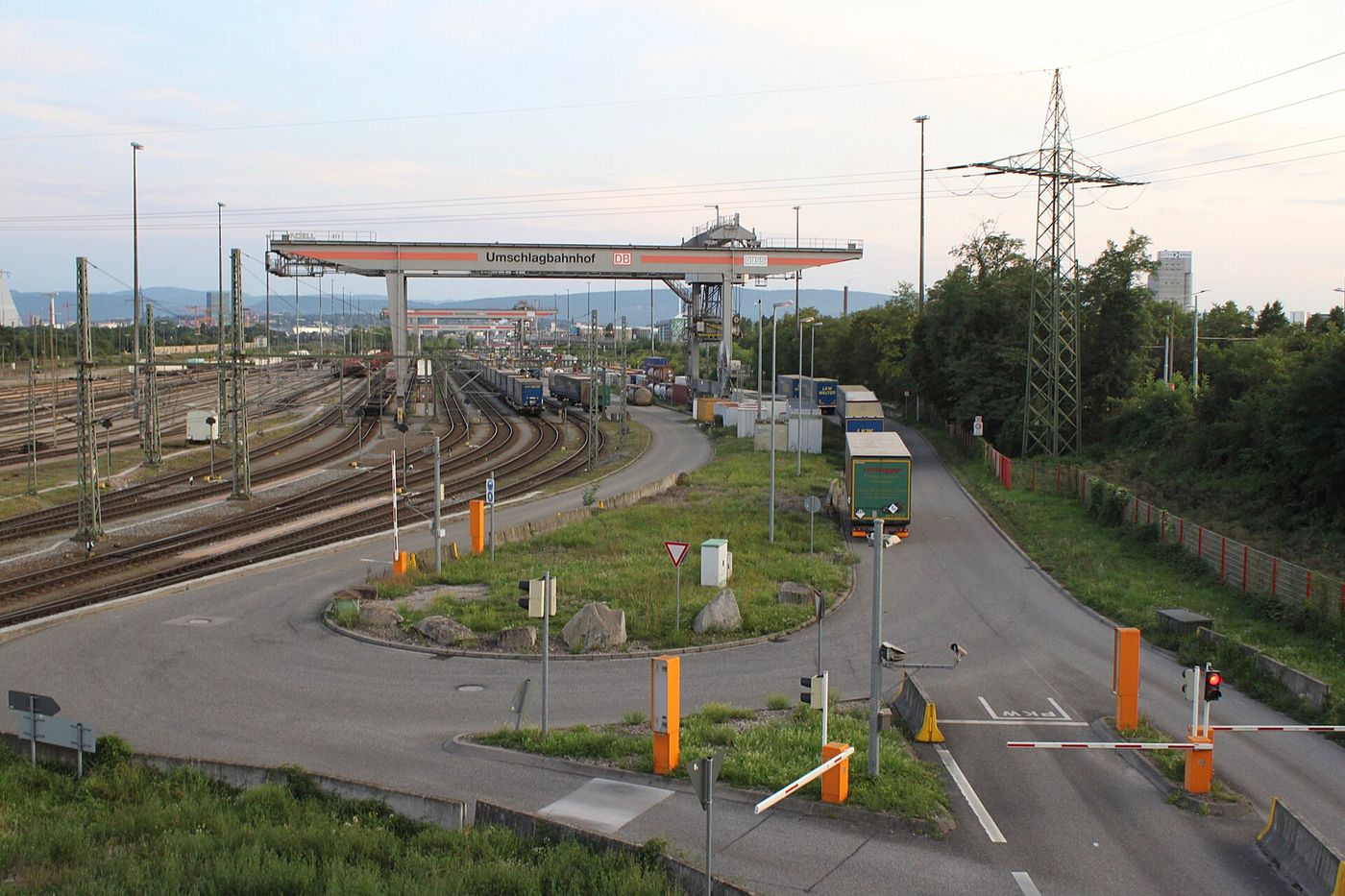
Multimodal freight transport, in the Glossary for transport statistics of Eurostat, the UN Economic Commission for Europe and the International Transport Forum (6th edition, 2026), is “Transport of goods using at least two modes of transport”, and “Intermodal transport is a particular type of multimodal transport”: “The movement of goods in one and the same ITU”, an intermodal transport unit such as a container, a swap body or a semi-trailer, “which uses several modes of transport successively without handling the goods themselves when changing modes”. Combined transport narrows it again: “Intermodal transport where the major part is by rail, inland waterways or sea”, with limits on any initial and final road legs. The definition that EU law applies is in Article 1 of Council Directive 92/106/EEC: “the transport of goods between Member States where the lorry, trailer, semi-trailer, with or without tractor unit, swap body or container of 20 feet or more uses the road on the initial or final leg of the journey and, on the other leg, rail or inland waterway or maritime services where this section exceeds 100 km as the crow flies”, with limits on the road leg.
Status as of 8 October 2026. Read on that day: Directive 92/106/EEC in its consolidated text of 1 July 2013, which the data of the EU Publications Office record as in force, with no amending act after Directive 2013/22/EU; the Commission’s proposal to revise it and the European Parliament’s procedure file; the 6th edition of the Glossary for transport statistics, published by Eurostat on 23 February 2026, and its 5th edition of 2019; the texts and status pages of the two UN treaties in the UN Treaty Collection; and the other EU acts and the Turkish regulation named below. The EU consolidated texts say of themselves that each “is meant purely as a documentation tool and has no legal effect”. Turkish quotations keep the original words, with our translation in brackets.
Multimodal transport: more than one mode
The glossary’s entry is the widest: two modes are enough, and multimodal transport “may involve handling of the goods during transfers between modes”. The European Commission’s Communication COM(2006) 336 of 28 June 2006 on freight transport logistics uses the same idea: ‘Multimodality’ “is the carriage of goods by two or more modes of transport, irrespective of the types of freight, within a single transport chain”. Its other definitions are covered in what is logistics.
The United Nations Convention on International Multimodal Transport of Goods, adopted at Geneva on 24 May 1980, ties the term to a contract: international multimodal transport is “the carriage of goods by at least two different modes of transport on the basis of a multimodal transport contract”, from the place in one country where the multimodal transport operator takes the goods in charge to a place designated for delivery in another (Article 1(1)). Pick-up and delivery bought under a separate single-mode contract are left out: “The operations of pick-up and delivery of goods carried out in the performance of a unimodal transport contract, as defined in such contract, shall not be considered as international multimodal transport.” The operator “acts as a principal, not as an agent” (Article 1(2)). The UN Treaty Collection lists the Convention as “Not yet in force”, with 6 signatories and 11 parties; Article 36 requires 30 States.
Intermodal transport: one loading unit, several modes
The difference between the two glossary entries is the unit. The glossary’s intermodal transport unit (ITU) is a “Container, swap body, semi-trailer, trailer or goods road motor vehicle suitable for intermodal transport”, also called an intermodal loading unit. The goods stay inside it and only the unit is transhipped; the glossary names roll-on/roll-off (ro-ro), on wheels, and lift-on/lift-off (lo-lo), with lifting equipment, as the most commonly used techniques.
For road vehicles on rail the glossary has two further entries. Piggyback transport is “Transport of road vehicles by rail”. A rolling road is “Transport of complete road vehicles, using ro-ro techniques, on trains normally composed entirely of low-floor wagons”, and “Transport of lorries via the Eurotunnel is an example of a rolling road”. Semi-trailers on their own travel on wagons such as the pocket wagon, a “rail wagon with a recessed pocket to accept the axle/wheel assembly of a semi-trailer”. How a swap body differs from a container and a semi-trailer is described in swap bodies explained.
Combined transport: the major part off the road
The glossary limits the road legs of combined transport in the same words as Directive 92/106/EEC, quoted in the next section. Its 6th edition says the intermodal chapter was revised, “particularly aligning the chapter with UNECE’s terminology on combined transport”; the 5th edition of 2019 had no entry for combined transport (our search of its text).
The European Agreement on Important International Combined Transport Lines and Related Installations (AGTC), concluded at Geneva on 1 February 1991, defines combined transport as “the transport of goods in one and the same transport unit using more than one mode of transport” (Article 1(a)). The parties adopt it “as a co-ordinated international plan for the development and operation of a network of important international combined transport lines and related installations” (Article 2), lines used for “regular international combined transport (e.g. swap body, container, semi-trailer)” among them (Article 1(b)). It entered into force on 20 October 1993; the UN Treaty Collection lists 34 parties, among them Germany, Italy, Poland, the Russian Federation and Türkiye, with Spain acceding on 25 November 2025. The United Kingdom is not among them.
Türkiye’s Combined Transport Regulation (Kombine Taşımacılık Yönetmeliği), a national text prepared taking Directive 92/106/EEC into account (Article 4), defines kombine yük taşımacılığı (combined freight transport) as intermodal transport in which “Taşımacılığın büyük kısmının demiryolu, iç suyolu veya denizyoluyla, taşımanın başlangıç veya son etabının ise mümkün olan en kısa mesafeyle karayoluyla yapıldığı” (the major part of the carriage is by rail, inland waterway or sea and the initial or final stage is by road over the shortest possible distance) (Article 5(1)(e)). Article 6(1) adds conditions like the Directive’s: a rail, sea or inland waterway leg of more than 100 km as the crow flies, and the use of the nearest suitable rail freight stations or logistics centres and/or of ports within a radius of 150 km as the crow flies.
The road leg under Directive 92/106/EEC
The road leg lies either “between the point where the goods are loaded and the nearest suitable rail loading station for the initial leg, and between the nearest suitable rail unloading station and the point where the goods are unloaded for the final leg”, or “within a radius not exceeding 150 km as the crow flies from the inland waterway port or seaport of loading or unloading”. For a rail leg the text gives no figure in kilometres.
The Directive attaches rules to the definition. Member States had to “liberalize the combined transport operations referred to in Article 1 from all quota systems and systems of authorization” by 1 July 1993 (Article 2). For hire or reward, the transport document must also name the stations or ports of loading and unloading, stamped by the rail or port authorities once the non-road part is completed (Article 3). Hauliers established in a Member State who meet the conditions of access to the occupation and to the market may carry out “initial and/or final road haulage legs which form an integral part of the combined transport operation and which may or may not include the crossing of a frontier” (Article 4). Member States must ensure that listed taxes on road vehicles routed in combined transport, such as the German Kraftfahrzeugsteuer, are “reduced or reimbursed either by a standard amount, or in proportion to the journeys that such vehicles undertake by rail”, within limits and conditions that they fix after consultation with the Commission (Article 6). The road legs are exempt from compulsory tariff regulations (Article 8).
Other EU acts refer back to the Directive. Directive 96/53/EC counts among its intermodal transport operations the combined transport operations of Directive 92/106/EEC that carry containers or swap bodies up to a total maximum length of 45 feet, and allows 44 tonnes for a three-axle motor vehicle with a two- or three-axle semi-trailer in such operations, against 40 tonnes otherwise; see truck weights, GVW and GCW. Regulation (EC) No 1072/2009 lets a Member State apply the cabotage rules to road legs within its territory “where necessary to avoid misuse” (Article 10(7)), and under Directive (EU) 2020/1057 a driver on a road leg is not posted “if the road leg on its own consists of bilateral transport operations” (Article 1(6)); both rules are covered in cabotage and posted drivers.
How the texts compare
| Text | Term defined | What counts | Road leg |
|---|---|---|---|
| UN Convention on International Multimodal Transport of Goods, 1980, Article 1(1); not in force | International multimodal transport | At least two different modes under one multimodal transport contract, from a place in one country to a place in another | Pick-up and delivery under a unimodal transport contract are not international multimodal transport |
| Glossary for transport statistics, 6th edition, 2026, G.I-02 | Multimodal freight transport | At least two modes; the goods may be handled between modes | No condition |
| Glossary for transport statistics, 6th edition, 2026, G.I-03 | Intermodal transport | One and the same intermodal transport unit, several modes in succession, goods not handled when the mode changes | No condition |
| AGTC, 1991, Article 1(a); in force since 20 October 1993 | Combined transport | One and the same transport unit, more than one mode | No condition |
| Glossary for transport statistics, 6th edition, 2026, G.I-04 | Combined transport | Intermodal transport whose major part is by rail, inland waterways or sea | To or from the nearest suitable rail station, or within 150 km as the crow flies of the port |
| Council Directive 92/106/EEC, Article 1, consolidated text of 1 July 2013 | Combined transport | Goods between Member States; lorry, trailer, semi-trailer with or without tractor unit, swap body or container of 20 feet or more; rail, inland waterway or sea leg of more than 100 km as the crow flies | To or from the nearest suitable rail loading or unloading station, or within 150 km as the crow flies of the inland waterway port or seaport |
| Proposal COM(2023) 702, Articles 1b and 1c; not adopted | Intermodal transport operation; combined transport operation | One intermodal loading unit over two or more legs, at least one by rail, inland waterways or short sea shipping; combined transport if it produces at least 40% less external costs than the alternative road-only operation (for island–mainland connections without a road alternative, than the alternative maritime operation) | Initial or final leg, or both, by road; no distance limit |
| Türkiye, Kombine Taşımacılık Yönetmeliği, Articles 5 and 6 (national) | Kombine yük taşımacılığı (combined freight transport) | Trailers or semi-trailers with or without tractor, swap bodies and containers of 20, 40 or 45 ft; rail, sea or inland waterway leg of more than 100 km as the crow flies | Shortest possible distance; nearest suitable rail freight stations or logistics centres and/or ports within 150 km as the crow flies |
The revision of Directive 92/106/EEC
On 7 November 2023 the Commission proposed to amend the Directive (COM(2023) 702), as part of what the proposal calls the “Greening Transport Package”, under the new title “on the establishment of a support framework for intermodal transport of goods”. Article 1 would be replaced by Articles 1a to 1c. An intermodal transport operation would be “the carriage of a single intermodal loading unit between its loading point and unloading point over two or more transport legs”, at least one by rail, inland waterways or short sea shipping and the initial or final leg, or both, by road, without handling of the goods. It would count as a combined transport operation if, among other conditions, “the operation produces at least 40% less external costs than the alternative unimodal road transport operation” (for connections between an island and the mainland without a road alternative, than the alternative maritime intermodal operation); the conditions of Article 1c contain no distance limits. A new Article 9a would exempt vehicles on the road legs “from weekend, night and holiday driving bans applying to heavy goods vehicles only”; the national bans are compared in truck driving bans in Europe.
On 8 October 2026 the Legislative Observatory gave the stage reached in procedure 2023/0396(COD) as “Awaiting committee decision”, with the Parliament’s Transport and Tourism Committee responsible. Its key events are the publication of the proposal on 7 November 2023, the referral to committee announced on 14 December 2023 and the resumption of business from the previous parliamentary term on 13 November 2024; it lists no Parliament position, no Council position and no adopted act. Article 1 as quoted above therefore remains the definition in force. Related terms are defined briefly in the truck and bus glossary.
Quick answers
- What is the difference between multimodal and intermodal transport?
- Multimodal transport uses at least two modes of transport; intermodal transport is the particular type in which the goods stay in one and the same intermodal transport unit, such as a container, swap body or semi-trailer, and are not handled themselves when the mode changes. Both definitions are those of the Glossary for transport statistics of Eurostat, the UNECE and the International Transport Forum (6th edition, 2026), which adds that multimodal transport may involve handling of the goods during transfers between modes.
- What is combined transport?
- In Article 1 of Council Directive 92/106/EEC, combined transport is the transport of goods between Member States in which a lorry, trailer, semi-trailer with or without tractor unit, swap body or container of 20 feet or more uses the road on the initial or final leg and rail, inland waterway or maritime services on the other leg, where that section exceeds 100 km as the crow flies. The statistical glossary of Eurostat, the UNECE and the ITF defines it as intermodal transport where the major part is by rail, inland waterways or sea and any initial or final road legs are kept within the same limits.
- How long can the road leg of combined transport be?
- Directive 92/106/EEC sets no distance in kilometres for a road leg next to a rail leg: the road leg runs between the point where the goods are loaded and the nearest suitable rail loading station, or between the nearest suitable rail unloading station and the point where they are unloaded. Next to an inland waterway or sea leg, the road leg must stay within a radius of 150 km as the crow flies from the port of loading or unloading.
- Is the UN Multimodal Transport Convention in force?
- No. The UN Treaty Collection lists the United Nations Convention on International Multimodal Transport of Goods, Geneva, 24 May 1980, as not yet in force on 8 October 2026, with 6 signatories and 11 parties. Its Article 36 requires 30 States before it can enter into force.
- Is Directive 92/106/EEC being revised?
- A revision has been proposed but not adopted. The Commission proposed it on 7 November 2023 (COM(2023) 702), and on 8 October 2026 the European Parliament's Legislative Observatory gave the stage of procedure 2023/0396(COD) as awaiting committee decision, with no Parliament or Council position listed. Article 1 of the Directive, in its consolidated text of 1 July 2013, is therefore the definition that applies.
Sources
- Council Directive 92/106/EEC on the establishment of common rules for certain types of combined transport of goods between Member States — consolidated text of 1 July 2013, Articles 1 to 9 — EUR-Lex, European Union
- EUR-Lex records for Council Directive 92/106/EEC: in-force flag, consolidated versions, amending acts and proposals to amend it (Publications Office CELLAR query, 8 October 2026) — Publications Office of the European Union
- Proposal for a Directive amending Council Directive 92/106/EEC as regards a support framework for intermodal transport of goods and Regulation (EU) 2020/1056, COM(2023) 702 final, 7 November 2023 — explanatory memorandum and Article 1 — EUR-Lex, European Union, 7 Nov 2023
- Procedure file 2023/0396(COD) — Combined transport: support framework for intermodal transport of goods (read on 8 October 2026) — Legislative Observatory, European Parliament
- Glossary for transport statistics, 6th edition (2026) — introduction and chapter G, intermodal transport — Eurostat, United Nations Economic Commission for Europe and International Transport Forum, 23 Feb 2026
- Glossary for transport statistics, 5th edition (2019) — intermodal freight transport chapter — Eurostat, United Nations Economic Commission for Europe and International Transport Forum
- United Nations Convention on International Multimodal Transport of Goods, Geneva, 24 May 1980 — certified true copy, Article 1 — United Nations Treaty Collection, 24 May 1980
- United Nations Convention on International Multimodal Transport of Goods — status of treaty XI.E.1 as at 8 October 2026 — United Nations Treaty Collection
- European Agreement on Important International Combined Transport Lines and Related Installations (AGTC), Geneva, 1 February 1991 — United Nations Treaty Series vol. 1746, No. 30382, preamble and Articles 1 and 2 — United Nations Treaty Collection, 1 Feb 1991
- European Agreement on Important International Combined Transport Lines and Related Installations (AGTC) — status of treaty XI.E.2 as at 8 October 2026 — United Nations Treaty Collection
- Council Directive 96/53/EC laying down the maximum authorised dimensions and weights for certain road vehicles — consolidated text of 14 August 2019, Article 2 and Annex I, point 2.2.2 — EUR-Lex, European Union
- Regulation (EC) No 1072/2009 on common rules for access to the international road haulage market — consolidated text of 21 February 2022, Article 10(7) — EUR-Lex, European Union
- Directive (EU) 2020/1057 laying down specific rules for posting drivers in the road transport sector — Article 1(6) — EUR-Lex, European Union, 15 Jul 2020
- Communication from the Commission COM(2006) 336 final, Freight Transport Logistics in Europe – the key to sustainable mobility, Brussels, 28 June 2006 — section 2 — EUR-Lex, European Union, 28 Jun 2006
- Kombine Taşımacılık Yönetmeliği (Combined Transport Regulation, Resmî Gazete of 27 May 2022, No. 31848, amended in the Resmî Gazete of 21 January 2025, No. 32789) — consolidated text, Articles 1 to 6 — Mevzuat Bilgi Sistemi, Presidency of the Republic of Türkiye