Rescue sheets and emergency-response guides for electric trucks and buses
What rescue sheets and emergency response guides for electric trucks and buses are, where Volvo, Renault, Mercedes-Benz, Scania and DAF publish them, and what they contain.
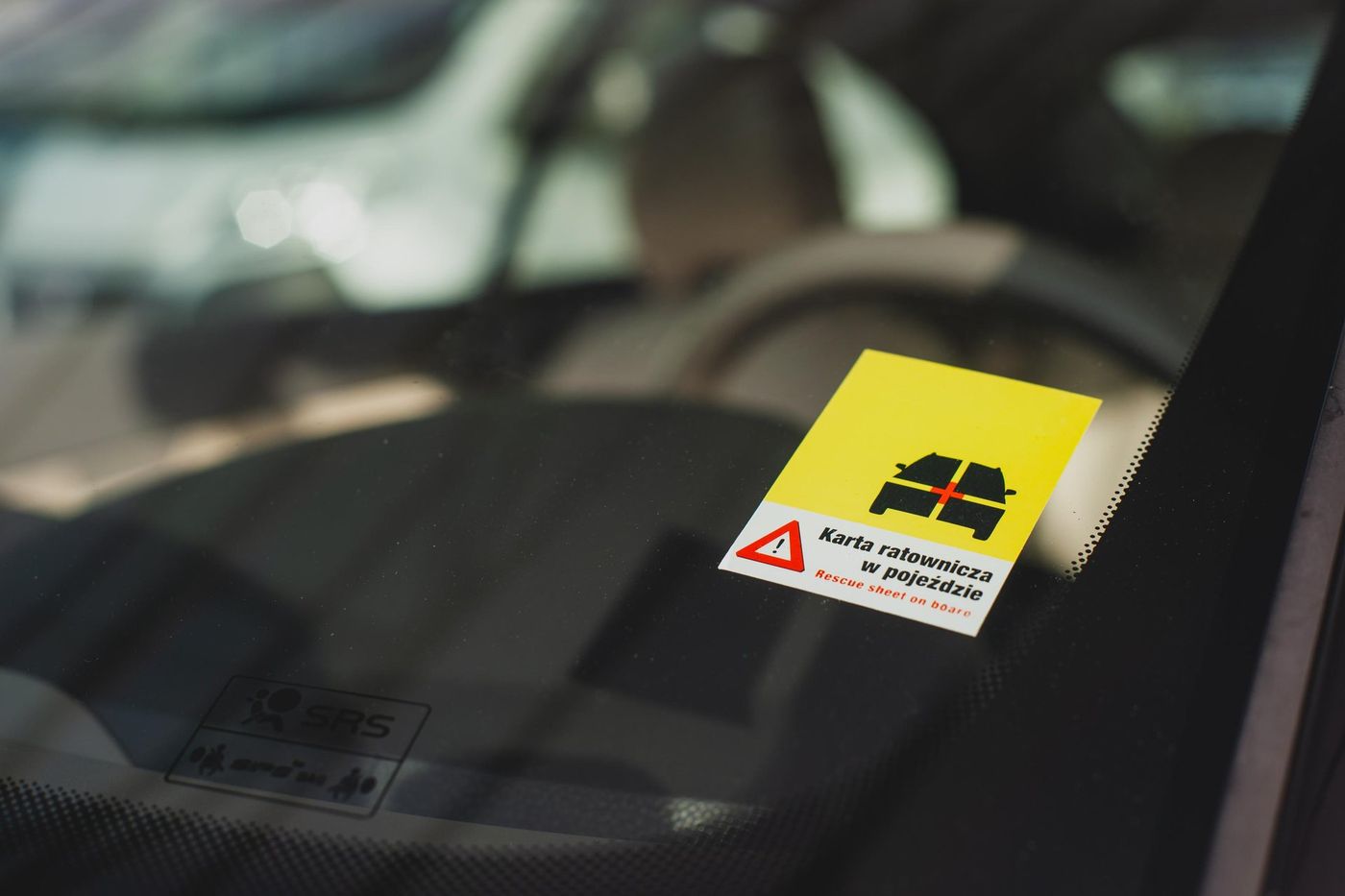
A rescue sheet is a document from the vehicle’s maker that gives emergency services key vehicle information, which Euro NCAP’s commercial-vehicle glossary illustrates with the positions of airbags, the battery and high-voltage cables and with safe cut points; the documents makers publish for emergency services carry names such as emergency response guide, rescue sheet, rescue card and product information for the emergency services. Volvo Trucks publishes its documents at vehicleinfo.volvotrucks.com and in an app, Renault Trucks on a safety page with 16 language codes by our count, Scania on a “Rescue and towing” page and DAF as PDF guides; Daimler Truck offers rescue cards for Mercedes-Benz Trucks in an Emergency Portal, and Mercedes-Benz Buses offers rescue guidelines in German, English and French.
This page reads what those makers say about their documents and, where a document could be opened, the document itself, all on 29 September 2026: Renault Trucks’ guide and its product-information document for the tractor, the Mercedes-Benz eActros 600 sheet, Scania’s P4x2 BEV sheet and its manual 00:01-08, and DAF’s two guides. Volvo’s documents sit behind an interactive site that was not opened, so for Volvo the page gives only Volvo’s own description. It reproduces no rescue, cutting, lifting, towing or extinguishing method from any of these documents; those are in the documents themselves. It does not describe ISO 17840, whose text was not opened, and names the standard only where a maker names it.
What the makers say the documents are
Euro NCAP’s Commercial Vehicles glossary has an entry “Rescue Sheets”. We found no glossary entry for “Emergency Response Guide”, so for that name the makers’ own descriptions are what there is:
- Volvo Trucks. Its emergency-information page, as served on its Hong Kong market site, says the documents aim to provide technical product information that can be used to establish procedures and methods for rescue operations involving Volvo trucks.
- Renault Trucks. Its product-information document says it gives technical information, procedures and methods for rescue operations during accidents, and explains the potential dangers to the emergency service personnel during the operation.
- Scania. It says the information is provided for emergency services, covers the design and systems of Scania vehicles, and aims to let the emergency services work safely and efficiently with a Scania vehicle that has been in an accident. It adds that the information is designed for use in preparatory training. Its manual 00:01-08 says the document is intended for emergency services, recovery companies and similar, and refers workshops to the Workshop Manual.
- DAF. Its guide says it was created to assist first responders in identifying and responding to vehicles equipped with a DAF electrical driveline.
By our reading of the documents opened, three of them (Renault Trucks’ guide, the eActros 600 sheet and Scania’s P4x2 BEV sheet) open with one or two pages of vehicle drawings and a legend and continue with numbered headings, while the manuals run longer. The names do not follow that split: Renault Trucks calls its drawing-first document an “Emergency response guide”, Daimler Truck’s page introducing its Emergency Portal calls the Mercedes-Benz Trucks documents “Rettungskarten” (rescue cards), Scania lists “Rescue sheets” and “Manuals” side by side, and DAF’s “Emergency response guide” documents are manuals.
| Maker | Document | Identifier, version or date as printed | Pages |
|---|---|---|---|
| Renault Trucks | Emergency response guide, E-Tech T & C | Identification number 800077265; version number 07/2023 | 8 |
| Renault Trucks | Product information on electric truck for emergency services personnel, Model C BEV (Tractor) | Publish date 06/11/2023 (as printed) | 32 |
| Mercedes-Benz Trucks | Mercedes-Benz eActros 600 (2024 - ) sheet | Document N° MB_983_600_EN; version N° 03; version date 02/2024 | 8 |
| Scania | Scania 4x2 P BEV Electric sheet | Printed matter No. 00:01-124; printed matter issue 1 | 4 |
| Scania | Product information for the emergency services, Truck, L, P, G, R and S series | 00:01-08; Issue: 12; en-GB | Page numbers of the form “1 (113)” |
| DAF Trucks | Emergency response guide DAF CF Electric | DW83211801 | 58 |
| DAF Trucks | Emergency response guide DW (XD and XF Electric) | Title reads “Emergency response guide DW” | 61 |
Volvo Trucks: vehicleinfo.volvotrucks.com and the Emergency Response Guides app
Volvo’s electric-truck safety FAQ, an undated page, answers “Are electric trucks safe for rescue personnel?” by saying that information documents compliant with ISO 17840 have been created for all its electric models. That is Volvo’s statement about its own documents; this page does not describe the standard. The documents, Volvo says, are available in over 25 languages on vehicleinfo.volvotrucks.com and in the app Emergency Response Guides for Android and iOS tablets. Asked whether information is available in the event of a breakdown, the FAQ answers yes: individual safety sheets are available at the same address.
The FAQ also says that one specific feature mentioned in the information is the emergency cut-off loop, which it describes as two easily accessible wires, one on each side of the truck; how the loop is used is in the documents and is not repeated here. For a driver’s action in case of a fire the FAQ points to a separate “Driver Guide”, which was not opened.
The vehicleinfo.volvotrucks.com page is titled “Volvo Trucks Vehicle Information”. It is an interactive site: the per-vehicle documents sit behind “Enter site” and a chassis selection, and none was opened for this page. It also links to the app in a downloads section. On 29 September 2026 the emergency-information address of Volvo’s global site returned a permanent redirect (301) to vehicleinfo.volvotrucks.com.
The app has a history of its own. Volvo Group’s news of 16 May 2023 presented an augmented-reality (AR) safety app for electric trucks, aimed at first responders, and described Volvo Group as the first truck manufacturer to launch one. It says the app is free to download from the Android and Apple stores and provides safety information for all Volvo Group heavy electric truck brands, naming Volvo Trucks, Renault Trucks and Mack Trucks. It says the app offers the locations of high-voltage cables, battery packs and other key components and step-by-step instructions for shutting down the power supply in an emergency (the steps are in the app and are not reproduced here), and that, besides AR information and 3D models, it holds all safety documentation relating to the electric truck, accessible once the truck is identified.
Volvo Trucks’ story of 30 May 2023 adds that the app can be searched by registration number or vehicle identification number, or by chassis number. Its AR mode starts the camera and overlays the location of key high-voltage components and other potential hazards such as compressed air, and if the AR function cannot recognise a truck, the user can search by model and use the 3D model. The story says all electric trucks will be added to the app during regular rollouts, “so it’s important to keep it updated”. Both texts date from 2023 and the app itself was not opened for this page; the name used here, “Emergency Response Guides”, is the one in Volvo’s current FAQ.
For one of Volvo’s electric trucks, see the Volvo FH Electric model page.
Renault Trucks: a safety page with 16 language codes
Renault Trucks’ page “Safety - Renault Trucks E-Tech T & C”, which shows no date, carries above its language sections the heading “FURTHER PRODUCT & SAFETY INFORMATION ON ELECTRIC TRUCKS AND LCVS FOR EMERGENCY SERVICES PERSONNEL”. By our count the page has 16 language or country codes on 29 September 2026: CZ, DE, DK, EN, ES, FI, FR, HU, IL, IT, NL, PL, PT, RO, RS and TR. Russian is not among them. Under each code the page lists three documents: the emergency response guide for the E-Tech T & C, and “Emergency service personnel - Product information on electric trucks” for the Tractor and for the Rigid. In the French section the guide is called “Fiche de secours Renault Trucks E-Tech T & C”.
Our check of the links on 29 September 2026 covered the EN, DE, ES, FR and TR sections only. In the TR section the guide links to a file whose text is in Turkish, while the Tractor and Rigid links point to English files (TRACTOR - ENG-GB.pdf and RIGID - ENG-GB.pdf). Nothing is inferred from this for the other codes.
The guide itself has its identification number 800077265 and version number 07/2023 in the footer of every page. Pages 1 and 2 are drawing pages headed “RENAULT TRUCKS E-TECH C” and “RENAULT TRUCKS E-TECH T”, page 1 marked “(TRACTOR)” and page 2 “(RIGID)”, both with “PRODUCTION START : 2023”; pages 3 to 8 carry the numbered headings listed below.
The second document is longer. Its first page gives the model as “C BEV” and the publish date as printed, 06/11/2023; the day and month are not interpreted here. Its footer says that copyright to the documentation belongs to the Volvo Group, that the information is current at the time of its original distribution but subject to change, and that printed copies are uncontrolled. Its “Identification/recognition” section says a BEV is identified by an “E-TECH” emblem on the front of the cab and near the cab doors on both sides, and names two other ways: orange high-voltage cables and the absence of an exhaust system. That is Renault Trucks’ text about its own trucks, not a general rule for electric trucks.
Renault Trucks’ page also links three safety pages for other electric products: “Safety - Renault Trucks E-Tech Trafic Red EDITION”, “Safety - Renault Trucks E-Tech Master Red Edition & Renault Trucks Master Z.E.” and “Safety - Renault Trucks E-Tech D & D Wide, D & D Wide Z.E.”; their contents were not opened. Volvo Group’s 2023 news, described above, names Renault Trucks among the brands its app covers. For the truck, see the Renault Trucks E-Tech T model page.
Mercedes-Benz Trucks, Scania and DAF
Mercedes-Benz Trucks. Daimler Truck’s Truck After-Sales Portal has a German page, “Retten und Abschleppen”, that welcomes visitors to the “Emergency Portal”. The page says the portal lets rescue services and towing companies call up rescue cards (Rettungskarten) for Mercedes-Benz Trucks. It says the cards hold all relevant information for emergency personnel, from the arrangement of the high-voltage batteries to fuel tanks and shut-off devices, and that they have also been supplemented with information on towing and recovery. The link leads to manuals.daimlertruck.com/emergencyportal/, a script application whose vehicle list could not be read, so which models are covered is not stated on the page we read. The eActros 600 sheet, listed in the table above, names “in co-operation with Moditech Rescue Solutions B.V.” on every page; its pages 3 to 8 are headed “Additional Pages”, and its drawing pages mark “800 V” and “LFP”. For the truck, see the Mercedes-Benz eActros 600 model page.
Scania. Scania’s “Rescue and towing” page, which shows no date, lists two kinds of document. Under “Rescue sheets” it groups trucks as “L, P, G, R, S series truck (2016-)” and buses as “C and K series - bus (2020-)”. For the trucks there are sheets for 4x2 and 6x2 layouts labelled, for example, “BEV”, “ICE”, “CNG”, “Gas” and “LNG”, one labelled “PHEV Plug-in hybrid” for the R-series 4x2 and one labelled “Scania R 6x2 Hydrogen”. On our reading the sheets are separate by series, axle layout and powertrain; all are labelled “English”, and this page does not count them. Under “Manuals”, “Product information for the emergency services” is listed for “P, G, R, T series truck (2003-) and F, K, N series bus (2004-)”, for “L, P, G, R, S series truck (2016-)” and for “C and K series- Bus (2020-)”. By our reading of the link lists the manuals are offered in several languages, among them German, Spanish, Russian and Turkish; no language count is given here. Scania’s P4x2 BEV sheet and its manual 00:01-08 are in the table above.
DAF. DAF’s guide for the CF Electric, DW83211801, is held in the document library of daf.com. Its contents list runs through “Introduction”, “Vehicle identification”, “Securing the vehicle”, “Stabilising the vehicle”, “Releasing a trapped driver”, “Towing information” and “Lifting information”, ending with an “Alphabetical index”; sub-headings include “Built-In Safety Features”, “High-voltage shutdown procedure” and “High-voltage batteries”. The contents list of DAF’s guide for the XD and XF Electric has the same main sections from “Introduction” to “Lifting information” and, under “Securing the vehicle”, a subsection “3.1.1 Safety card XD/XF electric”. Only the headings are reported here; what the sections say is in the guides.
What the documents list, heading by heading
The lists below give heading names only. What each section says (methods, sequences, distances, times) is in the documents and is not summarised here.
| No. | Renault Trucks guide | eActros 600 sheet | Scania P4x2 BEV sheet |
|---|---|---|---|
| 1 | Identification / recognition | Identification / recognition | Identifiers |
| 2 | Immobilisation / stabilisation / lifting | Immobilization / stabilization / lifting | Immobilisation / stabilisation / lifting |
| 3 | Disable direct hazards / safety regulations | Disable direct hazards / Safety regulations | Disable direct hazards / safety regulations |
| 4 | Not present | Access to the occupants | Access to the occupants |
| 5 | Stored energy / liquids / gases / solids | Stored energy / Liquids / Gases / Solids | Stored energy / liquids / gases / solids |
| 6 | In case of fire | In case of fire | In case of fire |
| 7 | In case of submersion | In case of submersion | In case of submersion |
| 8 | Towing / transportation / storage | Towing / transportation / storage | Towing / transportation / storage |
| 9 | Important additional information | Important additional information | Important additional information |
| 10 | Not present | Explanation of pictograms used | Explanation of pictograms used |
Between its headings 3 and 5 the Renault Trucks guide has an unnumbered block headed “If the truck is charging”; the document does not say why headings 4 and 10 are absent. By our reading the three documents share a near-identical numbered sequence, while DAF’s two guides use the different main-section structure described above. We have not traced where the shared sequence comes from, and no claim about it is made here.
Renault Trucks’ longer product-information document for the Tractor has, by our count, 25 entries in its contents list: “Introduction”, “Identification/recognition”, “Immobilisation/stabilization/lifting”, “Disable direct hazards/safety regulations”, “Disconnect the traction voltage circuit”, “Accident while charging”, “Disconnect the 12 V and 24 V circuits”, “Access to the occupants”, “Opening the doors from outside”, “Opening the doors from inside”, “Seat adjustment”, “Steering system adjustments”, “Windows and windscreen”, “High-strength zone”, “Stored energy/liquid/gases/solid”, “12 V Battery”, “Traction Battery”, “Main components in electric truck”, “Warning label and identification of traction voltage cables”, “In case of collision”, “In case of fire”, “In case of water submersion”, “Towing/transportation/storage”, “Important additional information” and “Explanation of pictograms”. Scania’s manual 00:01-08 lists, among its contents entries, “Hybrid vehicles and plug-in hybrid electric vehicles, truck”, “Electric vehicles” and “Components with voltage class B (650 V)”.
The drawing pages carry a legend naming the components marked on the drawing. Renault Trucks’ legend names, among others, “High-voltage lithium-ion battery”, “Emergency cut-off loop”, “High-voltage cable” and “Airbag”; the eActros 600 legend names “Battery pack, high-voltage”, “High voltage power cable”, “Lifting point; central support”, “Air tank” and “SRS controlunit”; Scania’s names “Traction voltage battery”, “Low voltage battery, 24V” and “Fire extinguisher”. Where each item sits is on the drawings and is not described here.
Voltage figures appear in the documents too, each tied to its own document and vehicle:
| Document | Figure as printed |
|---|---|
| Renault Trucks E-Tech T & C guide, version 07/2023 | “600 V” high-voltage lithium-ion battery, under heading 5 |
| Mercedes-Benz eActros 600 sheet, version 03, 02/2024 | “800 V” and “LFP” on the drawing pages; “800V” and “LFP” under heading 5 |
| Scania P4x2 BEV sheet, issue 1 | “650 V” traction voltage lithium-ion battery, under heading 5 |
| Mercedes-Benz eCitaro, press release of 7 September 2018 | Onboard voltage “can be up to 750 volts” |
Electric buses: rescue guidelines, and a battery that calls for help
Mercedes-Benz Buses’ “Download rescue guidelines” page, which shows no date and is headed “Mercedes-Benz bus and coach rescue guidelines”, offers PDF downloads in German, English and French. The page says that providing key information to emergency services is part of Mercedes-Benz’s work, because detailed knowledge of its vehicles and their safety systems helps the emergency services reach injured people more quickly. The English PDF is larger than 10 MB and could not be opened, so nothing is said here about what the guidelines contain, how many pages they have or which edition is current.
Daimler Truck’s press release of 7 September 2018 on the eCitaro says rescue services have been able to download the rescue guidelines for Mercedes-Benz buses for years, that the eCitaro’s onboard voltage can be up to 750 volts, and that not only workshop personnel but also rescue services must therefore be prepared in advance. It says a chapter for the eCitaro was added to the guideline for buses bearing the Mercedes star in parallel with the eCitaro’s introduction, and that the guideline informs rescue services about the locations of the high-voltage components. According to the release, all high-voltage lines in the eCitaro are coloured a distinctive orange and are particularly resistant or routed through an orange sleeve, and all high-voltage components are marked with a bright yellow warning symbol. These are 2018 statements; whether the current edition of the guideline still has the eCitaro chapter is not known from the sources read.
Scania’s “Rescue and towing” page lists, among its bus sheets, a “Scania LF C-series BEV 4x2 rescue sheet” and a “Scania K-series PHEV 6x2 rescue sheet”, and its manuals include one for “C and K series- Bus (2020-)”.
A different kind of thing is the vehicle-side alert of Omniplus On Battery Monitoring, a digital service and not a rescue document. Daimler Truck’s press release of 2 October 2025 presents it, under the subheading “Now with new emergency call function”, as a service for the high-voltage batteries in the Mercedes-Benz electric bus fleet. It says that if the temperature and other parameters of the high-voltage battery “unexpectedly exceed certain limit values”, the horn and hazard warning lights are switched on in the vehicle and a pop-up message appears in the driver’s display; at the same time the warning is transmitted to the Omniplus On portal and a telephone number previously stored by the customer is called. The passage read does not say whether the service is standard, free or required on every bus, and neither does this page.
The press release of 24 February 2026 on the eCitaro with the new NMC4 battery says the battery management system, responsible for thermal monitoring and triggering alerts in the event of overheating, now operates not only when the operating system is active but also when the NMC4 battery is in standby mode. It adds that “Since Busworld 2025” the system has featured an automatic battery warning function that immediately initiates a call to the customer’s stored phone number as well as designated contact persons whenever a critical event is detected; this page does not turn “Busworld 2025” into a calendar date. For the eCitaro’s battery and charging, see City bus propulsion and the Mercedes-Benz Citaro model page.
Versions, variants and languages
The documents say a good deal about themselves:
- Renault Trucks’ guide carries three notes on its drawing pages. The drawing shows information for one variant, and the number of axles, cab structure and number of traction batteries can vary with the variant. The instructions do not cover the safety aspects of components and equipment mounted by a third party, for example body builders. Discrepancies may exist in translated documents because the original is written in English.
- Renault Trucks’ product-information document says the information is current at the time of its original distribution but subject to change, and that printed copies are uncontrolled.
- DAF’s CF Electric guide says in its preface that the text has been translated from the English source, that translation may lead to interpretation differences, and that in case of dispute the English version is the sole and authentic source.
- Scania’s manual 00:01-08 (Issue: 12) carries a warning to check that it is the latest issue, and a second warning that its information applies to L, P, G, R and S series vehicles that have been ordered in the ordinary order system. Scania’s rescue sheets are labelled “English” on its page.
- Volvo says, of its app, that all electric trucks will be added during regular rollouts and that it is therefore important to keep it updated (30 May 2023).
- Languages. Volvo’s figure is “over 25 languages”, not counted here; Renault Trucks’ page has 16 language codes by our count; Mercedes-Benz Buses’ page has downloads in three languages.
The Euro Rescue app is a further place to look, though not a maker’s own publication. CTIF, the International Association of Fire and Rescue Services, reported on 7 January 2025 that rescue sheets for trucks and buses are now integrated in it, and that a button to choose between cars and trucks/buses has been added. This page gives no count of truck or bus sheets in the app and has not checked whether the eActros 600 or DAF files are among them.
What these sources do not settle
- ISO 17840: its text was not opened (the ISO catalogue page returned an error, and Euro NCAP’s truck bulletin on post-crash rescue information could not be found), so nothing here describes its structure. Volvo’s statement about it is Volvo’s.
- Volvo’s own documents, its “Driver Guide” and the app were not opened. Volvo’s Hong Kong emergency-information page is used here only for its purpose sentence.
- Renault Trucks’ product information for the Rigid was not opened, and only the EN, DE, ES, FR and TR links on its safety page were checked. Nothing is said here about the other language sections.
- The vehicle lists of Mercedes-Benz Trucks’ Emergency Portal could not be read. The Mercedes-Benz Buses rescue guidelines could not be opened, so their contents and current edition are not described.
- The eActros 600 sheet and DAF’s XD and XF Electric guide were opened from files hosted at euroncaprescuesheets.blob.core.windows.net. The documents name Mercedes-Benz Trucks and DAF Trucks as their makers; this page does not say who published or checked them at that address.
- MAN, IVECO, Volvo Buses, Solaris, Otokar, Karsan, BMC, Ford Trucks and BYD were not read for this page, so nothing is said about whether they publish such documents.
- The sources read do not say whether any rule requires makers to publish rescue sheets, and this page does not say so either. Euro NCAP’s glossary entry was read for its definition only; what Euro NCAP’s truck ratings ask of rescue information was not read.
Quick answers
- What is a rescue sheet for an electric truck?
- Euro NCAP's commercial-vehicle glossary defines a rescue sheet as a document supplied by the vehicle manufacturer that gives emergency services key vehicle information, with the positions of airbags, the battery and high-voltage cables, and safe cut points, as its examples. One example is Mercedes-Benz Trucks' eActros 600 sheet, document MB_983_600_EN, version 03, version date 02/2024: eight pages, the first two carrying drawings and a legend and pages 3 to 8 headed "Additional Pages", with numbered headings from 1 (Identification / recognition) to 10 (Explanation of pictograms used).
- How is an emergency response guide different from a rescue sheet?
- The makers do not use the two names consistently. By our reading, three shorter documents (Renault Trucks' 8-page emergency response guide, the 8-page eActros 600 sheet and Scania's 4-page P4x2 BEV sheet) open with vehicle drawings and a legend and continue with numbered headings, while the longer manuals run to 32 pages (Renault Trucks' product information for the Tractor), 58 PDF pages (DAF's CF Electric guide DW83211801) and 61 PDF pages (DAF's guide for the XD and XF Electric), the Scania and DAF page counts being our count of PDF pages. Renault Trucks calls its drawing-first document an "Emergency response guide", and Scania lists "Rescue sheets" and "Manuals" separately.
- Where do Volvo and Renault Trucks publish their rescue documents?
- Volvo says its information documents, which it describes as compliant with ISO 17840 and created for all its electric models, are available in over 25 languages on vehicleinfo.volvotrucks.com and in the app Emergency Response Guides for Android and iOS tablets. Renault Trucks publishes on its page "Safety - Renault Trucks E-Tech T & C", which lists 16 language codes by our count on 29 September 2026, each with three documents: the emergency response guide and the product information for the Tractor and for the Rigid. Volvo Group's news of 16 May 2023 says its app covers Renault Trucks among the Volvo Group brands.
- Where do Mercedes-Benz, Scania and DAF publish their rescue documents?
- Daimler Truck offers rescue services and towing companies rescue cards (Rettungskarten) for Mercedes-Benz Trucks through its Emergency Portal at manuals.daimlertruck.com/emergencyportal/. Scania's "Rescue and towing" page lists rescue sheets, which on our reading are separate by series, axle layout and powertrain and are labelled English, and manuals titled "Product information for the emergency services". DAF's emergency response guide for the CF Electric, DW83211801, is held in the document library of daf.com.
- Do electric buses have rescue documents?
- Mercedes-Benz Buses offers rescue guidelines as downloads in German, English and French, and Daimler Truck's press release of 7 September 2018 says the guideline for buses bearing the Mercedes star had a chapter added for the eCitaro, whose onboard voltage it gives as up to 750 volts. Scania's "Rescue and towing" page lists a "Scania LF C-series BEV 4x2 rescue sheet". Omniplus On Battery Monitoring is a different thing, a digital service and not a rescue document: per the press release of 2 October 2025, if the high-voltage battery's temperature and other parameters unexpectedly exceed certain limit values, the horn and hazard warning lights are switched on and a telephone number stored by the customer is called.
- Are truck and bus rescue sheets in the Euro Rescue app?
- CTIF, the International Association of Fire and Rescue Services, reported on 7 January 2025 that rescue sheets for trucks and buses are now integrated in the Euro Rescue app and that a button to choose between cars and trucks/buses has been added. That news item is the only source this page uses on this; this page gives no count of truck or bus sheets in the app and has not checked whether the eActros 600 or DAF files are among them.
Models in this article
Sources
- FAQ Electric truck safety — Volvo Trucks
- Volvo Trucks Vehicle Information — Volvo Trucks
- Volvo Group launches world's first electric truck safety app with AR technology for first responders (news, 16 May 2023) — Volvo Group, 16 May 2023
- World's first AR safety app for electric trucks launched by Volvo (30 May 2023) — Volvo Trucks, 30 May 2023
- Emergency response guide (Volvo Trucks emergency information page, Hong Kong market site) — Volvo Trucks
- Safety - Renault Trucks E-Tech T & C — Renault Trucks
- Emergency response guide Renault Trucks E-Tech T & C (identification number 800077265, version 07/2023) — Renault Trucks
- Emergency service personnel - Product information on electric trucks - Renault Trucks E-Tech T & C - Tractor — Renault Trucks
- Retten und Abschleppen: Emergency Portal (Truck After-Sales Portal) — Daimler Truck
- Mercedes-Benz eActros 600 (2024 - ) rescue sheet, document MB_983_600_EN, version 03, 02/2024 — Mercedes-Benz Trucks
- Rescue and towing — Scania
- Scania P4x2 BEV Electric rescue sheet (printed matter 00:01-124, issue 1) — Scania
- Product information for the emergency services: Truck, L, P, G, R and S series (00:01-08, issue 12) — Scania
- Emergency response guide DAF CF Electric (DW83211801) — DAF Trucks
- Emergency response guide DW (DAF XD and XF Electric) — DAF Trucks
- Download rescue guidelines: Mercedes-Benz bus and coach rescue guidelines — Mercedes-Benz Buses (Daimler Buses)
- Mercedes Benz eCitaro: On the safe side in the electric bus: the all-round safety concept of the Mercedes-Benz eCitaro - from employee training to rescue guidelines (press release, 7 September 2018) — Daimler Truck, 7 Sept 2018
- Omniplus: Digital services for greater safety and efficiency (press release, 2 October 2025) — Daimler Truck, 2 Oct 2025
- Daimler Buses presents the Mercedes-Benz eCitaro with new NMC4 battery and eMobility services at mobility move 2026 in Berlin (press release, 24 February 2026) — Daimler Truck, 24 Feb 2026
- Glossary: Rescue Sheets — Euro NCAP
- Rescue sheets for trucks and buses are now integrated in the Eurorescue app (7 January 2025) — CTIF - International Association of Fire and Rescue Services, 7 Jan 2025