Volvo
Volvo FH Electric
Five power steps to 540 kW, 360–540 kWh installed against up to 460 kWh usable, up to 470 km of range and a 20–80 per cent CCS charge in 65 minutes — what Volvo actually publishes.
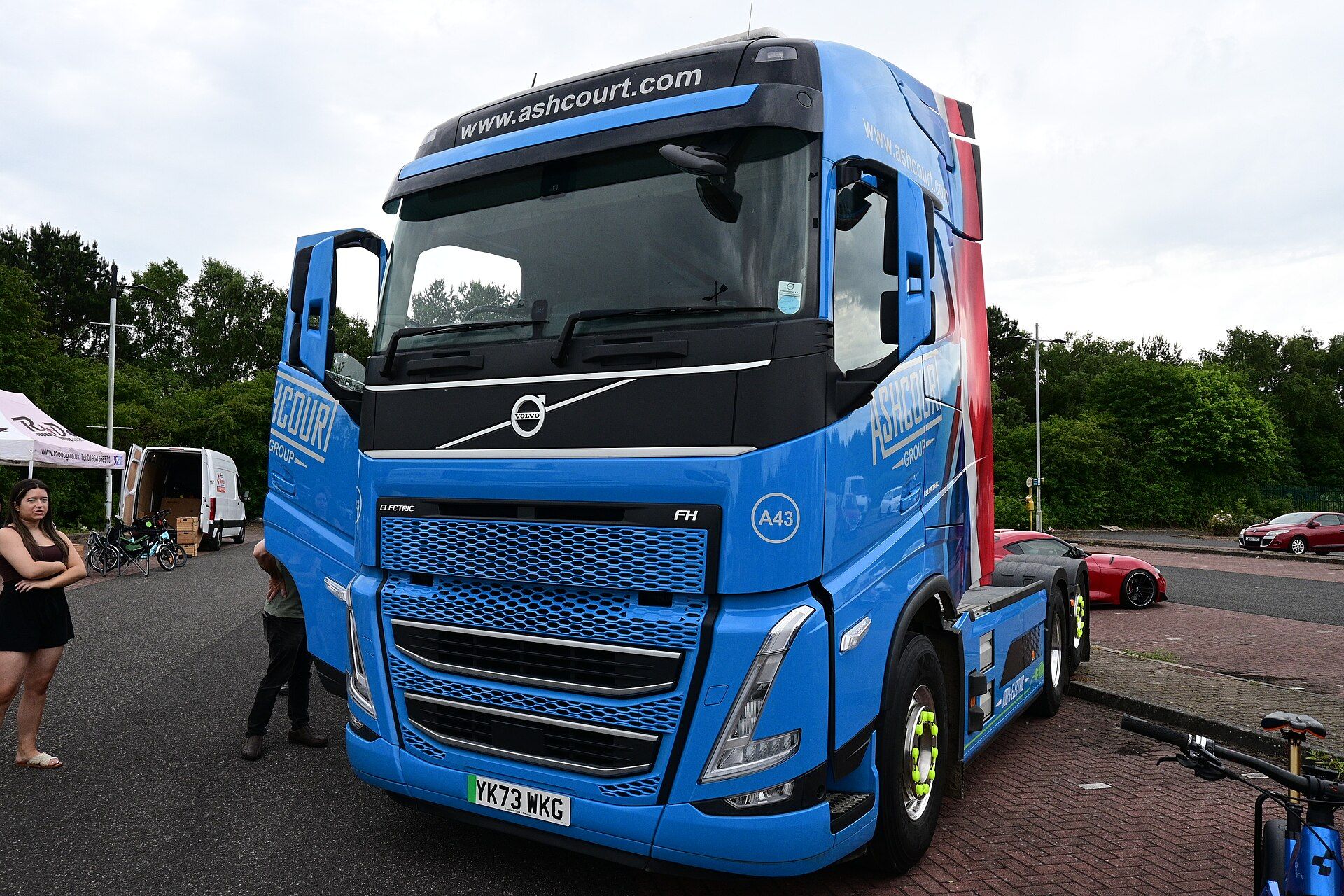

Model overview
Axle configurations: 4x2 tractor · 6x2 tractor · 6x4 tractor · 4x2 rigid · 6x2 rigid · 6x4 rigid · 8x2 rigid · 8x4 rigid
Volvo publishes five power steps for the twin-motor drive unit — 300, 350, 400, 470 and 540 kW — under a heading that reads "Performance", with no continuous-versus-peak split; the top step is also quoted as 731 hp. Installed energy is a range, 360–540 kWh across four to six packs, against usable energy of up to 460 kWh, a difference of 80 kWh at the top of the range — that subtraction is ours, not a Volvo figure. Volvo's battery FAQ gives 90 kWh installed for the cube pack and 98 kWh for the L-shaped one, and four and six cube packs come to exactly the 360 and 540 kWh ends of the published range; that arithmetic is also ours, and Volvo does not state which pack the range is built from. Range and usable energy are both published as ceilings, "up to", and the range figure carries a footnote open at both ends: it depends on external conditions such as the weather and wind resistance, as well as other factors such as the total weight of the truck and the driver's performance. CCS charging is quoted at 350 kW below 750 V, 20 to 80 per cent in 65 minutes. Two power take-offs are offered: an electrical one at 30, 60 or 90 kW and a clutch-independent transmission PTO that can run while the truck is charging. The 65 tonnes is a ceiling for the range rather than a plate on one truck — Volvo quotes payload up to 23.8 tonnes for the 4x2 tractor, and at the September 2022 production start the same three heavy models were presented at 44 tonnes gross combination weight. On battery life the model page says the batteries are long-lasting, with a potential lifespan of up to ten years; that is the only life figure published anywhere that opened, and it is a potential rather than a warranty. The battery FAQ gives a two-year driveline guarantee and a service contract that covers battery function beyond it, no capacity-retention percentage and no warranted life in years or cycles. The dual-motor driveline was announced on 14 April 2026, and Volvo states that the new trucks will be rolled out step by step to markets starting in 2026, so the announcement date is not a changeover date in any one market.
The Volvo FH Electric is the battery-electric version of Volvo’s long-haul flagship. Volvo gives it a specification table of its own rather than a variant line under the diesel Volvo FH, and the two tables do not carry the same equipment: the electric one names its own cabs, its own tractor and rigid axle layouts and its own weights, so nothing on this page is borrowed from the diesel sheet. Volvo started series production of the heavy electric trio — FH, FM and FMX Electric — in September 2022, and the truck Volvo presents under the name today carries a completely new dual-motor driveline, announced on 14 April 2026 and, in Volvo’s own words, to be “rolled out step by step to markets starting in 2026”.
A further distinction is worth establishing before any number is read, because Volvo now sells two heavy electric platforms and most writing about them runs the two together. This page is about the FH Electric. The far longer range Volvo announced in the same April 2026 release belongs to the FH Aero Electric with extended range, a separate model with an e-axle driveline and its own battery and charging figures. None of those figures appear here.
Five power steps and two motors
Volvo describes the driveline in one line — “2 EM, 5 different levels” — and then lists the levels: 300, 350, 400, 470 and 540 kW. Volvo pairs the top step with 731 hp in its own announcement, and which horsepower a maker means when it writes one is the subject of reading truck power figures. Behind the motors sits an eight-speed powershift gearbox designed for electric drive rather than carried over from the diesel range, and motors, power electronics and gearbox are supplied as one integrated unit.
Five steps is an unusually wide programme for an electric tractor, and it is the most useful thing on the specification sheet, because it means the drive unit is an ordering decision in the way a diesel engine has always been. What Volvo does not publish is any guidance on which step suits which job, so this page offers none either. The steps are there; the reasoning for choosing between them is not in the document.
Installed energy, usable energy, and the gap between them
There are two battery figures and they are not the same number. Installed capacity is a range — 360 to 540 kWh, across four to six packs — while usable energy is given as up to 460 kWh. At the top of the range that is a difference of 80 kWh between what is fitted and what the maker will let the driver spend. The subtraction is ours; Volvo publishes the two capacities and not the gap.
Volvo does not explain the reservation, and this page does not guess at it. What Volvo does publish, in its own battery and charging FAQ, is the size of the packs it fits to heavy trucks: a cube pack of 90 kWh installed and an L-shaped pack of 98 kWh installed. Four and six cube packs come to exactly the 360 and 540 kWh ends of the published range — again our arithmetic, not Volvo’s. The L-shaped pack does not produce those two figures at the same pack counts, and Volvo does not state which pack the range is built from, so the inference stops there.
For a buyer this is the section that decides the specification. Packs are the heaviest thing on the chassis and the most expensive, and the choice between four and six of them is a direct trade of payload against range. Volvo sells the battery configuration as flexible for exactly that reason.
Range and charging
Volvo gives up to 470 km on a single charge, and the footnote attached to it is open at both ends: range depends “on external conditions such as the weather and wind resistance, as well as other factors such as total weight of the truck and the driver’s performance”. Two “such as” hinges in one sentence mean those four are examples rather than the whole of it, and Volvo names nothing further. It is a ceiling, not a duty-cycle promise.
Charging is quoted as CCS at 350 kW below 750 V, taking the pack from 20 to 80 per cent in 65 minutes. That window is the number an operator should plan around rather than the range figure, because it decides whether a charge fits inside a break the driver was going to take anyway — the argument set out in megawatt charging explained.
The FH Electric specification table lists one charging entry, and it is CCS. Volvo’s charging FAQ does quote megawatt figures, but for the heavy-duty range as a whole, and on the model pages those figures are attached to the FH Aero Electric with extended range. Reading them onto this truck would be the easiest mistake on the page to make.
What we could not confirm
Volvo heads its power row “Performance” and publishes no continuous and peak pair. Mercedes-Benz splits the two on its long-haul electric tractor, so the comparison a reader reaches for first — continuous against continuous — cannot be made from what Volvo prints. Not every maker splits them, and the absence is not by itself a fault; it is a figure this page does not have. The spec record carries the five steps as five figures and leaves both the continuous and the peak field blank rather than promoting one of the five into them.
Neither the specification table nor the April 2026 release carries an energy consumption figure — nothing in kilowatt-hours per kilometre, under any load. Without it the range figure cannot be recalculated for a heavier or a lighter combination, and this page does not attempt to.
There is no published kerb weight for the tractor, only a payload ceiling. Battery life is published, but not in the form a buyer can hold anyone to: Volvo describes long-lasting batteries with a potential lifespan of up to ten years, and a potential is not a warranty. Beside it the FAQ sets a two-year driveline guarantee and a service contract that monitors the batteries and covers their function beyond that, and there the documents stop. No capacity-retention percentage, no warranted life in years and no cycle count appears in any of them, so none appears here.
Weights and axles
Eight configurations are listed, and Volvo separates them by body type rather than lumping them together: as a tractor, 4x2, 6x2 and 6x4; as a rigid, 4x2, 6x2, 6x4, 8x2 and 8x4. Every axle is air suspended. What each of those layouts is for is covered in axle configurations explained and is not repeated here.
Gross combination weight is given as up to 65 tonnes. That is a ceiling for the whole range rather than the plate on any one truck, and it is exactly the kind of figure that should not be quoted without its frame — the distinction between a vehicle weight and a combination weight is set out in truck weights, GVW and GCW. Volvo quotes payload up to 23.8 tonnes for the 4x2 tractor. It is also worth knowing that the same three models were introduced at 44 tonnes gross combination weight in September 2022; the 65-tonne figure belongs to the current driveline, and the older number should not be read as the current one or the other way round.
Who this truck is right for
The published figures describe a truck for work that comes back to a charger. A maximum of 470 km and a 65-minute charging window fit a return-to-base operation, a two-shift hub run with a planned stop, or regional distribution with a fixed depot — not an unplanned continental route. Where that leaves the overall economics against a diesel tractor is the subject of tractor unit running costs.
The second group is less obvious. Volvo fits two power take-offs: an electrical one at 30, 60 or 90 kW and a clutch-independent transmission PTO that can run while the truck is charging. That is aimed squarely at bodied work — Volvo names tipper bodies, refrigeration units, mixers that must keep turning, and road-building sites where the vehicle creeps forward while distributing gravel. An operator running equipment that would otherwise need a diesel auxiliary engine is looking at a different value proposition from a long-haul buyer, and the 8x2 and 8x4 rigids in the configuration list exist for them.
Where it sits against its rivals
The truck this one is measured against is Mercedes-Benz’s long-haul electric tractor, and this site covers it in an article of its own. Its numbers stay there. A spec record that carried another maker’s figures could not be checked against this truck’s sources, which is the whole reason the technical data on this site lives in one file per model — and why the comparison below is about method rather than a table of somebody else’s kilowatt-hours.
What is worth comparing is narrower than the marketing suggests. Compare usable energy against usable energy, never installed against usable — both makers publish the two separately, and on this truck’s own top figures the installed number stands 17 per cent above the usable one, which is our arithmetic and not Volvo’s. How wide that gap runs differs from maker to maker, so mixing the two flatters whichever truck is quoted on installed energy, by a margin that has to be worked out for each. Compare the charging standard and the state-of-charge window, not the peak kilowatt number. And compare the gross combination ceiling against the work actually being quoted for, because a tractor plated far above the European norm is carrying weight and cost that a general haulier will never use.
Buying used
Establish the generation first, and do not expect a date to do it alone. April 2026 is when the dual-motor driveline was announced, not when it reached any particular country: Volvo says the new trucks “will be rolled out step by step to markets starting in 2026”. A truck registered before 2026 therefore has the earlier unit, and the eight-speed powershift gearbox and the current five power steps are not the specification it left the factory with. From 2026 onwards the registration date settles nothing, because two trucks registered in the same month in different markets can be two different trucks. There it takes the chassis record or the build specification; the registration document will not do it, and the badge does not do it anywhere.
Then establish the order specification, because two FH Electrics can differ more than two diesel FHs. Ask which power step was ordered and how many battery packs are fitted — both are options, and both change what the truck can legally and practically do. Ask for the battery monitoring history and the service contract rather than a verbal description of battery health; Volvo sells that monitoring as part of the contract, so on a properly maintained truck the record exists.
Finally, ask what the seller’s depot could actually deliver, since a truck that has spent its life on a slow charger has had a different working life from one cycled hard at 350 kW. The rest of the checks are the ordinary ones set out in buying a used truck, which apply to an electric tractor exactly as they do to a diesel one.
Quick answers
- What axle configurations does the Volvo FH Electric come in?
- 4x2 tractor, 6x2 tractor, 6x4 tractor, 4x2 rigid, 6x2 rigid, 6x4 rigid, 8x2 rigid, 8x4 rigid.
Compared with
- Mercedes-Benz eActros 600
- MAN eTGX
- Renault Trucks E-Tech T
Sources
- Volvo FH Electric — specifications — Volvo Trucks
- Volvo launches new electric trucks — with ranges up to 700 km — Volvo Trucks
- Volvo FH Aero Electric — specifications — Volvo Trucks
- Break-through: Volvo Trucks starts series production of heavy electric trucks — Volvo Trucks
- FAQ on truck batteries and charging — Volvo Trucks