The ADR driver training certificate explained: who needs it, what it covers, when it is renewed
ADR 2025 Chapter 8.2: which drivers must hold the driver training certificate, the basic and specialisation courses, the examination, validity, renewal and the changes proposed for 2027.
What is commonly called an “ADR licence” is, in the wording of ADR 2025, a driver training certificate: drivers of vehicles carrying dangerous goods shall hold one, issued by the competent authority after a training course and an examination (8.2.1.1), except where the exemptions described below apply. It is valid for five years, counted from the date the driver passes the initial basic or initial comprehensive training examination, and it is renewed on proof of refresher training and a passed examination (8.2.2.8.2).
The text read for this page is ADR 2025 (ECE/TRANS/352), applicable from 1 January 2025. The previous edition, ADR 2023, could still be used until 30 June 2025 under the transitional measure in 1.6.1.1; that period has ended. ADR’s own word is “certificate”, and the model card in 8.2.2.8.5 is headed “ADR DRIVER TRAINING CERTIFICATE”. By our search the words “driving licence” occur in neither volume of ADR 2025, and the model card has no box for a vehicle category, only for classes or UN numbers on its back; the licence categories are in truck driving licences. Nor is it the certificate of approval that a vehicle needs under 9.1.3, which the vehicle article covers.
Who has to hold the certificate
Paragraph 8.2.1.1 puts the duty on the driver. Drivers of vehicles carrying dangerous goods “shall hold” a certificate issued by the competent authority, stating that they have taken part in a training course and passed an examination on the particular requirements to be met during the carriage of dangerous goods. The paragraph names no vehicle mass and no vehicle category: the duty attaches to a vehicle carrying dangerous goods, and the exceptions are those of the next section. Where ADR requires the certificate to be drawn up, 8.1.2.2 (b) has it carried “on the driver’s cab of the transport unit”, and 8.1.2.1 (d) does the same for the means of identification, which include a photograph, of each member of the vehicle crew (see 1.10.1.4). “On the driver’s cab” is the wording of ADR 2025; the amendments proposed for 2027 would replace it with “in the driver’s cab” in both paragraphs.
The certificate has a basic level and up to three specialisations, and ADR ties each to its own trigger.
| Course | Drivers who attend it | Paragraph |
|---|---|---|
| Basic training course | Drivers of vehicles carrying dangerous goods | 8.2.1.2 |
| Specialisation for carriage in tanks | Drivers of vehicles or MEMUs carrying dangerous goods in fixed tanks or demountable tanks with a capacity exceeding 1 m³; drivers of battery-vehicles with a total capacity exceeding 1 m³; drivers of vehicles or MEMUs carrying dangerous goods in tank-containers, portable tanks or MEGCs with an individual capacity exceeding 3 m³ on a transport unit | 8.2.1.3 |
| Specialisation for Class 1 | Drivers of vehicles carrying dangerous goods of Class 1, other than substances and articles of Division 1.4, compatibility group S | 8.2.1.4 |
| Specialisation for Class 7 | Drivers of vehicles carrying dangerous goods of Class 7 | 8.2.1.4 |
The tank thresholds are written “exceeding 1 m³” and “exceeding 3 m³”: the first is a capacity for fixed and demountable tanks and a total capacity for battery-vehicles, the second an individual capacity on a transport unit for tank-containers, portable tanks and MEGCs. MEMU is the mobile explosives manufacturing unit and MEGC the multiple-element gas container; the vehicle designations are in the vehicle article.
The competent authority “may approve” basic courses and tank courses limited to specific dangerous goods or to a specific class or classes. A restricted course of either kind does not confer the right to attend the Class 1 and Class 7 courses of 8.2.1.4 (8.2.1.2, 8.2.1.3).
A certificate that conforms to 8.2.1 and was issued under 8.2.2.8 by the competent authority of a Contracting Party is accepted by the competent authorities of the other Contracting Parties “during their period of validity” (8.2.1.6). The competent authority “shall maintain” up-to-date registers of all valid driver training certificates issued by it or by any recognised organisation (1.10.1.6).
When a driver needs no certificate, and what applies instead
ADR lifts the certificate in several places, and each place has its own frame; they are not one rule.
The first is by quantity. Where the quantity of dangerous goods on a transport unit does not exceed the value for its transport category in column (3) of the table in 1.1.3.6.3 — or the value calculated under 1.1.3.6.4 when the load mixes categories — 1.1.3.6.2 says the goods “may be carried in packages” without applying a list of provisions. The list takes in Part 8 except for a group of paragraphs that includes 8.2.3 and does not include 8.2.1. Read together, which is our reading and not a sentence ADR writes out, the certificate of 8.2.1 is not asked for on such a load, while the training of 8.2.3 still applies. What the thresholds are for each transport category, and what the figures count, is set out in the vehicle article; the frame is goods carried in packages, and that article reads it as leaving tanks outside the exemption.
The second is Chapter 3.4. Dangerous goods packed in limited quantities that meet that chapter “are not subject to any other provisions of ADR” apart from a list in 3.4.1, and for Part 8 that list names 8.2.3, 8.6.3.3 and 8.6.4. The certificate of 8.2.1 is not among the provisions that remain; 8.2.3 is.
The third, Chapter 3.5, is worded differently. Excepted quantities of dangerous goods of certain classes, other than articles, that meet that chapter are not subject to any other provisions of ADR except three groups, and the first is the training requirements in Chapter 1.3 (3.5.1.1 (a)); the other two concern classification and packaging. What remains there is Chapter 1.3, not 8.2.3 by name.
Class 7 has two provisions of its own. Special provision S5 covers radioactive material in excepted packages, UN Nos. 2908, 2909, 2910 and 2911 only, and says that the requirements of the instructions in writing of 8.1.2.1 (b) and of 8.2.1, 8.3.1 and 8.3.4 “shall not apply”. S12 covers a small load: where the total number of packages containing radioactive material carried in the transport unit does not exceed 10, the sum of the transport indexes does not exceed 3 and there are no subsidiary hazards — all three together — the driver-training requirements of 8.2.1 “need not be applied”. The drivers shall then receive appropriate training in the requirements governing the carriage of radioactive material, commensurate with their duties, giving them an awareness of the radiation hazards; that awareness training is to be confirmed by a certificate provided by their employer, and S12 refers on to 8.2.3. Like every provision of Chapter 8.5, these apply, in addition to Chapters 8.1 to 8.4, when column (19) of Table A in Chapter 3.2 refers to them, and Chapter 8.5 takes precedence over Chapters 8.1 to 8.4 in a conflict.
Separately, 1.1.3.1 says the provisions of ADR do not apply at all to some kinds of carriage. One of them, (c), is carriage undertaken by enterprises which is ancillary to their main activity, such as deliveries to or returns from building or civil engineering sites, or in relation to surveying, repairs and maintenance, in quantities of not more than 450 litres per packaging, including intermediate bulk containers (IBCs) and large packagings, and within the maximum quantities specified in 1.1.3.6, with measures taken to prevent any leakage of contents in normal conditions of carriage. That exemption does not apply to Class 7, and carriage undertaken by such enterprises for their supply or external or internal distribution does not fall within it.
The paragraph that reaches persons without the certificate is 8.2.3, headed “Training of persons other than the drivers holding a certificate in accordance with 8.2.1, involved in the carriage of dangerous goods by road”. Persons whose duties concern the carriage of dangerous goods by road shall have received training in the requirements governing the carriage, appropriate to their responsibilities and duties, according to Chapter 1.3. The paragraph names personnel employed by the road vehicle operator or the consignor, personnel who load or unload, personnel in freight forwarding or shipping agencies, and drivers of vehicles other than drivers holding a certificate in accordance with 8.2.1. Chapter 1.3 describes that training as general awareness training (1.3.2.1), function-specific training (1.3.2.2) and safety training (1.3.2.3), periodically supplemented with refresher training to take account of changes in regulations (1.3.2.4); 1.10.2.1 adds that it includes elements of security awareness. The employer keeps the records, makes them available to the employee or the competent authority on request, and keeps them for a period established by the competent authority (1.3.3). By our reading, neither 8.2.3 nor Chapter 1.3 prescribes a card or a model certificate for this training; what 1.3.3 asks for is a record. Chapter 1.3 itself points away for the crew: with regard to the training of the vehicle crew, note 2 to 1.3.1 says “see Chapter 8.2 instead of this section”.
The basic course and the three specialisations
Training covers theoretical courses and practical exercises, and the knowledge is tested in an examination (8.2.2.1). It is given as a basic course and, “when applicable”, specialisation courses; either kind may be given as comprehensive courses, conducted integrally, on the same occasion and by the same training body (8.2.2.3.1). The courses are subject to approval by the competent authority, which gives it only on written application and organises the supervision of training and examinations; the approval document states whether the courses are basic or specialisation, initial or refresher, and whether they are limited to specific dangerous goods or to a class or classes (8.2.2.6.1, 8.2.2.6.2, 8.2.2.6.4, 8.2.2.6.6).
ADR lists the subjects a course covers “at least”. For the basic course there are, by our count, fifteen, lettered (a) to (o) in 8.2.2.3.2:
- General requirements governing the carriage of dangerous goods
- Main types of hazard
- Information on environmental protection in the control of the transfer of wastes
- Preventive and safety measures appropriate to the various types of hazard
- What to do after an accident: first aid, road safety, basic knowledge about the use of protective equipment, instructions in writing, etc.
- Marking, labelling, placarding and orange-coloured plate marking
- What a driver should and should not do during the carriage of dangerous goods
- Purpose and method of operation of technical equipment on vehicles
- Prohibitions on mixed loading in the same vehicle or container
- Precautions to be taken during loading and unloading of dangerous goods
- General information concerning civil liability
- Information on multimodal transport operations
- Handling and stowage of packages
- Traffic restrictions in tunnels and instructions on behaviour in tunnels: prevention of incidents, safety, action in the event of fire or other emergencies, etc.
- Security awareness
The general rules on load securing are covered in load securing.
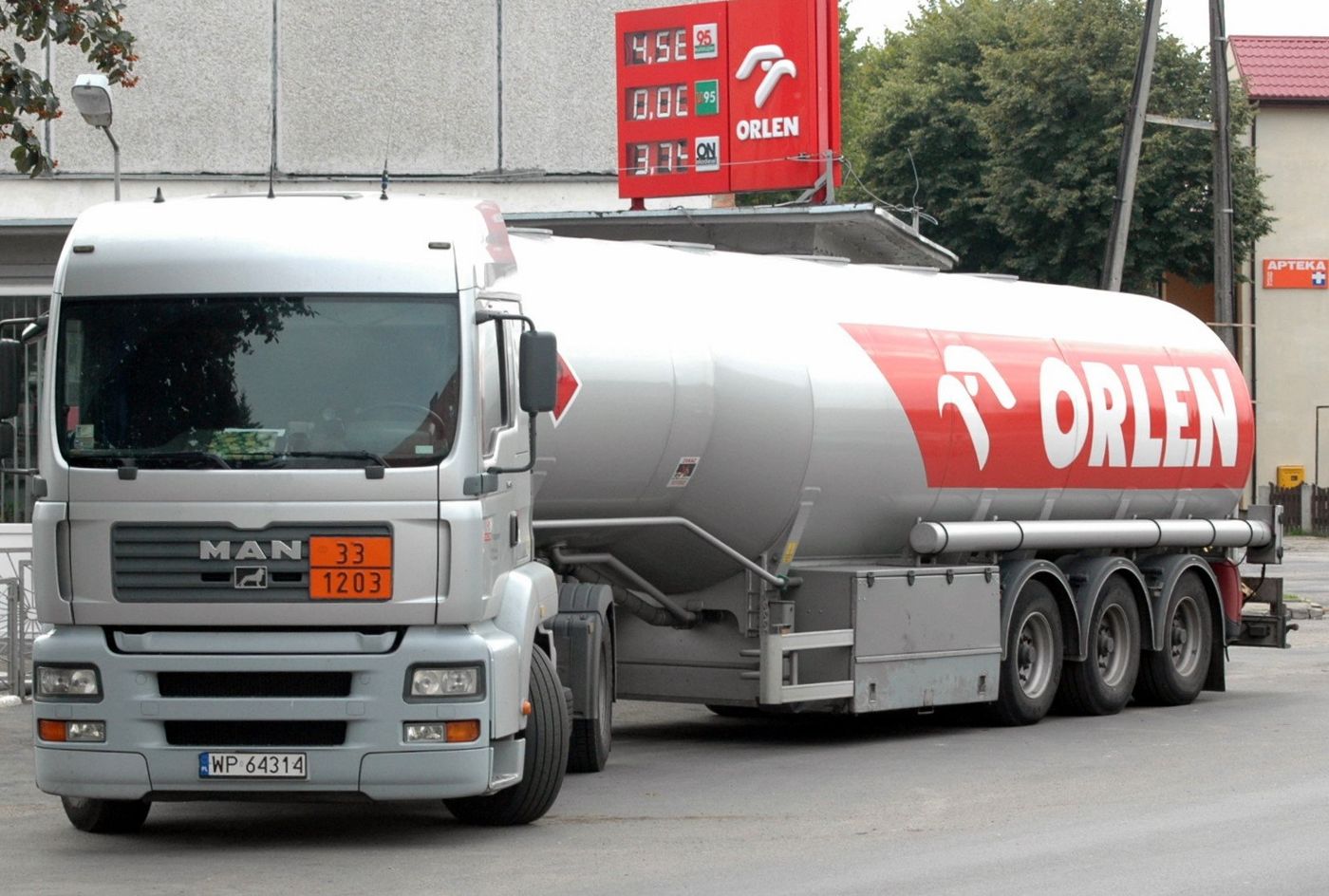
The tank specialisation lists four subjects (8.2.2.3.3): the behaviour of vehicles on the road, including movements of the load; the specific requirements of the vehicles; general theoretical knowledge of the various and different filling and discharge systems; and the specific additional provisions applicable to the use of those vehicles, with certificates of approval, approval marking, placarding and orange-coloured plate marking named as examples. The Class 1 specialisation lists two (8.2.2.3.4): the specific hazards related to explosive and pyrotechnical substances and articles, and the specific requirements concerning mixed loading of substances and articles of Class 1. The Class 7 specialisation lists three (8.2.2.3.5): the specific hazards related to ionizing radiation; the specific requirements concerning packing, handling, mixed loading and stowage of radioactive material; and the special measures to be taken in the event of an accident involving radioactive material. The tanker on the cover carries the orange plate 33 over 1203; the vehicle article explains how to read it.
The individual practical exercises take place in connection with the theoretical training and cover at least first aid, fire-fighting and what to do in case of an incident or accident (8.2.2.3.8).
| Course | Subjects listed | Minimum theory (teaching units) | Practical exercises |
|---|---|---|---|
| Basic training course | 15 | 18 | Additional teaching units, varying with the number of drivers under instruction |
| Specialisation for carriage in tanks | 4 | 12 | Additional teaching units, varying with the number of drivers under instruction |
| Specialisation for Class 1 | 2 | 8 | Not stated in 8.2.2.4.1 |
| Specialisation for Class 7 | 3 | 8 | Not stated in 8.2.2.4.1 |
A teaching unit is “intended to last 45 minutes” (8.2.2.3.6), and “Normally” not more than eight teaching units are permitted on each training day (8.2.2.3.7). Because ADR states the theory as a minimum and the practical units as varying with the group, it gives no total number of hours or days for an initial course. For a comprehensive course, the competent authority may determine the total duration; it shall maintain the duration of the basic course and of the tank specialisation, and may supplement it with shortened specialisation courses for Classes 1 and 7 (8.2.2.4.2).
Where, under other regulations applicable in the country of a Contracting Party, a driver has followed equivalent training under a different regime or for a different purpose, covering the subjects of 8.2.2.3.4 (Class 1, special provision S1 (1)) or of 8.2.2.3.5 (Class 7, S11), the specialisation course “may be totally or partially dispensed with”. The certificate is then issued after the candidate has acquired that knowledge and passed the specialisation examination (8.2.2.8.1 (b)).
The examination
After the basic training, practical exercises included, an examination is held on it (8.2.2.7.1.1). In it the candidate has to prove the knowledge, insight and skill for the practice of professional driver of vehicles carrying dangerous goods as provided in the basic course (8.2.2.7.1.2). The competent authority prepares a catalogue of questions that refers to the subjects of 8.2.2.3.2; the examination questions are drawn from it, and the candidates “shall not have any knowledge” of the selected questions beforehand (8.2.2.7.1.3). The examination is written, or a combination of written and oral, and the questions may be of varying degrees of difficulty and carry different weightings (8.2.2.7.1.6). A single examination may be held for a comprehensive course (8.2.2.7.1.4).
Every examination is invigilated, manipulation and deception are to be ruled out as far as possible, the candidate is authenticated, and all examination documents are recorded and kept as a print-out or electronically (8.2.2.7.1.7). Written examinations may be held wholly or partly as electronic examinations, on conditions that include the competent authority checking and accepting the hardware and software and the examining body providing the electronic media (8.2.2.7.1.8).
A candidate is allowed to take a specialisation examination “after having sat” the basic examination and after attending the specialisation course (8.2.2.7.2.1). Its catalogue of questions refers to the subjects of 8.2.2.3.3, 8.2.2.3.4 or 8.2.2.3.5 as appropriate (8.2.2.7.2.2), and an examination based on a restricted basic course limits the specialisation examination to the same scope (8.2.2.7.2.4).
| Examination | Minimum written questions | Minimum duration |
|---|---|---|
| Basic training course | 25 | 45 minutes |
| After a basic refresher course | 15 | 30 minutes |
| Each specialisation course | 15 | 30 minutes |
| After a specialisation refresher course | 10 | 20 minutes |
Chapter 8.2 sets numbers of questions and minutes and stops there: by our reading of the chapter it states no pass mark, no minimum age and no prerequisite driving-licence category.
The certificate is issued after the candidate has completed a basic course and passed the basic examination (8.2.2.8.1 (a)); if applicable, after completing a specialisation course, or having acquired the knowledge referred to in S1 and S11, and passing the specialisation examination (8.2.2.8.1 (b)); and after a restricted basic or restricted tank course and its examination, in which case the certificate indicates its limited scope of validity to the dangerous goods or classes concerned (8.2.2.8.1 (c)).
Five years from the examination, and how renewal works
ADR dates the validity by the examination: the certificate is valid for five years “from the date the driver passes an initial basic or initial comprehensive training examination” (8.2.2.8.2). The card carries the resulting expiry date in box 8, “VALID TO” (8.2.2.8.5).
Renewal has two cases, both before the expiry date. The certificate “shall be renewed” if the driver furnishes proof of participation in refresher training under 8.2.2.5 and has passed an examination under 8.2.2.7, and the twelve-month mark decides where the new period starts.
| Refresher examination passed | New certificate | Its five years begin |
|---|---|---|
| In the twelve months before the date of expiry | Valid for five years | On the date of expiry of the previous certificate |
| Prior to the twelve months before the date of expiry | Valid for five years | On the date on which the refresher examination was passed |
Take, as an illustration of ours and not ADR’s, a certificate that expires on 30 June 2030. A refresher examination passed on 15 January 2030 falls inside the twelve months, so the new five years begin on 30 June 2030 and, by our arithmetic, run to 2035. One passed on 15 January 2029 falls before them, so the new five years begin on 15 January 2029 and run to 2034. The text makes the twelve months before expiry a case, not a condition: the earlier examination is provided for too, and only the start of the new period differs. In the second case, on our reading, ADR starts the new period at the examination and does not add the time left on the old certificate.
Adding a specialisation during validity does not restart the clock. Where a driver extends the scope of the certificate during its period of validity, by meeting the requirements of 8.2.2.8.1 (b) and (c), the period of validity of the new certificate “shall remain that of the previous certificate”, and when a driver has passed a specialisation examination, the specialisation is valid until the date of expiry of the certificate (8.2.2.8.2).
Refresher training serves to bring the drivers’ knowledge up to date and covers new technical, legal and substance-related developments (8.2.2.5.1). Its duration, practical exercises included, is at least two days for comprehensive courses or, for individual courses, at least one half of the duration allocated to the corresponding initial basic or specialisation course in 8.2.2.4.1 (8.2.2.5.2). Applying that half to the initial figures gives, by our arithmetic, 9 teaching units for the basic course, 6 for tanks and 4 each for Classes 1 and 7; ADR does not state those numbers. A driver may replace a refresher course and examination with the corresponding initial course and examination (8.2.2.5.3). The refresher examinations are the shorter ones in the table above (8.2.2.7.1.6, 8.2.2.7.2.3).
Paragraph 8.2.2.8.2 describes renewal only in the two cases above, both before the date of expiry; it says nothing about a certificate that has already expired.
What the card looks like
The certificate has the layout of the model in 8.2.2.8.5. Its dimensions are to accord with ISO 7810:2003 ID-1, it is made of plastic, white with black lettering, and it “shall include” an additional security feature “such as a hologram, UV printing or guilloche patterns” (8.2.2.8.3).
The front is headed ADR DRIVER TRAINING CERTIFICATE and carries eight numbered boxes: certificate number (1), surname (2), other name(s) (3), date of birth (4), nationality (5), driver signature (6), issuing body (7) and the date the card is valid to (8), with a place for the driver’s photograph and a distinguishing sign used on vehicles in international traffic. The back is headed “VALID FOR CLASS(ES) OR UN Nos.” and has two boxes for classes or UN numbers: box 9 under TANKS and box 10 under OTHER THAN TANKS.
The certificate is prepared in the language, or one of the languages, of the country of the competent authority that issued it. If none of them is English, French or German, the title of the certificate, the title of item 8 and the titles on the back are also drawn up in English, French or German (8.2.2.8.4). Each Contracting Party provides the UNECE secretariat with an example of the national model of any certificate it intends to issue, with explanatory notes that let conformity be verified, and the secretariat makes this information available on its website (8.2.2.8.6). This page does not go through the national examples.
The driver’s certificate is not the safety adviser’s
A different person carries a different certificate. Each undertaking whose activities include consigning or carrying dangerous goods by road, or the related packing, loading, filling or unloading, “shall appoint” one or more safety advisers, responsible for helping to prevent the risks of those activities to persons, property and the environment (1.8.3.1). The competent authorities of the Contracting Parties “may provide” that this does not apply to undertakings whose activities concern quantities per transport unit not exceeding those in 1.1.3.6, 1.7.1.4 and Chapters 3.3, 3.4 and 3.5, or whose main or secondary activities are not the consignment, carriage or related operations but which occasionally engage in national ones posing little danger or risk of pollution (1.8.3.2 (b), (c)). The adviser may be the head of the undertaking, a person with other duties in it, or a person not directly employed by it, provided that person is capable of performing the duties (1.8.3.4). Among those duties are preparing an annual report to the management of the undertaking or a local public authority, preserved for five years, and monitoring the proper training of the undertaking’s employees and the maintenance of records of such training (1.8.3.3).
The adviser holds a vocational training certificate valid for transport by road (1.8.3.7), obtained by training and an examination approved by the competent authority (1.8.3.8); the examining body is not to be a training provider (1.8.3.10), and the certificate is recognised by all Contracting Parties (1.8.3.15). It is valid for five years, and its validity is extended from its date of expiry for five years at a time where, during the year before expiry, the holder has passed an examination approved by the competent authority (1.8.3.16.1). The two five-year rules are not the same rule: the driver’s renews on proof of refresher training plus an examination, in the two cases of the table above, while the adviser’s paragraph names an examination in the year before expiry and does not mention a refresher course.
Where ADR applies, and what happens without the certificate
ADR is an agreement between States, done at Geneva on 30 September 1957 under the auspices of the United Nations Economic Commission for Europe and in force since 29 January 1968. Its title lost the word “European” on 1 January 2021, under a protocol adopted on 13 May 2019, and it is now the Agreement concerning the International Carriage of Dangerous Goods by Road. The United Nations Treaty Collection shows 55 parties as at 28 September 2026. ADR itself applies to transport operations performed on the territory of at least two Contracting Parties; the EU Member States have adopted Annexes A and B as the basis for regulating carriage within and between their territories, and a number of non-EU countries have adopted them as the basis for their national legislation.
ADR states that there is no overall enforcing authority: in practice highway checks are carried out by Contracting Parties, and non-compliance may result in legal action by national authorities against offenders in accordance with their domestic legislation. ADR itself prescribes no penalties.
Inside the EU, Annexes A and B apply to national transport operations within the Union as well, as recital (1) of Commission Delegated Directive (EU) 2025/1801 puts it. Annex I, Section I.1 of Directive 2008/68/EC, as replaced by Commission Delegated Directive (EU) 2025/149, refers to them “as applicable with effect from 1 January 2025”; the vehicle article sets that out.
What a roadside check makes of a missing certificate is written outside ADR. In the EU it is Annex II to Directive (EU) 2022/1999, which, in the version Commission Delegated Directive (EU) 2025/1801 put in its place and Member States “shall apply” from 24 June 2026 (its Article 2), is a non-exhaustive list that gives guidance on what is to be regarded as an infringement, in three risk categories, category I posing the highest risk. The category is determined taking into account the particular circumstances and at the discretion of the enforcing body or officer, so it may be upgraded or downgraded. In the numbering of that text, a driver who does not hold a valid vocational training certificate is item 20 of category I, whose infringements, if observed during roadside checks, “shall normally lead to” immediate and appropriate corrective measures such as immobilisation of the vehicle. A driver who holds a certificate but does not carry it on board, where there is evidence that it is held, is item 3 of category III, where corrective measures do not need to be taken at the roadside but can be taken at a later date by the undertaking. The same Annex II lists failure to appoint a safety adviser when required (category I, item 23), failure to comply with the provisions on the adviser’s role, duties and certificates (category II, item 15) and failure to comply with the provisions on the training of persons involved in the carriage of dangerous goods (category II, item 17). The amounts of any penalties are national and are not covered here.
In Türkiye, the Regulation on the Carriage of Dangerous Goods by Road of 18 June 2022 (Official Gazette No. 31870) defines the SRC5, the Tehlikeli Mal Taşımacılığı Sürücü Eğitim Sertifikası, as the document issued by the Ministry of Transport and Infrastructure under ADR Chapter 8.2 (Article 4(1)(ff)), and makes it compulsory for drivers of vehicles carrying dangerous goods on national and international roads (Article 5(4)). The carrier has to have the vehicle driven by drivers holding an SRC5 certificate appropriate to the class and/or manner of carriage of the goods (Article 22(1)(h)), and the driver has to hold it and present it to the authorised personnel during an inspection (Article 23(1)(a)). The training, examinations and certification themselves fall under the Ministry’s own legislation (Article 5(4)), which this page does not cover.
Whether dangerous-goods training counts towards the periodic training of a Driver CPC is for the Member State to decide; Driver CPC explained sets out how the hours are counted.
What changes on 1 January 2027
Everything above about ADR’s own text is ADR 2025. A set of amendments will enter into force on 1 January 2027. ECE/TRANS/WP.15/274 of 24 February 2026 is the consolidated list of the amendments the Working Party on the Transport of Dangerous Goods had adopted for entry into force on that date; an addendum of 1 June 2026 (ECE/TRANS/WP.15/274/Add.1) adds the amendments it adopted at its following session, and a corrigendum of the same date (ECE/TRANS/WP.15/274/Corr.1) corrects the main document. The depositary notification C.N.252.2026.TREATIES-XI.B.14 of 1 July 2026, which carries a proposal by France, names all three documents as the text of the proposed amendments and says that unless they are deemed rejected under article 14 (3) within three months of the notification, that is on 1 October 2026, they will enter into force on 1 January 2027. Under article 14 (3), as the notification quotes it, a proposed amendment is deemed to be accepted unless at least one-third of the Contracting Parties, or five of them if one-third exceeds that figure, have given written notification of their objection; with 55 parties, that is five, by our arithmetic. By 1 October 2026 no Contracting Party had notified an objection, and the depositary notification C.N.395.2026.TREATIES-XI.B.14 of 9 October 2026 records that the amendments will accordingly enter into force for all Contracting Parties on 1 January 2027.
WP.15/274 changes Chapter 8.2 in five places; the addendum and the corrigendum do not touch Chapter 8.2.
- A new note at the head of the chapter defines two terms: “e-learning” is asynchronous teaching conducted with information and communication technology (ICT) tools where trainees and trainers are separated in both space and time, and “remote training” is synchronous teaching conducted with ICT tools where trainees and trainers communicate simultaneously and are separated in space.
- 8.2.2.3.6 would add that teaching units may be divided into shorter sessions.
- A new 8.2.2.4.3 would allow initial training to be delivered as in-person training, remote training, or a combination of these, with the individual practical exercises of 8.2.2.3.8 delivered only in person.
- A new 8.2.2.5.4 would allow a refresher course to include in-person training, remote training, e-learning, or a combination of these, again with the practical exercises only in person; the theoretical part “shall not be delivered entirely as e-learning”.
- 8.2.2.6.5 (b) would read that the competent authority shall be granted the right to access the training courses and examinations.
Chapter 8.2 of ADR 2025 does not mention remote training or e-learning; the electronic examinations already provided for in 8.2.2.7.1.8 are a separate matter. The validity, renewal, minimum-duration and examination paragraphs described above are not among the five changes to Chapter 8.2 in these documents, by our reading of them. Chapter 1.3, to which 8.2.3 points, would also be amended: 1.3.1 would cover persons participating in the activities referred to in Chapter 1.4, where it now covers persons employed by the participants; 1.3.2 would add that the term “personnel”, as used in 1.3.2.1, 1.3.2.2 and 1.3.2.3, is understood to include each person with an equivalent role or function; and 1.3.3 would extend the record-keeping obligations to the persons mentioned in 1.3.1, except if the participants referred to in Chapter 1.4 are keeping these records.
Quick answers
- How long is an ADR driver training certificate valid?
- Five years, counted from the date the driver passes an initial basic or initial comprehensive training examination (ADR 8.2.2.8.2). A specialisation passed later is valid until the date of expiry of the certificate, and extending the scope of the certificate does not extend that date.
- When can an ADR certificate be renewed, and does renewing early shorten it?
- Renewal needs proof of refresher training and a passed examination, and a twelve-month mark decides the dates (ADR 8.2.2.8.2). Passed in the twelve months before expiry, the new five-year period begins on the old expiry date; passed before those twelve months, it begins on the date of the refresher examination, so the months left on the old certificate are not added on (our reading of the text).
- How long is the ADR training course?
- ADR states a minimum for the theory, not a total: 18 teaching units for the basic course, 12 for the tank specialisation and 8 each for Class 1 and Class 7 (8.2.2.4.1), a teaching unit being intended to last 45 minutes (8.2.2.3.6). The basic and tank courses need additional units for practical exercises, varying with the number of drivers under instruction. Refresher training lasts at least two days in a comprehensive course, or at least half the corresponding initial course for individual courses (8.2.2.5.2).
- Do you need an ADR certificate to carry small quantities of dangerous goods?
- Not for packaged goods within the thresholds of 1.1.3.6, but the training of 8.2.3 still applies: 1.1.3.6.2 lifts Part 8 except for a list of paragraphs that includes 8.2.3 and does not include 8.2.1 (our reading of the two together). Limited quantities under Chapter 3.4 keep 8.2.3 as well (3.4.1), excepted quantities under Chapter 3.5 keep the training requirements of Chapter 1.3 (3.5.1.1), and our vehicle article reads the 1.1.3.6 exemption as not reaching tanks.
- How many questions are in the ADR exam?
- At least 25 written questions and at least 45 minutes for the basic course, and at least 15 questions and 30 minutes after a refresher course (8.2.2.7.1.6). Each specialisation examination has at least 15 questions and 30 minutes, or at least 10 and 20 after a refresher course (8.2.2.7.2.3). By our reading, Chapter 8.2 states no pass mark; the questions are drawn from a catalogue the competent authority prepares (8.2.2.7.1.3).
- Is the ADR driver certificate the same as the safety adviser certificate?
- No. The safety adviser holds a separate vocational training certificate under 1.8.3.7, valid for five years and extended for five years at a time where the holder has passed an examination during the year before its expiry (1.8.3.16.1). The driver's certificate is governed by 8.2.1 and 8.2.2.8 and is renewed on refresher training plus an examination.
Sources
- ADR 2025 Volume I (ECE/TRANS/352) — Parts 1 to 3, including the introduction, 1.1.3.1, 1.1.3.6, 1.2.1, Chapter 1.3, 1.8.3, 1.10, 3.4.1 and 3.5.1 — United Nations Economic Commission for Europe
- ADR 2025 Volume II (ECE/TRANS/352) — Parts 4 to 9, including 8.1.2, Chapter 8.2 and special provisions S1, S5, S11 and S12 of Chapter 8.5 — United Nations Economic Commission for Europe
- Agreement concerning the International Carriage of Dangerous Goods by Road (ADR) — status of treaty, as at 28 September 2026 — United Nations Treaty Collection
- ECE/TRANS/WP.15/274 — Draft amendments to annexes A and B of ADR for entry into force on 1 January 2027 — United Nations Economic Commission for Europe, Working Party on the Transport of Dangerous Goods
- ECE/TRANS/WP.15/274/Add.1 — Draft amendments to annexes A and B of ADR, addendum — United Nations Economic Commission for Europe, Working Party on the Transport of Dangerous Goods
- ECE/TRANS/WP.15/274/Corr.1 — Draft amendments to annexes A and B of ADR, corrigendum — United Nations Economic Commission for Europe, Working Party on the Transport of Dangerous Goods
- Depositary notification C.N.252.2026.TREATIES-XI.B.14 — proposal of amendments to Annexes A and B of ADR — United Nations, Secretary-General as depositary
- Depositary notification C.N.395.2026.TREATIES-XI.B.14 — entry into force of amendments to Annexes A and B of ADR — United Nations, Secretary-General as depositary
- Commission Delegated Directive (EU) 2025/149 amending the Annexes to Directive 2008/68/EC — EUR-Lex, European Union
- Commission Delegated Directive (EU) 2025/1801 replacing Annexes I and II to Directive (EU) 2022/1999 — EUR-Lex, European Union
- Tehlikeli Maddelerin Karayoluyla Taşınması Hakkında Yönetmelik (Regulation on the Carriage of Dangerous Goods by Road), Official Gazette 18/6/2022 No. 31870, as amended to 6/2/2025 No. 32805 — Mevzuat Bilgi Sistemi, Republic of Türkiye