Concerted roadside checks in Europe: the EU rules and ROADPOL's Truck & Bus weeks
EU Member States must run concerted roadside checks on drivers and vehicles at least six times a year, and on cabotage at least twice. The legal texts, and ROADPOL's 2026 Truck & Bus weeks.
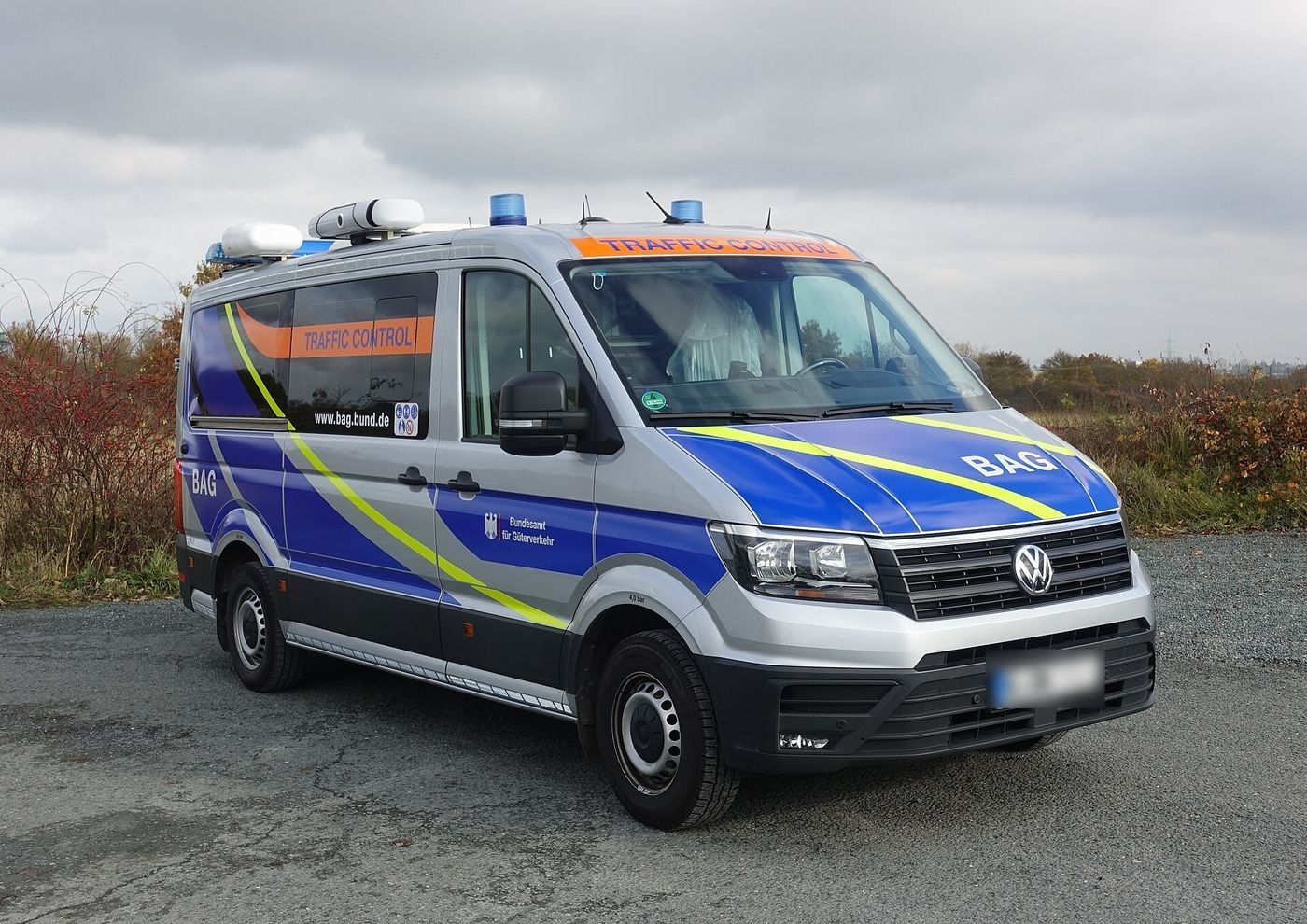
Concerted roadside checks are checks carried out at the same time by the enforcement authorities of two or more EU Member States, each in its own territory. Article 5 of Directive 2006/22/EC, in the wording given by Directive (EU) 2020/1057, requires Member States to carry them out at least six times per year on drivers and vehicles within the scope of the driving time rules of Regulation (EC) No 561/2006 or the tachograph rules of Regulation (EU) No 165/2014. Since 21 February 2022, Article 10a(3) of Regulation (EC) No 1072/2009 has added concerted roadside checks on cabotage at least twice per year. Alongside these legal duties, ROADPOL, the network of European traffic police forces, publishes its own calendar of Truck & Bus operation weeks; for 2026 it lists 9–15 February, 4–10 May and 16–22 November.
Status as of 13 November 2026. Read that day: the Official Journal texts of Directive 2006/22/EC, Directive (EU) 2020/1057 and Regulation (EU) 2020/1055 held by the Publications Office of the European Union, in English, German, French, Spanish, Italian and Polish; ROADPOL’s post of 23 October 2025 on its 2026 operations plan; and ROADPOL’s home page. Article 5 of Directive 2006/22/EC and Article 10a of Regulation (EC) No 1072/2009 are quoted in the wording the 2020 amending acts gave them.
The rules side by side
| Text | What is checked | How often | Who carries it out | Applies from |
|---|---|---|---|---|
| Directive 2006/22/EC, Article 5, first sentence (as replaced by Directive (EU) 2020/1057) | Drivers and vehicles within the scope of Regulation (EC) No 561/2006 or (EU) No 165/2014, at the roadside | At least six times per year | Enforcement authorities of two or more Member States, at the same time, each in its own territory | 2 February 2022 in this wording; six a year since the 2006 text |
| Directive 2006/22/EC, Article 5, second sentence | Concerted checks at premises of undertakings | No number: Member States “shall, in addition, endeavour to organise” them | As above | 2 February 2022 |
| Regulation (EC) No 1072/2009, Article 10a(3) (inserted by Regulation (EU) 2020/1055) | Cabotage operations, at the roadside | At least twice per year | National authorities in charge of enforcing road transport rules in two or more Member States, at the same time, each in its own territory | 21 February 2022 |
| ROADPOL 2026 operations plan (not a legal text) | Roadworthiness and compliance of heavy goods vehicles and buses, including overloading, driving and rest time, technical defects | Three weeks in 2026: 9–15 February, 4–10 May, 16–22 November | ROADPOL member countries, simultaneously, coordinated by the ROADPOL Operational Working Group | Calendar for 2026 |
Six a year: Article 5 of Directive 2006/22/EC
Directive (EU) 2020/1057 replaced Article 5 of Directive 2006/22/EC with a two-paragraph text under the heading “Concerted checks”. The first paragraph reads: “Member States shall, at least six times per year, carry out concerted roadside checks on drivers and vehicles falling within the scope of Regulation (EC) No 561/2006 or (EU) No 165/2014. Member States shall, in addition, endeavour to organise concerted checks at premises of undertakings.” The second sets the form: “Such concerted checks shall be carried out at the same time by the enforcement authorities of two or more Member States, each operating in its own territory.”
The figure of six is older than the 2020 wording. The Article as adopted on 15 March 2006 already required Member States, “at least six times per year”, to undertake concerted roadside checks, then on drivers and vehicles within the scope of Regulations (EEC) No 3820/85 and (EEC) No 3821/85, which Regulation (EC) No 561/2006 and Regulation (EU) No 165/2014 later repealed. Article 16 of the 2006 Directive set 1 April 2007 for national measures. The 2020 text changed the regulations referred to and added the sentence on premises; under Article 9 of Directive (EU) 2020/1057, Member States had to adopt and publish their measures by 2 February 2022 and apply them from that date.
Which vehicles fall within the scope of Regulation (EC) No 561/2006 is set out under which vehicles the rules reach. The general quota of checks, at least 3 % of days worked by drivers of vehicles in scope, is a separate provision of the same Directive, Article 2(3).
Each Member State also designates a liaison body under Article 7(1) of the Directive. Its first task, in point (a), is “to ensure coordination with equivalent bodies in the other Member States concerned as regards actions taken under Article 5”.
What a roadside check covers
Article 4(3) of Directive 2006/22/EC reads: “The points to be verified at roadside checks are set out in Part A of Annex I. Checks may focus on a specific point if the situation so requires.” As amended by Directive (EU) 2020/1057, Part A lists among its points:
- daily and weekly driving times, breaks and daily and weekly rest periods, also the preceding days’ record sheets carried on board under Article 36(1) and (2) of Regulation (EU) No 165/2014 and/or the data stored for the same period on the driver card, in the memory of the recording equipment or on printouts;
- cases where the vehicle’s authorised speed is exceeded, defined as any periods of more than one minute during which the vehicle’s speed exceeds 90 km/h for category N3 vehicles or 105 km/h for category M3 vehicles;
- the correct functioning of the recording equipment, including possible misuse of the equipment, the driver card or record sheets;
- “extended maximum weekly working times of 60 hours as set out in Article 4 point (a) of Directive 2002/15/EC”, a point added in 2020; other weekly working times under that Directive “only where technology enables effective checks to be carried out”.
What the driver must be able to produce at the roadside is set out in the digital tachograph and driver card article, and the weekly working time limits in the article on Directive 2002/15/EC. The technical roadside inspection of the vehicle, and the risk rating under which undertakings with a high risk rating “shall be checked more closely and more often” (Article 9(2) of Directive 2006/22/EC), are covered in roadworthiness tests and roadside checks.
Twice a year on cabotage: Article 10a(3) of Regulation (EC) No 1072/2009
Regulation (EU) 2020/1055 inserted Article 10a, headed “Checks”, into Regulation (EC) No 1072/2009 on common rules for access to the international road haulage market. Under Article 4 of Regulation (EU) 2020/1055, it applies from 21 February 2022. Paragraph 3 reads: “At least twice per year, Member States shall undertake concerted roadside checks on cabotage operations.” The checks are carried out “at the same time by the national authorities in charge of enforcing the rules in the field of road transport of two or more Member States, each national authority operating in its own territory”.
The same paragraph links the two regimes: “Member States may combine those activities with those provided for by Article 5 of Directive 2006/22/EC.” It also sets what follows a check: the national contact points designated under Article 18(1) of Regulation (EC) No 1071/2009 “shall exchange information on the number and type of infringements detected after the concerted roadside checks have taken place”.
The other two paragraphs of Article 10a frame the concerted checks. Paragraph 1 requires a coherent national enforcement strategy focused on undertakings with a high risk rating under Article 9 of Directive 2006/22/EC; paragraph 2 requires the checks under Article 2 of that Directive to include a check on cabotage operations, where relevant. Article 17(3) of Regulation (EC) No 1072/2009, as replaced by Regulation (EU) 2020/1055, required Member States to send the Commission their national enforcement strategy by 21 August 2022, and requires them, by 31 March of every year, to report on the enforcement operations under Article 10a in the previous calendar year, “including, where appropriate, the number of checks performed”; that information is to include the number of vehicles checked.
The conditions for cabotage itself are set out in cabotage and posted drivers.
The European Labour Authority in the recitals
Both 2020 acts name in their recitals the European Labour Authority, whose scope of activities is set out in Article 1(4) of Regulation (EU) 2019/1149. Recital 29 of Directive (EU) 2020/1057 states that cooperation between enforcement authorities “should be further promoted through concerted checks, which Member States should endeavour to extend to checks at premises”, and that the Authority “could play an important role in assisting Member States carrying out concerted checks”. Recital 25 of Regulation (EU) 2020/1055 states that the Authority will play an important role in assisting Member States to enforce the rules of that Regulation, and that this role “will in particular concern concerted checks”, along with cooperation and exchanges of information between Member States, capacity building, training and awareness-raising campaigns.
ROADPOL’s Truck & Bus operations
ROADPOL presents itself on its website as the “Network of European Traffic Police Forces”. On 23 October 2025 it published its 2026 Pan-European Traffic Safety Operations Calendar. The post states that the operations “will be carried out simultaneously by ROADPOL member countries”, and that the ROADPOL Operational Working Group (OPG) coordinates them, “ensuring data collection, trend analysis, and sharing of best practices”.
For heavy vehicles the calendar lists three Truck & Bus operation weeks in 2026: 9–15 February, 4–10 May and 16–22 November. The post states: “These checks will focus on the roadworthiness and compliance of heavy goods vehicles and buses.” Officers “will target unsafe practices such as overloading, violations of driving and rest time regulations, and technical defects that compromise safety”. The same calendar has separate weeks for seatbelts, speed, alcohol and drugs, two-wheelers and driver distraction.
The ROADPOL operations and the concerted checks of EU law rest on different texts. Article 5 of Directive 2006/22/EC and Article 10a(3) of Regulation (EC) No 1072/2009 address Member States and their enforcement authorities; the texts of Directive 2006/22/EC, Directive (EU) 2020/1057 and Regulation (EU) 2020/1055 do not name ROADPOL. ROADPOL’s 2026 plan does not refer to either legal text, and it gives no figure for how many checks each member country carries out during an operation week.
Dates
| Date | Step | Text |
|---|---|---|
| 1 April 2007 | Deadline for national measures under Directive 2006/22/EC, including six concerted roadside checks a year | Directive 2006/22/EC, Articles 5 and 16 |
| 2 February 2022 | National measures for the new Article 5 (six a year under Regulations 561/2006 and 165/2014; endeavour to organise premises checks) adopted, published and applied | Directive (EU) 2020/1057, Article 9 |
| 21 February 2022 | Concerted roadside checks on cabotage, at least twice a year, apply | Regulation (EU) 2020/1055, Article 4; Regulation (EC) No 1072/2009, Article 10a(3) |
| 21 August 2022 | Deadline for sending national enforcement strategies under Article 10a to the Commission | Regulation (EC) No 1072/2009, Article 17(3) |
| 31 March, every year | Deadline for the report to the Commission on the previous year’s enforcement operations under Article 10a | Regulation (EC) No 1072/2009, Article 17(3) |
| 9–15 February, 4–10 May, 16–22 November 2026 | ROADPOL Truck & Bus operations | ROADPOL 2026 operations plan |
The cross-border enforcement of traffic fines is a separate regime, covered in cross-border traffic fines in the EU.
Quick answers
- How often must EU countries carry out concerted roadside checks on trucks and buses?
- At least six times per year. Article 5 of Directive 2006/22/EC, as replaced by Directive (EU) 2020/1057, requires Member States to carry out concerted roadside checks on drivers and vehicles falling within the scope of Regulation (EC) No 561/2006 or Regulation (EU) No 165/2014, and to endeavour to organise concerted checks at the premises of undertakings. The six-a-year rule has been in the Directive since 2006; Member States had to apply the measures for the 2020 wording from 2 February 2022.
- What is a concerted roadside check?
- A check carried out at the same time by the enforcement authorities of two or more EU Member States, each operating in its own territory. Article 5 of Directive 2006/22/EC defines it in these terms, and Article 10a(3) of Regulation (EC) No 1072/2009 uses the same model for cabotage checks.
- Are there concerted roadside checks on cabotage?
- Yes. Article 10a(3) of Regulation (EC) No 1072/2009, inserted by Regulation (EU) 2020/1055 and applicable from 21 February 2022, requires concerted roadside checks on cabotage operations at least twice per year. Member States may combine them with the checks under Article 5 of Directive 2006/22/EC, and their national contact points exchange information on the number and type of infringements detected afterwards.
- When are the ROADPOL Truck & Bus operations in 2026?
- ROADPOL's 2026 operations plan, published on 23 October 2025, lists three Truck & Bus operation weeks: 9–15 February, 4–10 May and 16–22 November 2026. The plan says the checks focus on the roadworthiness and compliance of heavy goods vehicles and buses, including overloading, driving and rest time violations and technical defects, and that the operations are carried out simultaneously by ROADPOL member countries.
- Is a ROADPOL Truck & Bus operation the concerted check required by EU law?
- The two are set out in different texts. Article 5 of Directive 2006/22/EC and Article 10a(3) of Regulation (EC) No 1072/2009 place the duty on Member States and their enforcement authorities, and the texts of Directive 2006/22/EC, Directive (EU) 2020/1057 and Regulation (EU) 2020/1055 do not name ROADPOL; ROADPOL's 2026 operations plan, a police network's calendar, does not refer to either legal text.
Sources
- Directive 2006/22/EC of the European Parliament and of the Council of 15 March 2006 on minimum conditions for the implementation of Council Regulations (EEC) No 3820/85 and (EEC) No 3821/85 concerning social legislation relating to road transport activities and repealing Council Directive 88/599/EEC — Official Journal text (OJ L 102, 11.4.2006): Articles 2, 4, 5, 7, 9 and 16, Annex I — Publications Office of the European Union, 15 Mar 2006
- Directive (EU) 2020/1057 of the European Parliament and of the Council of 15 July 2020 laying down specific rules with respect to Directive 96/71/EC and Directive 2014/67/EU for posting drivers in the road transport sector and amending Directive 2006/22/EC as regards enforcement requirements and Regulation (EU) No 1024/2012 — Official Journal text (OJ L 249, 31.7.2020): recital 29, Article 2 points (3), (5), (9) and (13), Article 9 — Publications Office of the European Union, 15 Jul 2020
- Regulation (EU) 2020/1055 of the European Parliament and of the Council of 15 July 2020 amending Regulations (EC) No 1071/2009, (EC) No 1072/2009 and (EU) No 1024/2012 with a view to adapting them to developments in the road transport sector — Official Journal text (OJ L 249, 31.7.2020): recital 25, Article 2 (Regulation (EC) No 1072/2009, Articles 10a and 17), Article 4 — Publications Office of the European Union, 15 Jul 2020
- ROADPOL Unveils 2026 Operations Plan (news post, published 23 October 2025) — ROADPOL, 23 Oct 2025
- ROADPOL – Network of European Traffic Police Forces (home page, read on 13 November 2026) — ROADPOL