How electric truck and bus battery warranties are defined
Months, kilometres, charging cycles, energy use and a state-of-health threshold: how Mercedes-Benz, Renault Trucks, DAF, IVECO and Daimler Buses state battery cover, and what MAN forecasts.
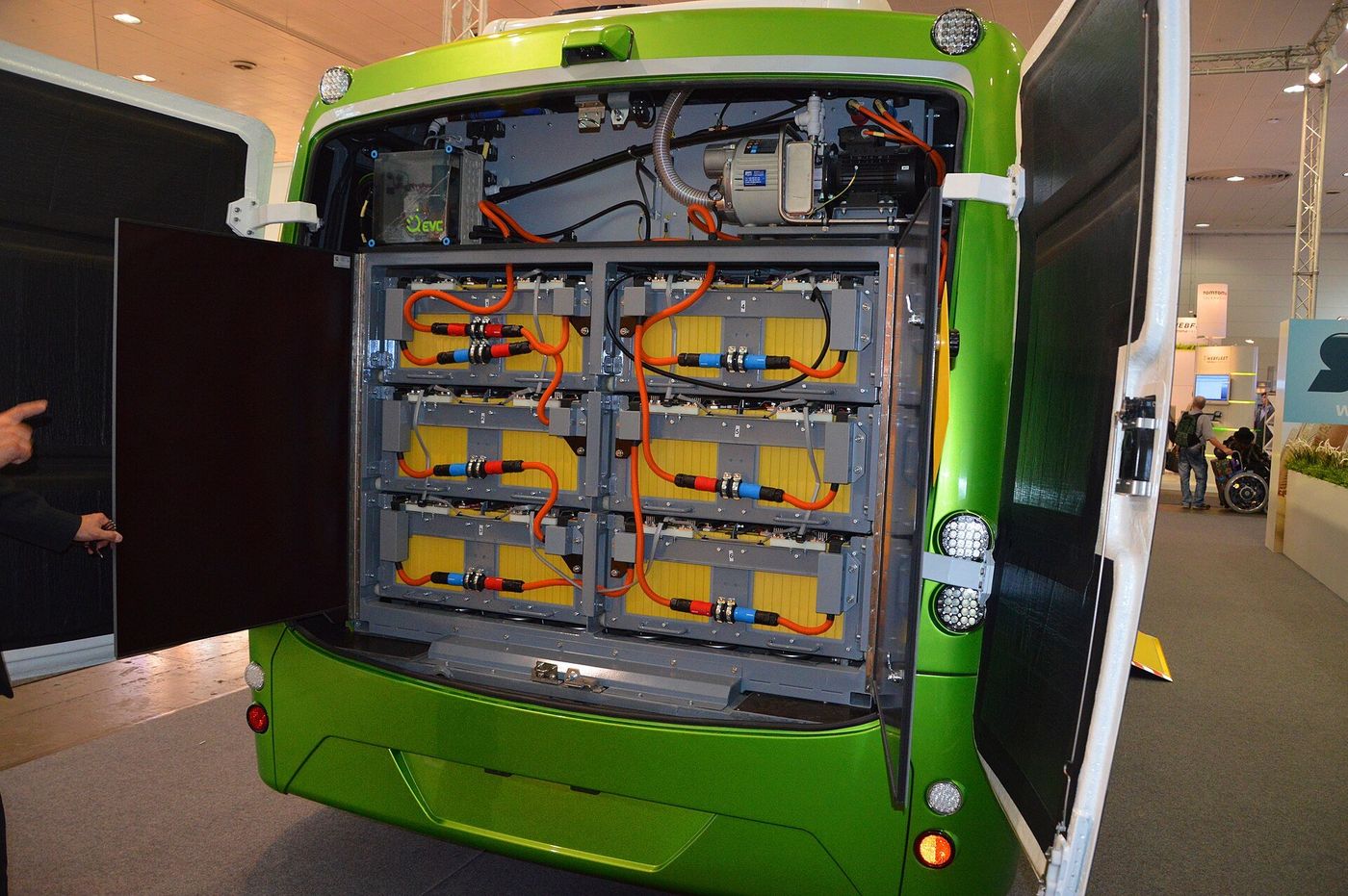
Battery cover is not defined in one unit: the makers cited here state it in months or years, in kilometres, in charging cycles, in energy use and by a state-of-health threshold, joined differently from maker to maker. For the eActros 600, Mercedes-Benz gives the high-voltage batteries a maximum of 72 months, 720,000 km or 1,800 charging cycles, whichever is reached first, with a warranty case if state of health falls below 80% under the specified conditions, while DAF’s brochure states 70% state of health for 8 years or 4 MWh/kWh, whichever comes first.
This page sets out what the makers publish, each figure with the document it comes from and, where the document carries one, its date; it does not rank the makers or say which cover is better. The documents were read on 29 September 2026. Where a document does not say something, such as how state of health is determined, the page says so instead of filling the gap.
Three layers of cover: vehicle, driveline, battery
Mercedes-Benz Trucks’ GB product sheet for the eActros 600 says the “factory-direct guarantee covers the entire vehicle, the ePowertrain and the high-voltage batteries”, each with its own limit: the entire vehicle a maximum of 12 months with unlimited mileage, the ePowertrain a maximum of 36 months or 360,000 km, and the high-voltage batteries a maximum of 72 months or 720,000 km or 1,800 charging cycles. The documents do not use one word for it. The Swiss edition of the sheet says “Gewährleistung ab Werk”, the GB sheet “factory-direct guarantee” with a “warranty case” in its footnote, and Mercedes-Benz Trucks’ international eActros page “warranty”; this page passes on each document’s own word.
Of the three Mercedes-Benz documents, only the international page states a start: the warranty runs “from the date of leaving the plant”. It prints the same three limits, with “whichever occurs first applies” for the ePowertrain and the high-voltage batteries. It presents the eActros 600, the eActros 400 and the eActros Lowliner together and names no variant in the warranty block, while the product sheets tie the limits to the eActros 600; whether the limits are the same for the other two is not stated in the documents opened for this page. The eActros 600’s specification is on its model page, and its warranty ceilings set against its design life are also discussed in Mercedes-Benz eActros 600: what 600 kWh means in service.
Renault Trucks UK’s page for the E-Tech T Range also gives its cover in layers: up to 6 years or 720,000 km of traction battery manufacturer warranty, “including full vehicle for the first year and driveline for the second and third years”. The asterisk on the battery figure reads “subject to specified operating conditions”, which the page does not spell out.
DAF’s electric brochure says the trucks “benefit from the same vehicle warranty programs all other New Generation DAF trucks have” and covers the high-voltage battery packs in a separate sentence; the durations of those vehicle programmes are not given in the DAF documents opened for this page.
MAN lists a driveline warranty among its “flexible MAN eMobility service products”. Its eTruck brochure (09/2026) names “a 3-year warranty for the driveline, service contracts plus tyre service or individual purchase warranties”, and the MAN overview page introduces the same kind of list with “for example”. No MAN document opened for this page gives a battery warranty in years, kilometres, cycles or state of health.
Volvo’s FAQ on truck batteries and charging mentions a “two-year driveline guarantee that comes with the truck” (2 years) and says of a service contract that it “also guarantees the battery function beyond” it. That sentence carries no year or kilometre figure for the battery cover.
Time, distance, cycles and energy: the limits makers print
The limits are printed in different units, and the makers join them with different words.
| Maker and vehicle | Stated cover | How the limits are joined | Document |
|---|---|---|---|
| Mercedes-Benz Trucks, eActros 600 | High-voltage batteries: max. 72 months or 720,000 km or 1,800 charging cycles; warranty case if state of health falls below 80% under the specified conditions | “or”; “whichever is reached first” | GB product sheet; international eActros page |
| Renault Trucks, E-Tech T 780, 585 and 540 | Standard: up to 6 years or 720,000 km; extendable to 10 years via the Serenity Pack | “or” | Releases of 25 June and 15 September 2026; UK E-Tech T Range page |
| DAF, XG Electric and New Generation DAF Electric | 70% state of health for 8 years or 4 MWh/kWh | “or”; “whichever comes first” (brochure) | XG Electric infosheet; Powering your Success brochure (UK-EN-0326) |
| IVECO, S-eWay Artic | Up to 10 years and up to 1.2 million km | “and” | Release of 12 June 2025 |
| Daimler Buses, eCitaro (new NMC4 batteries) | Guarantee of a 10-year lifespan; optional customer-specific coverage of up to 15 years | Years only | Releases of 2 October 2025 and 24 February 2026 |
| MAN, electric trucks | No battery warranty figure in the documents opened; a forecast useful life instead (see below) | Not applicable | Overview page; eTruck brochure 09/2026 |
For the ePowertrain and the high-voltage batteries the GB product sheet says “whichever is reached first” (the international page: “whichever occurs first applies”); the entire vehicle has no kilometre limit (“max. 12 months with unlimited mileage”). IVECO’s release joins its two limits with “and” where the Mercedes-Benz, Renault Trucks and DAF documents use “or”; this page keeps each maker’s conjunction as printed.
DAF’s documents state the cover in several forms. The infosheet for the XG Electric words it as guaranteeing “70% State of Health over 8 years or 4 MWh/kWh of energy use” and adds that this is equivalent to 4,000 charging cycles, which is DAF’s own equivalence. The Powering your Success brochure adds “whichever comes first”, the technical brochure prints “4 MWh/ kWh (or 8 year)”, and the 13 January 2026 release for the XG and XG+ Electric gives only the years, saying the LFP batteries “come with an eight-year warranty” (8 years). The documents do not say whether the kWh in “4 MWh/kWh” refers to installed or usable capacity; the two kinds of kWh figure are set out in installed vs usable battery capacity. The truck’s specification is on the DAF XG Electric model page.
IVECO’s release for the S-eWay Artic (12 June 2025) describes a battery warranty “covering up to 10 years and up to 1.2 million km”. The release gives no starting point and no state-of-health threshold for it.
Volvo’s FAQ, in answering how long batteries last, says: “There is natural ageing over time, but it’s also influenced by how much energy is cycled through the battery.” That is Volvo’s statement about battery lifetime, not a warranty term.
State of health: the threshold behind a warranty case
Two of the makers cited here, Mercedes-Benz and DAF, state a state-of-health level. Mercedes-Benz’s GB product sheet says in its footnote: “A warranty case for the high-voltage batteries occurs if the state of health falls below 80% under the specified conditions for the high-voltage batteries.” The international eActros page states it as a fall of the State of Health (SoH) of the high-voltage batteries below 80% “under the conditions stated”. DAF states 70% state of health over 8 years or 4 MWh/kWh. Neither maker’s documents opened for this page say how state of health is determined, and Mercedes-Benz’s “specified conditions” are not set out in them.
The documents name the chemistry of the batteries as LFP for the eActros 600 and for DAF’s XG and XG+ Electric, as NCA (Nickel, Cobalt, Aluminium) for the Renault Trucks E-Tech T 585 and T 780, and as “NMC4” for the eCitaro. The chemistries are set out in battery chemistries in heavy trucks.
Standard cover and contract extensions: Renault Trucks’ two figures
Renault Trucks’ documents describe the cover in two layers: a standard warranty and an extension by contract.
The standard layer: Renault Trucks’ release of 25 June 2026 says the batteries fitted to the E-Tech T 780, 585 and 540 “are covered as standard” by a warranty of up to 6 years or 720,000 km. The release of 15 September 2026 for IAA Transportation 2026 repeats it for the same three models as a “standard battery warranty” that is “extendable to 10 years via the Serenity Pack”, and the UK E-Tech T Range page gives up to 6 years or 720,000 km with the asterisk “subject to specified operating conditions”. This page does not carry those figures to other Renault Trucks vehicles: the releases name the E-Tech T 780, 585 and 540.
The contract layer: Renault Trucks describes the Serenity Pack as “a specific electromobility contract” that “ensures optimal use of electric trucks through enhanced tracking and personalised assistance provided by Renault Trucks experts during the first year of operation” (release of 18 November 2025). The UK page says the Serenity Pack includes “regular performance reviews and proactive Energy Storage System monitoring”, and separately: “Renault Trucks provides battery coverage up to 10 years under conditions, with battery health monitoring included.” The asterisk on that sentence leads to Renault Trucks’ own line “Contact your dealer for more information”. None of the Renault documents opened for this page states a kilometre limit for the 10-year extension, and neither the “specified operating conditions” of the standard cover nor the “under conditions” of the extension is spelled out in them.
Where the 8 years appear: Renault Trucks’ release of 18 November 2025, on the long-distance E-Tech T 780 and T 585, describes NCA (Nickel, Cobalt, Aluminium) lithium-ion batteries and says: “Renault Trucks guarantees their performance up to 8 years or 1 million kilometres (as part of a subscription to the Serenity Pack offer).” The release of 25 June 2026 carries the parenthesis “(previously announced as up to 8 years)” inside its sentence about extending coverage to 10 years through the Serenity Pack. In both places the 8 years is attached to the Serenity Pack, as Renault Trucks words it; the standard cover is the 6 years or 720,000 km above. The vehicles are described on the Renault Trucks E-Tech T model page.
City buses: the eCitaro NMC4 guarantee
Daimler Buses’ three releases opened for this page state the guarantee for “the new NMC4 batteries” in years:
| Release | Guarantee stated | Optional extra cover stated |
|---|---|---|
| 25 March 2025 (mobility move 2025) | Service life of 8 years | Extended warranty with a term of 12 years |
| 2 October 2025 | Service life of 10 years | Extended customer-specific warranty with a duration of up to 15 years |
| 24 February 2026 (mobility move 2026) | 10-year lifespan | Customer-specific coverage of up to 15 years |
The wording separates a guarantee of a “service life” (2025) or “lifespan” (February 2026) from the extended warranty or coverage that is optional. The February 2026 release says: “Daimler Buses guarantees a 10‑year lifespan for the new NMC4 batteries and additionally offers optional customer‑specific coverage of up to 15 years.” The earliest of the three releases that gives the 10 years is the one of 2 October 2025; the February 2026 release repeats it. None of the three gives a kilometre, energy or state-of-health condition, and the statements concern the new NMC4 batteries only.
The releases speak of the introduction of the NMC4 batteries as a plan — “from early 2026”, “from 2026” and “Starting this year” — and this page does not describe them as in service. The bus is described on the Mercedes-Benz Citaro model page, and the propulsion options of city buses are set out in city bus propulsion.
Design life and forecasts are not warranties
Daimler Truck’s release for the eActros 600 world premiere (10 October 2023) states a design figure for the vehicle and its components: “That means up to 1.2 million kilometers in ten years of operation” (1.2 million km in 10 years), after which “the battery state of health should still be over 80 percent”. The product sheet describes the LFP batteries as “enjoying a life of up to 1.2 million kilometres”, and the international eActros page lists “Service life of up to 1,200,000 km” and, as a separate line, “Six-year warranty” (6 years). The 1.2 million km figures are design and life statements, not warranty terms; the warranty limits are the 72 months, 720,000 km or 1,800 charging cycles above.
MAN’s electric trucks overview page (undated, read on 29 September 2026) says: “With a forecasted effective useful life of up to 1.6 million kilometres or up to 13 years (depending on the type of use), the batteries are also extremely long-lasting.” The eTruck brochure D111.3699/EN (09/2026) says: “With a forecast effective performance period of up to 1.6 million kilometres or up to 15 years (depending on use), the batteries are designed for long service life.” The two MAN documents differ on the years, 13 and 15; this page reports both with their sources and does not choose between them. MAN calls both a forecast, and neither is presented as a warranty term. The MAN eTGX model page also records the difference.
IVECO’s S-eWay Artic release separates the two as well: the LFP battery is “designed for a lifetime of 12 years and 70% capacity retention”, while the warranty is described as “covering up to 10 years and up to 1.2 million km”. The 70% there is worded “capacity retention”, not “state of health”.
What EU battery law adds: state-of-health data and the battery passport
This section reads only the provisions of Regulation (EU) 2023/1542 (OJ L 191, 28.7.2023) that it quotes; they read the same in the Official Journal text and in the consolidated text of 31 July 2025.
Article 3(1)(14) defines an “electric vehicle battery” to include “a battery that is specifically designed to provide electric power for traction in hybrid or electric vehicles of categories M, N or O as provided for in Regulation (EU) 2018/858”. Article 3(1)(28) defines state of health as “a measure of the general condition of a rechargeable battery and its ability to deliver the specified performance compared with its initial condition”. The maker documents opened for this page do not say how their state-of-health figures are determined, so this page does not equate them with that definition.
From 18 August 2024, electric vehicle batteries “shall be accompanied by a document containing values for the electrochemical performance and durability parameters set out in Part A of Annex IV” (Article 10(1)); point 5 of that Part lists “The expected life-time of the battery under the reference conditions for which it has been designed, in terms of cycles, except for non-cycle applications, and calendar years”.
Also from 18 August 2024, “up-to-date data for the parameters for determining the state of health and expected lifetime of batteries as set out in Annex VII shall be contained in the battery management system” of electric vehicle batteries, among others (Article 14(1)). Article 14(2) provides read-only access to that data, “respecting the intellectual property rights of the battery manufacturer, on a non-discriminatory basis to the natural or legal person who has legally purchased the battery, including independent operators or waste management operators, or any third party acting on their behalf at any time”, for listed purposes, one of which is “(b) evaluating the residual value or remaining lifetime of the battery and capability for further use, based on the estimation of the state of health of the battery”. Annex VII, Part A, gives the parameter for electric vehicle batteries as “state of certified energy (SOCE)”; this page does not define the term, and the Regulation text read for it contains no definition. How a truck is depreciated, and its book value, is a separate subject, set out in truck depreciation and book value.
From 18 February 2027, as the Regulation stands, “each electric vehicle battery placed on the market or put into service shall have an electronic record” — the battery passport (Article 77(1)). Annex XIII lists information that is accessible to the public, among it “(j) expected battery lifetime expressed in cycles, and reference test used”, “(k) capacity threshold for exhaustion (only for electric vehicle batteries)” and “(m) period for which the commercial warranty for the calendar life applies”. Information on the state of health of the battery under Article 14 is listed as “accessible only to persons with a legitimate interest”.
What the published terms leave open
In the documents opened for this page:
- How the state-of-health figures (Mercedes-Benz 80%, DAF 70%) are determined, and what Mercedes-Benz’s “specified conditions” are.
- How Mercedes-Benz counts a charging cycle: neither the product sheet nor the international eActros page defines the term. The eActros 600 article linked above discusses it.
- Whether the Mercedes-Benz limits are the same for the eActros 400 and the eActros Lowliner.
- Whether the kWh in DAF’s “4 MWh/kWh” is installed or usable capacity, when DAF’s 8 years start, whether the warranty passes to a later owner, and the durations of the vehicle warranty programmes DAF refers to.
- What Renault Trucks’ “specified operating conditions” and “under conditions” contain, and whether the 10-year Serenity Pack extension has a kilometre limit.
- When IVECO’s 10 years start, and whether its warranty has a state-of-health threshold.
- Whether the eCitaro guarantee carries a kilometre, energy or state-of-health condition: the three releases give none.
- Whether 13 or 15 years is MAN’s current forecast, and whether MAN gives a battery warranty figure at all: the documents opened give none.
Quick answers
- How are electric truck battery warranties defined?
- Mercedes-Benz gives the eActros 600's high-voltage batteries a maximum of 72 months, 720,000 km or 1,800 charging cycles, whichever is reached first, with a warranty case if state of health falls below 80% under the specified conditions. The units differ from maker to maker: DAF's brochure states 70% state of health for 8 years or 4 MWh/kWh, whichever comes first, and Renault Trucks states up to 6 years or 720,000 km as standard for the E-Tech T 780, 585 and 540. Each is the maker's own statement, and the maker documents cited on this page do not say how state of health is determined.
- What does state of health mean in a battery warranty?
- Mercedes-Benz's threshold is 80% and DAF's is 70%, and neither maker's document opened for this page says how state of health is determined. Mercedes-Benz's footnote says a warranty case occurs if the state of health falls below 80% under the specified conditions; DAF states 70% state of health over 8 years or 4 MWh/kWh. Regulation (EU) 2023/1542 defines state of health as 'a measure of the general condition of a rechargeable battery and its ability to deliver the specified performance compared with its initial condition'; whether the makers' figures follow that definition is not stated in their documents.
- What is the standard battery warranty on the Renault Trucks E-Tech T?
- Up to 6 years or 720,000 km for the E-Tech T 780, 585 and 540, extendable to 10 years through the Serenity Pack, according to Renault Trucks' releases of 25 June and 15 September 2026. The 8 years or 1 million kilometres in the release of 18 November 2025 is given 'as part of a subscription to the Serenity Pack offer'. The documents opened do not publish the 'specified operating conditions' attached to the standard figure or a kilometre limit for the 10-year extension.
- Is a battery life forecast the same as a warranty?
- No. MAN forecasts an effective useful life of up to 1.6 million km or up to 13 years on its electric trucks overview page and an effective performance period of up to 1.6 million km or up to 15 years in its 09/2026 brochure, and calls it a forecast in both; the MAN documents opened give no battery warranty figure. Mercedes-Benz states a design figure of up to 1.2 million km in 10 years of operation for the eActros 600, while its battery warranty is a maximum of 72 months, 720,000 km or 1,800 charging cycles.
- How long is the battery guarantee on the Mercedes-Benz eCitaro city bus?
- 10 years for the new NMC4 batteries, with optional customer-specific coverage of up to 15 years, according to Daimler Buses' releases of 2 October 2025 and 24 February 2026. In March 2025 Daimler Buses had given 8 years with an optional extended warranty with a term of 12 years. The three releases give the cover in years only, with no kilometre, energy or state-of-health condition.
- Does the EU battery passport carry a warranty period?
- From 18 February 2027, as Regulation (EU) 2023/1542 stands, each electric vehicle battery placed on the market or put into service shall have a battery passport, and the information in it that is accessible to the public includes the 'period for which the commercial warranty for the calendar life applies'. The public part also lists the expected battery lifetime expressed in cycles and, for electric vehicle batteries, a capacity threshold for exhaustion; information on the state of health of the battery is accessible only to persons with a legitimate interest.
Models in this article
Sources
- Der neue eActros 600 — Produktblatt (Swiss edition) — Daimler Truck Schweiz AG
- The new eActros 600 — product sheet — Mercedes-Benz Trucks
- eActros — model overview — Mercedes-Benz Trucks
- Mercedes-Benz Trucks celebrates world premiere of the battery electric long-haul truck eActros 600 (press release, 10 October 2023) — Daimler Truck
- A range of 600 km: Renault Trucks unveils its long-distance electric trucks (press release, 18 November 2025) — Renault Trucks
- Long-haul operations now within reach of Renault Trucks electric tractors (press release, 25 June 2026) — Renault Trucks
- Two premieres and a complete electric portfolio: Renault Trucks takes the stage at IAA Transportation 2026 (press release, 15 September 2026) — Renault Trucks
- Renault Trucks E-Tech T Range Electric — Renault Trucks UK
- DAF introduces XG and XG+ Electric (13 January 2026) — DAF Trucks N.V.
- DAF XG Electric — infosheet — DAF Trucks
- New Generation DAF Electric — Powering your Success (brochure, UK-EN-0326) — DAF Trucks Limited
- New Generation DAF Electric — Technical Specifications (brochure, UK-EN-0326) — DAF Trucks Limited
- MAN electric trucks: model overview — MAN Truck & Bus
- The new MAN eTruck generation (brochure D111.3699/EN, 09/2026) — MAN Truck & Bus
- Daimler Buses presents eCitaro K and eMobility Services at mobility move 2025 in Berlin (press release, 25 March 2025) — Daimler Truck
- The new NMC4 battery in the Mercedes-Benz eCitaro: more capacity, longer service life (press release, 2 October 2025) — Daimler Truck
- Daimler Buses presents the Mercedes-Benz eCitaro with new NMC4 battery and eMobility services at mobility move 2026 in Berlin (press release, 24 February 2026) — Daimler Truck
- IVECO unveils the new S-eWay Artic, the ideal vehicle for e-mobility in long-haul and regional missions (press release, 12 June 2025) — IVECO
- FAQ on truck batteries & charging — Volvo Trucks
- Regulation (EU) 2023/1542 concerning batteries and waste batteries (OJ L 191, 28.7.2023) — Article 3(1)(14) and (28), Articles 10(1), 14 and 77(1), Annexes IV, VII and XIII — Official Journal of the European Union