How Euro NCAP tests trucks
Euro NCAP's truck rating as it publishes it: the areas scored, how stars and the CitySafe award are set, and its 14 September 2026 results, each with its rated variant.
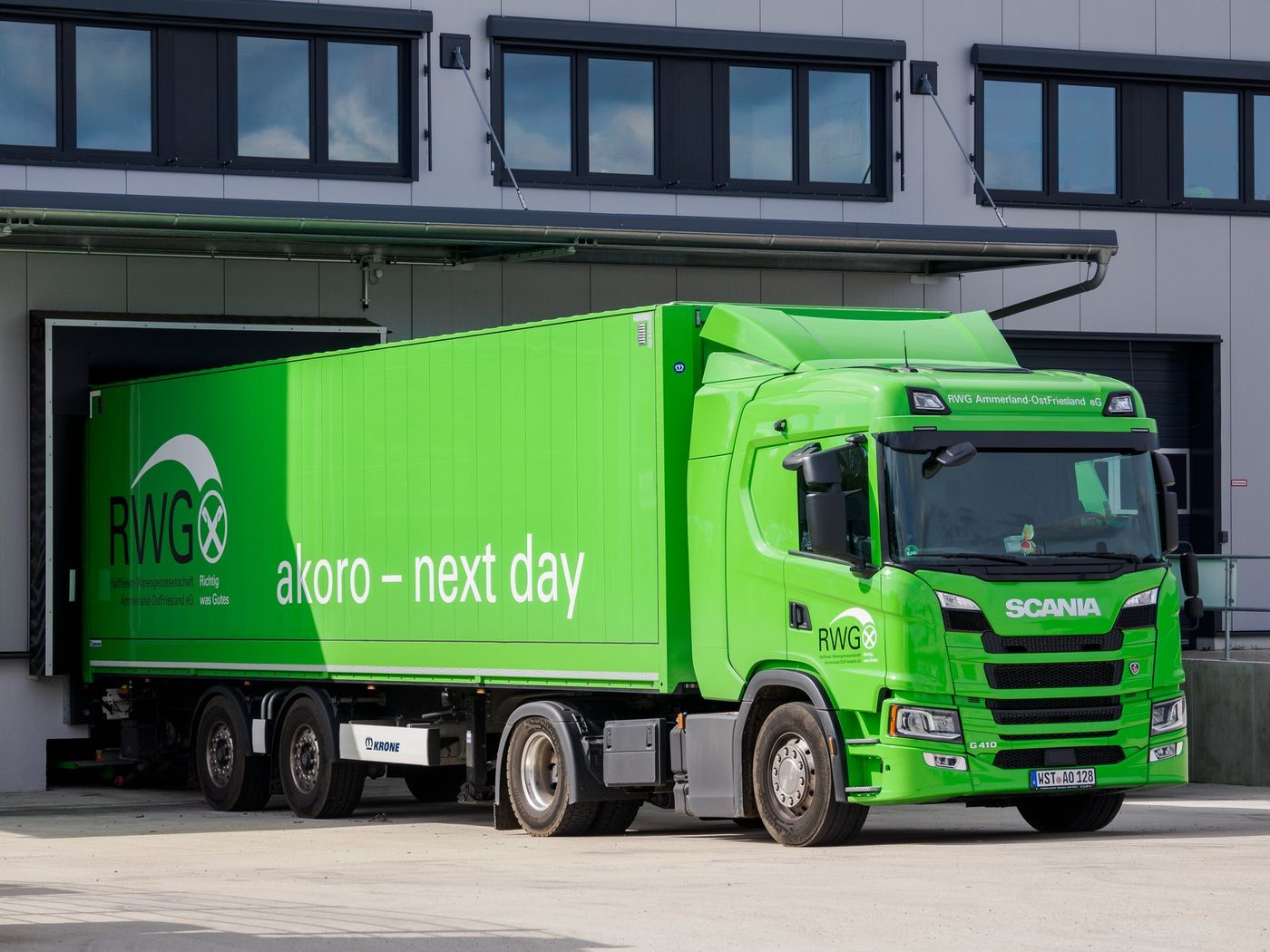
Euro NCAP, which describes itself as an independent organisation, has rated heavy trucks since 2024: it scores three areas, Safe Driving, Crash Avoidance and Post-Crash Safety, at up to 100 points each and gives a result of zero to five stars. The protocol takes the overall star from the lowest rating assigned to any pillar (excluding Post-Crash for the 2025 to 2027 rating period), the scheme is voluntary, and a fourth area, Crash Protection, is not yet evaluated.
This page reads Euro NCAP’s own truck pages, its four truck protocols (version 1.20), a conference paper and its media releases, all on 29 September 2026. The table lists the eight ratings of Euro NCAP’s release of 14 September 2026, each with its rated variant and the year 2026 and with the same fields for every row; the page does not rank them or add advice of its own, and any sentence that reads like advice is Euro NCAP’s, attributed. What the law requires, and from when, is in Mandatory driver assistance systems: the four dates in Annex II.
A voluntary rating, not a type-approval
Euro NCAP, the European New Car Assessment Programme, describes itself as an independent organisation dedicated to improving the safety of modern vehicles, not a government agency and not part of the automotive industry. Its page ‘What is Euro NCAP?’ says it launched its Safer Truck Programme in 2024, and its ESV 2026 conference paper (M. Avery, I. Knight, C. Grover) says that in 2024 it applied a consumer rating scheme to heavy trucks aimed at long-haul freight for the first time.
Euro NCAP states its aim as encouraging manufacturers to upgrade safety solutions in commercial vehicles far above the regulation that exists today. The paper says consumer rating schemes are by their nature voluntary and that industry may submit updated and improved vehicles for testing at any time; a star is therefore a voluntary consumer rating, not a type-approval.
Which trucks, and how they are chosen
Euro NCAP’s protocols define a heavy goods vehicle (HGV) as a category N2 or N3 vehicle with gross mass exceeding 3,500 kg. It classifies trucks into four sectors that cover the European N2 and N3 classification: long haul (international), fleet distribution (regional and city), construction (on and off-road vehicles) and utility (refuse, fire and specialist vehicles).
Euro NCAP says its member organisations sponsor at least one truck test per year, that manufacturers can also request their own models but the testing process is identical for all, and that trucks are provided by the manufacturers, built to order with a specification typical for the application. A 2025 Euro NCAP release records at least one exception: a manufacturer declined to take part, and Euro NCAP sourced its model from the market.
Three areas are scored today
Euro NCAP’s Overall Rating protocol names four areas: Safe Driving, Crash Avoidance, Crash Protection (to be introduced in a future protocol generation) and Post Crash Safety. Three are scored, each with a maximum of 100 points.
| Pillar | Weighting factor | Items and their maximum points | Total |
|---|---|---|---|
| Safe Driving | 0.4 | Seat belt reminder 15; driver state monitoring 10; speed assistance systems 15; direct vision 35; indirect vision 15; longitudinal assistance 10 | 100 |
| Crash Avoidance | 0.5 | Frontal collisions with a vehicle 35; frontal collisions with vulnerable road users (VRU) 25; low speed near side turn collisions 15; lane departure collisions 25 | 100 |
| Crash Protection | To be introduced in a future protocol generation | Not scored | Not scored |
| Post-Crash Safety | 0.1 | Rescue sheets and emergency response guide 80; external energy labelling 10; occupant extrication 5; e-call 5 | 100 |
Safe Driving
Direct vision is 35 of the 100 points and is measured as a volume: Euro NCAP says vision is calculated in cubic metres, virtually or with a specialist optical device at the driver’s eyepoint, and that a higher volume gives a greater score. The protocol scores the total visible volume (TVV) as zero points at 5.000 m³ or less and 35 points above 20.500 m³, with a formula in between that is not reproduced here. Euro NCAP’s page ‘How are trucks tested?’ says cab and chassis height can vary significantly and can have a negative impact on Direct Vision scores; cabs are covered in Truck cabs explained.
For indirect vision, Euro NCAP encourages replacing the regulated Class 2 and 4 (rear vision) and Class 5 and 6 (near-field vision) mirrors with cameras, and says manufacturers that replace all mirrors with a camera monitoring system are awarded the highest score. Speed assistance carries 15 points; Euro NCAP says such systems help control the speed of the vehicle to keep within safe and legal limits.
Crash Avoidance
Euro NCAP says the technologies assessed today include car-to-car, car-to-pedestrian and car-to-cyclist autonomous emergency braking (AEB) and lane support systems, and that near-side turn AEB, which can prevent collisions with cyclists as the vehicle turns, is unique to trucks. Its listed tests include approaching a slower-moving and a stationary car, a turn across the path of a cyclist, a pedestrian crossing the road, lane keep assist and emergency lane keeping in overtaking traffic. In all Crash Avoidance evaluations, it says, impactable soft dummy targets are used at specialist test track facilities; the targets represent full-size cars, motorcycles, adult and child pedestrians and cyclists, and robots control the vehicles so that conditions are closely controlled and repeatable.
The Crash Avoidance protocol defines frontal scenarios with a car that is stationary (HCRs), travelling at constant speed (HCRm) or travelling at constant speed and then decelerating (HCRb), and a near-side turn across the path of a cyclist travelling in the same direction at constant speed (HBTA). For each group of tests it says the effective systems must be on by default at the start of every journey to be eligible for points.
Post-Crash Safety
The Post Crash protocol says that at present only its rescue requirements, the rescue sheet and emergency response guide, have been fully transferred to the truck rating scheme. Placeholders for its other items are included in the points, but no assessment against them is undertaken because requirements appropriate to trucks have not yet been developed; the protocol says the placeholder points are sufficiently small that the inability to provide a rating does not prevent any vehicle from achieving 5 stars. It lists extrication and e-call as under development for 2028, with no score possible at this time. The documents makers publish are described in Rescue sheets and emergency-response guides for electric trucks and buses.
How a result is written down
Euro NCAP says every new truck it tests is awarded a score from zero to five stars, the combined pillar scores being translated into an overall star rating. For the 2025 to 2027 rating period the Overall Rating protocol sets the same balance limits for each of Safe Driving, Crash Avoidance and Post-Crash Safety: 5 stars at 80 %, 4 stars at 65 %, 3 stars at 50 %, 2 stars at 35 % and 1 star at 20 %. The overall star rating is, in the protocol’s words, the lowest rating assigned to any pillar (excluding Post-Crash for the 2025 to 2027 rating period). Where one pillar has a surplus of points above a star threshold and an adjacent pillar a deficit below one, one transfer of up to 20 points from one to the other is permitted; for 2025 to 2027 that is between Safe Driving and Crash Avoidance, in either direction.
Euro NCAP’s page ‘How to choose a safer truck?’ describes the six levels as follows, condensed here:
- Five stars: superior safety across a wide range of functionalities and the best protection for occupants and those around the vehicle, combining good vision with high-performing collision avoidance systems.
- Four stars: significant safety benefits across a range of functions and a good balance for both city and highway operation.
- Three stars: some significant safety functionality beyond legal requirements, but only in certain areas.
- Two stars: a vehicle that just passes current regulations and offers some safety systems or functions beyond legal requirements; other vehicles offer more safety.
- One star: a vehicle that just passes current regulations and offers some minor additional safety functionality.
- Zero stars: a vehicle that just passes current regulations and offers no safety systems or functions beyond legal requirements.
The conference paper words the bottom of the scale differently, saying that any vehicle that only complied with the minimum standard set by the EU’s General Safety Regulation in 2024 would achieve zero stars.
Separately from the stars, Euro NCAP offers a CitySafe award. Its protocol makes the award where the star rating is at least three stars and the total CitySafe score, the sum of the final direct vision, indirect vision, frontal collisions VRU and low speed near side turn collisions scores, is greater than 45 points. Euro NCAP’s page describes it as highlighting vehicles most appropriate for inner-city operation; its glossary and paper word the threshold differently, as at least 50 % of the available points in the relevant assessments.
What a rating applies to
Euro NCAP states that fleets and operators using its information to select a safe vehicle need to understand that a vehicle must be ordered with the same optional equipment as that fitted to the test vehicle to achieve the safety performance suggested. Its FAQ adds that ratings are presented by sector to guide fair comparisons, but that the rating still applies regardless of operational use as long as make, model, model year, cab and chassis structure, electronic architecture, axle configuration, wheelbase, cab mounting height and optional safety equipment are the same.
The FAQ also says that some manufacturers work with Euro NCAP to extend ratings to partner vehicles or additional variants using engineering analyses and spot testing, listed within the model rating or as a separate partner model on the website.
The 14 September 2026 release: eight rated variants
Euro NCAP’s media release of 14 September 2026, timed with the opening of IAA Transportation 2026 in Hannover, Germany, lists eight ratings: seven under Long haul and, under Regional distribution, the IVECO S-WAY 4x2 Rigid. Euro NCAP’s assessment pages show the year 2026 beside each model and state no day of testing, so each row carries the year, not a test day. The pages also carry verdict text, pillar percentages, function scores and safety equipment tables, which this page does not reproduce, so that every row has the same fields.
| Model | Rated variant | Year | Stars | CitySafe award | Engine as printed | Chassis as printed |
|---|---|---|---|---|---|---|
| BYD ETT 44 | 4x2 Tractor Unit | 2026 | 5 stars | shown | 680 kW | Medium height (figure not shown); wheelbase 3800 mm |
| IVECO S-WAY | 4x2 Rigid | 2026 | 2 stars | not shown | 360 hp | Medium height (965 mm); wheelbase 5000 mm |
| Mercedes-Benz Actros F | 4x2 Tractor Unit | 2026 | 5 stars | shown | 510 hp | Medium height (922 mm); wheelbase 3700 mm |
| Mercedes-Benz Actros F | 6x2 Rigid | 2026 | 5 stars | shown | 510 hp | Medium height (922 mm); wheelbase not shown |
| Scania G-series | 4x2 Tractor Unit | 2026 | 5 stars | shown | 560 hp | Medium height (978 mm); wheelbase 3750 mm |
| Scania G-series | 6x2 Rigid | 2026 | 5 stars | shown | 560 hp | Medium height (978 mm); wheelbase not shown |
| Scania R-series | 4x2 Tractor Unit | 2026 | 5 stars | shown | 560 hp | Medium height (945 mm); wheelbase not shown |
| Scania R-series | 6x2 Rigid | 2026 | 5 stars | shown | 560 hp | Medium height (945 mm); wheelbase 4750 mm |
The column is headed rated variant, not tested variant, because Euro NCAP’s pages describe four of the eight ratings, by our count, as a variant or partner of another listed row:
- Mercedes-Benz Actros F 6x2 Rigid: a variant of the Actros F 4x2 Tractor Unit tested in 2026.
- Scania G-series 4x2 Tractor Unit: a partner of the Scania R-series 6x2 Rigid tested in 2026.
- Scania G-series 6x2 Rigid: a variant of the Scania G-series 4x2 tractor unit 2026 rating, which partners the Scania R-series 6x2 Rigid tested in 2026.
- Scania R-series 4x2 Tractor Unit: a variant of the R-series 6x2 Rigid tested in 2026.
The pages for the BYD ETT 44, the IVECO S-WAY, the Actros F 4x2 Tractor Unit and the Scania R-series 6x2 Rigid carry no such statement. This page does not say that all eight were separately tested, and the eight rows are not all of Euro NCAP’s truck results: its press page also lists rating releases dated 30 September 2025, 20 January 2026 and 22 April 2026.
What Euro NCAP does not assess yet
Euro NCAP’s page ‘How are trucks tested?’ says that at present it does not evaluate the passive safety features of trucks. Euro NCAP’s own pages and paper give different years for what is planned:
- ‘How are trucks tested?’ says restraint systems such as pre-tensioners and airbags will be added to the assessment in 2028 and that work is being undertaken to introduce a whole vehicle crash test in 2031.
- ‘How to choose a safer truck?’ says Crash Protection is coming into force in 2031, and the FAQs say Euro NCAP plans to introduce comprehensive, independent assessments of HGV occupant protection measures in 2031.
- The paper says crash protection measures were allocated as an upgrade for 2031 ratings in a roadmap published in 2022 and in most discussions since, and that research and consultation is underway to examine whether interim measures may be possible in the 2028 to 2031 time frame.
These statements do not agree on the year, and this page does not reconcile them. The paper also says Euro NCAP has committed to updating the rating every three years, so that the next major upgrade is due in 2028 and subsequently in 2031, and that the detailed protocols for evolving the existing ones are due to be delivered to industry by the end of 2026.
On what comes next, three Euro NCAP statements are given as they stand. Its home page shows a block headed ‘Next release’ with the line 3 November 2026, without a vehicle type. Its release of 22 April 2026 says City Distribution trucks (up to 12 tonnes) are scheduled for testing and release in November. The paper says city distribution trucks (up to 12 tonnes) will be rated in the autumn of 2026 and construction vehicles, for example 4 axle rigid tippers at 32 tonnes, in 2027. The home page was read on 29 September 2026.
Trailer rear underrun: a report and a call, not a rating
On 14 September 2026 Euro NCAP published a release that reports trailer rear underrun crash tests and calls on Europe’s truck and trailer manufacturers to take immediate action, with voluntary upgrades and retrofit solutions. It contains no star rating for any trailer or truck. Euro NCAP describes a rear underrun collision as one in which a passenger car impacts the back of a heavy trailer and slides underneath it. It says the testing programme, supported by the UK’s National Highways and Department for Transport alongside partners including Germany’s ADAC, Sweden’s Trafikverket and the US Insurance Institute for Highway Safety (IIHS), exposed vulnerabilities that contribute to an estimated 400 fatal trailer rear underrun collisions across Europe every year. Euro NCAP reports:
- When crash-tested at 56 km/h (35 mph), European trailer rear guards built to the current mandatory UN standard failed structurally; the guards buckled, allowing even five-star rated passenger vehicles to slide underneath and suffer catastrophic damage.
- In comparative testing against trailers with rear underrun barriers built to the voluntary US IIHS TOUGHGUARD benchmark, the guard held firm under identical impact conditions.
- Detection rates of early-generation advanced driver assistance systems dropped significantly when facing real commercial vehicles, such as skeletal or curtainside trailers, and Euro NCAP notes that with the average age of passenger cars continuing to rise, it will take more than 15 years for crash-avoidance technology to significantly mitigate the issue. Both trailer types are described in Trailer types explained.
Euro NCAP calls on both trailer and truck manufacturers to encourage the adoption of improved rear underrun protection structures voluntarily, rather than waiting for regulatory change. The release says Matthew Avery, Euro NCAP’s Director of Strategic Development, together with representatives from Germany’s ADAC, will present research findings at the 132nd session of the UNECE Working Party on General Safety Provisions (GRSG) in Geneva, which it says takes place from 28 September; this page does not report the outcome. A trailer’s basic dimensions are in Semi-trailer dimensions.
Quick answers
- How does Euro NCAP test trucks?
- Euro NCAP scores three areas at up to 100 points each: Safe Driving (seat belt reminder, driver state monitoring, speed assistance, direct and indirect vision and longitudinal assistance), Crash Avoidance (frontal collisions with vehicles and vulnerable road users, low-speed near-side turns and lane departure) and Post-Crash Safety. The pillar weighting factors in its protocol are 0.4 for Safe Driving, 0.5 for Crash Avoidance and 0.1 for Post-Crash Safety. Crash Avoidance tests use soft dummy targets on specialist test tracks with robot-controlled vehicles, and Euro NCAP says it does not evaluate the passive safety features of trucks at present.
- Does Euro NCAP crash-test trucks?
- Not at present: Euro NCAP's page 'How are trucks tested?' says it does not evaluate the passive safety features of trucks, that restraint systems will be added to the assessment in 2028, and that work is being undertaken to introduce a whole vehicle crash test in 2031. Its other pages and a 2026 conference paper date crash protection to 2031, with research under way on whether interim measures may be possible in the 2028 to 2031 time frame. Euro NCAP's own pages do not agree on the year.
- What does a Euro NCAP star rating mean for a truck?
- It is a result from zero to five stars, set for 2025 to 2027 at 80 % for 5 stars, 65 % for 4 stars, 50 % for 3 stars, 35 % for 2 stars and 20 % for 1 star in each of Safe Driving, Crash Avoidance and Post-Crash Safety. The protocol takes the overall star from the lowest rating assigned to any pillar (excluding Post-Crash for the 2025 to 2027 rating period). Euro NCAP says its safety results only apply to vehicles with the specific safety equipment listed.
- Which trucks did Euro NCAP rate on 14 September 2026, and with how many stars?
- Euro NCAP's release of 14 September 2026 lists eight ratings, each for 2026: BYD ETT 44 4x2 Tractor Unit, 5 stars; IVECO S-WAY 4x2 Rigid, 2 stars; Mercedes-Benz Actros F 4x2 Tractor Unit, 5 stars; Mercedes-Benz Actros F 6x2 Rigid, 5 stars; Scania G-series 4x2 Tractor Unit, 5 stars; Scania G-series 6x2 Rigid, 5 stars; Scania R-series 4x2 Tractor Unit, 5 stars; Scania R-series 6x2 Rigid, 5 stars (seven rows at five stars and one at two stars, our count). These are not all of Euro NCAP's truck results, and four of the eight pages describe the rating as a variant or partner of another listed row.
- What is the CitySafe award?
- It is an award separate from the stars: Euro NCAP's protocol makes it where the star rating is at least three stars and the total CitySafe score is greater than 45 points. In the 14 September 2026 release the award is shown for seven of the eight rows and not shown for the IVECO S-WAY 4x2 Rigid, 2026 (our count).
- Has Euro NCAP given trailers a star rating for rear underrun protection?
- No: Euro NCAP's release of 14 September 2026 contains no star rating for any trailer or truck. It reports crash tests at 56 km/h (35 mph) in which, Euro NCAP says, European trailer rear guards built to the current mandatory UN standard failed structurally, and it calls on truck and trailer manufacturers to adopt improved rear underrun protection voluntarily.
Models in this article
Sources
- How are trucks tested? — Euro NCAP Trucks & Vans
- How to choose a safer truck? — Euro NCAP Trucks & Vans
- What is Euro NCAP? — Euro NCAP Trucks & Vans
- Frequently asked questions — Euro NCAP Trucks & Vans
- Glossary — Euro NCAP Trucks & Vans
- Euro NCAP Trucks & Vans home page: Latest truck ratings and Next release (read 29 September 2026) — Euro NCAP Trucks & Vans
- Euro NCAP awards five-star safety rating to BYD’s new electric truck (media release with results table, 14 September 2026) — Euro NCAP, 14 Sept 2026
- Assessment: BYD ETT 44, 4x2 Tractor Unit, 2026 — Euro NCAP Trucks & Vans
- Assessment: IVECO S-WAY, 4x2 Rigid, 2026 — Euro NCAP Trucks & Vans
- Assessment: Mercedes-Benz Actros F, 4x2 Tractor Unit, 2026 — Euro NCAP Trucks & Vans
- Assessment: Mercedes-Benz Actros F, 6x2 Rigid, 2026 — Euro NCAP Trucks & Vans
- Assessment: Scania G-series, 4x2 Tractor Unit, 2026 — Euro NCAP Trucks & Vans
- Assessment: Scania G-series, 6x2 Rigid, 2026 — Euro NCAP Trucks & Vans
- Assessment: Scania R-series, 4x2 Tractor Unit, 2026 — Euro NCAP Trucks & Vans
- Assessment: Scania R-series, 6x2 Rigid, 2026 — Euro NCAP Trucks & Vans
- HGV Assessment Protocol: Overall Rating, version 1.20, July 2025 — Euro NCAP
- HGV Assessment Protocol: Safe Driving, version 1.20, July 2025 — Euro NCAP
- HGV Assessment Protocol: Crash Avoidance, version 1.20, July 2025 — Euro NCAP
- HGV Post Crash assessment protocol, version 1.20 (July 2025) — Euro NCAP
- Developing a consumer safety rating for Heavy Goods Vehicles (paper ESV-166, M. Avery, I. Knight, C. Grover; listed by Euro NCAP as ESV 2026) — Euro NCAP, Enhanced Safety of Vehicles conference
- Euro NCAP calls on truck trailer manufacturers to save lives and voluntarily improve rear underrun protection (media release, 14 September 2026) — Euro NCAP, 14 Sept 2026
- Driving change: Euro NCAP elevates safety standards for European trucks (media release, 22 April 2026) — Euro NCAP, 22 Apr 2026
- The Mercedes-Benz star shines as Actros achieves five-star Safer Truck rating (media release, 30 September 2025) — Euro NCAP, 30 Sept 2025
- Press & media (list of Euro NCAP truck releases) — Euro NCAP Trucks & Vans