Limited and excepted quantities under ADR: the LQ mark, the 12 t / 8 t marking rule, tunnel category E and codes E0–E5
ADR 2025 Chapters 3.4 and 3.5: the LQ mark and package limits, the marks for transport units over 12 t and the 8 t threshold, tunnel category E, and the excepted quantity codes E0 to E5.
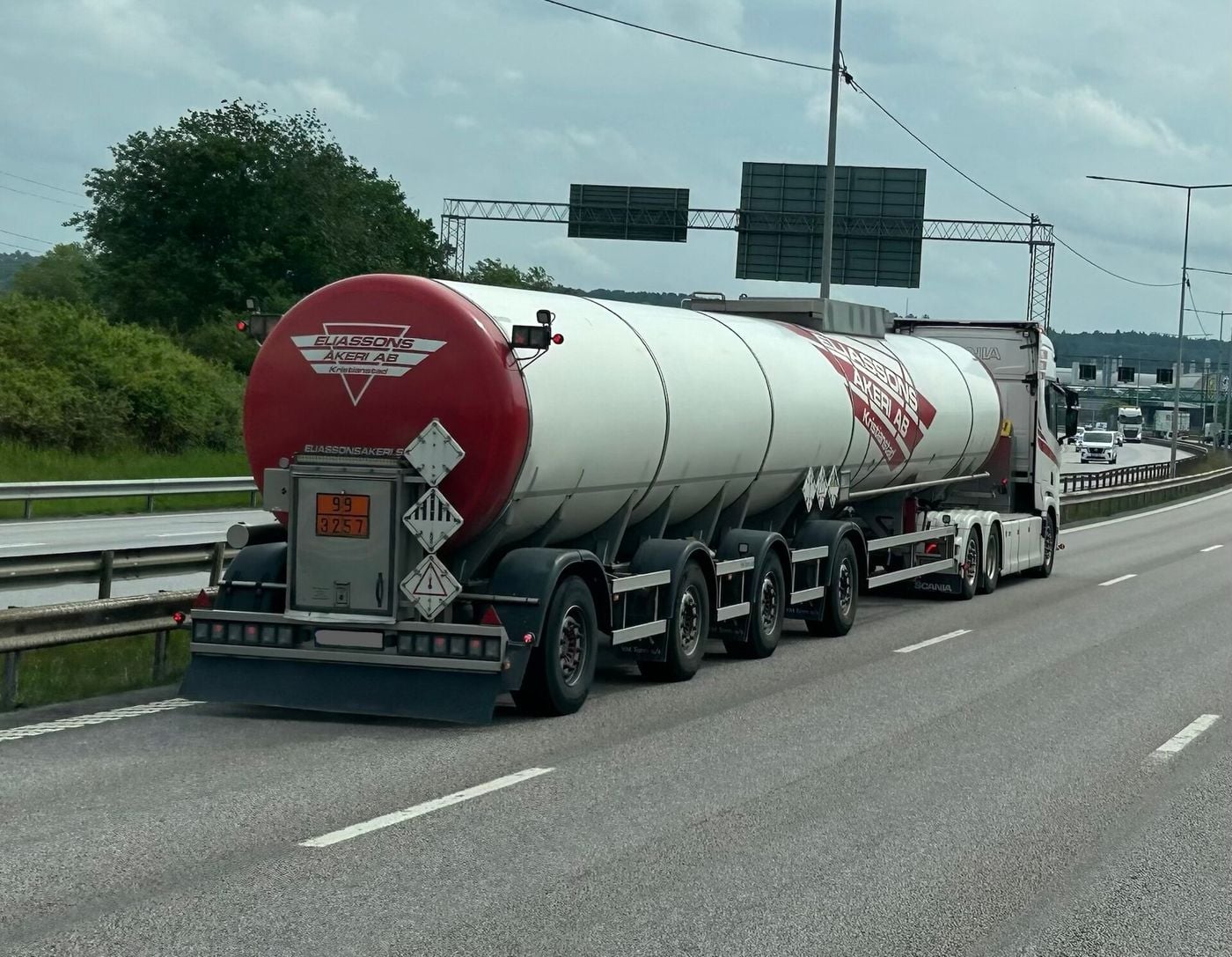
Limited quantities (LQ) and excepted quantities (EQ) are two sets of rules in ADR, the agreement on the international carriage of dangerous goods by road, under which dangerous goods packed within set quantity limits are subject only to the provisions each chapter lists. Limited quantities are Chapter 3.4 of ADR 2025: column (7a) of Table A gives the limit per inner packaging or article, a package may not exceed 30 kg gross, it bears a diamond mark with a black top and bottom, and transport units with a maximum mass exceeding 12 tonnes carry larger marks at the front and at the rear, with an exception where other dangerous goods on board require orange-coloured plates; the marks may be dispensed with when the limited quantity packages total no more than 8 tonnes gross per transport unit. When the quantities carried exceed 8 tonnes total gross mass per transport unit, tunnel category E restricts them. Excepted quantities are Chapter 3.5: the codes E0 to E5 in column (7b) cap the net quantity per inner and outer packaging, the packages carry a mark of their own, no vehicle or container may carry more than 1 000 of them, and where documents accompany them, at least one of them states “Dangerous Goods in Excepted Quantities” and the number of packages. The amendments to ADR that the UNECE Working Party on the Transport of Dangerous Goods adopted for entry into force on 1 January 2027 contain no amendment to either chapter.
Status as of 14 November 2026. Read on that day: ADR 2025 (ECE/TRANS/352, Volumes I and II) in its English text as published in the United Nations Digital Library — 1.3.1, 1.9.5.2.2, 1.9.5.3.5, 1.9.5.3.6, Chapters 3.4 and 3.5, 8.2.3 and 8.6.2 to 8.6.4 — and 1.9.5.2.2, 3.4.8 to 3.4.15 and 3.5.1 in the French text published by the Swiss Federal Roads Office; and ECE/TRANS/WP.15/274 of 24 February 2026 with its addendum (Add.1) and corrigendum (Corr.1), the amendments for 1 January 2027.
Limited quantities: what Chapter 3.4 covers
3.4.1 opens: “This Chapter provides the provisions applicable to the carriage of dangerous goods of certain classes packed in limited quantities.” The limit is set substance by substance: “The applicable quantity limit for the inner packaging or article is specified for each substance in column (7a) of Table A of Chapter 3.2.” Where an entry may not be carried under the chapter at all, the same column shows a zero: “the quantity ‘0’ has been indicated in this column for each entry not permitted to be carried in accordance with this Chapter”.
Goods packed in this way and meeting the chapter “are not subject to any other provisions of ADR except the relevant provisions of” eight groups, listed in 3.4.1 (a) to (h):
| 3.4.1 | Part of ADR | Relevant provisions of |
|---|---|---|
| (a) | Part 1 | Chapters 1.1, 1.2, 1.3, 1.4, 1.5, 1.6, 1.8 and 1.9 |
| (b) | Part 2 | Part 2 |
| (c) | Part 3 | Chapters 3.1, 3.2 and 3.3, except special provisions 61, 178, 181, 220, 274, 625, 633 and 650 (e) |
| (d) | Part 4 | 4.1.1.1, 4.1.1.2, 4.1.1.4 to 4.1.1.8 |
| (e) | Part 5 | 5.1.2.1 (a) (i) and (b), 5.1.2.2, 5.1.2.3, 5.2.1.10, 5.4.2 |
| (f) | Part 6 | The construction requirements of 6.1.4, and 6.2.5.1 and 6.2.6.1 to 6.2.6.3 |
| (g) | Part 7 | Chapter 7.1 and 7.2.1, 7.2.2, 7.5.1 (except 7.5.1.4), 7.5.2.4, 7.5.7, 7.5.8 and 7.5.9 |
| (h) | Part 8 | 8.2.3, 8.6.3.3 and 8.6.4 |
The package limits come next. Under 3.4.2 dangerous goods are packed only in inner packagings placed in suitable outer packagings, intermediate packagings may be used, and inner packagings are not necessary for articles such as aerosols or “receptacles, small, containing gas”. The same paragraph ends: “The total gross mass of the package shall not exceed 30 kg.” Except for articles of Division 1.4, Compatibility Group S, shrink-wrapped or stretch-wrapped trays are acceptable as outer packagings, and the paragraph on them ends: “The total gross mass of the package shall not exceed 20 kg.” (3.4.3). The classes of dangerous goods are set out in dangerous goods classes and orange plates.
The LQ mark on packages
“Except for air transport”, packages containing dangerous goods in limited quantities bear the mark of Figure 3.4.7.1 (3.4.7.1). The text describes it: “The mark shall be in the form of a square set at an angle of 45° (diamond-shaped). The top and bottom portions and the surrounding line shall be black. The centre area shall be white or a suitable contrasting background. The minimum dimensions shall be 100 mm × 100 mm and the minimum width of the line forming the diamond shall be 2 mm.” The mark “shall be readily visible, legible and able to withstand open weather exposure without a substantial reduction in effectiveness”. If the size of the package so requires, the outer dimensions “may be reduced to be not less than 50 mm × 50 mm provided the mark remains clearly visible”, with a line of at least 1 mm (3.4.7.2).
An overpack holding limited quantity packages whose marks are not all visible is marked with the word “OVERPACK”, in letters “at least 12 mm high”, in an official language of the country of origin and also, if that language is not English, French or German, in one of those three unless agreements between the countries concerned provide otherwise; it also bears the marks required by Chapter 3.4 (3.4.11).
Transport units with a maximum mass over 12 tonnes: 3.4.12 to 3.4.15
3.4.12: “In advance of carriage, consignors of dangerous goods packed in limited quantities shall inform the carrier in a traceable form of the total gross mass of such goods to be consigned.”
The rule itself is written for the transport unit. 3.4.13 (a): “Transport units with a maximum mass exceeding 12 tonnes carrying dangerous goods packed in limited quantities shall be marked in accordance with 3.4.15 at the front and at the rear except when the transport unit contains other dangerous goods for which orange-coloured plate marking in accordance with 5.3.2 is required.” In that case the transport unit “may display the required orange-coloured plate marking only, or both the orange-coloured plate marking in accordance with 5.3.2 and the marks in accordance with 3.4.15”. 3.4.13 (b) sets the corresponding rule for containers, and 3.4.14 sets the threshold up to which the marks may be dispensed with: “The marks specified in 3.4.13 may be dispensed with, if the total gross mass of the packages containing dangerous goods packed in limited quantities carried does not exceed 8 tonnes per transport unit.”
| Situation as the text states it | What is displayed | Paragraph |
|---|---|---|
| Transport unit with a maximum mass exceeding 12 tonnes, carrying dangerous goods packed in limited quantities | The 3.4.15 mark at the front and at the rear | 3.4.13 (a) |
| The same transport unit also containing other dangerous goods for which orange-coloured plate marking under 5.3.2 is required | The orange-coloured plates only, or both the orange-coloured plates and the 3.4.15 marks | 3.4.13 (a) |
| Container carrying limited quantities on a transport unit with a maximum mass exceeding 12 tonnes | The 3.4.15 mark on all four sides; where the container holds other dangerous goods requiring placards under 5.3.1, the placards only, or both | 3.4.13 (b) |
| The transport unit carrying such a container | No mark, except when the container marks are not visible from outside the carrying transport unit; then the same marks at the front and at the rear | 3.4.13 (b) |
| Total gross mass of the limited quantity packages carried not exceeding 8 tonnes per transport unit | The marks of 3.4.13 may be dispensed with | 3.4.14 |
| No dangerous goods in limited quantities carried | The marks are removed or covered | 3.4.15 |
The mark on transport units and containers is the package mark at a larger size. 3.4.15 makes it “the same as the one required in 3.4.7, except that their minimum dimensions shall be 250 mm × 250 mm”, and ends: “These marks shall be removed or covered if no dangerous goods in limited quantities are carried.” The orange-coloured plates of 5.3.2 and the placards of 5.3.1 that this rule refers to are described in dangerous goods classes and orange plates.
Tunnel category E above 8 tonnes
Limited quantities meet the tunnel rules through Chapter 1.9, which 3.4.1 (a) keeps, and through 8.6.3.3 and 8.6.4, which 3.4.1 (h) keeps. The definition of tunnel category E in 1.9.5.2.2 reads: “Restriction for the carriage of all dangerous goods other than those for which ‘(-)’ is marked in column (15) of Table A of Chapter 3.2 and for all dangerous goods in accordance with the provisions of Chapter 3.4 if the quantities carried exceed 8 tonnes total gross mass per transport unit.”
Three further paragraphs tie the tunnel rule to the marking rule:
- 1.9.5.3.6, after applying tunnel restrictions to transport units that require orange-coloured plates under 5.3.2: “For tunnels of category E, they shall apply also to transport units for which a marking in accordance with 3.4.13 is required or carrying containers for which a marking in accordance with 3.4.13 is required.” The same paragraph adds that tunnel restrictions do not apply when dangerous goods are carried in accordance with 1.1.3, “except when transport units carrying such goods are marked in accordance with 3.4.13 subject to 3.4.14”.
- 8.6.4: the restrictions for passage through tunnels apply “to transport units for which marking is required by 3.4.13 subject to 3.4.14, through tunnels of category E”.
- 8.6.3.3: dangerous goods carried in accordance with 1.1.3 are not subject to the tunnel restrictions and are not taken into account when determining the tunnel restriction code of the whole load, “except if the transport unit is required to be marked in accordance with 3.4.13 subject to 3.4.14”.
On the road, a tunnel of category E is shown by a sign with an additional panel bearing the letter E (8.6.2); 1.9.5.3.5 says that sign “applies to vehicles carrying dangerous goods not allowed in tunnels of category E”. How tunnels are placed in categories A to E, and the tunnel restriction codes of column (15), are covered in ADR vehicles for dangerous goods.
Excepted quantities: Chapter 3.5
3.5.1.1: “Excepted quantities of dangerous goods of certain classes, other than articles, meeting the provisions of this Chapter are not subject to any other provisions of ADR except for: (a) The training requirements in Chapter 1.3; (b) The classification procedures and packing group criteria in Part 2; (c) The packaging requirements of 4.1.1.1, 4.1.1.2, 4.1.1.4 and 4.1.1.6.” A note sends radioactive material to the requirements for excepted packages in 1.7.1.5.
Which goods qualify, and how much, is shown in column (7b) of Table A “by means of an alphanumeric code” (3.5.1.2):
| Code | Per inner packaging | Per outer packaging |
|---|---|---|
| E0 | Not permitted as Excepted Quantity | |
| E1 | 30 | 1000 |
| E2 | 30 | 500 |
| E3 | 30 | 300 |
| E4 | 1 | 500 |
| E5 | 1 | 300 |
For the outer packaging the column heading adds “or sum of grams and ml in the case of mixed packing”. For gases, the volume for inner packagings “refers to the water capacity of the inner receptacle”, and for outer packagings to the combined water capacity of all inner packagings within a single outer packaging. Where goods with different codes are packed together, “the total quantity per outer packaging shall be limited to that corresponding to the most restrictive code” (3.5.1.3).
3.5.2 sets the packagings, with an inner, an intermediate and an outer packaging, and 3.5.3 the tests of the complete package, among them drops “from a height of 1.8 m”. Under 3.5.1.4, excepted quantities assigned to codes E1, E2, E4 and E5 “with a maximum net quantity of dangerous goods per inner packaging limited to 1 ml for liquids and gases and 1 g for solids and a maximum net quantity of dangerous goods per outer packaging which does not exceed 100 g for solids or 100 ml for liquids and gases” are only subject to 3.5.2, with the exception for the intermediate packaging set out in 3.5.1.4 (a), and to 3.5.3.
The EQ mark, the 1 000-package limit and the document
Packages are “durably and legibly marked” with the excepted quantities mark of 3.5.4.2 (3.5.4.1). The text describes it: “The mark shall be in the form of a square. The hatching and symbol shall be of the same colour, black or red, on white or suitable contrasting background.” Its minimum dimensions are 100 mm × 100 mm. 3.5.4.1 sets its content: “The first or only label number indicated in column (5) of Table A of Chapter 3.2 for each of the dangerous goods contained in the package shall be shown in the mark.” Where the name of the consignor or consignee is not shown elsewhere on the package, it is included within the mark. An overpack whose marks are not all visible is marked “OVERPACK”, in letters at least 12 mm high, under the same language rule as for limited quantities (3.5.4.3).
3.5.5 caps the load: “The number of packages in any vehicle or container shall not exceed 1 000.”
3.5.6 sets the documentation. If a document or documents, “such as a bill of lading, air waybill or CMR/CIM consignment note”, accompany dangerous goods in excepted quantities, “at least one of these documents shall include the statement ‘Dangerous Goods in Excepted Quantities’ and indicate the number of packages.”
The training that remains
Both chapters keep training. For limited quantities, 3.4.1 (a) keeps Chapter 1.3 and 3.4.1 (h) keeps 8.2.3, which reads: “Persons whose duties concern the carriage of dangerous goods by road shall have received training in the requirements governing the carriage of such goods appropriate to their responsibilities and duties according to Chapter 1.3.” For excepted quantities, 3.5.1.1 (a) keeps “The training requirements in Chapter 1.3”. Under 1.3.1, persons employed by the participants referred to in Chapter 1.4, whose duties concern the carriage of dangerous goods, “shall be trained in the requirements governing the carriage of such goods appropriate to their responsibilities and duties”. The driver training certificate of 8.2.1 is in neither list. What Chapter 1.3 and Chapter 8.2 require of drivers and other staff is set out in the ADR driver training certificate.
Limited and excepted quantities side by side
| Point | Limited quantities (Chapter 3.4) | Excepted quantities (Chapter 3.5) |
|---|---|---|
| Where Table A shows it | Column (7a): quantity limit per inner packaging or article (3.4.1) | Column (7b): code E0 to E5 (3.5.1.2) |
| Entry not permitted | “0” in column (7a) (3.4.1) | E0 (3.5.1.2) |
| Package limit | 30 kg gross; 20 kg gross on shrink- or stretch-wrapped trays (3.4.2, 3.4.3) | Net quantity per outer packaging by code: 300 to 1000 g or ml (3.5.1.2) |
| Package mark | Diamond, black top and bottom, white or contrasting centre, at least 100 mm × 100 mm (3.4.7) | Square, hatching and symbol in black or red, at least 100 mm × 100 mm, with the label number (3.5.4) |
| Vehicle and load | Marks on transport units with a maximum mass over 12 tonnes; may be dispensed with up to 8 tonnes of limited quantity packages per transport unit (3.4.13, 3.4.14) | No more than 1 000 packages in any vehicle or container (3.5.5) |
| Information and documents | The consignor informs the carrier of the total gross mass in a traceable form (3.4.12) | “Dangerous Goods in Excepted Quantities” and the number of packages in an accompanying document (3.5.6) |
| Tunnels | Category E restriction above 8 tonnes total gross mass per transport unit (1.9.5.2.2, 8.6.4) | Chapters 1.9 and 8.6 are not among the provisions 3.5.1.1 keeps |
| Training | Chapter 1.3 and 8.2.3 (3.4.1 (a) and (h)) | Chapter 1.3 (3.5.1.1 (a)) |
Air transport and the Channel Tunnel
Packages packed in conformity with Part 3, Chapter 4 of the ICAO Technical Instructions may bear the same diamond with the symbol “Y” in the centre (3.4.8), and under ADR such packages, with or without the additional labels and marks for air transport, are deemed to meet 3.4.1 as appropriate and 3.4.2 to 3.4.4 and need not bear the 3.4.7 mark (3.4.9). What the Channel Tunnel shuttle asks of limited quantities at check-in is in trucks on ferries, trains and the Channel Tunnel.
The amendments scheduled for 1 January 2027
ECE/TRANS/WP.15/274 of 24 February 2026 is the consolidated list of the amendments to ADR that the Working Party on the Transport of Dangerous Goods adopted for entry into force on 1 January 2027, the scheduled date; its addendum (Add.1) and corrigendum (Corr.1) add to and correct that list. None of the three documents amends Chapter 3.4, Chapter 3.5, 1.9.5 or Chapter 8.6. They do amend Chapter 1.3, which both chapters keep: the first sentence of 1.3.1 is to begin “Persons participating in the activities referred to in Chapter 1.4,”, in its second sentence “Employees” is to be replaced by “They”, and 1.3.2 is to gain the sentence “The term ‘personnel’, as used in 1.3.2.1, 1.3.2.2 and 1.3.2.3, is understood to include each person with an equivalent role or function.” The amendment to 1.3.3 on record keeping is described in the ADR driver training certificate. WP.15/274 also amends individual entries of Table A, among them a value in column (7a).
Quick answers
- What does the limited quantity (LQ) mark look like under ADR?
- It is a square set at an angle of 45 degrees, a diamond, whose top and bottom portions and surrounding line are black and whose centre area is white or a suitable contrasting background (ADR 2025, 3.4.7.1). On packages the minimum size is 100 mm × 100 mm with a line at least 2 mm wide; if the size of the package so requires it may be reduced to not less than 50 mm × 50 mm, provided the mark remains clearly visible, with a line of at least 1 mm (3.4.7.2). The same mark on transport units and containers is at least 250 mm × 250 mm (3.4.15).
- When does a transport unit carrying limited quantities need the LQ mark front and rear?
- Under 3.4.13 (a), transport units with a maximum mass exceeding 12 tonnes carrying dangerous goods packed in limited quantities are marked at the front and at the rear, unless they also carry other dangerous goods that require orange-coloured plates under 5.3.2; then the orange plates alone, or both, may be shown. Under 3.4.14 the marks may be dispensed with if the total gross mass of the limited quantity packages does not exceed 8 tonnes per transport unit. The marks are removed or covered when no limited quantities are carried (3.4.15).
- When do limited quantities fall under tunnel category E?
- Tunnel category E restricts, among other things, all dangerous goods carried under Chapter 3.4 if the quantities carried exceed 8 tonnes total gross mass per transport unit (ADR 2025, 1.9.5.2.2). Under 8.6.4 the restrictions apply through tunnels of category E to transport units for which marking is required by 3.4.13 subject to 3.4.14. Such tunnels are signed with an additional panel bearing the letter E (8.6.2).
- What do the excepted quantity codes E0 to E5 mean?
- They appear in column (7b) of Table A and give the maximum net quantity per inner and per outer packaging, in grams for solids and millilitres for liquids and gases (ADR 2025, 3.5.1.2). E0: not permitted as an excepted quantity. E1: 30 per inner packaging, 1000 per outer packaging. E2: 30 and 500. E3: 30 and 300. E4: 1 and 500. E5: 1 and 300. Where goods with different codes are packed together, the most restrictive code sets the total per outer packaging (3.5.1.3).
- Is training required for limited and excepted quantities?
- Both chapters keep training in their lists. For limited quantities, 3.4.1 keeps the relevant provisions of Chapter 1.3 and, from Part 8, 8.2.3, under which persons whose duties concern the carriage of dangerous goods by road receive training according to Chapter 1.3. For excepted quantities, 3.5.1.1 (a) keeps the training requirements in Chapter 1.3. The driver training certificate of 8.2.1 is not in either list.
Sources
- ADR 2025 (ECE/TRANS/352), Volumes I and II, English text — 1.3.1, 1.9.5.2.2, 1.9.5.3.5, 1.9.5.3.6, Chapter 3.4 (3.4.1 to 3.4.15), Chapter 3.5 (3.5.1 to 3.5.6), 8.2.3, 8.6.2, 8.6.3.3 and 8.6.4 — United Nations Economic Commission for Europe, as published in the United Nations Digital Library
- ADR 2025, Volume I (ECE/TRANS/352), French text — 1.9.5.2.2, 3.4.8 to 3.4.15 and 3.5.1 — United Nations Economic Commission for Europe, as published by the Swiss Federal Roads Office (FEDRO)
- ECE/TRANS/WP.15/274 — Draft amendments to annexes A and B of ADR for entry into force on 1 January 2027 (24 February 2026): Chapter 1.3 and Table A — United Nations Economic Commission for Europe, Working Party on the Transport of Dangerous Goods, 24 Feb 2026
- ECE/TRANS/WP.15/274/Add.1 — Draft amendments to annexes A and B of ADR, addendum — United Nations Economic Commission for Europe, Working Party on the Transport of Dangerous Goods
- ECE/TRANS/WP.15/274/Corr.1 — Draft amendments to annexes A and B of ADR, corrigendum — United Nations Economic Commission for Europe, Working Party on the Transport of Dangerous Goods