Mandatory equipment in trucks and buses: the rules country by country
Warning triangle, vest, first-aid kit, fire extinguisher, wheel chocks: what 30 Your Europe country pages list, and what German, Spanish, British and Turkish texts say.
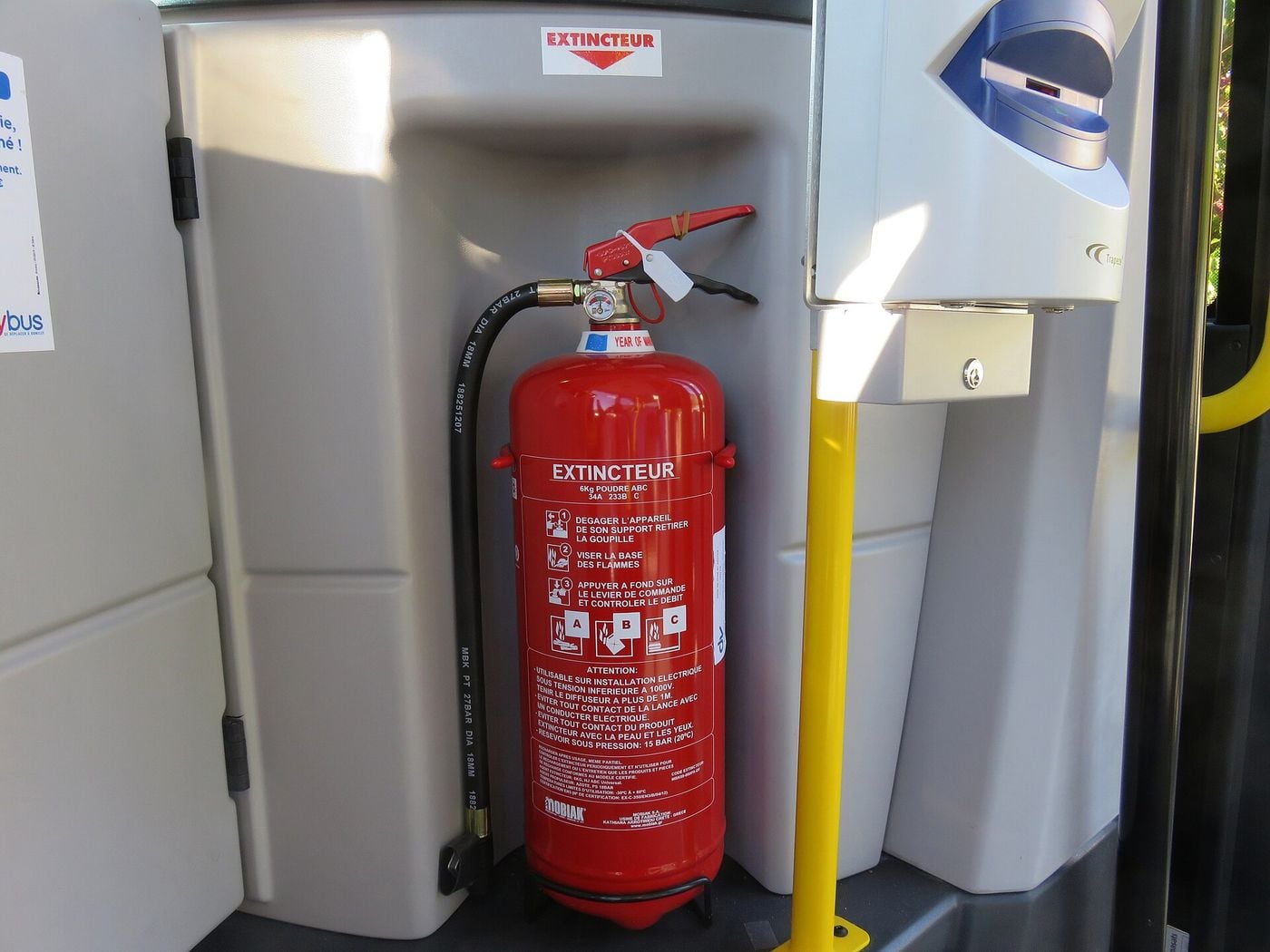
What a truck or bus must carry differs from one country to the next. Of the 30 countries whose road rules the EU’s Your Europe site publishes, 24 list a warning triangle among the safety equipment and 15 a reflective vest or jacket, mostly under a heading for cars; six pages have safety-equipment entries that name trucks, buses or vehicles over 3.5 tonnes. The German and Spanish texts name heavy vehicles directly. In Germany motor vehicles over 3.5 t must carry a warning triangle and, separately, a warning lamp; lorries, tractor units and buses a warning vest; motor vehicles over 4 t at least one wheel chock; and buses fire extinguishers and first-aid kits. In Spain buses and goods vehicles over 3,500 kg must carry the V-16 hazard warning device, a high-visibility vest and approved fire-extinguishing equipment.
Status as at 27 October 2026. Read on that day: the Your Europe road-rules pages for 30 countries; sections 35g, 35h, 41 and 53a of Germany’s Straßenverkehrs-Zulassungs-Ordnung (StVZO) on gesetze-im-internet.de; the consolidated texts of Spain’s Reglamento General de Vehículos and Reglamento General de Circulación in the Boletín Oficial del Estado, both last updated on 26 June 2026; Türkiye’s Road Traffic Law No. 2918 on mevzuat.gov.tr, with the amendments of 12 February 2026; the Highway Code’s rules on breakdowns and incidents on GOV.UK, updated on 22 October 2025; the contents page of the UK’s Public Service Vehicles (Conditions of Fitness, Equipment, Use and Certification) Regulations 1981 on legislation.gov.uk; and Directive 2001/85/EC as published in the Official Journal in 2002.
What the 30 Your Europe pages list
Your Europe is an official website of the European Union, managed by the Directorate-General for Internal Market, Industry, Entrepreneurship and SMEs. Its road-rules pages for each country end with the same note: the content “is provided by the national authorities according to Article 8(1) of Directive (EU) 2015/413/EU”, and “The European Commission does not assume liability for this content or its accuracy.” Each page carries its own “last checked” date. For 25 of the 30 pages that date falls in 2024 — 18 September 2024 for 24 of them, 29 October 2024 for Austria — and the most recent are Lithuania’s, 24 April 2026, and those of Greece and Spain, 1 October 2026.
The warning triangle is the item listed most often. Twenty-four lists name one, among them Lithuania’s “Emergency triangle” and Romania’s “Reflective emergency triangle”; Malta’s page lists one for cars for hire, and Spain’s accepts warning triangles on vehicles registered in other countries. A reflective vest or jacket follows, in 15 lists. A first-aid kit appears on nine pages, and also on Estonia’s for company cars only and on Malta’s for cars for hire. A fire extinguisher appears on seven pages for cars, on Norway’s and Sweden’s for buses only, on Spain’s for buses and goods vehicles over 3.5 t, and on Malta’s for cars for hire. Estonia’s page is the only one that lists a wheel chock; Croatia and Slovenia list spare bulbs, Slovenia and Spain a spare wheel, and Latvia an “Emergency hazard sign”. The pages for Cyprus and Ireland have no safety-equipment entry for motor vehicles.
Every list except Spain’s stands under a heading for cars: “Safety equipment for cars” on most pages, “Car safety equipment” on Belgium’s and “Mandatory car safety kit” on Slovenia’s. Spain’s reads “Safety items for motor vehicles”. Six pages have safety-equipment entries that name heavier vehicles: Estonia’s safety vest (“cars, trucks, buses or tractors”), France’s reflective vest or jacket (“cars, trucks, buses, motorbikes, mopeds and tractors”), Romania’s reflective vest (“vehicles more than 3.5t”), the fire extinguisher on Norway’s page (“only in buses”) and on Sweden’s (“only buses”), and Spain’s line “Buses and goods vehicles over 3.5 t: all the above plus a fire extinguisher”.
Two pages add conditions on the vest. Belgium’s has a separate entry under which drivers “must wear a retro-reflective safety vest when outside a broken-down vehicle parked on motorways and motor vehicle roads in an area where stopping and parking are prohibited”. Luxembourg’s says that for cars not registered in Luxembourg “only the use of a reflective vest is mandatory under certain circumstances”.
| Country | Items listed | Trucks, buses or vehicles over 3.5 t | Source |
|---|---|---|---|
| Austria | First-aid kit; warning triangle; reflective jacket vest | Winter-tyre entry for vehicles above 3.5 tonnes, with separate periods for trucks and buses | Your Europe, 29 Oct 2024 |
| Belgium | Warning triangle; separate entry: a retro-reflective vest to be worn outside a broken-down vehicle on motorways and motor vehicle roads | None named | Your Europe, 18 Sep 2024 |
| Bulgaria | Reflective vest; warning triangle; first-aid kit; fire extinguisher | None named | Your Europe, 18 Sep 2024 |
| Croatia | First-aid kit; warning triangle; reflective vest in the car; spare bulbs, except for cars with xenon, neon or LED bulbs | Winter-equipment entry for buses and heavy goods vehicles | Your Europe, 18 Sep 2024 |
| Cyprus | No safety-equipment entry on the page: not verified | None named | Your Europe, 18 Sep 2024 |
| Czechia | Seat belts; first-aid kit | None named | Your Europe, 18 Sep 2024 |
| Denmark | Warning triangle | None named | Your Europe, 24 Apr 2025 |
| Estonia | Fire extinguisher; wheel chock; warning triangle; first-aid box, only company car; safety vest | Safety vest: “cars, trucks, buses or tractors” | Your Europe, 18 Sep 2024 |
| Finland | Warning triangle | None named | Your Europe, 18 Sep 2024 |
| France | Warning triangle; reflective vest or jacket, for use in the event of breakdowns, accidents or other problems on the road | Vest or jacket: “cars, trucks, buses, motorbikes, mopeds and tractors” | Your Europe, 18 Sep 2024 |
| Germany | First aid kit; warning triangle; reflective vest | StVZO: warning lamp over 3.5 t; warning vest in lorries, tractor units and buses; wheel chocks over 4 t; fire extinguishers and first-aid kits in buses (see below) | Your Europe, 1 Jul 2025; StVZO §§ 35g, 35h, 41, 53a |
| Greece | Warning triangle; first-aid kit; fire extinguisher | None named | Your Europe, 1 Oct 2026 |
| Hungary | Warning triangle | None named | Your Europe, 18 Sep 2024 |
| Ireland | No safety-equipment entry for motor vehicles on the page: not verified | None named | Your Europe, 18 Sep 2024 |
| Italy | Reflective vest; warning triangle | None named | Your Europe, 18 Sep 2024 |
| Latvia | Emergency hazard sign; first aid kit; fire extinguisher | None named | Your Europe, 18 Sep 2024 |
| Liechtenstein | Warning triangle | None named | Your Europe, 18 Sep 2024 |
| Lithuania | Fire extinguisher; emergency triangle; first-aid kit; reflective vest or reflector | None named | Your Europe, 24 Apr 2026 |
| Luxembourg | Warning triangle; reflective vest: “for cars not registered in Luxembourg, only the use of a reflective vest is mandatory under certain circumstances” | None named | Your Europe, 18 Sep 2024 |
| Malta | Fire extinguishers, warning breakdown triangle and first aid kit, for cars for hire | None named | Your Europe, 18 Sep 2024 |
| Netherlands | Warning triangle | None named | Your Europe, 18 Sep 2024 |
| Norway | Warning triangle; reflective vest in the car; fire extinguisher | Fire extinguisher “only in buses”; heavy goods vehicles over 3.5 tons: winter tyres and “a sufficient number of snow chains” | Your Europe, 18 Sep 2024 |
| Poland | Fire extinguisher; warning triangle | None named | Your Europe, 18 Sep 2024 |
| Portugal | Reflective vest; warning triangle | None named | Your Europe, 18 Sep 2024 |
| Romania | Reflective emergency triangle; fire extinguisher; reflective vest | Reflective vest: “vehicles more than 3.5t” | Your Europe, 18 Sep 2024 |
| Slovakia | Reflective vest; warning triangle | Winter-tyre entry for heavy goods vehicles and buses | Your Europe, 18 Sep 2024 |
| Slovenia | Spare wheel and car tool, or a device to keep driving on a damaged tyre; warning triangle; first aid kit for vehicles of various categories; set of spare bulbs; reflective jacket | None named | Your Europe, 18 Sep 2024 |
| Spain | Spare wheel and tools for fitting it; V16 emergency warning light for vehicles registered in Spain; reflective vest | “Buses and goods vehicles over 3.5 t: all the above plus a fire extinguisher”; Annex XII of the vehicle regulation (see below) | Your Europe, 1 Oct 2026; Real Decreto 2822/1998, Annex XII |
| Sweden | Warning triangle; fire extinguisher | Fire extinguisher “only buses” | Your Europe, 18 Sep 2024 |
| Switzerland | Warning triangle | None named | Your Europe, 18 Sep 2024 |
| Great Britain | Highway Code, Rule 276: a warning triangle, “or use other permitted warning devices if you have them” | Public service vehicles: regulations 35, “Fire extinguishing apparatus”, and 36, “First aid equipment”; wording in force not verified | Highway Code, GOV.UK; PSV Regulations 1981, legislation.gov.uk |
| Türkiye | Equipment set by regulation under Article 31 of Law No. 2918: list not verified | Tachograph in goods vehicles over 3,500 kg and in motor vehicles with more than 17 seats including the driver’s used for passenger transport under Laws No. 5216, 5393 or 4925 | Law No. 2918, mevzuat.gov.tr |
Not verified: Russia, Ukraine, Serbia, Iceland and the other European countries without a row in the table.
Germany: the StVZO
Four sections of Germany’s Road Traffic Licensing Regulation, the Straßenverkehrs-Zulassungs-Ordnung (StVZO), set equipment to be carried. Section 53a(2) applies to motor vehicles other than motorised invalid carriages, motorcycles and single-axle tractors or working machines, and lists the minimum warning equipment they must carry; for those over 3.5 t its wording is “ein Warndreieck und getrennt davon eine Warnleuchte”, a warning triangle and, separately, a warning lamp.
| Item | Vehicles | StVZO |
|---|---|---|
| Warning triangle | Cars, agricultural or forestry tractors or working machines, and other motor vehicles up to 3.5 t; motor vehicles over 3.5 t | § 53a(2), points 1 and 2 |
| Warning lamp, carried separately from the triangle | Motor vehicles over 3.5 t | § 53a(2), point 2 |
| Warning vest | Cars, lorries, tractors and semi-trailer tractors, buses | § 53a(2), point 3 |
| First-aid kits to DIN 13164 | Buses: at least one kit in those with not more than 22 passenger places, two in other buses | § 35h(1) |
| First-aid material to DIN 13164 | Other motor vehicles with a design speed above 6 km/h, except motorised invalid carriages, motorcycles, tractors or working machines in agriculture or forestry, and other single-axle tractors or working machines | § 35h(3) |
| Fire extinguishers of 6 kg each | Buses: at least one; double-deck vehicles: at least two | § 35g(1) |
| One wheel chock | Motor vehicles over 4 t, tracked vehicles excepted; two-axle trailers over 750 kg other than semi-trailers and rigid-drawbar trailers | § 41(14), point 1 |
| Two wheel chocks | Vehicles with three or more axles; semi-trailers; rigid-drawbar trailers, including centre-axle trailers, over 750 kg | § 41(14), point 2 |
Section 53a(1) sets requirements for the items themselves. Warning triangles must be retroreflective; warning lamps must emit yellow flashing light, be independent of the vehicle’s lighting and have sufficient burning time; warning vests must meet DIN EN 471:2003+A1:2007 or EN ISO 20471:2013; and the warning devices “müssen in betriebsfertigem Zustand sein”, must be ready for use. A portable flashing lamp under section 53b(5), sentence 7, may also be carried as the warning lamp (section 53a(2), point 2). Wheel chocks must be safe to handle and sufficiently effective, and be fitted in or on the vehicle, easily accessible, in holders that keep them from being lost or rattling; hooks or chains may not serve as holders (section 41(14)).
For buses, the first-aid kits are kept in the places provided for them, and those places must be clearly marked (section 35h(2)). The fire extinguishers must be officially approved at least for fire classes A, B and C, that is combustible solids, liquids and gases. One is placed in the immediate vicinity of the driver’s seat and, in a double-deck vehicle, the second on the upper deck (section 35g(1) and (2)). The driving staff must be familiar with handling them, a responsibility the vehicle’s keeper shares, and the keeper must have the extinguishers checked by a competent tester at least once within twelve months, with the tester’s name and the date on a label fixed to the extinguisher (section 35g(3) and (4)).
Spain: Annex XII of the vehicle regulation
Article 19 of Spain’s Reglamento General de Vehículos, Royal Decree 2822/1998, requires motor vehicles and vehicle combinations in circulation to carry “como mínimo”, at least, the equipment set out in its Annex XII. Point 1 of the annex covers cars, and mixed vehicles and goods vehicles of up to 3,500 kg maximum authorised mass: (a) the V-16 luminous hazard warning device, the “dispositivo luminoso de preseñalización de peligro V-16”; (b) a high-visibility reflective vest, certified under Royal Decree 1407/1992, CE-marked and conforming to UNE EN 471, at least class 2; and (c) a complete spare wheel or a temporary-use wheel with the tools to change it, or an alternative system.
Point 2 covers buses, mixed vehicles and goods vehicles over 3,500 kg, and vehicle combinations other than special vehicles. In addition to items 1 (a) and (b) they must carry “un equipo homologado de extinción de incendios, adecuado y en condiciones de uso”: approved fire-extinguishing equipment, suitable and in working order. The annex was last amended with effect from 1 October 2026, when a point 3 on motorcycles was added.
Two articles of the Reglamento General de Circulación, Royal Decree 1428/2003, deal with use. Article 118(4), in the wording in force since 1 October 2026, requires drivers of motorcycles, cars, buses, goods vehicles, mixed vehicles and non-agricultural vehicle combinations to wear a high-visibility reflective vest, the one “que figura entre la dotación obligatoria del vehículo”, when they get out and occupy the carriageway or the hard shoulder of an interurban road. Under Article 130(4), when a vehicle is immobilised after an accident or breakdown, “todo conductor deberá emplear el dispositivo de preseñalización de peligro reglamentario”: every driver must use the prescribed hazard warning device.
Your Europe’s page for Spain, last checked on 1 October 2026, lists “Spare wheel and tools for fitting it” first, then “Buses and goods vehicles over 3.5 t: all the above plus a fire extinguisher”; in Annex XII the spare wheel is item 1 (c), and point 2 adds the extinguishing equipment to items 1 (a) and (b), the V-16 device and the vest. For vehicles registered in other countries and travelling in Spain, the page says “it is sufficient to carry warning triangles or any other similar device used in their country of origin”. It also lists “Mandatory use of snow chains in heavy snow”.
Buses: extinguishers and first-aid kits
| Country | Fire extinguisher | First aid | Source |
|---|---|---|---|
| Germany | At least one of 6 kg, near the driver’s seat; double-deck vehicles at least two, the second on the upper deck | DIN 13164 kits: at least one in buses with not more than 22 passenger places, two in other buses | StVZO §§ 35g, 35h |
| Spain | Approved fire-extinguishing equipment, also in goods vehicles over 3,500 kg | Not listed in Annex XII | Real Decreto 2822/1998, Annex XII, point 2 |
| Norway | “Fire extinguisher – only in buses” | Not listed on the page | Your Europe, 18 Sep 2024 |
| Sweden | “Fire extinguisher - only buses” | Not listed on the page | Your Europe, 18 Sep 2024 |
| Great Britain | Regulation 35, “Fire extinguishing apparatus” | Regulation 36, “First aid equipment” | PSV Regulations 1981, contents; wording in force not verified |
Directive 2001/85/EC, on special provisions for vehicles carrying passengers with more than eight seats in addition to the driver’s seat, dealt with the space for these items. In its text published in the Official Journal on 13 February 2002, Annex I, 7.5.4.1, reads: “Space shall be provided for the fitting of one or more fire extinguishers, one being near the driver’s seat”; 7.5.4.2 requires space for the fitting of one or more first-aid kits. The construction requirements for fire safety on buses are covered in bus fire safety explained.
Great Britain and Türkiye
The United Kingdom is not among the 30 countries on Your Europe’s list. In Great Britain, Rule 276 of the Highway Code, on breakdowns, names a warning triangle and adds “or use other permitted warning devices if you have them”; it also says “never use them on motorways”. Its rule on incidents reads “put on high-visibility clothing if you have it” (Rule 283). For public service vehicles, Part III of the Public Service Vehicles (Conditions of Fitness, Equipment, Use and Certification) Regulations 1981, on equipment, consists of regulation 35, “Fire extinguishing apparatus”, and regulation 36, “First aid equipment”. On legislation.gov.uk the Regulations are available only in their original form as made in 1981, so the wording in force is not verified.
Türkiye’s Road Traffic Law No. 2918 leaves the list to a regulation. Article 31, as amended by Law No. 7574 of 12 February 2026, makes it compulsory to carry, keep usable and use “nitelik ve nicelikleri yönetmelikte belirtilen gereçlerin”, the equipment whose characteristics and quantities the regulation sets. Besides that list it names three devices: a tachograph in motor vehicles used to carry goods with a maximum laden weight over 3,500 kg and in motor vehicles with more than 17 seats including the driver’s used for passenger transport under Laws No. 5216, 5393 or 4925; a taximeter in taxis; and a speed limiter in the vehicles whose features, model years and types the regulation specifies. The regulation’s list is not verified. Article 65/A of the same law covers winter tyres and snow chains.
Winter equipment
Winter entries on the Your Europe pages name heavy vehicles for Austria, Croatia, Norway and Slovakia. Norway’s adds that heavy goods vehicles over 3.5 tons must be equipped with “a sufficient number of snow chains”. The winter rules for heavy trucks and buses, including those of Spain and Türkiye, are set out in winter tyres and snow chains for trucks and buses.
Quick answers
- What safety equipment must a truck over 3.5 tonnes carry in Germany?
- Under section 53a of the StVZO, a warning triangle and, carried separately, a warning lamp, plus a warning vest in lorries and tractor units. Section 35h adds first-aid material to DIN 13164, and section 41(14) requires at least one wheel chock on motor vehicles over 4 t and two on vehicles with three or more axles and on semi-trailers.
- Do buses have to carry a fire extinguisher?
- In Germany at least one 6 kg extinguisher, and at least two in double-deck buses, one in the immediate vicinity of the driver's seat and the second on the upper deck (StVZO section 35g). Spain's Annex XII requires approved fire-extinguishing equipment in buses and in goods vehicles over 3,500 kg. The Your Europe pages for Norway and Sweden list a fire extinguisher for buses only.
- Does a foreign truck need the V16 warning light in Spain?
- Your Europe's page for Spain, last checked on 1 October 2026, says that for vehicles registered in other countries and travelling in Spain 'it is sufficient to carry warning triangles or any other similar device used in their country of origin'. Spain's Annex XII lists the V-16 device among the equipment of buses and of goods vehicles over 3,500 kg, with a high-visibility vest and approved fire-extinguishing equipment.
- Which safety equipment do most European countries list?
- A warning triangle: 24 of the 30 country pages on the EU's Your Europe site list one, and 15 list a reflective vest or jacket. Nine list a first-aid kit and seven a fire extinguisher, not counting entries limited to company cars, cars for hire, buses or goods vehicles over 3.5 t. Most lists stand under a heading for cars; six pages have safety-equipment entries naming trucks, buses or vehicles over 3.5 t: Estonia, France, Norway, Romania, Spain and Sweden.
- Is a warning triangle compulsory in the UK?
- The United Kingdom is not among the 30 countries on Your Europe's list. In Great Britain, Rule 276 of the Highway Code, on breakdowns, names a warning triangle and adds 'or use other permitted warning devices if you have them'; it also says 'never use them on motorways'.
Sources
- Road rules and safety: Austria — Your Europe country page, safety equipment and other specific rules (last checked 29 October 2024; read on 27 October 2026) — Your Europe, European Commission
- Road rules and safety: Belgium — Your Europe country page, safety equipment and other specific rules (last checked 18 September 2024; read on 27 October 2026) — Your Europe, European Commission
- Road rules and safety: Bulgaria — Your Europe country page, safety equipment (last checked 18 September 2024; read on 27 October 2026) — Your Europe, European Commission
- Road rules and safety: Croatia — Your Europe country page, safety equipment and winter equipment (last checked 18 September 2024; read on 27 October 2026) — Your Europe, European Commission
- Road rules and safety: Cyprus — Your Europe country page (last checked 18 September 2024; read on 27 October 2026) — Your Europe, European Commission
- Road rules and safety: Czechia — Your Europe country page, safety equipment (last checked 18 September 2024; read on 27 October 2026) — Your Europe, European Commission
- Road rules and safety: Denmark — Your Europe country page, safety equipment (last checked 24 April 2025; read on 27 October 2026) — Your Europe, European Commission
- Road rules and safety: Estonia — Your Europe country page, safety equipment (last checked 18 September 2024; read on 27 October 2026) — Your Europe, European Commission
- Road rules and safety: Finland — Your Europe country page, safety equipment (last checked 18 September 2024; read on 27 October 2026) — Your Europe, European Commission
- Road rules and safety: France — Your Europe country page, safety equipment (last checked 18 September 2024; read on 27 October 2026) — Your Europe, European Commission
- Road rules and safety: Germany — Your Europe country page, safety equipment (last checked 1 July 2025; read on 27 October 2026) — Your Europe, European Commission
- Road rules and safety: Greece — Your Europe country page, other specific rules (last checked 1 October 2026; read on 27 October 2026) — Your Europe, European Commission
- Road rules and safety: Hungary — Your Europe country page, safety equipment (last checked 18 September 2024; read on 27 October 2026) — Your Europe, European Commission
- Road rules and safety: Ireland — Your Europe country page (last checked 18 September 2024; read on 27 October 2026) — Your Europe, European Commission
- Road rules and safety: Italy — Your Europe country page, safety equipment (last checked 18 September 2024; read on 27 October 2026) — Your Europe, European Commission
- Road rules and safety: Latvia — Your Europe country page, safety equipment (last checked 18 September 2024; read on 27 October 2026) — Your Europe, European Commission
- Road rules and safety: Liechtenstein — Your Europe country page, safety equipment (last checked 18 September 2024; read on 27 October 2026) — Your Europe, European Commission
- Road rules and safety: Lithuania — Your Europe country page, safety equipment (last checked 24 April 2026; read on 27 October 2026) — Your Europe, European Commission
- Road rules and safety: Luxembourg — Your Europe country page, safety equipment (last checked 18 September 2024; read on 27 October 2026) — Your Europe, European Commission
- Road rules and safety: Malta — Your Europe country page, safety equipment (last checked 18 September 2024; read on 27 October 2026) — Your Europe, European Commission
- Road rules and safety: Netherlands — Your Europe country page, safety equipment (last checked 18 September 2024; read on 27 October 2026) — Your Europe, European Commission
- Road rules and safety: Norway — Your Europe country page, safety equipment and winter tyres (last checked 18 September 2024; read on 27 October 2026) — Your Europe, European Commission
- Road rules and safety: Poland — Your Europe country page, safety equipment (last checked 18 September 2024; read on 27 October 2026) — Your Europe, European Commission
- Road rules and safety: Portugal — Your Europe country page, safety equipment (last checked 18 September 2024; read on 27 October 2026) — Your Europe, European Commission
- Road rules and safety: Romania — Your Europe country page, safety equipment (last checked 18 September 2024; read on 27 October 2026) — Your Europe, European Commission
- Road rules and safety: Slovakia — Your Europe country page, safety equipment and winter tyres (last checked 18 September 2024; read on 27 October 2026) — Your Europe, European Commission
- Road rules and safety: Slovenia — Your Europe country page, mandatory car safety kit (last checked 18 September 2024; read on 27 October 2026) — Your Europe, European Commission
- Road rules and safety: Spain — Your Europe country page, safety items for motor vehicles (last checked 1 October 2026; read on 27 October 2026) — Your Europe, European Commission
- Road rules and safety: Sweden — Your Europe country page, safety equipment (last checked 18 September 2024; read on 27 October 2026) — Your Europe, European Commission
- Road rules and safety: Switzerland — Your Europe country page, safety equipment (last checked 18 September 2024; read on 27 October 2026) — Your Europe, European Commission
- Straßenverkehrs-Zulassungs-Ordnung (StVZO), § 53a Warndreieck, Warnleuchte, Warnblinkanlage, Warnweste — Federal Ministry of Justice, gesetze-im-internet.de
- Straßenverkehrs-Zulassungs-Ordnung (StVZO), § 35g Feuerlöscher in Kraftomnibussen — Federal Ministry of Justice, gesetze-im-internet.de
- Straßenverkehrs-Zulassungs-Ordnung (StVZO), § 35h Erste-Hilfe-Material in Kraftfahrzeugen — Federal Ministry of Justice, gesetze-im-internet.de
- Straßenverkehrs-Zulassungs-Ordnung (StVZO), § 41 Bremsen und Unterlegkeile, paragraph 14 — Federal Ministry of Justice, gesetze-im-internet.de
- Real Decreto 2822/1998, Reglamento General de Vehículos — consolidated text, last update published 26 June 2026: Article 19 and Annex XII — Boletín Oficial del Estado (BOE)
- Real Decreto 1428/2003, Reglamento General de Circulación — consolidated text, last update published 26 June 2026: Articles 118 and 130 — Boletín Oficial del Estado (BOE)
- Karayolları Trafik Kanunu, Law No. 2918 — Articles 31 and 65/A as amended by Law No. 7574 of 12 February 2026 — Mevzuat Bilgi Sistemi, Presidency of the Republic of Türkiye
- The Highway Code: Breakdowns and incidents (rules 275 to 287), updated 22 October 2025 — Department for Transport, GOV.UK
- The Public Service Vehicles (Conditions of Fitness, Equipment, Use and Certification) Regulations 1981 (SI 1981/257) — table of contents, original version as made — legislation.gov.uk, The National Archives
- Directive 2001/85/EC relating to special provisions for vehicles used for the carriage of passengers comprising more than eight seats in addition to the driver's seat — text as published in OJ L 42 of 13 February 2002, Annex I, 7.5.4 — Publications Office of the European Union, 20 Nov 2001