What is VECTO? How truck CO2 is certified in the EU
VECTO, the Commission's heavy-duty CO2 and fuel consumption simulation tool: the regulation behind it, its inputs, three output files, where the result is used, and versions on 29 September 2026.
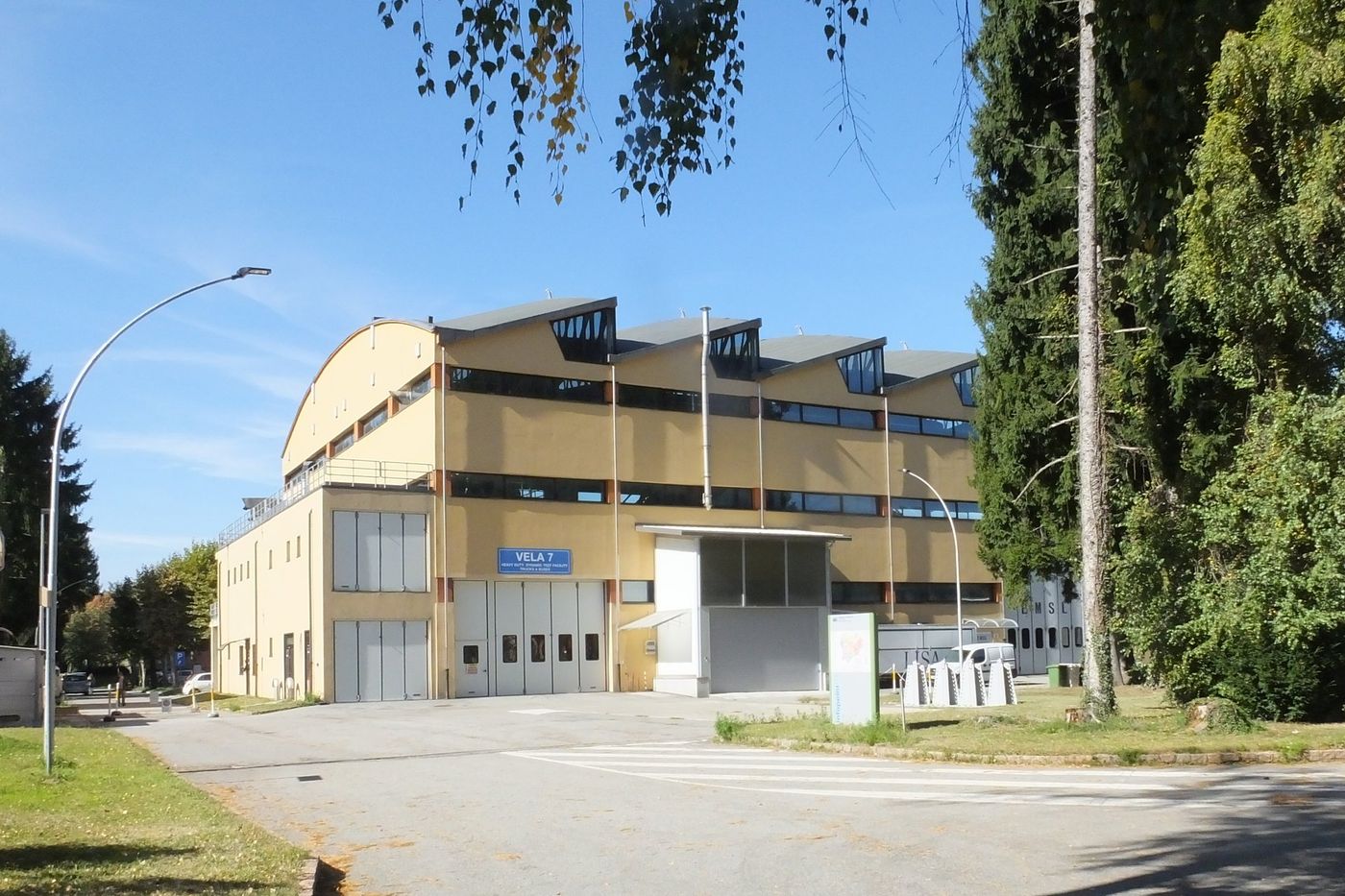
VECTO, short for Vehicle Energy Consumption calculation TOol, is the software the European Commission developed for determining the CO2 emissions and fuel consumption of heavy-duty vehicles. Under Regulation (EU) 2017/2400 a manufacturer determines those values for each new vehicle in scope by running the Commission’s simulation tool, which the Commission calls VECTO, on data for the vehicle’s components, so the declared figure is a simulation and not a whole-vehicle measurement.
This page reads Regulation (EU) 2017/2400 as published and in its consolidated text of 1 January 2026, the three regulations that amend it in substance, the Commission’s and the JRC’s pages on the tool, and the VECTO wiki and repository on code.europa.eu, all on 29 September 2026. It gives no simulated figure for any named truck, and what a source says is attributed to it.
One word needs care. The Commission’s and the JRC’s pages call the whole scheme certification, and the title above follows them. In the regulation’s own wording, on our reading, “certified values” belong to the tested properties of components (Articles 14 and 17), while the result for a vehicle is determined and declared (Articles 1 and 9).
What VECTO is
The Commission’s VECTO page describes it as the simulation tool the Commission developed to determine CO2 emissions and fuel consumption from heavy-duty vehicles (HDVs). The wiki FAQ spells out the name and says the software was developed by the European Commission for determining CO2 emissions and fuel consumption from the whole vehicle. The Commission’s page on lorries, buses and coaches says manufacturers determine CO2 emissions and fuel consumption of new heavy-duty motor vehicles and new trailers under Regulations (EU) 2017/2400 and 2022/1362, and that the values are simulated using the VECTO tool. It describes the tool as simulation software working for specific loads, fuels and mission profiles from data on the relevant vehicle components, developed by the Commission in close cooperation with stakeholders.
In the articles of Regulation (EU) 2017/2400 the instrument is called “the simulation tool”. Regulation (EU) 2022/1362 ties the name to it, saying the Commission “has developed the VECTO simulation tool pursuant to Article 5(1), point (a)” of the 2017 regulation. By our search of the consolidated text of 1 January 2026, the word VECTO itself occurs once, in an Annex III table heading, “Architecture ID for VECTO input”.
The software is downloadable and delivered as executable files written in C#. The Commission’s page says the executable is designed for use on a single computer, and the wiki FAQ says it runs in a Windows environment only. The FAQ says all components of the platform are licensed under the EUPL v1.2 and that the tool is free to be used by anyone; the JRC’s model inventory says the Commission holds the IPR.
VECTO is a family of programs. The Commission’s page lists four executables: VECTO Sim, VECTO Air Drag, VECTO Engine and VECTO Trailer. The wiki FAQ says the platform consists of the simulation software and other tools developed for the certification procedure, including VECTO Engine, VECTO AirDrag and a hashing tool, used at various points in it. Article 5(1) of the regulation names three kinds of tool: a simulation tool, pre-processing tools and a hashing tool. The pre-processing tools verify and compile test results, perform additional calculations and convert the results into the format the simulation tool uses (Article 5(4)); the hashing tool establishes an unequivocal association between a component’s certified properties and its certification document, and between a vehicle and its manufacturer’s records file, vehicle information file and customer information file (Article 5(5)).
The sources word the JRC’s part differently, so each is attributed. The JRC’s page says the JRC develops the simulation tool used for certifying carbon emissions, energy and fuel consumption of heavy and medium duty vehicles in Europe. The wiki says the project is administered by the JRC, and the code.europa.eu group description says it is managed by the Commission’s Joint Research Centre. The FAQ says the tool and its certification methodology were developed under a series of contracts launched by DG CLIMA and that the JRC “acts as scientific coordinator” of the development. The JRC’s model inventory says the model was developed by Technical University of Graz and Ricardo AEA on behalf of the JRC and DG CLIMA. The duty to provide and maintain the tool sits with the Commission, in Article 5.
Who does what
| Party | What the regulation gives it to do | Where |
|---|---|---|
| The Commission | Provides the simulation tool, the pre-processing tools and the hashing tool free of charge as downloadable and executable software; maintains them and provides modifications and updates; makes them available through a publicly available dedicated electronic distribution platform. | Article 5(1)–(2) |
| The approval authority | Grants the licence to operate the simulation tool where the manufacturer applies under Article 6 and proves that the requirements of Annex II are met for the application case; certifies the values of components and component families; performs an assessment four times per year of the manufacturer’s processes. | Articles 7(1), 17(1) and 20(2) |
| The vehicle manufacturer | Determines the CO2 emissions and fuel consumption of each new vehicle, except vehicles using the technologies listed in Appendix 1 to Annex III, using the latest available version of the simulation tool, and may operate it for that purpose only if in possession of a licence for the application case concerned; records the results in the manufacturer’s records file; accompanies each lorry and each complete or completed heavy bus with the customer information file. | Article 9(1), (2) and (4) |
Article 3(38) defines an application case as the different scenarios to be followed for a medium lorry, a heavy lorry, or a heavy bus that is a primary, interim, complete or completed vehicle, for which different manufacturer provisions and functions apply in the simulation tool. The word licence therefore has two meanings here. The software licence is the EUPL v1.2, and anyone may download and use the tool. The regulation’s licence is a permission from the approval authority, and a manufacturer may operate the tool for the purposes of Article 9 only if in possession of it.
The regulation behind it
The instrument is Commission Regulation (EU) 2017/2400 of 12 December 2017, implementing Regulation (EC) No 595/2009 as regards the determination of the CO2 emissions and fuel consumption of heavy-duty vehicles. It was published in the Official Journal on 29 December 2017 (L 349, p. 1). A Commission workshop presentation of 14 November 2018 gives its entry into force as 18 January 2018, which matches Article 27 (the twentieth day after publication) by our arithmetic.
Article 1 says the regulation complements the type-approval framework for emissions in Regulation (EU) No 582/2011 by laying down the rules for issuing licences to operate a simulation tool for determining CO2 emissions and fuel consumption of new vehicles, and for operating that tool and declaring the values determined. Recital 5 of the regulation as published says that until then Union legislation had laid down no common method to measure CO2 emissions and fuel consumption of heavy-duty vehicles, so that objectively comparing the performance of vehicles was impossible; recital 6 says that to obtain unique data for each produced vehicle at the lowest cost the values should be determined using simulation software. Those are the regulation’s stated reasons, attributed here and not assessed.
The consolidated text lists four amending regulations. Three add substance, and the fourth, Regulation (EU) 2020/1181 of 7 August 2020, corrects language versions: for Regulation (EU) 2017/2400 the Danish one, the other language versions being, its recitals say, not affected.
| Regulation | Date and publication | What it records |
|---|---|---|
| (EU) 2019/318 | 19 February 2019; OJ L 58, 26.2.2019 | Recitals: LNG is an available alternative fuel to diesel (5); the specificities of vocational vehicles, meaning vehicles used for purposes other than the delivery of goods, are to be taken into account (6); vehicles whose advanced powertrains, including electric, hybrid electric and dual-fuel, cannot for the moment be subject to the requirement to use the available simulation tool are to be clearly defined (7); conformity is to be verified with an on-road verification testing procedure in addition to the existing procedures (8), the obligation applying as of 1 July 2020 (12). It also amended Article 24. |
| (EU) 2022/1379 | 5 July 2022; OJ L 212, 12.8.2022 | Recitals: it is necessary to determine the CO2 emissions and fuel consumption of medium lorries and heavy buses (3), and to specify additional requirements for new technologies such as hybrid and pure electric vehicles, dual-fuel vehicles, waste heat recovery and advanced driver assistance systems (4). Article 3 sets 1 July 2022 and, for some groups, 1 January 2024 (below). |
| (EU) 2025/258 | 7 February 2025; OJ L, 20.2.2025 | Recitals: new technologies should include vehicles running on hydrogen, efficient wheel ends, vehicles propelled by several drivetrains operating independently or vehicles capable of recharging while in motion (3); the on-road verification testing procedure should also apply to heavy buses, with certain adjustments (7). Article 3: applies from 1 January 2026. It rewrote Article 24 (below). |
Which vehicles it covers, and since when
Article 2(1) of the consolidated text says the regulation applies to medium lorries, heavy lorries and heavy buses, subject to Article 4, second paragraph. Article 3 defines them by category, as defined in Article 4(1) of Regulation (EU) 2018/858, and by technically permissible maximum laden mass:
- Medium lorry: category N2 with a mass exceeding 5,000 kg and not exceeding 7,400 kg (Article 3(26)).
- Heavy lorry: category N2 with a mass exceeding 7,400 kg, and a vehicle of category N3 (Article 3(27)).
- Heavy bus: category M3 with a mass of more than 7,500 kg (Article 3(28)).
Not every such vehicle is inside. Article 2(3) excludes off-road vehicles, special purpose vehicles and off-road special purpose vehicles as defined in Part A of Annex I to Regulation (EU) 2018/858. Article 4 sorts vehicles into vehicle groups (Annex I, Tables 1 to 6), a numbering separate from the categories N2, N3 and M3, and says Articles 5 to 23 do not apply to heavy lorries of groups 6, 7, 8, 13, 14, 15, 17, 18 and 19, to medium lorries of groups 51, 52, 55 and 56, or to any vehicle with a driven front axle in groups 11, 12 and 16. Article 9(1) also exempts the vehicle technologies listed in Appendix 1 to Annex III, whose last row covers any other propulsion technology for which a simulation cannot be performed “due to limitations of the simulation tool regarding this specific propulsion technology”. Article 15(1)(g) of Regulation (EU) 2019/1242, a review clause, describes small lorries with a TPMLM less or equal to 5 tonnes as not currently within the scope of Regulation (EU) 2017/2400.
There is no single date from which VECTO became mandatory; the obligation arrived in layers. The Commission’s VECTO page, dated 18 July 2024, says that as of January 2019 its use has been gradually extended to cover an increasing number of vehicle groups: heavy lorries with standard axle configurations, medium lorries, lorries with specific axle configurations, and buses and coaches.
| Vehicle groups | As from |
|---|---|
| 4, 5, 9 and 10 | 1 July 2019 |
| 1, 2 and 3 | 1 January 2020 |
| 11, 12 and 16 | 1 July 2020 |
As published, Article 24(2) added that the Article 9 obligations applied from 1 January 2019 to all vehicles in groups 4, 5, 9 and 10 with a production date on or after that day, the production date being the date of signature of the certificate of conformity or the date of issue of the individual approval certificate. Regulation (EU) 2019/318 added the sub-group “v” of each vehicle group to Article 24(1)(a) and replaced the second sentence of Article 24(2) with one saying that for vehicles in sub-group “v” the Article 9 obligation applies “as from the entry into force of this Regulation”; that sentence gives no date of its own and this page adds none. It also added a subparagraph defining the production date as the date of signature of the certificate of conformity or, where a certificate of conformity has not been issued, the date on which the vehicle identification number was affixed for the first time on the relevant parts of the vehicle.
Article 3 of Regulation (EU) 2022/1379 says it applies from 1 July 2022 and, for the determination of CO2 emissions and fuel consumption of vehicles in groups 1, 2, 3, 4, 5, 9, 10, 4v, 5v, 9v, 10v, 11, 12 and 16, other than ZE-HDVs, He-HDVs, dual-fuel vehicles and vehicles whose engine has been certified with a waste heat recovery system, from 1 January 2024. This page does not compress that into one date.
Article 24 now reads, in the text inserted by Regulation (EU) 2025/258 and carrying no dates, that where the Article 9 obligations have not been complied with Member States consider certificates of conformity for type approved vehicles to be no longer valid for the purposes of Article 48 of Regulation (EU) 2018/858 and, for type approved and individually approved vehicles, prohibit the registration, sale or entry into service of vehicles in groups 1s, 1, 2, 3, 4, 5, 9, 10, 11, 12, 16, 31 to 40, 53 and 54.
What goes in
Article 12(1) lists the components, separate technical units and systems whose CO2 and fuel consumption related properties feed the simulation: engines; transmissions; torque converters; other torque transferring components; additional driveline components; axles; air drag; auxiliaries; tyres; electric powertrain components; and wheel ends. DG CLIMA’s page names among the characteristic parameters rolling resistance, air drag, masses and inertias, gearbox friction, auxiliary power and engine performance, used to simulate CO2 emissions and fuel consumption on standardised driving cycles. Annex III lists the parameters the manufacturer provides, and says the XML schema and example data are on the distribution platform.
Article 12(2) bases the input for each component either on certified values, determined under Article 14 and certified under Article 17, or, in the absence of certified values, on standard values determined under Article 13. Article 3 defines a standard value as input data for a component that has not been tested to determine a specific value, reflecting the worst-case performance of the component (Article 3(35)), and a generic value as data used where no component testing or declaration of specific values is foreseen, reflecting average component technology or typical vehicle specifications (Article 3(36)). A parent component is one selected from a family so that its properties are the worst case for that family (Article 3(13) and (14)); Article 15(1) makes the certified values of a parent valid, without further testing, for all family members under the family definition.
| Input | Basis of the value | Annex |
|---|---|---|
| Engines | Certified values, per engine family (Article 12(3)) | Annex V, points 4, 5 and 6 |
| Transmissions | Certified values or, where none, standard values (Article 12(2)) | Annex VI, point 3 |
| Torque converters | As transmissions | Annex VI, point 4 |
| Other torque-transferring components | As transmissions | Annex VI, point 5 |
| Additional driveline components | As transmissions | Annex VI, point 6 |
| Axles | As transmissions | Annex VII, point 4 |
| Air drag | As transmissions | Annex VIII, point 3 |
| Tyres | As transmissions | Annex X |
| Electric powertrain components | As transmissions | Annex Xb, points 4, 5 and 6 |
| Wheel ends | As transmissions | Annex VIIa |
| Auxiliaries | Generic values implemented in the simulation tool and allocated to the vehicle from input information (Article 12(4)) | Annex IX |
Two of these procedures are described in the text itself: the engine test procedure of Annex V produces input data relating to engines for the simulation tool, and Annex VIII defines the constant speed test as a measurement procedure carried out on a test track to determine the air drag. Annex IX lists the auxiliaries whose power consumption is modelled with technology specific average generic models: engine cooling fan, steering system, electric system, pneumatic system, heating, ventilation and air conditioning system, and transmission power take off.
The site covers three of these inputs from their own side: the tyre coefficient in truck tyre labelling, where gearbox friction enters the declared figure in automated manual transmissions, and how ratings printed on a spec sheet are read in reading truck power figures. By our search, the word turbocompound does not occur in the consolidated text of the regulation, so this page draws no equivalence between its waste heat recovery provisions in Annex V and any engine design; turbocompound explained covers the design.
How the simulation runs
Regulation (EU) 2019/1242 defines a mission profile as a combination of a target speed cycle, a payload value, a body or trailer configuration and, if applicable, other parameters reflecting the specific use of a vehicle, on the basis of which official CO2 emissions and fuel consumption are determined (Article 3(13)). A target speed cycle describes the velocity the driver wants to reach, or to which traffic conditions limit him, as a function of the distance covered in a trip (Article 3(14)). The wiki FAQ says driving cycles are defined as target speed over distance, and that the vehicle group determines which cycles are simulated.
Annex I of that regulation defines the mission profiles by code (point 1.4): for lorries regional delivery, long haul, urban delivery, municipal utility and construction, with EMS variants of regional delivery and long haul, and for buses heavy urban, urban, sub-urban, inter-urban and coach, each at a low and a representative load (codes ending in L and R). The repository README counts five profiles for trucks and five for buses and coaches. Table 1 of Annex I of Regulation (EU) 2017/2400 has seven mission profile columns, because long haul and regional delivery also appear with an EMS configuration; that reading of the table is ours.
The FAQ distinguishes two modes. Declaration mode is “the official simulation mode for declaring CO2 emissions of a vehicle”, and in it several model parameters such as the payload, gearshift parameters and simulated mission profiles are generic. In engineering mode all simulation parameters can be set or edited by the user.
The JRC’s model inventory says VECTO simulates CO2 emissions and fuel consumption from vehicle longitudinal dynamics, using a driver model for simulating target speed cycles, and that fuel consumption and CO2 emissions are then interpolated from an engine fuel/CO2 map. It lists among the outputs results over official and user defined driving cycles in metrics such as gCO2/km, gCO2/t-km and gCO2/passenger-km.
What comes out: three files
| File | What it is | What the regulation says about it |
|---|---|---|
| Manufacturer’s records file | Produced by the tool; contains manufacturer related information, a documentation of the input data and input information, and the results for CO2 emissions and fuel consumption. | The manufacturer records the results of the simulation in it (Article 9(2)). Annex IV Part I lists among its items the vehicle identification number, the simulation tool licence number, the simulation tool version and the date and time of the simulation. |
| Customer information file (CIF) | Produced by the tool; contains a defined set of vehicle related information and the CO2 and fuel consumption results, as defined in Part II of Annex IV. | Each lorry, and each complete or completed heavy bus, to be registered, sold or put into service is accompanied by it (Article 9(4)). |
| Vehicle information file (VIF) | Produced by the tool for heavy buses, to transfer input data, input information and simulation results to subsequent manufacturing stages. | Annex IV Part III: produced for heavy buses to transfer the relevant data and results to subsequent certification steps. |
The CIF layout in Annex IV Part II includes the vehicle identification number; the vehicle group under Annex I; results for each mission profile and loading combination, with the mission profile and payload (kg) as simulation parameters; fuel and energy consumption results per fuel type and electric energy; CO2 results in g/km, g/t-km and g/p-km; weighted results including specific CO2 emissions (g/t-km); range blocks for actual charge depleting range, equivalent all electric range, zero CO2 emission range and hydrogen range, which how electric truck range is declared covers; and software information, namely the simulation tool version, the date and time of the simulation and the cryptographic hash of the file itself.
The hashes work as follows. Under Article 9(3) the manufacturer of medium and heavy lorries creates cryptographic hashes of the manufacturer’s records file and of the CIF, and under Article 9(5) the certificate of conformity, or the individual vehicle approval certificate, includes an imprint of them. Article 11(1) requires the manufacturer’s records file, the vehicle information file and the certificates on the components’ CO2 and fuel consumption related properties to be stored by the vehicle manufacturer “for at least 20 years after the production of the vehicle” and to be available, upon request, to the approval authority and to the Commission.
How the results are checked
Before use, the manufacturer applies to the approval authority for a licence to operate the tool for an application case (Article 6(1)). Afterwards the approval authority performs, four times per year, an assessment to verify whether the manufacturer’s processes continue to be adequate, and the assessment also includes verification of the selection of the input information and input data and repetition of the simulations the manufacturer performed (Article 20(2)).
The verification testing procedure of Annex Xa consists of an on-road test to verify the CO2 emissions of new vehicles after production. It is carried out by the vehicle manufacturer and supervised by the approval authority that granted the licence to operate the simulation tool, and the approval authority selects the vehicles on the basis of proposals from the manufacturer. During the test the torque and speed at the driven wheels, the engine speed, the fuel consumption, the pollutant emissions and other relevant parameters are measured. To pass, the CO2 emissions calculated from the measured fuel consumption must be within the tolerances in point 7 compared with the CO2 emissions from the verification testing procedure simulation. Table 5 sets the pass criterion for the ratio CVTP, the ratio of measured to simulated brake specific CO2 emissions for the total verification test relevant trip, at 1.075 or lower, and says that where CVTP is lower than 0.925 the results need to be reported to the Commission for further analysis to determine the cause. If a first vehicle does not meet the criterion, up to two additional tests are to be performed on the same vehicle, or two more similar vehicles may be tested on request of the manufacturer.
Article 20(1) has medium lorries and heavy lorries, “with the exception of He-HDV or PEV”, tested by the manufacturer on a minimum number of vehicles; Annex Xa adds that for heavy buses the procedure is performed by the manufacturer of the primary vehicle, and recital 7 of Regulation (EU) 2025/258 says it should also apply to heavy buses with certain adjustments.
Regulation (EU) 2019/1242 adds two provisions outside the tool itself. Article 13(1) has manufacturers ensure that the values recorded in the CIF correspond to the CO2 emissions and fuel consumption of heavy-duty vehicles in service, as determined under Regulation (EU) 2017/2400. Article 12(1) has the Commission monitor and assess the real-world representativeness of the CO2 emissions and energy consumption values determined within the framework of Regulation (EC) No 595/2009, and regularly collect data on the real-world CO2 emissions and energy consumption of heavy-duty vehicles using on-board fuel and/or energy consumption monitoring devices.
Where the result is used
In the vehicle’s papers. The CIF accompanies the vehicle, and the certificate of conformity carries the hash imprints (Article 9(4) and (5)).
In road charges. Article 2(1)(28) of Directive 1999/62/EC defines the CO2 emissions of a heavy-duty vehicle as its specific CO2 emissions provided in its customer information file as defined in Part II of Annex IV to Regulation (EU) 2017/2400, and Article 2(1)(35) defines a vehicle group as a grouping listed in Table 1 of Annex I to that regulation. The directive cites a numbered point of the file; on our reading that numbering follows an older layout, because the certificate of conformity model as amended by Regulation (EU) 2019/318 refers to specific CO2 emissions as indicated in point 2.3 of the customer information file, while the consolidated Annex IV of 1 January 2026 places them at 2.6.1. The five CO2 emission classes and their toll discounts are in EU road tolls and CO2 emission classes.
In CO2 standards. Article 3(2) of Regulation (EU) 2019/1242 defines specific CO2 emissions as the CO2 emissions of an individual heavy-duty vehicle determined in accordance with point 2.1 of Annex I. That point uses the CO2 emissions in g/km determined for each mission profile and reported under Articles 13a and 13b, together with mission profile weights; for zero-emission heavy-duty motor vehicles the values are set to 0. Article 3(11)(a) defines a zero-emission heavy-duty motor vehicle as one without an internal combustion engine, or with one that emits not more than 3 g CO2/(tkm) or 1 g CO2/(pkm) as determined in accordance with Article 9 of Regulation (EU) 2017/2400. The Commission’s page says manufacturers have to comply with targets for fleet-wide average CO2 emissions starting from 2025; the target levels are not covered here.
| Sub-group | RDL | RDR | LHL | LHR | Sum |
|---|---|---|---|---|---|
| 5-LH | 0.03 | 0.07 | 0.27 | 0.63 | 1.00 |
| 5-RD | 0.27 | 0.63 | 0.03 | 0.07 | 1.00 |
In reporting. Under Article 13b(1) manufacturers report the data to the Commission “By 30 September of each year” for each new heavy-duty vehicle with a date of determination, or of assessment, falling within the reporting period ending on 30 June. Article 13c(1) has the Commission keep a central register, publicly available with the exception of the data entries listed in point 3.2 of Annex V, with the air drag value made public in a range format; Article 13c(2) has the European Environment Agency manage it on the Commission’s behalf. The EEA’s data hub lists a data set for the reporting period 2019-2023, published on 29 April 2025; this page has not verified whether a newer data set exists. The EEA’s entry still carries the title of Regulation (EU) 2018/956. The Commission’s page says that regulation was repealed by Article 3 of Regulation 2024/1610 of 14 May 2024 with effect from 1 July 2024, and that the 2024 revision of Regulation (EU) 2019/1242 integrated the monitoring and reporting requirements.
Where the tool stops
- Trailers. Recital 2 of Regulation (EU) 2022/1362 says the VECTO simulation tool cannot take into account the influence of different trailers, and that the Commission developed a dedicated trailer simulation tool. That regulation applies to vehicles of categories O3 and O4, with exceptions.
- Some vehicles and technologies. See the exclusions in Articles 2(3), 4 and 9(1) above.
- Seasons. The JRC’s model inventory says of its temporal extent: “Seasonal variations cannot be captured.”
The tool today: versions
On 29 September 2026 the newest official release in the wiki’s release table and the repository was v5.1.3, dated 4 August 2026, and the newest release, v5.1.4-RC of 3 September 2026, was a release candidate, which the wiki says should not be used for certification.
| Version | Date | Status on the wiki |
|---|---|---|
| 5.1.4 | 3 September 2026 | Release Candidate |
| 5.1.3 | 4 August 2026 | Official Release |
| 5.1.2 | 14 July 2026 | Release Candidate (retracted) |
| 5.1.1 | 11 February 2026 | Official Release (retracted) |
| 5.0.8 | 16 December 2025 | Release Candidate (retracted) |
| 5.0.7 | 15 October 2025 | Official Release |
A notice to users of 5 August 2026 on the wiki’s Official Releases page says that, because of “concerns related to intellectual property rights belonging to third parties” identified in versions 5.0.8 RC, 5.1.1 and 5.1.2 RC, those versions were withdrawn from use; this page adds nothing to that wording. The notice says version 5.1.3 replaces 5.1.1, that the results of 5.1.3 are identical to those of 5.1.1, and that the replacement is without prejudice to the validity of the certified results under 5.1.1.
Two provisions of the regulation speak of versions, and they are given as written. Article 9(1) has the manufacturer determine the values “using the latest available version of the simulation tool”, and Article 10(1) says that in the case of modifications or updates the manufacturer shall start using the updated tool “no later than 3 months after” they were made available on the dedicated electronic distribution platform.
The wiki’s release tables also list official releases of VECTO Trailer 1.0.9.4207 (10 July 2026), VECTO Airdrag 3.3.5 (9 December 2025) and VECTO Engine 1.6.0.3721 (10 March 2025). The source repository on code.europa.eu, described as the primary repo of the VECTO simulator, was created on 8 June 2022.
Quick answers
- What is VECTO?
- VECTO, the Vehicle Energy Consumption calculation TOol, is the software the European Commission developed for determining CO2 emissions and fuel consumption of heavy-duty vehicles. Article 5 of Regulation (EU) 2017/2400 has the Commission provide the simulation tool free of charge as downloadable software, and Article 9(1) has the manufacturer determine the values for each new vehicle with it, apart from vehicles using the technologies listed in Appendix 1 to Annex III. The JRC's page says the JRC develops it.
- Which regulation makes VECTO the CO2 certification method for trucks?
- Commission Regulation (EU) 2017/2400 of 12 December 2017, published in the Official Journal on 29 December 2017. Regulations (EU) 2019/318, (EU) 2022/1379 and (EU) 2025/258 amend it in substance, and Regulation (EU) 2020/1181 only corrects language versions. The regulation's articles call the tool 'the simulation tool'; by our search of the consolidated text of 1 January 2026, the word VECTO occurs once, in an Annex III table heading.
- Is a VECTO result a measured fuel consumption?
- No, it is a simulation. Its input is certified values for components or, in the absence of certified values, standard values (Article 12(2)), with generic values for auxiliaries (Article 12(4)), and it runs over mission profiles that include a payload. A separate on-road verification testing procedure then checks vehicles after production: Annex Xa, Table 5 sets its pass criterion at a CVTP ratio of 1.075 or lower. Article 12(1) of Regulation (EU) 2019/1242 has the Commission monitor the real-world representativeness of the values.
- Which vehicles does VECTO cover?
- Regulation (EU) 2017/2400 applies to medium lorries (category N2, above 5,000 kg and up to 7,400 kg), heavy lorries (N2 above 7,400 kg, and category N3) and heavy buses (M3 above 7,500 kg), by technically permissible maximum laden mass. Off-road and special purpose vehicles are excluded, Article 4 excludes some vehicle groups from Articles 5 to 23, and Article 9(1) exempts the technologies listed in Appendix 1 to Annex III. The obligation arrived in stages: as published, Article 24 set 1 July 2019 for groups 4, 5, 9 and 10, 1 January 2020 for groups 1, 2 and 3, and 1 July 2020 for groups 11, 12 and 16.
- Where does a VECTO result appear?
- In the customer information file that accompanies each lorry and each complete or completed heavy bus (Article 9(4)), with cryptographic hashes of the files imprinted in the certificate of conformity (Article 9(5)). Directive 1999/62/EC defines the CO2 emissions of a heavy-duty vehicle as its specific CO2 emissions provided in that file, and Regulation (EU) 2019/1242 calculates a vehicle's specific CO2 emissions with the values determined for its mission profiles. Manufacturers report to the Commission by 30 September of each year, and the European Environment Agency manages the central register on the Commission's behalf.
- Which VECTO version is current, and can anyone use it?
- On 29 September 2026 the newest official release was v5.1.3 of 4 August 2026, and the newest release, v5.1.4-RC of 3 September 2026, was a release candidate, which the wiki says should not be used for certification. The software is free to use under the EUPL v1.2, but under Article 9(1) of Regulation (EU) 2017/2400 a manufacturer may operate it for the purposes of that Article only if in possession of a licence granted for the application case concerned.
Sources
- Commission Regulation (EU) 2017/2400 of 12 December 2017 on the determination of the CO2 emissions and fuel consumption of heavy-duty vehicles, consolidated text of 1 January 2026 — EUR-Lex, Publications Office of the European Union, 1 Jan 2026
- Commission Regulation (EU) 2017/2400 of 12 December 2017 as published (OJ L 349, 29.12.2017, p. 1): recitals, Article 24 and Annex I — EUR-Lex, Official Journal of the European Union, 29 Dec 2017
- Commission Regulation (EU) 2019/318 amending Regulation (EU) 2017/2400 and Directive 2007/46/EC as regards the determination of the CO2 emissions and fuel consumption of heavy-duty vehicles (OJ L 58, 26.2.2019) — EUR-Lex, Official Journal of the European Union, 26 Feb 2019
- Commission Regulation (EU) 2020/1181 correcting certain language versions, including the Danish version of Regulation (EU) 2017/2400 (OJ L 263, 12.8.2020) — EUR-Lex, Official Journal of the European Union, 12 Aug 2020
- Commission Regulation (EU) 2022/1379 amending Regulation (EU) 2017/2400 as regards the determination of the CO2 emissions and fuel consumption of medium and heavy lorries and heavy buses and to introduce electric vehicles and other new technologies (OJ L 212, 12.8.2022) — EUR-Lex, Official Journal of the European Union, 12 Aug 2022
- Commission Regulation (EU) 2025/258 amending Regulation (EU) 2017/2400 as regards the determination of the CO2 emissions and fuel consumption of medium and heavy lorries and heavy buses and the inclusion of vehicles running on hydrogen and other new technologies (OJ L, 20.2.2025) — EUR-Lex, Official Journal of the European Union, 20 Feb 2025
- Commission Implementing Regulation (EU) 2022/1362 on the performance of heavy-duty trailers with regard to their influence on the CO2 emissions, fuel consumption, energy consumption and zero emission driving range of motor vehicles (OJ L 205, 5.8.2022) — EUR-Lex, Official Journal of the European Union, 5 Aug 2022
- Regulation (EU) 2019/1242 setting CO2 emission performance standards for new heavy-duty vehicles, consolidated text of 10 September 2026: Articles 3, 12, 13, 13a to 13c and 15, Annex I and Annex IV — EUR-Lex, Publications Office of the European Union, 10 Sept 2026
- Directive 1999/62/EC on the charging of heavy goods vehicles for the use of certain infrastructures, consolidated text of 24 December 2025: Article 2(1) — EUR-Lex, Publications Office of the European Union, 24 Dec 2025
- Vehicle Energy Consumption calculation TOol - VECTO — European Commission, Climate Action, 18 Jul 2024
- Lorries, buses and coaches: CO2 emission standards, determination and reporting of CO2 emissions, VECTO — European Commission, Climate Action, 30 Jan 2026
- Road transport decarbonisation and energy efficiency improvement: The VECTO simulation tool — European Commission, Joint Research Centre
- VECTO, Vehicle Energy Consumption calculation TOol (Policy Model Inventory) — European Commission, Joint Research Centre (MIDAS)
- Implementation of Regulation (EU) 2017/2400 (VECTO workshop, 14 November 2018) — European Commission, DG GROW, 14 Nov 2018
- VECTO group and VECTO wiki home (read on 29 September 2026) — European Commission, VECTO group, code.europa.eu
- VECTO wiki: Frequently Asked Questions — European Commission, VECTO group, code.europa.eu
- VECTO wiki: VECTO Sim, releases table (read on 29 September 2026) — European Commission, VECTO group, code.europa.eu
- VECTO wiki: Official Releases, e-mail notices to users including 5 August 2026 — European Commission, VECTO group, code.europa.eu, 5 Aug 2026
- VECTO repository: project page, README and releases (read on 29 September 2026) — European Commission, VECTO group, code.europa.eu
- Monitoring of CO2 emissions from heavy-duty vehicles (data hub entry) — European Environment Agency, 29 Apr 2025