ADR tank codes explained: L4BH, LGBF, SGAV, the Class 2 codes, the hierarchy of tanks and where the code is recorded
An ADR tank code such as L4BH, LGBF or SGAV names the least stringent tank a substance may be carried in. What its four parts mean, the hierarchy of tanks and where the code is recorded.
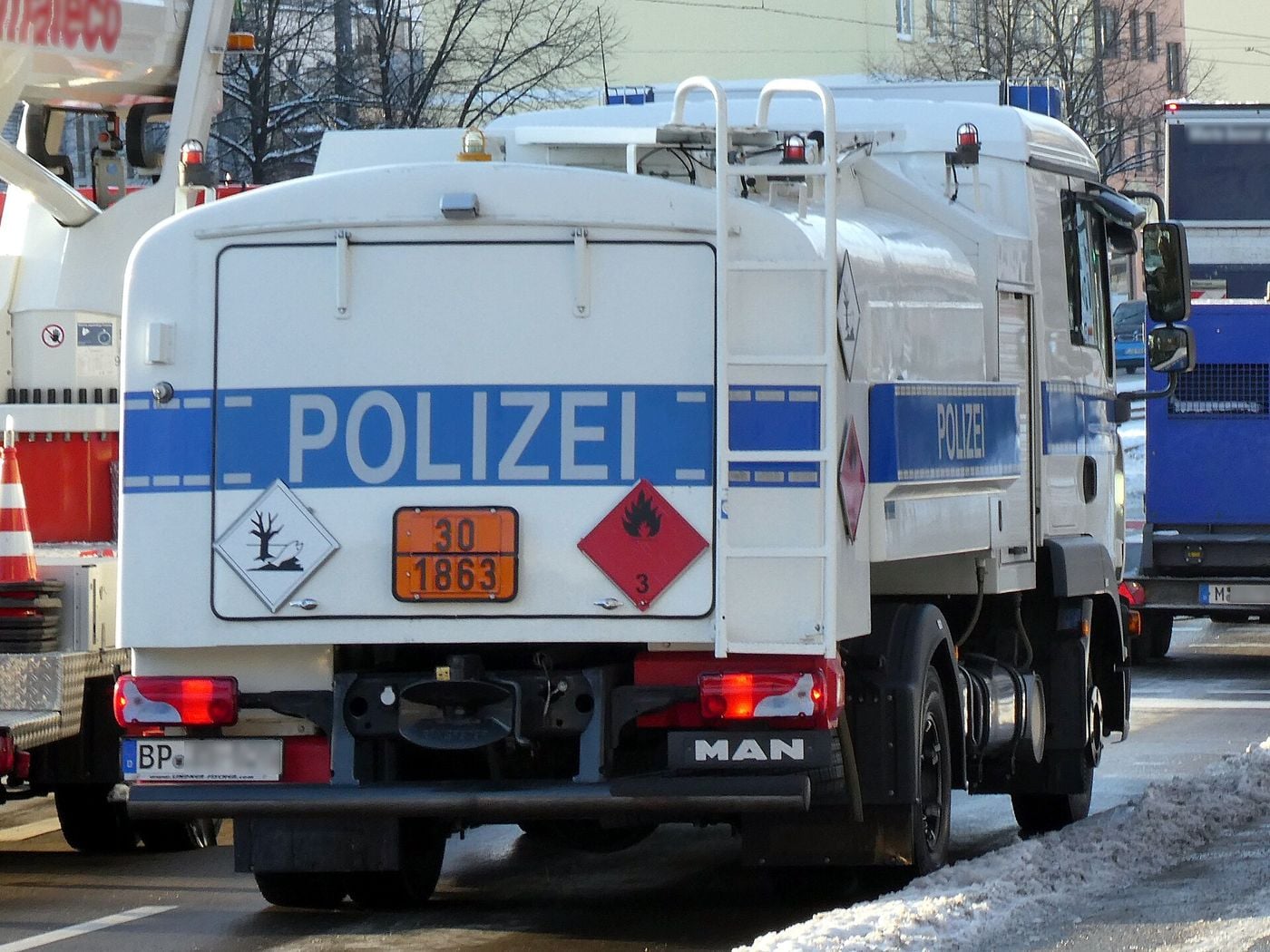
An ADR tank code is the four-part code in column (12) of Table A in Chapter 3.2 of ADR, the Agreement concerning the International Carriage of Dangerous Goods by Road, that states the type of tank a substance may be carried in. Under 4.3.2.1.1 a substance subject to ADR may be carried in fixed tanks (tank-vehicles), demountable tanks, battery-vehicles, tank-containers, tank swap bodies and MEGCs “only when provision is made for a tank code” in that column, and where no code is given, “carriage in ADR tanks is not permitted” (3.2.3). The code describes the least stringent tank that is acceptable; a tank with a higher code may be used under the hierarchy of tanks. Codes for gases of Class 2 are read under 4.3.3.1.1, codes for Classes 3 to 9 under 4.3.4.1.1: L4BH, for example, is a tank for liquids with a minimum calculation pressure of 4 bar, bottom openings with three closures and hermetic closure. The code is recorded in the type approval certificate and in box 9.5 of the vehicle’s certificate of approval, and it is inscribed on demountable tanks and tank-containers and, for Class 2, on tank-vehicles; it is not among the particulars of the tank’s metal plate.
Status as at 21 November 2026. Read on that day in copies of the official English texts: ADR 2025 (ECE/TRANS/352), with the explanatory notes to Columns (10) to (12) in 3.2.3, Table A, 4.3.2.1, 4.3.3.1, 4.3.4.1, 6.7.1.3, 6.8.2.3.2, 6.8.2.5, 6.8.3.5.6 and the certificate model in 9.1.3.5; and the amendments adopted for entry into force on 1 January 2027, ECE/TRANS/WP.15/274 of 24 February 2026 with its addendum (Add.1) and corrigendum (Corr.1) of 1 June 2026.
Where the code sits in Table A
In Table A each entry has a row under its UN number, with columns for its class, classification code and packing group among others (these are explained in dangerous goods classes and orange plates). Column (12), “Tank codes for ADR tanks”, “contains an alphanumeric code describing a tank type, in accordance with 4.3.3.1.1 (for gases of Class 2) or 4.3.4.1.1 (for substances of Classes 3 to 9)”. The explanatory note in 3.2.3 says that this tank type “corresponds to the least stringent tank provisions that are acceptable” for the substance, and that the codes of the other permitted tank types are in 4.3.3.1.2 and 4.3.4.1.2. Paragraph 4.3.2.1.3 adds that tanks “corresponding to codes prescribing a higher minimum calculation pressure, or more stringent requirements for filling or discharge openings or for safety valves/devices” may be used. A footnote to 4.3.2.1.2 adds: “An exception is made for tanks intended for the carriage of substances of classes 1, 5.2 or 7 (see 4.3.4.1.3).”
The explanatory note also gives the meaning of what can stand next to a code:
- An S code and an L code together. The substance “may be offered for carriage in tanks in the solid or the liquid (molten) state”. Where a solid has only an L code, it is offered for carriage in tanks only in the molten state.
- (M). Written after the code, it “means that the substance can also be carried in battery-vehicles or MEGCs”.
- (+). Written after the code, it “means that the alternative use of the tanks is permitted only where this is specified in the certificate of type approval”.
The code does not carry every requirement. According to the same note, the general requirements for construction, equipment, type approval, testing and marking “that are not indicated in the tank code” are in 6.8.1, 6.8.2, 6.8.3 and 6.8.5; additional provisions for certain substances are special provisions in column (13) (4.3.2.1.4), such as the TU provisions of 4.3.5 and the TC and TE provisions of 6.8.4. Fibre-reinforced plastic tanks are dealt with in 4.4.1 and Chapter 6.13, vacuum operated waste tanks in 4.5.1 and Chapter 6.10.
Portable tanks follow a different system. Column (10) contains the code of a portable tank instruction, T1 to T23, T50 or T75 (6.7.1.3), and the general requirements for their design, construction, type approval, testing and marking are in Chapter 6.7. For petrol, UN 1203, Table A shows T4 in column (10) and LGBF in column (12). The tank bodies themselves, for mineral oil, dry bulk or foodstuffs, are described in tanker trucks and tank trailers.
Classes 3 to 9: the four parts
| Part | Code | Meaning in 4.3.4.1.1 |
|---|---|---|
| 1 Types of tank | L | Tank for substances in the liquid state (liquids or solids handed over for carriage in the molten state) |
| 1 Types of tank | S | Tank for substances in the solid state (powdery or granular) |
| 2 Calculation pressure | G | Minimum calculation pressure according to the general requirements of 6.8.2.1.14 |
| 2 Calculation pressure | 1.5; 2.65; 4; 10; 15 or 21 | Minimum calculation pressure in bar (see 6.8.2.1.14) |
| 3 Openings (see 6.8.2.2.2) | A | Tank with bottom-filling or bottom-discharge openings with 2 closures |
| 3 Openings | B | Tank with bottom-filling or bottom-discharge openings with 3 closures |
| 3 Openings | C | Tank with top-filling and discharge openings with only cleaning openings below the surface of the liquid |
| 3 Openings | D | Tank with top-filling and discharge openings with no openings below the surface of the liquid |
| 4 Safety valves/devices | V | Tank with a breather device, according to 6.8.2.2.6, but no device protecting against the propagation of a flame; or non-explosion pressure shock resistant tank |
| 4 Safety valves/devices | F | Tank with a breather device, according to 6.8.2.2.6, fitted with a device protecting against the propagation of a flame; or explosion pressure shock resistant tank |
| 4 Safety valves/devices | N | Tank without a breather device according to 6.8.2.2.6 and not hermetically closed |
| 4 Safety valves/devices | H | Hermetically closed tank (see 1.2.1) |
The figure in the second part is a calculation pressure: ADR writes it as “minimum calculation pressure in bar”. The test pressure of the tank is a separate particular on its metal plate under 6.8.2.5.1, which is described in ADR explained.
Read part by part:
- L4BH: a tank for substances in the liquid state, minimum calculation pressure 4 bar, bottom-filling or bottom-discharge openings with 3 closures, hermetically closed.
- LGBF: a tank for substances in the liquid state, minimum calculation pressure according to the general requirements of 6.8.2.1.14, bottom openings with 3 closures, a breather device fitted with a device protecting against the propagation of a flame (or an explosion pressure shock resistant tank).
- SGAV: a tank for substances in the solid state, powdery or granular, minimum calculation pressure according to 6.8.2.1.14, bottom-filling or bottom-discharge openings with 2 closures, a breather device without flame protection (or a non-explosion pressure shock resistant tank).
Codes with a decimal figure, such as L1.5BN or S2.65AN, are read the same way; the figure is the second part.
Class 2: compressed, liquefied and refrigerated gases
| Part | Code | Meaning in 4.3.3.1.1 |
|---|---|---|
| 1 Types of tank, battery-vehicle or MEGC | C | Tank, battery-vehicle or MEGC for compressed gases |
| 1 Types of tank, battery-vehicle or MEGC | P | Tank, battery-vehicle or MEGC for liquefied gases or dissolved gases |
| 1 Types of tank, battery-vehicle or MEGC | R | Tank for refrigerated liquefied gases |
| 2 Calculation pressure | X | Value of the minimum relevant test pressure according to the table in 4.3.3.2.5 |
| 2 Calculation pressure | 22 | Minimum calculation pressure in bar |
| 3 Openings (see 6.8.2.2 and 6.8.3.2) | B | Tank with bottom filling or discharge openings with 3 closures; or battery-vehicle or MEGC with openings below the surface of the liquid or for compressed gases |
| 3 Openings | C | Tank with top filling or discharge openings with 3 closures with only cleaning openings below the surface of the liquid |
| 3 Openings | D | Tank with top filling or discharge openings with 3 closures; or battery-vehicle or MEGC with no openings below the surface of the liquid |
| 4 Safety valves/devices | N | Tank, battery-vehicle or MEGC with safety valve according to 6.8.3.2.9 or 6.8.3.2.10 which is not hermetically closed |
| 4 Safety valves/devices | H | Hermetically closed tank, battery-vehicle or MEGC (see 1.2.1) |
Here the second part works differently from Classes 3 to 9. The letter X stands for the value of the minimum relevant test pressure, taken from the table in 4.3.3.2.5; only the figure 22 is a calculation pressure. Table A prints the X as a lower-case x: UN 1965, hydrocarbon gas mixture, liquefied, n.o.s., carries PxBN(M), UN 1005, ammonia, anhydrous, carries PxBH(M), and UN 1001, acetylene, dissolved, carries PxBN(M) with special provision TU17 in column (13). Note 3 to 4.3.3.1.1 reads: “The pressures indicated on the tank itself or on the panel shall be not less than the value of ‘X’ or the minimum calculation pressure.” Notes 1 and 2 explain two special provisions of column (13): under TU17 the gas “may only be carried in a battery-vehicle or MEGC the elements of which are composed of receptacles”, and under TU40 in one whose elements are “composed of seamless receptacles”.
Examples from Table A
| UN No. | Entry | Tank code |
|---|---|---|
| 1203 | Motor spirit or gasoline or petrol | LGBF |
| 1202 | Diesel fuel complying with standard EN 590:2013 + A1:2017, or gas oil or heating oil, light, with a flash-point as specified in that standard | LGBF |
| 1202 | Gas oil or diesel fuel or heating oil, light (flash-point more than 60 °C and not more than 100 °C) | LGBV |
| 1230 | Methanol | L4BH |
| 1830 | Sulphuric acid with more than 51 % acid | L4BN |
| 3077 | Environmentally hazardous substance, solid, n.o.s. | SGAV and LGBV |
| 2372 | 1,2-Di-(dimethylamino) ethane | LGBF (L4BH in the amendments for 1 January 2027) |
| 1965 | Hydrocarbon gas mixture, liquefied, n.o.s. | PxBN(M) |
| 1005 | Ammonia, anhydrous | PxBH(M) |
| 1001 | Acetylene, dissolved | PxBN(M) |
The hierarchy of tanks for Classes 3 to 9
Under 4.3.4.1.2, tanks with other codes “may also be used provided that any element (number or letter) of parts 1 to 4 of these tank codes correspond to a level of safety at least equivalent” to the corresponding element of the code in Table A. The paragraph gives the order of each part, from the lowest level to the highest:
| Part | Increasing order |
|---|---|
| 1 Types of tanks | S, L |
| 2 Calculation pressure | G, 1.5, 2.65, 4, 10, 15, 21 bar |
| 3 Openings | A, B, C, D |
| 4 Safety valves/devices | V, F, N, H |
ADR gives two examples: “A tank with the tank code L10CN is authorized for the carriage of a substance to which the tank code L4BN has been assigned”, and “A tank with the tank code L4BN is authorized for the carriage of a substance to which the tank code SGAN has been assigned.” A note follows: “The hierarchy does not take account of any special provisions for each entry (see 4.3.5 and 6.8.4).”
The same paragraph holds the rationalized approach, a table that assigns groups of substances, by class, classification code and packing group, to a fixed series of codes. For liquids the series is LGAV, LGBV, LGBF, L1.5BN, L4BN, L4BH, L4DH, L10BH, L10CH, L10DH, L15CH and L21DH; for solids SGAV, SGAN, SGAH, S4AH, S10AN and S10AH. Apart from the first row for liquids (LGAV) and the first for solids (SGAV), each row also lists the groups of permitted substances of other codes in the series: the LGBF row ends with the groups “for tank codes LGAV and LGBV”, the L4BH row, which begins with Class 3, classification code FT1, packing groups II and III, ends “and groups of permitted substances for tank codes LGAV, LGBV, LGBF, L1.5BN and L4BN”, and the S10AH row ends with the groups “for tank codes SGAV, SGAN, SGAH and S10AN”. For Class 3, classification code F1, packing group II, the table divides at a vapour pressure at 50 °C of 1.1 bar: up to that value the row is LGBF, above it L1.5BN.
The table’s note states that “certain substances and groups of substances are not included in the rationalized approach”. They are listed in 4.3.4.1.3 and carry “(+)” after the code in Table A: for them, “the alternate use of the tanks for other substances and groups of substances is permitted only where this is specified in the certificate of type approval”. The list covers entries of Classes 1, 4.1, 4.2, 4.3, 5.1, 5.2, 6.1, 7 and 8. It gives, for example, LGAV for UN 3375 ammonium nitrate emulsion, suspension or gel in its liquid form and SGAV for the solid form, and for all substances of Class 7 “special tanks” with a minimum requirement of L2.65CN for liquids and S2.65AN for solids.
Tanks for liquid wastes that comply with Chapter 6.10 and are equipped with two closures in accordance with 6.10.3.2 “shall be assigned to tank code L4AH”; if they are equipped for the alternate carriage of liquid and solid substances, “they shall be assigned to the combined codes L4AH+S4AH” (4.3.4.1.4). The vacuum-operated waste tanks themselves are covered in sewer-cleaning and vacuum trucks.
The hierarchy of tanks for Class 2
For gases, 4.3.3.1.2 is a table of its own. The asterisk stands for the figure in the tank code of the left column, the hash for the figure in the other permitted codes.
| Tank code | Other tank code(s) permitted for the substances under this code |
|---|---|
| C*BN | C#BN, C#CN, C#DN, C#BH, C#CH, C#DH |
| C*BH | C#BH, C#CH, C#DH |
| C*CN | C#CN, C#DN, C#CH, C#DH |
| C*CH | C#CH, C#DH |
| C*DN | C#DN, C#DH |
| C*DH | C#DH |
| P*BN | P#BN, P#CN, P#DN, P#BH, P#CH, P#DH |
| P*BH | P#BH, P#CH, P#DH |
| P*CN | P#CN, P#DN, P#CH, P#DH |
| P*CH | P#CH, P#DH |
| P*DN | P#DN, P#DH |
| P*DH | P#DH |
| R*BN | R#BN, R#CN, R#DN |
| R*CN | R#CN, R#DN |
| R*DN | R#DN |
The rule under the table: “The figure represented by ‘#’ shall be equal to or greater than the figure represented by ‘*’.” Every row permits only codes with the same first letter. As for Classes 3 to 9, “this hierarchy does not take any special provisions into account (see 4.3.5 and 6.8.4)”.
Where the code is recorded
- Type approval certificate. The competent authority issues a certificate for each new type of tank-vehicle, demountable tank, tank-container, tank swap body, battery-vehicle or MEGC, in addition to the items of 1.8.7.2.2.1 and an approval number it shows “the tank code in accordance with 4.3.3.1.1 or 4.3.4.1.1” (6.8.2.3.2). Tanks may not be loaded with dangerous substances other than those for which they have been approved under that paragraph and which are not liable to react dangerously with the materials of the shell, gaskets, equipment and protective linings (4.3.2.1.5).
- Vehicle certificate of approval. In the model of 9.1.3.5, box 9 describes the fixed tank or battery-vehicle, and box 9.5 reads “Tank code according to 4.3.3.1 or 4.3.4.1 of ADR”. In box 10.2, for a tank-vehicle or battery-vehicle, one of two options is marked: “only the substances permitted under the tank code and any special provisions specified in No. 9 may be carried”, or a list of named substances. The footnote to the first option defines them as “Substances assigned to the tank code specified in No. 9 or to another tank code permitted under the hierarchy in 4.3.3.1.2 or 4.3.4.1.2, taking account of the special provision(s), if any.” The certificate as a whole is described in ADR explained.
- Demountable tanks and tank-containers. Under 6.8.2.5.2 the “Tank code according to 4.3.4.1.1” is inscribed on the tank itself or on panels, together with the codes of the TC and TE special provisions from column (13) or, for substances of 4.3.4.1.3, the proper shipping name of the substances accepted for carriage.
- Class 2 tanks. On tank-vehicles and tank-containers for gases, 6.8.3.5.6 adds, on the tank itself or on panels, “The tank code according to the certificate (see 6.8.2.3.2) with the actual test pressure of the tank”.
The tank code is not among the particulars of the corrosion-resistant metal plate of 6.8.2.5.1. For a tank-vehicle of Classes 3 to 9, the inscriptions of 6.8.2.5.2 are the name of the owner or operator, the unladen mass and the maximum permissible mass of the vehicle.
What changes on 1 January 2027
The amendments adopted for entry into force on 1 January 2027 replace the tank code of one entry in Table A and delete that of another. For UN 2372, 1,2-di-(dimethylamino) ethane, ECE/TRANS/WP.15/274 reads: “In column (12), replace ‘LGBF’ by ‘L4BH’.” Among the other changes to the same entry, the classification code in column (3b) goes from F1 to FTC, column (5) adds “+6.1 +8”, column (13) gains special provision TU15 and the hazard identification number in column (20) goes from 33 to 368. Two new transitional measures in the addendum deal with the replaced code: for UN 2372 the tank code “applicable up to 31 December 2026 may continue to be applied until 31 December 2030” for fixed tanks (tank-vehicles) and demountable tanks constructed before 1 July 2027 (1.6.3.64), and for tank-containers constructed before 1 July 2027 (1.6.4.70).
For UN 3553, disilane, which carries PxBN(M) in ADR 2025, WP.15/274 reads: “delete the entries in columns (10), (12), (13) and (14)”. The same document deletes the entry for UN 2941, fluoroanilines, which carries L4BH in ADR 2025, and adds six new entries, four of them with a code in column (12): LGBF for UN 2348, butyl acrylates, stabilized, in packing group II; SGAH for UN 2862, vanadium pentoxide, non-fused form, containing not less than 10 % respirable particles; and SGAN for UN 3561, chlorophenols, corrosive, toxic, solid, n.o.s., and UN 3562, chlorophenols, corrosive, solid, n.o.s.
In 4.3.3.1.1 two cross-references change and the letters stay. After new paragraphs are inserted in 4.3.3.2, the explanation of X refers to 4.3.3.2.7 in place of 4.3.3.2.5 (WP.15/274 as corrected by Corr.1), and the explanation of N refers to “6.8.3.2.1.8.1 or 6.8.3.2.1.9” in place of “6.8.3.2.9 or 6.8.3.2.10” (Add.1). The three documents contain no amendment to 4.3.3.1.2 or to 4.3.4.1.1 to 4.3.4.1.3. How the 2027 amendments enter into force is set out in ADR explained.
Quick answers
- What does L4BH mean in ADR?
- Read under ADR 4.3.4.1.1, L4BH is a tank for substances in the liquid state (L) with a minimum calculation pressure of 4 bar (4), bottom-filling or bottom-discharge openings with 3 closures (B), and hermetically closed (H). In the rationalized approach of 4.3.4.1.2 the L4BH row also takes the groups of permitted substances for tank codes LGAV, LGBV, LGBF, L1.5BN and L4BN. ADR 2025 gives L4BH in column (12) of Table A to UN 1230 methanol, among other entries, and the amendments for 1 January 2027 give it to UN 2372 in place of LGBF.
- What is the difference between LGBF and LGBV?
- Only the fourth part. Both are tanks for liquids with the minimum calculation pressure of the general requirements of 6.8.2.1.14 (G) and bottom openings with 3 closures (B). F is a tank with a breather device fitted with a device protecting against the propagation of a flame, or an explosion pressure shock resistant tank; V has a breather device without that protection, or is a non-explosion pressure shock resistant tank. In the rationalized approach the LGBF row also takes the groups of permitted substances for tank codes LGAV and LGBV. In ADR 2025 Table A gives LGBF to petrol (UN 1203) and to EN 590 diesel (UN 1202), and LGBV to gas oil with a flash-point above 60 °C and not above 100 °C.
- Is the number in an ADR tank code the test pressure?
- Not for Classes 3 to 9: there the figure 1.5, 2.65, 4, 10, 15 or 21 is the minimum calculation pressure in bar (ADR 4.3.4.1.1), and G stands for the minimum calculation pressure of the general requirements of 6.8.2.1.14. For Class 2 gases the second part is either X, the value of the minimum relevant test pressure from the table in 4.3.3.2.5, or 22, a minimum calculation pressure in bar. The test pressure is a separate particular on the tank's metal plate (6.8.2.5.1).
- Where is a tank's ADR tank code shown?
- In the type approval certificate of the tank type (ADR 6.8.2.3.2) and, for fixed tanks and battery-vehicles, in box 9.5 of the vehicle's certificate of approval. It is inscribed on the tank itself or on panels for demountable tanks and tank-containers (6.8.2.5.2) and, for Class 2, on tank-vehicles and tank-containers together with the actual test pressure (6.8.3.5.6). It is not among the particulars of the metal plate of 6.8.2.5.1.
- What do the tank codes for Class 2 gases mean?
- They have four parts too (ADR 4.3.3.1.1): C for compressed gases, P for liquefied or dissolved gases, R for refrigerated liquefied gases; X for the minimum relevant test pressure or 22 for a minimum calculation pressure in bar; B, C or D for the openings; N for a safety valve, not hermetically closed, or H for hermetically closed. Table A prints the X as a lower-case x, as in PxBN(M) for UN 1965 and PxBH(M) for UN 1005 anhydrous ammonia; (M) means the gas can also be carried in battery-vehicles or MEGCs.
Sources
- ADR 2025 (ECE/TRANS/352), English text — 3.2.3 explanatory notes to Columns (10) to (12), Table A of Chapter 3.2, 4.3.2.1, 4.3.3.1, 4.3.4.1, 6.7.1.3, 6.8.2.3.2, 6.8.2.5, 6.8.3.5.6 and the certificate model in 9.1.3.5; read on 21 November 2026 — United Nations Economic Commission for Europe (copy in the UN Digital Library)
- ECE/TRANS/WP.15/274 — Draft amendments to annexes A and B of ADR, adopted for entry into force on 1 January 2027 (24 February 2026): Table A (UN 2372, UN 2941, UN 3553 and new entries) and 4.3.3.1.1 — United Nations Economic Commission for Europe, Working Party on the Transport of Dangerous Goods, 24 Feb 2026
- ECE/TRANS/WP.15/274/Add.1 — Draft amendments to annexes A and B of ADR, addendum (1 June 2026): 1.6.3.64, 1.6.4.70 and 4.3.3.1.1 — United Nations Economic Commission for Europe, Working Party on the Transport of Dangerous Goods, 1 Jun 2026
- ECE/TRANS/WP.15/274/Corr.1 — Draft amendments to annexes A and B of ADR, corrigendum (1 June 2026): item 4, amendment to 4.3.3.1.1 — United Nations Economic Commission for Europe, Working Party on the Transport of Dangerous Goods, 1 Jun 2026