Running the engine of a parked truck or bus in Europe: the idling rules of seven countries
Germany's fine catalogue lists €80 under the StVO rule against running engines unnecessarily, Italy €223 to €444 for keeping the engine on while parked to run the air conditioning.
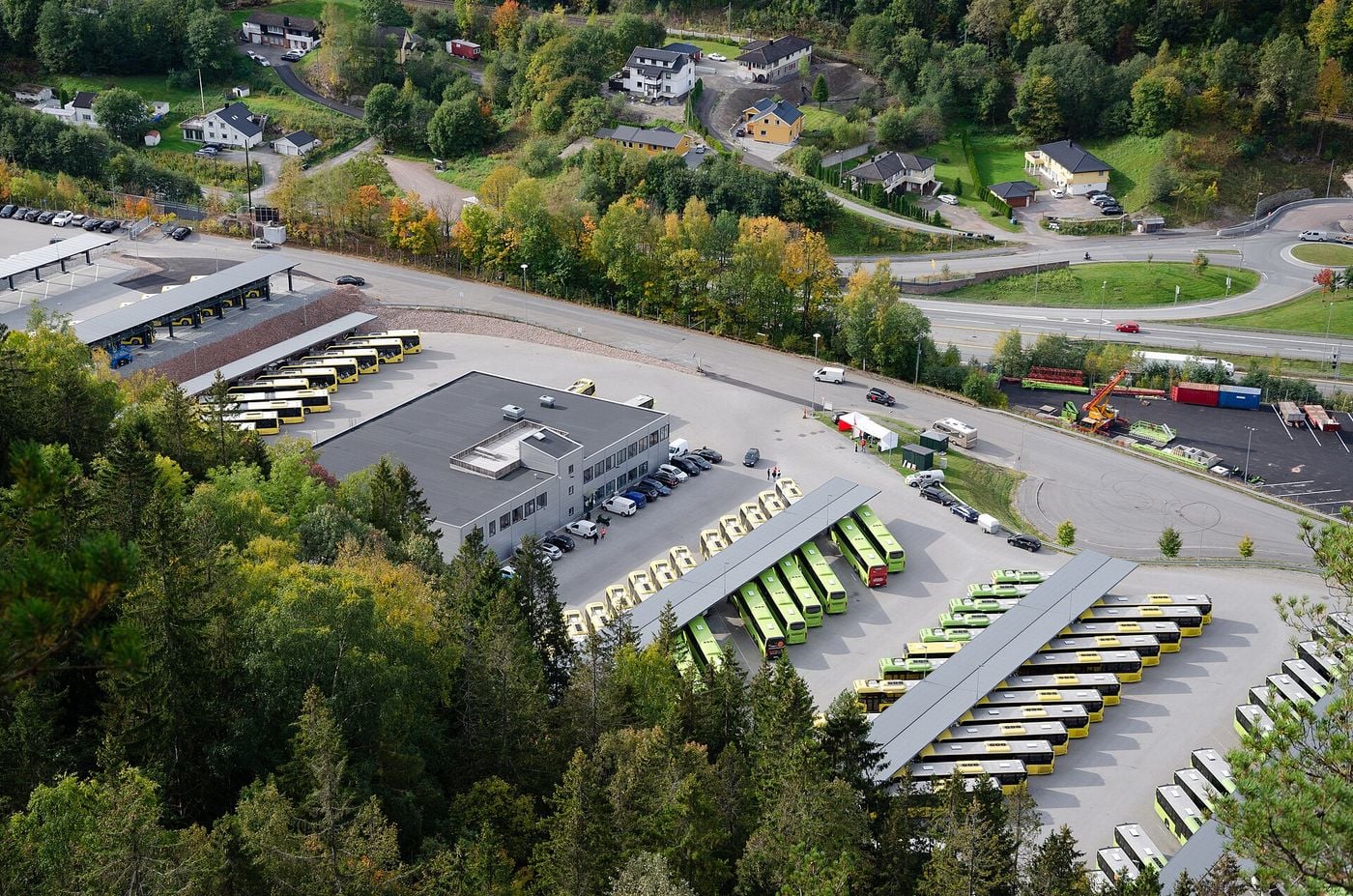
In Germany, § 30(1) of the road traffic regulations (StVO) forbids letting vehicle engines run unnecessarily, and no. 117 of the federal fine catalogue, which cites that paragraph, lists €80. Poland forbids the driver to leave the engine running during a postój (a standstill of more than 1 minute not resulting from traffic conditions or rules) in a built-up area, with one exception, for a vehicle performing activities on the road; a bill that would add buses to that exception was still pending in the Sejm on 14 November 2026. Italy’s Codice della strada forbids keeping the engine on while parked in order to run the air conditioning, at €223 to €444. In Great Britain, rule 123 of the Highway Code says a driver must not leave a vehicle engine running unnecessarily while the vehicle is stationary on a public road. Spain requires the engine to be stopped when the driver leaves the seat, when the vehicle is stopped in tunnels and closed places and while refuelling, and Türkiye when a vehicle is parked and during a stop whose purpose requires a long wait. For France the source read is a government answer of 26 November 2019 to a parliamentary question. None of the provisions in force quoted below names trucks or buses separately.
Status as at 14 November 2026. Read on that day: § 30 of the Straßenverkehrs-Ordnung and no. 117 of the Bußgeldkatalog on gesetze-im-internet.de; Articles 2 and 60 of Poland’s road traffic act (Prawo o ruchu drogowym) in the consolidated text Dz. U. 2024 poz. 1251, Sejm print no. 1079 and its process record on the Sejm’s API; Article 157 of Italy’s Codice della strada on Normattiva; rule 123 of the Highway Code on GOV.UK; written question no. 21620 of the French National Assembly with the government’s answer; Articles 92 and 115 of Spain’s Reglamento General de Circulación in the consolidated text of the Boletín Oficial del Estado; Articles 117 and 118 of Türkiye’s Karayolları Trafik Yönetmeliği on the Mevzuat Bilgi Sistemi.
The rules side by side
| Country | Legal basis | What the text requires | When or where | Exception in the text | Fine in the text read |
|---|---|---|---|---|---|
| Germany | StVO § 30(1) sentences 1 and 2; Bußgeldkatalog no. 117 | Unnecessary noise and avoidable exhaust nuisance are forbidden, in particular letting vehicle engines run unnecessarily | Whenever a vehicle is used; no time limit | None stated | €80 |
| Poland | Prawo o ruchu drogowym, Art. 60(2) points 1 and 3; Art. 2 points 29 and 30 | The driver may not leave the engine running during a postój, nor move away from the vehicle while the engine is running | Point 3: during a postój (a standstill of more than 1 minute not resulting from traffic conditions or rules) in a built-up area; point 1: no place or time stated | A vehicle performing activities on the road (point 3) | Not in the texts read |
| Italy | Codice della strada, Art. 157 comma 7-bis | Keeping the engine on in order to keep the air-conditioning system running | During the sosta (parking) of the vehicle | None stated | €223 to €444, in effect from 1 January 2021 |
| Great Britain | Highway Code rule 123, citing CUR regs 98 and 107 | MUST NOT leave a parked vehicle unattended with the engine running, or leave the engine running unnecessarily while stationary | Stationary on a public road | Stationary in traffic; diagnosing faults | Not in the texts read |
| France | As named in the government’s answer of 26 November 2019: Code de la route R. 318-1 and Art. 2 of the arrêté of 12 November 1963 | Compromising public health and safety through the emission of smoke or of toxic, corrosive or odorous gases, in conditions likely to inconvenience the population, is punishable | Not given in the answer | Not given in the answer | Fourth-class contravention, immobilisation possible; no amount in the answer |
| Spain | Reglamento General de Circulación, Art. 92.3(a) and Art. 115 | Stop the engine and disconnect the starting system when the driver has to leave the seat; stop the engine in the cases of Art. 115 | Stopped in a tunnel or closed place; a forced stop of more than two minutes there; refuelling | None stated | Not in the texts read |
| Türkiye | Karayolları Trafik Yönetmeliği, Art. 117(b) and 118(b) | Stop the engine | A stop (duraklama) whose purpose requires a long wait; parking (parketme) | None stated | Not in the texts read |
Germany: § 30(1) StVO
Section 30 of the StVO, headed “Umweltschutz, Sonn- und Feiertagsfahrverbot”, opens with a general rule: “Bei der Benutzung von Fahrzeugen sind unnötiger Lärm und vermeidbare Abgasbelästigungen verboten” (paragraph 1, sentence 1), unnecessary noise and avoidable exhaust nuisance are forbidden when vehicles are used. Sentence 2 names the engine: “Es ist insbesondere verboten, Fahrzeugmotoren unnötig laufen zu lassen”, in particular it is forbidden to let vehicle engines run unnecessarily. The same sentence also forbids closing vehicle doors excessively loudly. The paragraph sets no time limit and names no vehicle class.
The fine catalogue annexed to the Bußgeldkatalog-Verordnung lists the offence under no. 117, “Bei Benutzung eines Fahrzeugs unnötigen Lärm oder vermeidbare Abgasbelästigungen verursacht”, citing § 30(1) sentences 1 and 2 together with § 49(1) no. 25 StVO, at €80. Paragraph 3 of the same section is the Sunday and holiday driving ban for trucks over 7.5 t, covered in truck driving bans in Europe.
Poland: Article 60(2) of the road traffic act
Article 60(2) of the Prawo o ruchu drogowym lists what the driver is forbidden to do. Point 3 reads in full: “pozostawiania pracującego silnika podczas postoju na obszarze zabudowanym; nie dotyczy to pojazdu wykonującego czynności na drodze;”, leaving the engine running during a postój in a built-up area; this does not apply to a vehicle performing activities on the road. Point 1 forbids “oddalania się od pojazdu, gdy silnik jest w ruchu”, moving away from the vehicle while the engine is running, and point 2 the use of a vehicle in a way that causes nuisance through excessive exhaust emissions or excessive noise.
The 1-minute threshold comes from the definitions in Article 2. A postój is a standstill not resulting from traffic conditions or rules “trwające dłużej niż 1 minutę”, lasting longer than 1 minute (point 30). A standstill of not longer than 1 minute, and every standstill that does result from those conditions or rules, is a zatrzymanie (point 29). Point 3 of Article 60(2) names the postój.
A bill to add buses: pending, not law. Sejm print no. 1079 of the 10th term, an MPs’ bill amending the road traffic act, would give point 3 a new wording ending “nie dotyczy to pojazdu wykonującego czynności na drodze lub autobusu;”, adding buses (“lub autobusu”, or a bus) to the exception. Its explanatory statement gives the aim as allowing bus drivers to leave the engine running during a postój in a built-up area. The Sejm’s process record lists three stages: the bill was received on 21 February 2025, referred to first reading in committee on 1 April 2025, and the government’s position on it was received on 22 July 2025. On 14 November 2026 the record showed the bill as not passed, and point 3 in force keeps its single exception. Under Article 2 of the bill, the amending act would enter into force 14 days after its publication.
Italy: Article 157, comma 7-bis of the Codice della strada
Comma 7-bis of Article 157 reads: “È fatto divieto di tenere il motore acceso, durante la sosta del veicolo, allo scopo di mantenere in funzione l’impianto di condizionamento d’aria nel veicolo stesso”, keeping the engine on during the sosta (parking) of the vehicle in order to keep the vehicle’s air-conditioning system running is forbidden. The paragraph names that one purpose.
The penalty is in the same paragraph: an administrative fine “da € 223 a € 444”. On Normattiva the amounts carry update note (163), which states that the Decree of 31 December 2020 (Gazzetta Ufficiale of 31 December 2020, no. 323) gave that change effect from 1 January 2021.
Great Britain: Highway Code rule 123
Rule 123, “The driver and the environment”, states: “You MUST NOT leave a parked vehicle unattended with the engine running or leave a vehicle engine running unnecessarily while that vehicle is stationary on a public road.” The rule continues in the Code’s advisory wording for a vehicle that is stationary and “likely to remain so for more than a couple of minutes”, and ends with the exceptions: “However it is permissible to leave the engine running if the vehicle is stationary in traffic or for diagnosing faults.”
The legal reference printed under the rule is “Law CUR regs 98 & 107”. The regulations it cites, and any penalty they carry, were not read for this page.
France: the government’s answer of 2019
For France the source read is not the legal text but a government answer to a parliamentary question. Written question no. 21620 of the 15th legislature, headed “Verbalisation des véhicules arrêtés, moteur allumé” (fining drivers of vehicles stopped with the engine on), was published in the Journal officiel on 16 July 2019. The answer of the Ministry of the Interior, published on 26 November 2019, names two provisions: Article R. 318-1 of the Code de la route and Article 2 of the arrêté of 12 November 1963 on smoke produced by motor vehicles. Under them, it says, compromising public health and safety through the emission of smoke or of toxic, corrosive or odorous gases, in conditions likely to inconvenience the population, “est punissable d’une peine de contravention de quatrième classe et l’immobilisation du véhicule peut être prescrite (Natinf 21939)”: it is punishable as a fourth-class contravention, and immobilisation of the vehicle may be ordered.
The answer adds that since 2014 the gendarmerie nationale had recorded 1,628 offences, an average of 270 a year. It gives no fine amount. The current texts of Article R. 318-1 and of the 1963 arrêté were not read for this page.
Spain: Articles 92 and 115 of the Reglamento General de Circulación
Article 92 deals with the placing of a vehicle that stops or parks. Paragraph 3 sets rules for when the driver of a motor vehicle or moped “tenga que dejar su puesto”, has to leave the seat. The first of them, point (a), is “Parar el motor y desconectar el sistema de arranque”: stop the engine and disconnect the starting system, and, if the driver moves away from the vehicle, take the precautions needed to prevent its use without authorisation.
Article 115, “Apagado de motor”, applies even when the driver stays in the seat. Under paragraph 1 the driver “deberá parar el motor siempre que el vehículo se encuentre detenido en el interior de un túnel o en lugar cerrado y durante la carga de combustible”, must stop the engine whenever the vehicle is stopped inside a tunnel or in a closed place and while refuelling; the paragraph cites Article 46 of the texto articulado. Paragraph 2 covers a driver forced to remain stopped inside a tunnel or other closed place “por un período de tiempo superior a dos minutos”, for more than two minutes: the engine is switched off until the journey can continue, with the position lights kept on. Paragraph 3 repeats that a vehicle must have its engine stopped for refuelling.
Türkiye: Articles 117 and 118 of the Karayolları Trafik Yönetmeliği
Article 117 lists the measures that are mandatory (“Mecburidir”) when stopping (duraklama). Under point (b), if the purpose of the stop “uzun süre beklemeyi gerektiriyorsa”, requires a long wait, stopping the engine (“motorun durdurulması”) is one of them, with the other measures listed in the same point. Article 118 sets out the rules for parking (parketme); its point (b) begins “Motor durdurulur”, the engine is stopped. Neither point gives a duration.
What this page does not cover
- Fines in Poland, Great Britain, Spain and Türkiye: the texts that set them were not read for this page. For France, the 2019 answer gives the class of the offence but no amount.
- Russia and the European countries not listed above.
- Rules made by regions, cities and municipalities, and rules tied to air quality. The low-emission zones are covered in low-emission zones for trucks and buses in Europe.
- Heaters and coolers that work while the engine is off, and the approval rules for them, which are described in parking heaters and coolers.
- The United States: California’s limit of 5 consecutive minutes and the federal provisions on idle reduction equipment are in truck idling rules in the US.
Quick answers
- Is it illegal to leave a truck engine running in Germany?
- § 30(1) of the StVO says that it is in particular forbidden to let vehicle engines run unnecessarily ("Fahrzeugmotoren unnötig laufen zu lassen"), and the fine catalogue lists €80 under no. 117 for causing unnecessary noise or avoidable exhaust nuisance when using a vehicle. The paragraph sets no time limit and names no vehicle class.
- Can a bus stand with its engine running in Poland?
- Article 60(2)(3) of the Polish road traffic act forbids the driver to leave the engine running during a postój in a built-up area. A postój is a standstill not resulting from traffic conditions or rules that lasts longer than 1 minute. The only exception in the text is a vehicle performing activities on the road. Sejm print no. 1079, an MPs' bill received on 21 February 2025, would add buses to the exception; on 14 November 2026 it had not been passed.
- Is engine idling illegal in the UK?
- In Great Britain, rule 123 of the Highway Code says: "You MUST NOT leave a parked vehicle unattended with the engine running or leave a vehicle engine running unnecessarily while that vehicle is stationary on a public road." The rule permits the engine to run if the vehicle is stationary in traffic or for diagnosing faults, and gives "CUR regs 98 & 107" as its legal basis.
- Is it forbidden in Italy to keep the engine running while parked?
- Article 157, comma 7-bis of the Codice della strada forbids keeping the engine on during the sosta (parking) of the vehicle in order to keep its air-conditioning system running. The fine is €223 to €444, the amount in effect from 1 January 2021. The paragraph names that one purpose.
- When must the engine be switched off in Spain and Türkiye?
- In Spain, Article 92.3(a) of the Reglamento General de Circulación requires a driver who has to leave the seat to stop the engine and disconnect the starting system, and Article 115 requires the engine to be stopped when the vehicle is stopped in a tunnel or closed place and during refuelling. In Türkiye, Article 117(b) of the Karayolları Trafik Yönetmeliği requires the engine to be stopped when the purpose of a stop requires a long wait, and Article 118(b) says that when a vehicle is parked the engine is stopped.
Sources
- Straßenverkehrs-Ordnung (StVO), § 30 Umweltschutz, Sonn- und Feiertagsfahrverbot, paragraph 1, read on 14 November 2026 — Federal Ministry of Justice, Germany (gesetze-im-internet.de)
- Bußgeldkatalog-Verordnung (BKatV), Anlage (Bußgeldkatalog), no. 117, read on 14 November 2026 — Federal Ministry of Justice, Germany (gesetze-im-internet.de)
- Ustawa z dnia 20 czerwca 1997 r. Prawo o ruchu drogowym — consolidated text Dz. U. 2024 poz. 1251, Article 2 points 29 and 30 and Article 60(2), read on 14 November 2026 — Kancelaria Sejmu (Chancellery of the Sejm), Poland, ELI
- Poselski projekt ustawy o zmianie ustawy – Prawo o ruchu drogowym, Sejm print no. 1079 (10th term): bill text and explanatory statement — Sejm of the Republic of Poland, 21 Feb 2025
- Legislative process no. 1079 (10th term), record of stages, read on 14 November 2026 — Sejm of the Republic of Poland, API
- Decreto legislativo 30 aprile 1992, n. 285, Nuovo codice della strada — Article 157, comma 7-bis and update note (163), read on 14 November 2026 — Normattiva, Istituto Poligrafico e Zecca dello Stato, Italy
- The Highway Code: general rules, techniques and advice for all drivers and riders (103 to 158), rule 123, read on 14 November 2026 — Department for Transport, GOV.UK
- Written question no. 21620 (15th legislature), Verbalisation des véhicules arrêtés, moteur allumé — question published in the Journal officiel on 16 July 2019, answer of the Ministry of the Interior published on 26 November 2019, page 10328 — Assemblée nationale, France, 26 Nov 2019
- Real Decreto 1428/2003, Reglamento General de Circulación — consolidated text, Articles 92 and 115, read on 14 November 2026 — Agencia Estatal Boletín Oficial del Estado, Spain
- Karayolları Trafik Yönetmeliği (Highway Traffic Regulation, Türkiye), Official Gazette 18/7/1997 No 23053, consolidated text — Articles 117 and 118, read on 14 November 2026 — Mevzuat Bilgi Sistemi, Presidency of the Republic of Türkiye