Otokar
Otokar Sultan
Three lengths from 7,180 to 9,175 mm on a four-cylinder 4.5-litre Cummins: what Otokar publishes for the Sultan Comfort, Mega and Giga midibuses, and where its documents differ.
- 2002—
- Two-axle
- 129–151 kW
- Euro 6
- 7.18 m

Model overview
- Segment
- Bus
- Produced
- 2002—
- Axle configurations
- 1 (Two-axle…)
- Emission
- Euro 6 — Sultan Comfort and Mega, KS95TB-26
- Transmission
- Automatic, 9 forward, standard on all three; manual, 6 forward and 1 reverse, optional on the Comfort and Mega
- Length
- 7 180 mm
- Capacity
- 29+1 (Comfort); 35+1+1 (Mega); 39+1+1 (Giga)
- Doors
- Front and rear, single-leaf, outward-opening
Engine families
- Power
- 129–151 kW
- Torque
- 682–832 Nm
- Rated speed
- 2300 rpm
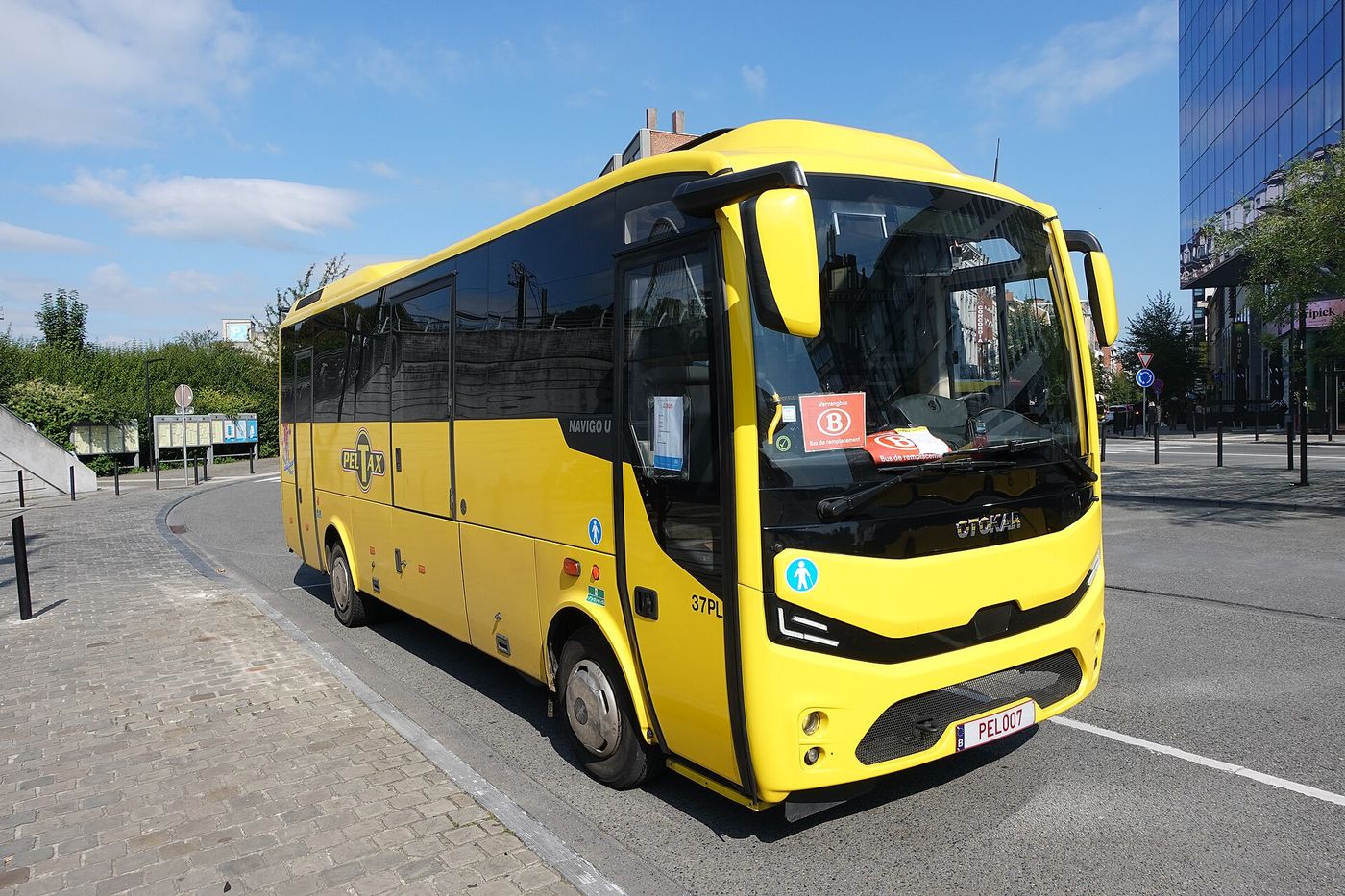
The Sultan is Otokar’s midibus for tourism and shuttle work. Otokar’s corporate timeline dates the start of its production to 2002, and the company’s Turkish range now lists three models: the Sultan Comfort, the Sultan Mega and the Sultan Giga. Otokar’s English release of 23 September 2024 describes the Navigo as “known as ‘Sultan’ in the Turkish market” and says that it began its export journey under the name Navigo in its second year.
The figures on this page come from Otokar’s Turkish Sultan family brochure, document code KS95TB-26, whose PDF is dated 21 August 2026, and from Otokar’s Turkish model pages for the three buses, read on 8 October 2026. The history draws on Otokar’s timeline, its news items from January 2019 to September 2024 and two posts on its corporate blog. The section on the Navigo is built from the Otokar Europe brochure imprinted OEU-25 EN, February 2025, from Otokar’s and Otokar Europe’s English model pages, and from two Navigo operation manuals issued by Otokar in August and October 2024.
Range and history
Otokar’s tourism and shuttle range page lists the three Sultans beside the 10.1-metre Ulyso; Otokar lists its city buses in a separate range, and its timeline records the 12-metre Kent city buses in 2009. The brochure gives the three Sultans one width, one height and one engine family, and separates them by length, seating, engine rating, rear suspension and tyres.
| Sultan Comfort | Sultan Mega | Sultan Giga | |
|---|---|---|---|
| Length | 7,180 mm | 8,475 mm | 9,175 mm |
| Width / height | 2,295 / 3,200 mm | 2,295 / 3,200 mm | 2,295 / 3,200 mm |
| Front / rear track | 1,963 / 1,708 mm | 1,963 / 1,708 mm | 1,963 / 1,708 mm |
| Seating | 29+1; alternatives 27+1+1, 25+1+1, 25+1 | 35+1+1 | 39+1+1 |
| Engine | Cummins, 4 cylinders in line, 4.5 l, Euro 6 | Cummins, 4 cylinders in line, 4.5 l, Euro 6 | Cummins, 4 cylinders, 4.5 l |
| Maximum power | 129 kW at 2,300 rpm | 151 kW at 2,300 rpm | 151 kW at 2,300 rpm |
| Maximum torque | 682 Nm at 1,350 rpm | 832 Nm at 1,200–1,450 rpm | 832 Nm at 1,200–1,450 rpm |
| Gearbox | 9-speed automatic | 9-speed automatic | 9-speed automatic |
| Rear suspension | parabolic springs | air | air |
| Tyres | 225/75 R 17.5 | 245/70 R 17.5 | 245/70 R 17.5 |
| Fuel / AdBlue tank | 194 / 26 l | 197 / 26 l | 190 / 26 l |
Otokar’s model pages give the lengths as 7.2, 8.5 and 9.2 m. The Mega page adds an alternative layout of 37+1, which the brochure also names in a note on the Mega’s standard refrigerator. The Giga page gives the engine as 210 Hp; Otokar’s news item of 16 January 2023 gives it as 210 BG.
Otokar’s blog post of 3 May 2021 says the company began building small buses designed by Turkish engineers under the Sultan name in 2002, on a chassis made for the Sultan, that the buses were first offered in two models, and that the first model, the Sultan 115 L, was presented at a launch meeting in November 2002. The same post says Otokar gave the Sultan its first European showing at the IAA in Germany, without a year, and that it went on sale abroad as the Navigo; the timeline dates the first Sultan exports to 2004. The post describes a city-bus version that followed, and a family that grew to six models, from a city type suited to passengers with disabilities to a 35-passenger model. In 2021 it listed the Sultan Mega with 35+1+1 seats, the Sultan Maxi with 31+1+1, the Sultan Comfort, the Sultan S with a 107 kW engine, the Sultan Maxi Engelsiz with a lift and its own entrance door for wheelchair users, and the Sultan LF and Sultan City for city routes. It says that the Sultan’s success and Otokar’s product-development experience also took shape in special models, and names mobile health units, prisoner-transport vehicles and what it calls Turkey’s first concealed armoured bus. The timeline records that in 2016 Otokar began exporting technology and licences for Sultan buses.
Otokar’s news item of 29 January 2019 gives the low-floor Sultan LF, with a wheelchair ramp, a length of 8.4 m and passenger layouts of 21+4 folding+35+1 as standard, with 21+42+1 and 21+1 wheelchair+35+1 as options. A blog post of 2 February 2023 gives the Sultan City up to 58 passengers. Otokar’s news item of 27 June 2019 reports the first fleet delivery of a renewed Sultan Comfort and gives it 29+1 seats, an option of height-adjustable three-point seat belts, and emergency braking (AEBS) and lane-departure warning (LDWS) as standard.
On 16 January 2023 Otokar announced a redesigned Sultan, its front and rear completely changed and, in Otokar’s words, with more dynamic and sharper lines. The release calls the Sultan Giga the first model put on sale with the family’s new face: 9.2 metres long, with 39+1+1 seats, 4.8 m³ of luggage space and a retarder as standard. The timeline lists the Giga, designed for tourism transport, among the company’s 2023 entries. Otokar’s news item of 7 June 2024 said the Navigo would accompany the Olympic torch relay from Marseille to Paris; the Turkish version names the Sultan. On 23 September 2024 Otokar said the 30,000th Sultan had left the line at its Sakarya plant, and described the model in lengths from 7.2 to 9.2 metres with a renewed interior. The 2026 brochure states that an automatic gearbox is now standard on every Sultan model.
Body, doors and interior
The brochure gives each Sultan a front door and a rear door, both single-leaf and outward-opening; on the Comfort and the Mega both are listed as remote-controlled, and the Giga’s entry does not name remote control. Otokar’s Mega page instead speaks of the Mega’s centre door. All three carry a roof emergency-exit hatch, an emergency hammer, a fire extinguisher and a first-aid kit as standard. What UN Regulation No 107 asks of service doors and exits is set out in bus doors and emergency exits.
The floor is flat, without a podium, with carpet on the aisle and under the seats. Passenger and driver seats are trimmed in acrylic fabric in the brochure; the passenger seats recline, extend sideways and carry headrests, leather ones on the Mega and the Giga, with a reclining five-seat row at the rear. Otokar’s Mega page describes velvet upholstery with leather headrests. Passenger seats have two-point belts as standard; the driver’s seat is air-suspended and weight-adjustable with a three-point belt. A folding hostess seat at the front with a three-point belt is standard on the Mega and the Giga and optional on the Comfort, where it cannot be combined with the 29+1 layout.
The brochure lists double-glazed driver’s and passenger windows as standard on the Comfort, and smoked double glazing on the Mega and the Giga; the Giga’s driver’s window also slides. Darker smoked double glazing is optional on the Comfort and the Mega. The Comfort page describes the double glazing as optional. Lighting is LED in the ceiling on the Comfort and the Mega and RGB in the ceiling and the dashboard on the Giga, with step lamps, reading units and pleated side and rear curtains on all three; the Giga adds an electric roller blind on the windscreen. Otokar gives the Giga 4.8 m³ of luggage space.
Engine and gearbox
Every Sultan in the brochure has a Cummins engine of four cylinders and 4.5 litres, and all three model pages give diesel as the fuel. The Comfort and Mega entries describe the engine as an intercooled turbo diesel, Euro 6; the Giga entry gives only the make, four cylinders and 4.5 litres, with no emission class. The brochure rates the Comfort at 129 kW at 2,300 rpm and 682 Nm at 1,350 rpm, the figures Otokar’s Comfort page also gives, and the Mega and the Giga at 151 kW at 2,300 rpm and 832 Nm between 1,200 and 1,450 rpm. Otokar’s Mega page gives the Mega 129 kW at 2,300 rpm and 682 Nm at 1,400 rpm instead. No Sultan document opened names a Cummins engine type.
The clutch is a single plate, hydraulically operated with air assistance. A nine-speed automatic gearbox is standard on all three models, and the Comfort page calls it the gearbox that has become standard on the new-generation Comfort. A six-speed manual, six forward and one reverse, is an option on the Comfort and the Mega; the brochure says that choosing it changes the engine’s power and torque figures and does not give them. No Sultan document names the gearbox maker.
For auxiliary braking, the Comfort and the Mega have a lever-operated “turbo freni” (turbo brake) as standard. The Mega can instead be ordered with a retarder operated from the steering-column stalk, which replaces the turbo brake. For the Giga the brochure lists a lever-operated retarder as the auxiliary brake; Otokar’s news item of January 2023 says the retarder is standard on the Giga, and the Giga page says the bus has one.
Axles, suspension, steering and brakes
The brochure gives each Sultan a rigid front and a rigid rear axle and prints no wheel formula. The Comfort is sprung on parabolic springs front and rear, with double-acting hydraulic shock absorbers and anti-roll bars at both ends. The Mega and the Giga have parabolic leaf springs, double-acting hydraulic shock absorbers and anti-roll bars at the front and air suspension at the rear. Steering is hydraulic on all three.
The service brakes are full air, dual-circuit, with an electronic braking system (EBS), electronic stability control (ESC) and traction control (ASR), and disc brakes at the front and the rear. The parking brake is pneumatic and acts on the rear wheels. Otokar’s blog post of 2 February 2023 adds ABS to the list of systems standard on every Sultan and says the Sultan’s suspension and driveline were designed for use as a bus chassis.
Dimensions, tanks and performance
All three models are 2,295 mm wide and 3,200 mm high, with a front track of 1,963 mm and a rear track of 1,708 mm; lengths, tyres and tank sizes are in the table above. The brochure gives a gradeability of 30 per cent for all three and a maximum speed of 110 km/h for the Giga. The electrical system is two 12 V batteries of 105 Ah and a 24 V, 120 A alternator on every model. No Sultan document opened gives a wheelbase, a turning circle, an unladen weight or a gross vehicle weight.
Safety and driver-assistance systems
The brochure lists the same assistance systems as standard on all three models: autonomous emergency braking (AEBS), lane-departure warning (LDWS), a blind-spot information system (BSIS), a moving-off information system (MOIS), driver drowsiness and attention warning (DDAW), intelligent speed assistance (ISA), tyre-pressure monitoring (TPMS), a reversing camera and an engine-compartment fire-suppression system. Its safety page adds an emergency stop signal (ESS), a preparation interface for an alcohol tester and a cyber-security system. Otokar describes this equipment as “GSR II uyumlu” (GSR II compliant) in the brochure and on the model pages. The EU timetable for these systems is set out in mandatory driver assistance systems.
Otokar’s blog post of 2 February 2023 says the Sultan has passed the R66 rollover test of type approval, and that the seat belts and seat systems on every seat of the family were put through the type-approval tests R14, R16 and R80; what the rollover regulation covers is set out in UN R66 rollover strength. The Comfort can be ordered with school-vehicle features and with passenger seats whose three-point belts have a height-adjustable shoulder anchorage; the rules that apply to such vehicles are covered in school transport vehicles. No Otokar document opened states the Sultan’s class under UN Regulation No 107; the classes themselves are explained in bus classes.
Equipment
Beyond those systems, the Comfort’s standard list includes air conditioning, a multimedia system with a 7-inch monitor, a public-address system, a refrigerator without water heater (an under-seat unit with the 29+1 layout), a double USB charging socket, a tachograph, front fog lamps, LED daytime running lights with automatic dipped beam, heated, internally adjustable wide-angle mirrors with auxiliary mirrors, an electronic accelerator pedal, an adjustable steering column, a battery master switch and a driver’s heater. Its options are metallic and other paint colours, a refrigerator with water heater, a rear parking sensor, LED headlamps and LED fog lamps, cameras recording the interior and the road ahead, a folding LCD monitor and a driver’s heater that also cools.
The Mega’s list is the Comfort’s with leather headrests, the hostess seat and smoked glazing as standard. Its options are those of the Comfort, less the hostess seat, the school-vehicle features, the three-point passenger belts and the folding LCD monitor, plus the column-stalk retarder. Otokar’s Mega page names an LCD screen, a DVD, CD and MP3 player, a refrigerator, a guide’s seat and a microphone system as tourism equipment. The Giga’s standard list adds a digital tachograph, an LCD monitor, exterior graphics, a parking sensor and a driver’s heater that heats and cools; the brochure prints no options list for the Giga.
Navigo: Otokar and Otokar Europe documents
Otokar’s release of 23 September 2024 links the two names; no Otokar document opened states that the specifications in the Navigo documents are those of the Sultan Comfort, Mega or Giga.
Otokar Europe’s NAVIGO brochure, imprinted OEU-25 EN and dated February 2025, offers two versions, each in three lengths: the NAVIGO U, an intercity and school version, and the NAVIGO T, a tourism version, at 7.80, 8.40 and 9.20 m. It gives every model a Cummins ISBE4.5 Euro 6 engine of 151 kW (210 HP) at 2,300 rpm and 832 Nm, and describes both versions as Euro 6 diesel, XTL- and HVO-compatible. The brochure states that over 30,000 Navigos have been sold around the world.
| Model | Dimensions | Passengers |
|---|---|---|
| NAVIGO U 7 | 7,801 × 2,295 × 3,200 mm | 33 |
| NAVIGO U 8 | 8,475 × 2,295 × 3,200 mm | 37 |
| NAVIGO U 9 | 9,175 × 2,295 × 3,200 mm | 41 |
| NAVIGO T 7 | 7,801 × 2,295 × 3,200 mm | 33 |
| NAVIGO T 8 | 8,475 × 2,295 × 3,200 mm | 35 |
| NAVIGO T 9 | 9,175 × 2,295 × 3,200 mm | 39 |
The same brochure gives the NAVIGO T a monocoque structure, semi-air suspension and up to 4.4 m³ of storage for a maximum of 48 medium-sized suitcases, and the NAVIGO U a nine-speed automatic gearbox and an optional third door with a lifting platform for wheelchair users. Otokar Europe’s English model pages list the T 8, T 9, U 7, U 8 and U 9, repeat the brochure’s dimensions, engine and capacities, and name the gearbox as an Allison nine-speed automatic. How a lift and a wheelchair space fit the accessibility rules is covered in bus accessibility.
Otokar’s own English pages on its commercial site give other figures. The NAVIGO T page gives 129 kW (180 hp), a torque row reading only 1200 rpm, lengths of 7.2, 7.8, 8.4 and 9.2 m in its header and “two lengths 7.80 m and 8.45 m” in its text, and up to 35 passengers; it says the Navigo’s front and rear have been completely changed and its interior and dashboard redesigned, without a date. The NAVIGO U page gives 129 kW (180 hp), lengths of 7.80 and 8.40 m, up to 37 seated passengers, 3.20 m³ of luggage space, a monocoque chassis and an optional third door with a platform lift.
Two operation and maintenance manuals issued by Otokar and listed on Otokar Europe’s site carry the Navigo’s technical data: an English manual for the NAVIGO 7.8–8.4, dated August 2024, and a French manual for the NAVIGO 9.2, dated October 2024. Between them, their engine tables name three Cummins engines, all of four cylinders in line and 4.5 litres: the ISB4.5E6C150B at 107 kW (143 HP) and 650 Nm at 1,300 rpm, in the English manual only; the ISB4.5E6D180 at 129 kW (180 HP) and 682 Nm at 1,300 rpm; and the B4.5E6D210B at 151 kW and 832 Nm at 1,200–1,450 rpm, given as 210 HP in the English manual and 202 HP in the French one. All are rated at 2,300 rpm, with a maximum operating speed of 2,850 rpm.
The manuals list, as an option, an Allison 2906 Series automatic with nine forward gears and one reverse, at ratios of 4.26, 3.10, 2.60, 1.81, 1.41, 1.00, 0.71, 0.61 and 0.54, and of -4.49 in reverse. The English manual adds an Eaton ESBO-6206B manual gearbox, six forward and one reverse, at 6.195, 3.391, 2.079, 1.333, 1.000 and 0.729, and 5.690 in reverse. The front axle is a Mercedes VL2/22 DC-4.1 with disc brakes, parabolic springs and hydraulic shock absorbers; the rear axle is a Dana with a ratio of 3.73 to 4.10, disc brakes, air bellows, hydraulic shock absorbers and Z-type springs. The English manual lists the NAVIGO 7.8–8.4’s emergency exits as the doors, released by air-discharge valves inside and outside, the marked side and rear windows, broken with the emergency hammer on the window pillar, and the roof hatch.
| NAVIGO 7.8–8.4 (English, August 2024) | NAVIGO 9.2 (French, October 2024) | |
|---|---|---|
| Length | 7,801–8,475 mm | 9,175 mm |
| Width | 2,295 mm | 2,295 mm |
| Height | 3,200 mm, with air conditioning | 3,200 mm, without air conditioning |
| Minimum turning radius, wall to wall | 6.9–7.9, under a millimetre heading | 8.7, under a millimetre heading |
| Maximum vehicle capacity | 10,500–12,000 kg | 12,000 kg |
| Front / rear axle capacity | 4,000–4,400 / 6,500–8,000 kg | 4,400 / 7,600 kg |
| Fuel tank | 190–194 l | 190–195 l |
| Maximum speed | 100 km/h | 100 km/h |
| Gradeability | 35 per cent | 35 per cent |
| Alternator | 24 V, 120 A | 28 V, 120 A |
| Tyres | 235/75 R17.5, 245/70 R17.5 | 225/75 R17.5, 235/75 R17.5 |
Source notes
The grid above describes the Sultan Comfort, the shortest of the three models in Otokar’s Sultan family brochure KS95TB-26: 7,180 mm long, 2,295 mm wide and 3,200 mm high, with 29+1 seats and the four-cylinder 4.5-litre Cummins at 129 kW and 682 Nm. The brochure gives the Sultan Mega a length of 8,475 mm and 35+1+1 seats and the Sultan Giga 9,175 mm and 39+1+1, both at the same width and height, with the same engine at 151 kW and 832 Nm, air rear suspension and 245/70 R 17.5 tyres; the Comfort has parabolic springs at the rear and 225/75 R 17.5 tyres. Otokar’s Sultan Mega page gives that model 129 kW and 682 Nm instead. A nine-speed automatic gearbox is standard on all three; a six-speed manual is an option on the Comfort and Mega, with engine figures the brochure does not give. No Sultan document opened gives a wheelbase, a turning circle or a gross vehicle weight. Otokar’s English release of 23 September 2024 describes the Navigo as known as “Sultan” in the Turkish market.
Quick answers
- Which engines are available in the Otokar Sultan?
- The record for the Otokar Sultan covers these engine families: Cummins (4.5 l). Output spans 129–151 kW and 682–832 Nm.
- What axle configurations does the Otokar Sultan come in?
- Two-axle.
- What emission standard does the Otokar Sultan meet?
- Euro 6 — Sultan Comfort and Mega, KS95TB-26.
- When did production of the Otokar Sultan start?
- Production of the Otokar Sultan started in 2002.
- Which transmission does the Otokar Sultan use?
- Transmission: Automatic, 9 forward, standard on all three; manual, 6 forward and 1 reverse, optional on the Comfort and Mega.
- How long is the Otokar Sultan?
- Length: 7 180 mm.
- How many passengers does the Otokar Sultan carry?
- Capacity: 29+1 (Comfort); 35+1+1 (Mega); 39+1+1 (Giga).
More Otokar on this site
Sources
- SULTAN — family brochure, Sultan Comfort, Mega and Giga (document code KS95TB-26, PDF dated 21 August 2026) — Otokar Otomotiv ve Savunma Sanayi A.Ş., 21 Aug 2026
- Sultan Comfort — model page (Turkish) — Otokar Otomotiv ve Savunma Sanayi A.Ş.
- Sultan Mega — model page (Turkish) giving 129 kW and 682 Nm at 1,400 rpm — Otokar Otomotiv ve Savunma Sanayi A.Ş.
- Sultan Giga — model page (Turkish) — Otokar Otomotiv ve Savunma Sanayi A.Ş.
- Turizm ve Servis — tourism and shuttle bus range page (Turkish) — Otokar Otomotiv ve Savunma Sanayi A.Ş.
- Yolların Sultan’ı Tasarım Yeniledi — news item on the redesigned Sultan and the Sultan Giga — Otokar Otomotiv ve Savunma Sanayi A.Ş., 16 Jan 2023
- Otokar Rolls 30,000th Navigo Bus and 5,000th Atlas Truck Rolls Off the Production Line — news item (English) — Otokar Otomotiv ve Savunma Sanayi A.Ş., 23 Sept 2024
- Otokar'ın 30.000'inci Sultan Otobüsü ile 5.000’inci Atlas Kamyonu Üretim Bandından İndi — news item (Turkish) — Otokar Otomotiv ve Savunma Sanayi A.Ş., 23 Sept 2024
- Tarihçe — Otokar corporate timeline — Otokar Otomotiv ve Savunma Sanayi A.Ş.
- Geçmişten Günümüze “Sultan” — Otokar blog post on the Sultan's history — Otokar Otomotiv ve Savunma Sanayi A.Ş., 3 May 2021
- Güvenlik ‘Sultan’la yeniden tanımlanıyor — Otokar blog post on the Sultan's safety systems — Otokar Otomotiv ve Savunma Sanayi A.Ş., 2 Feb 2023
- Yenilenen Sultan Comfort'un İlk Filo Satışı Erensoy Turizm'e Yapıldı — news item — Otokar Otomotiv ve Savunma Sanayi A.Ş., 27 Jun 2019
- Bergamalılar Toplu Ulaşımda Otokar Sultan LF Konforu ile Seyahat Edecek — news item on the Sultan LF — Otokar Otomotiv ve Savunma Sanayi A.Ş., 29 Jan 2019
- Otokar Navigo is at the Paris Olympics! — news item (English) — Otokar Otomotiv ve Savunma Sanayi A.Ş., 7 Jun 2024
- Otokar Sultan, Paris Olimpiyatları’nda! — news item (Turkish) — Otokar Otomotiv ve Savunma Sanayi A.Ş., 7 Jun 2024
- NAVIGO — Euro 6 diesel range brochure, 7.80, 8.40 and 9.20 m (imprint OEU-25 EN, February 2025) — Otokar Europe SAS, 19 Feb 2025
- NAVIGO T — model page (English) — Otokar Otomotiv ve Savunma Sanayi A.Ş.
- NAVIGO U — model page (English) — Otokar Otomotiv ve Savunma Sanayi A.Ş.
- NAVIGO T 8 — model page naming the Allison 9-speed automatic gearbox — Otokar Europe SAS
- NAVIGO U 7 — model page — Otokar Europe SAS
- NAVIGO 7.8–8.4 — Operation and Maintenance Manual (document no K2TMF100NT09CME6ALO2408R00, August 2024) — Otokar Otomotiv ve Savunma Sanayi A.Ş., via Otokar Europe
- NAVIGO 9.2 — Manuel de fonctionnement et d'entretien (document no K3TMF100NT10CME6ALO2408R00, October 2024) — Otokar Otomotiv ve Savunma Sanayi A.Ş., via Otokar Europe