Plastic pellet losses: what Regulation (EU) 2025/2365 requires of road carriers
From 17 December 2027 every EU and non-EU carrier moving plastic pellets in the Union must notify an authority, carry clean-up equipment, train staff, and record and report losses.
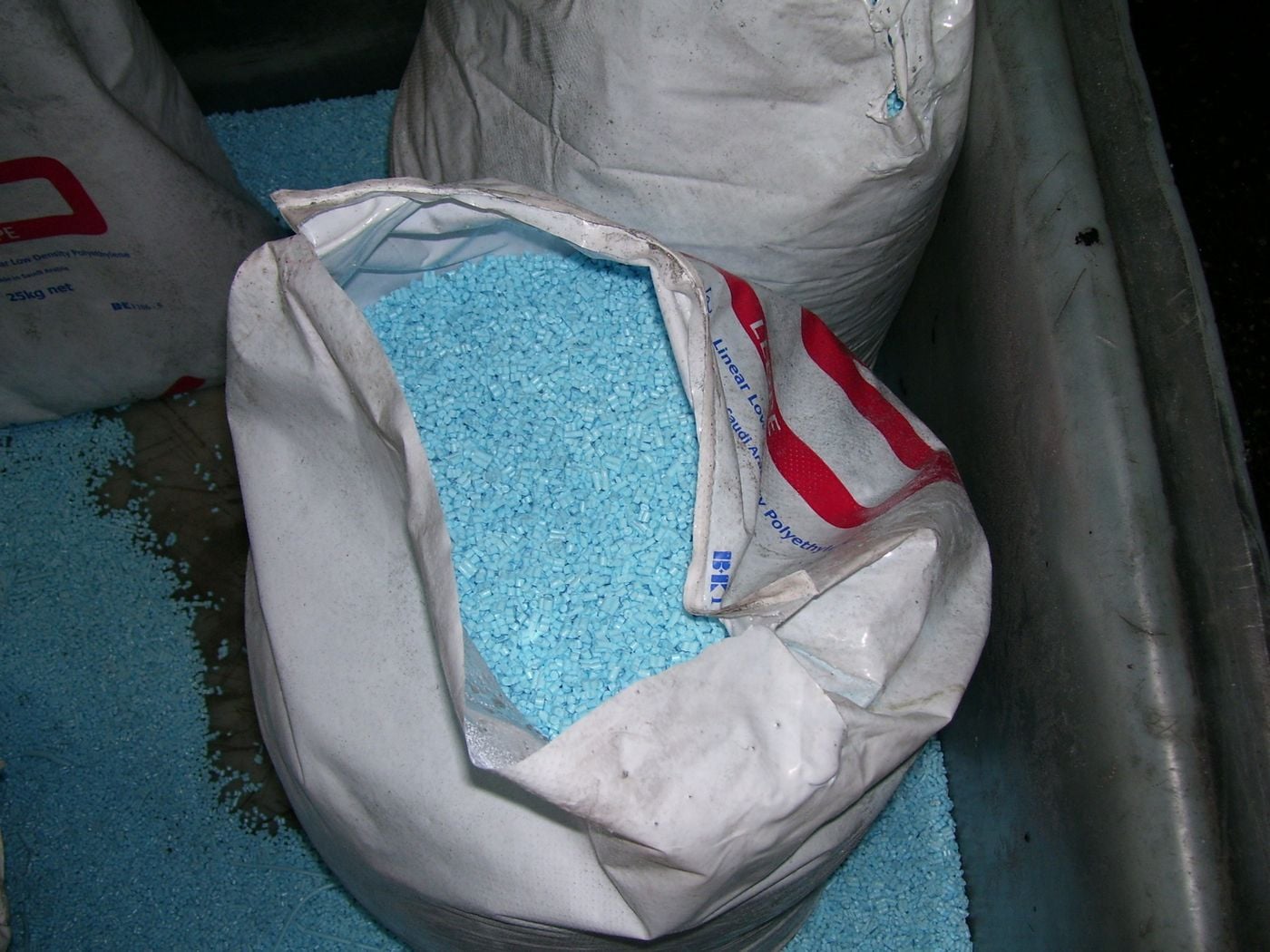
Regulation (EU) 2025/2365 on preventing plastic pellet losses, adopted on 12 November 2025, applies from 17 December 2027 to every carrier that transports plastic pellets in the European Union by road vehicle, rail wagon or inland waterway vessel, whether the carrier is established in a Member State (an “EU carrier”) or in a third country (a “non-EU carrier”). Article 1(2) sets a threshold of 5 tonnes in the previous calendar year for the economic operators that handle pellets, and none for carriers. From that date an EU carrier, or the authorised representative of a non-EU carrier, has to notify the competent authority before the first transport of pellets, and every carrier has to apply the prevention, containment and clean-up measures of Annex III, carry the equipment the Annex lists, train its staff, keep yearly records of the pellets handled and lost, and report a loss that affects human health or the environment without delay and no later than 30 days after the incident. A carrier established outside the Union also has to designate that authorised representative in a Member State. One duty applies already: since 16 December 2025 carriers “shall ensure that losses are avoided” (Article 3(1)).
Status as at 27 October 2026. Read on that day: the Official Journal text of Regulation (EU) 2025/2365, published on 26 November 2025, in its English version and in its German, Spanish, French, Italian and Polish versions, as delivered by the EU Publications Office. The Commission’s awareness-raising and training material, the list of national competent authorities and any harmonised standard on estimating losses were not among the texts read for this page.
Who the Regulation covers
Article 1(1) states the purpose: the Regulation “lays down obligations for the handling of plastic pellets to prevent losses at all stages of the plastic pellet supply chain, with the aim of achieving zero plastic pellet losses”. Its final provision states that it “shall be binding in its entirety and directly applicable in all Member States”. Article 1(2) lists four groups:
- economic operators handling plastic pellets in the Union in quantities of 5 tonnes or more in the previous calendar year (point (a));
- economic operators running installations in the Union that clean plastic pellet containers and tanks (point (b));
- EU carriers and non-EU carriers transporting plastic pellets in the Union (point (c));
- shippers and operators, agents and masters of seagoing vessels carrying plastic pellets in freight containers leaving or calling at a port of a Member State (point (d)).
Plastic pellets are “a mass of polymer-containing material, regardless of its shape, form, or size, that is produced for moulding in plastic product manufacturing operations, irrespective of its actual use” (Article 2(1)). Recital 3 adds that they may be “of primary or secondary origin, or both, regardless of whether they are derived from biomass or intended to biodegrade over time”.
An EU carrier is “any natural or legal person established in a Member State, engaged in the transport of plastic pellets as part of its economic activity by using road vehicles, rail wagons or inland waterway vessels” (Article 2(6)). A non-EU carrier is the same, established in a third country and engaged in that transport “in the Union” (Article 2(7)). The Regulation sets no conditions for establishing a road haulage business; those are described in the road transport operator licence.
The Regulation separates two events. A spill is “a one-off or prolonged escape of plastic pellets within an installation’s boundaries or within road vehicles, rail wagons, or inland waterway vessels transporting plastic pellets from primary containment” (Article 2(2)). A loss is “a one-off or prolonged escape of plastic pellets to the environment at any stage of the supply chain”, whether from an installation or from the vehicle, wagon or vessel (Article 2(3)).
Installations have duties that carriers do not. An installation is “any premises, structure, location, site or place within which one or more economic activities involving the handling of plastic pellets are carried out” (Article 2(4)), and the person who operates or controls it is the economic operator (Article 2(5)). Economic operators draw up a risk management plan for each installation and notify it with a self-declaration of conformity (Article 5(1)); for installations that handled 1,500 tonnes or more in the previous calendar year, large enterprises need a certificate from a certifier by 17 December 2027, medium-sized enterprises by 17 December 2028 and small enterprises by 17 December 2030 (Article 6). Carriers have no risk management plan. Recital 27 explains: “Due to the characteristics of their activity, carriers should not be mandated to establish and implement a risk management plan. Instead, they should be required to undertake tangible measures aimed at preventing, containing, and addressing spills and losses.”
Recital 5 gives the background: “Plastic pellet losses constitute the third largest source of microplastics unintentionally released to the environment in the Union”, and the supply chain it describes includes “distribution, transport, including by sea, and other logistic operations”. Recital 18 says pellets reach the sea from losses and spills at all stages of the supply chain, “especially while plastic pellets are in transit”.
The dates
| Date | What applies or is due | Article |
|---|---|---|
| 26 Nov 2025 | Publication in the Official Journal, L series | — |
| 16 Dec 2025 | Entry into force. From this date: the duty to avoid losses and to contain and clean them up (Article 3(1)); the rule on estimating losses by a standardised methodology (Article 5(6), second subparagraph); the designation of competent authorities (Article 16); the Commission’s tasks under Articles 17(1) and 18(2) and (3) | 26 |
| 17 Dec 2026 | Deadline for the Commission’s awareness-raising and training material, and for its request to European standardisation organisations for harmonised standards on estimating losses | 17(1), 18(2) |
| 17 Dec 2027 | General date of application, including all the carrier obligations below: notification, Annex III, training, records, incidents, authorised representatives, verification and penalties | 26 |
| 2 Jan 2028 | Start of the five-year period in which the Commission may amend Annex III by delegated acts | 22(1)(b), 23(2) |
| 17 Dec 2028 | The sea freight rules apply to shippers and to operators, agents and masters of seagoing vessels | 12, 26 |
| 1 Jan 2030 | First Member State report to the Commission, including the number of EU and non-EU carriers and the means of transport they use; then every three years | 13(2) |
| 17 Dec 2033 | Commission evaluation, including the relevance of a threshold for carriers and compliance by carriers, “in particular non-EU carriers” | 25(1) |
The Regulation enters into force “on the twentieth day following that of its publication in the Official Journal of the European Union” (Article 26); twenty days after 26 November 2025 is 16 December 2025, the date Article 26 also gives for the provisions that apply early. It sets no separate date for road carriers. The derogation to 17 December 2028 covers only “shippers and operators, agents and masters of seagoing vessels”.
Before the first transport: the notification
Article 3(2) reads: “Before the transport of plastic pellets in the Union for the first time, EU carriers or authorised representatives referred to in Article 4, as applicable, shall notify the competent authorities of the Member State in which the EU carrier or the authorised representative is established about their involvement in the transport of plastic pellets within the Union and the means of transport used.” Article 3(3) requires a further notification of “any significant change in what was previously notified”, “including any closure of an existing installation, cessation of transport activities or where they are no longer subject to this Regulation”. Recital 22 gives the reason: “it is necessary for installations handling plastic pellets and carriers transporting them to be registered”. Recital 16 adds that “the Union can promote discussion at international level on the obligation for carriers to notify competent authorities when transporting plastic pellets in a country different from the one in which they are established”.
The notifications are made public. The competent authorities publish the information received under Articles 3(2), 3(3) and 4 “on a website which is easy to find, free of charge and without restricting access to registered users, while ensuring that confidential business information is safeguarded” (Article 11(1)); they may omit parts of it where disclosure would adversely affect the safety of the installations or of the local population, or interests listed in Directive 2003/4/EC (Article 11(2)). The Commission publishes the list of those national websites (Article 11(3)). Each Member State designates one or more competent authorities and was to inform the Commission of their names and contact details “without delay after 16 December 2025” (Article 16(1)).
Carriers from outside the EU: the authorised representative
A non-EU carrier “shall designate in writing an authorised representative in at least one Member State where the non-EU carrier is engaged in the transport of plastic pellets” (Article 4(1)). The representative is a natural or legal person established in the Union (Article 2(14)). Its written mandate covers the notification under Article 3(2) and (3), the evidence of staff training and the records under Article 5(6), third subparagraph, and the duties after an infringement under Article 15(1). Article 4(2) adds: “Such authorised representative may be addressed in addition to the non-EU carriers or instead of them. The authorised representative’s mandate shall be valid only when accepted in writing by the authorised representative.”
Before the first transport of pellets in the Union, the non-EU carrier informs both the competent authorities of that Member State and the Commission of the designation and the mandate (Article 4(3)). The Commission makes the list of designated representatives public (Article 11(4)). Recital 28 states that the designation “does not affect the responsibility or liability of the non-EU carrier under this Regulation”, and that the representative “should be subject to enforcement proceedings, as far as its mandate is concerned, in the event of non-compliance by the non-EU carrier”.
Annex III: the measures and the equipment on board
“EU carriers and non-EU carriers shall ensure that the actions set out in Annex III are implemented” (Article 5(4)). They apply them in a fixed order of priority: actions to prevent spills, then actions to contain spills “to avoid them becoming a loss”, then actions to clean up after a spill or loss (Article 5(5)). Annex III has three points.
Prevention (point 1):
- checking during and after loading and unloading that pellets “are properly removed from the outside of the transport means and freight containers before leaving the installation”, and that the loading and unloading ramps are closed when leaving it;
- “clear communication on requirements concerning safe stowage” (the forces cargo restraint has to withstand on the road are covered in load securing explained);
- “visually checking the integrity of packaging of plastic pellets prior to the journey”;
- protective covers on, for example, forklifts and hydraulic equipment “to prevent the piercing of packaging”;
- preventing leakage during the journey, “for example, by ensuring that the transport means are technically suitable and that freight containers are supplemented, if necessary, with appropriate sealing”;
- “regularly cleaning the loading compartments, the freight containers and trailers to minimise the loss of spilled plastic pellets”;
- visually checking the openings and integrity of loading compartments, freight containers and trailers “prior to and, to the extent possible, during the journey, including in the multimodal terminals, rail terminals, inland ports and seaports”.
Containment and clean-up (point 2):
- “where possible, repair damaged packaging during transport and contain the remaining plastic pellets in the loading compartment”;
- collecting spilled pellets “in closed containers or bags for proper disposal”;
- “where plastic pellets are transported in bulk tanks, open the bottom manhole/cone of the silo tank only after entering the cleaning bay” (silo semi-trailers are described in trailer types explained);
- “replace the container liner only in suitable and non-public areas, where any spillage can be contained”;
- notifying “the appropriate authorities, such as international and national emergency authorities or environmental authorities of the Member State where the loss occurred”.
Equipment on board (point 3): “at least one portable lighting device, hand tools (e.g. brooms, dustpans and brushes, buckets, repair tapes, etc.); closed collection containers/reinforced collection bags.”
Recital 27 says that some of these measures should be implemented during loading and unloading, which “are hotspots for spills and losses” and are “typically carried out under the responsibility of both the economic operators and the carriers, while the carriers are the only responsible party for the transportation journey”. Rail and inland waterway carriers fall under the same Annex; transport that combines road with rail, inland waterway or sea is described in combined, intermodal and multimodal transport.
Annex III can change. The Commission is empowered to amend its three points by delegated acts “to add or remove equipment requirements or procedures or to specify the technical features of the existing equipment and procedures” (Article 22(1)(b)), for five years from 2 January 2028, tacitly extended for periods of the same length unless the European Parliament or the Council opposes (Article 23(2)). A delegated act enters into force only if neither the European Parliament nor the Council objects within two months of notification, a period either of them can extend by two months (Article 23(6)).
Training, records and corrective measures
Article 5(6) gives carriers two further duties. They “ensure that their staff are trained according to their specific roles and responsibilities and that they are aware of and are able to use the relevant equipment and execute the procedures set out to ensure compliance with this Regulation” (point (a)), and they “keep records of annually estimated quantities of losses and of the total quantities of plastic pellets handled” (point (b)). EU carriers and authorised representatives keep those records for five years and make them available to the competent authorities on demand; authorised representatives also provide evidence that the non-EU carrier’s staff are trained. Recital 29 says the records are “to help fill persisting knowledge gaps”.
The Regulation leaves the method of estimating losses to harmonised standards (Article 18(1)), and the Commission has to request them from the European standardisation organisations by 17 December 2026 (Article 18(2)). From six months after the relevant harmonised standard is published in the Official Journal, carriers estimate their losses by that methodology (Article 5(6), second subparagraph). If no standardisation organisation accepts the request, or the Commission finds the proposed standard insufficient, the Commission sets the methodology by an implementing act, and the obligation then runs from that act’s date of application (Articles 5(6) and 18(3)).
“Where an action taken for the prevention, containment and clean-up of spills and losses fails, economic operators, EU carriers and non-EU carriers shall take corrective measures without delay” (Article 5(7)).
Support is provided for. By 17 December 2026 the Commission has to publish “awareness-raising and training material on the appropriate implementation of the obligations laid down in this Regulation”, prepared in consultation with, among others, representatives of carriers (Article 17(1)). Member States ensure that carriers get access to information on compliance and get assistance, especially micro- and small enterprises; the assistance may take the form of financial support, access to finance, specialised management and staff training, and organisational and technical assistance (Article 17(2)).
When pellets are lost
Article 14(1) applies “in the event of an incident or accident that causes a loss affecting human health or the environment”. The carrier then has to:
- “immediately inform emergency services, where relevant”;
- “immediately take all possible measures to minimise the human health or environmental consequences”;
- “without delay and no later than 30 days after the incident or accident”, give the competent authorities of the territory where it happened the estimated quantities of the loss, its causes and the measures taken;
- “take measures to prevent further incidents or accidents”.
This is without prejudice to Directive 2004/35/EC on environmental liability. The competent authority requires, where necessary, appropriate complementary measures, “including by organising specific training” (Article 14(2)), and immediately informs the competent authority of another Member State where human health or the environment there is affected (Article 14(3)).
For any infringement of the Regulation, the carrier or its authorised representative has to inform the competent authority immediately, restore compliance “within the shortest possible time” and comply with any complementary measures the authority sets (Article 15(1)). Article 15(2) adds a power over vehicles: where an infringement “poses an immediate danger to human health or threatens to cause an immediate significant adverse effect upon the environment”, the competent authority “shall”, and where it “leads to a significant loss” the authority “may”, “immobilise or prevent the movement of road vehicles, rail wagons or inland waterway vessels until compliance is restored”.
Checks, penalties and complaints
The competent authorities verify compliance by carriers and authorised representatives as well as by economic operators (Article 13(1)). “The competent authorities shall carry out environmental inspections, including without prior notice, and other verification measures, following a risk-based approach.” For carriers, recital 27 says the measures “should be subject to verification by competent authorities, primarily during the transportation process”, and recital 37 that inspections “should, where possible, be coordinated with those required under other Union legal acts”. The authorities’ minimum powers include access to any relevant documents and data related to an infringement, whatever the medium or the place where they are stored, the power to require information, and the power to start an inspection on their own initiative (Article 16(3)). The Regulation does not mention technical roadside inspections of commercial vehicles; those are described in roadworthiness tests and roadside checks.
Member States lay down the penalties, which must be “effective, proportionate and dissuasive” (Article 20(1)). They include “administrative financial penalties that effectively deprive those that committed the infringement of the economic benefits derived from their infringements” (Article 20(2)). Article 20(3) sets a minimum for the maximum fine: “For the most serious infringements committed by a legal person, the maximum level of the administrative financial penalties referred to in paragraph 2 shall be at least 3 % of its annual Union turnover in the financial year preceding the year in which the administrative financial penalty is imposed.” Member States may also, or instead, impose criminal penalties (Article 20(4)), and they notify their rules to the Commission (Article 20(6)). The national penalty rules were not among the texts read for this page.
Persons with a sufficient interest under national law, or who consider their rights impaired, may submit substantiated complaints to the competent authorities about a carrier’s compliance (Article 19(1)); non-governmental organisations promoting the protection of human health or the environment, or consumer protection, and meeting the requirements of national law “shall be deemed to have sufficient interest”. Where damage to human health results from an infringement, the individuals affected have the right to claim compensation from those responsible (Article 21(1)).
What the Regulation leaves to others
Labelling. Article 10 is addressed to “any manufacturer, importer, downstream user or distributor placing on the market plastic pellets” that are synthetic polymer microparticles under entry 78 of Annex XVII to Regulation (EC) No 1907/2006, the REACH Regulation. They give the information of Annex V, “Harmful to the environment – avoid losses”, on the label, the packaging, the package leaflet or the safety data sheet; recital 17 refers to “a pictogram and a warning statement”. Carriers are not named in Article 10.
Packaging and stowage at sea. Article 12 has shippers ensure that pellets in freight containers carried by sea are packed in “good-quality packaging that is strong enough to withstand the shocks and loadings normally encountered during transport”, and vessel operators and masters stow those containers “under deck, wherever reasonably practicable, or inboard in sheltered areas of exposed decks”. These rules apply to shippers and vessels from 17 December 2028. No article of the Regulation deals with packaging for road transport. Annex I, point 2(a), asks installations where packaging takes place for packaging “strong enough to withstand the shocks, loadings and weather conditions normally encountered during transport”; for carriers, Annex III asks for the visual check of packaging before the journey.
Dangerous goods and transport documents. The text does not mention the ADR or dangerous goods; Article 10 refers to Regulation (EC) No 1272/2008 on classification, labelling and packaging and to the REACH Regulation. The ADR rules for vehicles and tanks are covered in ADR explained. The only transport information the Regulation prescribes is for the sea leg: information identifying the freight containers with pellets, delivered to the vessel’s operator, agent and master in addition to the cargo information required by SOLAS, with a special stowage request (Article 12(1)(b) and (c)).
Quick answers
- When do the EU plastic pellet rules apply to hauliers?
- Regulation (EU) 2025/2365 applies from 17 December 2027. From that date EU carriers, and the authorised representatives of non-EU carriers, have to notify the competent authority before the first transport of pellets in the Union, and EU and non-EU carriers have to apply the measures and carry the equipment of Annex III, train their staff, keep yearly records and report losses that affect human health or the environment. One duty applies already: since 16 December 2025 carriers have had to ensure that losses are avoided and, where losses occur, take immediate action to contain and clean them up (Article 3(1)).
- Is there a minimum quantity of plastic pellets for carriers?
- No. Article 1(2) sets a threshold of 5 tonnes in the previous calendar year for economic operators that handle pellets, but none for EU and non-EU carriers transporting plastic pellets in the Union. The Commission's evaluation due by 17 December 2033 has to assess the relevance of establishing a threshold for carriers (Article 25(1)(i)).
- What equipment must a vehicle carrying plastic pellets have on board?
- Point 3 of Annex III lists at least one portable lighting device; hand tools, such as brooms, dustpans and brushes, buckets and repair tapes; and closed collection containers or reinforced collection bags. From 2 January 2028 the Commission may add or remove equipment requirements by delegated acts (Articles 22(1)(b) and 23(2)).
- What does a haulier from outside the EU need to carry plastic pellets in the EU?
- A non-EU carrier has to designate in writing an authorised representative, established in the Union, in at least one Member State where it transports plastic pellets, and inform that Member State's competent authorities and the Commission of the designation and its mandate before its first transport of pellets in the Union (Article 4). The Commission makes a public list of the designated representatives (Article 11(4)).
- What happens if plastic pellets are lost from a truck?
- Where a loss affects human health or the environment, the carrier has to inform the emergency services where relevant, take all possible measures to minimise the consequences, and give the competent authority of the territory the estimated quantity, the causes and the measures taken without delay and no later than 30 days after the incident (Article 14(1)). Where an infringement poses an immediate danger to human health or threatens an immediate significant adverse effect on the environment, the authority must immobilise or prevent the movement of the vehicle until compliance is restored (Article 15(2)). Member States set the penalties; for the most serious infringements by a legal person the maximum fine is at least 3 % of annual Union turnover (Article 20(3)).