Shipping container dimensions: 20 ft, 40 ft, high cube and 45 ft, inside and out
ISO 668 sets a container's outside: 2,438 mm wide, 6,058 mm (20 ft) or 12,192 mm (40 ft) long, 2,591 or 2,896 mm high. Inside sizes, doors and weights as ONE, Hapag-Lloyd and Maersk publish them.
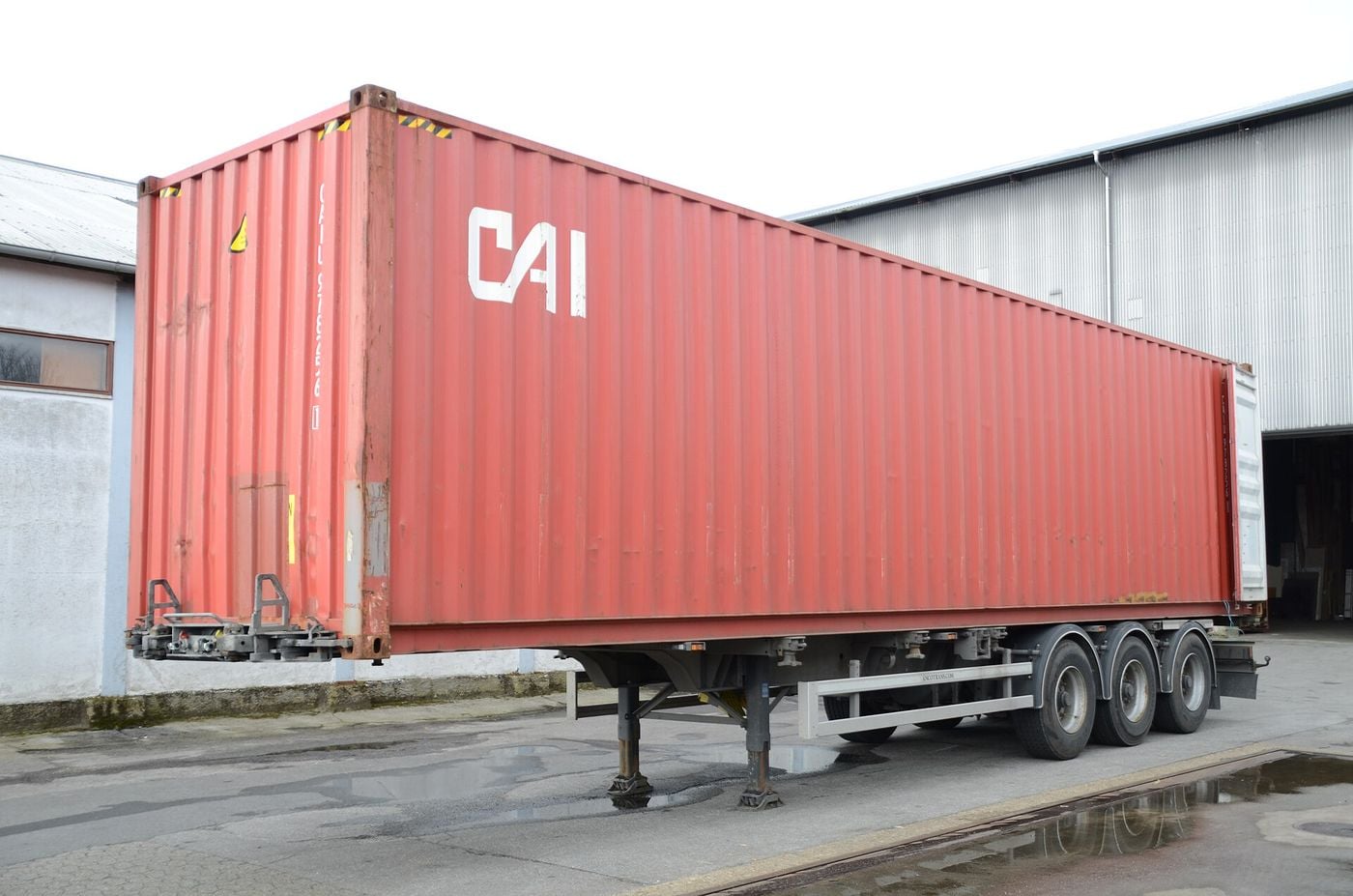
The outside of a shipping container is set by ISO 668, the international standard for series 1 freight containers, in its seventh edition of January 2020. Every series 1 container is 2,438 mm (8 ft) wide. A 20 ft container is 6,058 mm long, a 40 ft container 12,192 mm and a 45 ft container 13,716 mm, and the heights in the standard include 2,591 mm (8 ft 6 in) and 2,896 mm (9 ft 6 in), the height the shipping lines call high cube. For the inside the standard gives minimums. Inside dimensions, door openings and weights are published by the lines for the containers in their fleets: Ocean Network Express (ONE), Hapag-Lloyd and Maersk each give 12,032 mm of inside length for a 40 ft dry container, with 2,350 or 2,352 mm of width and 2,390 to 2,395 mm of height, and ONE and Maersk give 2,695 and 2,697 mm of height for a 40 ft high cube. ONE and Hapag-Lloyd say that individual containers can differ from the figures they publish, and Maersk’s reefer sheet says that dimensions vary within container series.
Status as at 28 October 2026. Read on that day: ONE’s container information page and the consolidated text of Council Directive 96/53/EC of 14 August 2019. Read on 14 October 2026: the preview pages of ISO 668:2020 with clause 4 and Tables 1 to 3, Hapag-Lloyd’s 20’ Standard and 40’ Standard pages and its Container Specification brochure of March 2016, Maersk’s equipment specifications for dry and reefer containers (PDF files created on 7 February 2014), the 45 ft pallet-wide brochure of the container lessor Seaco, dated March 2023, and P&O Ferrymasters’ page on its 45 ft containers.
The outside: what ISO 668 sets
ISO 668:2020 is titled Series 1 freight containers — Classification, dimensions and ratings. Its clause on classification starts from the width: “Series 1 freight containers have a uniform width of 2 438 mm (8 ft).” Table 1 gives the nominal lengths: 45 ft (13.7 m) for 1EEE and 1EE, 40 ft (12.2 m) for the 1A designations, 30 ft (9.1 m) for the 1B designations and 20 ft (6.1 m) for the 1C designations. Clause 4 assigns the heights: 2,896 mm (9 ft 6 in) to 1EEE, 1AAA and 1BBB; 2,591 mm (8 ft 6 in) to 1EE, 1AA, 1BB and 1CC; 2,438 mm (8 ft) to 1A, 1B, 1C and 1D; and less than 2,438 mm to 1AX, 1BX, 1CX and 1DX, where the X, in the standard’s words, has “no specific connotation” other than that height. Tables 1 to 3 also list a 1CCC, a 20 ft container 2,896 mm high.
| Designation | External length | External height | Minimum internal length | Minimum door opening height |
|---|---|---|---|---|
| 1EEE | 13,716 mm (45 ft) | 2,896 mm (9 ft 6 in) | 13,542 mm | 2,566 mm |
| 1EE | 13,716 mm (45 ft) | 2,591 mm (8 ft 6 in) | 13,542 mm | 2,261 mm |
| 1AAA | 12,192 mm (40 ft) | 2,896 mm (9 ft 6 in) | 11,998 mm | 2,566 mm |
| 1AA | 12,192 mm (40 ft) | 2,591 mm (8 ft 6 in) | 11,998 mm | 2,261 mm |
| 1A | 12,192 mm (40 ft) | 2,438 mm (8 ft) | 11,998 mm | 2,134 mm |
| 1BBB | 9,125 mm (29 ft 11¼ in) | 2,896 mm (9 ft 6 in) | 8,931 mm | 2,566 mm |
| 1BB | 9,125 mm (29 ft 11¼ in) | 2,591 mm (8 ft 6 in) | 8,931 mm | 2,261 mm |
| 1B | 9,125 mm (29 ft 11¼ in) | 2,438 mm (8 ft) | 8,931 mm | 2,134 mm |
| 1CCC | 6,058 mm (19 ft 10½ in) | 2,896 mm (9 ft 6 in) | 5,867 mm | 2,566 mm |
| 1CC | 6,058 mm (19 ft 10½ in) | 2,591 mm (8 ft 6 in) | 5,867 mm | 2,261 mm |
| 1C | 6,058 mm (19 ft 10½ in) | 2,438 mm (8 ft) | 5,867 mm | 2,134 mm |
| 1D | 2,991 mm (9 ft 9¾ in) | 2,438 mm (8 ft) | 2,802 mm | 2,134 mm |
Table 3 sets the minimum internal height as the nominal external height minus 241 mm, which gives 2,655 mm for a container 2,896 mm high, 2,350 mm for one 2,591 mm high and 2,197 mm for one 2,438 mm high. Table 2 gives the external tolerances as zero and a negative value, for example 0 and −10 mm on the length of 1EEE and 1EE, 0 and −6 mm on the length of the 1C designations, 0 and −5 mm on width and height. It rates every designation at 30,480 kg (67,200 lb) of gross mass except 1D, rated at 10,160 kg (22,400 lb), and the 30,480 kg figures carry the footnote “Higher values are permissible under certain conditions.”
Two passages in Table 2 concern the vehicles that carry containers. The heights of 2,896 mm and 2,591 mm carry the footnote “Legal limitations to the overall height of vehicle and load can exist in certain countries”, with rail and road service as the example. A note to Table 2 says that it can be difficult to provide a 1CCC container with a gooseneck tunnel, and that 1CCC containers without one “can meet height problems in some countries” on the road on straight frame container chassis. Skeletal container chassis are described with the other semi-trailer bodies in trailer types explained.
The inside: what the lines publish
The lines publish the inside dimensions, door openings and weights of the containers in their fleets: ONE on its container information page, Hapag-Lloyd on web pages for individual container types and in its Container Specification brochure of March 2016, and Maersk in equipment specification sheets, which give the inside height as “height to load line”.
| Container | Published by | Inside length × width × height | Door opening width × height | Capacity | Max. gross / tare / payload |
|---|---|---|---|---|---|
| 20 ft standard | ONE | 5,898 × 2,350 × 2,390 mm | 2,340 × 2,280 mm | 33.1 m³ | 30,480 / 2,150 / 28,330 kg |
| 20 ft standard | Hapag-Lloyd | 5,900 × 2,352 × 2,395 mm | 2,340 × 2,292 mm | 33.2 m³ | 30,480 / 2,350 / 28,130 kg |
| 20 ft standard | Maersk | 5,896 × 2,350 × 2,393 mm | 2,350 × 2,274 mm | 33 m³ | 30,480 / 2,280 / 28,200 kg |
| 40 ft standard | ONE | 12,032 × 2,350 × 2,390 mm | 2,340 × 2,280 mm | 67.6 m³ | 30,480 / 3,640 / 26,840 kg |
| 40 ft standard | Hapag-Lloyd | 12,032 × 2,352 × 2,395 mm | 2,340 × 2,292 mm | 67.7 m³ | 32,500 / 3,750 / 28,750 kg |
| 40 ft standard | Maersk | 12,032 × 2,350 × 2,393 mm | 2,340 × 2,274 mm | 67 m³ | 32,500 / 3,700 / 28,800 kg |
| 40 ft high cube | ONE | 12,032 × 2,350 × 2,695 mm | 2,340 × 2,585 mm | 76.2 m³ | 30,480 and 32,500 listed / 3,700 / 28,800 kg |
| 40 ft high cube | Maersk | 12,032 × 2,350 × 2,697 mm | 2,340 × 2,577 mm | 76 m³ | 32,500 / 3,880 / 28,620 kg |
| 45 ft high cube | ONE | 13,556 × 2,352 × 2,697 mm | 2,340 × 2,585 mm | 86.0 m³ | 30,480 and 32,500 listed / 4,650 / 27,850 kg |
| 45 ft high cube | Hapag-Lloyd | 13,556 × 2,352 × 2,700 mm | 2,340 × 2,597 mm | 86.0 m³ | 32,500 / 4,700 / 27,800 kg |
| 45 ft high cube | Maersk | 13,556 × 2,352 × 2,698 mm | 2,340 × 2,585 mm | 85 m³ | 32,500 / 4,900 / 27,600 kg |
Each line qualifies its figures. ONE says they are “for reference only” and adds: “Individual containers may have different specifications from the measurement shown above.” Hapag-Lloyd’s brochure says the dimensions it prints “are nominal figures” and that, because of production tolerances, “a difference in measurement is possible”, with a maximum difference of 10 mm in length, width and height, and that the series it shows “only represent a sample of the entire fleet”. Maersk’s reefer sheet says: “Dimensions vary within container series.”
Hapag-Lloyd’s 40’ Standard page prints the tare as “3.750”. The same page’s gross of 32,500 kg and payload of 28,750 kg are 3,750 kg apart, and the brochure lists a 40 ft series with that tare and payload.
The brochure also includes a table headed “External and minimum internal dimensions (according to ISO)”. Its external figures are those of the ISO table above; several of its minimums differ from those of ISO 668:2020. For a 40 ft container it gives a minimum internal length of 12,029 mm, a minimum internal width of 2,350 mm and a minimum door opening width of 2,337 mm, where Table 3 of the 2020 edition gives 11,998 mm, 2,330 mm and 2,286 mm. The brochure is dated March 2016.
Reefer containers
ONE gives the outside of its 20 ft reefer as 6,058 × 2,438 × 2,591 mm and that of its 40 ft high cube reefer as 12,192 × 2,438 × 2,896 mm, the ISO 668 figures for 1CC and 1AAA. Hapag-Lloyd’s brochure has a column for the maximum stowage height beside the inside height in its reefer tables, and says on its page for 40 ft reefers that the maximum stowage height is “indicated by red line inside the container in order to ensure proper air circulation”. Maersk gives its reefer heights to the load line.
| Container | Published by | Inside length × width × height | Door opening width × height | Capacity | Max. gross / tare / payload |
|---|---|---|---|---|---|
| 20 ft reefer | ONE | 5,456 × 2,288 × 2,263 mm | 2,290 × 2,221 mm | 28.2 m³ | 30,480 / 2,810 / 27,670 kg |
| 20 ft reefer | Hapag-Lloyd | 5,450 × 2,284 × 2,267 mm; maximum stowage height 2,184 mm | 2,290 × 2,264 mm | 28.2 m³ | 30,480 / 2,905 / 27,575 kg |
| 20 ft reefer | Maersk | 5,451 × 2,290 × 2,167 mm (to load line) | 2,290 × 2,212 mm | 27 m³ | 30,480 / 2,990 / 27,490 kg |
| 40 ft high cube reefer | ONE | 11,590 × 2,284 × 2,544 mm | 2,290 × 2,502 mm | 67.5 m³ | 34,000 / 4,490 / 30,510 kg (payload as printed) |
| 40 ft high cube reefer | Hapag-Lloyd | 11,578 × 2,280 × 2,525 mm; maximum stowage height 2,425 mm | 2,276 × 2,535 mm | 66.7 m³ | 34,000 / 4,300 / 29,700 kg |
| 40 ft high cube reefer | Maersk | 11,580 × 2,275 × 2,415 mm (to load line) | 2,276 × 2,471 mm | 67.5 m³ | 34,000 / 4,520 / 29,480 kg |
ONE’s entry for the 40 ft high cube reefer gives a payload of 30,510 kg beside a maximum gross of 34,000 kg and a tare of 4,490 kg; 34,000 kg less 4,490 kg is 29,510 kg.
Open top and flat rack containers
ONE also publishes figures for its open top and flat rack containers. For the open tops it adds the roof opening. For the flat racks it measures the inside length between the corner posts and the width between the side rails, and gives the outside as 6,058 or 12,192 mm long, 2,438 mm wide and 2,591 mm high, or 2,896 mm for the high cube version.
| Container | Inside length × width × height | Door and roof openings | Capacity | Max. gross / tare / payload |
|---|---|---|---|---|
| Open top 20 ft | 5,898 × 2,350 × 2,348 mm | Door 2,340 × 2,280 mm; roof 5,680 × 2,252 mm | 32.5 m³ | 30,480 / 2,240 / 28,240 kg |
| Open top 40 ft | 12,022 × 2,350 × 2,348 mm | Door 2,340 × 2,280 mm; roof 11,798 × 2,230 mm | 66.3 m³ | 30,480 / 3,880 / 26,600 kg |
| Open top 40 ft high cube | 12,032 × 2,352 × 2,653 mm | Door 2,340 × 2,585 mm; roof 11,806 × 2,192 mm | 75.1 m³ | 32,500 / 3,890 / 28,610 kg |
| Flat rack 20 ft | 5,568 × 2,194 × 2,213 mm | — | 28.4 m³ | 38,100 / 3,100 / 35,000 kg |
| Flat rack 40 ft | 11,652 × 2,208 × 1,955 mm | — | 53.2 m³ | 45,000 / 6,200 / 38,800 kg |
| Flat rack 40 ft high cube | 11,658 × 2,374 × 2,264 mm | — | 64.3 m³ | 58,600 / 6,250 / 52,500 kg (payload as printed) |
For the 40 ft high cube flat rack, 58,600 kg less 6,250 kg is 52,350 kg; ONE prints a payload of 52,500 kg.
45 ft pallet-wide containers
Seaco’s brochure is titled “45FT HIGH CUBE (2.5M WIDE) PALLETWIDE CONTAINERS” and lists, under the heading External dimensions, 13,716 mm, 2,500 mm and 2,896 mm; ISO 668 gives series 1 containers a uniform width of 2,438 mm. P&O Ferrymasters gives its 45 ft high cube pallet wide containers an overall width of 2.5 m and says that they “are ISO type LEG1”.
| Seaco | P&O Ferrymasters | |
|---|---|---|
| Outside length × width × height | 13,716 × 2,500 × 2,896 mm | 13.6 × 2.5 × 2.9 m |
| Inside length × width × height | 13,556 × 2,420 × 2,694 mm | 13.57 × 2.44 × 2.7 m |
| Door opening width × height | 2,416 × 2,585 mm | — |
| Capacity | 89.2 m³ | 90 m³ |
| Maximum gross weight | 34,000 kg | 33,000 kg (design gross weight) |
| Tare | 4,750 kg | 4,300 to 4,500 kg |
| Payload | 29,250 kg | — |
| Pallets | 33 Euro pallets (800 × 1,200 mm); 22 Australian pallets (1,165 × 1,165 mm) | 33 Euro pallets; 26 UK pallets |
Seaco also gives a floor thickness of 28 mm. The pallet calculator counts pallets for 20, 40 and 45 ft containers, including the pallet-wide one, beside trailers, swap bodies and vans.
Gross mass, tare and payload
For some of their containers the lines publish maximum gross figures above the 30,480 kg rating of ISO 668:2020. In the tables above, Hapag-Lloyd and Maersk give 32,500 kg for their 40 ft and 45 ft dry containers, ONE lists both 30,480 and 32,500 kg for its dry 40 ft high cube and 45 ft, and all three give 34,000 kg for their 40 ft high cube reefers. ONE lists 38,100, 45,000 and 58,600 kg for its three flat racks. Each payload in the tables equals the maximum gross less the tare, with 32,500 kg where ONE lists two gross figures, except in the two ONE entries noted. Weights and payload on the vehicle side are worked through in the truck payload calculator.
45-foot containers on EU roads
Council Directive 96/53/EC lays down, for certain road vehicles, maximum dimensions in national and international traffic and maximum weights in international traffic. Annex I includes containers in the vehicle’s dimensions (point 1.4), and Article 10c and point 2.2.2 of Annex I concern vehicles carrying 45-foot containers in intermodal transport operations.
Under Article 10c, the maximum lengths of point 1.1 of Annex I and the maximum distance of point 1.6, from the kingpin to the rear of a semi-trailer, “may be exceeded by 15 cm for vehicles or vehicle combinations engaged in the transport of 45-foot containers or 45-foot swap bodies, empty or loaded, provided that the road transport of the container or swap body in question is part of an intermodal transport operation”. Point 2.2.2 of Annex I sets 44 tonnes for a three-axle motor vehicle with a two- or three-axle semi-trailer “carrying, in intermodal transport operations, one or more containers or swap bodies, up to a total maximum length of 45 feet”, and 42 tonnes for a two-axle motor vehicle with a three-axle semi-trailer carrying the same; for the same two combinations, points 2.2.2(a) and (b) set 40 tonnes.
Article 2 defines the intermodal transport operation by reference to combined transport under Directive 92/106/EEC, or to waterborne transport with an initial or final road leg of up to 150 km in the territory of the Union, subject to exceptions. That definition, the Directive’s other provisions on containers and swap bodies, including the shipper’s weight statement of Article 10f, and the difference between a container and a swap body are set out in swap bodies explained; combined transport itself is covered in combined, intermodal and multimodal transport, and the length, width and height limits of Annex I in semi-trailer dimensions.
Quick answers
- What are the dimensions of a 20 ft shipping container?
- Outside, a 20 ft container is 6,058 mm long and 2,438 mm wide in ISO 668:2020, and 2,438 mm (8 ft) high as a 1C, 2,591 mm (8 ft 6 in) as a 1CC or 2,896 mm (9 ft 6 in) as a 1CCC. Inside, the lines publish their own figures: 5,898 × 2,350 × 2,390 mm at ONE, 5,900 × 2,352 × 2,395 mm at Hapag-Lloyd and 5,896 × 2,350 × 2,393 mm at Maersk, for capacities of 33.1, 33.2 and 33 m³. The standard's minimum inside length for a 20 ft container is 5,867 mm and its minimum inside width 2,330 mm.
- What are the inside dimensions of a 40 ft container?
- ONE, Hapag-Lloyd and Maersk each publish an inside length of 12,032 mm for a 40 ft standard container, with a width of 2,350 or 2,352 mm and a height of 2,390 to 2,395 mm, and capacities of 67.6, 67.7 and 67 m³. For a 40 ft high cube ONE gives 2,695 mm of inside height and Maersk 2,697 mm. ISO 668:2020 sets the minimum inside length of a 40 ft container at 11,998 mm and the minimum inside width at 2,330 mm.
- How tall is a high cube container?
- 2,896 mm (9 ft 6 in) outside, the height ISO 668:2020 gives its 1EEE, 1AAA, 1BBB and 1CCC designations, against 2,591 mm (8 ft 6 in) for 1EE, 1AA, 1BB and 1CC; all are 2,438 mm wide. The standard's minimum inside height is the external height minus 241 mm, which gives 2,655 mm for a container 2,896 mm high. ONE publishes 2,695 mm of inside height and a door opening 2,585 mm high for its 40 ft high cube.
- How much weight can a shipping container carry?
- ISO 668:2020 rates series 1 containers at 30,480 kg of gross mass, except 1D at 10,160 kg, and says higher values are permissible under certain conditions. Maersk gives 32,500 kg as the maximum gross of its 40 ft and 45 ft dry containers, and Hapag-Lloyd's 40' Standard page the same figure, with a tare of 3,750 kg and a payload of 28,750 kg; its 20' Standard page gives a maximum gross of 30,480 kg, a tare of 2,350 kg and a payload of 28,130 kg. ONE lists 30,480 kg for its 40 ft standard and both 30,480 and 32,500 kg for its 40 ft high cube and 45 ft.
- What does EU law say about 45 ft containers on the road?
- Under Article 10c of Council Directive 96/53/EC, consolidated text of 14 August 2019, the Directive's maximum lengths and its kingpin-to-rear distance may be exceeded by 15 cm for vehicles carrying 45-foot containers or swap bodies when the road transport is part of an intermodal transport operation. Annex I sets 44 tonnes for a three-axle motor vehicle with a two- or three-axle semi-trailer carrying containers or swap bodies up to a total of 45 feet in intermodal transport operations, and 42 tonnes for a two-axle motor vehicle with a three-axle semi-trailer; the Directive's weights apply to international traffic.
Sources
- ISO 668:2020 Series 1 freight containers — Classification, dimensions and ratings, seventh edition (2020-01): preview pages with clause 4 and Tables 1, 2 and 3 — ISO, International Organization for Standardization (preview distributed by iTeh Standards)
- Container information: dry, refrigerated, flat rack and open top containers (read on 28 October 2026) — Ocean Network Express (ONE)
- Container 20' Standard: inside dimensions, door opening and weights (read on 14 October 2026) — Hapag-Lloyd
- Container 40' Standard: inside dimensions, door opening and weights (read on 14 October 2026) — Hapag-Lloyd
- Container Specification brochure, Group Communications, 03/2016: printed pages 5, 11, 15 and 41 to 43 — Hapag-Lloyd
- Our fleet: equipment specifications, dry containers (PDF, Maersk South Africa local information, file created 7 February 2014) — Maersk
- Our fleet: equipment specifications, reefer containers (PDF, Maersk Madagascar local information, file created 7 February 2014) — Maersk
- 45ft High Cube (2.5m wide) Palletwide containers: product brochure, technical specifications (PALLETWIDE/MAR2023) — Seaco
- 45 ft High Cube Pallet Wide (HCPW) containers, operating equipment page (read on 14 October 2026) — P&O Ferrymasters
- Council Directive 96/53/EC on maximum authorised dimensions and weights, consolidated text of 14 August 2019: Articles 2, 10c and 10f, Annex I points 1.1, 1.4, 1.6 and 2.2.2 — EUR-Lex, European Union