Official truck fuel consumption data in the EU: what is reported and published
How the EU records the fuel consumption of new trucks: simulated values per vehicle, a public register with some fields withheld, and yearly fleet averages in g CO2 per tonne-km.
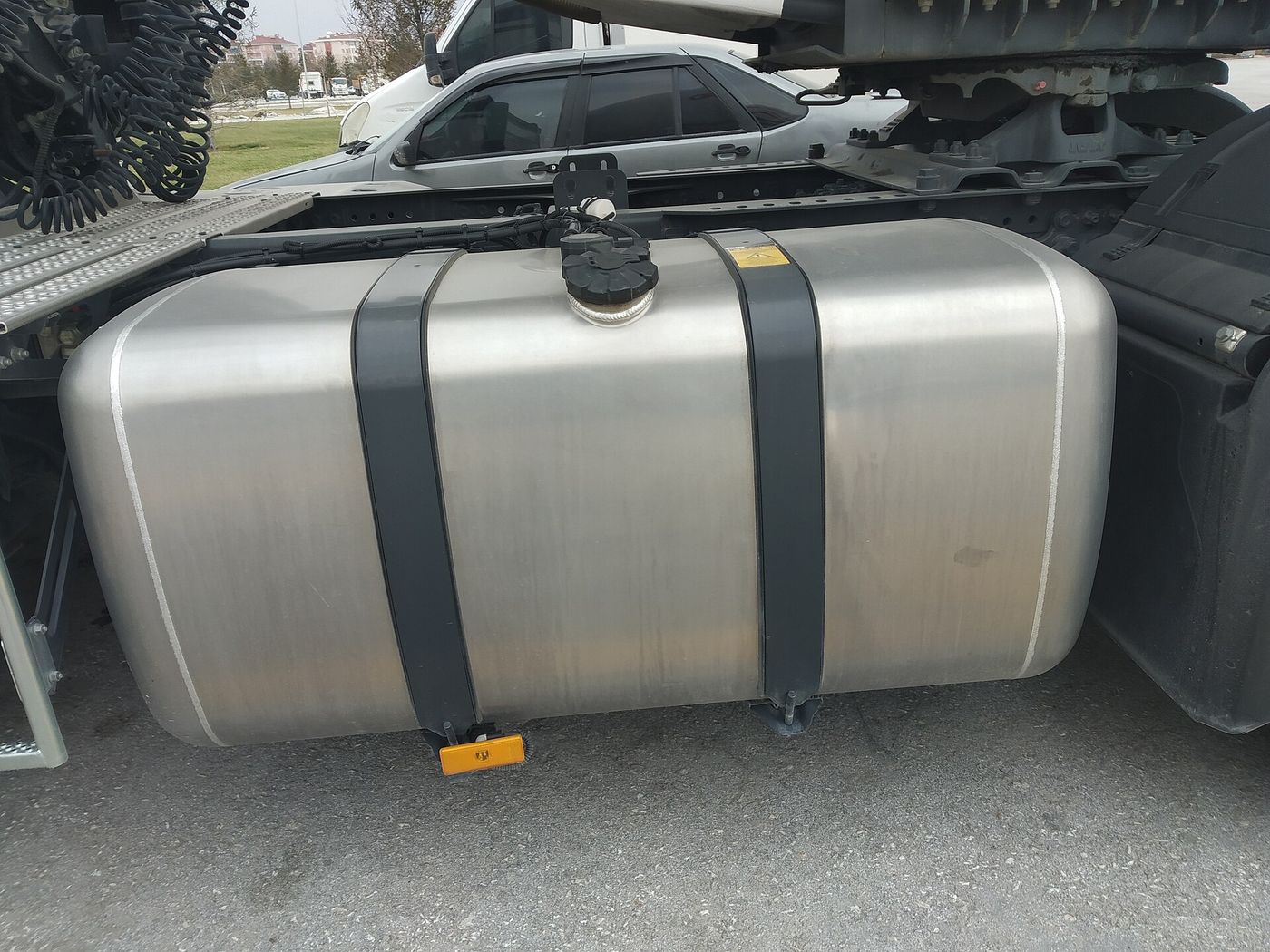
The official fuel consumption of a new truck in the European Union is a simulated value. Manufacturers determine the CO2 emissions and fuel consumption of new heavy-duty vehicles with the Commission’s simulation tool, VECTO, for specific loads, fuels and mission profiles, and report the data for each new vehicle to the Commission. The data have been monitored since 2019, first under Regulation (EU) 2018/956 and, since 1 July 2024, under Regulation (EU) 2019/1242 as amended by Regulation (EU) 2024/1610. The European Environment Agency (EEA) manages the central register on the Commission’s behalf and publishes it, with some data entries withheld. The figure the Commission adopts for all new heavy-duty vehicles registered in the Union is an average of CO2 emissions in grams per tonne-kilometre, not litres: 52.3 g/tkm for the reporting period of 2021 and 35.2 g/tkm for that of 2024, a value its own Decision calls no longer directly comparable with earlier years.
Status as of 27 October 2026. Read on that day: Regulation (EU) 2018/956 as published in the Official Journal of 9 July 2018, repealed since 1 July 2024; Regulation (EU) 2024/1610 as published on 6 June 2024; the Commission’s Implementing Decisions (EU) 2024/2165, 2025/792, 2025/1786 and 2026/1815 for the reporting periods 2021 to 2024; the Commission’s page on lorries, buses and coaches, last updated on 30 January 2026; and the EEA’s dataset page, last modified on 25 September 2026.
What the official figure for a truck is
The Commission’s page on lorries, buses and coaches says manufacturers “determine CO2 emissions and fuel consumption of both new heavy-duty motor vehicles and new trailers, in accordance with Certification Regulations (EU) 2017/2400 and 2022/1362”, and that the values “are simulated using the VECTO tool”. It describes VECTO as software that determines them “for specific loads, fuels, and mission profiles (e.g. long haul, regional delivery, urban delivery, etc.), based on data from relevant vehicle components”. The inputs, the mission profiles and the files in which the results are recorded are explained in what VECTO is.
Regulation (EU) 2018/956 listed what manufacturers had to report for each new vehicle (Annex I, Part B, point 2). Its simulation parameters and results were given “for each mission profile/load/fuel combination”. As adopted in 2018, the list contained these simulation, fuel and CO2 entries:
| Entry | Monitoring parameter | Units or values |
|---|---|---|
| 56 | Mission profile | long haul, long haul (EMS), regional, regional (EMS), urban, municipal, construction |
| 57 | Load (as defined in the simulation tool) | kg |
| 58 | Fuel type | diesel/petrol/LPG/CNG/… |
| 68 | CO2 emissions | g/km, g/t-km, g/p-km, g/m³-km |
| 69 | Fuel consumption | g/km, g/t-km, g/p-km, g/m³-km, l/100km, l/t-km, l/p-km, l/m³-km, MJ/km, MJ/t-km, MJ/p-km, MJ/m³-km |
| 75 to 78 | CO2 mass emission and fuel consumption of the engine over the WHTC and over the WHSC | g/kWh |
The Regulation’s footnotes expand the abbreviations: EMS is the European Modular System of Council Directive 96/53/EC, WHTC the World Harmonized Transient Driving Cycle and WHSC the Worldwide Harmonised Steady state Cycle. The engine values are taken from the addendum to Appendix 5 or 7 of Annex I to Regulation (EU) No 582/2011, the Commission regulation on emissions from heavy-duty vehicles (Euro VI). The Commission’s page writes two of the units out in full where it defines a zero-emission vehicle with an internal combustion engine, one “emitting less than 3g CO2 per tonne-km or 1g CO2 per person-km”.
The 2024 revision changed the form of the list. Annex IV, Part B, as added by Regulation (EU) 2024/1610, has each reporter submit, for the vehicles for which it has to produce them, the manufacturer’s records file and, for vehicles of category M, also the vehicle information file, together with additional information that still includes the engine’s CO2 mass emission and fuel consumption over the WHTC and the WHSC (entries 75 to 78). Recital (48) of the amending Regulation states both changes: the reporting obligation “should be extended beyond manufacturers to those entities which carry out that determination”, and “The data to be reported should comprise the manufacturer’s records file.” Article 13b now speaks of “Manufacturers or other entities that are responsible for the determination of the CO2 emissions of a heavy-duty vehicle”.
Who reports, and since when
Two sets of data meet in the register. The EEA’s dataset page puts it in two sentences: “Member States report trucks, buses and trailers registered in their territory. Manufacturers report trucks of specific types that are subject to certification requirements.”
As adopted, Regulation (EU) 2018/956 had Member States monitor, “Starting from 1 January 2019”, the new heavy-duty vehicles registered for the first time in the Union (Article 4(1)): the vehicle identification number, the manufacturer name, the make, the bodywork code and the powerplant entries of the certificate of conformity (Annex I, Part A). Its scope was vehicles of categories M1, M2, N1 and N2 with a reference mass above 2,610 kg that do not fall within the scope of Regulation (EC) No 715/2007, all vehicles of categories M3 and N3, and vehicles of categories O3 and O4 (Article 2). The categories are explained in vehicle categories M, N and O. For manufacturers the starting years depended on the vehicle group:
| Category | Vehicle groups | Monitoring from | Reporting from |
|---|---|---|---|
| N2 | 1 and 2 | 2020 | 2021 |
| N3 | 3 | 2020 | 2021 |
| N3 | 4, 5, 9 and 10 | 2019 | 2020 |
| N3 | 11, 12 and 16 | 2020 | 2021 |
| N1, M1, M2, M3, O3, O4 | — | — | — |
The Regulation did not stay as adopted. Regulation (EU) 2019/1242 amended it, as its title records, and Regulation (EU) 2024/1610 repealed it and, in the Commission’s words, “integrated monitoring and reporting requirements for Member States and manufacturers” into Regulation (EU) 2019/1242. In that text, Member States and the manufacturers or other entities report by 30 September of each year for the reporting period of 1 July to 30 June (Articles 13a(1) and 13b(1)), and the reporting table of Annex IV, Part B has rows for all vehicles of categories N, M and O. The registration data listed in the 2024 text also include the vehicle’s specific CO2 emissions and its average payload value as entered in the certificate of conformity (Annex IV, Part A, points (l) and (m)).
Where the data are published
Article 6 of Regulation (EU) 2018/956 had the Commission keep a “Central Register for data on heavy-duty vehicles”, managed by the EEA on its behalf. Article 13c of Regulation (EU) 2019/1242, inserted in 2024, keeps a central register in the same way, and both texts make it public with listed exceptions. The Commission’s page says the EEA “makes this data - along with other relevant technical information, such as aerodynamic drag - publicly available on behalf of the Commission”.
The EEA publishes the register as the dataset “Monitoring of CO2 emissions from heavy-duty vehicles - Regulation (EU) 2018/956”, product ID DAT-251. On 27 October 2026 its page listed one current dataset, for the reporting periods 2019 to 2023, published on 29 April 2025 in CSV, text and SQL formats, with a table definition, an “HDV TableViewer”, a zipped CSV file listed as 280Mb and an unzipped one listed as 3Gb. Earlier datasets covering 2019 to 2022, published on 22 March 2024, and 2019 to 2021 are listed as superseded or restricted. The page says the reporting periods “run from 1st July to 30 June the following year”, the first reporting being an exception. In the 2024 text, Annex V, point 3.2 has the data on vehicles registered in the preceding reporting period “made public by 30 April each year”.
| Data | 2018 text | 2024 text |
|---|---|---|
| Vehicle identification number | Not published | Not published |
| Name and address, and make, of the transmission, axle and tyre manufacturers | Not published | Not published |
| Air drag value (CdxA) | Published as a range | Published as a range |
| Engine, transmission, retarder, torque converter, angle drive, axle and air drag models | No such entries | Not published |
| The .vsum file of aggregated results per simulated mission profile and payload condition | No such entry | Not published |
The ranges are 24 bands of the CdxA value in square metres, from A1, 0.00 to below 3.00 m², to A24, 8.77 to below 9.21 m², the same in both texts. Recital (13) of Regulation (EU) 2018/956 gives the reasons: “Data that are sensitive on the grounds of personal data protection and fair competition should not be published”, certain data on aerodynamic performance are to be public “in a range format in order to take account of considerations of fair competition”, and the data reported “should be made available to the public in an easily accessible manner and free of charge”. Article 14(3)(b) of Regulation (EU) 2019/1242, as replaced in 2024, empowers the Commission to amend point 3.2 of Annex V by delegated act “by adding any data entries that have been added to the central register”.
Why the data are made public
The recitals of Regulation (EU) 2018/956 state the purpose. Transport companies, recital (8) says, are to a large extent small and medium-sized enterprises that did not yet have access to standardised information “to evaluate fuel efficiency technologies or to compare heavy-duty vehicles”, while their fuel bills “account for more than a quarter of their operating costs”. Recital (9) wants the information public “to enable all vehicle operators to take well-informed purchasing decisions and to ensure a high level of transparency”, and adds: “All heavy-duty vehicle manufacturers will be able to compare their vehicles’ performance with those of other makes.” It also names policy makers at Union and Member State level among the users. The Commission’s page puts heavy-duty vehicles at “more than a quarter of greenhouse gas (GHG) emissions from road transport in the EU” and “over 6% of total EU GHG emissions”. Where fuel stands among the other costs of a long-haul tractor is covered in what it costs to run a tractor unit.
The figure for all new heavy-duty vehicles
For each of the reporting periods of 2021 to 2024 the Commission adopted an implementing decision under Article 11(1) of Regulation (EU) 2019/1242, with a list of values per manufacturer and, in its Article 4, one value for all manufacturers together: “the average specific CO2 emissions of all new heavy-duty vehicles registered in the Union”. The Commission’s page defines the reporting period of a given year as running “from 1 July of that year to 30 June of the following year”.
| Reporting period of the year | Implementing Decision | Adopted | Based on data available on | Manufacturers addressed | Average, g/tkm |
|---|---|---|---|---|---|
| 2021 | (EU) 2024/2165 | 1 July 2024 | 20 March 2024 | 9 | 52.3 |
| 2022 | (EU) 2025/792 | 24 April 2025 | 12 September 2024 | 10 | 48.8 |
| 2023 | (EU) 2025/1786 | 9 September 2025 | 26 June 2025 | 11 | 46.7 |
| 2024 | (EU) 2026/1815 | 24 July 2026 | 2 July 2026 | 11 | 35.2 |
The four values are in grams of CO2 per tonne-kilometre; none of the Decisions gives a fuel consumption value. Their basis also differs. The Decisions for 2021 to 2023 rest on the data reported under Regulation (EU) 2018/956 (recitals (1) and (2)) and apply the formula of Annex I, point 2.7, of Regulation (EU) 2019/1242. The Decision for 2024 applies the formula in point 2.7.1 to the data reported by all manufacturers for vehicles in sub-groups 4-UD, 4-RD, 4-LH, 5-RD, 5-LH, 9-RD, 9-LH, 10-RD and 10-LH (recital (4)). Its recital (5) says that, because Regulation (EU) 2024/1610 enlarged the scope and the sub-group shares are calculated over the enlarged scope from the reporting period of 2024, its average values “are no longer directly comparable to the values set out in the Decisions for the reporting periods of the previous years”. The first three Decisions also state that the Commission “may have to update the data published herein, should it receive additional data which would affect the results of those calculations” (recital (6)). The values per manufacturer for 2024 are listed, with the CO2 standards themselves, in EU CO2 standards for trucks and buses.
The annual analysis in the 2018 text
As adopted, Regulation (EU) 2018/956 also provided for an analysis. Article 10(1) read: “By 31 October every year, the Commission shall publish an annual report with its analysis of the data transmitted by Member States and manufacturers for the preceding calendar year.” Under Article 10(2) the analysis was to indicate, as a minimum, “the performance of the heavy-duty vehicle fleet of the Union as well as that of each Member State and each manufacturer in terms of the average fuel consumption and CO2 emissions for each heavy-duty vehicle group by mission profile, load and fuel combination”, and, where available, to take into account data on the uptake of new and advanced CO2-reducing technologies and of alternative powertrains and to include an analysis of the results of on-road verification tests. The Commission was to prepare it with the support of the EEA (Article 10(3)).
Regulation (EU) 2024/1610 repealed Regulation (EU) 2018/956 “with effect from 1 July 2024” and has references to it read in accordance with a correlation table, added to Regulation (EU) 2019/1242 as Annex VI (Article 3). In that table Articles 4 to 9 of the 2018 Regulation correspond to Articles 13a to 13f, and Article 10 is set against a dash, with no article beside it. For reporting periods prior to 1 July 2024, Article 4 of Regulation (EU) 2024/1610 keeps Regulation (EU) 2018/956 “as applicable on 30 June 2024” in application. The monitoring of the results of on-road verification tests carries on in Article 13d, under which the Commission monitors, where available, the results of on-road tests “to verify the CO2 emissions and fuel consumption of new heavy-duty vehicles”.
Real-world fuel consumption
The fuel consumption reported for each vehicle and mission profile is a simulated value. The Commission’s page names a second stream: under the heading “Governance” it says the Commission will “Collect, publish, and monitor real-world fuel consumption data reported by manufacturers, based on mandatory standardised fuel consumption meters (OBFCM)”. The rules on collecting real-world data are covered in EU CO2 standards for trucks and buses.
Quick answers
- Is there an official fuel consumption figure for each new truck in the EU?
- Yes, for the vehicles covered, and it is a simulated value. The European Commission says manufacturers determine CO2 emissions and fuel consumption of new heavy-duty vehicles under Regulations (EU) 2017/2400 and 2022/1362 and that the values are simulated using the VECTO tool, for specific loads, fuels and mission profiles. Regulation (EU) 2018/956 had the results reported for each new vehicle and for each mission profile, load and fuel combination; since 1 July 2024 the reporting rules are in Regulation (EU) 2019/1242.
- Where is official EU truck fuel consumption data published?
- In the central register that the European Environment Agency manages for the Commission, published as the dataset 'Monitoring of CO2 emissions from heavy-duty vehicles' (DAT-251). On 27 October 2026 the newest dataset on its page covered the reporting periods 2019 to 2023 and had been published on 29 April 2025, as CSV, text and SQL files with a table viewer. The vehicle identification number and the makers of the transmission, axles and tyres are not published, and the air drag value appears only as a range.
- What is the average CO2 emission of new trucks in the EU?
- The Commission's implementing decisions give the average specific CO2 emissions of all new heavy-duty vehicles registered in the Union as 52.3 g/tkm for the reporting period of 2021, 48.8 g/tkm for 2022, 46.7 g/tkm for 2023 and 35.2 g/tkm for 2024. A reporting period runs from 1 July to 30 June of the following year. The Decision for 2024 says its average values are no longer directly comparable with those of previous years, because after the 2024 amendment the vehicle sub-group shares are calculated over the Regulation's enlarged scope.
- Do the official EU figures give truck fuel consumption in litres per 100 km?
- For individual vehicles, l/100km is among the units listed for fuel consumption in the data manufacturers had to report under Regulation (EU) 2018/956 as adopted in 2018, alongside g/km, g/t-km, l/t-km and MJ/km among others. The Commission's figure for all new heavy-duty vehicles is different: its implementing decisions state averages of CO2 emissions in grams per tonne-kilometre and give no fuel consumption value.
- What happened to the annual report on heavy-duty vehicle fuel consumption?
- Article 10 of Regulation (EU) 2018/956, as adopted, required the Commission to publish by 31 October every year a report analysing average fuel consumption and CO2 emissions per vehicle group by mission profile, load and fuel combination, for the Union fleet, each Member State and each manufacturer. Regulation (EU) 2024/1610 repealed that Regulation with effect from 1 July 2024; in its correlation table Article 10 has no corresponding article, and for reporting periods before 1 July 2024 the 2018 Regulation, as applicable on 30 June 2024, continues to apply.
Sources
- Regulation (EU) 2018/956 of the European Parliament and of the Council of 28 June 2018 on the monitoring and reporting of CO2 emissions from and fuel consumption of new heavy-duty vehicles, as published (OJ L 173, 9.7.2018): recitals 8, 9 and 13, Articles 2, 4 to 6 and 10, Annex I (repealed with effect from 1 July 2024) — EUR-Lex, Official Journal of the European Union, 28 Jun 2018
- Regulation (EU) 2024/1610 of the European Parliament and of the Council of 14 May 2024 amending Regulation (EU) 2019/1242 as regards strengthening the CO2 emission performance standards for new heavy-duty vehicles and integrating reporting obligations, amending Regulation (EU) 2018/858 and repealing Regulation (EU) 2018/956 (OJ L, 6.6.2024): recital 48, Article 1 points 16, 17 and 21 with Annex II (Articles 13a to 13f and 14 of, and Annexes IV to VI to, Regulation (EU) 2019/1242), Articles 3 to 5 — EUR-Lex, Official Journal of the European Union, 14 May 2024
- Commission Implementing Decision (EU) 2024/2165 of 1 July 2024 on the publication of a list indicating certain CO2 emissions values per manufacturer as well as average specific CO2 emissions of all new heavy-duty vehicles registered in the Union pursuant to Regulation (EU) 2019/1242 of the European Parliament and of the Council for the reporting period of the year 2021 (OJ L, 21.8.2024) — EUR-Lex, Official Journal of the European Union, 1 Jul 2024
- Commission Implementing Decision (EU) 2025/792 of 24 April 2025 on the publication of a list indicating certain CO2 emissions values per manufacturer as well as average specific CO2 emissions of all new heavy-duty vehicles registered in the Union pursuant to Regulation (EU) 2019/1242 of the European Parliament and of the Council for the reporting period of the year 2022 (OJ L, 25.4.2025) — EUR-Lex, Official Journal of the European Union, 24 Apr 2025
- Commission Implementing Decision (EU) 2025/1786 of 9 September 2025 on the publication of a list indicating certain CO2 emissions values per manufacturer as well as average specific CO2 emissions of all new heavy-duty vehicles registered in the Union pursuant to Regulation (EU) 2019/1242 of the European Parliament and of the Council for the reporting period of the year 2023 (OJ L, 11.9.2025) — EUR-Lex, Official Journal of the European Union, 9 Sept 2025
- Commission Implementing Decision (EU) 2026/1815 of 24 July 2026 on the publication of a list indicating certain CO2 emissions values per manufacturer as well as average specific CO2 emissions of all new heavy-duty vehicles registered in the Union pursuant to Regulation (EU) 2019/1242 of the European Parliament and of the Council for the reporting period of the year 2024 (OJ L, 28.7.2026) — EUR-Lex, Official Journal of the European Union, 24 Jul 2026
- Lorries, buses and coaches (page last updated 30 January 2026, read on 27 October 2026) — European Commission, Climate Action
- Monitoring of CO2 emissions from heavy-duty vehicles - Regulation (EU) 2018/956, dataset DAT-251 (page last modified 25 September 2026, read on 27 October 2026) — European Environment Agency