Underrun protection and Mansfield bars: what the rear, side and front rules require
Mansfield bar is a name used for a truck or trailer's rear underride guard. What UN Regulations 58, 73 and 93, FMVSS 223 and 224 and 49 CFR 393.86 require: heights, forces, exemptions and dates.
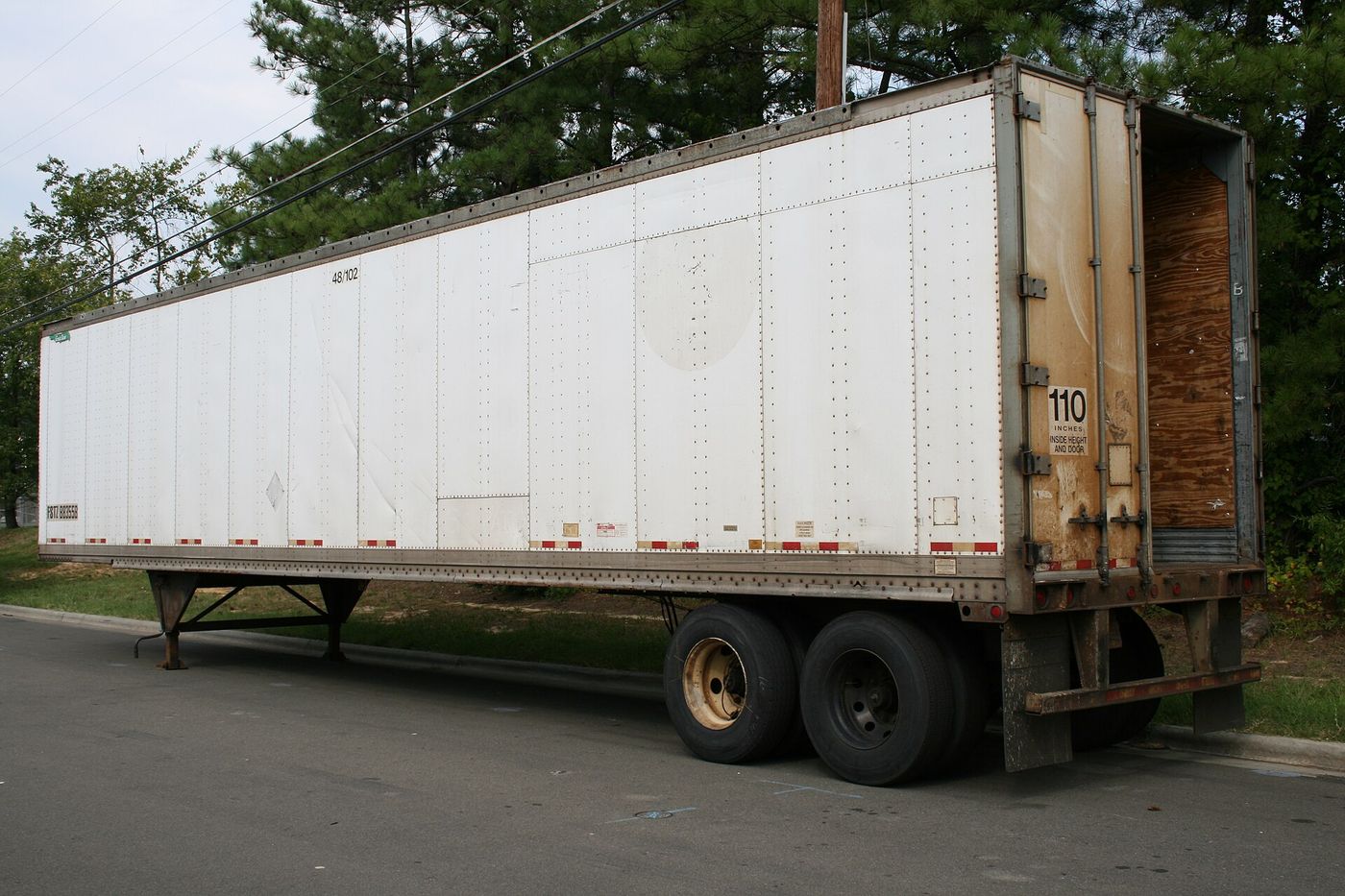
Mansfield bar is a name used for the rear impact guard of a truck or trailer: the bar low across the back that limits how far the front of a car slides underneath in a rear-end collision. The legal texts read for this page do not use the name. In the European Union the rear device falls under UN Regulation No 58, the side device under UN Regulation No 73 and the front device under UN Regulation No 93, all three listed in Regulation (EU) 2019/2144, which has applied since 6 July 2022. In the United States, Federal Motor Vehicle Safety Standards (FMVSS) Nos. 223 and 224 require a certified guard on most new trailers and semitrailers with a gross vehicle weight rating (GVWR) of 4,536 kg (10,000 lb) or more, with upgraded strength and energy absorption figures since 15 July 2024, and 49 CFR 393.86, in the Federal Motor Carrier Safety Regulations, sets the rear guard rule for trailers and other motor vehicles.
Status as at 5 November 2026. Read on that day: Regulations (EU) 2019/2144 and (EU) 2018/858 in their Official Journal text as adopted; UN Regulations Nos 58, 73 and 93 as published in English in the Official Journal; 49 CFR 393.86, 571.223 and 571.224 in the 2025 edition of the Code of Federal Regulations, dated 1 October 2025; and the Federal Register notices of 24 January 1996, 15 July 2022 and 27 June 2024. Later amendments to the EU acts, later UN series of amendments and later CFR editions were not read.
What the name and the official terms mean
None of the regulations and Federal Register notices read for this page uses the name Mansfield bar or gives its origin. US texts write underride, UN and EU texts underrun, and each device has its own term:
- Rear impact guard (FMVSS No. 223, S4): “a device installed on or near the rear of a vehicle so that when the vehicle is struck from the rear, the device limits the distance that the striking vehicle’s front end slides under the rear end of the impacted vehicle”.
- Rear underrun protective device, RUPD (UN Regulation No 58, paragraph 3.1.3): it “normally consists of a cross-member and links to the chassis side members or other structural members of the vehicle”. Rear underrun protection, RUP, also covers bodywork, chassis parts or other components that can be regarded as fulfilling that function (paragraph 22.1.3).
- Lateral protection device, LPD (UN Regulation No 73, paragraph 2.1.4): longitudinal members and links, and parts of the vehicle can also serve as one.
- Front underrun protective device, FUPD (UN Regulation No 93): front underrun protection, FUP, “normally consists of a cross-member and links to the chassis or other structural members” (Figure 1), and may also be bodywork or chassis parts that fulfil the function (paragraph 3.1.6).
The National Highway Traffic Safety Administration (NHTSA) explains in its final rule of 2022 that underride may occur “because the bed and chassis of the trailer is often higher than the front of the passenger vehicle”. It calls the extreme case passenger compartment intrusion (PCI): the passenger vehicle goes so far under that the rear end of the trailer strikes and enters its passenger compartment.
Rear, side and front in the UN Regulations
| No 58: rear | No 73: side | No 93: front | |
|---|---|---|---|
| Version | 03 series, in force 18 June 2016 | 01 series, in force 9 December 2010 | Original version, in force 27 February 1994 |
| Vehicles | M, N, O | N2, N3, O3, O4 | N2, N3 |
| Does not apply to | Tractive units for articulated vehicles; trailers for very long loads of indivisible length | Tractors for semi-trailers; special purpose vehicles where a device cannot be fitted for practical reasons | Off-road N2G and N3G; vehicles whose use is incompatible with front underrun protection |
| Protects | Vehicles of categories M1 and N1 in a rear collision | Pedestrians, cyclists and motor cyclists | Vehicles of category M1 or N1 in a frontal collision |
| Ground clearance, at most | 450, 500 or 550 mm, by vehicle | 550 mm to the lower edge | 400 mm between the two outer test points |
| Height of the member, at least | 120 mm; 100 mm on lighter vehicles | Rails 50 mm (N2, O3) or 100 mm (N3, O4) | 120 mm (N3); 100 mm (N2) |
| Test force, up to | 180 kN and 100 kN | 1 kN | 160 kN and 80 kN |
The letters are vehicle categories (Regulation (EU) 2018/858, Article 4): N2 is a goods vehicle above 3.5 t and up to 12 t, N3 one above 12 t, O3 a trailer above 3.5 t and up to 10 t, O4 one above 10 t. All of them are set out in vehicle categories M, N and O.
How the EU makes them compulsory
Annex I of Regulation (EU) 2019/2144 lists the three UN Regulations with their series of amendments, and under Article 4(2) type-approval under a listed UN Regulation “shall be considered as EU type-approval”. Annex II carries them as rows A11 (front underrun protection), A12 (rear underrun protection) and A13 (lateral protection), all with note A: “Date for the prohibition of the registration of vehicles, as well as the placing on the market and entry into service of components and separate technical units: 6 July 2022”. Article 16 has national authorities apply those dates, and the Regulation is “binding in its entirety and directly applicable in all Member States”. Article 18 repealed its predecessor, Regulation (EC) No 661/2009. In the framework Regulation (EU) 2018/858 the same subjects are items 3B, 42A and 57A of Annex II, Part I, and Part III of that Annex has its own tables for special purpose vehicles such as motor-caravans, mobile cranes and exceptional load transport vehicles.
The duty is on manufacturers and concerns new vehicles: Article 4(1) speaks of “all new vehicles that are placed on the market, registered or entered into service”. The other systems required by the same Regulation are in mandatory driver assistance systems, and the tests of vehicles already on the road in roadworthiness tests and roadside checks.
The Official Journal prints a line above each UN text: “Only the original UN/ECE texts have legal effect under international public law.” Under paragraphs 31.3 and 31.4 of UN Regulation No 58, Contracting Parties applying it grant approvals only to the 03 series as from 1 September 2019, and as from 1 September 2021 they are not obliged to accept, for national or regional type approval, a vehicle, component or separate technical unit that is not approved to it.
Rear: UN Regulation No 58
Paragraph 2.1 requires vehicles to “offer effective protection over their whole width” against under-running in a rear collision with vehicles of categories M1 and N1. A device can be approved on its own and then installed (Parts I and II), or the vehicle can be approved with its rear underrun protection (Part III). Vehicles of categories M1, M2, M3, N1, O1 and O2 are deemed to comply if the rear of the unladen vehicle has a ground clearance of no more than 550 mm over a width no more than 100 mm shorter on either side than the rear axle (paragraph 2.3).
Besides tractive units, the Regulation leaves out trailers “specially designed and constructed for the carriage of very long loads of indivisible length, such as timber, steel bars, etc.” (paragraph 1.2.2). Vehicles where any device “is incompatible with their use on traffic roads” may be partly or fully exempted, subject to the decision of the Type Approval Authority (paragraph 1.3).
| Vehicle | Ground clearance, at most | Horizontal distance to the rearmost point, at most | Section height, at least |
|---|---|---|---|
| O3, O4 without a platform lift and not tipping trailers | 450 mm with hydropneumatic, hydraulic or pneumatic suspension or automatic levelling; otherwise 500 mm or an 8 degree departure angle, whichever is less | 200 mm before the test forces; 300 mm less the largest deformation in the test | 120 mm |
| N2 above 8 t, N3; O3, O4 with a platform lift or built as tipping trailers | As above | 300 mm before the test forces; 400 mm less the largest deformation in the test | 120 mm; 100 mm with a platform lift |
| M, N1, N2 up to 8 t, O1, O2 | 550 mm | 400 mm less the largest deformation in the test | 100 mm |
For the heavier groups, a departure angle up to 8 degrees with a maximum ground clearance of 550 mm is deemed to satisfy the requirement. The device may not be wider than the rear axle at the outermost points of the wheels, nor more than 100 mm shorter on either side (paragraph 16.3). A cross-member’s lateral ends may not bend to the rear or have a sharp outer edge (paragraph 7.1).
Annex 5 applies a horizontal force of 180 kN, or 85 percent of the force generated by the maximum mass of the vehicle if that is less, to two points 700 mm to 1 m apart. It applies 100 kN, or 50 percent, to two points 300 mm (plus or minus 25 mm) from the outer edges of the rear wheels and to a third point on the centre line. Vehicles of category N2 up to 8 t without a separate cab may use 100 kN or 50 percent and 50 kN or 25 percent. At the manufacturer’s request, vehicles with tipping bodies and vehicles with a rear platform lift may use 80 percent of these forces (Annex 5, paragraph 3.1.3, and Annex 6). After the test, on N2 above 8 t, N3, O3 and O4, ground clearance may not exceed its value before the test by more than 60 mm, and 600 mm is the limit for vehicles with a departure angle up to 8 degrees (paragraph 16.5).
A device may have several positions if it can be secured in the service position; the operator’s force to change it may not exceed 40 daN, and a label of at least 60 x 120 mm shows the standard position (paragraph 7.2). On vehicles with a rear platform lift the device may be interrupted for the mechanism, with a lateral clearance of no more than 2.5 cm and an effective surface of at least 420 square centimetres on each element, or 350 where the section height is under 120 mm (paragraph 7.4). Lifts and bars that share the rear of a chassis also appear in tail lifts explained. An approved device or vehicle carries a circle with the letter E and the number of the approving country, with the Regulation number and approval number beside it; the first two digits of the approval number, at present 03, give the series (paragraphs 6.2, 6.4, 15.4 and 24.4).
NHTSA’s notice of 1996, summarising a paper submitted in its rulemaking, gives the forces of UN Regulation No 58 at that time as 100 kN, 50 kN and up to 25 kN at three test positions. Its final rule of 2022, citing a text of February 2019, gives 25 kN at test location P1, 25 kN at P2 and 100 kN at P3 and no energy absorption requirement; the force figures differ from those of Annex 5 above, which are the figures of the 03 series as printed in the Official Journal.
Side: UN Regulation No 73
The side device is written for a different road user. It is “designed to offer effective protection to unprotected road users against the risk of falling under the sides of the vehicle and being caught under the wheels” (paragraph 2.1.4), and those road users are “pedestrians, cyclists or motor cyclists” (paragraph 2.1.3). The figures for vehicles approved under Part I:
- Height. The lower edge is at no point more than 550 mm above the ground. The upper edge is no more than 350 mm below the vehicle’s structure, or, where a vertical plane along the tyres does not cut that structure, level with the load platform or 950 mm from the ground, whichever is less; where the plane cuts it above 1.3 m, the upper edge is at least 950 mm above the ground (paragraphs 12.8 and 12.9).
- Form. A flat surface, rails or both; rails no more than 300 mm apart and at least 50 mm high on N2 and O3, at least 100 mm high and essentially flat on N3 and O4 (paragraph 12.3).
- Length. The forward edge is no more than 300 mm behind the tyre in front on N2 and N3, no more than 500 mm on a drawbar trailer, and on a semi-trailer no more than 250 mm behind the support legs and no more than 2.7 m from the kingpin. The rear edge is no more than 300 mm in front of the tyre behind it (paragraphs 12.4 and 12.5).
- Width. It does not increase the vehicle’s overall width; the main part of its outer surface is no more than 150 mm inboard of the outermost plane, and its rear end no more than 30 mm inboard of the outer edge of the rear tyres over at least the rearmost 250 mm (paragraph 12.1).
- Strength. A horizontal static force of 1 kN from a round ram 220 mm across (plus or minus 10 mm), with deflection of no more than 30 mm over the rearmost 250 mm and 150 mm over the rest (paragraph 12.10).
Components permanently fixed to the vehicle, such as spare wheels, battery boxes, air tanks, fuel tanks and tool boxes, may be part of the device if they meet its dimensions (paragraph 12.11). Paragraph 12.12 adds: “The device may not be used for the attachment of brake, air or hydraulic pipes.” Paragraph 13 allows gaps or lesser compliance for extendible trailers, tank vehicles, vehicles with extendible legs, vehicles with lashing points for Ro/Ro vessels and vehicles with cranes. Regulation No 73 is also among the conditions of London’s Direct Vision Standard and HGV Safety Permit.
Front: UN Regulation No 93
UN Regulation No 93 protects vehicles of category M1 or N1 against underrunning of the truck in a frontal collision (paragraph 2). N2 vehicles with a maximum mass of no more than 7.5 tonnes “shall comply only with the ground clearance requirement of 400 mm” (paragraph 1.2).
For the others, ground clearance is no more than 400 mm between the two points P1, which lie up to 200 mm from the planes of the front tyres, and may rise outboard of them at a slope of 15 degrees. It is no more than 450 mm during the test load. The device is no more than 400 mm behind the foremost part of the vehicle, less the deformation recorded in its test, leaving out parts more than 2 m above the ground (paragraphs 8.3 to 8.7). The test applies 50 percent of the vehicle’s maximum weight, up to 80 kN, to each P1 and 100 percent, up to 160 kN, to each of the two P2 points, which are 700 to 1,200 mm apart. The test points are no more than 445 mm above the ground and the forces are held for at least 0.2 seconds (Annex 5). The width runs up to the mudguards of the front wheels and is no more than 100 mm shorter on either side than the front axle, or 200 mm shorter than the outermost points of the cab access steps (paragraph 8.8).
United States: from 1953 to the 2022 rule
“The initial Federal regulation addressing the issue of heavy vehicle rear underride was issued in 1953 by the Bureau of Motor Carriers of the Interstate Commerce Commission”, NHTSA wrote in 1996. That regulation, 49 CFR 393.86, was still in effect, and NHTSA gave its terms as a ground clearance of no more than 760 mm (30 inches), a position no more than 610 mm (24 inches) forward of the rear and within 460 mm (18 inches) of each side, with guards “substantially constructed and firmly attached”. NHTSA proposed a federal safety standard in 1981 and again in 1992, the second time with two separate standards and without single unit trucks. Its 1996 notice estimates about 11,551 rear-end crashes a year with trucks, trailers and semitrailers, with approximately 423 passenger vehicle occupant deaths and about 5,030 non-fatal injuries; trailers were 28 percent of registered heavy vehicles and accounted for 73 percent of those deaths.
The final rule of 24 January 1996 created FMVSS No. 223, an equipment standard for the guard, and FMVSS No. 224, a vehicle standard requiring most new trailers and semitrailers to carry a guard certified to FMVSS No. 223, effective on 26 January 1998. NHTSA explains the split as a way for a small trailer manufacturer to certify without destructive testing of its own production. FMVSS No. 224 gives the threshold as a GVWR of 4,536 kg in S1 and S2, as does 49 CFR 393.86, while S3 in the 2025 CFR edition prints 4,356 kg.
The final rule of 15 July 2022 (effective 11 January 2023, compliance date 15 July 2024) adopted requirements similar to Canada’s standard, CMVSS No. 223, and responds to Section 23011 of the Bipartisan Infrastructure Law of 15 November 2021, which directs an upgrade of the rear impact guard standards. NHTSA’s reference impact moved from 48 km/h (30 mph) to 56 km/h (35 mph), which it describes as a 36 percent increase in crash energy.
| Requirement | Before | After |
|---|---|---|
| Point force at P1 and at P2 | 50,000 N | 50,000 N |
| Point force at P3 | 100,000 N | Replaced by the distributed force |
| Uniform distributed force across the horizontal member | None | At least 350,000 N |
| Deflection limit under these forces | 125 mm | 125 mm, without eliminating any load path |
| Energy absorbed by plastic deformation in the first 125 mm | 5,650 J at each P3 | 20,000 J under the distributed load |
| Alternative | None | More than 700,000 N, without the energy requirement |
| Ground clearance after the test | Not listed | No more than 560 mm at each support |
Hydraulic guards and guards on tanker trailers are outside the energy requirement (S5.2.2). The configuration is in FMVSS No. 224: the bottom edge of the horizontal member no more than 560 mm above the ground at any point, apart from rounded corners, which may curve upward within 255 mm of the side planes, its rear surface no more than 305 mm forward of the rear extremity, its outer ends within 100 mm of the side extremities and not beyond them (S5.1.1 to S5.1.3), and a vertical height of at least 100 mm (FMVSS No. 223, S5.1). Each guard carries a permanent label with the manufacturer’s name and address, the month and year of manufacture and the letters DOT, “constituting a certification by the guard manufacturer” (FMVSS No. 223, S5.3).
Standard No. 224 does not apply to pole trailers, pulpwood trailers, low chassis vehicles, road construction controlled horizontal discharge trailers, special purpose vehicles, wheels back vehicles or temporary living quarters (S3). A wheels back vehicle has its rearmost axle permanently fixed with the rear tyre surface no more than 305 mm forward of the rear extremity (S4). “As SUTs are not trailers, they are not subject to FMVSS Nos. 223 and 224”, NHTSA notes of single unit trucks, and it left comments on them to a follow-up document to its advance notice of 23 July 2015; that follow-up was not read.
49 CFR 393.86 is the Federal Motor Carrier Safety Administration’s rule. Paragraph (a)(1) requires each trailer and semitrailer with a GVWR of 4,536 kg or more, manufactured on or after 26 January 1998, to have a guard meeting FMVSS No. 223 “in effect at the time the vehicle was manufactured”, and paragraphs (a)(2) to (a)(5) carry the same 100 mm, 560 mm (22 inches) and 305 mm figures. Paragraph (b)(1) covers each motor vehicle manufactured after 31 December 1952, other than those trailers and except truck tractors, pole trailers, pulpwood trailers, road construction controlled horizontal discharge trailers and vehicles in driveaway-towaway operations, when the rear bottom edge of the body or chassis is more than 76.2 cm (30 inches) above the ground empty. Its guard has a bottom no more than 76.2 cm from the ground, no more than 61 cm (24 inches) forward of the rear and no more than 45.7 cm (18 inches) from each side, “substantially constructed and attached by means of bolts, welding, or other comparable means” (paragraph (b)(2)).
What NHTSA counted, and the 30 percent overlap
For the 2022 rule NHTSA counted 72 light vehicle occupant deaths a year in crashes with PCI into the rear of trailers with guards, and about 26 percent of fatal light vehicle crashes into the rear of trailers at 56 km/h (35 mph) or less. It estimates that 94 percent of new trailers subject to the standards were already designed to CMVSS No. 223, and that the rule would save about 0.56 lives and 3.5 serious injuries a year, with an average added weight of 22.2 kg (48.9 lb) per trailer. The field data come from a NHTSA-funded study of 2013 by the University of Michigan Transportation Research Institute, on fatal crashes in 2008 and 2009. In 2024 NHTSA acknowledged “that there is undercounting of underride crashes in FARS and in police reports”, FARS being the federal Fatality Analysis Reporting System, and said it had not relied on those sources for the rule.
The rule is written for full overlap and for crashes in which 50 percent of the width of the car overlaps the rear of the trailer. It does not extend to 30 percent overlap, which the 2021 law left to a determination under the National Traffic and Motor Vehicle Safety Act. NHTSA’s reasons in the rule:
- At 30 percent overlap in the first tests by the Insurance Institute for Highway Safety (IIHS), only about 22 percent of the guard width engaged the car, without a vertical support. The one design that prevented PCI in all three conditions, with vertical members further outboard, showed the greatest underride in the full overlap test, 1,350 mm against 990 mm in another test.
- Full and 50 percent overlap crashes are more frequent than low overlap crashes, and data indicate that most fatal light vehicle crashes into the rear of trailers are at speeds much higher than 56 km/h (35 mph). NHTSA is concerned that a low overlap requirement could reduce protection in those conditions.
- Benefit: an estimated 0.75 to 1.5 deaths prevented a year.
- Cost: an overall undiscounted increase of a minimum of $103 million to on average $161 million, so $69 million to $215 million per life saved, against a value of a statistical life of $11.6 million.
In footnotes NHTSA gives 28 percent of applicable trailers as already equipped with guards that mitigate PCI at 30 percent overlap, and describes the TOUGHGUARD award, introduced by IIHS in 2017 and given to nine North American trailer manufacturers that offer the feature on at least some trailers. It writes that “the Federal standards act as a floor, not a ceiling”. In a notice published on 27 June 2024 it denied a petition for reconsideration from Advocates for Highway and Auto Safety, the Truck Safety Coalition, Citizens for Reliable and Safe Highways and Parents Against Tired Truckers, who called the requirements “inadequate and dangerous”. Crash tests of European guards at the same speed, reported by Euro NCAP, are in how Euro NCAP tests trucks.
The 2021 law also directs the Secretary of Transportation to research guards for crashes up to 104.5 km/h (65 mph), to review the two standards not later than 5 years after the regulations are promulgated, to set up an advisory committee on underride protection, and to complete research and an assessment on side underride guards for new trailers and semitrailers and, if warranted, develop performance standards. NHTSA’s later documents on these steps were not read. NHTSA did not propose to retrofit used trailers, and says its evaluation “suggests that such a requirement would not be practicable or cost-effective”.
Rear rules side by side
| Item | UN Regulation No 58 | FMVSS Nos. 223 and 224 |
|---|---|---|
| Ground clearance, at most | 450 or 500 mm; 550 mm at a departure angle up to 8 degrees | 560 mm |
| Distance from the rear, at most | 200 mm before the test forces | 305 mm |
| Width | No wider than the rear axle, no more than 100 mm shorter on either side | Within 100 mm of the side extremities, not beyond them |
| Height of the member, at least | 120 mm | 100 mm |
| Point forces | 180 kN or 85 percent at two points; 100 kN or 50 percent at three points | 50,000 N at P1 and at P2 |
| Distributed force | None in Annex 5 | At least 350,000 N |
| Energy absorption | No figure in the Regulation | 20,000 J in the first 125 mm, or more than 700,000 N instead |
| How compliance is shown | Type approval, mark with E and country number | Manufacturer’s certification, label with DOT |
The two tests load the device differently: UN Regulation No 58 through a surface not more than 250 mm high and 200 mm wide, FMVSS No. 223 through a 203 mm square block at the points and a device 203 mm high across the member.
Where each text applies
| Country | Rule read | Status | Source |
|---|---|---|---|
| European Union, all Member States | UN Regulations Nos 58, 73 and 93 through Regulation (EU) 2019/2144 | In force; directly applicable; dates in Annex II, note A: 6 July 2022 | Regulation (EU) 2019/2144, Articles 4, 16 and 19, Annexes I and II |
| United States | FMVSS Nos. 223 and 224; 49 CFR 393.86 | In force; 2022 upgrade with a compliance date of 15 July 2024 | CFR 2025 edition; 87 FR 42339; 89 FR 53505 |
| Canada | CMVSS No. 223, only as NHTSA describes it | Not verified from the Canadian text | 87 FR 42339 |
| Great Britain | Not verified | Not verified | No national text read |
| Türkiye | Not verified | Not verified | No national text read |
| Russia | Not verified | Not verified | No national text read |
The Official Journal publication of each UN Regulation refers to the UN status document TRANS/WP.29/343 for its status and date of entry into force. That document was not read, so which countries outside the EU apply which series is not stated here.
Quick answers
- What is a Mansfield bar?
- A name used for the rear impact guard of a truck or trailer: a bar low across the rear that limits how far the front of a striking car slides underneath. FMVSS No. 223 says rear impact guard and UN Regulation No 58 says rear underrun protective device (RUPD), and none of the regulations and Federal Register notices read for this page uses the name or gives its origin.
- How high off the ground can a rear underride guard be?
- On US trailers under FMVSS No. 224 and 49 CFR 393.86(a), 560 mm (22 inches) at any point across the width of the member, apart from rounded corners; on other vehicles under 49 CFR 393.86(b), 76.2 cm (30 inches) when empty. UN Regulation No 58 gives heavy vehicles 450 mm with hydropneumatic, hydraulic or pneumatic suspension or automatic levelling, and otherwise 500 mm or an 8 degree departure angle, with up to 550 mm accepted at a departure angle up to 8 degrees. Lighter categories have 550 mm.
- Do tractor units need an underrun guard?
- Not at the rear or the side under these texts. UN Regulation No 58 does not apply to tractive units for articulated vehicles, UN Regulation No 73 does not apply to tractors for semi-trailers, 49 CFR 393.86(b) excepts truck tractors, and FMVSS Nos. 223 and 224 apply to trailers and semitrailers. UN Regulation No 93, on the front, has no such exception: it covers categories N2 and N3, apart from off-road N2G and N3G and vehicles whose use is incompatible with front underrun protection.
- What is the difference between UN Regulations 58, 73 and 93?
- UN Regulation No 58 is the rear device, for categories M, N and O, protecting vehicles of categories M1 and N1 in a rear collision, with test forces up to 180 kN. UN Regulation No 73 is the side device, for N2, N3, O3 and O4, protecting pedestrians, cyclists and motor cyclists from falling under the sides, with a test force of 1 kN. UN Regulation No 93 is the front device, for N2 and N3, protecting vehicles of category M1 or N1 in a frontal collision, with test forces up to 160 kN.
- Did the 2022 US rule require older trailers to get new guards?
- No. The final rule of 15 July 2022 has a compliance date of 15 July 2024 and NHTSA did not propose a retrofit, saying its evaluation suggests such a requirement would not be practicable or cost-effective. Under 49 CFR 393.86(a)(1) a trailer manufactured on or after 26 January 1998 needs a guard meeting FMVSS No. 223 as 'in effect at the time the vehicle was manufactured'.
Sources
- Regulation (EU) 2019/2144 on type-approval requirements for motor vehicles and their trailers as regards their general safety, Official Journal text of 16 December 2019: Articles 4, 16, 18 and 19, Annex I and Annex II rows A11 to A13 — EUR-Lex, European Union, 27 Nov 2019
- Regulation (EU) 2018/858 on the approval and market surveillance of motor vehicles and their trailers, Official Journal text: Article 4 and Annex II, Part I items 3B, 42A and 57A and Part III — EUR-Lex, European Union, 30 May 2018
- UN Regulation No 58, rear underrun protective devices and rear underrun protection, incorporating the 03 series of amendments (in force 18 June 2016), OJ L 49, 20 February 2019 — EUR-Lex, European Union, 20 Feb 2019
- UN Regulation No 73, lateral protection devices, incorporating the 01 series of amendments (in force 9 December 2010), OJ L 122, 8 May 2012 — EUR-Lex, European Union, 8 May 2012
- UN Regulation No 93, front underrun protective devices and front underrun protection (in force 27 February 1994), OJ L 185, 17 July 2010 — EUR-Lex, European Union, 17 Jul 2010
- 49 CFR 571.223, Standard No. 223: Rear impact guards, Code of Federal Regulations, 2025 edition (1 October 2025) — National Highway Traffic Safety Administration, via govinfo.gov, 1 Oct 2025
- 49 CFR 571.224, Standard No. 224: Rear impact protection, Code of Federal Regulations, 2025 edition (1 October 2025) — National Highway Traffic Safety Administration, via govinfo.gov, 1 Oct 2025
- 49 CFR 393.86, Rear impact guards and rear end protection, Code of Federal Regulations, 2025 edition (1 October 2025) — Federal Motor Carrier Safety Administration, via govinfo.gov, 1 Oct 2025
- Federal Motor Vehicle Safety Standards; Rear Impact Guards, Rear Impact Protection: final rule, 87 FR 42339, 15 July 2022 — National Highway Traffic Safety Administration, Federal Register, 15 Jul 2022
- Federal Motor Vehicle Safety Standards; Rear Impact Guards; Rear Impact Protection: response to petition for reconsideration, 89 FR 53505, 27 June 2024 — National Highway Traffic Safety Administration, Federal Register, 27 Jun 2024
- Federal Motor Vehicle Safety Standards; Rear Impact Guards; Rear Impact Protection: final rule, 61 FR 2004, 24 January 1996 — National Highway Traffic Safety Administration, Federal Register, 24 Jan 1996