Retreaded truck and bus tyres: UN Regulation No 109 and the rules in the EU and Great Britain
Since 13 September 2006, UN Regulation No 109 has been a compulsory condition for placing retreaded truck, bus and heavy-trailer tyres on the EU market. What its approval covers and what Britain adds.
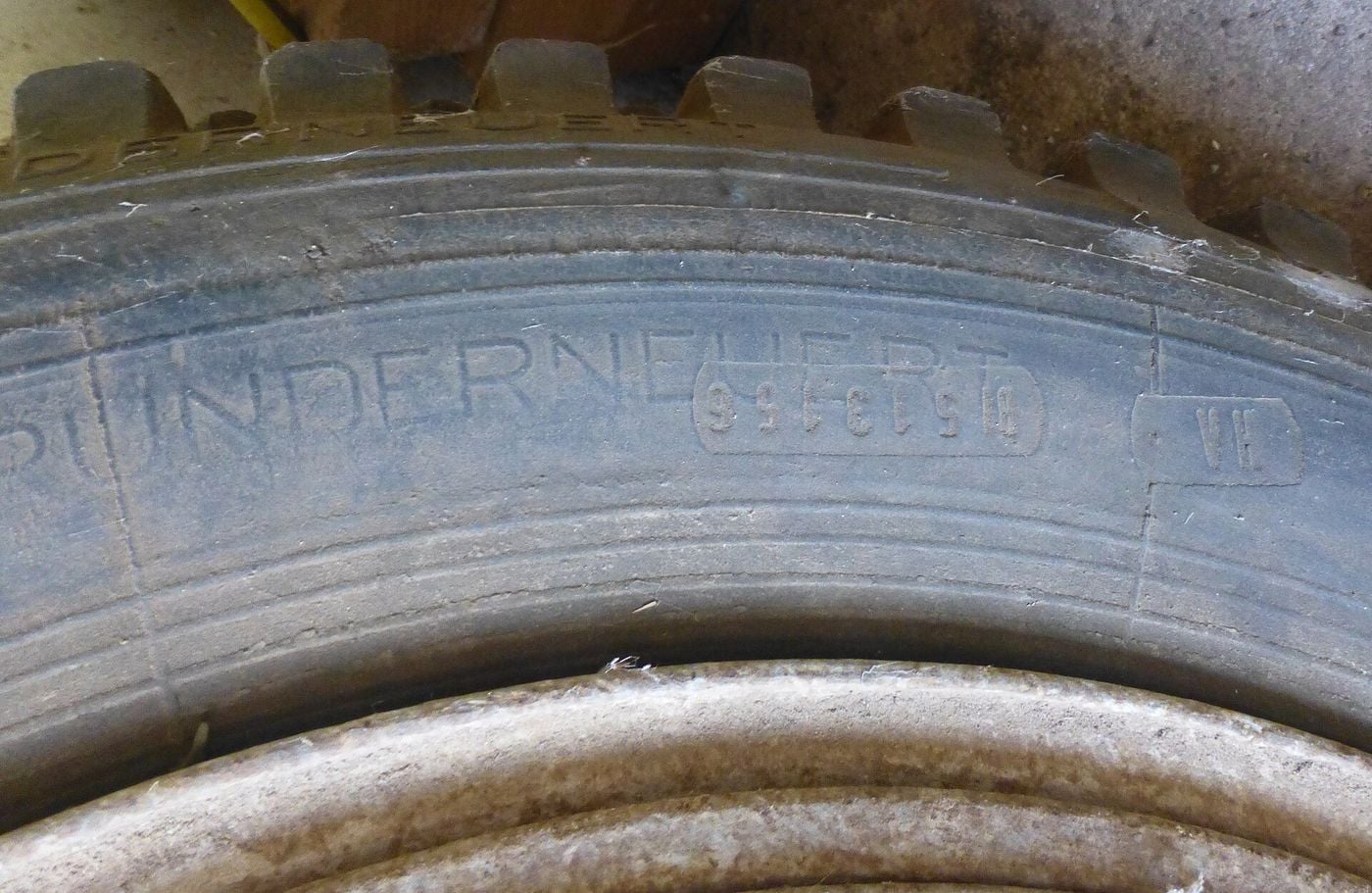
A retreaded tyre is a used tyre whose worn tread has been replaced with new material. For the tyres of buses and coaches, goods vehicles and heavier trailers, UN Regulation No 109 sets the conditions under which retreads are produced, and Council Decision 2006/443/EC made its provisions “a compulsory condition for the placing on the market in the Community of retreaded tyres falling under the scope of that Regulation” from 13 September 2006. The approval it requires is granted to a retreading production unit for a declared range of tyres, and every retread that conforms carries that unit’s approval mark. Under the EU tyre labelling Regulation, requirements for retreads apply only once a suitable testing method is available. In Great Britain, S.I. 2020/1178, in force since 1 February 2021, added references to UN Regulations Nos 108 and 109 for retreads to the Construction and Use Regulations and introduced a ten-year age limit that counts a retread’s age from the week of retreading. The other markings on a retread’s sidewall are read in truck tyre markings explained.
Status as at 27 October 2026. Read on that day: the text of UN Regulation No 109 published in the Official Journal on 6 March 2026, which incorporates the 01 series of amendments up to Supplement 1, in force since 11 January 2026, and the text of UN Regulation No 108 published the same day; Council Decision 2006/443/EC with the original text of Regulation No 109 annexed to it; Regulation (EU) 2019/2144 in its Official Journal text of 16 December 2019; Regulation (EU) 2020/740; S.I. 2020/1178 as made; and the Department for Transport’s guidance on tyre age of 15 January 2021.
Where the rules apply
| Jurisdiction | Rules in the texts read | Source of the row |
|---|---|---|
| European Union | UN Regulations Nos 109 and 108, a compulsory condition for placing retreads within their scope on the market since 13 September 2006; item C12 of Annex II to Regulation (EU) 2019/2144, date 6 July 2022 for components; tyre label requirements for retreads apply once a suitable testing method is available | Decision 2006/443/EC, Articles 1 and 2; Regulation (EU) 2019/2144, Article 16 and Annexes I and II; Regulation (EU) 2020/740, Article 2(1) |
| Great Britain | From 1 February 2021: retreads referred to ECE Regulation 108 or 109 in regulation 25(7) of the Construction and Use Regulations 1986; ten-year age limit counted from the week of retreading for tyres in the positions listed in regulation 27(1A) | S.I. 2020/1178; Department for Transport guidance of 15 January 2021 |
| EU Member States, national rules on use | not verified | — |
| Türkiye | not verified | — |
| Russia | not verified | — |
| United States | not verified | — |
What UN Regulation No 109 covers
Paragraph 1 states that the Regulation “covers the production of retreaded pneumatic tyres designed primarily for vehicles of category M2, M3, N, O3 and O4”, the categories of buses and coaches, goods vehicles and heavier trailers set out in vehicle categories M, N and O. It does not apply to the production of “Retreaded tyres identified by nominal speed category below eighty (80) km/h (speed category symbol ‘F’)”, of tyres originally produced without speed symbols and/or load indices, or of “Tyres originally produced without UN Regulation No 54 type approval”. A footnote to the scope reads: “This Regulation defines requirements for tyres as a component. It does not limit their installation on any categories of vehicles.”
Retreading is defined as “the generic term for refurbishing a used tyre by replacing the worn tread with new material” (paragraph 2.42), and the casing as “the worn tyre comprising carcass and remaining tread and sidewall material” (paragraph 2.43). Regulation (EU) 2020/740 on tyre labelling defines a re-treaded tyre in similar terms, as “a used tyre that is reconditioned by replacing the worn tread with new material” (Article 3(2)).
UN Regulation No 108 is the parallel text, also approving retreading production units, for retreads designed primarily for M1, N1, O1 and O2 vehicles; it does not apply to retreads with a speed category below 120 km/h or suitable for speeds above 300 km/h. Two of its requirements have no counterpart in No 109: “Tyres which have been previously retreaded shall not be accepted for further retreading”, and “The age of the casing accepted for retreading shall not exceed 7 years, based on the digits showing the year of manufacture of the original tyre” (paragraphs 6.2 and 6.3). No 109 sets no casing age and no number of retreads. Its paragraph 6.1 provides that tyres “shall not be accepted for first retread unless they have been type approved and bear either an ‘E’ or ‘e’ mark”, and paragraph 6.4.10 has a rule for tyres that have been retreaded before, set out below.
Approval goes to the production unit
Paragraph 5.1 sets the principle: “To retread tyres requires the approval of the retreading production unit by the approval authorities in accordance with the requirements of this Regulation.” A retreading production unit is “a site or group of localized sites where finished retread tyres are produced” (paragraph 2.41), and it “shall be fully responsible for ensuring that the retreaded tyres will meet the requirements of this Regulation and that they will perform adequately in normal use”.
The retreader, “responsible to the Type Approval Authority (TAA) for all aspects of the type-approval under this Regulation and for ensuring the conformity of production” (paragraph 2.2), applies with an outline of the company’s structure, a brief description of its quality management system, its brand names and trade descriptions, and the range of tyres to be retreaded, down to the maximum speed symbol and load index (paragraph 4.1). Before granting approval, the authority must be satisfied that tests have been carried out successfully on at least five and not necessarily more than 20 samples representative of that range (paragraph 5.4). Approval, extension, refusal, withdrawal and the definitive end of production are notified to the Parties to the 1958 Agreement that apply the Regulation, on the form in Annex 1 (paragraph 5.7).
For conformity of production, the holder of the approval has at least 0.01 per cent of annual production checked and tested, “but in any case not less than 2 tyres and not necessarily more than 10 tyres during each year of production” (paragraph 9.2); the approving authority takes random samples from each production facility in the same proportion, and its tests and checks may replace the holder’s (paragraphs 9.4 and 9.5). The approval may be withdrawn if these requirements are not complied with (paragraph 10.1).
The approval mark and the 109R number
Every retreaded tyre conforming to the Regulation carries an international approval mark: a circle surrounding the letter E followed by the distinguishing number of the country that granted approval, and the approval number (paragraph 5.8). The number is preceded by “109R”, and its first two digits “shall indicate the series of amendments incorporating the most recent major technical amendments made to the Regulation at the time of issue of the approval” (paragraph 5.6). Annex 2 illustrates it with a production unit approved in the Netherlands (E4) under number 109R012439, “meeting the requirements of 01 series of amendments to this Regulation”; the original text annexed to Decision 2006/443/EC gave 109R002439, for the Regulation “in its original form (00)”. The same authority may not assign the same number to another production unit.
Paragraphs 3.6 and 3.7 deal with the markings left from the original tyre: “As far as any of the original manufacturer’s specifications are still legible after the tyres have been retreaded, they shall be regarded as specifications of the retreader for the retreaded tyre.” Specifications that no longer apply are removed completely, as are the original E or e approval mark and number, and any earlier retreading approval mark and number, if no longer applicable. A retread is also marked with the term RETREAD, to which the same term in other languages may be added at the retreader’s request (paragraph 3.2.12), and with its date of retreading; these and the other sidewall markings are read in truck tyre markings explained.
Speed symbol, load index, size and the ASP layer
The service description of a retread “shall not show either a higher speed symbol or a higher load index than that of the original, first life, tyre unless approval has been granted to the manufacturer of the original, first life, tyre for that same carcass to be used at the revised service description” (paragraph 6.4.9). Paragraph 6.4.10 allows that upgrade for the first retread of an original, first-life tyre, and for a used casing whose traceability is guaranteed, within the conditions recorded for those carcasses on the form in Annex 9 to UN Regulation No 54; where traceability back to the original tyre is not guaranteed, neither figure may be raised above that shown on the used casing. “Tyres which have been previously retreaded shall not have either the speed symbol or the load index raised above that shown on the used casing.”
The maximum outer diameter of a retread may be up to 1.5 per cent greater than the maximum that UN Regulation No 54 permits for the same tyre size designation, and the same allowance applies to the maximum section width of a radial retread (paragraph 6.5.4).
Retreaded C3 radial tyres, the class used on heavy-duty vehicles, may carry an additional sidewall protective rubber layer, ASP, up to 8 mm beyond the overall width that No 54 permits for the size (paragraph 7.1.4.4). The conditions: the layer is applied to one sidewall only; that sidewall is marked ASP and OUTSIDE, each at least 8 mm high; the maximum speed rating is J, 100 km/h; and “In case of a dual mounting (twinning) only one tyre with ASP is allowed and has to be mounted on the outer wheel position”.
The 01 series and its transition dates
The text published in the Official Journal on 6 March 2026 incorporates “all valid text up to” Supplement 1 to the 01 series of amendments, whose date of entry into force it gives as 11 January 2026. It is a documentation tool: “Only the original UN/ECE texts have legal effect under international public law”, and the authentic texts it names are documents ECE/TRANS/WP.29/2024/64 and ECE/TRANS/WP.29/2025/74. It does not state the date on which the 01 series itself entered into force.
Paragraph 13 sets the transition for the Contracting Parties that apply the Regulation:
- from the official date of entry into force of the 01 series, none may refuse to grant or to accept approvals under it (paragraph 13.1);
- approvals of retreading production units to the preceding series that are “not affected by the changes introduced by the 01 series of amendments” continue to be accepted and extended (paragraph 13.2);
- from 1 September 2025, Parties “shall not be obliged to accept type approvals issued according to the preceding series of amendments, first issued after 1 September 2025” (paragraph 13.3);
- until 1 September 2028, they “shall accept type approvals and shall grant extensions to type approvals issued according to the preceding series of amendments, first issued before 1 September 2025” (paragraph 13.4).
UN Regulation No 108 has the same four paragraphs with the same dates.
The scope has changed since the original version. The text annexed to Decision 2006/443/EC excluded “Tyres originally produced without type approval and without either an ‘E’ or ‘e’ mark”; the 2026 text excludes “Tyres originally produced without UN Regulation No 54 type approval”. The requirement of paragraph 6.1 for an E or e mark before the first retread is in both texts.
How the EU made the Regulation compulsory
The European Community acceded to Regulations Nos 109 and 108 by Decisions 2001/507/EC and 2001/509/EC, which committed it to accept them “as alternatives to Community legislation”; applying them on a compulsory basis required a provision in Community law (recital 2 of Decision 2006/443/EC). Council Decision 2006/443/EC of 13 March 2006, published in the Official Journal on 4 July 2006, provided it in Articles 1 and 2: “As from 13 September 2006 the provisions of Regulation 109 as set out in the Annex shall apply as a compulsory condition for the placing on the market in the Community of retreaded tyres falling under the scope of that Regulation”, with the same words for No 108. Its first recital gives the reason: the two Regulations “lead to harmonised requirements for the retreading of tyres and to a high level of safety and environmental protection. They enable the free circulation of retreaded tyres.” A Decision was used instead of a Directive “In view of the limited scope of the needed regulatory action” (recital 3).
Regulation (EU) 2019/2144 on general safety, which applies from 6 July 2022, carries both Regulations in its annexes. Under Article 4(2), “Type-approval in accordance with the UN Regulations listed in Annex I shall be considered as EU type-approval”. In its Official Journal text of 2019, Annex I lists No 108 for M1, O1 and O2 and No 109 for M2, M3, N, O3 and O4, each in its “Original version of the Regulation” published in OJ L 181 of 4 July 2006. The entry for No 108, which refers to that original version, does not include the N1 named in the scope of the 2026 text. A note to the table states: “Compliance with a series of amendments adopted after the particular series indicated in the table shall be accepted as an alternative.”
Annex II lists item C12, “Retreaded tyres”, under Nos 108 and 109, marked for every vehicle category from M1 to O4 and given date A for components: 6 July 2022, the “Date for the prohibition of the registration of vehicles, as well as the placing on the market and entry into service of components and separate technical units”. From the dates in Annex II, Article 16(c) requires national authorities to “prohibit, on grounds relating to that requirement, the placing on the market or entry into service of components and separate technical units, where they do not comply with the requirements of this Regulation”. The four date notes of Annex II, A to D, and the driver assistance systems they apply to are set out in mandatory driver assistance systems.
Retreads and the EU tyre label
Regulation (EU) 2020/740 has applied since 1 May 2021 and covers C1, C2 and C3 tyres placed on the market, but its Article 2(1) provides: “Requirements for re-treaded tyres apply once a suitable testing method to measure the performance of such tyres is available in accordance with Article 13.” Recital 17 states the purpose of covering them later: “The re-treading of tyres extends their lifespan and contributes to circular economy objectives, such as waste reduction. Applying labelling requirements to such tyres would bring substantial energy savings.” The label itself, and the state of the delegated acts that Article 13(2) provided for by 26 June 2022, are covered in truck tyre labelling.
Great Britain
The Road Vehicles (Construction and Use) (Amendment) Regulations 2020 (S.I. 2020/1178), made on 26 October 2020 and in force since 1 February 2021, amended the Construction and Use Regulations 1986 as they apply to retreaded tyres. In regulation 25, on tyre loads and speed ratings, the words “but this requirement shall not apply to a retreaded tyre” in paragraph (7) were replaced by “or, in the case of a retreaded tyre, with the requirements of ECE Regulation 108 or 109”, and the definition of load-capacity index in paragraph (9) was extended to the “load index” in paragraph 2 of ECE Regulation 108 or ECE Regulation 109. Table 2 of Schedule 2, the list of ECE Regulations, gained entries for Nos 108 and 109; the instrument’s explanatory note describes this as including “the provisions about retreaded tyres in ECE Regulations 108 and 109”.
The same instrument introduced Britain’s ten-year age limit for tyres on the front axle of a bus other than a minibus or of a goods vehicle over 3,500 kg, and for tyres fitted singly on any axle of a minibus, with a rule of its own for retreads. A retread may not be used in those positions if “the week of retreading marked on its sidewall in accordance with ECE Regulation 108 or 109 falls more than 10 years before the date on which the motor vehicle is used on the road”, or if it has no week-of-retreading marking that complies with those Regulations, “whether because it was retreaded before the ECE Regulations applied or otherwise” (regulation 27(1)(j)). The Department for Transport’s guidance of 15 January 2021 states: “Re-treaded tyres are subject to the same requirement as first-life tyres. The date of re-treading, instead of date of first manufacture, will be used to determine the tyre age.” The exemptions and the rule on illegible date markings are set out in tread depth and tyre age.
Quick answers
- Are retreaded truck tyres allowed in the EU?
- They may be placed on the EU market under UN Regulation No 109: Council Decision 2006/443/EC made its provisions a compulsory condition for placing retreads within its scope on the market from 13 September 2006. Regulation (EU) 2019/2144 lists it in Annex II as item C12, Retreaded tyres, with 6 July 2022 as the date for components. A retread that conforms carries the approval mark of the production unit that made it.
- What does 109R mean on a tyre?
- It precedes the approval number of a retreading production unit approved under UN Regulation No 109. The approval mark is a circle around the letter E with the number of the approving country, followed by that approval number, whose first two digits give the series of amendments: the Regulation's own example, 109R012439 granted in the Netherlands (E4), is an approval to the 01 series.
- How many times can a truck tyre be retreaded?
- UN Regulation No 109, which covers retreads for buses, goods vehicles and heavier trailers, sets no number and no maximum casing age. It requires a tyre to be type approved and to bear an E or e mark before its first retread, and a tyre that has been retreaded before may not have its speed symbol or load index raised above those on the used casing. UN Regulation No 108, for M1, N1, O1 and O2 vehicles, excludes previously retreaded tyres and casings more than 7 years old.
- Can retreaded tyres be used on a bus front axle?
- UN Regulation No 109 defines requirements for tyres as a component and states that it does not limit their installation on any categories of vehicles. Great Britain applies its ten-year age limit to tyres on the front axle of a bus other than a minibus, and counts a retread's age from the week of retreading marked under UN Regulation No 108 or 109. Other countries' rules on this point were not verified.
- What is the difference between UN Regulation 108 and 109?
- No 109 covers retreads designed primarily for M2, M3, N, O3 and O4 vehicles, from a nominal speed category of 80 km/h upwards. No 108 covers M1, N1, O1 and O2 vehicles, for speed categories from 120 km/h up to 300 km/h, and accepts neither previously retreaded tyres nor casings more than 7 years old for retreading. Both approve the retreading production unit, and both became a compulsory condition for placing retreads on the EU market on 13 September 2006.
Sources
- UN Regulation No 109 — Uniform provisions concerning the approval for the production of retreaded pneumatic tyres for commercial vehicles and their trailers, incorporating Supplement 1 to the 01 series of amendments (in force 11 January 2026) — OJ L 2026/308, 6.3.2026 — Publications Office of the European Union, 6 Mar 2026
- UN Regulation No 108 — Uniform provisions concerning the approval for the production of retreaded pneumatic tyres for motor vehicles and their trailers, incorporating Supplement 1 to the 01 series of amendments (in force 11 January 2026) — OJ L 2026/302, 6.3.2026 — Publications Office of the European Union, 6 Mar 2026
- Council Decision 2006/443/EC of 13 March 2006 amending Decisions 2001/507/EC and 2001/509/EC with a view to making UN/ECE Regulation Nos 109 and 108 on retreaded tyres compulsory — recitals, Articles 1 and 2, and the original text of Regulation No 109 in Annex I (OJ L 181, 4.7.2006) — Publications Office of the European Union, 13 Mar 2006
- Regulation (EU) 2019/2144 on type-approval requirements as regards general safety and the protection of vehicle occupants and vulnerable road users — Official Journal text of 16 December 2019: Articles 4, 16 and 19, Annexes I and II — Publications Office of the European Union, 27 Nov 2019
- Regulation (EU) 2020/740 on the labelling of tyres with respect to fuel efficiency and other parameters — recital 17, Articles 2(1), 3(2), 13(2) and 18 — Publications Office of the European Union, 25 May 2020
- The Road Vehicles (Construction and Use) (Amendment) Regulations 2020 (S.I. 2020/1178), as made, with its explanatory note — legislation.gov.uk, The National Archives, 26 Oct 2020
- Tyre age restrictions for goods vehicles, buses, coaches and minibuses (guidance, published 15 January 2021) — Department for Transport, GOV.UK, 15 Jan 2021