Gillig
Gillig Low Floor
Gillig's Low Floor transit bus from its 2026 brochures and tech sheets and earlier releases: 29 to 40 ft, Cummins X10, L9 and L9N, eGen Flex hybrid and a 490 to 686 kWh battery-electric version.
- 1997—
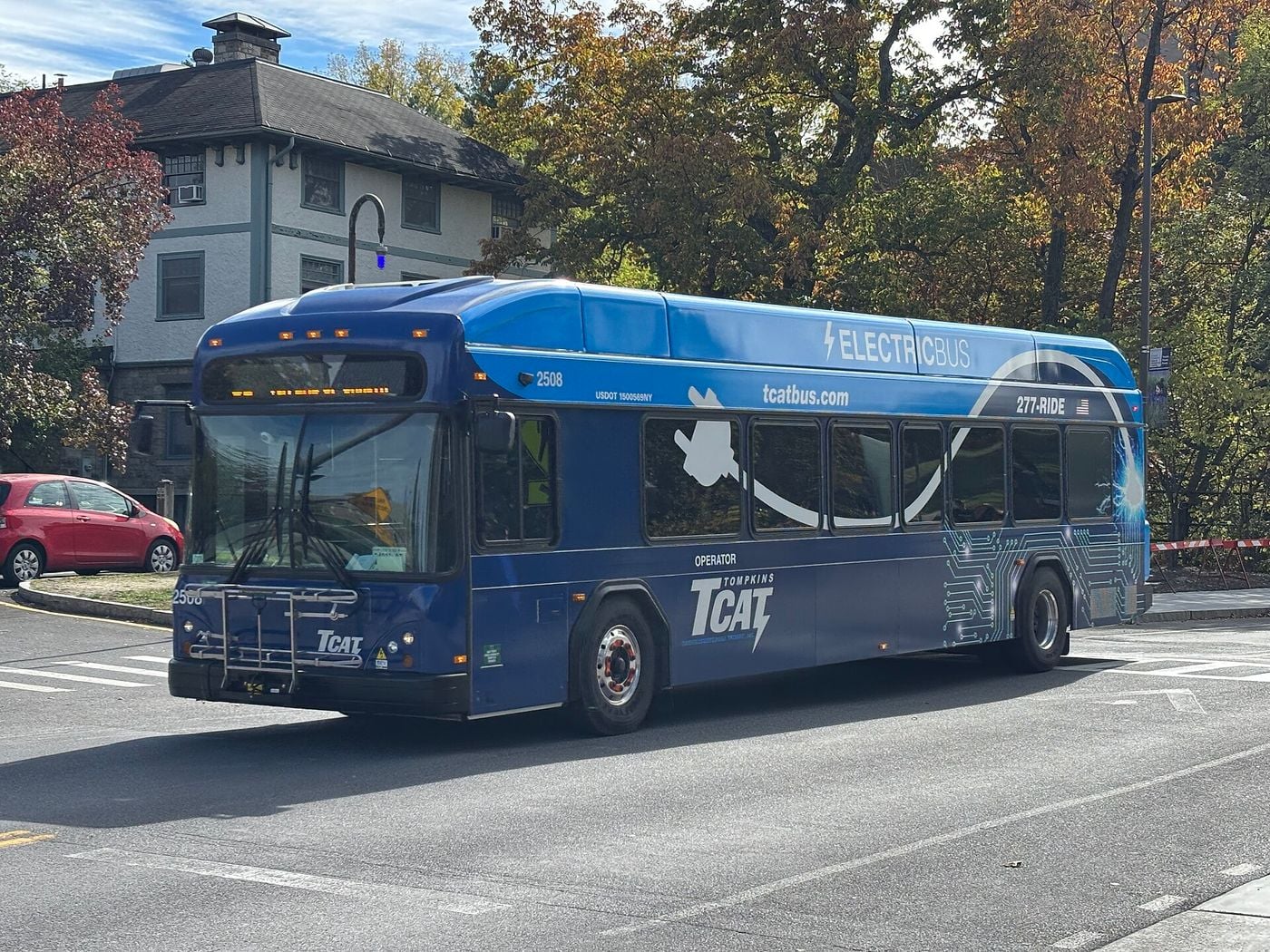

Model overview
- Segment
- Bus
- Produced
- 1997—
- Transmission
- Customer tech sheets of October 2026: ZF EcoLife 2 (Clean Diesel), Allison B400R with retarder (CNG), Allison eGen Flex 40 Max (Hybrid Electric); Battery Electric product page: direct-drive motor
- Capacity
- 26 at 29 ft, 33 at 35 ft, 40 at 40 ft; total capacity 50, 66 and 78
- Doors
- Front and rear doors; front 40 in, rear 34 in or 48 in on the October 2026 tech sheets
The Low Floor is the heavy-duty transit bus platform of GILLIG LLC, which builds its buses in Livermore, California. Gillig sells it with four propulsion systems, which also name the buses — Clean Diesel, CNG, Hybrid Electric and Battery Electric — in lengths of 29, 35 and 40 feet, and in six styles: Low Floor, Low Floor Plus, BRT, BRT Plus, Trolley and Suburban Commuter. This page is built from Gillig’s four two-page brochures for the four propulsion systems, whose PDF files were created on 15 September 2026; from four tech sheets for customer configurations in Dallas, St. Paul, Arlington Heights and Honolulu, created on 1 and 2 October 2026; from Gillig’s product pages, buses overview page and history page, read on 8 and 9 November 2026; and from Gillig press releases of 16 May 2019, 7 July 2021, 8 November 2021 and 19 December 2022. Gillig states power in horsepower, torque in pound-feet, lengths in feet and door widths in inches; its documents give no kilowatt, newton-metre, millimetre or kilogram figures.
Model line and dates
Gillig’s history page lists the Phantom transit bus, which debuted in 1980, and dates the first Low Floor bus to 1997: “based on the Phantom while featuring modern technology and improved accessibility”. The same timeline lists the first Low Floor Hybrid in 2000, the move to a purpose-built facility in Livermore in 2017, the introduction of the battery-electric bus in 2018, an Altoona test result for the third-generation battery-electric bus in 2023 and the introduction of a Hydrogen Fuel Cell bus in 2024. Gillig’s release of 7 July 2021 dates its “experience with product electrification” back to 2001, “with diesel-electric hybrid and overhead trolley electric buses”. The buses overview page, read on 9 November 2026, lists four propulsion systems on the platform and no fuel-cell bus, and no document opened gives a figure for the Hydrogen Fuel Cell bus.
Lengths, styles and passenger capacity
The product pages offer the Clean Diesel and the CNG bus in lengths of 29, 35 and 40 feet and the Hybrid Electric and the Battery Electric in 35 and 40 feet. No Gillig document opened gives any other length figure, or a width, height, wheelbase, turning circle, kerb weight, gross vehicle weight rating or axle load.
| Length | Seated | Total capacity | Brochures |
|---|---|---|---|
| 29 ft | 26 | 50 | Clean Diesel, CNG |
| 35 ft | 33 | 66 | Clean Diesel, CNG, Hybrid, Battery Electric |
| 40 ft | 40 | 78 | Clean Diesel, CNG, Hybrid, Battery Electric |
The brochures print the seated and total figures only. Gillig’s release of 8 November 2021 gave the battery-electric bus of that time 31 seated and 62 total passengers at 35 feet and 38 seated and 75 total at 40 feet.
The Clean Diesel, CNG and Hybrid brochures list five style options — Low Floor, Low Floor Plus, BRT, BRT Plus and Trolley — and the Battery Electric brochure lists Low Floor Plus alone. The buses overview page calls the Low Floor style “the backbone of all GILLIG’s styling options”, gives the Low Floor Plus “smooth roof transitions, updated lighting designs”, the BRT Plus “a raised, raked-back front cap and a streamlined roofline” and the Trolley package “solid oak seats and brass stanchions”. Its Suburban Commuter has “reclining seats, overhead luggage racks, reading lights, and power outlets”, with an optional rear door. The overview page lists the Suburban Commuter for Clean Diesel, Hybrid Electric and CNG and the Trolley for Clean Diesel and Hybrid Electric only, while the CNG product page and the CNG brochure include the Trolley.
Structure and chassis
All four tech sheets give a body of bolted extruded aluminium and a chassis of 3CR12 stainless steel with integrated side-impact barriers. The buses overview page describes “a corrosion-resistant stainless steel chassis and lightweight aluminum body” and says the buses are built to go beyond the “Federal Transit Administration’s 12-year/500,000-mile standard”. Gillig’s release of 8 November 2021 adds integrated side-impact beams and quick-change side-skirt panels. Every tech sheet lists Meritor axles and disc brakes, named EX+ on the DART and Metro Transit sheets.
Clean Diesel
Gillig’s Clean Diesel product page, read on 8 and 9 November 2026, names the Cummins L9 and says the bus “meets today’s EPA emissions standards”; Gillig claims on it 50% less NOx and 75% less particulate matter than a diesel bus from a decade ago. The Clean Diesel brochure of September 2026 names the Cummins X10 instead: “Powered by the all-new Cummins X10 engine”, it says, the bus “meets 2027 EPA and CARB emissions standards”. It describes the X10 as a 10-litre engine “Built on the proven legacy of the Cummins L9 platform”, with over-the-air software update capability, and gives it up to 350 hp and up to 1,150 lb-ft. The two documents name different engines.
The Metro Transit tech sheet for a 40-foot Low Floor Plus Clean Diesel, in a file whose name marks it as a draft, lists the Cummins L9 at 280 hp with a ZF EcoLife 2 gearbox, a Modine E-Fan and a 120-gallon stainless steel fuel tank. The engine is described in Cummins L9.
CNG
The CNG bus has the Cummins L9N, which the CNG brochure gives at up to 280 hp and 900 lb-ft, compatible with compressed natural gas or renewable natural gas (RNG), and “Certified by the EPA and CARB to the Optional Low NOx standard of 0.02 g/bhp-hr”. The CNG product page describes lightweight composite fuel cylinders and an integrated fuel access panel. The DART tech sheet for a 40-foot Low Floor CNG bus lists an Allison B400R gearbox with retarder and five Type 4 fuel tanks of 148.5 inches; Allison’s bus gearboxes are described in Allison automatic transmissions.
Hybrid Electric
The Hybrid Electric has the Allison eGen Flex hybrid system with 26 kWh of lithium titanate (LTO) batteries. Gillig’s documents differ on its output: the hybrid brochure gives “UP TO 280 HP & 1050 lb-ft”, the product page “up to 330 horsepower and 1050 lb-ft of torque”. The product page names Allison’s H 40/50 EP platform, with “nearly 20 years of proven performance”, and the brochure names the H 40EP as its transmission platform. With geofencing, the bus switches to battery-only operation in designated zones: the product page gives up to 10 miles of zero-emission operation and battery-only running “up to 50% of the time”, both marked “May vary depending on duty cycle and configuration”, and the brochure gives “up to 7 to 10 miles” in a zero-emission zone. Gillig claims up to 25% improved fuel economy over older diesel buses. The brochure lists fewer belt-driven accessories, regenerative braking and simplified WEG cooling.
The Pace tech sheet for a 35-foot Low Floor Plus Hybrid lists a Cummins B6.7 engine with an Allison eGen Flex 40 Max, two Vanner Hybrid Beltless Alternators, an all-electric Thermo King TE14 HVAC unit and a 120-gallon stainless steel fuel tank. The engine is described in Cummins B6.7, and diesel, gas, hybrid and battery drives in city buses in city bus propulsion.
Battery Electric
On 16 May 2019 Gillig and Cummins announced that the Gillig battery-electric bus, “powered by Cummins, is now available”, and invited the media to its unveiling on 20 May 2019 at the American Public Transportation Association’s Bus & Paratransit Mobility Conference in Louisville, Kentucky. That release gives the bus a Cummins electrified powertrain and “the standard 444 kWh battery capacity (six packs)”, and says that a 35-foot version and opportunity charging would follow. On 7 July 2021 Gillig reported that its “second-generation battery electric bus” had completed the Federal Transit Administration’s Bus Test Program at Altoona, Pennsylvania. On 8 November 2021 it announced a next-generation energy storage system from AKASOL, the AKASystem CYC, in configurations of 490, 588 and 686 kWh, “a 32 percent increase in onboard energy capacity”, “ahead of the 2023 production start date”. Gillig’s release of 19 December 2022 reports a total score of 89.5 out of 100 for its 40-foot battery-electric bus in the Altoona tests; the history page places the third-generation bus’s Altoona result in 2023.
Gillig’s Battery Electric product page gives the drive as an Accelera by Cummins powertrain with a “direct-drive motor”; the TheBus tech sheet names the traction motor as the Cummins TM4. No Gillig document opened gives the motor’s output, a range or a charging power. The modular battery system holds 490, 588 or 686 kWh in 5, 6 or 7 packs, and the brochure labels up to 686 kWh as available on-board energy storage. The product page names BorgWarner Li-Ion NMC batteries in a stainless steel housing rated IP67 and IP6K9K, with active cooling, overcharge protection, cell-level propagation resistance and electrical disconnection safeguards. The battery maker is AKASOL in the 2021 release and BorgWarner on the current product page.
For charging, the product page offers “pantograph rails, inductive charging plates, and charging port locations available on both curbside and streetside”, and the release of 19 December 2022 describes its modular energy storage system as “plug-in, overhead conductive, and inductive charging compatible”. The TheBus tech sheet lists two CCS Type 1 connectors for plug-in charging and a Schunk Transit Systems pantograph for on-route charging; on-route charging is described in opportunity charging and pantographs. The product page also lists electronic stability control and precision weight balancing, and the TheBus sheet ZF ReAX electric-assist steering, an all-electric Thermo King TE18 HVAC unit, an Air Squared electric direct-drive air compressor and I/O Controls G5 multiplexing.
Four customer configurations
| Sheet row | DART, Dallas: 40 ft Low Floor CNG | Metro Transit, St. Paul: 40 ft Low Floor Plus Clean Diesel | Pace, Arlington Heights: 35 ft Low Floor Plus Hybrid | TheBus, Honolulu: 40 ft Low Floor Plus Battery Electric |
|---|---|---|---|---|
| Engine or motor | Cummins L9N | Cummins L9 (280 hp) | Cummins B6.7 | Cummins TM4 traction motor |
| Transmission | Allison B400R with retarder | ZF EcoLife 2 | Allison eGen Flex 40 Max | not on the sheet |
| Fuel or charging | five Type 4 tanks, 148.5 in | stainless steel tank, 120 gal | stainless steel tank, 120 gal | two CCS Type 1 connectors; Schunk pantograph |
| Steering | TRW TAS6505, JTEKT single tilt | TRW TAS6505, JTEKT single tilt column | TRW TAS6505, JTEKT single tilt column | ZF ReAX electric assist |
| Brakes | EX+ disc | Meritor EX+ disc | disc | disc |
| Wheels | Accuride white powder-coated steel | Alcoa aluminium, Dura-Bright EVO finish | Alcoa aluminium, Dura-Bright EVO finish | Alcoa aluminium, Dura-Bright EVO finish |
| Tyres | Firestone 315/80R22.5 | Michelin, no size given | Michelin 305/85R22.5 | Goodyear Metro Miler, front 315/80R22.5, rear 305/85R22.5 |
| Front door | 40 in Vapor Ameriview Slide-Glide | 40 in electric Slide-Glide | 40 in Slide-Glide, air open and close | 40 in electric Slide-Glide |
| Rear door | 34 in swing-out | 48 in electric Slide-Glide | 48 in Slide-Glide | 34 in electric swing-out |
| Passenger seats | STER Aries | American Seating InSight | American Seating InSight-Prime+ | STER Gemini |
| Ramp | Lift-U Dual-Mode | Lift-U LU18 | Lift-U LU18 | Lift-U LU18 |
| HVAC | Thermo King T14 | Thermo King T14 | Thermo King TE14 all-electric | Thermo King TE18 all-electric |
| Driver assistance (ADAS) | not on the sheet | not on the sheet | Rosco Mobileye Shield+ V4.0 | Rosco Mobileye Shield+ V4.0 |
| Video surveillance | Genetec 7-camera system | Luminator RoadRunner Pro, 8 cameras | AngelTrax 14-camera system | Safety Vision 7-camera system |
Safety, accessibility and passenger equipment
The buses overview page describes a driver’s workstation with optional safety barriers and an integrated crash barrier, and lists video mirror technology, see-through pillar camera systems, collision alert systems and pedestrian alert systems as options; the DART and Pace sheets list an Arow Global ArowGuard MAX driver’s barrier. For passengers it names ADA-compliant securement systems for wheelchairs and scooters, on-board Wi-Fi, USB charging ports and power outlets, and offers several rear door widths, an optional rear ramp and framed or bonded windows. The tech sheets list Q’Straint Q’POD restraints on all four buses, with Quantum restraints as well on the Pace and TheBus sheets. Access features in general are set out in bus accessibility explained.
Source notes
Gillig builds the Low Floor in four propulsion systems: Clean Diesel, CNG, Hybrid Electric and Battery Electric. Gillig gives lengths of 29, 35 and 40 ft for Clean Diesel and CNG and of 35 and 40 ft for Hybrid Electric and Battery Electric. No Gillig document opened gives any other length figure, a width, height, wheelbase, turning circle, kerb weight, gross vehicle weight rating or axle load, or the motor output of the battery-electric bus, and none gives a figure in kilowatts or newton-metres. The four brochures of September 2026 give 26 seated and 50 total capacity at 29 ft (Clean Diesel and CNG), 33 seated and 66 total at 35 ft and 40 seated and 78 total at 40 ft; Gillig’s release of 8 November 2021 gave the battery-electric bus 31 seated and 62 total passengers at 35 ft and 38 seated and 75 total at 40 ft. Styling options are Low Floor, Low Floor Plus, BRT, BRT Plus and Trolley on the Clean Diesel, CNG and Hybrid brochures and Low Floor Plus alone on the battery-electric bus; the buses overview page lists the Suburban Commuter for Clean Diesel, Hybrid Electric and CNG, and the Trolley for Clean Diesel and Hybrid Electric only. Clean Diesel: the product page, read on 8 and 9 November 2026, names the Cummins L9 and claims 50% less NOx and 75% less particulate matter than a diesel bus from a decade ago; the September 2026 brochure names the 10-litre Cummins X10, up to 350 hp and up to 1,150 lb-ft, meeting 2027 EPA and CARB emissions standards; the Metro Transit tech sheet lists the Cummins L9 at 280 hp with a ZF EcoLife 2 gearbox and a 120-gallon stainless steel fuel tank. CNG: Cummins L9N, up to 280 hp and 900 lb-ft, certified by the EPA and CARB to the Optional Low NOx standard of 0.02 g/bhp-hr; the DART tech sheet lists an Allison B400R with retarder and five Type 4 fuel tanks of 148.5 in. Hybrid Electric: Allison eGen Flex with 26 kWh of lithium titanate (LTO) batteries, up to 280 hp and 1,050 lb-ft on the brochure and up to 330 hp and 1,050 lb-ft on the product page; up to 10 miles of zero-emission operation on the product page and 7 to 10 miles in a geofenced zone on the brochure, with battery-only operation up to 50% of the time, and Gillig claims up to 25% improved fuel economy over older diesel buses; the product page names Allison’s H 40/50 EP platform; the Pace tech sheet lists a Cummins B6.7 with an Allison eGen Flex 40 Max. Battery Electric: Accelera by Cummins powertrain with a direct-drive motor; the TheBus tech sheet names the Cummins TM4 traction motor; 490, 588 or 686 kWh of on-board energy storage in 5, 6 or 7 packs of BorgWarner Li-Ion NMC batteries in stainless steel housings rated IP67 and IP6K9K; plug-in, pantograph and inductive charging, with two CCS Type 1 connectors and a Schunk pantograph on the TheBus tech sheet. Gillig’s release of 16 May 2019 gave the battery-electric bus an initial standard 444 kWh in six packs; its release of 8 November 2021 announced AKASOL batteries with up to 686 kWh of available energy, a 32 percent increase, ahead of a 2023 production start; its release of 19 December 2022 reports an Altoona score of 89.5 out of 100 for the 40 ft battery-electric bus. The four tech sheets of October 2026 give a body of bolted extruded aluminium and a 3CR12 stainless steel chassis with integrated side-impact barriers, Meritor axles, disc brakes, front doors of 40 in, rear doors of 34 in or 48 in, and tyres of 315/80R22.5 and 305/85R22.5. Gillig’s history page dates the Phantom to 1980, the first Low Floor bus to 1997, the first Low Floor Hybrid to 2000, the move to Livermore, California, to 2017, the battery-electric bus to 2018, the third-generation battery-electric bus’s Altoona score to 2023 and the Hydrogen Fuel Cell bus to 2024; the release of 7 July 2021 dates Gillig’s experience with product electrification, with diesel-electric hybrid and overhead trolley electric buses, back to 2001.
Quick answers
- When did production of the Gillig Low Floor start?
- Production of the Gillig Low Floor started in 1997.
- Which transmission does the Gillig Low Floor use?
- Transmission: Customer tech sheets of October 2026: ZF EcoLife 2 (Clean Diesel), Allison B400R with retarder (CNG), Allison eGen Flex 40 Max (Hybrid Electric); Battery Electric product page: direct-drive motor.
- How many passengers does the Gillig Low Floor carry?
- Capacity: 26 at 29 ft, 33 at 35 ft, 40 at 40 ft; total capacity 50, 66 and 78.
Articles that mention the Gillig Low Floor
Sources
- Clean Diesel brochure (two pages, file Clean-Diesel-One-Pager-NEW-BROCHURE-2026.pdf, created 15 September 2026) — GILLIG LLC
- CNG brochure (two pages, file CNG-One-Pager-NEW-BROCHURE-2026.pdf, created 15 September 2026) — GILLIG LLC
- Hybrid brochure (two pages, file Hybrid-One-Pager-NEW-BROCHURE-2026.pdf, created 15 September 2026) — GILLIG LLC
- Battery Electric brochure (two pages, file Battery-Electric-One-Pager-NEW-BROCHURE-2026.pdf, created 15 September 2026) — GILLIG LLC
- Tech sheet: Metro Transit, St. Paul, MN, 40' Low Floor Plus Clean Diesel (file StPaulTechSheet_DRAFT.pdf, created 1 October 2026) — GILLIG LLC
- Tech sheet: DART, Dallas, TX, 40' Low Floor CNG (created 2 October 2026) — GILLIG LLC
- Tech sheet: Pace, Arlington Heights, IL, 35' Low Floor Plus Hybrid (created 2 October 2026) — GILLIG LLC
- Tech sheet: OTS/TheBus, Honolulu, HI, 40' Low Floor Plus Battery Electric (created 2 October 2026) — GILLIG LLC
- Clean Diesel (product page) — GILLIG LLC
- Compressed Natural Gas (CNG) (product page) — GILLIG LLC
- Hybrid Electric (product page) — GILLIG LLC
- Battery Electric (product page) — GILLIG LLC
- Buses: GILLIG Low Floor platform and styling options (overview page) — GILLIG LLC
- About Us: mission, values and history timeline — GILLIG LLC
- GILLIG Battery Electric Bus Unveiled (press release with Cummins, updated 27 May 2020) — GILLIG LLC, 16 May 2019
- GILLIG's Battery Electric Bus Delivers High Marks at Altoona Testing — GILLIG LLC, 7 Jul 2021
- GILLIG's next-generation battery to provide 32 percent increase in onboard energy — GILLIG LLC, 8 Nov 2021
- GILLIG's Battery Electric Bus Has Range, Reliability, And Record-breaking Altoona Scoring (updated 3 February 2023) — GILLIG LLC, 19 Dec 2022