Karsan
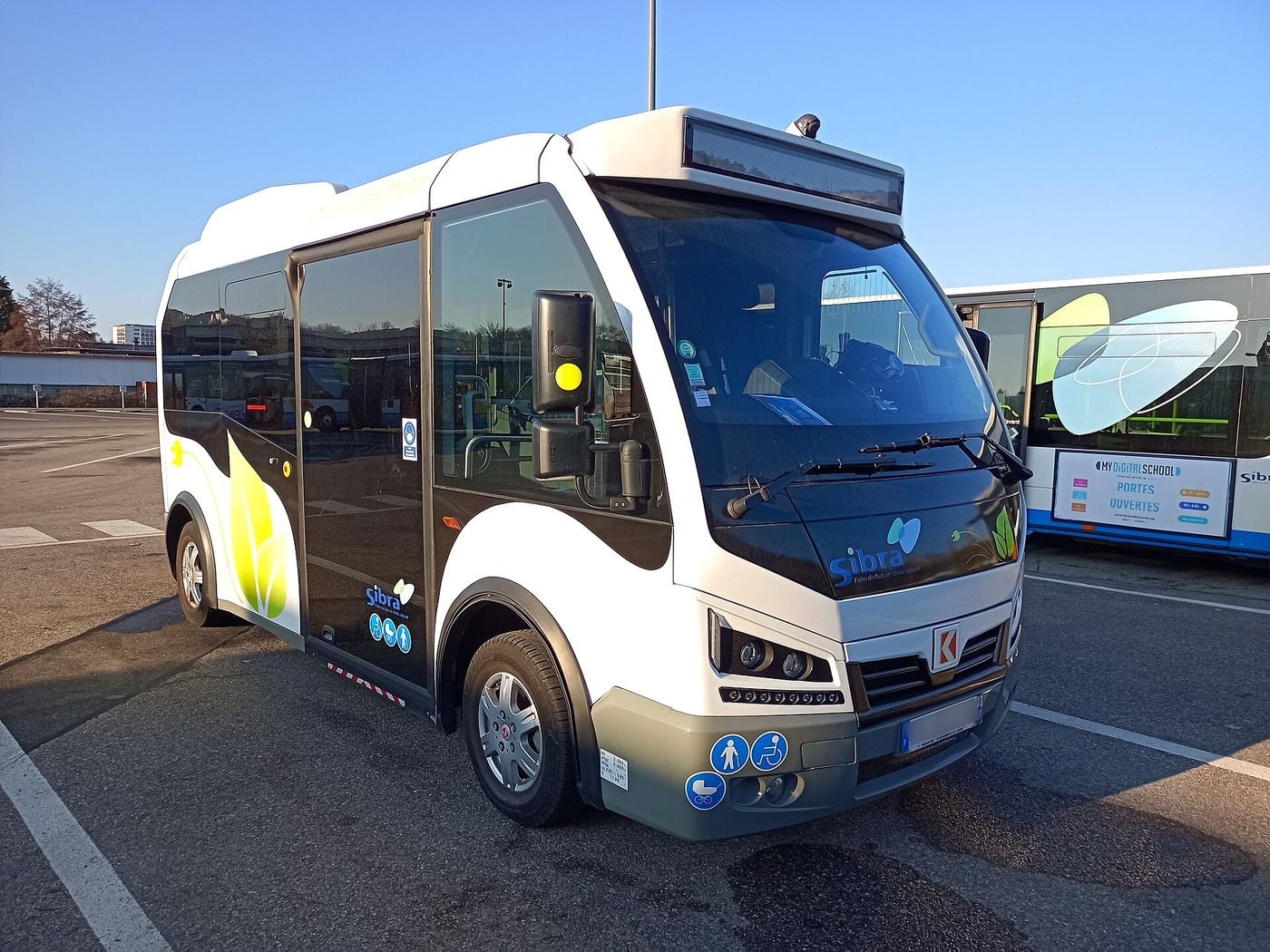
Karsan e-JEST
Karsan's battery-electric minibus, 5,845 mm long: a 135 kW BMW motor, 105 kWh and 260 km (NEDC) in the June 2026 catalogues, M2/M3 Class A, up to 20 passengers.
- 2018—
- 5.84 m

Model overview
- Segment
- Bus
- Produced
- 2018—
- Transmission
- Single speed automatic transmission
- Battery capacity
- 105 kWh
- Range
- 260 km
- Charging
- 80 kW (DC Combo)
- Electric motor
- 135 kW peak
- Length
- 5 845 mm
- Wheelbase
- 3 750 mm
- Capacity
- 9 or 10 fixed, plus 2 foldable in some layouts + 5 to 11, by layout
- Doors
- Outward swing passenger door (standard) or sliding passenger door (option)
The Karsan e-JEST is a battery-electric low-floor minibus. Karsan’s specification tables class it as “M2 / M3 Category & Class A”, and its English product page calls it “an electrified city bus” and “a zero-emission electric minibus”. The figures on this page come from Karsan’s own documents: the English product page and its UK and Turkish editions (read on 8 October 2026; none carries a date), the English and Turkish catalogues whose back pages are dated 3 June 2026, the earlier English catalogue dated 16 January 2024, the right-hand-drive catalogues for the UK (28 April 2025 and 22 May 2024) and Japan (1 December 2023), Karsan’s catalogue page and corporate timeline, and its press releases from 4 August 2018 to 6 October 2025. Karsan’s fuel-cell city bus is described in Karsan e-ATA HYDROGEN.
Category, body and dimensions
The English and Turkish catalogues of 3 June 2026 and both product pages give the vehicle category and class as “M2 / M3 Category & Class A” (“M2/M3 Kategorisi ve Sınıf A” in the Turkish catalogue). What the M2 and M3 categories cover is set out in vehicle categories M, N and O, and Class A under UN Regulation No 107 in bus classes. The right-hand-drive documents print the category differently; they are described further down.
The body is listed as “Monocoque Space Frame - Original Low Floor (270 mm Step Height)”, with “Cataphoresis Coating & Under Coating” against corrosion. The catalogue’s text speaks of a “strong monocoque chassis and composite plastic and aluminum body panels”.
| Row | Catalogues, 3 June 2026 | Product pages |
|---|---|---|
| Overall length | 5,845 | 5,845 |
| Overall width | 2,055 (without mirrors) | 2,055 (without mirrors) |
| Overall height | 2,850 (with A/C) | 2,800 (with A/C) |
| Interior height | 2,185 (maximum) | 2,253 (maximum) |
| Front overhang | 1,200 | 1,200 |
| Rear overhang | 895 | 895 |
| Wheelbase | 3,750 | 3,750 |
| Turning radius | 6,993 | 6,993 |
| Gross vehicle weight | 5,000 / 5,200 | 5,000 / 5,200 |
Karsan prints the gross vehicle weight as “5.000 / 5.200” with no further text; no document opened says which of the two weights belongs to which version. The turning figure is a radius, “Turning Radius (mm) 6.993”, and Karsan states no measuring convention with it. No document opened gives a kerb weight or axle loads.
Electric motor and drive
Every specification table opened gives “Maximum Power (kW & hp) 135 & 184” and “Maximum Torque (Nm) 290”, with a “Single Speed Automatic Transmission”. The English catalogue of June 2026 and the English product page name the motor “BMW Electric Traction Motor” (“BMW Elektrik Motoru” in Turkish); the English catalogue of January 2024 and the right-hand-drive documents write “Electric Traction Motor”. The product page’s heading reads “ELECTRIFIED BY BMW I TECHNOLOGY”, and its text says the e-JEST is “Powered by a BMW 100% electric motor”. Karsan’s catalogue gives a top speed of 70 km/h and a maximum gradeability of 25%, and describes a hill holder under the heading “Comfortable Hill Start Even 25% Slope”.
Some of Karsan’s releases, and the Turkish product page’s FAQ, give the power as 170 HP. The releases of 4 August 2018 and 20 May 2019 say the BMW motor “constantly produces a power of 170 HP and a torque of 290 Nm”, and the release of 18 February 2019 that it “constantly produces 170 HP with a torque of 290 Nm”; the release of 25 April 2025 gives “170 HP power and 290 Nm torque”; and the Turkish product page’s FAQ speaks of a “170 beygirlik” (170 hp) BMW motor that it says is also used in the BMW i3 and i8. The releases of 20 December 2023 and 12 November 2024 give “BMW’s 135 kW electric motor”. No document opened names the driven axle.
The catalogues of January 2024 and June 2026 say that “During braking, e-JEST regenerates up to 25% of the kinetic energy”, and a “2 Mode Regeneration Module” is standard. The Turkish product page’s brake row adds “pedaldan ayak çekildiğinde frenleme yapan, enerji kazanımı özellikli (rejeneratif)”: braking when the foot is lifted from the pedal, with energy recovery. How regeneration is defined for buses is covered in regenerative braking in trucks and buses. A speed limiter of 50 km/h (“On-Off Available”) and an acceleration limiter are standard.
Battery and range
The specification table of the June 2026 catalogues gives “High Voltage Battery (Type - Capacity) Li-ion - 105 kWh” and “Range (km) 260”, footnoted “Based on NEDC testing standards with a base-level equipped vehicle” and as varying with driving style, route, outside temperature, heating and air conditioning, and passenger weight. The catalogue’s battery page prints “Capacity 105 kWh” and “Range 260 km” under the heading “Double Battery” and says that “High-performance Li-Ion NMC batteries and an electric motor, proven to deliver exceptional efficiency, power the e-JEST.” The product page carries the banner “105 kWh DOUBLE BATTERY” and speaks of “BMW Li-Ion battery technology and advanced on-board charging systems”. No Karsan document opened says whether 105 kWh is installed or usable capacity; the difference between the two figures is explained in installed vs usable battery capacity.
Karsan’s release of 6 October 2025 ties the 105 kWh figure to “the new-generation batteries introduced at Busworld 2025”: with them, the e-JEST “delivers a range of up to 260 km with a 105 kWh capacity”. Before that, the English catalogue of 16 January 2024 gave “BMW Battery Packs” and, under the same “Double Battery” heading, a capacity of 88 kWh and a range of 210 km, and the English product page’s FAQ reads: “With 88 kWh battery packs e-Jest offers 210 km range according to NEDC test cycle.” The releases of 18 February and 20 May 2019 gave “BMW’s 44 kWh or 88 kWh batteries” and a range of up to 210 km; the release of 4 August 2018 gave “BMW’s 33 or 66 kWh batteries” and up to 165 km.
Charging
A “22 kW High Capacity Charger” is standard, and a “CCS2 Charging Cable (3 Phases x 32A)” is an option. The documents print the charging times differently.
| Document | Battery | AC | DC |
|---|---|---|---|
| English catalogue, 3 June 2026 | 105 kWh | AC Type, 22 kW, 4 h 45 min | DC Combo, 80 kW, 1 h 20 min (up to 80%) |
| Turkish catalogue, 3 June 2026 | 105 kWh | AC Tipi, 22 kW, 4 h 45 min (up to 80%) | DC Tipi, 80 kW, 1 h 20 min (up to 80%) |
| English and Turkish product pages | 105 kWh | AC Type, 22 kW, 5 h (up to 80%) | DC Combo (DC Type in Turkish), 80 kW, 80 min (up to 80%) |
| English catalogue, 16 January 2024 | 88 kWh | AC Type 2, 22 kW, 4 h (up to 80%) | DC Combo 2, 80 kW, 65 min (up to 80%) |
The text pages of both June 2026 catalogues describe the same times as a full charge: “a full charge achieved in 4 hours and 45 minutes using AC charging, or in 1 hour and 20 minutes with DC fast charging” (“tam şarj olur” in Turkish). The English product page’s FAQ gives another figure: “With a 50 kW capacity quick charger e-Jest can be charged as quick as 55 minutes depending on battery variations and up to 80% state of charge.” Earlier releases gave full-charge times of 8 hours on AC and 1.2 hours at fast-charging stations (August 2018), and 8 hours and 1 hour (February 2019). Depot and fast charging of buses in general are covered in charging electric trucks and buses.
The documents also place the charging socket in two places. The catalogues say the e-JEST is charged “via the charging socket located on the rear right side”, with the note “Charging socket location might be different on vehicles”; the highlights of the Turkish product page and of the UK product page say the same. The design sections of the English and Turkish product pages say: “Plug is located in the middle of front grill hidden under Karsan logo” (“Şarj girişi ön ızgaranın ortasında Karsan logosunun altındadır”).
Suspension, brakes, steering and tyres
The e-JEST has independent suspension at all four wheels, listed as “4WIS-Four Wheel Independent Suspension System”: at the front “Independent, MacPherson, Coil Springs & Telescobic Shock Absorber” (spelt as printed), at the rear “Trailing Arm, Helical Spring + Anti Roll Bar”. The brakes are “Hydraulic & Disc” front and rear, with an electric park brake as standard. ABS, EBD (electronic brake force distribution), HBA (hydraulic brake assistant), ESP, VDC (vehicle dynamics control), TCS (traction control system), DTC (drag torque control), a hill holder and a brake pad wear sensor are all standard.
The equipment list gives a “Tiltable & Telescopic Hydraulic Steering Wheel” as standard and a leather steering wheel as an option; the catalogue’s cockpit page names a “Tiltable & Telescopic Electrohydraulic Leather Steering Wheel”. Tyres are 215/75 R 16C on 6J x 16” rims, and 16-inch alloy wheels are standard. Karsan prints no wheel formula.
Passenger capacity and layouts
Karsan gives “Class A Up to 20 Passengers (105 kWh)” and a table of example layouts, identical in the English catalogue, the Turkish catalogue and the product pages, with the note “Values are examples. These values may change as +/- depending on the selected features.”
| Category | Seated | Foldable | Wheelchair | Max. standing | Max. total |
|---|---|---|---|---|---|
| M2 Class A | 9 | – | – | 10 | 19 |
| M2 Class A | 9 | 2 | – | 8 | 19 |
| M2 Class A | 9 | – | 1 | 6 | 16 |
| M2 Class A | 10 | – | – | 9 | 19 |
| M2 Class A | 10 | 2 | – | 7 | 19 |
| M2 Class A | 10 | – | 1 | 5 | 16 |
| M3 Class A | 9 | – | – | 11 | 20 |
| M3 Class A | 9 | 2 | – | 9 | 20 |
| M3 Class A | 9 | – | 1 | 9 | 19 |
| M3 Class A | 10 | – | – | 10 | 20 |
| M3 Class A | 10 | 2 | – | 8 | 20 |
| M3 Class A | 10 | – | 1 | 8 | 19 |
The English catalogue of January 2024, for the 88 kWh battery, gives the same M2 layouts. Its M3 layouts total 22 passengers without a wheelchair place (9 seated with 13 standing, 10 seated with 12 standing, and 22 again with 2 foldable seats) and 19 with one, the same total as in the June 2026 catalogues. The English product page’s FAQ says “e-Jest offers up to 10 fixed and 2 foldable seats”; the Turkish product page’s FAQ gives a capacity of up to 25 (“25 kişiye kadar”). Plastic passenger seats are standard and plastic seats with fabric an option; the catalogue describes “all the front-facing fixed seats”.
Doors, floor and access
Karsan describes the floor as “Original Low Floor” with a 270 mm step height; the catalogue says that “The low floor allows passengers to get in by just a half step.” An outward swing passenger door is standard and a sliding passenger door an option; a manual access ramp is standard and an electric access ramp an option. Both options carry the footnote “Can’t be used with 105 kWh + Class A + 9 Fixed + 2 Foldable Layout.” A driver’s door is an option in the 2026 documents and was standard in the January 2024 catalogue. The Turkish product page gives the door as “1200 mm Dışa Açılır / Kayar Kapı” (1,200 mm outward-opening or sliding door). The product page lists a “Wheelchair Traveling Area”, and an exterior door opening button under the wiper is an option.
Safety and driver-assistance systems
A “GSR Package” is standard. In the English catalogue of June 2026 and on the English product page its footnote reads: “Includes: Emergency stop signal, Tyre pressure monitoring system, Blind spot information system, Reversing information system, Moving off information system, Alcohol Interlock Facilitation Installation, Intelligent speed assistance.” The Turkish catalogue and product page add “Sürücü Yorgunluk Tespit Sistemi” (driver drowsiness detection) to that list, as the English catalogue of January 2024 did with “Driver drowsiness and inattention warning”. DDAW (Driver Drowsiness and Attention Warning) is listed separately: as an option in both June 2026 catalogues and as standard on the English and Turkish product pages. The systems and their dates are covered in mandatory driver assistance systems.
“Cyber Security” is standard, with the footnote “ECE R.155: Protection of vehicle against cyberattacks; ECE R.156: Software update and software updates managment system” (spelt as printed). A battery room fire detection system, an electric motor fire detection system, a reverse gear buzzer, a rear parking sensor, a telematic system, an FMS gateway and a smart tachograph are standard. Two camera packages with a 1TB DVR are options: rear view, driver and service door cameras, or front, inside, rear view, driver and service door cameras. A diesel pre-heater is an option whose footnote says it “includes Fire Supression System for pre-heater area”.
Driver’s area, climate and equipment
The 2026 equipment list gives a full digital cluster, a multimedia touchscreen and four speakers as standard; the product page specifies a “10’’ Full Digital Cluster” and a “10.1” Multimedia Touchscreen”, and the release of 25 April 2025 a “12-inch touchscreen multimedia screen”. Radio with USB port and AUX is standard on the product pages and an option in the June 2026 catalogues. The driver’s seat is listed as “8 Way Adjustable Pneumatic Driver Seat with Arm Rest (PILOT)” as standard and the same seat by SEGE as an option in the catalogue; the product page’s equipment list names an “Adjustable Driver Seat with Arm Rest (PILOT)” and its design section a “6 Way Adjustable Pneumatic Driver Seat”. A semi-closed driver cabin with a hand luggage area and a driver overhead bin are standard; a fully separated driver cabin is an option.
Roof-mounted passenger air conditioning, driver air conditioning and a high-voltage heater are standard. So are electric and heated side mirrors, a sidewalk mirror on the right, an electric and heated driver window, a heated front right window, a heated windscreen, a manual roof hatch (electric as an option) and a remote-controlled central locking system. Outside, LED high and low beams, LED daytime running lights and fog lamps are standard; an LED third stop lamp, rear clearance lamps and a flag holder are options. Inside, an LED light path in the passenger area, blue handrails (stainless steel as an option), two stop buttons on the handrails and a stop sign with digital clock are standard; USB sockets (Type A and Type C) on the handrails and on the sidewalls, a Wi-Fi router, “Heightened Roof Destination Info Preparation with Digital Route Indicator”, validator preparation and a billboard (with the fully separated driver cabin only) are options.
Right-hand-drive versions for the UK and Japan
Karsan’s release of 20 December 2023 presents the e-JEST as “the first right-hand drive vehicle in the history of the brand”, introduced at a ceremony at the Turkish Embassy in Japan with the distributor Altech, and gives it a “passenger capacity of 22”, “BMW’s 135 kW electric motor”, an 88 kWh battery and a range of up to 210 km. The release of 12 November 2024 reports the right-hand-drive e-JEST’s launch in the UK at EuroBus Expo in Birmingham, with the partner EVM for the UK and Ireland, and gives “a passenger capacity of 17 people in the right-hand drive version exclusive for the UK market”, the same motor, 88 kWh and up to 210 km. The UK catalogue of April 2025 prints “5,8 m Minibus | 17 Passanger Capacity” on one page and layouts of up to 15 passengers, “given according to the M2 category”, on another.
| Row | UK catalogue, 28 April 2025 | UK catalogue, 22 May 2024; Japan catalogue, 1 December 2023 | UK product page |
|---|---|---|---|
| Category | RHD M2 / Category & Class A | RHD M2 / M3 Category & Class A | RHD M2 Category & Class A |
| Top speed | 80 km/h | 70 km/h | 100 km/h |
| Battery | Li-ion, up to 88 kWh | Li-ion, up to 88 kWh | Li-ion, up to 88 kWh |
| Range (NEDC) | 210 km | 210 km | 210 km |
| Charging | AC Type 2, 22 kW, 4 h; DC Combo 2, 80 kW, 65 min (both up to 80%) | AC Type 2, 22 kW, 4 h; DC Combo 2, 80 kW, 65 min; CHAdeMO DC, 80 kW, 65 min (all up to 80%) | AC Type 2, 22 kW, 4 h; DC Combo 2, 80 kW, 65 min (both up to 80%) |
| Overall length | 5,845 mm | 5,900 mm | 5,845 mm |
| Rear overhang | 895 mm | 950 mm | 950 mm |
| Overall height | 2,800 mm (with A/C) | 2,800 mm (with A/C) | 2,800 mm (with AC) |
| Interior height | 2,245 mm (maximum) | 2,245 mm (maximum) | 3,345 mm (maximum) |
| Gross vehicle weight | 5,000 kg | 5,000 / 5,200 kg | 5,000 / 5,200 kg |
| Tyres | 225/75 R 16C | 225/75 R 16C | 225/75 R 16C |
| Maximum passengers | 15 (M2) | 22 | 15 (88 kWh) |
Power, torque, turning radius, width, front overhang and wheelbase are the same in all three columns as in the June 2026 catalogues. The UK catalogue of 2025 and the UK product page list a sliding passenger door, double-glazed side windows, yellow handrails, a tyre pressure monitoring system, a preheater, shuttle-type passenger seats with three-point seat belts and farebox preparation as standard; the catalogue lists Q-Straint as an option and the product page as standard. Neither UK document has a GSR package, cyber security or DDAW row.
History of the JEST family
Karsan’s timeline says that in 2013 Karsan “re-developed its product portfolio with its own vehicles, named Jest, Atak and Star”, and that in 2017 “Jest+ was relaunched with an esthetic look and enhanced features”. Karsan’s release of 25 April 2025 calls the line “the JEST model family, whose production started in 2013”, and reports its ten-thousandth vehicle leaving the lines of the Hasanağa Factory in Bursa. The English catalogues of January 2024 and June 2026 say Jest has been meeting public transportation needs “since 2013” with “more than 7,700 units on the road”; the right-hand-drive catalogues for Japan (December 2023) and the UK (May 2024 and April 2025) give more than 10,000 units (“more than 10.000 units” as printed). No Karsan document opened gives technical data for the diesel JEST or JEST+.
Karsan’s releases of 2018 and 2019 use the name Jest Electric. The release of 4 August 2018 calls the Jest Electric “the first product of the procurement agreement for electric vehicles signed between Karsan and BMW”, tested by BMW engineers “on the Maisach track in Munich”, and gives it 170 HP, 290 Nm, a single-speed transmission, BMW’s 33 or 66 kWh batteries, a range of up to 165 km, a 10.1-inch multimedia screen and four-wheel independent suspension. Karsan’s press-release list carries an entry of 19 September 2018 saying the Jest Electric “left its mark on the 67th IAA Hannover Fair”. Karsan’s timeline gives 2018 as the year “Karsan’s first electric vehicle e-JEST, which is electrified by BMW i, was launched in Munich, in cooperation with BMW”.
The release of 18 February 2019 says Karsan “began serial production of Jest Electric in November” and completed its first deliveries “at the end of January”, and gives 44 kWh or 88 kWh batteries and up to 210 km. The release of 20 May 2019 names France, Germany, Romania, Portugal and Slovakia as the first countries to receive the vehicles “produced at Karsan’s factory in Bursa”, with 35 orders and 20 vehicles delivered. Karsan’s release of 20 December 2023 says the company’s electric transformation “began with the 6-meter electric minibus e-JEST at the end of 2018”. The right-hand-drive version followed in Japan in December 2023 and in the UK in November 2024, and the 105 kWh battery at Busworld 2025.
At the same show, held in Brussels from 4 to 9 October 2025, Karsan showed the Autonomous e-JEST, which its release of 3 October 2025 calls “the Level 4 autonomous driving technology version of the e-JEST”. Karsan’s catalogue page lists it as a separate entry with its own catalogue.
Source notes
The figures above are from Karsan’s English catalogue dated 3 June 2026, which the Turkish catalogue of the same date repeats: category M2 / M3, Class A; BMW electric traction motor of 135 kW (184 hp) maximum power and 290 Nm maximum torque; top speed 70 km/h; maximum gradeability 25%; turning radius 6,993 mm; Li-ion battery of 105 kWh, which Karsan does not split into installed and usable capacity; range 260 km based on NEDC with a base-level equipped vehicle; AC charging 22 kW in 4 h 45 min and DC Combo 80 kW in 1 h 20 min (to 80%; the Turkish catalogue marks both times to 80%); width 2,055 mm without mirrors, height 2,850 mm with air conditioning, interior height 2,185 mm, front overhang 1,200 mm, rear overhang 895 mm; gross vehicle weight printed as 5,000 / 5,200 kg; tyres 215/75 R 16C on 6J x 16 rims; low floor with a 270 mm step; up to 20 passengers in Class A. Karsan’s English and Turkish product pages print a height of 2,800 mm, an interior height of 2,253 mm and charging times of 5 h (AC) and 80 min (DC), both to 80%. The English catalogue of 16 January 2024 gives 88 kWh, 210 km, 4 h (AC Type 2) and 65 min (DC Combo 2) and up to 22 passengers in M3 Class A. The right-hand-drive UK catalogue of 28 April 2025 gives M2 Class A, 80 km/h, up to 88 kWh, 210 km, 5,845 mm, 2,245 mm interior height, 5,000 kg and up to 15 passengers; the UK catalogue of 22 May 2024 and the Japan catalogue of 1 December 2023 give M2 / M3 Class A, 70 km/h, 5,900 mm, rear overhang 950 mm, CHAdeMO 80 kW and up to 22 passengers; the UK product page gives 100 km/h and an interior height of 3,345 mm. Karsan’s releases of 2018 and 2019 give the Jest Electric 170 HP and 290 Nm, with 33 or 66 kWh and up to 165 km in August 2018 and 44 or 88 kWh and up to 210 km in February 2019.
Quick answers
- When did production of the Karsan e-JEST start?
- Production of the Karsan e-JEST started in 2018.
- Which transmission does the Karsan e-JEST use?
- Transmission: Single speed automatic transmission.
- What battery capacity does the Karsan e-JEST have?
- Battery capacity: 105 kWh; Range: 260 km; Charging: 80 kW (DC Combo).
- How long is the Karsan e-JEST?
- Length: 5 845 mm; Wheelbase: 3 750 mm.
- How many passengers does the Karsan e-JEST carry?
- Capacity: 9 or 10 fixed, plus 2 foldable in some layouts; Standing places: 5 to 11, by layout.
More Karsan on this site
Sources
- e-JEST — product page (English, global) — Karsan Otomotiv Sanayii ve Ticaret A.Ş.
- e-JEST — catalogue (English), dated 03.06.2026 — Karsan Otomotiv Sanayii ve Ticaret A.Ş.
- e-JEST — katalog (Türkçe), dated 03.06.2026 — Karsan Otomotiv Sanayii ve Ticaret A.Ş.
- e-JEST — ürün sayfası (Türkiye) — Karsan Otomotiv Sanayii ve Ticaret A.Ş.
- e-JEST — earlier catalogue (English), dated 16.01.2024 — Karsan Otomotiv Sanayii ve Ticaret A.Ş.
- e-JEST — product page (English, United Kingdom; right-hand drive) — Karsan Otomotiv Sanayii ve Ticaret A.Ş.
- e-JEST — UK right-hand-drive catalogue, dated 28.04.2025 — Karsan Otomotiv Sanayii ve Ticaret A.Ş.
- e-JEST Right-hand drive (UK) — catalogue, dated 22.05.2024 — Karsan Otomotiv Sanayii ve Ticaret A.Ş.
- e-JEST Right-hand drive (JAPAN) — catalogue, dated 01.12.2023 — Karsan Otomotiv Sanayii ve Ticaret A.Ş.
- Catalogs — Karsan Otomotiv Sanayii ve Ticaret A.Ş.
- Timeline — Karsan Otomotiv Sanayii ve Ticaret A.Ş.
- Press releases (list, with the entry of 19 September 2018 on the Jest Electric at the IAA in Hannover) — Karsan Otomotiv Sanayii ve Ticaret A.Ş.
- Karsan Jest Electric passes BMW tests with Flying Colors! (press release, 4 August 2018) — Karsan Otomotiv Sanayii ve Ticaret A.Ş., 4 Aug 2018
- Karsan Starts Exporting Electric Minibuses to Europe! (press release, 18 February 2019) — Karsan Otomotiv Sanayii ve Ticaret A.Ş., 18 Feb 2019
- Karsan Launches the Export of Jest Electric! (press release, 20 May 2019) — Karsan Otomotiv Sanayii ve Ticaret A.Ş., 20 May 2019
- Karsan Makes Debut in Japan with Right-Hand Drive Electric e-JEST! (press release, 20 December 2023) — Karsan Otomotiv Sanayii ve Ticaret A.Ş., 20 Dec 2023
- UK is the New Destination for Electric Karsan e-JEST Vehicles! (press release, 12 November 2024) — Karsan Otomotiv Sanayii ve Ticaret A.Ş., 12 Nov 2024
- Karsan Delivers Its 10,000th JEST from the Production Line! (press release, 25 April 2025) — Karsan Otomotiv Sanayii ve Ticaret A.Ş., 25 Apr 2025
- Karsan Unveils the Autonomous e-JEST to the World! (press release, 3 October 2025) — Karsan Otomotiv Sanayii ve Ticaret A.Ş., 3 Oct 2025
- Three Launches, One Vision from Karsan at Busworld 2025! (press release, 6 October 2025) — Karsan Otomotiv Sanayii ve Ticaret A.Ş., 6 Oct 2025