Wrightbus
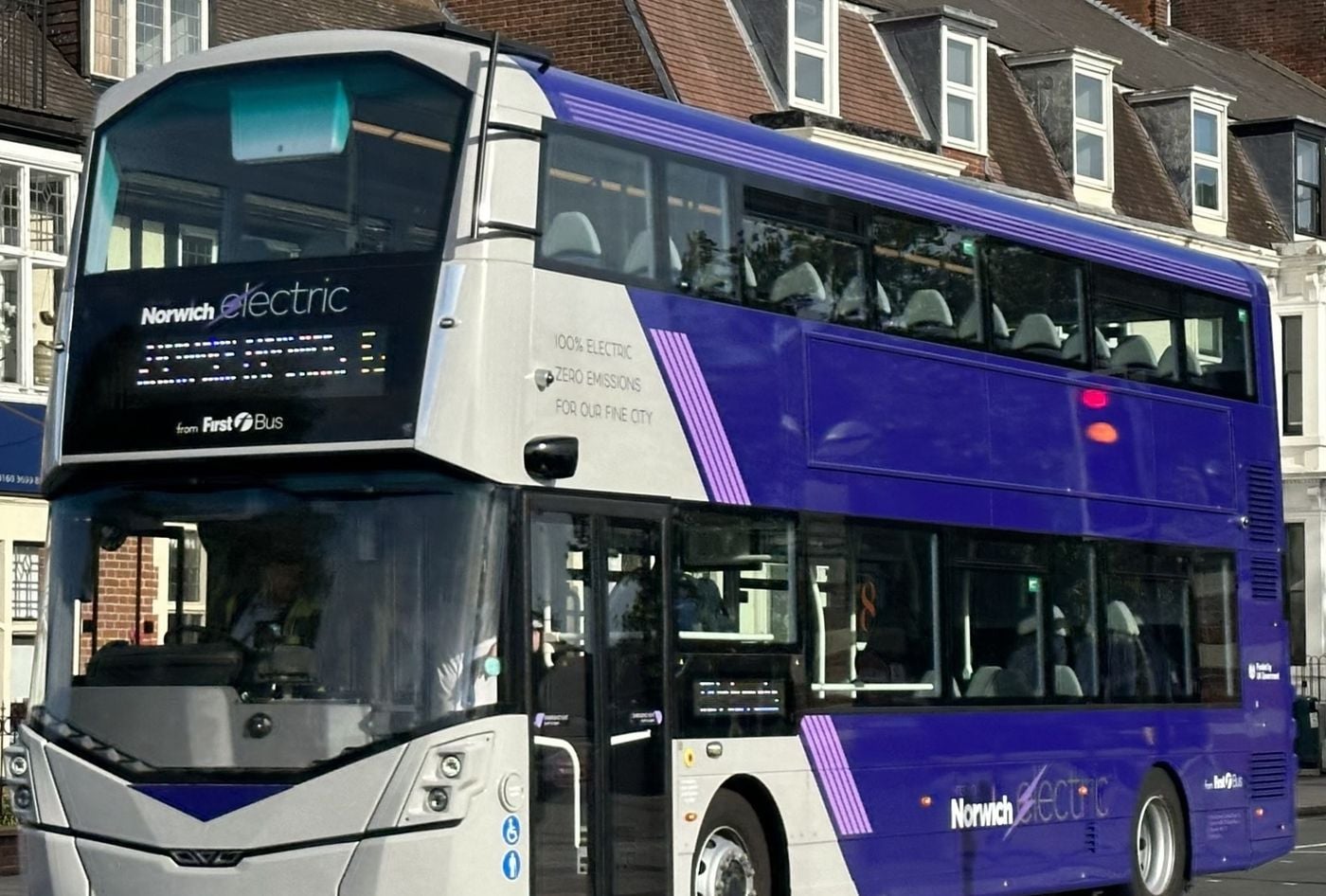
Wrightbus StreetDeck Electroliner
Wrightbus's battery-electric StreetDeck double-decker: a 442 kWh CATL LFP battery, 230 kW continuous and 250 kW peak drive, 10,732 mm length, up to 73 seats, 19,500 kg gross.
- 230 kW
- 10.73 m
- 19.5 t

Model overview
- Segment
- Bus
- Gross vehicle
- 19 500 kg
- Battery capacity
- 442 kWh
- Charging
- 150 kW (CCS2.0 compliant Combo 2 socket)
- Electric motor
- 230 kW · 250 kW peak
- Length
- 10 732 mm
- Wheelbase
- 5 580 mm
- Capacity
- Up to 73 seated (maximum capacity 84) + Up to 14 standing
- Doors
- 1 or 2 door option
The StreetDeck Electroliner is the battery-electric double-deck bus of Wrightbus, the bus maker whose principal place of business is in Ballymena, Northern Ireland. It is 10,732 mm long, and Wrightbus’s model page presents its current version as the StreetDeck Electroliner Gen 2.0. This page is built from three Wrightbus documents in English on the company’s United Kingdom site, all read on 14 November 2026: the model page, the two-page StreetDeck BEV Electroliner 2.0 data sheet, whose footer carries the code “QCD Nov 2026”, and the model page of the StreetDeck Open Top Electroliner. Neither model page is dated, and the data sheet names no market.
Model and generations
The model page calls the StreetDeck Electroliner Wrightbus’s “first-ever electric bus” and describes the Gen 2.0 as the electric double-decker that “shares over 85% commonality with its single deck sister”. The same page names that sister as the single-deck GB Kite Electroliner and says the commonality reduces “parts inventory, training costs and depot complexity”; the data sheet gives “over 85% commonality between single and double decker Electroliner buses”. On the Wrightbus site the StreetDeck range lists the Electroliner BEV beside the Hydroliner FCEV, the Ultroliner EU6 and the Open Top Electroliner.
The model page speaks of “improvements in charging speed, range, battery life, HVAC systems, and warranty coverage”, without naming the earlier version they are measured against or giving its figures. No document opened gives the dates of the first StreetDeck Electroliner or of the Gen 2.0, or a start of series production.
Electric drive
Under “Electric Drive System” the data sheet gives a continuous power of 230 kW and a peak power of 250 kW, and a continuous torque of 2,624 Nm and a peak torque of 2,850 Nm. It lists an “Upgraded lightweight inverter, ISO-26262 compliant”, a DC/DC converter (EACU) of 440 A, with a 660 A converter as an option, and a “New gen CCU (improved charger compatibility)”. No document opened names the maker of the motor, the number of motors or a gearbox. How a battery-electric bus is built and charged is set out in electric buses explained.
Axles, wheels and tyres
The data sheet, and the model page under “AXLE & Suspension”, list a ZF RL 82 EC front axle and a ZF AV 133 rear axle. Neither document describes the suspension, and neither gives a wheel formula, the brakes or the steering. The data sheet lists “275 / 70R x 22.5 Tubeless” tyres with a choice of Bridgestone or Michelin, and alloy wheels among the optional specification items.
Dimensions and weight
| Row | Data sheet |
|---|---|
| Length | 10,732 |
| Width | 2,520 |
| Height | 4,395 |
| Wheelbase | 5,580 |
| Overhang front | 2,607 |
| Overhang rear | 2,545 |
| Gross vehicle weight | 19,500 kg |
The sheet heads the dimensions “Dimensions (MM / 10.7)”. The two overhangs and the wheelbase add up to the printed length: 2,607 + 5,580 + 2,545 = 10,732. No document opened gives a kerb weight, axle loads, a turning circle or the headroom of either deck.
Battery, charging and range
The data sheet describes the traction battery as a liquid-cooled LFP battery from CATL with a nominal energy of 442 kWh, a maximum continuous discharge current of 500 A and a maximum continuous charge current of 500 A. The model page gives “Liquid cooled LFP” and “CATL 442kWh”. Neither document says how much of the nominal energy is usable; the difference is explained in installed vs usable battery capacity, and the LFP chemistry in battery chemistries in heavy trucks. The model page gives a battery warranty of up to 15 years, which it attributes to the LFP battery technology.
Both documents give a CCS2.0-compliant Combo 2 socket and plug-in charging at up to 150 kW, written “150kW/200A” on the data sheet. For higher-power charging the two documents differ: the data sheet lists the “Option: 380kW/500A Plug-in charging with high powered charging box”, while the model page lists “Up to 360kW opportunity charging available”. Both give the same charging times for the 442 kWh battery:
| Charge rate | Charging time (442 kWh) |
|---|---|
| 150 kW | 2 h 45 min |
| 380 kW | 1 h 15 min |
The model page also gives the 380 kW time as a “rapid charge time of just 1.25 hours”. Charging electric buses away from the depot is set out in opportunity charging and pantographs.
Range is given in miles, with two figures. The model page gives “a range of up to 275 miles” and repeats the figure in its feature list; the data sheet, under “Vehicle Range”, gives “442kWh approx 300 miles: Electroliner (duty-cycle dependent)”. No document opened gives a range in kilometres or the test cycle behind either figure.
Energy consumption and emissions
Under “Emissions” the data sheet gives “ZEMO zero-emission bus test results”: an energy consumption of 0.75 kWh/km, “2.4 CO2e g per passenger per km” and an “84% Well-to-Wheel CO2 saving against Euro VI Diesel”. It gives no date and no route or duty cycle for the test.
Doors, seats and capacity
Both documents give a “1 or 2 door option” and wheelchair access “via electronic or manual ramp”. Under “Passenger Capacity 442kWh” the data sheet gives a maximum capacity of 84, a maximum seated capacity of 73 and a maximum standing capacity of 14. The model page gives “Maximum Capacity 84” and seating for up to 73 passengers. No document opened gives the number of seats on each deck or the seated and standing split of an 84-passenger bus. How the makers of city double-deckers state their capacities and dimensions is set out in double-decker buses.
Optional equipment and compliance
Under “Legislative compliance” the data sheet states “Certified to NSSTA requirements”. Its list of optional specification items, which Wrightbus says includes but is not limited to the items named, gives alloy wheels, camera mirror systems, CCTV, destination equipment and next-stop announcement systems, driver’s cab air conditioning, fire suppression systems, a range of extended warranties, a range of seating models “which include seat belts for both driver and passengers”, telematics and Wi-Fi. Camera systems in place of mirrors are described in camera-monitor systems instead of mirrors.
StreetDeck Open Top Electroliner
Wrightbus lists an open-top version, the StreetDeck Open Top Electroliner, on a model page of its own, which describes it as an electric open-top bus for sightseeing duty cycles and says its “seating configuration and capacity are similar to our diesel model”. Its specification list gives a maximum capacity of 96, the same 1 or 2 door option and ramp, the same ZF RL 82 EC front axle and ZF AV 133 rear axle, a CCS2.0-compliant Combo 2 socket, plug-in charging at up to 150 kW and opportunity charging at up to 360 kW. For the battery system it gives “Forsee Power 340kWh” in “60AH PHEV modules (3P4S)”, with a charging time of “2 ½ Hours @ 150kW Charge Rate”.
The text of the open-top page speaks of “optimised power from a 454kW zero-emission battery electric power train”, gives “a range of up to 200 miles” and “a fast charge time of just 2.5 hours”, and names “an optional 8-year battery warranty”. Apart from the 454 kW in that phrase, the open-top page gives no power or torque figures, and it gives no dimensions or weights.
Source notes
The figures above are the Wrightbus data sheet StreetDeck BEV Electroliner 2.0 with the footer code QCD Nov 2026: a traction battery of 442 kWh nominal energy, liquid-cooled LFP from CATL, with a maximum continuous charge and discharge current of 500 A each; an electric drive of 230 kW continuous and 250 kW peak power and 2,624 Nm continuous and 2,850 Nm peak torque, with an inverter compliant with ISO 26262 and a DC/DC converter of 440 A, or 660 A as an option; a ZF RL 82 EC front axle and a ZF AV 133 rear axle; 275 / 70R x 22.5 tubeless tyres; front and rear overhangs of 2,607 mm and 2,545 mm; a maximum capacity of 84 passengers, at most 73 seated and at most 14 standing; and a gross vehicle weight of 19,500 kg. The data sheet and the model page both give a CCS2.0 compliant Combo 2 socket, plug-in charging at up to 150 kW, and charging times of 2 h 45 min at 150 kW and 1 h 15 min at 380 kW. The data sheet lists the 380 kW rate as an option, plug-in charging at 380 kW and 500 A with a high powered charging box; the model page lists opportunity charging at up to 360 kW instead. The model page gives a range of up to 275 miles and the data sheet approximately 300 miles, duty-cycle dependent. Under ZEMO zero-emission bus test results the data sheet gives 0.75 kWh/km and 2.4 g CO2e per passenger per km. The model page gives a battery warranty of up to 15 years. No Wrightbus document opened gives a usable battery capacity, a range in kilometres, the motor maker or the number of motors, a gearbox, a kerb weight, axle loads, a turning circle, the suspension, a wheel formula, the dates of the first generation or of Gen 2.0, or a start of series production.
Quick answers
- What is the gross vehicle weight of the Wrightbus StreetDeck Electroliner?
- Gross vehicle weight: 19 500 kg.
- What battery capacity does the Wrightbus StreetDeck Electroliner have?
- Battery capacity: 442 kWh; Charging: 150 kW (CCS2.0 compliant Combo 2 socket).
- How long is the Wrightbus StreetDeck Electroliner?
- Length: 10 732 mm; Wheelbase: 5 580 mm.
- How many passengers does the Wrightbus StreetDeck Electroliner carry?
- Capacity: Up to 73 seated (maximum capacity 84); Standing places: Up to 14 standing.
Articles that mention the Wrightbus StreetDeck Electroliner
More Wrightbus on this site
Sources
- StreetDeck BEV Electroliner 2.0 — data sheet (QCD Nov 2026) — Wrightbus
- StreetDeck Electroliner BEV — model page — Wrightbus
- StreetDeck Open Top Electroliner — model page — Wrightbus