Wrightbus
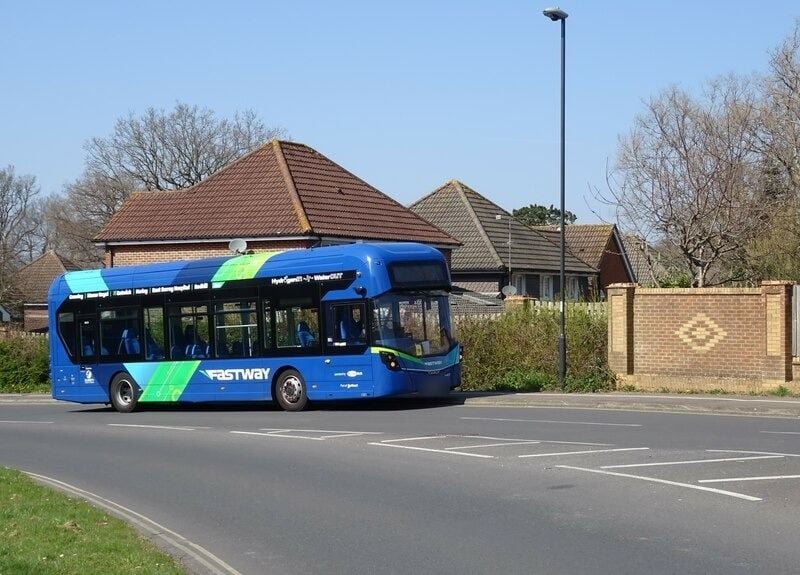
Wrightbus GB Kite Hydroliner FCEV
Wrightbus's single-deck hydrogen fuel-cell bus: a 70 kW Ballard FCmove Gen 8 fuel cell, a 250 kW Voith VEDS MD drivetrain, hydrogen at 350 bar and a 19,500 kg gross vehicle weight.
- 250 kW
- 12.16 m
- 19.5 t

Model overview
- Segment
- Bus
- Transmission
- Voith VEDS MD drivetrain
- Gross vehicle
- 19 500 kg
- Electric motor
- 250 kW
- Fuel cell
- 70 kW · Ballard
- Hydrogen tank
- 40 kg · gaseous
- Storage pressure
- 350 bar
- Length
- 12 165 mm
- Wheelbase
- 5 835 mm
- Capacity
- 41 maximum + 41 maximum
- Doors
- 1 or 2 door option
The GB Kite Hydroliner FCEV is a single-deck bus from Wrightbus that runs on hydrogen through a fuel cell; Wrightbus’s UK product page introduces it as “a brand new single-deck bus powered entirely by hydrogen”. This page is built from four Wrightbus documents in English, all read on 14 November 2026: the brochure headed “GB KITE DF FCEV | HYDROLINER 2.0”, with the code “QCD Nov 2026” in its footer; the model’s product page for the United Kingdom; its product page for Europe, which names it the Kite Hydroliner FCEV; and the UK product page of the double-deck StreetDeck Hydroliner FCEV, for what that page says about the Kite.
Introduction and dates
The UK product page says GB Kite Hydroliners “are expected to be in service across the UK from summer 2023”, and that with its introduction “Wrightbus is now the first bus manufacturer in the UK to provide four zero-emission vehicles”. The Europe page says: “In the last quarter of 2023, production of the bus is anticipated to begin.” No document opened reports when series production began or describes an earlier version of the bus, and the brochure does not say what the “2.0” in its heading refers to.
Fuel cell
The brochure lists the fuel cell module as a “Ballard FCmove Gen 8” with “Freeze start enabled” and gives a “70kW Fuel Cell Module”. The UK product page names a Ballard FCmove with a 70 kW fuel cell module. The Europe page also names a Ballard FCmove and gives an “Option of 70kW or 100kW Fuel Cell Module”. Fuel-cell buses in Europe and the figures their makers publish are covered in hydrogen fuel-cell buses and coaches.
Drivetrain
Under “Drivetrain” the brochure lists a “Voith VEDS MD 250kW”, a torque of 2,850 Nm and a “Max. Speed – 2,850 rpm”. It does not say whether the 250 kW is a continuous or a peak rating. The StreetDeck Hydroliner page calls it “The new Voith VEDS MD drivetrain system, common with the Kite buses”. The EU rules for zero-emission city buses and their drive options are covered in zero-emission city buses.
Hydrogen storage, refuelling and range
All three Kite documents give a filling pressure of 350 bar. The brochure lists “Hydrogen Storage utilizing a 5 Cylinder configuration – 40kg” and, among its optional specification items, “Additional Hydrogen Storage Tanks”. The UK and Europe product pages list three configurations: 32 kg of hydrogen with 4 cylinders, 40 kg with 5 cylinders and 50 kg with 7 cylinders.
For refuelling, the brochure gives “Fully refuelled in under 15 minutes”, the Europe page “Refuels in less than 10 minutes” and the UK page “Takes minimum time to refuel”.
The ranges are given in miles. The brochure gives “40kg Stored Hydrogen – approximately 400 miles”. The UK page gives “a range of up to 640 miles” in its text and “can go up to 650 miles” under the heading “FAST RE-FUELLING TIME”; the Europe page gives “a range of up to 640 miles”. No document opened states the basis of these figures.
Hydrogen safety
The brochure says that “The Kite Hydroliner adheres to all industry safety standards” and that the vehicle has been tested “on and not limited to the following”: “Accelerated Stress Rapture Test”, “Extreme Temperature Pressure Cycle Test Hydraulic Test”, “Penetration Test, Chemical Exposure and Composite Flaw Testing” and “Storage Tank Testing”. It gives the hydrogen quality as “aligned to ISO14687 or SAE Specification”.
Battery
The brochure lists the battery system as a “New Forsee system” with “2 x 15kWh L TO” and prints no total. The UK product page gives “54kWh Capacity”, and the Europe page “The 54kWh capacity of the Microvast x2 MV-C Modules”. No document opened says whether these are installed or usable figures; the difference is explained in installed vs usable battery capacity.
Axles, wheels and tyres
All three Kite documents give a ZF RL 82 EC front axle and a ZF AV 133 rear axle, which the UK page writes “AV133”. The StreetDeck Hydroliner page lists the same two axles for the double-decker and adds “Axles are common across zero-emission products”. The brochure gives “275 / 70R x 22.5 Tubeless Tyre”, with a “Choice of Bridgestone or Michelin”, and lists alloy wheels among its optional items. No document opened gives a wheel formula, the suspension or the brakes.
Dimensions and weight
| Row | Brochure |
|---|---|
| Length | 12,165 |
| Width | 2,520 |
| Height | 3,380 |
| Wheelbase | 5,835 |
| Overhang front | 2,850 |
| Overhang rear | 3,480 |
| Gross vehicle weight | 19,500 kg |
The brochure prints one set of dimensions. No document opened gives a kerb weight, axle loads or a turning circle. How bus lengths, widths and heights are set in the rules is covered in bus and coach dimensions.
Doors, accessibility and capacity
The brochure and the UK product page give a “1 or 2 door option”; the Europe page gives a “1, 2 or 3 door option”. All three Kite documents say the bus is “Wheelchair compliant via electronic or manual ramp”; the rules behind ramps and wheelchair spaces are set out in bus accessibility.
The brochure gives a maximum capacity of 79, a maximum seated capacity of 41 and a maximum standing capacity of 41. The UK product page says: “Depending on length and specification choice, a maximum capacity of up to 90 can be achieved.” The Europe page gives “Up to 90 people, depending on its length and specification.”
Type approval and optional equipment
Under “Legislative Compliance” the brochure lists “European Whole Vehicle Type Approval” and “Certified to NSSTA requirements”. Among the optional specification items Wrightbus “are able to offer”, it lists additional hydrogen storage tanks, alloy wheels, camera mirror systems, CCTV systems, destination equipment and next stop announcement systems, driver’s cab air conditioning, fire suppression systems, a range of seating models including seat belts for both driver and passengers, telematics, “VRU frontal crash worthiness – pedestrian impact safety” and Wi-Fi.
The double-deck StreetDeck Hydroliner
Both Kite product pages say the bus shares 86% of its parts with its double-deck sister, the StreetDeck Hydroliner FCEV. The StreetDeck Hydroliner’s UK page says the double-decker “has been refined and improved with a new fuel cell, more efficient powertrain and other enhancements” and that “The new components are now common with the single deck Kite Hydroliner”. It names the new fuel cell as an “FCmove Generation 8” and says: “StreetDeck Hydroliner and its sister single deck Kite Hydroliner share the latest fuel cell and drive train technology”. Double-deck buses in general are covered in double-decker buses.
Source notes
The figures above are Wrightbus’s brochure headed “GB KITE DF FCEV | HYDROLINER 2.0”, with the code “QCD Nov 2026” in its footer. It gives a Ballard FCmove Gen 8 fuel cell module of 70 kW with freeze start enabled; a Voith VEDS MD drivetrain of 250 kW with a torque of 2,850 Nm and a maximum speed of 2,850 rpm; a filling pressure of 350 bar and 40 kg of hydrogen in a 5-cylinder configuration, with additional hydrogen storage tanks as an optional item; a battery system listed as “New Forsee system” and “2 x 15kWh L TO”; a ZF RL 82 EC front axle and a ZF AV 133 rear axle; 275 / 70R x 22.5 tubeless tyres, by Bridgestone or Michelin; a length of 12,165 mm, a width of 2,520 mm, a height of 3,380 mm, a wheelbase of 5,835 mm, a front overhang of 2,850 mm and a rear overhang of 3,480 mm; a gross vehicle weight of 19,500 kg; a maximum capacity of 79, with a maximum of 41 seated and a maximum of 41 standing; a 1 or 2 door option and a wheelchair ramp, electronic or manual; a full refuelling in under 15 minutes and approximately 400 miles from 40 kg of stored hydrogen; European Whole Vehicle Type Approval and certification to NSSTA requirements. The UK product page gives a 70 kW Ballard FCmove module, 32, 40 or 50 kg of hydrogen in 4, 5 or 7 cylinders at a filling pressure of 350 bar, a battery capacity of 54 kWh, a maximum capacity of up to 90 depending on length and specification, and a range of up to 640 miles in its text and up to 650 miles in a feature heading; it says GB Kite Hydroliners were expected to be in service across the UK from summer 2023. The Europe page gives the option of a 70 kW or a 100 kW module, the same three hydrogen stores, 54 kWh from Microvast x2 MV-C modules, a 1, 2 or 3 door option, up to 90 people, refuelling in less than 10 minutes and a range of up to 640 miles, and says production was anticipated to begin in the last quarter of 2023. Both product pages say the bus shares 86% of its parts with the double-deck StreetDeck Hydroliner FCEV. Ranges are given in miles only, and no document states their basis. No document opened gives a wheel formula, a kerb weight, axle loads, a turning circle, the suspension, the brakes, whether the battery figures are installed or usable energy, a continuous and peak split of the drive’s power, or a UN Regulation No 107 class.
Quick answers
- Which transmission does the Wrightbus GB Kite Hydroliner FCEV use?
- Transmission: Voith VEDS MD drivetrain.
- What is the gross vehicle weight of the Wrightbus GB Kite Hydroliner FCEV?
- Gross vehicle weight: 19 500 kg.
- How long is the Wrightbus GB Kite Hydroliner FCEV?
- Length: 12 165 mm; Wheelbase: 5 835 mm.
- How many passengers does the Wrightbus GB Kite Hydroliner FCEV carry?
- Capacity: 41 maximum; Standing places: 41 maximum.
More Wrightbus on this site
Sources
- GB Kite DF FCEV | Hydroliner 2.0 — brochure (QCD Nov 2026) — Wrightbus
- GB Kite Hydroliner FCEV — UK product page — Wrightbus
- Kite Hydroliner FCEV — Europe product page — Wrightbus
- StreetDeck Hydroliner FCEV — UK product page — Wrightbus